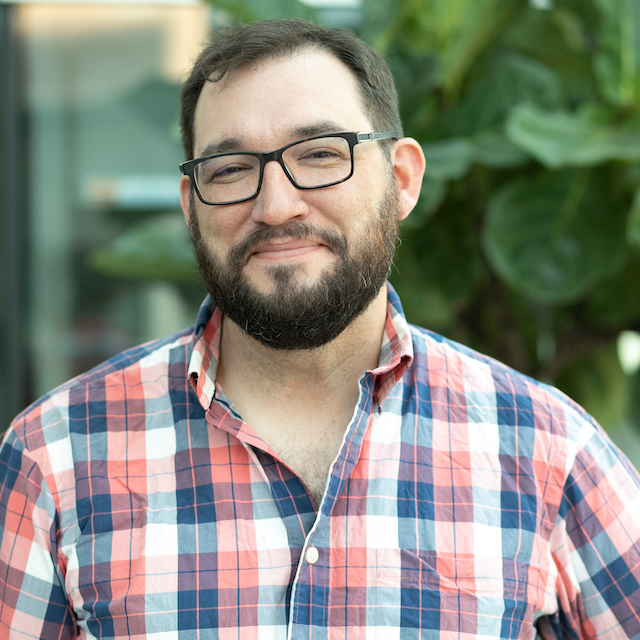
Michael Qizhe Shieh is an Assistant Professor in the Department of Computer Science at the National University of Singapore (NUS), affiliated with the Tree and Rock AI Lab (TRAIL). He holds a PhD and Master's from Carnegie Mellon University (Machine Learning and Language Technologies) and a Bachelor's from Shanghai Jiao Tong University's ACM Class. His research focuses on Large Language Models, Deep Learning, and Natural Language Processing, with notable contributions to semi-supervised learning techniques like Noisy Student and UDA, and the RACE benchmark for reading comprehension. Education: PhD in Machine Learning, Carnegie Mellon University (2020) Master's in Language Technologies, Carnegie Mellon University (2018) Bachelor's in Computer Science, Shanghai Jiao Tong University (2016) His research explores robustness, safety, and scalability of AI systems. He has served as Area Chair for top conferences like NeurIPS, ICML, and ICLR. Current research directions include adversarial robustness, LLM self-evaluation, and alignment mechanisms. His lab, TRAIL, emphasizes foundational AI research. Selected contributions include: Developing UDA and Noisy Student techniques for semi-supervised learning Creating the RACE benchmark for exam-based reading comprehension Advancing methods for LLM safety and adversarial defense Prospective students are encouraged to apply to NUS's PhD program for collaborative research opportunities.
Dmitri Perkins is a Professor at the Department of Computer Science and Electrical Engineering within the College of Engineering and Information Technology at the University of Maryland, Baltimore County (UMBC). He has held leadership roles including Senior Program Director at the National Science Foundation (2021-2024) and Lead Program Director for the NSF's Industry-University Cooperative Research Centers (2015-2019). His research spans wireless and mobile networking paradigms, including cognitive radio, sensor networks, and large-scale heterogeneous systems. Ph.D., Computer Engineering, Michigan State University (2002) M.S., Computer Engineering, Michigan State University (1997) B.S., Computer Science, Tuskegee University (1995) His research focuses on adaptive protocol design , spectrum management , and network security . Key areas include dynamic spectrum access , cross-layer optimization , and formal performance evaluation in wireless systems. Publications highlight innovations in cognitive radio networks , IoT protocols , and secure wireless communication . Recent publications emphasize machine learning for spectrum efficiency , edge computing in heterogeneous networks , and security frameworks for wireless systems. The 15 most recent works (2002-2018) demonstrate expertise in protocol design , network scalability , and spectrum optimization . NSF CAREER Award (2005) NSF Director's Award for Superior Accomplishment (2024) ONR Research Fellow, U.S. Naval Research Lab (2013-2014) He leads a research lab at UMBC offering RA positions in spectrum research , IoT/CPS systems , and wireless cybersecurity . Prior to UMBC, he served as Hardy Edmiston Endowed Professor at the University of Louisiana at Lafayette and held roles at the U.S. Naval Research Laboratory.
Dr. Hongwei Wang is a Senior Researcher at Tencent AI Lab Seattle , specializing in applied machine learning for Natural Language Processing and Interconnected Systems . His work bridges Knowledge Graphs , Recommender Systems , and Graph Neural Networks , with a focus on large language models and retrieval-augmented generation. Ph.D. (2018), B.E. (2014) in Computer Science from Shanghai Jiao Tong University Postdoctoral Researcher : Stanford University (2019-2021), University of Illinois Urbana-Champaign (2021-2022) Dr. Wang’s research explores integrating Knowledge Graphs with Graph Neural Networks to enhance recommendation systems, language models, and information retrieval. His work spans Retrieval-Augmented Generation , Representation Learning , and GAN-based Graph Modeling , with recent papers on State-Space Exploration for LLM agents and Semantic Watermarking . His 15 most recent publications (2022-2024) focus on Retrieval Granularity , Interactive Memory , and Agent Systems , with keywords spanning Computer Science , Machine Learning , and Knowledge Graphs . Trends highlight advancements in Token-Level Semantic Matching , Schema-Guided Event Prediction , and Multi-Document Summarization . Scientific Awards: 2020 CCF Outstanding Doctoral Dissertation Award 2018 Google Ph.D. Fellowship Dr. Wang contributes to open-source projects like DKN and RippleNet , with 11 repositories on GitHub. He actively engages in Knowledge Graph Conferences (KDD, WWW, AAAI) and studies Chinese Classical Poetry and Film Arts .
Athanasios Liavas is a Professor at the Technical University of Crete in the School of Electrical and Computer Engineering , specializing in Signal Processing for Telecommunications and Information Theory . He has held administrative roles as Department Chair (2009-2011), Vice Chair (2011-2013), and Dean of the ECE School (2017-2021). Education: Diploma (1989) and PhD (1993) in Computer Engineering and Informatics from the University of Patras. Professional Background: Postdoctoral Marie Curie Fellow at INT, Evry (1996-1998); Lecturer at University of Ioannina (1999-2001); Assistant/Associate Professor at University of the Aegean (2001-2004) and Technical University of Crete (2004-present). His research focuses on Signal Processing for Telecommunications , Information Theory , and Tensor Decomposition . Recent work involves nonnegative tensor factorization , parallel algorithms , and fMRI data analysis , with applications in wireless communications and medical imaging . Articles show trends in optimization algorithms , LDPC code design , and MIMO system robustness . Scientific Awards include: Marie Curie Fellowship (1996-1998) Associate Editor, IEEE Transactions on Signal Processing (2005-2009) Elected Member, IEEE Signal Processing for Communications and Networking Technical Committee (2006-2011) He has taught courses like Telecommunications Systems II , Wireless Communications , and Information Theory , and supervised students such as Despoina Tsipouridou (PhD) and Alex Balatsoukas-Stimming (Graduate). He leads projects like Partensor (Parallel Tensor Toolbox) and COOPCOM (Cooperative Communications), and contributes to labs including the Telecommunications Laboratory .
M.A. Keller is an Instructor in the Department of English at Virginia Commonwealth University and current Online Editor of the Blackbird Founders Archive, following 22 years as Online Editor of Blackbird: an online journal of literature and the arts (2001-2023). Education: MFA, Virginia Commonwealth University, 1989 BA, James Madison University, 1985 Keller's research centers on creative writing with dual focus on poetry/nonfiction and Appalachian representation . They investigate digital publishing challenges including archive fragility, error transmission systems, and multimodal narrative structures (hypertext, alternative pathways). Specialized interests include ADA-compliant captioning practices, nature writing in digital contexts, and artificial body representation. Publications from 2010-2023 reveal consistent engagement with digital literary preservation through Blackbird, featuring author interviews (Scafidi, Bouldrey), collaborative Appalachian-themed poetry (1918 Suite), and new media criticism. The work demonstrates evolving exploration of pandemic narratives, historical trauma, and digital error within multimodal frameworks. Scientific Awards: No awards documented in source materials No graduate student advising or research grants are referenced in available documentation. Keller leads the Blackbird Founders Archive initiative with advisors Mary Flinn and Kurtis Zirkle, maintaining 43 issues as free educational resources. The project focuses on preserving digital literary heritage through outreach to global educators, students, and contributors while addressing digital fragility challenges.
Pan Xu is a tenure-track assistant professor with joint appointments in the Department of Biostatistics & Bioinformatics, Department of Computer Science, and Department of Electrical & Computer Engineering at Duke University's Pratt School of Engineering. Prior to joining Duke, he was a Postdoctoral Scholar Research Associate at the California Institute of Technology, and he earned his Ph.D. in Computer Science from UCLA. His research bridges theoretical foundations with practical applications in machine learning and artificial intelligence. Dr. Xu's research focuses on developing computationally- and data-efficient machine learning algorithms with strong theoretical guarantees, particularly in reinforcement learning, optimization, and high-dimensional statistics. His work addresses two fundamental challenges in sequential decision-making: efficient exploration with minimal interactions and robustness against distributional shifts. His research spans theoretical algorithm design, practical implementation, and real-world applications in bioinformatics and healthcare. His publication record demonstrates consistent high-impact contributions to top-tier conferences including ICML, NeurIPS, ICLR, AAAI, and AISTATS. The research trends show a progression from foundational work in non-convex optimization and multi-armed bandits toward increasingly sophisticated frameworks for robust reinforcement learning, with particular emphasis on distributional robustness, efficient exploration strategies, and practical applications. His work often bridges theoretical guarantees with empirical validation. NSF award on approximate sampling based exploration for sequential decision making Whitehead Scholar award from Duke University School of Medicine PIMCO Postdoctoral Fellowship in Data Science UCLA Outstanding Graduate Student Research Award Rising Stars in Data Science by University of Chicago Best Paper Award for Queer In AI: A Case Study in Community-Led Participatory AI at FAccT 2023 Featured Certification for Wasserstein Distributionally Robust Policy Evaluation and Learning for Contextual Bandits at TMLR Oral Presentation award at AAAI 2024 Dr. Xu actively mentors students and researchers, seeking highly motivated individuals with strong mathematical backgrounds for Ph.D. programs in Biostatistics & Bioinformatics, Computer Science, and Electrical & Computer Engineering at Duke. He has received multiple research grants including an NSF award on approximate sampling based exploration for sequential decision making. His service to the academic community includes roles as area chair for NeurIPS, ICML, ICLR, and AISTATS, as well as action editor for Transactions on Machine Learning Research. His research group develops algorithms that address fundamental challenges in sequential decision-making, with applications spanning healthcare, bioinformatics, and multi-agent systems. Current research directions include distributionally robust reinforcement learning, efficient exploration strategies, and applications of graph neural networks to biological problems.
Dr. Kenneth Zick is a Research Professor at the University of Southern California's Information Sciences Institute (USC ISI), where he serves as Research Director of Transformational Computing. His work focuses on game-changing computer architectures, hardware, and systems for solving critical government problems, with expertise in unconventional computing, quantum computing, and bio-inspired systems. Ph.D. in Computer Science & Engineering, University of Michigan-Ann Arbor M.S. in Electrical Engineering, University of Texas at Dallas Bachelor's in Electrical Engineering, University of Michigan-Ann Arbor Dr. Zick's research interests span unconventional computing , bio-inspired systems , Ising machines , quantum annealing , FPGA-based solutions , and neuromorphic computing . His group develops hardware-centric algorithm discovery and Cosm, a heuristic algorithm for sparse Ising optimization. Current projects include superconducting digital architectures, analog-digital hybrid computing, and human-AI co-design for breakthrough hardware. His team leverages advanced facilities such as USC ISI's MOSIS 2.0 and the California DREAMS hub in the DoD Microelectronics Commons, with expertise in high-speed I/O, FPGA prototyping, and radiation-hardened systems. He has received a NASA Fellowship for his Ph.D. work and mentored students like Aditi, who won the USC ECE Outstanding Academic Achievement Award.
Desmond McEwan is an Assistant Professor in the School of Kinesiology at the University of British Columbia, Faculty of Education. His research focuses on sport and exercise psychology, particularly teamwork, group dynamics, and human thriving in high-performance teams. His research interests include Sport Psychology, Teamwork, Group Dynamics, High-Performance Teams, and Human Thriving. He examines how team cohesion, psychological safety, and resilience contribute to individual and team success in sport settings. His work often involves both elite and youth athletes, with applications in coaching and performance support. Recent publications (2023-2025) show a strong trend in exploring psychological safety, team resilience, and human thriving in sport. His work spans systematic reviews, longitudinal studies, and qualitative investigations, often focusing on interventions to improve teamwork and well-being. Key themes include the role of social support, leadership, and identity in team functioning. McEwan advises graduate students, including Stef Atkinson who completed a Master of Arts in Kinesiology on trust in the coach-athlete relationship. He is open to collaborations on clusters and grants. He directs the Sport and Performance Psychology Lab at UBC, which conducts research on team dynamics and thriving in sport.
Pradeep Kumar is a Professor in the Department of Electrical Engineering at the Indian Institute of Technology Kanpur (IIT Kanpur), specializing in quantum cryptography, quantum optics, and fiber-optic communications. His research focuses on secure quantum communication systems and the application of quantum phenomena in information processing. Dr. Kumar received his PhD from IIT Madras in 2009 under the supervision of Anil Prabhakar. He completed his B.E. at M.V.J. College of Engineering, Visweswaraiah Technological University in 2002. His research interests span quantum cryptography and computation, quantum and nonlinear optics, and fiber-optics. Dr. Kumar's work primarily explores quantum key distribution systems, examining various approaches including frequency coding, decoy states, and spin wave-optical interactions. His research has significant implications for secure communications and quantum information processing. Dr. Kumar's publications demonstrate a consistent focus on quantum communication technologies, with particular emphasis on improving the reliability and security of quantum key distribution systems. His research trajectory shows progression from fundamental quantum state manipulation to practical implementations of quantum cryptography. He maintains an active research laboratory within the Advanced Centre for Electronic Systems (ACES) at IIT Kanpur, where he supervises graduate students working on quantum communication technologies and optical systems.
Pavel Panchekha is an Assistant Professor in the School of Computing at the University of Utah, where he holds the Warnock Chair for Junior Faculty. His research spans programming languages, web browsers, and numerical analysis, with a focus on developing programming language techniques to address challenges across computer science. Dr. Panchekha received his educational training at prestigious institutions: PhD in Computer Science from the Paul G. Allen School for Computer Science and Engineering at the University of Washington, advised by Michael D. Ernst and Zachary Tatlock BS in Mathematics from MIT Panchekha's research program has two major thrusts. First, he works on web browser internals , with projects including fuzzing layout invalidation, multi-tenant garbage collection, and optimizing 2D graphics. He is also authoring a textbook on web browsers that informs much of this research. Second, he focuses on automatic numerical analysis , with projects such as automatic accuracy improvement, synthesis via term rewriting, scalable static accuracy analysis, and math library implementation. He leads the FPBench and Herbie projects, which are major deployments of his research. His scholarly output demonstrates consistent contributions across programming languages, verification, and numerical methods. Recent work shows a growing emphasis on bidirectional typing systems, layout invalidation in browsers, and robust floating-point error analysis. His publications reveal a trajectory from foundational work on floating-point accuracy (notably the Herbie tool that won a Distinguished Paper Award at PLDI 2015) toward more comprehensive systems for program synthesis, verification, and browser optimization. Panchekha has received significant recognition for his research contributions: NSF Fellowship ARCS Foundation Fellowship Adobe Research Fellowship Wissner-Slivka Foundation Fellowship 2015 PLDI Distinguished Paper Award for work on the Herbie numerical analysis and repair tool As an advisor, Panchekha mentors a substantial group of students across multiple levels. He currently advises six students: Marisa Kirisame (PhD), Bhargav Kulkarni (PhD), Yumeng He (PhD), Artem Yadrov (MS), Jesus Ponce (BS), and Jonas Regehr (BS). Previously, he has advised over twenty students including PhD candidates like Ian Briggs and numerous MS and BS students. His advising spans theoretical topics in programming languages and practical applications in web browsers and numerical computing. Panchekha leads research groups focused on programming languages applications to web browsers and numerical analysis. His work on the Herbie tool for floating-point accuracy improvement has become influential in the programming languages community, and his more recent work on browser internals is shaping how researchers understand and optimize modern web rendering engines. He is currently developing a textbook on web browsers that aims to synthesize knowledge about browser architecture and implementation.
Dr. Yu Huang is an Assistant Professor in the Department of Computer Science at Vanderbilt University's School of Engineering, with a secondary appointment in the Department of Teaching and Learning at the Peabody School of Education. She is affiliated with the Institute for Software Integrated Systems, the Frist Center for Autism and Innovation, the Vanderbilt Lab for Immersive AI Translation (VALIANT), and the Vanderbilt LIVE Learning Innovation Incubator. Her academic journey began with a BS in Aerospace Engineering from Harbin Institute of Technology in China (2011), followed by an MS in Computer Engineering from the University of Virginia (2015), and culminated with a PhD in Computer Science and Engineering from the University of Michigan in 2021 under Professor Westley Weimer. Dr. Huang's research bridges human cognition and machine intelligence to enhance software development. Her work spans software, hardware, AI, medical imaging (fMRI/fNIRS), eye tracking, and mobile sensing through collaborations with Security, Education, Psychology, and Neuroscience researchers. She leads the MIND Lab (Mixed INtelligence Development for programming lab), investigating programming expertise formation, code comprehension processes, cognitive error patterns, and diversity in programming communities. Her innovative approach combines empirical human studies with AI model development to create more effective programming tools. Her recent publications reveal a growing emphasis on leveraging human attention data to improve code language models, analyzing cognitive biases in security contexts, and examining social factors in technical communication. The research shows strong interdisciplinary connections between neuroscience, psychology, and software engineering, with increasing applications of LLMs in developer tooling. Dr. Huang's work consistently demonstrates how understanding human cognition can inform better AI systems for programming tasks. Dr. Huang has received numerous prestigious recognitions including the 2025 ICPC Vaclav Rajlich Early Career Achievement Award and three ACM SIGSOFT Distinguished Paper Awards (ICSE 2019, FSE 2023, ICSE 2024). Her lab has earned the Best Presentation Award at GI2024, while her students have received the Richard Bennett/Dorothy Danforth Compton Prize scholarship and the C. F. Chen Best Paper award. She actively mentors a diverse team of graduate students (Yifan Zhang, Zach Karas, Zihan Fang, Yueke Zhang, Jiahao Zhang) and undergraduate researchers, with many former students advancing to top institutions (Stanford, Harvard, Duke, UC Berkeley) and organizations (NASA JPL). Her research is supported by a 4-year NSF grant, GitHub Tech for Social Good funding, and the Provost's Faculty Immersion Vanderbilt Grant, enabling comprehensive studies of human-AI collaboration in software engineering. The MIND Lab maintains a strong collaborative culture, frequently working with Professor Kevin Leach's research group and organizing retreats to locations like Radnor State Park and the Great Smoky Mountains. This environment fosters innovation at the intersection of human cognition and software engineering while supporting the professional development of emerging researchers in the field.
Santosh S. Vempala is the Frederick P. Storey II Chair and Professor of Computer Science at Georgia Institute of Technology's College of Computing with joint appointments in the H. Milton Stewart School of Industrial and Systems Engineering (ISyE) and the School of Mathematics. He teaches courses including CS6150: Computing for Good (C4G) and CS6550/CS8803DAA: Continuous Algorithms: Optimization and Sampling. His research spans multiple interconnected domains: Algorithmic convex geometry and high-dimensional sampling Continuous optimization methods Computational models of brain function Randomized algorithms with applications to machine learning Vempala's recent publications reveal a strong focus on developing efficient algorithms for high-dimensional problems, particularly logconcave sampling and convex body integration. His work bridges theoretical computer science with practical applications in optimization and neuroscience, with increasing attention to the intersection of theoretical frameworks and brain computation models through his collaboration with Christos Papadimitriou. He leads the Computing for Good (C4G) initiative which applies computational approaches to social challenges, including projects like Safe and Easy Passwords!, LifeNet, C4G BLIS, and Shelter-to-Home that address problems in resource-constrained settings. Vempala currently advises PhD students Xinyuan Cao, Mirabel Reid, Max Dabagia, and Yunbum Kook, and has authored influential books including 'Spectral Algorithms' and 'The Random Projection Method' that have shaped research in algorithmic convex geometry. His tutorials at major conferences, including STOC 2015 on 'Sampling and Volume Computation in High Dimension' and FOCS 2020 on 'Computation in the Brain,' demonstrate his leadership in connecting theoretical computer science with broader scientific challenges.
Justin English serves as Assistant Professor of Biochemistry at the University of Utah School of Medicine, where he develops molecular tools to investigate human health and disease mechanisms through directed evolution and protein engineering approaches. Education: B.A. from Cornell University Ph.D. from University of North Carolina at Chapel Hill Research Focus: Dr. English's laboratory specializes in Directed Evolution and Protein Engineering to create molecular tools for studying G-protein Coupled Receptors (GPCRs) , cell signaling pathways , and neuroscience applications . His work integrates synthetic biology with classical pharmacology to develop innovative platforms like VEGAS for mammalian cell evolution and TRUPATH for GPCR transducerome analysis, with significant implications for drug discovery and therapeutic development. Publication Trends: Analysis of his 2019-2025 publications reveals consistent focus on GPCR biology, featuring breakthroughs in biosensor development (nanobody-based receptor monitoring), chemogenetic tools (BioTAC system), and high-throughput screening platforms. His research demonstrates strong translational potential in neuroscience, particularly through engineered mouse models for psychedelic drug studies and molecular tools for mapping small-molecule interactomes. Research Environment: Dr. English leads an active laboratory within the University of Utah's Department of Biochemistry, leveraging institutional core facilities for biochemical and molecular studies. His research program maintains strong collaborative ties with neuroscience and pharmacology groups, with ongoing projects focused on advancing molecular engineering techniques for biomedical applications as detailed on his lab website.
Dr. Henry Streby is an Associate Professor of Ecology in the Department of Environmental Sciences at the University of Toledo, where he leads the Streby Lab. He also holds an appointment as Adjunct Assistant Professor and is recognized as a Fellow of the American Ornithological Society. Education: Ph.D. in Ecology from University of Minnesota Research Focus: Dr. Streby's research spans avian ecology , wildlife ecology , evolutionary biology , and quantitative science . His work particularly emphasizes organismal ecology with applications to conservation and management of migratory songbirds. Key research areas include: Migratory connectivity and seasonal interactions Conservation biology of declining songbird populations Behavioral ecology of breeding and migratory birds Quantitative methods in wildlife research Effects of environmental change on bird populations Research Impact: Dr. Streby's work has significantly advanced understanding of songbird migration, particularly in Vermivora warblers and golden-winged warblers. His 2015 Current Biology paper on tornado avoidance behavior in songbirds received extensive international media coverage and reached the 99th percentile of all articles tracked by Altmetric. His recent research continues to explore migratory connectivity, hybridization patterns, and conservation strategies for North American migratory birds. Awards and Recognition: 2021 President's Award for Excellence in Scholarly Activity (University of Toledo) Elected Fellow of the American Ornithological Society (2021) 2013 Cooper Ornithological Society Young Professional Award Multiple best presentation awards at professional conferences Student Mentorship and Lab: Dr. Streby has successfully mentored numerous graduate students who have gone on to prestigious positions. Notable former students include: Gunnar Kramer (PhD 2021) - now Assistant Professor at Iowa State University Silas Fischer - recipient of multiple awards and fellowships Sean Peterson - pursued PhD at UC Berkeley Kyle Pagel - Environmental Scientist with California Department of Fish and Wildlife Annie Lindsay - active in migration research The Streby Lab continues to be highly productive, with ongoing research on Gray Vireos, migration ecology, and conservation applications. The lab maintains active field sites and collaborates extensively with other institutions and agencies.
Bruno Deffains serves as Professor of Economic Sciences at Paris-Panthéon-Assas University, where he directs the Master's program in Law and Economics, the Center for Research in Economics and Law (CRED), and the Digital Transformation of Law and Legaltech University Diploma. His academic leadership extends to the Yale-ESSEC-Paris 2 Summer School in Law and Economics and the Legal Security Index initiative. Affiliated with the Faculty of Law, he bridges economic theory with legal practice through extensive research and institutional engagement. Doctor of Economic Sciences (1991) Accreditation to Supervise Research (Habilitation à Diriger des Recherches, 1993) Deffains' research centers on the Economics of Law, examining how legal frameworks influence economic outcomes across diverse domains. His work in Public Economics investigates tax compliance and redistribution mechanisms, while Industrial Economics research analyzes competition policy and market regulation. Recent scholarship explores digital transformation's impact on legal practice, compliance systems, and the cognitive functions of law. He employs rigorous economic modeling to dissect liability rules, dispute resolution mechanisms, and the comparative performance of legal traditions, consistently linking theoretical insights to real-world policy challenges in antitrust, corruption, and judicial efficiency. His publication trajectory reveals deepening engagement with contemporary legal-economic intersections, evolving from foundational work on liability and legal origins toward cutting-edge analysis of digitalization and compliance. The consistent thread across his oeuvre is the application of microeconomic principles to institutional design, with increasing emphasis on behavioral dimensions and technological disruption in legal systems. Institut Universitaire de France Fellowship (2013) As academic director of the Law and Economics Master's program and CRED research center, Deffains oversees numerous doctoral theses and research initiatives. His role in the trilateral Summer School with Yale Law School and ESSEC cultivates international scholarly exchange, while leadership in the French Association of Law and Economics and European Association of Law and Economics demonstrates sustained commitment to field-building. External responsibilities include chairing the Commercial Practices Examination Commission and advising the National Consultative Commission on Human Rights, reflecting policy-relevant scholarship grounded in empirical economic analysis. Deffains leads the Center for Research in Economics and Law (CRED), a prominent research unit specializing in institutional analysis of legal systems. Through the Summer School in Law and Economics and Digital Transformation initiatives, he fosters interdisciplinary collaboration between economists, legal scholars, and practitioners. His directorship of the Legal Security Index project connects academic research with practical legal metrics development, while involvement with the Club des Juristes' digital pole positions him at the forefront of technology-law convergence debates.