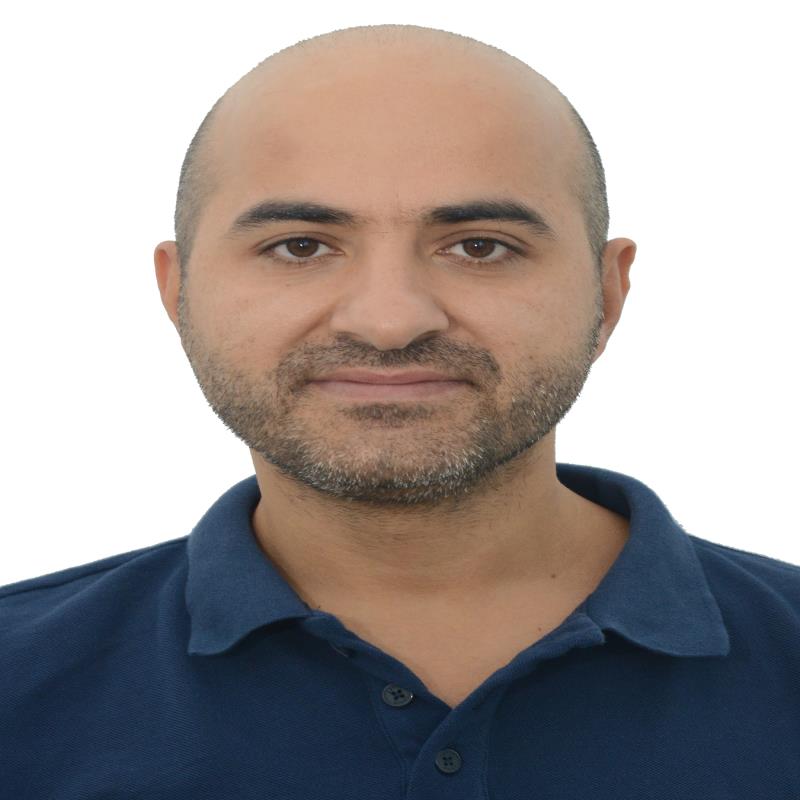
Gül GÜLER is an academic researcher specializing in educational measurement and psychometrics. Holding a doctoral degree, her work focuses on scale development, factor analysis, and educational technology. Bachelor's Degree (2008) Master's Degree (2012) Doctoral Degree (2017) Her research interests include: Educational measurement and assessment design Psychometric evaluation of scales Factor analysis in skewed distributions Collaborative learning tools for gifted students Teacher education and professional identity Dimensionality analysis in educational testing Key publications examine wording effects in scales, reliability testing, and bibliometric trends in educational research. She has contributed to projects like the TÜBİTAK 4004 science outreach initiative and Istanbul Governorship's life skills training program.
Prof. Dr. Gülin Feryal Ural is a Professor of Industrial Engineering at Baskent University's Faculty of Engineering. With a PhD in Industrial Engineering from Kocaeli University (2013), she has established herself as a prominent researcher in ergonomics, risk assessment, and multi-criteria decision making. Her academic journey includes a Master's in Business Administration (2006) and BSc in Industrial Engineering (2004), both from Kocaeli University. Dr. Ural's educational background is deeply rooted in Industrial Engineering, with a PhD from Kocaeli University in 2013, followed by a Master's degree in Business Administration in 2006 and her undergraduate degree in Industrial Engineering in 2004, all from the same institution. This strong foundation has enabled her to bridge theoretical knowledge with practical applications in her research and teaching. Her research interests span multiple domains within Industrial Engineering, with a strong focus on Ergonomics and Human Factors Management , Risk Assessment and Management , and Multi-Criteria Decision Making methodologies. Dr. Ural has pioneered approaches integrating various decision-making techniques like KEMIRA-M, DEMATEL, and Entropy methods to address complex problems in occupational safety, usability evaluation, and production systems. Her work often bridges theoretical frameworks with practical industrial applications, particularly in healthcare, manufacturing, and educational settings. Analysis of Dr. Ural's extensive publication record reveals a clear trajectory toward increasingly sophisticated risk assessment methodologies and ergonomics applications. She has consistently advanced the integration of multiple decision-making techniques to create holistic assessment frameworks. Her research shows particular strength in adapting these methods to specific industry contexts, from healthcare to manufacturing, and increasingly incorporating machine learning approaches for risk prediction. The interdisciplinary nature of her work is evident in publications spanning engineering, healthcare management, and educational research domains. Dr. Ural has actively contributed to academic service through editorial roles, including membership on the editorial board of the International Journal of Intelligent Computing and Cybernetics and serving as an editor for the International Journal of Lean Six Sigma since 2023. Her teaching portfolio is extensive and reflects her research expertise, covering courses such as Ergonomics and Human Factors Management, Work Study, Lean Production, Occupational Health and Safety, Risk Analysis and Risk Management, and Special Topics in Industrial Engineering. This comprehensive teaching approach ensures her students receive both theoretical foundations and practical applications of Industrial Engineering principles.
Ahmet Burak ŞENÖZ serves as a Researcher at Sakarya University's Faculty of Education, Department of Mathematics and Science Education, holding a Research Assistant position since 2019. His academic qualifications include: Doctorate in Science Education, Sakarya University (2019-2022) Master of Arts in Science Education, Sakarya University (2019-2022) Master of Arts in Science Teaching, Marmara University (2018-2019) Licence in Science Teaching (English), Bogazici University (2010-2018) ŞENÖZ's research centers on Science Education with specialized expertise in Chemistry Education and STEAM pedagogy. He investigates flow theory applications, situational engagement dynamics, and optimal learning moment identification within laboratory environments, aiming to enhance student experiences through evidence-based instructional design. His publication portfolio reveals consistent focus on chemistry laboratory education, employing mixed-methods approaches to examine engagement scales, procedural error recognition, and metaphorical student perceptions. Key trends include cross-cultural instrument adaptation and qualitative analysis of pre-service teacher experiences. No scientific awards, grant funding, student advisement records, or laboratory team affiliations were documented in the source materials.
İlkay Öksüz is an Associate Professor in the Department of Computer Engineering at Istanbul Technical University (ITU), where he has been serving since 2021, following his appointment as a Doctoral Academic Staff member in 2020. He previously held research positions at King's College London (2017–2020), The University of Edinburgh (2016), and Yale University (2015–2016). He earned his Ph.D. in Computer, Decision and Systems Science from IMT School for Advanced Studies Lucca, Italy, in 2017, under the supervision of Prof. Sotirios Tsaftaris. B.Sc. in Electronics Engineering, Istanbul Technical University (2010) M.Sc. in Electrical-Electronics Engineering, Bahçeşehir University (2013) Ph.D. in Computer, Decision and Systems Science, IMT School for Advanced Studies Lucca (2017) His research focuses on medical image analysis, particularly in cardiac MRI, with core interests in image segmentation, registration, quality assessment, and reconstruction using deep learning. He also explores electricity price forecasting and explainable AI. His work bridges machine learning with clinical applications, aiming to improve diagnostic accuracy and automation in radiology. The 15 most recent publications highlight a strong trend in applying deep learning to medical imaging, especially cardiac and prostate MRI, mammography, and ECG analysis. A significant emphasis is placed on explainability , optimization , and clinical applicability , with frequent participation in MICCAI challenges and collaborations with radiology departments. Projects also extend into energy forecasting, showing interdisciplinary versatility. Scientific awards include: 2024 ITU Young Scientist Award in Engineering 2024 Parlar Research Incentive Award He leads the Predictive Intelligence and Medical Imaging (PIMI) Lab at ITU, mentoring graduate students and managing multiple funded projects, including the TUBITAK International Fellowship. His lab has achieved top placements in national and international AI competitions such as Teknofest and MICCAI challenges. He serves as principal investigator (PI) on several active grants focused on interpretable deep learning for medical imaging and electricity forecasting. The PIMI Lab, under his leadership, actively participates in high-impact medical AI challenges and has consistently achieved top rankings in competitions related to prostate cancer detection, breast imaging, and cardiac MRI reconstruction, demonstrating strong translational research impact.
Murat Üçüncü is an Associate Professor in the Department of Electrical and Electronics Engineering at Başkent University . He holds a PhD (1989), MSc (1985), and BSc (1983) from Boğaziçi University, and an additional BSc from Kara Harp Okulu (1980). His academic career spans over 35 years, with a focus on RF systems, control theory, and defense technologies. PhD, Boğaziçi University (1989) MSc, Boğaziçi University (1985) BSc, Boğaziçi University (1983) BSc, Kara Harp Okulu (1980) His research interests include RF power amplifier design, MEMS-IMU systems, underwater communication, and graph signal processing for automotive RADAR. Recent work emphasizes adaptive Kalman filtering, avionics network simulations, and autonomous systems for UAVs. Key article trends show expertise in RF circuit optimization , Kalman filter adaptation , and graph-based classification algorithms . No scientific awards are mentioned in the provided data. Advised 21+ students in areas spanning control systems, avionics, and defense technologies Led projects on shaped charges, underwater communication systems, and avionics networks
Assoc. Prof. Vedat Halıtoğlu is a faculty member at the Department of Turkish and Social Sciences Education, Faculty of Education, Erciyes University. He holds a B.Ed. from Yuzuncu Yil University (2004), MA in Turkish Education from Erciyes University (2012), and PhD in Turkish Education from the same institution (2017). His postdoctoral research (2021-2024) was conducted at the Georgia State University's Center for Transnational and Multilingual Education. His research focuses on Turkish language education methodologies, multilingualism in diaspora communities, and innovative pedagogical approaches like flipped classrooms and Web Adventure methods. He has published extensively on topics such as bilingual student writing errors, technology integration in language teaching, and curriculum alignment. Halıtoğlu has co-authored books including Activity-Based Teaching Turkish as a Foreign Language (2021) and edited volumes on academic Turkish textbooks for international students. He led projects funded by the EU and Turkish Ministry of Education, including initiatives supporting Syrian children's integration into Turkish schools and developing academic Turkish textbooks for non-native learners.
Ali Emre Pusane is a Professor of Electrical and Electronics Engineering at Bogazici University, Turkey. He holds a PhD in Electrical Engineering from the University of Notre Dame (2008) and has been faculty since 2009. His research focuses on digital communications, information theory, and coding theory, with particular emphasis on molecular communication, radar signal processing, and low-complexity embedded designs. He leads the Bogazici University Signal Analysis Research Group (BUSARG), addressing challenges in communication signal analysis and prototyping. Education: B.Sc. and M.Sc. in Electronics and Communications Engineering, Istanbul Technical University (1999, 2002) M.Sc. in Electrical Engineering and Applied Mathematics, University of Notre Dame (2004, 2006) Ph.D. in Electrical Engineering, University of Notre Dame (2008) Research Interests: His work spans waveform design, machine learning-aided signal analysis, and nanoscale communication systems. Recent projects include molecular beamforming, RIS-assisted wireless systems, and LDPC-coded molecular communications. He also advises on R&D for national and international organizations. Teaching: He teaches courses like EE 242 (Numerical Methods for EE), EE 644 (Error Control Coding), and advanced communication engineering topics at Bogazici University. Feedback from students highlights his dedication to sophomore/junior-level education. Affiliations: Senior Member of IEEE, former associate editor for IEEE Transactions on Communications. Engaged with BUSARG in developing prototypes for physical layer security and molecular communication systems.
Cihan Bayındır is an Associate Professor at Istanbul Technical University's Faculty of Civil Engineering, Department of Civil Engineering, specializing in fluid mechanics, coastal engineering, and computational methods. His research integrates advanced mathematical techniques with practical engineering applications across multiple disciplines. His primary research areas include Fluid Mechanics, Coastal Sciences and Engineering, Numerical Modeling, Fluid Physics, Acoustics and Vibrations, Nonlinear Dynamics, and Quantum Hydrodynamics. Bayındır's work demonstrates a strong interdisciplinary approach, bridging traditional civil engineering with cutting-edge computational methods and quantum phenomena. His research has significant applications in coastal protection, renewable energy systems, disaster management, and infrastructure resilience. Analysis of his recent publications reveals a clear trend toward applying artificial intelligence and machine learning techniques to traditional civil engineering challenges. His work increasingly focuses on using compressive sensing, deep learning (particularly LSTM networks), and fuzzy logic systems to solve complex problems in wave dynamics, vibration analysis, and tsunami prediction. The integration of quantum computing concepts with classical fluid mechanics represents another distinctive aspect of his research portfolio. ITU Doctoral Special Award-2024-Advisor (2025) ITU 2023 Academic Performance Award (2024) Turkish Academy of Sciences (TUBA) Outstanding Young Scientist Award (GEBİP) (2022) Elsevier Frontiers Article Award (2020) Kaleidoscope Award (American Physical Society, 2016) Bayındır leads multiple research projects funded by ITU's Scientific Research Projects Unit (BAP), including studies on dam break wave propagation using fractional equations, optimization of wave energy concentrators with AI methods, and three-dimensional vibration control in marine structures. His work involves collaborations with international institutions, including previous engagement with CERN on accelerator design. He maintains an active research laboratory focused on hydraulics and coastal engineering, with specialized equipment for wave and vibration analysis in the Hydraulics Laboratory HL 216 at ITU.
Dr. Durdane YILMAZ GÜVEN is an Assistant Professor in the Department of Surgical Diseases Nursing at Karabük University's Faculty of Health Sciences. She holds concurrent roles as Head of the Nursing Department, Director of Vocational School, and Coordinator of Scientific Research Projects. Her academic journey includes a Doctorate from Gazi University (2018) and a Master's from Atatürk University (2013). Education: Doctorate: Gazi University (2014–2018) – Dissertation on 'The Effect of Foot Reflexology in Knee Arthroplasty Patients' Master's: Atatürk University (2011–2013) – Thesis on 'CPR Training Impact on Nurses' Bachelor's: Ordu University (2006–2010) – Nursing Research Focus: Surgical nursing practices, postoperative care, pain management, patient satisfaction, health literacy, and virtual reality in healthcare education. Her work emphasizes evidence-based interventions in critical care, infection control, and complementary therapies. Recent Article Trends: Recent publications address reflexology in orthopedic patients, pressure injury prevention in intensive care, and nursing workforce well-being during the pandemic. Her VR-based pain management study highlights innovative education strategies. Awards: 2024 Project Excellence Award from Karabük University for research on postoperative care interventions. Advising & Grants: Supervised 9 graduate theses (e.g., music therapy for burn patients, VR in geriatric care). Active in 13 research projects including a VR-based emergency training initiative and AI-driven pressure ulcer prediction systems. Labs/Teams: Leads the Nursing Education Innovation Lab at Karabük University, focusing on digital tools and simulation-based training for healthcare professionals.
Dr. Ahmet Kesmez is an Assistant Professor at Bingöl University's Faculty of Arts and Sciences, Department of English Language and Literature. He holds a PhD in English Language Teaching from Atatürk University's Institute of Educational Sciences (2020), preceded by an MA in English Linguistics (Atatürk University, 2013) and a BA in English Language and Literature (Yüzüncü Yıl University, 2010). His academic career includes roles as a Research Assistant at Bingöl and Atatürk Universities (2010-2012), Lecturer at Bingöl University (2014-2023), and his current position since 2023. His research focuses on sociolinguistics, language revitalization, bilingualism, and applied linguistics, with emphasis on endangered languages like Zazaki. He investigates technology's role in language preservation, EFL pedagogy, and L1 interference in second language acquisition. Recently, he has explored AI-driven solutions for revitalizing endangered languages and EFL learners' perceptions of digital tools. He teaches courses such as Linguistics I, Semantics I, and Speech I. Despite no listed awards, his work bridges theoretical linguistics with practical educational challenges, particularly in multilingual contexts. No specific grants, labs, or teams are mentioned in the provided data.
Orhan Akyılmaz serves as a Professor in the Department of Geomatics Engineering at Istanbul Technical University, Turkey, with continuous research activity since 2004. His work bridges geodetic science with environmental monitoring through satellite gravity missions and advanced computational methods. His research focuses on satellite gravity field modeling (GRACE/GRACE-FO missions), machine learning applications for hydrological monitoring, and geodetic algorithm development . Key contributions include deep learning-aided temporal downscaling of water storage data, high-resolution gravity field products, and optimized topographic correction algorithms using digital elevation models. His fingerprint reveals strong expertise in Fuzzy Inference Systems (100%), Earth Rotation Parameters (72%), and Quaternion-based transformations (66%). Recent publications (2022-2024) demonstrate a pronounced trend toward integrating deep learning with satellite geodesy to address water resource challenges, particularly in groundwater monitoring and gap-filling between satellite missions. His work consistently targets practical environmental applications while advancing computational geodesy. Scientific recognition includes: TUJK Bilim Ödülü (Science Award) from the Turkish National Union of Chambers of Survey Engineers (2011) He secured TÜBİTAK funding (2020-2023) for the project "Grace ve Çoklu-Görev Uydu Uzaktan Algılama Verileri ile Yüksek Çözünürlüklü Yeraltı Su Bütçesi İzleme Sistemi" (High-Resolution Underground Water Budget Monitoring System). His supervised work encompasses 8 students, though specific names aren't provided in source materials.
Assoc. Prof. Mevlüt Gülmez is a faculty member at Akdeniz University, Faculty of Education, Turkish and Social Sciences Education Department . He holds a Doctorate in New Turkish Language from Selçuk University (2013) and has been actively contributing to Turkish language education since 2000. 2007-2013: Doctorate in New Turkish Language, Selçuk University 2000-2004: Postgraduate in Turkish Language and Literature, Selçuk University 1996-2000: Undergraduate in Turkish Language and Literature, Selçuk University His research focuses on Language Pedagogy, Philology, and Turkish Language History , with significant work on: Textbook Analysis through Bloom's Taxonomy Augmented Reality Applications in Reading Comprehension Second Language Acquisition for Turkish Historical Linguistics of Turkish Disability-Inclusive Language Education Comparative Dialect Studies Recent publications include studies on 2024 AR-based Reading Comprehension , 2023 Derebucak Folk Healing Practices , and 2022 Argumentation Pedagogy . He has supervised 11 graduate theses and participated in 4 funded projects related to international student mobility and dialect documentation.
Prof. Dr. Remzi CAN is a full-time Professor at the Faculty of Education , Kırşehir Ahi Evran University , Turkey. He has held academic positions since 2002, including Assistant Professor (2012-2018) and Associate Professor (2018-2024) at the same institution. Education: PhD in Turkish and Social Sciences Education (2007-2012), Gazi University MA in Turkish and Social Sciences Education (2003-2006), Gazi University BA in Turkish Language Teaching (1998-2002), Gazi University Research Interests: His work focuses on Turkish language instruction, literary analysis, reading comprehension, and writing skill development. Key areas include the impact of audiobooks/podcasts on literacy, paragraph cohesion in second-language learners, and curriculum design for creative writing. Scientific Missions: Acted as principal investigator for projects like "Improving Reading Skills through Youth Novels" (2012-2014) and "Cohesion Awareness in Reading Comprehension" (2014-2015). Collaborates frequently with academics such as Dr. Devrim Murat Güzelküçük and Dr. Ali Kıribiş. Publications & Editorial Roles: Over 40 publications, including co-edited volumes like Türkçeyi Yabancı Dil Olarak Öğrenenlerin Duygusal Zekâ Düzeyleri (2024). Served as editor for the Ahi Evran University Journal of Social Sciences Institute (2017).
Fatma KİMSESİZ is a lecturer in the Department of Foreign Language Education at the Faculty of Education, Kirsehir Ahi Evran University. She holds a PhD in English Language Education from Atatürk University (2017) and has over 15 years of experience in EFL instruction and curriculum development. PhD: English Language Education (Atatürk University, 2014-2017) MSc: English Language Education (Atatürk University, 2009-2012) BA: English Language Education (Atatürk University, 2003-2007) Her research focuses on digital language learning tools, vocabulary acquisition strategies, intercultural communication in language education, and comparative analysis of translation accuracy. She has published extensively on topics including: Digital mind mapping techniques Infographic-based grammar instruction Project-based learning (PBL) Authentic material implementation Proverb equivalence analysis Rebus storytelling applications Key trends in her publications show increasing emphasis on technology-integrated language pedagogy, with 2023-2024 works focusing on digital storytelling, vlog-based intercultural learning, and AI translation comparisons. Scientific Recognition: 2211 Domestic Doctorate Scholarship from TÜBİTAK (2014) She currently serves as Department Head at Kirsehir Ahi Evran University while maintaining active teaching roles in both undergraduate and preparatory programs.
Solmaz Damla Gedik is a researcher affiliated with Nevşehir Hacı Bektaş Veli University , focusing on mathematics education and error-based learning strategies. Her work spans both theoretical and practical dimensions, including the adaptation of assessment tools like the Mistake-Handling Questionnaire to Turkish contexts. Her research investigates how pre-service mathematics teachers address common student misconceptions in topics such as exponential numbers, square roots, and Euclidean geometry. She also explores the relationship between mathematical self-efficacy, error-handling practices, and anxiety in secondary school students. Recent publications highlight her interest in integrating topology into geometry education and analyzing the impact of error-handling activities on classroom practices. While no formal awards or grants are explicitly mentioned, her collaborative work with scholars like Alper Cihan Konyalıoğlu and Zeki Aksu underscores her active role in educational research.