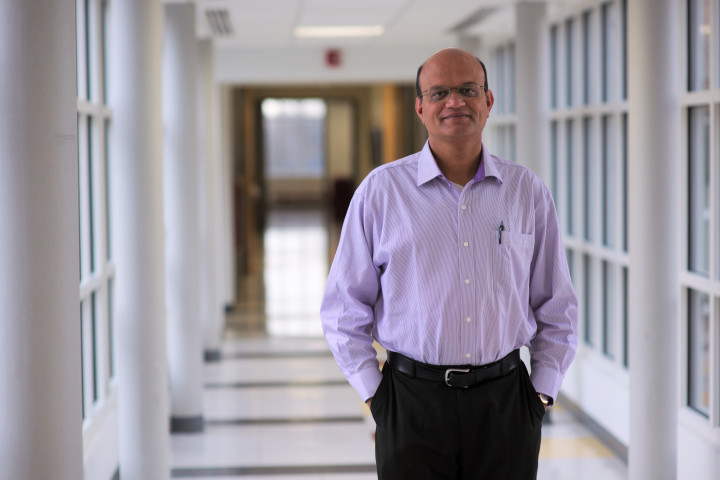
Ajit Mishra is a Professor and Head of Department in the Department of Economics at the University of Bath. His research focuses on governance, corruption, inequality, vulnerability, and poverty within development economics. He employs theoretical, empirical, and experimental methods to address systemic issues in corruption control and poverty measurement. Key research areas include the conceptualization of vulnerability, the impact of inequality on economic systems, and the design of anti-corruption mechanisms. He has contributed to UN Sustainable Development Goals related to poverty eradication (SDG 1) and reduced inequalities (SDG 10). His work bridges microeconomic theory with practical policy implications, particularly in informal economies and public sector governance. Notable projects include the ESRC-funded workshop on Resilience and Vulnerability (2024) and a British Academy study on bribery experiments (2016–2018). His teaching portfolio includes development economics and microeconomic theory, with a developing focus on law and economics. Publications span topics such as corruption dynamics, vulnerability frameworks, and gender inequality in organizational hierarchies. His interdisciplinary approach integrates economics with political science and social policy, addressing real-world challenges in governance and equitable development.
Dr. Julia Tomei is an Associate Professor at the Bartlett School of Environment, Energy, and Resources at University College London (UCL), where she has been since 2010. She serves as Deputy Director of UCL's Institute for Sustainable Resources (ISR) and co-leads a research theme on energy access and resource use in developing countries. Her work focuses on the social, political, and livelihood dimensions of energy and resources in low- and middle-income countries (LMICs), emphasizing equitable partnerships with local stakeholders. Education: BSc Biology, University of Leeds (2002) MSc Environmental Technology, Imperial College London (2005) PhD, University College London (2014) Research Interests: Dr. Tomei's research integrates human geography, development studies, and natural resource management to address challenges such as climate-compatible growth, energy equity, and sustainable development goals (SDGs 1, 5, 7, 13, 15). She explores policy pathways for clean energy transitions, data governance in energy planning, and the political economy of energy systems in LMICs. Grants & Collaborations: She leads the policy pathways workstream for the Climate Compatible Growth (CCG) programme, a £95M initiative funded by the UK's FCDO. Her work also involves collaborations with global researchers, policymakers, and civil society organizations to ensure context-relevant solutions. Awards: Fellow of the Higher Education Academy (HEA), 2019 Labs/Teams: Her research is anchored at the UCL Institute for Sustainable Resources (ISR), where she fosters interdisciplinary approaches to global sustainability challenges.
Dr. Gary T. Green serves as Assistant Dean of Academic Affairs and Professor in the Department of Natural Resources, Recreation and Tourism Management at the University of Georgia's Warnell School of Forestry and Natural Resources. His academic career spans over 25 years, with a focus on outdoor recreation management, environmental education, and the human dimensions of natural resource use. Education: Ed.D. in Recreation and Leisure Studies (Administration), University of Georgia, 2000 M.Ed. in Sport Management, University of Georgia, 1994 Research Interests: Dr. Green’s work explores park management, youth engagement in outdoor activities, and the socio-cultural dimensions of recreation. He emphasizes equitable access to natural spaces, particularly for underrepresented groups. His studies often combine quantitative analysis with participatory methods, addressing topics like wilderness stewardship, ecotourism sustainability, and the impacts of urbanization on recreation patterns. Article Trends: Recent publications (2015–2020) highlight concerns about visitor behavior in state parks, the role of art-based education in fostering environmental awareness, and the socio-economic effects of park fee policies. His work increasingly intersects with public health, linking green space access to obesity prevention and youth development. Awards: A recipient of the Josiah Meigs Distinguished Teaching Professorship (2019), he has been honored repeatedly for innovative teaching and mentoring. His leadership roles include Chair of UGA’s Teaching Academy and membership in the Tr-Alpha Honor Society. Advising & Grants: Supervised over 20 student researchers, including projects on wildlife conservation messaging, diversity in outdoor recreation, and camp program efficacy. Collaborative grants focus on environmental literacy and community-based natural resource management. Labs/Teams: Leads the Outdoor Recreation and Human Dimensions Lab , emphasizing interdisciplinary approaches to education and policy. Active in the UGA Service-Learning Program and Swimming & Diving mentorship initiatives.
Robert Hampshire is an Associate Professor at the University of Michigan, holding dual appointments in the Gerald R. Ford School of Public Policy and the Department of Industrial and Operations Engineering within the College of Engineering. His research focuses on applying operations research, data science, and systems analysis to public and private service industries, with a particular emphasis on emerging mobility systems and networked industries. Key areas include smart parking, autonomous vehicles, ride-hailing, bike-sharing, and equitable transportation policy. His work combines queueing theory, stochastic modeling, and dynamic optimization to address real-world challenges such as congestion reduction, resource allocation, and policy design. He collaborates with both public sector entities and private companies to ensure practical impact. Notable contributions include analyzing parking search behavior, optimizing on-demand transportation networks, and evaluating equitable access to mobility services. Dr. Hampshire has received grants such as the NSF CAREER Award (2014) for research on smart mobility services and has contributed to scalable risk assessment methods for pedestrians and bicyclists. His research methodologies span data integration, machine learning, and mathematical modeling, with applications in economics, engineering, and social science domains. His advisory and grant work includes collaborations on teleoperation systems for autonomous vehicles, parking pricing experiments in San Francisco, and analyzing the re-entry of ride-sourcing services in Austin, Texas. He leads initiatives to bridge academic research with industrial and governmental partners, emphasizing reproducibility and rigor in data-driven decision-making.
Adriana Alejandra Zuniga is an Assistant Professor at the University of Arizona's School of Geography, Development & Environment and the Udall Center for Studies in Public Policy. She holds a PhD in Arid Lands Resource Sciences, an MArch in Design and Energy Conservation, and a BArch from ITESM. Her research focuses on water security, urban resilience, and environmental justice, emphasizing greenspace and green infrastructure in arid regions. She collaborates with communities to address transboundary water challenges, particularly along the U.S.-Mexico border. Education : PhD in Arid Lands Resource Sciences, University of Arizona M.S. in Architecture - Design and Energy Conservation, University of Arizona B.Arch, Monterrey Institute of Technology and Higher Education Research Interests : Adriana combines knowledge-building with real-world problem-solving, centering on water security, urban resilience, and greenspace equity. She explores how walkability and green infrastructure enhance public health and social justice in arid cities. Her work bridges urban planning, environmental science, and policy, with a focus on transboundary governance and climate adaptation. Key Contributions : Her recent work includes analyzing flood vulnerability among border children, evaluating cross-border sanitation projects, and developing frameworks for socio-environmental justice in urban water governance. She has also contributed to net-zero water systems and green infrastructure resilience. Awards : 2023: Poster Award, Udall Center 2022: Travel Award, Center for Latin American Studies 2021: Nominee for Diversity Leadership Award 2020: Best Paper Award for Water International Teaching : Teaches courses on sustainability, urban growth, and placemaking. Recent courses include Urban Growth & Development, Global Cities, and Sustainable Urban Design.
Katarina Andersson is an Associate Professor and Senior Lecturer in Social Work at Umeå University's Department of Social Work. She leads the research profile 'Age, Ageing and Social Welfare' and holds a Docent qualification. Her work focuses on eldercare systems, dignity in nighttime care, welfare technology, and policy governance. Key affiliations include the Eldercare, Ageing, and Social Vulnerability research group and projects such as 'CollAge' (2022–2027) analyzing aging populations and 'Dignity 24 Hours a Day' (2016–2018) addressing nighttime care challenges. Research interests span aging societal impacts, technology integration in care systems, and ethical dimensions of intimate caregiving. Notable projects include evaluating state supervision mechanisms in eldercare (2013–2017) and investigating gender dynamics among care workers (2010–2013). Publications emphasize care quality, policy efficacy, and worker-patient interactions. She has contributed to understanding pandemic-era care adaptations and the role of dignity in eldercare delivery. Current work integrates digitalization trends with infrastructural design for equitable care environments.
Dominique Baker is an Associate Professor at the University of Delaware , holding a joint appointment in the College of Education and Human Development’s School of Education and the Joseph R. Biden, Jr. School of Public Policy and Administration . She is also a Cochran Scholar of Inclusive Excellence, recognizing her commitment to equity and inclusivity in academia. Educational Background: Ph.D. in Leadership and Policy Studies (Higher Education concentration), Vanderbilt University (2016) M.Ed. in Student Affairs Practice in Higher Education, University of Virginia (2012) B.A. in Psychology, University of Virginia (2008) Research Focus: Dr. Baker investigates how education policies impact access and success for minoritized students in higher education, particularly in areas like student financial aid , test-optional admissions , and campus climate equity . She emphasizes racial justice and systemic barriers to educational attainment. Media and Public Engagement: Her work has been featured in The New York Times , The Atlantic , and NPR , and she has testified before the U.S. Senate on race and student loans. She serves on the National Academies’ Board on Higher Education and Workforce. Grants and Funding: "To Borrow a Phrase": NAEd/Spencer Foundation ($70,000) Russel Sage Foundation Pipeline Grant ($30,000) Bill & Melinda Gates Foundation Grant ($1.4M) Advising and Mentorship: While no specific students are listed, her research often involves collaborative teams addressing policy advocacy and equity initiatives. Labs/Teams: Her work intersects with interdisciplinary teams at the University of Delaware’s Data Science Institute and policy networks at the National Academies.
Brian E. Robinson is an Associate Professor in the Department of Geography at McGill University, affiliated with the Bieler School on the Environment. His research focuses on the intersection of ecosystems, human livelihoods, and policy, particularly in developing regions. He holds a PhD from the University of Wisconsin-Madison (2011) and advanced degrees from MIT and Georgia Tech. His work employs methods from environmental economics, ecology, and geographic information sciences to address policy-relevant questions. His current research includes projects on ecosystem services, land tenure security, and equitable urban development. Notable initiatives include ResNet (Sustainable & Resilient Ecosystems for Canada) and studies on natural climate solutions' co-benefits. He advises four PhD/MSc students and collaborates globally on topics like locust outbreaks and household energy transitions in China and Ghana. His lab emphasizes inclusive science practices and interdisciplinary approaches. Education: PhD, Environment & Resources, University of Wisconsin-Madison (2011) MEng, Water Resources, MIT (2005) MCP, Environmental Policy & Planning, MIT (2005) BSc, Earth & Atmospheric Sciences, Georgia Tech (1999) Research Highlights: Integrates land systems science with policy analysis to explore how institutions mediate human-environment relationships. Current projects assess ecosystem service distribution, tenure security impacts, and urban health equity through transdisciplinary partnerships. Labs/Teams: Leads the Ecosystem Policy & People group, collaborating with global networks on projects like Beijing Household Energy Transitions and Pathways to Equitable Healthy Cities.
Joseph Wong is a Professor in the Department of Political Science and Vice-President, International at the University of Toronto. He holds affiliations with the Munk School of Global Affairs & Public Policy, Trinity College, and leads initiatives like the Munk One program and The Reach Alliance. His research focuses on comparative public policy, political economy, and developmental states in Asia, with notable work on democratization, welfare politics, and universal health coverage. Wong has authored influential books such as From Development to Democracy and Healthy Democracies , and contributes to global policy discourse through projects addressing poverty, innovation, and development. Wong previously directed the Asian Institute (2005–2014) and held the Canada Research Chair in Democratization, Health, and Development. His teaching includes courses on democracy, comparative politics, and global innovation governance. He has been recognized with the University’s Outstanding Teaching Award (2013) and oversees initiatives like the Global Ideas Institute and partnerships with institutions such as Howard University. His scholarship bridges academic rigor with practical policy solutions, emphasizing equitable access to healthcare, technology-driven social benefits, and knowledge exchange between high- and low-income countries. Recent work examines pandemic responses in Asia and the political dynamics of health systems in low-resource settings.
Felix Fajardo Magraner is an academic affiliated with the Department of Geography at the Faculty of Geography and History, University of Valencia. He is a member of the Inter-university Institute for Local Development (IIDL) and the research group INNODES, which focuses on Innovation and Local Development. His primary academic role is as an Assistant Professor (Ayudante Doctor), reflecting his early-career faculty status following the completion of his doctoral studies. His research interests center on Human Geography , with a focus on accessibility to public services , particularly early childhood education. His work integrates spatial analysis and urban planning to assess equitable distribution of public resources. Additional areas of interest include local development, education geography, and spatial inequality. Although no recent publications are listed in the provided text, his research trajectory suggests a strong orientation toward applied geographical methods in urban and social policy contexts. His doctoral work exemplifies this applied focus. Scientific Awards: No awards listed in the provided text. Advising and Grants: Dr. Fajardo completed his PhD under the supervision of Dr. Julia Salom Carrasco and Dr. María Dolores Pitarch Garrido. While no current advisees or grant funding are mentioned, his involvement with the INNODES research group indicates active participation in collaborative research projects related to local development and innovation. Labs and Teams: He is an active member of the INNODES research group and affiliated with the Inter-university Institute for Local Development (IIDL) , both of which promote interdisciplinary research on regional and urban development challenges.
Tsung-Ting Kuo is an Associate Professor in Biomedical Informatics & Data Science and Surgery at Yale School of Medicine. His primary appointment is in Biomedical Informatics & Data Science with a secondary role in Surgery. He holds adjunct affiliations with the Computational Biology and Biomedical Informatics program and the Yale Combined Program in the Biological and Biomedical Sciences (BBS). Education & Training PhD, National Taiwan University (2014), Institute of Networking and Multimedia Postdoctoral Scholar, University of California San Diego (2019) Research Focus Kuo's work centers on blockchain-based healthcare systems , distributed private modeling , and AI applications in biomedical data . He develops secure frameworks for cross-institutional data sharing, focusing on privacy preservation and robustness through decentralized technologies. Key areas include federated learning, clinical data interoperability, and genomic data security. Publications & Trends Recent work emphasizes privacy-preserving prediction models (e.g., C. difficile infection prediction) and blockchain solutions for consent management and research collaboration. His methods address challenges in equitable federated learning and model integrity across healthcare networks. Awards & Recognition NIH R01 Grant for blockchain-based healthcare research 2020 Faculty of the Year (UCSD) UCSD Chancellor’s Outstanding Postdoctoral Scholar Award Grants & Teams Active NIH funding supports projects in secure federated learning and blockchain applications. Collaborates with clinical teams at Yale New Haven Hospital and multi-institutional networks in California. Leads the Yale Biomedical Informatics & Computing (YBIC) initiative. Labs & Innovations Develops tools like WebQuorumChain (collaborative healthcare modeling framework) and ModelChain (decentralized predictive modeling system). Involved in Yale’s efforts to integrate blockchain into clinical research workflows.
Charles Rickert, MD, PhD is an Assistant Professor in the School of Medicine at the University of California, San Francisco (UCSF). A transplant surgeon specializing in general surgery and transplant surgery , he completed his M.D./Ph.D. at Washington University in St. Louis (2014) and a fellowship in Transplant Surgery at UCSF (2023). Ph.D. in Immunology Internship and Residency at Massachusetts General Hospital His research focuses on transplant immunology , sustainable xenotransplantation systems , and healthcare equity . He has pioneered studies on: Immune regulatory cells (T cells and B cells) in allograft tolerance Genetic modifications affecting porcine allograft survival Equitable distribution of transplant resources Implicit bias reduction in surgical departments Key article trends reveal expertise in transplantation , immunological tolerance , and health disparities . Among his scientific awards : Phi Beta Kappa Academic Honors (2003) Samson F. Wennerman Prize in Surgery (2014) Robert Linton Research Fellowship (2017) American Association for the Study of Liver Diseases Emerging Liver Scholar (2018) Sherilyn Gordon Memorial Travel Grant (2019) Dean's Community Service Award (2019) Dr. Rickert's community engagement includes: Organizing implicit bias programming Providing informal teaching to medical students Receiving the MGH Resident Teaching Award
Professor Rachael Salcido is a leading scholar in environmental and natural resources law at Pacific University School of Law. As Director of the Water and Environmental Certificate of Concentration, she specializes in ocean governance, climate change policy, ecosystem restoration, and environmental justice. Her expertise spans domestic, comparative, and international law frameworks. Research Focus: Professor Salcido’s work addresses the legal challenges of harmonizing human activity with ecological conservation. She explores intersections between renewable energy development and environmental protection, critiques international environmental impact assessments, and investigates integrative ocean governance through property law. Her scholarship emphasizes the central role of environmental law in sustainable community development. Scientific Contributions: Her publications highlight tensions between climate action and regulatory inertia, the complexities of ocean energy projects, and the evolution of environmental justice frameworks. Recent articles examine climate change adaptation, marine policy, and grassroots restoration initiatives. Professional Engagement: Professor Salcido co-authored the textbook Global Issues in Environmental Law , serves as treasurer for the Rocky Mountain Mineral Law Foundation, and has taught international environmental law courses in Guatemala. She organized the 2015 Global Center Symposium on property rights and species protection beyond national jurisdiction.
Rad Niazadeh is an Associate Professor of Operations Management at the University of Chicago Booth School of Business and holds a courtesy appointment at the Toyota Technological Institute at Chicago (TTIC) . He previously served as a visiting researcher at Google Research NYC and a Motwani postdoctoral fellow at Stanford University's Computer Science Department. He earned his PhD in Computer Science (with a minor in Applied Mathematics) from Cornell University. Research Interests: Focus on data-driven online decision-making and algorithmic mechanism design for platforms and non-profit operations. Key areas include fair resource allocation, dynamic matching algorithms, and socially-aware AI. Recent Publications: 15+ works on topics spanning online algorithms (e.g., refugee resettlement, reusable resource matching), fairness in AI (e.g., equity-constrained search), and market design (e.g., pricing with cancellations, combinatorial Bernoulli factories). Scientific Awards: Recipient of the Asness Junior Faculty Fellowship (2023), multiple INFORMS Rothkopf Junior Researcher Prizes , and IJCAI Distinguished Paper Award (2024). His co-authored works have won best paper honors at INFORMS and MSOM. Advising: Mentoring PhD students Mohammad Reza Aminian (awarded INFORMS Service Science Best Student Paper), Soonbong Lee (INFORMS AMD First Place), and Yueyang Zhong . Collaborates with principal researchers Yiding Feng and Pranav Nuti .
Aravind Srinivasan is a Distinguished University Professor and Professor of Computer Science at the University of Maryland, College Park, with additional appointments in UMIACS (University of Maryland Institute for Advanced Computer Studies) and AMSC (Applied Mathematics & Scientific Computation). He is an Amazon Scholar since 2019, applying his expertise in algorithms to cloud computing challenges at AWS. Dr. Srinivasan earned his B.Tech in Computer Science & Engineering from IIT Madras (1989) under Prof. C. Pandu Rangan, followed by a Ph.D. in Computer Science from Cornell University (1993) under Prof. David B. Shmoys. He completed postdoctoral work at the Institute for Advanced Study (Princeton) and DIMACS (Rutgers) from 1993-94. His research spans algorithms, probabilistic methods, data science, network science, and machine learning , with applications across multiple domains. He has pioneered work at the intersection of algorithms and AI, focusing on interpretability and explainability. His research in health includes computational epidemiology, cancer genomics, pharmacology, organ exchange, and medical devices. In the Internet economy, he works on E-commerce, digital marketing, cloud optimization, crowdsourcing, and social networks. He is a leading researcher in algorithmic fairness, developing methods to systematically incorporate probabilistic, per-user/demographic fairness in AI systems. His work also extends to networking algorithms, distributed computing, and sustainable growth applications including energy networks. His recent publications reveal a strong trend toward integrating algorithmic fairness with practical applications in healthcare, resource allocation, and sustainability. The research shows increasing focus on probabilistic methods for fair decision-making in online environments, with applications ranging from kidney exchange programs to pandemic response planning. His work consistently bridges theoretical computer science with real-world impact. Professional Recognition: Elected Fellow of six professional societies: ACM, IEEE, AMS, AAAS, EATCS, and SIAM Member of Academia Europaea (the Academy of Europe) Distinguished University Professor of the University of Maryland (2020) Dijkstra Prize, Danny Lewin Award, and Distinguished Career Award in Computer Science Dr. Srinivasan has advised an extensive portfolio of students at all levels, from high school to postdoctoral researchers. His current PhD students include Sharmila Duppala, Kishen Gowda, and Sanna Madan (co-advised with Eytan Ruppin). His graduated PhD students have gone on to faculty positions (Brian Brubach at Wellesley, Bo Han at George Mason), industry leadership roles (Tom DuBois as CTO of Maven/Salesforce), and research positions at major tech companies. His research has been funded by Adobe, Amazon, Google, NSF, IARPA, and other government agencies, focusing on applications in cloud computing, epidemiology, and fair resource allocation. He serves as Associate Editor for ACM Transactions on Algorithms and previously served as Editor-in-Chief (2014-2020), and as Managing Editor of Theory of Computing (2006-2019).