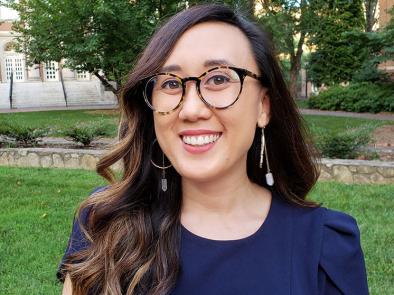
Dr. Yu Xia is an Assistant Professor of Instructional Design & Technology and Program Director of the School of Library & Information Management at Emporia State University. She holds a PhD in Learning, Design, and Technology from Pennsylvania State University and an MEd in Instructional Technology from the University of Virginia. Her research focuses on collaborative learning, design thinking, socioemotional practices in learning ecosystems, and technology-enhanced student engagement. Dr. Xia has published in Journal of the Learning Sciences and presented at international conferences such as ISLS and AERA. Her work emphasizes innovation in educational technology applications and pedagogical strategies for diverse learning environments. Key research trends in her publications include analyzing socioemotional dynamics in collaborative settings, evaluating educational technologies for synchronous learning, and exploring identity negotiation among early-career faculty. Notable contributions include her 2020 award-winning cybersecurity curriculum and studies on improvisation in engineering education. Professional affiliations include the Association for Educational Communications and Technology (AECT), International Society for the Learning Sciences (ISLS), American Educational Research Association (AERA), and the American Society of Engineering Education (ASEE). She is actively involved in curriculum development and open to research collaborations in her areas of expertise.
Alisha Pradhan is an Assistant Professor in the Informatics department at the New Jersey Institute of Technology (NJIT). Her research focuses on human-centered design of technologies for older adults and people with disabilities, emphasizing accessibility, inclusivity, and ethical considerations. She holds a Ph.D. in Information Studies from the University of Maryland-College Park (2022), an M.S. in Human-Computer Interaction (2018), and a B.Tech. in Industrial Design from National Institute of Technology (2015). Research Interests: Dr. Pradhan's work spans assistive technologies, voice interaction design for aging populations, inclusive AI systems, and participatory design methodologies with marginalized communities. Her current projects investigate the use of smart objects and voice assistants to support cognitive aging, while addressing challenges in technology adoption and ethical implications. She also explores sustainable makerspace models for older adults and co-design approaches with people living with dementia. Publications: Her recent work addresses voice assistant personalization for seniors, accessibility of smart home technologies, and frameworks for equitable AI development. Key topics include: ontological categorization of voice agents, multimodal interaction for memory support, and posthumanist perspectives in technology design. Grants & Awards: Active research funding includes NSF-supported projects exploring future-proofing smart technologies for age-related cognitive changes. She has developed curriculum modules integrating accessibility principles into design education. Labs & Collaborations: Maintains an active research website (https://www.alishapradhan.net/) documenting her work. Her lab collaborates with geriatric care organizations and technology firms to translate research into practical solutions for aging-in-place scenarios.
Aspa Baroutsis is a researcher affiliated with the University of Queensland and Victoria University in Australia, focusing on education policy, media representation of teachers, and alternative schooling. Collaborating with scholars like Annette Woods, Martin Mills, and Lisa Kervin, her work bridges critical literacy, pedagogical innovation, and student engagement in diverse educational contexts. Her research explores media-driven accountability in education design-based experiments in teacher-researcher collaborations computational thinking in primary classrooms student voice in alternative schools Baroutsis’s work highlights the intersection of technology, literacy, and equitable pedagogy, often employing interdisciplinary methodologies and focusing on marginalized youth. Recent publications emphasize the role of data literacy, makerspaces, and narrative inquiry in reshaping educational practices. While no specific scientific awards are documented in the provided texts, her collaborations and editorial contributions underscore her impact on educational discourse.
Dr Matthew Pilling serves as a Lecturer in Architecture and Research Associate for the 'Experiencing the Future Mundane' project at Lancaster University's Lancaster Institute for the Contemporary Arts (LICA). His affiliations span multiple research centers including the School of Architecture, Institute for Social Futures (ISF), and ImaginationLancaster, reflecting his interdisciplinary approach to design and futures research. Matthew completed his architectural education at the Manchester School of Architecture, earning a BA (Hons) in Architecture, a BArch, and an MA in Architecture and Urbanism. He then pursued an EPSRC-funded PhD at Lancaster University as part of the Institute for Social Futures, focusing on developing visual tools to engage the public in futures research and democratize the construction of possible futures through Graphic Social Futures methodology. Dr Pilling's research centers on how we envision futures involving emerging technologies, primarily using Speculative Design and Design Fiction as methodologies. His work examines the cultural landscape into which technologies are deployed, interrogating what is possible, probable, and preferable in technological futures. Recent research has increasingly focused on IoT device repairability, right-to-repair legislation, and the socio-technical implications of emerging technologies, particularly regarding environmental sustainability and social equity. He approaches futures research as a means to reveal underlying social structures and describe alternative social imaginaries. His publication record demonstrates a clear evolution from theoretical explorations of design fiction toward more applied work addressing tangible societal challenges. The most recent publications (2025-2022) show growing emphasis on sustainability concerns, community engagement, and practical applications of futures methodologies to real-world problems like IoT repairability. His work consistently bridges design research with social futures studies, creating methods that make futures research accessible and relevant to diverse audiences. Dr Pilling has secured significant research funding through multiple projects including the EPSRC-funded 'The Future Mundane,' PETRAS-funded 'The Edge of Reality,' and the £1.2m EPSRC-funded 'Fixing the Future' project. These projects have explored the intersection of design fiction with public engagement, technology adoption challenges, and sustainability concerns, often through collaborations with BBC R&D, Nottingham University, Edinburgh University, and The Making Rooms community fabrication lab. He maintains strong connections with The Making Rooms in Blackburn, which he helped establish, and is currently developing a national network for UK makerspaces to measure impact, share best practices, and disseminate research on repairability. His teaching focuses on digital skills for architecture students, emphasizing CAD software and digital fabrication techniques while connecting these skills to broader sustainability and social equity agendas.
Veena Vasudevan serves as an Assistant Professor of Practice in Digital Media and Learning within the School of Education at the University of Pittsburgh. Her academic journey includes postdoctoral work at New York University and the American Museum of Natural History, where she focused on citizen science platforms and science-community partnerships. Prior to her academic career, she designed educational technology initiatives with city and state governments and worked with non-profits addressing education equity and economic inequality. Her educational background includes a Master of Public Administration (MPA) from Columbia University's School of International and Public Affairs and a Ph.D. from the University of Pennsylvania's Graduate School of Education. Vasudevan's research centers on understanding children and youth through the lenses of identity, learning, and literacies, with particular emphasis on STEM learning, educational equity, and urban education contexts. Her work consistently places people at the center of technology, teaching, design, and classrooms, challenging traditional educational structures and advocating for more equitable learning environments. She employs qualitative methodologies and educational ethnography to examine how digital media and making practices can transform learning experiences. Her recent publications reveal a consistent focus on care-based research methodologies, youth agency in curriculum design, and the intersection of physical and digital making in learning environments. These works demonstrate her commitment to reimagining educational spaces where students co-construct knowledge and challenge traditional power dynamics in schools. Vasudevan is deeply committed to equity and justice in education, as evidenced by her co-edited book Care-Based Methodologies: Reimagining Qualitative Research with Youth in U.S. Schools which argues that care is essential in all aspects of school-based research. The book details methods for conducting responsible research that improves understanding of youth lives while working to dismantle oppressive systems. Her research trajectory shows significant engagement with National Science Foundation funded projects examining how online citizen science platforms shape students' science identities and how art-centered approaches can expand data literacies for middle school students. Her work bridges theory and practice, connecting academic research with real-world educational challenges. Vasudevan's approach to educational research emphasizes transparency, reflexivity, reciprocity, curiosity, consent, and self-care as core components of ethical research with youth. Her recent work has been particularly responsive to the challenges of the pandemic era, highlighting how isolation has magnified the need for caring relationships in educational research and practice.
Dr. Marijel (Maggie) Melo is an Associate Professor at the University of North Carolina's School of Information and Library Science (SILS), specializing in equitable makerspace design and critical maker culture. She directs the Equity in Making (EITM) Lab and is a 2020 NSF CAREER Award recipient for her work on makerspaces' spatial equity. Her research focuses on creating inclusive STEM-rich learning spaces in academic libraries, particularly addressing gender and diversity inclusion through spatial analysis and pedagogical innovation. Education: B.A., California Lutheran University M.A. in English, California State University of Northridge PhD in English, University of Arizona (AAUW Fellow) Research emphasizes makerspace design's impact on user demographics, with key projects including the University of Arizona's iSpace/CATalyst Studios expansion and the Southwest's first women-only hackathon. She explores themes like 'pedagogical violence,' VR integration challenges, and post-pandemic makerspace adaptations. Awards include the Deborah Barreau Teaching Excellence Award (2020) and the Peter W. Likins Inclusive Excellence Award (2017). She co-authored Re-making the Library Makerspace and has presented at venues like the Google Developer Group Summit and MIRA conference. Teaching focuses on information literacy, diversity in services, and maker pedagogy through courses like INLS 490: Real-time Data Science in Makerspaces.
Dr. Jennifer Rode is a Professor of Equity and Human Computer Interaction at University College London's Institute of Education, specializing in Educational Technology. Her research examines how gender, disability, and race are embedded into technology design, with a focus on advancing social justice in emerging fields like telepresence robotics and makerspaces. She combines industry experience as a usability engineer and ethnographer with cultural theory to critique and improve design practices. PhD in Informatics from University of California, Irvine MS in Human-Computer Interaction and BS in Anthropology from Carnegie Mellon University Her work bridges critical computing and practical applications, including founding the ACM AccessSIGCHI initiative for equitable participation in computing. She has contributed to lectures on computational thinking, telepresence in education, and gender diversity in computing research. ACM Distinguished Scientist
Nathan Phillips is an Associate Professor in the Department of Curriculum & Instruction at the University of Illinois Chicago (UIC) College of Education. He serves as Co-Coordinator of the MEd in Language, Literacies, and Learning program. Prior to academia, he taught high school English, journalism, creative writing, and film. Phillips holds a PhD from Vanderbilt University (Learning, Teaching, and Diversity), an MA from Brigham Young University (English), and a BA in English Teaching. His research focuses on spatial literacies, media literacies, and multimodal learning environments. He investigates how young people engage with virtual/physical landscapes and media to develop civic agency. Current projects include designing map-based performances for argumentation and studying youth-produced public media. His work emphasizes connections between geography, literacy, and qualitative research methods. Phillips has published extensively on topics like digital literacies equity, embodied science learning through performance, and justice-centered pedagogies. His recent work explores intersections of spatial justice and literacy practices, including community-based projects like Chicago Global Water Dances. Co-authored works address transliteracies frameworks and hybrid learning communities. Teaching focuses include disciplinary literacy preparation for secondary teachers. He maintains active collaborations with local schools through design studios and maker spaces, emphasizing equitable technology integration. Phillips' work is informed by principles of critical pedagogy and participatory action research.
Rachel Horst is a Lecturer in the Master of Educational Technology (MET) program at the University of British Columbia (UBC), Faculty of Education, Department of Language and Literacy Education. She holds a PhD in Language and Literacy Education from UBC, informed by a decade of secondary teaching experience. PhD in Language and Literacy Education (UBC) Her research explores digital arts-based methods, futures literacies pedagogy, and critical (post)digital literacies through posthumanist and generative AI frameworks. She focuses on ethical technology design, participatory AI systems, and environmental responsibility in digital tools, aiming to reimagine technology's role in education. Rachel teaches courses ETEC 531, ETEC 565H, ETEC 530, and ETEC 565C. Her work emphasizes values-based experimentation, accessibility, and care in educational technology, inviting educators to prototype alternatives that foreground consent and collaborative knowledge creation. She maintains a personal portfolio website ( www.rachelhorst.ca ) and is active on LinkedIn, engaging in public discourse about AI literacy and futures imaginaries. Her research integrates Donna Haraway's theories to challenge conventional technology narratives.
Dr. Rebekah Schulz is a Lecturer in Management and Human Resource Management at the University of Wollongong's School of Business (Faculty of Business and Law). Her research focuses on workplace feedback literacy, gender equity in leadership, and participative action research (PAR), particularly in low-resource contexts like India. She explores strategies to bridge educational and professional skills gaps, dismantle barriers for women in STEM leadership, and enhance organizational resilience through frameworks like participative action research and the PIHoQ model. Her work emphasizes actionable insights that connect theory to practice, promoting inclusive workplaces and community-driven solutions. She has contributed to projects such as a makerspace case study for Pacific Island resilience and stakeholder-driven performance indicators in local governments. Schulz currently chairs the Faculty of Business and Law's Equity, Diversity, and Inclusion (EDI) Committee and participates in the Women's Research Engineers Network (WREN). She has secured internal grants including the 2024 Early Mid-Career Researcher Enabling Grant and led projects on environmental sustainability in public agencies. Teaching interests include leadership, ethics, performance management, and corporate governance. Her research and service roles reflect a commitment to fostering inclusive, equitable, and innovative organizational practices globally.
Dani Herro is an Associate Professor in the Department of Digital Media and Learning at Clemson University's College of Education, with an affiliation to the College of Arts and Humanities. She co-directs the Digital Media and Learning and Gaming Labs and leads the STEAM Collective, an initiative promoting equitable access to STEAM (Science, Technology, Engineering, Arts, and Mathematics) education. Her work emphasizes game-based learning, data science integration in K-12 curricula, and teacher professional development. Prior to academia, she spent 20 years in public education as a teacher, technology resource specialist, and district administrator, developing curricula focused on computational thinking through game design and app development. She coordinates the Learning Science PhD program and has served on state and national advisory committees, including Wisconsin’s Department of Instruction Curriculum Digital Advisory Committee and CoSN’s Leading Edge Schools Cadre. Her research interests include co-design partnerships between educators and researchers, assessment of collaborative problem-solving skills, and the role of digital media in fostering equity in education. She has pioneered initiatives like the GROOVA data visualization tool and the Pokémon-inspired data science curriculum for elementary students. Her awards include the Edmund W. Gordon/MacArthur Foundation Fellowship (2013–2016) supporting 21st-century learning and assessment. Her recent publications (2021–2025) highlight trends in data science education, STEAM curriculum design, and the intersection of technology with social activism. Key themes include collaborative learning frameworks, teacher-educator partnerships, and leveraging digital tools to enhance equity in educational access. Her work bridges theoretical research with practical classroom applications, prioritizing real-world relevance and participatory approaches. Her advising and grants focus on interdisciplinary collaboration, including engineering design teams and school-university partnerships. She has also contributed to policy discussions around mobile learning and Web 2.0 literacy in teacher training programs. Her labs and initiatives foster innovation in makerspaces, gaming education, and community-driven educational projects, reflecting a commitment to both scholarly rigor and pragmatic impact.
Dr. Chelsea Cutting is a Senior Lecturer at the University of South Australia's UniSA Education Futures, based in Mt Gambier. She specializes in mathematics education, spatial reasoning, and early childhood learning. Her research focuses on frameworks for activating prior knowledge, spatial reasoning's role in fraction understanding, and play-based STEM education. She serves as a Research Degree Supervisor and collaborates with institutions like the STEM Education Research Centre (SERC) and the Centre for Change and Complexity in Learning (C3L). Research Interests: Spatial reasoning in mathematics learning Early childhood fraction concepts Play-based learning frameworks Technology-enhanced education (e.g., virtual makerspaces) Educational progressions and assessment Recent Work Trends: Her articles emphasize integrating spatial reasoning into mathematics education and leveraging play and technology to enhance STEM capabilities in young learners. Collaborative projects include evaluating the impact of tools like Makers Empire 3D design software on spatial skills and attitudes.
Rachel Bonnette is an Assistant Professor in the Department of Engineering Education at the University at Buffalo's School of Engineering and Applied Sciences. Her research focuses on neurodiversity, disability studies, and inclusive education in STEM fields. She holds a PhD in Learning Sciences and Policy from the University of Pittsburgh (2020), a JD and MPP from Loyola University Chicago (2015), and a BFA in Film and Animation from Rochester Institute of Technology (2010). Her work addresses critical issues such as fostering belonging for neurodiverse students, designing inclusive learning environments, and broadening participation in STEM through collaborative research and intersectional approaches. Recent publications explore instructor-student perception gaps in neurodiversity support, assessment tools for research collaborations, and the role of makerspaces in supporting marginalized learners. Rachel's research emphasizes equity and social justice, particularly in higher education and computer science contexts. She has developed frameworks for measuring belonging and advocated for systemic changes to ensure equitable educational access for multiply marginalized groups.
Shari Lee is an Associate Professor in the Department of Library and Information Science at St. John's College of Liberal Arts and Sciences , specializing in youth services, information literacy, and diversity initiatives in library science. She teaches courses focused on children's and young adult literature, information services, and special topics in teen spaces. Education Ph.D., University of California, Los Angeles (2009) ML.S., St. John’s University (2004) B.S., City University of New York Baccalaureate Program (2002) Research Interests span critical areas of library science, including social justice, racial identity in professional practice, and evolving digital environments for youth. Her work examines the intersection of technology, education, and equitable access, particularly through Online LIS education quality assessment Storytelling's role in community building Design of teen-centric library spaces . Recent Publications focus on diversity frameworks, virtual spaces for youth, and pedagogical innovations in LIS education, reflecting her commitment to inclusive practices and technological adaptation.
Amy Stornaiuolo is an Associate Professor and Chair of the Literacy Studies program at the University of Pennsylvania’s Graduate School of Education. She holds additional roles as Faculty Director of the Philadelphia Writing Project and Director of Undergraduate Programs, overseeing the Urban Education minor and the Accelerated Bachelor's to Master's Degree Program. Her research focuses on digital literacies, equity in education, and the role of technology in teaching and learning. Dr. Stornaiuolo leads initiatives such as the Digital Discourse Project (funded by the McDonnell Foundation) and the global youth writing community Write4Change, which leverage digital platforms for social change. She collaborates extensively with schools and communities to design participatory methodologies that address educational justice. Her work emphasizes the ethical dimensions of digital technologies, particularly in fostering cross-cultural understanding and equitable learning opportunities. Education: Background in post-secondary composition and literacy studies (prior roles at San Francisco Bay Area institutions). Research: Prioritizes digital tools, youth authorship, and platforms as sites of resistance and learning. Publications: Editor of the Handbook of Writing, Literacies, and Education in Digital Cultures (Routledge, 2017) and over 50 peer-reviewed articles. Her current projects investigate AI’s impact on writing instruction, data literacy in makerspaces, and the ethics of generative AI in education. She advocates for adaptive pedagogies that balance structured guidance with creative autonomy, informed by her work with K-12 and higher education institutions.