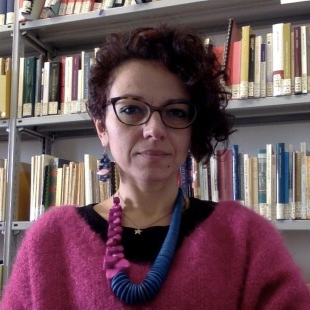
Carlo Ciccarelli is a Professor of Economic History at the University of Rome Tor Vergata, specializing in the Department of Economic History. His research focuses on long-term economic development, regional disparities in Italy, historical institutions, and the interplay between infrastructure, public health, and socio-economic outcomes. He teaches courses such as European Economic History and Quantitative Applied Economics at both bachelor and master levels. His work examines the legacy of historical policies like the Napoleonic reforms and Italian unification, analyzing their impacts on modern regional inequalities. He also investigates the role of transportation networks (e.g., railways) and resource exploitation (e.g., Sicilian sulphur) in shaping Italy's economic trajectory. Recent studies explore topics ranging from literacy's long-term effects on productivity to the historical determinants of smoking behavior and its health consequences. Dr. Ciccarelli's articles consistently emphasize quantitative approaches to historical data, often employing spatial econometrics and synthetic control methods. His research themes include: (1) institutional reforms and regional development, (2) socio-economic consequences of industrialization, and (3) historical analysis of public health issues. He currently holds no listed scientific awards but is active in editorial contributions for journals and research centers. While no formal advisees are listed, his teaching and research activities suggest involvement in mentoring students through his academic programs. Office hours are held Monday 11-13 during the lecture period, with appointments also available via email. His research interests are supported by extensive data collection efforts, including work with historical censuses and industry records.