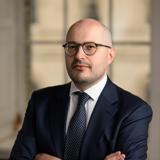
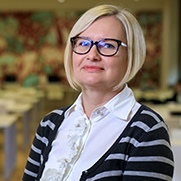
Niccolò Ridi is Senior Lecturer in Public International Law and Associate Director of the Centre for International Governance and Dispute Resolution (CIGAD) at King's College London's Dickson Poon School of Law. He joined King's in 2021 after roles at Liverpool University, Copenhagen University, and the Graduate Institute of International and Development Studies. He holds a PhD from King's, an LLM from Cambridge, and an LLB/MA from Florence. His research focuses on international law (public/private), dispute settlement, and empirical methodologies including data mining/social network analysis. He is finalizing books on international adjudication precedent and comity principles (with Thomas Schultz). He serves as Assistant Editor of the Journal of International Dispute Settlement and is affiliated with leading legal societies. Key research areas include judicial behavior analysis, international court performance, and legal communities' practices. His recent work employs scientometrics to study legal idea propagation and network analysis of scholarly collaboration. He co-leads interdisciplinary initiatives like the Centre for Data Futures, exploring data-driven legal tools. His 2020s research emphasizes ICJ dynamics, Security Council resolution impacts, and investment arbitration innovations. He has supervised 1 PhD student and participates in global legal forums.
Martin Schlag is Professor at the University of St. Thomas holding the Alan W. Moss Endowed Chair for Catholic Social Thought and serving as Co-director of the Terrence J. Murphy Institute for Catholic Thought, Law, and Business within the Opus College of Business's Department of Ethics and Business Law. His educational background includes: JD from University of Vienna Licentiate in Theology (Lic. Theol.) from Pontifical University of the Holy Cross, Rome Doctorate in Sacred Theology (STD) from Pontifical University of the Holy Cross, Rome Schlag's research centers on Catholic social thought's application to political and economic systems, examining historical Christian perspectives on markets, trade, money, private property, and social justice. He advocates for principled business leadership that promotes the common good and integrates the poor into market economies through Christian humanism. His work emphasizes truth, goodness, and beauty as foundational to business as a noble vocation. Analysis of his 2022-2025 publications reveals dominant trends in subsidiarity theory, gift economies in business, digital ethics, and pandemic policy through theological frameworks. His scholarship consistently connects Catholic social teaching to contemporary challenges including e-commerce morality, technological unemployment, diversity initiatives, and integral ecology of work. As Co-director of the Terrence J. Murphy Institute, Schlag leads interdisciplinary initiatives bridging Catholic thought with business practice, organizing global conferences that inform his research and publications. No information is available regarding student advising or research grants.
Andrew Francis-Tan serves as Assistant Dean (Student Affairs) and Senior Lecturer at the LKY School of Public Policy, National University of Singapore. Previously, he was associate professor of economics at Emory University. His academic journey spans prestigious institutions including the University of Chicago where he earned his Ph.D. in economics, establishing his foundation in quantitative research methods. Francis-Tan's research program focuses on education, labor economics, and demography, with particular emphasis on patterns of inequality and public policies designed to empower vulnerable populations. His work explores how factors such as race, gender, and religion influence social identities and outcomes across diverse contexts, especially in Asia and Latin America. His interdisciplinary approach bridges economics, sociology, and public policy to address complex social challenges. His extensive publication record shows a clear research trajectory examining ethnic identity formation, religious dynamics under restrictive regulation, gender empowerment effects, and affirmative action policies. The publications span multiple high-impact journals across disciplines including Political Science, Sociology, Public Health, and Economics, demonstrating the cross-cutting relevance of his work. As an educator, Francis-Tan teaches advanced quantitative methods courses for PhD students (PP6706), education economics and policy (PP5196), and principles of economics for policy (PP5001). His teaching portfolio reflects his expertise in applying economic frameworks to policy analysis and his commitment to training the next generation of policy professionals with rigorous analytical skills.
Jari Murto serves as Associate Professor at the Faculty of Law, University of Helsinki, where he specializes in Labour and Social Law. With over two decades of academic and practical experience, he contributes significantly to Finnish and European labour law discourse through publications, policy analysis, and academic leadership. His educational qualifications include a Doctor of Laws (LL.D), Master of Science in Economics and Business Administration, and Master of Laws (LL.M). Murto's doctoral dissertation Ryhmänormit yrityksessä (Group Norms in Companies, 2015) established foundational research on workplace norm systems. Murto's research examines labour law doctrines, norm systems, working conditions determination, and transition-phase labour market issues. He analyzes EU policy impacts on national frameworks, lifelong learning integration into labour law, and psychosocial workplace safety. Recent work addresses digital workplace challenges, parental employment policies, and just transitions in green/digital economies. His scholarship bridges theoretical legal frameworks with practical industrial relations through frequent commentary on Supreme Court decisions. As Doctoral Programme Supervisor, Murto mentors emerging legal scholars while maintaining active peer review roles. He serves on Finland's Board for Strengthening General Applicability of Collective Agreements and participates in European labour law networks including the Labour Law Research Network and Nordic Network of Labour Law Scholars. His conference activities span topics from social packages in income policy agreements to lifelong learning's role in modern labour law. Murto maintains strong engagement with practical legal applications through Supreme Court commentary series ( KKO:n ratkaisut kommentein ) and regular contributions to Lakimies journal. His research methodology combines doctrinal analysis with empirical studies of workplace practices and policy implementation.
Kristina Bučar is a full Professor and head of the Department of Tourism at the Faculty of Economics and Business, University of Zagreb, Croatia. She holds a doctorate from the University of Zagreb and completed international study visits at Wirtschaftsuniversität Wien (Austria) and Faculty of Sport and Physical Education, Lille 2 (France). Professor Bučar teaches courses across all academic levels including Tourism Principles , Tourism Geography , and Resource Management in Sustainable Tourism . Her research focuses on sustainable tourism development with specific expertise in: Tourism environmental management and ecolabeling systems Spatial planning for tourism destinations Social responsibility frameworks in tourism operations Sports tourism development strategies Socio-economic aspects of Mediterranean tourism Her recent publications (2021-2024) demonstrate strong thematic consistency in sustainable tourism, with particular emphasis on environmental certification programs, gender equality in tourism employment, waste management in tourist economies, and financing models for protected areas. Over 85% of her recent work incorporates Croatian case studies examining practical implementation of sustainability principles. Professor Bučar maintains significant academic leadership roles as: Editorial board member of International Journal of Sustainable Development Research Founding member of IRNIST (International Research Network In Sport Tourism) Regular scientific committee participant for international tourism conferences
Achilleas Psyllidis is an Assistant Professor of Urban Mobility and Director of the Urban Analytics Lab at TU Delft. He also leads the Social Urban Data Lab at Amsterdam Institute for Advanced Metropolitan Solutions and is affiliated with the LDE Centre for BOLD Cities. His roles include membership in TU Delft's Transport & Mobility Institute, the Mobility Futures Vision Team, and serving on the Executive Board of CUPUM. Education: PhD in Spatial Data Science (TU Delft, Faculty of Architecture and the Built Environment) Master of Science in Spatial Planning (National Technical University of Athens) Engineering Diploma in Architectural Engineering (National Technical University of Athens) Research Interests: Focuses on accessibility, walkability, land-use dynamics, and travel behavior. Develops computational methods for analyzing access equity, spatial segregation, and human mobility. Leads projects on sustainable urban mobility, environmental exposures, and the 15-minute city concept. Awards: CTwalk Map: Best Demo Award (ICT.Open 2024) ROUTE Ontology of Urban Transportation Entities (2015) Grants & Projects: Involved in initiatives like PERISCOPE (Social Resilience Design), Horizon2020 'Equal-Life' (Environmental Health), and SocialGlass (Urban Analytics Dashboard). Active in research collaborations across Europe and Asia. Labs & Teams: Directs Urban Analytics Lab and Social Urban Data Lab, focusing on data-driven urban solutions. Engages in interdisciplinary teams addressing mobility futures, urban health, and sustainable design.
Cesla Amarelle serves as Full Professor and Chairholder of Public Law and Migration Law at the University of Neuchâtel's Faculty of Law. Her academic leadership extends to co-directing the Swiss Center for Migration Law (CDM) and contributing to national research initiatives including the National Center of Competence in Research (NCCR) 'On the Move'. She concurrently holds significant public appointments as Chair of the Institute of European Law at the University of Fribourg and Federal Commissioner for Women's Issues, with recent expert designation to the Federal Round Table on signature collection integrity for 2024. Her academic foundation includes a law degree from the University of Lausanne (1996), LL.M. in European and International Economic Law from the University of Fribourg, and doctoral thesis from the University of Lausanne (2004). Her career progression at the University of Neuchâtel spans assistant professor (2009-2014), extraordinary professor (2015-2016), and full professor positions since 2016, complemented by earlier research roles at Swiss National Science Foundation and University of Fribourg. Professor Amarelle's research centers on migration law frameworks, human rights protections in asylum systems, and constitutional dimensions of European integration. Her work critically examines the intersection of migration governance with digital technologies, climate change impacts, and gender equality. Current projects analyze temporary protection regimes, non-refoulement principles in technological contexts, and the evolving relationship between Swiss migration law and European legal frameworks. Her scholarship consistently bridges theoretical legal analysis with practical policy implementation challenges. Her extensive publication record demonstrates evolving focus from foundational migration law codification toward contemporary challenges including digital discrimination, child rights in emergency contexts, and sustainable finance frameworks. Recent scholarship reflects increasing engagement with technological impacts on migration governance and the humanitarian dimensions of temporary protection systems, while maintaining rigorous analysis of constitutional and European law interfaces. Professor Amarelle actively contributes to academic and public discourse through leadership in the Swiss Center for Migration Law and participation in the NCCR 'On the Move' consortium. Her public service includes significant political roles as Vaud State Councilor for Education (2017-2022) and National Councilor (2011-2017), where she chaired key committees on political institutions and finance while representing Swiss higher education interests nationally. She maintains active engagement with professional associations including the Swiss Conference of Higher Education Institutions and Conference of Directors of Public Education.
Professor Marie Griffiths is a distinguished academic and expert in digital transformation at Salford Business School, University of Salford. She holds the position of Professor of Digital Technologies in Organizations and serves as EDI Lead for Research (2023–present). Her academic career includes significant leadership roles such as PGR Director at Salford Business School (2019–2023) and Head of the Digital Business Research Centre. She previously served as President of the UK Academy for Information Systems (UKAIS) after her tenure as Vice President. Dr. Griffiths earned her PhD in Business Information Systems, establishing the foundation for her expertise in digital transformation. Her research spans multiple critical areas including digital transformation, information systems, gender and IT, AI and disruptive technologies, digital society, privacy and surveillance studies, family surveillance, productivity technologies, and digital education. Her work consistently bridges academic theory with practical business applications, focusing on how organizations respond to digital disruptions and how workforces adapt to emerging technologies. Her recent publications reveal a strong focus on strategic digital transformation, digital maturity assessment, and the intersection of technology with social impact. The 2025 second edition of her book 'Strategic Digital Transformation – A Results-Driven Approach' represents a significant contribution to the field. Her research increasingly addresses the gender dimensions of digital transformation, as evidenced by her 2024 work on closing the REF Gender Inequality Gap. She also explores the practical applications of digital technologies in specific sectors including government organizations, healthcare (particularly nursing), and financial technology. Vice-Chancellor's Distinguished Teacher Awards (multiple) Professor Griffiths has supervised 14 PhD completions and currently oversees doctoral candidates researching fintech, digital transformation, and sustainability. She established the PGR International Women's Network to support female researchers. Her grant leadership includes 11 Knowledge Transfer Partnerships (KTPs) with organizations like Manchester Chamber of Commerce, OPAL, and Hydro-X, securing significant funding from Innovate UK. She has also contributed to policy development through work with the British Standards Institute Steering Group for Digital Maturity. As Head of the Digital Business Research Centre, Professor Griffiths leads a team focused on practical digital transformation research with strong industry connections. Her approach emphasizes people-centric transformation, ensuring that people remain at the heart of any change. The centre's work spans multiple sectors including government, healthcare, finance, and small and medium enterprises, with a particular focus on developing practical tools like digital transformation canvases for different organizational contexts.
Caitlin Mullarkey is an Associate Professor in the Department of Biochemistry and Biomedical Sciences at McMaster University's Faculty of Health Sciences. She teaches across multiple undergraduate programs including Biochemistry, Biomedicine, and Health Sciences, with courses ranging from Cellular and Molecular Biology to Immunological Principles in Practice and Principles of Virology. Dr. Mullarkey's research focuses on immunology and virology with particular emphasis on influenza virus immunity, antibody-mediated responses, and vaccine development. Her work explores intricate mechanisms of antibody function including Fc-mediated effector functions, neutrophil responses to viral infection, and the role of broadly neutralizing antibodies. She also investigates innovative approaches to biomedical education through virtual laboratory simulations and online course development. Analysis of her publication record reveals a strong focus on influenza immunology, with particular expertise in antibody structure-function relationships, hemagglutinin stalk-specific antibodies, and Fc-mediated immune responses. Her work bridges basic immunological mechanisms with practical vaccine development approaches, demonstrating consistent contributions to understanding host-pathogen interactions and immune protection mechanisms. Scientific Awards: Equality of Opportunity Award from the Government of Ontario (2024) for developing and leading McMaster's Biochemistry and Biomedical Sciences Summer Scholars Program Dr. Mullarkey actively supervises undergraduate research through Senior Research Thesis and Senior Thesis courses, providing mentorship to students across multiple academic years. Her teaching portfolio demonstrates significant commitment to both foundational and advanced topics in biochemistry and immunology. Beyond formal teaching, she leads the Summer Scholars Program which provides full research scholarships to students who identify as Black, Indigenous, and/or 2SLGBTQIA+, addressing barriers to participation in STEM research through comprehensive support for training, mentorship, and living expenses. As Chair of the Biochemistry and Biomedical Sciences Summer Scholars Program, Dr. Mullarkey has graduated 17 diverse scholars in just two years, with many continuing research at McMaster and receiving competitive awards. The program, supported by McMaster's Global Nexus and Michael G. DeGroote Institute for Infectious Disease Research, exemplifies her commitment to creating inclusive research opportunities in biomedical sciences.
Dr. Sheila Castilho is an Assistant Professor at the School of Applied Language & Intercultural Studies, Dublin City University (DCU). She holds a PhD from DCU (2016) and a Master's from the University of Wolverhampton and University of Algarve. Her expertise lies in machine translation (MT), post-editing, and translation technology evaluation. She co-leads the New Trends in Translation Technology (NeTTT’22) conference and chairs DCU's Master in Translation Studies and Master in Translation Technology programs. Education: Licenciatura em Letras Inglês/Português (UNIOESTE University, Brazil) Master in Natural Language Processing (University of Wolverhampton & University of Algarve) PhD in Translation Technologies (Dublin City University) Research: Focuses on document-level MT evaluation, post-editing strategies, and user-centric MT assessment. Leads the DELA project and contributed to TraMOOC/iADAATPA initiatives. Published over 40 articles and co-edited 'Translation Quality Assessment: From Principles to Practice' (Springer, 2018). Grants & Projects: DCU PI for DELA (Document-level Evaluation) PRINCIPLE project (EU Low-resource MT) ELE (European Language Equality) initiative Labs/Teams: Active in ADAPT Centre (DCU) and collaborates with international NLP/MT communities (ACL, EMNLP, WMT).
Isabel Grant is a Professor at the University of British Columbia’s Allard School of Law, specializing in criminal law, with a focus on violence against women, sexual assault, homicide, and mental health law. She holds degrees from the University of Toronto, Dalhousie University, and Yale Law School, and served as a law clerk to Supreme Court Justice Estey. Her research addresses gender-based violence, disability rights, and the impact of the Canadian Charter of Rights and Freedoms on legal frameworks. Grant has contributed to over 80 scholarly works and co-leads an SSHRC-funded project on sexual assault law reforms. She teaches courses on criminal law, sentencing, and mental health law. Grant’s work emphasizes feminist and disability justice perspectives, challenging systemic inequalities through litigation interventions in over 20 Supreme Court of Canada cases. Her recent scholarship critiques Bill C-7’s expansion of MAiD eligibility, arguing it entrenches ableism. Awards include the Royal Society of Canada Fellowship, UBC’s Killam Teaching Prize, and the 2025 University Killam Professor designation, UBC’s highest academic honor. Her research interests span criminal justice reform, gender and sexuality law, and the intersection of disability and legal rights. She collaborates with feminist and disability advocacy groups to shape policy and judicial outcomes. Key areas of focus include the ‘rough sex’ defense, consent frameworks, and sentencing disparities in intimate partner violence cases.
Prof. Bernhard U. Seeber is an Extraordinary Professor at the Technical University of Munich (TUM), leading the Chair of Audio Signal Processing within the TUM School of Computation, Information and Technology. His work bridges auditory neuroscience and engineering, focusing on improving hearing aids, cochlear implants, and virtual acoustic systems. He holds affiliations with the Bernstein Center for Computational Neuroscience, Munich Institute of Biomedical Engineering, and others. Education: Studied and earned his PhD (2003) in Electrical Engineering and Information Technology at TUM. Postdoctoral research included time at UC Berkeley and the MRC Institute of Hearing Research (UK), where he pioneered studies on binaural hearing and cochlear implant optimization. Research Interests: Combines experimental and theoretical approaches to explore auditory scene analysis, binaural unmasking, and spatial hearing. Key areas include signal coding for cochlear implants, virtual acoustics, and non-destructive acoustic monitoring. His work emphasizes interdisciplinary collaboration with industry and academia. Awards: Lothar Cremer Award (2010), Emmy Noether Fellowship (2007), and recognition from the German Acoustical Society. Teaching: Offers courses on audio communication, computational neuroscience, and technical acoustics. Projects: Leads initiatives like HAPPAA and Auralization, advancing sound field synthesis and hearing aid algorithms. Current Roles: Head of Chair of Audio Signal Processing, Board Member of DEGA, and spokesperson for the ITG Technical Committee on Hearing Acoustics.
Dr. Hannes Petrowsky is a Senior Research Associate at the Chair of Business Psychology, Social Psychology & Experimental Methods at Leuphana University of Lüneburg. He earned his M.Sc. in Management & Marketing (2017-2019) and completed his Ph.D. on first-offer effects in negotiations (2020-2023). Academic Affiliation: Institute for Management & Organization (IMO) Location: Universitätsallee 1, C6.419, Lüneburg Contact: hannes.petrowsky@leuphana.de | +49.4131.677-1437 His research spans negotiation psychology , consumer behavior , and the impact of digital technologies (e.g., big data, machine learning, AI, VR). He investigates anchoring effects, price-ending strategies, and socially innovative transformations through inclusive working environments. Key Trends in Recent Publications: Analysis of concession patterns in negotiations using behavioral economics principles Development of immersive VR frameworks for skill acquisition Behavioral science-driven interventions for climate change mitigation Meta-analyses of negotiation dynamics across 25-26 million real-world transactions Exploration of technology adoption in public health contexts Dr. Petrowsky contributes to projects like the Digital Transformation Lab and MEHRCE (circular economy initiatives). His work bridges experimental psychology with digital innovation and sustainable entrepreneurship .
Leslie Green is a Professor of the Philosophy of Law at the University of Oxford's Faculty of Law, affiliated with Balliol College. His research focuses on foundational questions in legal theory, including the relationship between law and morality, the nature of legal positivism, and the ethical dimensions of legal systems. He has contributed significantly to debates on jurisprudence, political philosophy, and the role of judges in shaping legal interpretation. Key research areas include the normativity of law, the limits of legal positivism, and the intersection of law with moral philosophy. His work often critiques traditional legal frameworks while exploring the philosophical underpinnings of contemporary legal issues. Recent publications emphasize the inseparability of law and morality, the forces driving legal obligations, and the ethical boundaries of legal systems. Green's articles reflect a sustained engagement with foundational jurisprudential questions, often addressing themes such as legal authority, consent, and the role of coercion in law. His work bridges theoretical and applied legal philosophy, influencing both academic discourse and practical legal analysis. No scientific awards or grants are explicitly listed in the provided texts. His advising record remains unspecified, though his academic output suggests significant influence on legal philosophy students and scholars.
Claudia Patricia Ayala Martinez serves as a Lecturer in the Department of Service and Information Systems Engineering at the Barcelona School of Informatics (FIB), Polytechnic University of Catalonia (UPC). She is actively involved in research through the GESSI - Group of Software and Service Engineering and the UPC inSSIDE - integrated Software, Services, Information and Data Engineering research groups. Her career spans over two decades of academic contributions in software engineering with consistent publication output. Dr. Ayala Martinez's research focuses on Empirical Software Engineering, Off-The-Shelf Adoption, Requirements Engineering, and Software and Architectural Quality. Her work demonstrates an evolution from traditional software engineering topics toward increasing integration with machine learning and AI systems. Recent publications show particular emphasis on software quality indicators, ML pipeline design principles, trustworthiness of ML models, and green computing in software systems. Analyzing her publication trends reveals a consistent research trajectory with growing focus on AI/ML integration in software engineering. Her work spans empirical studies, systematic literature reviews, and practical industrial applications. The research shows strong connections between software quality metrics, architectural decisions, and emerging technologies, with increasing attention to ethical considerations in ML systems and sustainability in software development. Most-Influential Paper Award at the 30th IEEE International Requirements Engineering Conference Dr. Ayala Martinez has participated in numerous competitive R&D projects including those funded by the Spanish National Research Plan, Horizon 2020, and the Catalan Innovation Strategy. Her collaborative network includes extensive work with Professor Javier Franch Gutierrez (69 joint publications), Silverio Juan Martinez Fernandez (26 joint publications), and Cristina Gomez Seoane (20 joint publications). Her research has been supported by various national and European funding programs focusing on software engineering, quality assessment, and open source adoption. She is actively involved with the GESSI and inSSIDE research groups at UPC, which focus on integrated software, services, information, and data engineering. These groups maintain strong industry connections and have produced significant research in empirical software engineering, reference architectures, and quality assessment methodologies. Her recent work shows increasing collaboration with researchers working at the intersection of software engineering and artificial intelligence.