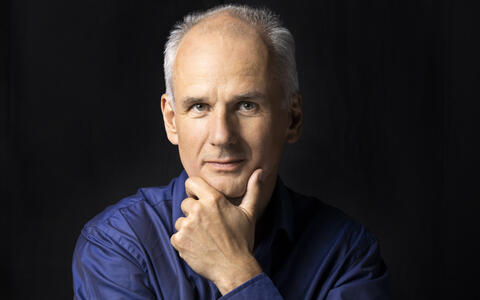
Nikolaus Rajewsky is a leading Professor at the Max Delbrück Center for Molecular Medicine (MDC) and Charité – Universitätsmedizin Berlin , where he founded and directs the Berlin Institute for Medical Systems Biology (BIMSB) . His lab integrates experimental (biochemistry, molecular biology) and computational (bioinformatics, physics) approaches to study RNA regulation in gene expression , with applications to developmental biology, regeneration, neurodegenerative diseases, and cancer . Using model systems like C. elegans , planaria, and human brain organoids, his team pioneers cutting-edge methods such as MirDeep , DistMap , and FLAM-seq for RNA analysis. His research focuses on single-cell transcriptomics , spatial RNA sequencing , and circular RNA (circRNA) regulation , revealing novel roles for circRNAs like CDR1as in neuropsychiatric disorders. Recent work includes 3D tumor microenvironment mapping and computational modeling of RNA metabolism in diseases. Scientific Awards : Gottfried Wilhelm Leibniz Prize (2012) EMBO Membership (2010) Honorary PhD, Sapienza University of Rome (2014) Berlin Science Award (2009) His team's recent articles highlight breakthroughs in 3D spatial transcriptomics , circRNA degradation mechanisms , and mitochondrial disease modeling using human brain organoids. The lab actively collaborates with clinical partners across Charité and European institutions, driving the LifeTime initiative for cell-based interceptive medicine.
Prof. Dr. Kirsten Jung is a faculty member at the Department of Microbiology , Faculty of Biology , Ludwig Maximilian University of Munich . Her research focuses on bacterial signal transduction, stress response mechanisms, and systems biology approaches to understand microbial regulatory networks. Key research areas include stress-dependent gene expression in bacterial populations Structural and functional analysis of membrane-integrated receptors Metabolism-based chemical communication in bacteria Integration of experimental and computational systems biology Recent publications highlight her lab's work on Escherichia coli epitranscriptomic modifications under heat stress, m 5 C rRNA dynamics, and the role of RNA methylation in host-pathogen interactions. Collaborative studies address bacterial acid stress responses and their implications for antibiotic tolerance. Her interdisciplinary work bridges microbiology with ecological studies, as evidenced by research on biodiversity conservation in forest and urban ecosystems. Publications also demonstrate expertise in advanced imaging techniques (e.g., arterial spin labeling for glioma analysis) and bioinformatics approaches. Current advisees include Gloria Gessinger and Tania P. Gonzalez-Terrazas . She can be contacted at jung@lmu.de .
Dr. Fabian Barthels is a Researcher and Research Group Leader at the Institute of Pharmaceutical and Biomedical Sciences of Johannes Gutenberg-Universität Mainz , Germany. His work focuses on RNA methyltransferases, epitranscriptomics, and medicinal chemistry technologies. Ph.D. in Medicinal Chemistry (University of Mainz, 2018) Biochemistry M.Sc. (University of Tübingen, 2016) Biochemistry B.Sc. (University of Tübingen, 2013–2016) Dr. Barthels' research explores dysregulation of RNA modifications in disease pathology, developing selective covalent/non-covalent inhibitors for RNA methyltransferases using DNA-encoded libraries and PROTACs. His group created microscale thermophoresis assays and 3D-printed lab equipment like FINDUS and a differential scanning fluorometer. His group's publications highlight advancements in RNA-MST protocols, METTL1/DNMT2 inhibitor discovery, and photoaffinity probes for viral proteases. Recent work includes fluorescent MTase probes (Angewandte Chemie 2024) and RNA-ligand interaction studies (Chemical Science 2023). 2023 Boehringer-Ingelheim Foundation Dissertation Award 2022 Walter-Schunack Prize in Medicinal Chemistry 2022 Phoenix Pharmacy Award (co-awarded) 2016–2018 Deutschlandstipendium for academic potential Dr. Barthels' lab includes researchers like Ariane Frey (Poster Award winner) and Annabelle Weldert (best presentation awardee). His DFG-funded Transregio 319 project on RNA Modification and Processing and CZS MAINCE initiative on Medical AI demonstrate his grant leadership.
Susanne Gerber is a Professor at iDNA and Adjunct Director at the Institute of Molecular Biology (IMB), Johannes Gutenberg University Mainz (JGU), affiliated with the Faculty of Biology's Bioinformatics department. Her academic journey includes an Assistant Professorship in Bioinformatics at JGU (2015-2020) and postdoctoral research at Università della Svizzera italiana. Her educational background comprises a PhD in Biophysics from Humboldt University of Berlin (2011), an M.Sc. in Bioinformatics from Free University of Berlin and Konrad Zuse Institute (2007), and a B.Sc. in Bioinformatics from Free University of Berlin and Max Planck Institute (2004). Dr. Gerber's research spans Bioinformatics, Computational Genomics, Systems Biology, Molecular Evolution, and Neuroinformatics , focusing on developing computational frameworks for genomic analysis, neurodegenerative disease modeling, and microbiome interactions. Her work integrates machine learning with multi-omics data to address complex biological questions in molecular evolution and neural systems. Analysis of her 15 most recent publications (2024-2025) reveals a strong emphasis on nanopore sequencing applications for RNA modification detection, deep learning frameworks for genomic data enhancement, and neurobehavioral modeling using AI-driven approaches. Key thematic clusters include epitranscriptomics, chromatin dynamics, and computational psychiatry with ethical AI considerations. Her methodological innovations include tools like COMET for network analysis, CCUT for chromatin data enhancement, and ModiDeC for RNA modification classification, demonstrating translational impact across genomics and neuroscience. Dr. Gerber leads research groups at IMB and iDNA focusing on computational genomics, advising students in bioinformatics and securing grants for AI-driven genomic analysis. Her labs develop open-source tools for nanopore data processing and neuroimaging analysis, fostering collaboration between computational and experimental biologists.
Prof. Dr. Robert Schneider is the Director of the Institute of Functional Epigenetics at Helmholtz Munich and Professor at the Faculty of Biology of Ludwig-Maximilians-University Munich since 2016. His research focuses on epigenetics, chromatin dynamics, and the interplay between cellular metabolism and histone modifications to decode gene expression regulation and disease mechanisms. Education: Ph.D. from Ludwig-Maximilian University Munich; Postdoctoral research at the Gurdon Institute (University of Cambridge, UK). Robert’s work spans the study of histone methylation, epigenetic reprogramming, and environmentally triggered diseases. His lab also explores epitranscriptomics and epigenetic memory in single cells to identify novel therapeutic targets. His scientific contributions include leadership roles in international research schools like Epigenetics@HelmholtzMunich and the International Helmholtz-Edinburgh Research School for Epigenetics “EpiCrossBorders.” Scientific Awards: Elected Member of Academia Europeae (2021), HFSP and EMBO Fellow (2000-2004), HFSP Career Development Award (2005-2012), ERC Grantee, Chaire Gutenberg (2012). Robert is deeply committed to mentoring future scientists, co-founding the International Max Planck Research School (IMPRS-MCB) and leading the EpiCrossBorders training program for epigenetics research.
Prof. Christian Henneberger is a Professor at the Institute of Cellular Neurosciences, Medical Faculty, University of Bonn. His research focuses on neuron-glia interactions, brain plasticity, and synaptic transmission, particularly exploring astrocyte roles in hippocampal network function, disease mechanisms, and signaling dynamics using advanced techniques like electrophysiology and two-photon microscopy. He leads the Synaptic and glial plasticity lab, collaborating with international networks such as NeurotechEU and the Bonn Center for Neuroscience. His research integrates experimental methods with computational modeling (e.g., NEURON simulations) to study astrocyte morphology changes, glutamate signaling, and glycine/D-serine co-agonist dynamics. Key projects include understanding astrocyte withdrawal during synaptic potentiation, calcium signaling regulation, and the impact of metabolic stress on neurotransmitter homeostasis. The lab actively mentors PhD and MD students, with notable advisees including Kirsten Bohmbach (PhD 2021) and Björn Breithausen (PhD 2020). Publications highlight breakthroughs like the discovery of astrocyte-driven glutamate spillover during long-term potentiation and the development of optical sensors (e.g., GlyFS for glycine monitoring). His work bridges cellular mechanisms to cognitive functions, addressing epilepsy, Alzheimer’s disease, and neurodevelopmental disorders through glial-neuronal crosstalk. Labs/Teams: Synaptic and glial plasticity lab (Bonn), Bonn Center for Neuroscience, NeurotechEU (European alliance for brain research), and collaborations with institutions like the Australian National University and RWTH Aachen.
Prof. Dr. Katharina Höfer is a Max Planck Research Group Leader at the Max Planck Institute for Terrestrial Microbiology in Marburg, Germany, where she heads the Research Group for Bacterial Epitranscriptomics. She is affiliated with SYNMIKRO, the Center for Synthetic Microbiology, a collaborative research center between the Max Planck Institute and Philipps-Universität Marburg. Her work bridges molecular biology, biochemistry, and microbiology to unravel the complex world of RNA modifications in bacteria. Dr. Höfer completed her academic journey with a Bachelor of Science from the University of Hannover in 2008, followed by a Master of Science in Molecular Biotechnology from Heidelberg University in 2011. She earned her Dr. rer. nat. from Heidelberg University's Institute of Pharmacy and Molecular Biotechnology in 2017, and continued as a Postdoctoral Researcher there until 2020. Dr. Höfer's research focuses on bacterial epitranscriptomics, particularly the study of NAD-capped RNAs in bacteria using Escherichia coli as a model organism. Her lab investigates how RNA modifications serve as epitranscriptomic mechanisms for gene regulation, exploring the connections between redox biology, gene expression, and regulation. By combining cell biological, biochemical, structural, chemical, and bioinformatic approaches, her team uncovers novel insights into RNA modifications and their functional implications in bacterial systems. Her recent work has expanded into bacteriophage research, examining the enigmatic epitranscriptome of phages and how viral infections alter host RNA modification landscapes. This interdisciplinary approach has positioned her at the forefront of understanding RNA-protein interactions, particularly through discoveries related to RNAylation - the conjugation of RNAs to proteins. The analysis of her recent publications reveals a strong focus on viral ADP-ribosyltransferases, phage engineering, and the functional consequences of RNA modifications during host-pathogen interactions. Dr. Höfer's scientific achievements have been recognized with several prestigious awards, including: ERC Starter Grant (2023) EMBO Young Investigator (2024) Otto Meyerhof Award from the German Society for Biochemistry & Molecular Biology (GBM) (2024) LOEWE Spitzenprofessur from Philipps-Universität Marburg (2024) As an advisor, Dr. Höfer has supervised numerous Master's and Bachelor's students, guiding research on topics ranging from phage infection mechanisms to RNA modifications and protein-RNA conjugation. Her group has received significant funding, most notably the ERC Starter Grant, which supports innovative research at the intersection of RNA biology and microbial systems. She maintains collaborative relationships with researchers across multiple institutions, as evidenced by her diverse publication record. The Höfer Lab, located at the Max Planck Institute for Terrestrial Microbiology, consists of a diverse team of doctoral researchers, technical assistants, guest scientists, and students. Current members include Elyés Gaaloul, Lydia Garrido Garcia-Dorado, Kitty Johnson, Helene Keuthen, Moritz Weber, Nurseda Yilmaz Demirel, Petra Mann (Technical Assistant), and several others. This collaborative environment fosters interdisciplinary research that combines molecular biology, biochemistry, and computational approaches to tackle fundamental questions in RNA biology.
Yang Zhang is a Professor at Tianjin University and has held academic positions at the Harbin Institute of Technology (2015-present) and The University of Tokyo (Visiting Professor, 2024). Education : PhD in Pathology from University of Cambridge (2012-2015) MPhil from University of Hong Kong (HKU-Pasteur Research Center, 2009-2011) His research bridges computational biology and experimental microbiology , focusing on: AI-powered microscopic imaging for disease diagnostics Deep learning analysis of multi-omics data (proteins, RNAs, etc.) Development of biosensors for pathogen and cancer detection Research Trends from 2018-2025: Consistent focus on deep learning applications Expanding from parasitology to broader cancer research Integration of electrochemical and optical biosensors Scientific Recognition : Elected Fellow of The Royal Society of Chemistry (2025) Elected Fellow of the Royal Society of Biology (2023) His work combines computational approaches (AI, protein language models) with experimental techniques (high-throughput sequencing, mass spectrometry) to address fundamental questions in disease mechanisms at the molecular level.
Gabriele Bucci is a researcher affiliated with the Italian Institute of Technology (IIT) and has conducted significant research at the European Institute of Oncology (IEO), Milan. His work integrates molecular biology and bioinformatics to study cancer mechanisms, particularly focusing on gene regulation and tumor development. His research interests lie at the intersection of molecular oncology and computational genomics. He investigates long non-coding RNAs (such as lncRNA EPR), their role in gene regulation, and their impact on diseases like intestinal inflammation, ovarian cancer, and leukemia. His work often involves multi-omics approaches, combining genomics, transcriptomics, and epigenetics to uncover regulatory networks in cancer. The recent publication trends show a strong emphasis on lncRNA biology, tumor microenvironment, immune responses in cancer, and clinical genomics applications in lung and esophageal cancers. His contributions span both basic molecular mechanisms and translational applications in precision oncology. Associate Editor, Computational Genomics, Frontiers in Genetics He has contributed to editorial work in computational genomics but no formal grants or advising roles are documented. His collaborative network includes leading researchers in oncology and genomics across Italian institutions. He is actively engaged in advancing genomic medicine through large-scale sequencing and functional genomics studies.
Andreas Ladurner is Professor and Chair of Physiological Chemistry at Ludwig Maximilian University of Munich (LMU), leading research at the Biomedical Center Munich. His laboratory investigates molecular mechanisms of chromatin dynamics, DNA repair, and metabolic regulation through biochemical and structural approaches. Research Focus: Chromatin biology and epigenetic regulation via histone variants (e.g., macroH2A) ADP-ribosylation signaling in DNA damage response and PARP functions Chromatin remodelers (ALC1/CHD1L) and their roles in genome stability Development of targeted inhibitors for cancer therapy Metabolic-epigenetic crosstalk in nuclear compartmentalization His recent work emphasizes PARP-ALC1 interactions in DNA repair, chemical probe development for macrodomains, and FACT-mediated heterochromatin dynamics. Publications demonstrate consistent focus on chromatin plasticity mechanisms with therapeutic applications in oncology.
Maik Wolfram-Schauerte is a Postdoctoral Researcher in the Integrative Transcriptomics group at the Interfaculty Institute for Bioinformatics and Medical Informatics (IBMI), Faculty of Science, University of Tübingen, since 2024. He participates in the AI & Data Science Fellowship Program, a collaboration between Tübingen University and Boehringer Ingelheim focused on pharmaceutical machine learning applications. His educational background includes a Doctorate in Bacterial & Phage Epitranscriptomics from the Max Planck Institute for Terrestrial Microbiology (2021-2024), a Master of Science in Biochemistry from Heidelberg University (2018-2021), and a Bachelor of Science in Molecular Biotechnology from Heidelberg University (2015-2018). His research centers on developing hybrid transcriptomics machine learning models for drug discovery, integrating unsupervised and supervised learning to create holistic transcriptome models. Key focus areas include bacterial/phage epitranscriptomics, bulk transcriptome deconvolution, and interactive exploration of bacterial infection gene expression. Dr. Schauerte has received multiple prestigious awards: Doctoral scholarship from German National Academic Foundation eV (2022-2024) Add-On Fellowship for Interdisciplinary Life Sciences from Joachim Herz Foundation (since 2021) ERASMUS scholarship for Master's internship on enzyme engineering (2019) Scholarship from German Academic Scholarship Foundation (2017-2021) He actively supervises students on projects including transcriptome deconvolution algorithms, bacterial infection analysis, and phage genome pipelines. His work operates within the Integrative Transcriptomics group under the AI & Data Science Fellowship Program, which bridges academic research with industrial pharmaceutical development through structured collaborations with Boehringer Ingelheim.
Dr. Silvia Belluti is an Assistant Professor in the Department of Life Sciences at the University of Modena and Reggio Emilia since September 2022. Her research focuses on molecular mechanisms in cancer progression and epigenetic regulation, particularly in prostate cancer and melanoma. Her work spans several subfields including: HDAC and Hsp90 inhibition strategies Transcription factor NF-Y in cancer aggressiveness Epitranscriptomic regulation of gene expression Metal-based pharmacological agents Alternative splicing in tumor development Recent publications highlight her expertise in developing dual inhibitors (e.g., Hsp90/HDAC6), exploring sigma-2 receptor antagonists for melanoma, and investigating epigenetic mechanisms in skeletal muscle regulation. She collaborates with researchers like Carol Imbriano and Giulio Rastelli on computational and experimental approaches to cancer therapy.
Pei Hao is a Professor at the Institut Pasteur, Shanghai, Chinese Academy of Sciences, where he leads the Lab for Pathogen Big Data. He currently serves as Principal Investigator at the Shanghai Institute of Immunity and Infection, CAS, focusing on pathogen big data analysis since 2024. Previously, he was Associate Professor at the Shanghai Institutes for Biological Sciences, CAS from 2009 to 2012. Dr. Hao earned his Ph.D. in Bioinformatics from Fudan University between 2003 and 2008. His research spans pathogen genomics, immune system profiling, and computational biology with particular emphasis on viral pathogens and RNA analysis. His research interests center on Pathogen Big Data , RNA Sequencing , and Immune System Profiling with applications in viral pathogen analysis, cancer immunotherapy, and CRISPR technology development. His work integrates computational approaches with experimental validation to address fundamental questions in host-pathogen interactions. Analysis of his recent publications (2019-2025) reveals a strong focus on viral pathogen analysis (particularly SARS-CoV-2), immune cell profiling using single-cell technologies, and cancer immunotherapy development. His work increasingly incorporates machine learning approaches for RNA modification detection and pathogen identification. Dr. Hao has published extensively in high-impact journals including Nature Communications, Nature, and PLoS Biology, demonstrating consistent research productivity across multiple domains of molecular and computational biology. He has advised numerous researchers as evidenced by his extensive co-authorship network across immunology, virology, and computational biology projects. His laboratory has secured significant research funding for pathogen genomics and immune profiling projects, though specific grant details are not provided in the available information. Dr. Hao leads the Lab for Pathogen Big Data at Institut Pasteur, Shanghai, which focuses on developing computational frameworks for pathogen surveillance, immune response characterization, and therapeutic development using large-scale genomic and transcriptomic datasets.
Prof. Dr. Seraphine Valeska Wegner is a Full Professor at the Institute of Physiological Chemistry and Pathobiochemistry within the Medical Faculty of the University of Münster. She leads the AG Wegner research group focused on light-controlled systems, with her laboratory located at Waldeyerstraße 15, 48149 Münster. Her research integrates principles from synthetic biology, optogenetics, and tissue engineering to develop innovative approaches for controlling cellular behavior. Dr. Wegner's research centers on the spatiotemporal control of cell-material and cell-cell interactions using visible light. Her group develops photoswitchable interactions that enable non-invasive remote control over cell adhesions, allowing precise self-assembly and self-sorting of cells into multicellular functional architectures. This work bridges fundamental cell biology with practical applications in tissue engineering and synthetic biology. Her research spans from creating synthetic minimal cells that reduce complexity while capturing key cellular features to engineering light-controlled bacterial biofilms with specific properties. Her recent publications demonstrate a strong focus on optogenetic control systems, photoswitchable protein engineering, and the development of light-responsive biomaterials. The research trends show increasing sophistication in multi-color control systems (green, red, and far-red light), reversible adhesion mechanisms, and applications in both fundamental biological questions and translational biomedical contexts including cancer immunotherapy and antimicrobial strategies. ERC Consolidator Grant (2024): LIGHTHOUSE project on nonchemical cell-to-cell communication ERC Starting Grant (2018): ARTIST project on artificial cell-cell interactions Faculty Member of the Max Planck Graduate Center (MPGC) Young Leaders in Science Program, Schering Foundation Research Grant from the Daimler and Benz Foundation Professor Wegner actively mentors numerous PhD students and postdoctoral researchers, with her lab comprising multiple technical staff and a substantial alumni network. Her research group is involved in several collaborative networks including CRC 1348, where she is scheduled to present a lecture in October 2025 titled 'Bottom-up Synthetic Biology - A Building Block Kit for the Cell.' The group's work has significant implications for understanding fundamental biological processes while developing novel therapeutic and biotechnological applications.
Prof. Tanja Schirmeister is a Professor of Medical/Pharmaceutical Chemistry and currently serves as Dean of the Department of Chemistry, Pharmacy, Geography, and Geosciences at Johannes Gutenberg University Mainz since 2011. Previously, she worked at the University of Würzburg for 11 years. Her academic journey includes studies, doctorate, and habilitation from the University of Freiburg. Education: 1982: Abitur 1987: University degree 1988: Approbation 1993: Doctorate 1999: Habilitation Research Interests: Her work focuses on protease inhibition , particularly targeting enzymes involved in diseases like African sleeping sickness, malaria, and SARS-CoV-2. She pioneered covalent inhibitors, now validated by the EMA’s approval of Pfizer’s Paxlovid®. Collaborations include Brazilian research groups and quantum chemists for atom-level reaction modeling. She emphasizes balancing career and family, advocating for mentorship and structured career planning in academia. Key Contributions: Her lab develops antiviral agents, covalent inhibitors for parasitic proteases, and immunomodulatory drugs. She co-authored over 150 publications, with recent breakthroughs in SARS-CoV-2 Mpro inhibition and cathepsin S targeting for cancer. Teaching & Mentoring: Enjoys teaching stereochemistry and organic chemistry, emphasizing holistic scientific perspectives. Actively supports mentoring programs to advance early-career researchers. Labs/Teams: Leads a dedicated research group focused on drug discovery and enzyme mechanisms. Collaborates with quantum chemists and industry partners (e.g., Pfizer). Personal Highlights: Collects model trains, garden gnomes, and prioritizes family time with grandchildren. Enjoys outdoor terraces overlooking mountains.