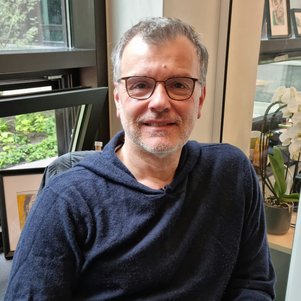
Dr.-Ing. Steffen Klamt leads the Research Group 'Analysis and Redesign of Biological Networks' at the Max Planck Institute for Dynamics of Complex Technical Systems in Magdeburg, Germany, where he has been employed since 1998. He received his Diplom-Systemwissenschaftler degree from the University of Osnabrück in 1998 and his Dr.-Ing. from the University of Stuttgart in 2005. His research focuses on computational systems biology with emphasis on metabolic engineering, biochemical networks analysis, and bioprocess optimization. He develops computational tools like CellNetAnalyzer for network analysis and StrainDesign for metabolic engineering applications. Key research areas include constraint-based modeling, minimal cut sets analysis, and dynamic optimization of metabolic processes. His recent publications demonstrate strong focus on multi-stage bioprocess optimization, enzyme cascade engineering, and novel strain development strategies for chemical production. Common themes include ATP manipulation strategies, thermodynamic constraints in metabolism, and integration of experimental data with computational models. Scientific Awards: Ernst Dieter Gilles Lecture Award Ernst Dieter Gilles Fellowship He leads a research group developing computational methods for metabolic network analysis and maintains collaborations with experimental groups for model validation and application. The group develops open-source software tools widely used in systems biology research.
Molly S. Shoichet serves as a University Professor at the University of Toronto's Faculty of Applied Science and Engineering, holding the Pamela and Paul Austin Chair in Precision and Regenerative Medicine and previously the Michael E. Charles Chair in Chemical Engineering. She leads the Shoichet Laboratory (Room 514, 160 College Street) focused on biomaterials-driven solutions for regenerative medicine and drug delivery challenges. Her educational foundation includes a B.Sc. from MIT and M.Sc./Ph.D. from the University of Massachusetts. This training underpins her cross-disciplinary approach integrating engineering, chemistry, and biology to address unmet medical needs. Shoichet's research centers on four synergistic pillars: (1) Targeted cancer delivery using colloidal drug aggregates for breast, brain, lung, and lymphoma; (2) Injectable hydrogels enabling sustained biomolecule release to the CNS for spinal cord/retinal repair; (3) 3D biomimetic scaffolds modeling disease microenvironments for drug screening; and (4) Cell delivery systems enhancing stem cell survival in blindness/stroke applications. Her lab emphasizes translational impact through commercialization efforts like AmacaThera. Analysis of her 2021-2025 publications reveals accelerating innovation in RNA delivery platforms, neural repair strategies, and disease-specific hydrogel systems, with strong emphasis on pulmonary delivery, stroke recovery mechanisms, and ocular therapeutics. These works bridge nanomedicine, regenerative biology, and clinical translation across cancer and neurological disorders. Her exceptional contributions are recognized through over 30 major honors including: Gerhard Herzberg Canada Gold Medal (2020) Killam Prize in Engineering (2017) Foreign Membership in US National Academy of Engineering (2016) Fellowship in The Royal Society (2019) Officer of the Order of Canada (2018) L’Oréal-UNESCO For Women in Science Laureate (2015) Shoichet actively mentors graduate students (including OGS/QEII scholars Chris Ling, Nadiyah Khan, and Riley Li) and secures major funding from Natural Sciences and Engineering Research Council (NSERC), Canadian Institutes of Health Research (CIHR), Canada First Research Excellence Fund (Medicine by Design), Krembil Foundation, and McEwen Foundation. Her lab operates as a multidisciplinary hub collaborating with stem cell biologists, neurosurgeons, and cancer researchers to advance therapeutic pipelines. The Shoichet Lab maintains state-of-the-art facilities for polymer synthesis, cell culture, and in vivo testing, with current projects focused on RNA delivery stabilization, glaucoma treatment systems, and stroke recovery mechanisms. Her TERMIS-Americas leadership and commercialization initiatives demonstrate commitment to translating biomaterials innovations into clinical impact.
Prof. Dr. Kai Tittmann is a Professor at the University of Göttingen and MPI-NAT Fellow leading the Department of Molecular Enzymology within the Göttingen Center of Molecular Biosciences (GZMB). His research is based at the Albrecht-von-Haller-Institute for Plant Sciences at the University of Göttingen. Professor Tittmann's research focuses on the molecular reaction mechanisms of enzymes (biocatalysts). His work particularly emphasizes enzymes with vitamin-derived cofactors , metal ions , and Schiff base-forming enzymes . His laboratory employs a multidisciplinary approach combining high-resolution X-ray crystallography , steady-state and transient kinetic methods , NMR spectroscopy , and theoretical studies to characterize enzyme reaction intermediates. The knowledge gained from these mechanistic studies is directly applied to redesign enzymes for biocatalytic applications and drug design . This translational approach bridges fundamental biochemical understanding with practical applications in biotechnology and medicine. His work contributes significantly to the scientific community at the intersection of structural biology, enzymology, and biocatalysis.
Codruta Ignea is an Assistant Professor in the Department of Bioengineering at McGill University , Montreal, Canada. Her research focuses on synthetic biology and metabolic engineering, specifically reconstructing biosynthetic pathways in microbial chassis for high-value compound production. Areas of Expertise : Synthetic Biology, Metabolic Engineering, Biological Membrane Engineering Contact : codruta.ignea@mcgill.ca , McConnell Engineering Building, 817 Sherbrooke Street West, Montreal, QC H3A 0C3 Her work involves designing synthetic biosystems that bio-mimic producer organism environments to enhance bioprocess performance, discovering novel enzymatic activities, and expanding natural chemical diversity for drug discovery. Key applications include pharmaceutical production and new-to-nature molecules with improved bioactivities. Recent publications highlight her contributions to yeast engineering for terpenoid biosynthesis, pathway optimization, and artificial intelligence integration in synthetic biology. Her team has developed systems for producing anti-cancer, anti-viral, and anti-inflammatory compounds through microbial platform innovation.
Stephan Hammer is a Professor of Organic Chemistry and Biocatalysis at the Faculty of Chemistry, University of Bielefeld , and Head of the Organic Chemistry and Biocatalysis Group at the Center for Biotechnology (CeBiTec). He is also a Project Manager for multiple DFG-funded initiatives and a Recipient of the Emmy Noether Fellowship . His work focuses on creating and evolving biocatalysts for synthetic chemistry applications. Education: PhD in Biocatalysis (University of Stuttgart, 2014), Postdoc with Frances Arnold (Caltech, 2015-2017), studied Chemistry at Cambridge (2008-2009) and Marburg (2005-2010) Research Interests center on directed enzyme evolution for non-natural reactions, particularly CC/CN/CO bond formations using SAM analogues and engineered enzymes like cytochrome P450s and methyltransferases. His methodology spans bioinformatics, molecular biology, and preparative synthesis. His 15 most recent articles highlight trends in biocatalytic alkylation , carbocation control , SAM analogue generation , and P450 engineering for selective oxidation. These studies often involve directed evolution of enzymes to access reactive intermediates and expand metabolic pathways. Scientific Awards include the Emmy Noether Junior Research Group Fellowship from the German Research Foundation (DFG), enabling his work on novel catalytic reactions through enzyme engineering. Additional funding includes DFG grants and support from the German Federal Environmental Foundation . Research Collaborations span institutions like Caltech (Frances Arnold), University of Stuttgart (Bernhard Hauer), and partnerships within the Organic Chemistry and Biocatalysis Group at CeBiTec. His projects frequently involve interdisciplinary teams in chemical biology and protein engineering .
Birgitte Zeuner is an Associate Professor at the Department of Biotechnology and Biomedicine , Technical University of Denmark, specializing in Protein Chemistry and Enzyme Technology . Her research focuses on Enzymatic Synthesis Technology with particular emphasis on carbohydrate-active enzymes. Active supervisor in Engineering alkenal reductase reversibility (2025-2028) Main supervisor in Regioselectivity in enzymatic carbohydrate synthesis (2024-2027) Supervisor in Enzymatic xyloglucan modification (2018-2022) Recent 54 publications highlight her work on glycosylation, human milk oligosaccharides, and transglycosylation. She has received significant attention in Mendeley readership and peer review platforms. Current projects explore: Enzyme engineering for biomass upgrading Sustainable biocatalytic processes using ionic liquids Gut microbiome interactions with plant-derived carbohydrates Her research aligns with UN Sustainable Development Goals for biocatalytic applications in health and sustainability.
Dr. Andres M. Escorcia is a researcher at the Max Planck Institute for Dynamics of Complex Technical Systems, leading the Molecular Simulations and Design (MSD) group. He holds a PhD in Chemistry from Universidad Industrial de Santander (UIS), Colombia, and has held academic positions including Assistant Professor at Universidad Icesi (2021–2023). His research focuses on enzyme reaction mechanisms using molecular dynamics (MD) simulations and hybrid quantum mechanics/molecular mechanics (QM/MM) methods, targeting enzymes such as deubiquitinases, hydrogenases, terpene synthases, and lytic polysaccharide oxygenases. He collaborates extensively with interdisciplinary teams and co-supervises PhD students. Previous postdoctoral positions include work at the University of Bristol (UK), Max-Planck-Institut für Dynamik komplexer technischer Systeme (Germany), and Max-Planck-Institut für Kohlenforschung (Germany). His educational background includes a BSc in Chemistry (UIS, 2008) and a PhD (UIS, 2015), advised by Professors Markus Doerr and Martha Daza. His research interests span computational enzymology, reaction mechanism elucidation, and enzyme engineering. He has published extensively in top journals like Inorg. Chem. , J. Chem. Inf. Model. , and ACS Catal. . His work bridges theoretical modeling and experimental validation, with contributions to understanding catalytic pathways in biocatalysts and protein-ligand interactions. Recent projects include studies on Cezanne-2 deubiquitinase and taxadiene synthase mechanisms. Dr. Escorcia is affiliated with the MSD group, contributing to both computational infrastructure and experimental collaborations. His contributions to enzyme modeling and reaction design have advanced understanding of enzymatic selectivity and catalytic efficiency.
Varsha S. Pathare is a Visiting Assistant Professor at Cornell University's School of Integrative Plant Science (Soil and Crop Sciences Section), joining as a tenure-track Assistant Professor in July 2025. She holds a PhD from Western Sydney University and has held postdoctoral positions at Washington State University and the University of Illinois. Her research focuses on plant ecophysiology, particularly optimizing photosynthesis and water-use efficiency in grasses under climate change. She investigates leaf anatomy, CO2/water fluxes, and C3/C4 photosynthetic pathways using field and controlled experiments. Education includes a PhD in Biological Sciences (2018, Western Sydney University), MSc (Botany, 2009, Savitribai Phule Pune University), and BSc (Botany, 2007, Sir Parshurambhau College). Awards include a Carl Woese Fellowship and recognition for her PhD work. She has mentored over 20 students across institutions and co-authored over 20 peer-reviewed papers. Her work bridges plant physiology and ecology, addressing climate resilience in crops and grasslands. Key projects include redesigning leaf cell walls for optimized gas exchange and integrating plant-atmosphere CO2-water fluxes into Earth system models. She collaborates with the RIPE project and serves on DEI committees, promoting STEM education at K-12 levels through PlantingScience. Affiliations: Cornell University, University of Illinois, Western Sydney University Grants: Over $370,000 in funding from institutions like the Carl Woese Institute Outreach: K-12 mentorship, public science engagement, and DEI advocacy
John McGeehan is a Principal Scientist and Group Manager III at the National Renewable Energy Laboratory (NREL) since January 2024, specializing in biochemical engineering under the Circular Economy for Energy Materials initiative. He serves as a Visiting Professor at the University of Portsmouth and previously held leadership roles such as Director of the Centre for Enzyme Innovation and Professor of Structural Biology. His work focuses on enzyme-based technologies for sustainable chemicals, materials, and fuels, particularly targeting plastics recycling and redesign through the BOTTLE consortium. PhD in Virology, University of Glasgow Bachelor in Microbiology, University of Glasgow McGeehan’s research spans enzyme engineering, lignin valorization, hydrogen and CO2 utilization, and sustainable materials. He leads collaborative projects on biocatalytic plastic degradation and depolymerization, with a focus on polyethylene terephthalate (PET) and aromatic compounds. Recent publications highlight advancements in enzymatic recycling of PET and cofactorless deformylation processes. His work emphasizes scalable solutions for plastic pollution and circular economy principles. Altmetric Top 100 Research Papers (2018, 2021) Circular Economy Innovation of the Year (2021) Diamond Light Source Research Highlights (2018, 2021) McGeehan advocates for collaborative research across U.S. and international networks, contributing to journals, conferences, and professional societies like the Royal Society of Biology and American Chemical Society.
Associate Professor Natalie Borg is a faculty member in the Department of Health and Biomedical Sciences at RMIT University , Australia. She leads the Immunity and Immune Evasion Laboratory and holds the title of RMIT Senior Research Translation Fellow . Her research focuses on innate immunity and how pathogens manipulate immune responses. This work drives antimicrobial drug discovery programs and investigates nanostructured surface applications for viral inactivation. Scientific Awards NHMRC Peter Doherty Fellowship NHMRC Career Development Award L'Oreal for Women in Science Fellowship ARC Future Fellowship Her research programs have secured $3.65 million in competitive national funding from ARC, NHMRC, and the US Leukemia and Lymphoma Society, alongside $1.16 million in translational grants supporting multidisciplinary collaborations and a technology licensing agreement.
Prof. Thomas Brück holds the Werner Siemens Chair of Synthetic Biotechnology at the Technical University of Munich (TUM), within the TUM School of Natural Sciences and Department of Chemistry. He serves as Director of the TUM AlgaeTec Center, operating a globally unique algae pilot plant that enables algal process development with climate simulation. Since 2020, he has been Dean for Research and Innovation at the TUM School of Natural Sciences, overseeing three research departments (Chemistry, Physics, Biology) with over 90 professors and 7,500 employees, and developing comprehensive research and industrial implementation strategies. His educational background includes: Ph.D. in Biochemistry (2002) from Imperial College and Greenwich University, London Master of Philosophy in Molecular Medicine (1996-1997) from Keele University Dual B.Sc. (Hons) in Chemistry and Biochemistry (1992-1996) from Keele University Prof. Brück's research focuses on synthetic biotechnology, particularly designing sustainable processes for converting residual biomass and CO 2 into platform and specialty chemicals. His group employs advanced bioinformatic tools and molecular simulation to modulate enzyme catalysis toward process-relevant parameters. They incorporate redesigned enzymes into customized cell systems for whole-cell production of terpenoids and functionalized lipids. His team specializes in phototrophic and heterotrophic cell systems that convert CO 2 to value-adding chemical entities, with expertise spanning microbial cultivation, artificial metabolic pathway design, synthetic and systems biology, and associated bioprocess development using E. coli, yeast, and microalgae. His scientific achievements have been recognized with numerous awards: 2024 JEC-Award for Green Carbon Fiber in the 'Sustainable Building' category 2022 Green Award for sustainable building materials at Green Tech Festival in Singapore 2019 1st Sustainability Award of Technical University of Munich 2018 E-Ward for development of carbon fibers based on algae 2018 Werner Siemens Foundation Chair for Synthetic Biotechnology 2011 Süd-Chemie Foundation Professorship for Industrial Biocatalysis Prof. Brück has successfully supervised over 145 Master's students and 34 doctoral students, including several who now lead their own research groups or companies. He has secured more than 75 million euros in research funding across 34 projects from national, EU, and private sources since 2011. His research spans multiple projects including AlgenBauSchutz, CannDesign, InViDetect, and VALUABLE, with significant contributions to sustainable materials and carbon capture technologies. His research team includes Dr. Daniel Garbe, PD Dr. Norbert Mehlmer, Dr. Marion Ringel, Dr. Dania Awad, and numerous scientific staff members. He also founded the Werner Siemens Student Research Center, enabling school students to conduct biotechnology research focused on sustainability, and serves on advisory boards including the Munich Catalysis Alliance and Austrian Drug Screening Institute.
Chandra Kanth Bandi is a researcher specializing in glycoscience, bioengineering, and synthetic biology. His work focuses on carbohydrate-active enzymes (CAZymes), glycosynthase engineering, and chemoenzymatic synthesis of glycans, with applications in biocatalysis, biosensors, and cell-free protein systems. Glycoprotein engineering via cell-free environments HTS platforms for enzyme optimization Click chemistry applications in glycan detection Machine learning for enzyme mutagenesis His research trends reveal a strong emphasis on industrial biotechnology, particularly in milk oligosaccharides synthesis and lignin-resistant cellulases. Publications highlight innovations in glycoengineering, biosensor development, and population balance modeling for pharmaceutical processes.
Prof. Dr. Ir. Jean-Marc Daran is a Full Professor and Section Leader in the Department of Biotechnology at the Faculty of Applied Sciences, Delft University of Technology (TU Delft) . He leads a research group focused on yeast molecular and metabolic engineering, with strong emphasis on industrial applications in fermentation, brewing, and biotechnology. His research interests span yeast molecular biology, metabolic engineering, CRISPR genome editing, synthetic biology, microbial physiology, and industrial biotechnology . He investigates the molecular basis of industrially relevant traits in both domesticated and wild yeasts, particularly Saccharomyces cerevisiae and Saccharomyces pastorianus , with applications in flavor formation, sugar assimilation, cold tolerance, and biosynthesis of high-value chemicals such as flavonoids and antibiotics. His group also pioneers genetic tools for non-conventional yeasts like Kluyveromyces , Ogataea , and Yarrowia . The recent articles highlight a strong trend in advanced genome editing techniques (e.g., CRISPR-Cas9, ErCas12a, CRI-SPA), metabolic pathway engineering (vitamin-independent growth, ethyl ester production, 2-phenylethanol), and systems-level understanding of yeast physiology and genomics . His work integrates computational genomics, molecular biology, and bioprocess engineering to develop next-generation yeast cell factories. Prof. Daran has made significant contributions through numerous high-impact publications and collaborative research within TU Delft, particularly with the Pronk and Daran-Lapujade groups. His work has practical implications in brewing, sustainable chemistry, and biomanufacturing. Email: j.g.daran@tudelft.nl Office: Room B58.B0.350, TU Delft ORCID: 0000-0003-3136-8193
Prof. Dr. Hajo Kries is a Professor at the Institute of Biochemistry and Technical Biochemistry, University of Stuttgart, specializing in Technical Biochemistry. His research focuses on enzyme engineering, natural product biosynthesis, and synthetic biology approaches to design novel biocatalysts. Key research areas include reprogramming nonribosomal peptide synthetases, elucidating biosynthetic pathways of complex natural products, and developing high-throughput screening methods for enzyme engineering. His work bridges chemical biology, enzymology, and metabolic engineering. Recent publications demonstrate innovations in directed evolution of megasynthetases, mechanistic studies of cyclopropanol formation in natural products, and the engineering of noncanonical amino acid incorporation. Research consistently addresses fundamental questions in enzyme specificity while developing tools for therapeutic peptide production.
Hein Wijma is a Researcher in the Department of Biotechnology at the Faculty of Science and Engineering , University of Groningen. His expertise spans Biotechnology , Applied Microbiology , and Chemistry , with a focus on enzymes, protein engineering, and computational protein design. He actively collaborates on projects involving enzyme structure-function relationships and biocatalytic applications. His research interests include enzyme engineering , computational protein design , and in silico screening . Recent work involves redesigning enzymes for biocatalytic synthesis (e.g., β-alanine production) and studying novel oxygenases. He has authored over 60 peer-reviewed articles, including studies on nitroreductases, Baeyer-Villiger monooxygenases, and thermostable enzyme variants. Wijma leads research on enzymatic mechanisms and has contributed to innovations like computationally designed enzyme libraries (e.g., FRESCO). His work aligns with sustainable development goals through biocatalytic solutions for industrial processes.