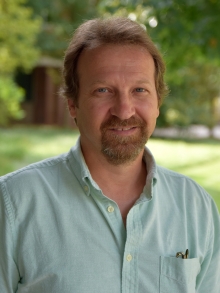
Dr. Rodney Weber is a Professor in the School of Earth & Atmospheric Sciences at Georgia Institute of Technology, part of the College of Sciences. His research focuses on atmospheric aerosols, urban air quality, and particle formation mechanisms. He holds a Ph.D. (1995) and M.S. (1991) in Mechanical Engineering from the University of Minnesota, and a B.S. (1987) from the University of Waterloo. Key research interests include atmospheric aerosol sources and processing, new particle formation via homogeneous nucleation, and aerosol growth processes. He develops novel instrumentation, such as the Particle Into Liquid Sampler (PILS), and leads field studies like the ALPACA project in Fairbanks, Alaska. His work bridges laboratory experiments and real-world atmospheric measurements. Dr. Weber has received awards including the Cullen-Peck Faculty Fellow Award (2007), Whitby Award (2005), and NASA Global Change Fellowship. His recent publications (2024–2025) address biomass burning plumes, urban pollution dynamics, and aerosol chemistry in cold climates. He collaborates on global initiatives like the NASA Atmospheric Tomography (ATom) mission and FIREX-AQ campaigns. His lab (ES&T 2107/2115) focuses on aerosol optical properties, reactive oxygen species in particulate matter, and the health effects of pollution. Research highlights include quantifying sulfur chemistry in Fairbanks and assessing oxidative potential of PM2.5 in urban environments.
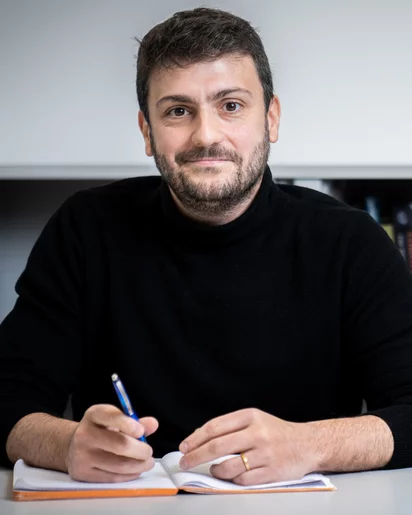
Dr. Jules Rawlinson is a Senior Lecturer in Digital Design at the Reid School of Music , University of Edinburgh. He serves as Programme Director for the MSc Sound Design and contributes to MSc Design and Digital Media, ESALA undergraduate courses, and the Reid School's MSc Digital Composition and Performance. PhD in Composition (University of Edinburgh, 2011) MSc Sound Design (University of Edinburgh, 2006) BA Combined Arts (Sunderland University) Jules investigates audiovisual composition , live electronics , and interactive performance systems , blending machine learning , virtual environments , and corpus-based sound synthesis . His work explores non-linear narrative structures , graphical scores , and political sound-art through collaborations like Raw Green Rust and projects such as Lie Still My Sleepy Fortunes and w[i]nd . His 15 most recent outputs span audiovisual installations , generative sound systems , and collaborative performances , focusing on virtual reality , spectral transformation , and digital improvisation . Jules co-founded the LLEAPP network and has secured grants from EPSRC and New Media Scotland's Alt-w Fund . He supervises PhD students Tim Bentley, Hal Xu, Benjamin Cantil, and Liam Peacock, with works showcased at festivals including Sonorities , Edinburgh International Film Festival , and Edinburgh Festival Fringe . His Requiem for Edward Snowden was featured in BBC Radio 3's Hear and Now and selected for Creative Scotland's Made In Scotland Showcase.
Paul Connolly is a Professor of Atmospheric Physics and Reader in the School of Earth and Environmental Sciences at The University of Manchester. He serves as the Department's Senior Academic Advisor since 2018. His roles include academic leadership, research, and teaching in atmospheric sciences. Connolly holds a BSc (Hons) in Pure and Applied Physics from UMIST (2001) and a PhD in Atmospheric Science from Manchester (2006). His research focuses on cloud physics, ice nucleation, and numerical modeling, including developing the University’s large cloud chamber facility in the Latham Laboratories. Research Interests: Ice nucleation mechanisms and secondary ice production Cloud-aerosol interactions and numerical modeling Unsupervised deep-learning applications in image classification Key Projects: Climate and Weather Impacts on Society (2022–present) RAI Centre for Robotics and Artificial Intelligence (co-investigator) Teaching: Courses include Environmental Modelling (EART22001) and Measuring and Predicting-2 (EART60071). He has over a decade of experience teaching mathematics, statistics, and atmospheric physics to undergraduate and postgraduate students. Impacts: His work contributed to UK responses during the 2010 volcanic ash crisis. Research collaborations span cloud dynamics, microphysics, and fieldwork in Australia, Switzerland, Germany, and New Mexico.
Dr. Imad El Haddad serves as Group Head of the Molecular Cluster and Particle Processes group at the Laboratory of Atmospheric Chemistry (LAC), part of the Center for Energy and Environmental Sciences at Paul Scherrer Institute (PSI), Switzerland, since 2018. Previously, he held positions as Tenured Scientist and Deputy Head (2018-2019), Senior Scientist in the Smog Chamber group (2015-2018), and Postdoctoral Fellow (2011-2015) at PSI. His research aims to quantify how anthropogenic emissions alter atmospheric pollutant composition and impact Earth's climate and public health through molecular-level analysis using advanced mass spectrometry techniques. His academic background includes: Ph.D. in Atmospheric Chemistry, University of Provence, Marseille (2007-2011) Master's in Environmental Sciences (with distinction, rank 1/9), University of Provence (2006-2007) Master's in General Chemistry (with distinction, rank 1/10), Saint-Joseph University of Beirut (2005-2006) Bachelor of Science in Chemistry (with distinction, rank 1/14), Saint-Joseph University of Beirut (2002-2005) El Haddad's work centers on molecular fingerprinting of atmospheric aerosols , utilizing mass spectrometry (GC/MS, HPLC/APCI-MS2, HPLC/ESI-MS2) to identify primary and secondary molecular markers. He conducts smog chamber experiments to characterize emissions from wood burning, traffic, and cooking processes, determining secondary organic aerosol potential and oxidation state evolution. His group also studies in-cloud aqueous-phase aging and collaborates with global modelers to link aerosol composition to climate forcing and health outcomes like oxidative stress. Recent publications (2025-2024) reveal three dominant trends: (1) rigorous molecular-scale analysis of secondary aerosol formation under varying humidity/temperature, (2) source apportionment breakthroughs in diverse regions (India, Europe, Arctic) using 14C and AMS data, and (3) quantification of health-relevant aerosol properties such as oxidative potential through DTT assays. High-resolution mass spectrometry is a consistent methodological thread across these studies. His scientific awards include: MENRT research fellowship from French ministry of research (2007-2010) Excellence Scholarship (top 1% student, University of Saint Joseph, 2005) Distinction Prize (best student, University of Saint Joseph, 2005) As Group Head, El Haddad oversees the Molecular Cluster and Particle Processes group's research direction and mentorship of junior scientists. While specific grant details are absent from the text, his leadership in multi-institutional publications (e.g., CERN CLOUD, iCUPE) implies active grant management and international collaboration. The group's work bridges laboratory simulations, field deployments, and health/climate modeling to address air pollution complexities. The Molecular Cluster and Particle Processes group develops cutting-edge online/offline mass spectrometers for 1 Hz-resolution atmospheric analysis. They deploy instruments in laboratory smog chamber experiments and global field studies, focusing on molecular marker identification, emission source characterization, and aging process quantification. Collaborations with biochemists and climate modelers extend their impact beyond pure aerosol physics into health risk assessment and policy-relevant climate science.
Steven Constable is a Professor of Geophysics at the Institute of Geophysics and Planetary Physics (IGPP) within the Scripps Institution of Oceanography at UC San Diego. He specializes in electrical conductivity studies of Earth’s crust and mantle, seafloor instrumentation development, and geophysical data analysis. His research focuses on understanding tectonic processes, subduction zone dynamics, and marine geohazards through electromagnetic methods. Education: B.S., University of Western Australia Ph.D., Australian National University Research Interests: Electrical conductivity of crust and mantle Seafloor instrumentation development Magnetotelluric and controlled-source electromagnetic (CSEM) methods Subduction zone fluid dynamics CO 2 sequestration monitoring Mid-ocean ridge magmatism Grants & Collaborations: NSF-NERC Collaborative Research: Magnetotelluric imaging of plume-ridge interactions (Galapagos) Magnetotelluric Investigation of the Salton Trough (MIST) Experiment PI-LAB Experiment at the Equatorial Mid-Atlantic Ridge Labs & Teams: He leads the Marine Electromagnetics Lab , developing cutting-edge instrumentation for marine geophysical surveys. His team collaborates globally on projects ranging from Arctic permafrost assessment to subduction zone imaging.
Pedro Schilling De Carvalho is a Lecturer in Law at University College London's Faculty of Laws, specializing in Financial and Environmental Law. He holds a PhD in Law and Finance from the University of Cambridge, where he received a Cambridge International Scholarship, as well as an LLM in Commercial Law from Cambridge (supported by a Chevening Scholarship) and a LLB from the University of São Paulo, Brazil. His academic journey includes positions at: University of Cambridge (Research Affiliate, Judge Business School and Lauterpacht Centre for International Law) London School of Economics (Guest Lecturer) University of Edinburgh (Early Career Fellow in Financial Law and Regulation) Max Planck Institute for Comparative and International Private Law (Visiting Fellow) Harvard Law School (Visiting Fellow) Pedro's research focuses on financial regulation, corporate finance, environmental law, international economic law, and sustainable finance. His work explores regulatory diffusion in sustainable finance, international financial governance in multipolar contexts, and the intersection of corporate governance with environmental and social concerns. He has published in peer-reviewed journals such as the Journal of Financial Regulation and has been cited by institutions including the International Monetary Fund. His recent publications demonstrate a strong focus on sustainable finance frameworks, regulatory coordination across jurisdictions, and the evolving landscape of financial technology regulation globally. His work spans theoretical analysis of corporate governance models alongside practical regulatory frameworks for emerging financial technologies and sustainable investment. Pedro has received several prestigious awards and recognitions: Cambridge International Scholarship Chevening Scholarship Max Planck Institute & Cambridge Scholarship Certified peer-reviewer by the Equitable Growth, Finance and Institutions Global Practice He has actively contributed to policy development through written evidence to the UK Parliament Committee on the Future Relationship with the European Union, consultancy work for the World Bank Group's Legal Vice Presidency, the Green Climate Fund, and the Bill & Melinda Gates Foundation. His professional activities include being Co-Director of the UCL Centre of Law and the Environment, academic member of the European Corporate Governance Network, and member of the Leadership of the Commission on Arbitration and ADR at the International Chamber of Commerce. Pedro has extensive experience as both a transactional and dispute resolution lawyer, having worked with prominent law firms and served as Chief of Staff at the Commercial Law Chamber of the São Paulo Supreme Court.
Joel Krueger is a Lecturer in Philosophy at the University of Exeter, affiliated with the Department of Sociology and Philosophy and Egenis, the Centre for the Study of Life Sciences. He specializes in phenomenology, philosophy of mind, and cognitive science, with a focus on embodied cognition, emotions, social cognition, psychopathology, and human-AI interactions. His research also encompasses Asian and comparative philosophy, philosophy of music, and pragmatism. Education: PhD in Philosophy from Purdue University (2010), MA in Philosophy from San Francisco State University (2006), and BA in Philosophy from the University of California, Davis (2003). Research Interests: Krueger’s work bridges philosophy and cognitive science, addressing topics such as loneliness, psychiatric disorders, AI ethics, and the role of music in affective scaffolding. He explores how technologies like AI chatbots influence grief and social interactions, and how embodied cognition shapes mental health and sociality. Editorial Roles: Associate Editor of Phenomenology and the Cognitive Sciences and Passion: Journal of the European Philosophical Society for the Study of Emotion . Labs/Teams: Active in Egenis (Mind, Body, and Culture), contributing to interdisciplinary studies on life sciences and their societal implications.
Justin Hollander is a Professor of Urban and Environmental Policy & Planning at Tufts University, affiliated with the Graduate School of Arts and Sciences. He earned a PhD from Rutgers University, an MRP from UMass Amherst, and a BA from Tufts. His research focuses on urban redevelopment, cognitive urbanism, and the intersection of technology with planning. Dr. Hollander has authored 11 books and over 70 journal articles, with grants from organizations like the U.S. Department of State and the Lincoln Institute of Land Policy. He serves as Editor-in-Chief of the Journal of Planning Education and Research and hosts the Cognitive Urbanism podcast. Research interests include cognitive responses to urban environments, biometric tools in design, and policy responses to urban shrinkage. Notable publications address military dimensions of urban planning, AI-driven public art analysis, and Mars colonization. Awards include the 2025 William R. and June Dale Prize. He teaches courses on urban studies, real estate development, and thesis guidance. Professional activities include conference presentations and media contributions to outlets like NPR and The New York Times. As director of the Urban Attitudes Lab, he explores biometric and digital tools for urban analysis. Ongoing work includes studies on climate hazards in Addis Ababa, bot-driven online planning discourse, and post-pandemic urban futures.
Professor Lee Joo-young serves at Seoul National University's College of Human Ecology, Department of Clothing and Textiles, where she leads research at the COM:FORT Lab (Clothing and Omnicare for Thermoregulation). Her office is located in Building 222, Room 306, with graduate student lab facilities in Room 332. Her research focuses on the critical relationship between clothing, thermal environments, and human health, exploring interactions within the Human-Clothing-Thermal environment system. Professor Lee's work applies fundamental theories of thermal physiology , exercise physiology , and occupational physiology to environmental ergonomics. Her laboratory conducts both human subject studies and thermal manikin experiments inside climate chambers to evaluate physiological and subjective responses. The COM:FORT Lab has undertaken significant research projects including: Firefighters' PPE wear trials and heat strain studies Cold tolerance research with Korean women divers (Hae-Nyeo) in Jeju Gloves dexterity testing and thermal protection evaluation Heat acclimation training protocols Graphene heating applications for protective clothing Professor Lee teaches courses in Clothing and Health, Special Function Clothing, Clothing Physiology and Experiment, and Thermal Physiology. Her work has involved international collaborations with institutions including US NIOSH and Japanese research groups.
Professor Carol Fuller is a Professor of Sociology of Education at the University of Reading's Institute of Education. Her research focuses on educational sociology, gender studies, and socio-economic disparities in education. She leads projects on topics such as 'Left-Behind’ Children in rural China, career decision-making in Gulf nations, and the impact of outdoor learning on educational attainment. Education No explicit educational details provided beyond her PhD in Sociology of Education from the University of Reading (2008). Research Interests Carol’s work explores educational identity formation, gender dynamics in education, widening participation strategies, and the role of social capital in shaping aspirations. She employs both qualitative and quantitative methods, often collaborating with international institutions (e.g., University of West Indies, Ho Chi Minh City University). Grants & Projects Thames Valley Chamber of Commerce LSIPs Employer Engagement Research (2023) Ministry of Justice-funded study on girls and routes into crime (2023) University of Reading grants on outdoor learning impacts (2014-2017) Awards Fellow of the Higher Education Academy Teaching & Supervision Supervises doctoral students globally, with current advisees researching topics like cultural parenting practices in Saudi Arabia and gender representations in STEM. Convenes courses such as ED1BSE and ED3FDD, contributing to MA and PhD programs. Labs/Teams Part of interdisciplinary teams at the Institute of Education, collaborating on projects like the 'Indoor/Outdoors Girlhood' initiative and the Jamaican education leadership study.
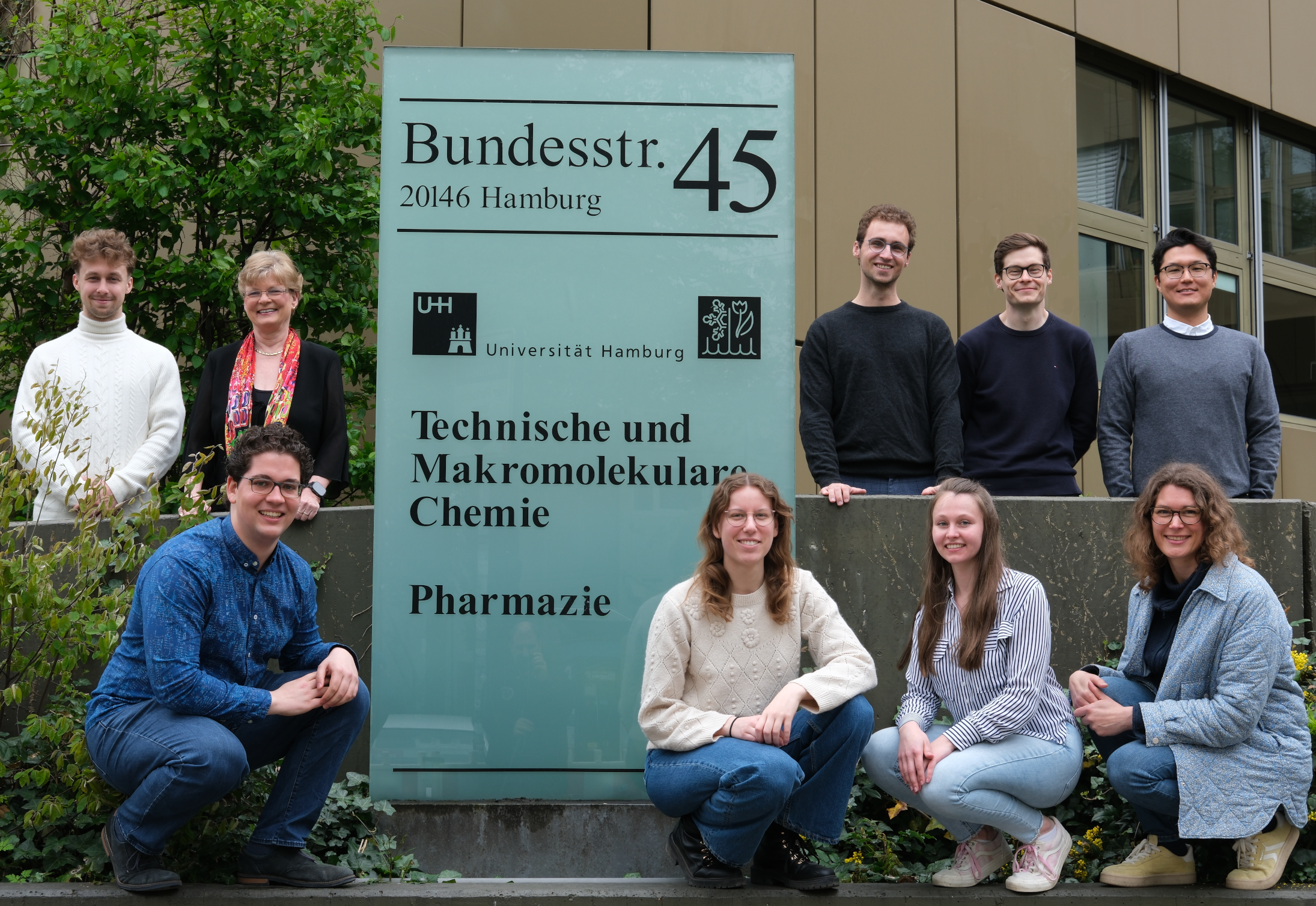
Professor Claudia S. Leopold serves as Professor and Head of the Institute of Pharmacy within the Department of Chemistry at the University of Hamburg's MIN Faculty. With over 35 years of academic experience, she leads the Pharmaceutical Technology Department and maintains an active research program focused on advanced pharmaceutical manufacturing processes and drug delivery systems. Her educational background includes a pharmacy degree from Heinrich-Heine-University Düsseldorf (1981-1985), followed by pharmacist certification in 1987. She completed her doctoral research in 1992 on skin penetration enhancement, conducted postdoctoral research at Stanford Research Institute and UC San Francisco, and achieved her habilitation in pharmaceutical technology in 1999. Her academic progression includes professorial positions at Leipzig University (2000-2005) before joining the University of Hamburg in 2005. Prof. Leopold's research program centers on pharmaceutical technology innovations, particularly in tablet formulation and manufacturing processes. Her laboratory investigates optimization of process flows during tableting, use of co-processed excipients, characterization of dustiness within containment systems, control of drug release through polymer interactions, and improving water solubility of active ingredients through co-amorphization techniques. Her work bridges fundamental pharmaceutical science with practical manufacturing applications, addressing critical challenges in modern pharmaceutical production. Her recent publications (2022-2025) demonstrate a strong focus on continuous manufacturing technologies, co-amorphous drug systems, and advanced process analytical techniques. These works reveal trends toward real-time monitoring of pharmaceutical processes, spatial analysis of powder behavior, and sophisticated approaches to enhancing drug solubility and stability. Her research group has made significant contributions to understanding powder flow dynamics, tablet coating mechanics, and the application of novel spectroscopic methods in pharmaceutical manufacturing. Habilitations-Förderpreis der Deutschen Pharmazeutischen Gesellschaft (1997) Ehrendoktorwürde (Dr. h.c.) (2020) Prof. Leopold has supervised over 25 doctoral students throughout her career, with recent dissertations focusing on powder characteristics, co-amorphous systems, continuous manufacturing optimization, and advanced tablet technologies. Her laboratory maintains strong industry connections through contract research in formulation development, tableting process optimization, drug release measurements, and expert consultation on pharmaceutical-technological issues. The research group operates specialized equipment for pharmaceutical technology studies and collaborates with international partners in continuous manufacturing and drug delivery research. The Leopold research group (AG Leopold) operates within the Institute of Pharmacy at the University of Hamburg, maintaining a comprehensive suite of equipment for pharmaceutical technology research. The team includes multiple scientific associates, research assistants, technical staff, and visiting scientists working collaboratively on various aspects of pharmaceutical development and manufacturing. The laboratory environment supports both fundamental research and applied contract work for industry partners, with particular expertise in tableting processes, drug delivery systems, and analytical method development for pharmaceutical applications.
Luc Deike is an Associate Professor at Princeton University, jointly appointed in the Department of Mechanical and Aerospace Engineering and the High Meadows Environmental Institute. His research focuses on multi-phase turbulent systems involving waves, bubbles, and droplets, with applications to environmental science and renewable energy. Education: Ph.D. in Physics, Université Paris Diderot, France (2013) BSc and MSc in Physics, Ecole Normale Supérieure and Université Pierre et Marie Curie, Paris (2006–2010) Research Interests: Dr. Deike's work integrates laboratory experiments and numerical simulations to study fundamental fluid dynamics in environmental contexts. Key areas include ocean wave breaking, air-sea gas exchange, bubble fragmentation in turbulence, sea spray generation, and offshore wind energy. His research bridges nonlinear wave dynamics, climate science, and sustainable materials. Publications: Recent work (2023–2025) emphasizes turbulence modeling, bubble-mediated gas transfer, wave-current interactions, and aerosol physics. Articles consistently explore interfacial phenomena, climate parameterizations, and high-fidelity simulations of oceanic processes. Awards: François Frenkiel Award, APS Division of Fluid Dynamics (2023) Milton Van Dyke Award, APS Division of Fluid Dynamics (2021) NSF CAREER Award (2019) Alfred Rheinstein Faculty Award, Princeton SEAS (2021) Grants & Labs: Leads the Deike Lab and holds multiple NSF/NASA grants (e.g., $1.2M for bubble dynamics in turbulence, 2023–2026). Projects include wind-wave-bubble gas exchange modeling and offshore wind farm optimization. Collaborates with NOAA GFDL and international partners on climate-scale parameterizations.
Tony Cookson is a Professor of Finance and the Michael A. Klump Endowed Professor at the Leeds School of Business , University of Colorado Boulder, where he has served since 2013. His research spans empirical finance , household and corporate financial decision-making , and the impact of social media and legal institutions on financial behavior. He has published in top journals like the Journal of Finance , Journal of Financial Economics , and Management Science , focusing on topics from investor disagreement to fracking-induced debt repayment . Education : Ph.D. in Economics (University of Chicago), M.S. in Statistics and Applied Economics (Montana State University), B.S. in Economics (Montana State University) His research interests include: How social media shapes investor sentiment and trading patterns The economic consequences of fracking and casino policy Legal institutions and their role in credit market development Behavioral finance through LLM-driven investor personas His scientific awards include the Best Paper in Investments and Asset Pricing (MFA 2023) , NASDAQ Best Paper in Asset Pricing (WFA 2021) , and Finalist for TIAA Paul A. Samuelson Award (2021) . He serves as Editor at the Review of Corporate Finance Studies and Associate Editor at multiple top journals.
Nga Lee "Sally" Ng is a Professor at the Georgia Institute of Technology, holding appointments in the School of Chemical & Biomolecular Engineering (primary), School of Earth & Atmospheric Sciences (joint), and School of Civil & Environmental Engineering (courtesy). Her research focuses on aerosol chemistry, with expertise in atmospheric nanoparticle formation, aerosol health effects, and advanced instrumentation development. She leads the Ng Research Group, which uses laboratory chamber experiments and field measurements to study aerosol dynamics. Dr. Ng has pioneered initiatives like the $12M NSF-funded ASCENT network for nationwide atmospheric measurements and served in leadership roles including Chair of AIChE's Environmental Division (2020) and AAAR Conference Chair (2019). She has received prestigious awards such as the AGU Atmospheric Sciences Ascent Award (2023), Love Family Professorship, and EPA STAR Early Career Award. Research interests: Aerosol chemistry, health impacts, instrument development, and climate interactions. Key contributions: Pioneering work on secondary organic aerosol formation, wildfire smoke health risks, and urban air quality monitoring networks. Her work bridges fundamental science and public health, with recent focus on quantifying aerosol toxicity using high-throughput assays and advancing low-cost sensor technologies for real-time air quality assessment.
Colette Heald is a Full Professor of Atmospheric Chemistry at ETH Zürich’s Institute for Atmospheric and Climate Science, serving as Deputy Head of the Institute. She holds a PhD in Earth and Planetary Science from Harvard University (2005) and has held academic roles at Colorado State University (2008–2011), MIT (2012–2023), and now ETH since 2024. Her research focuses on global tropospheric chemistry, atmospheric aerosols, biosphere-atmosphere interactions, and chemistry-climate linkages. Key contributions include advancing understanding of wildfire impacts on air quality, aerosol dynamics, and climate feedbacks. Dr. Heald’s honors include the AGU James B. Macelwane Medal (2015) and multiple teaching/leadership awards from MIT. She leads the Atmospheric Chemistry Group at ETH, contributing to courses like Atmospheric Chemistry and the Colloquium on Atmosphere and Climate. Her work integrates observational data with advanced models, addressing critical questions in climate change mitigation, air pollution, and environmental sustainability.