Daniel Leunbach is a Senior Lecturer at the School of Business, University of Oslo , specializing in Entrepreneurship . He teaches courses in strategy, innovation management, and entrepreneurship while integrating philosophy and psychology into his research to study decision-making under uncertainty. Ph.D. in Strategy and Entrepreneurship, University of Oslo MSc in Innovation and Entrepreneurship, University of Oslo BSc in Molecular Biology, University of Bergen His research explores the intersection of entrepreneurship theory , philosophy , and psychology , focusing on how entrepreneurs navigate situations where outcome probabilities are impossible to quantify. Recent publications investigate topics such as entrepreneurial imagination through poetry , resource acquisition negotiations , and Wittgensteinian approaches to defining entrepreneurship . Leunbach collaborates with scholars like Truls Erikson and Glenn Roger Kristiansen , publishing in journals such as Academy of Management Review , Scandinavian Journal of Management , and Journal of Business Venturing Design . He is affiliated with the Entrepreneurship (ENT) research group and consults on entrepreneurial decision-making frameworks.
Professor Ute Stephan is a Professor of Entrepreneurship at King's Business School, King’s College London, where she is affiliated with the Strategy, International Management & Entrepreneurship department. She is a globally recognized scholar in the psychology of entrepreneurship, with a focus on entrepreneurial well-being, mental health, social entrepreneurship, and the role of culture and institutions. Research Interests: Entrepreneurial well-being, stress, and mental health Social and inclusive entrepreneurship Cross-cultural innovation and national culture Family business and women entrepreneurs Entrepreneurial resilience during crises (e.g., Covid-19) Feedback-seeking and social networks Her recent publications reveal a strong trend toward understanding the psychological and social dimensions of entrepreneurship, particularly how entrepreneurs navigate uncertainty, maintain well-being, and create inclusive impact. Her work integrates insights from organizational behavior, psychology, and management, often using cross-national data and meta-analytic methods. Scientific Awards and Recognition: 2025 JIBS Decade Award Fellow, International Association of Applied Psychology (IAAP) 21st Century Entrepreneurship Fellow Winner, 2016 GLOBE Robert J. House Best Research Paper Award Highly Commended, 2015 GLOBE Robert J. House Best Research Paper Award Nominee, 2021 Journal of Management Scholarly Impact Award She has secured over £3 million in research funding from the European Commission, UK Government, UK research councils, and German institutions. She serves as Associate Editor at Journal of Management and Entrepreneurship Theory & Practice , and previously held editorial leadership roles at Applied Psychology and Journal of International Business Studies . She is an elected board member of the IAAP and chairs its publication committee. She also advises the Founder Mental Health Pledge and is an IfM Research Fellow at IfM Bonn. Labs and Research Teams: Lead investigator of the 25-country study on Entrepreneurship & COVID-19 Principal investigator of the WEWell project on women entrepreneurs’ well-being Lead investigator of the SEFORIS and SELUSI projects on social enterprises Team member in large-scale international collaborations across Europe, Asia, and the Americas
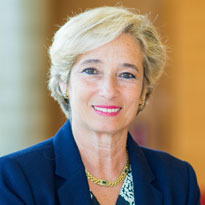
Nuria Chinchilla is Professor of People Management in Organizations at IESE Business School, University of Navarra, and holder of the Carmina Roca and Rafael Pich-Aguilera Chair of Women and Leadership. She founded the International Center for Work & Family and the I-WIL Initiative (IESE Women in Leadership), which focuses on fostering diversity in business and women's leadership globally. Her educational background includes a PhD in Business Administration and Economics, an MBA from IESE Business School, and a Law Degree from the University of Barcelona. She began her full-time professorship at IESE in 1984 and has maintained an active academic career spanning over four decades. Professor Chinchilla's research focuses on women and leadership, life course integration, family-responsible organizations, personal and professional career management, and organizational change. Her work examines how women leaders contribute to company development, the role of women on boards of directors, work-family balance, and corporate family responsibility. She has developed frameworks for integrating professional and personal life in harmony, emphasizing the conciliation with oneself as a starting point for broader life integration. Her recent publications reflect trends toward understanding talent management in post-pandemic organizations, sustainable business practices, and the impact of technology on work-life balance. Her research connects leadership development with ecological and humanistic approaches to business, exploring how purpose-driven organizations can create meaningful change. Best Female Manager of the Year by FEDEPE Gold Cross from European Development Foundation (AEFE) Member of Royal Academy of Economic and Financial Sciences of Spain (RACEF) since December 2018 Spanish candidate for UN CEDAW 2012 Professor Chinchilla serves as an advisor to numerous companies and government agencies, and is a member of several advisory boards including the VIP Advisory Board of the European Professional Women's Network, the Board of Trustees of UIC, and was a member of IWF-Spain from 2015-2019. She is a frequent speaker at universities and international conferences worldwide and has served as a visiting professor at business schools across Europe, Latin America, and Africa. Her work through the I-WIL network organizes events connecting women leaders at different career stages and investigates women's leadership impact on organizations.
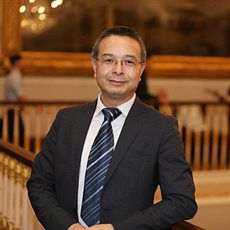
Dr Yong Lin is an Associate Professor in Operations and Supply Chain Management at the Department of Management, Birmingham Business School, University of Birmingham. He joined the university in September 2021, having previously held academic positions at the University of Greenwich and Huazhong University of Science & Technology. He has also served as a visiting researcher at the Institute for Manufacturing (IfM), University of Cambridge, and as a research assistant at the Hong Kong University of Science & Technology. PhD in Management Science and Engineering, Huazhong University of Science & Technology, 2002 MSc in Industrial Engineering and Management, Huazhong University of Science & Technology, 1999 Dr Lin’s research focuses on digital transformation and sustainability strategies in operations and supply chains. His key interests include supply chain risk and resilience, digital logistics platforms, business ecosystems, and manufacturing strategies. He explores how digital technologies such as blockchain and RFID can enhance transparency, efficiency, and sustainability across supply networks. His recent publications reflect a strong trend toward digitalization, resilience, and sustainability in supply chains, with studies on modular resilience in multinational platforms, blockchain in remanufacturing, and digitalization in healthcare logistics. His work frequently appears in top-tier journals such as International Journal of Operations and Production Management , Journal of Cleaner Production , and Technological Forecasting and Social Change . Senior Fellow of the Advance HE (Higher Education Academy) Certified Management and Business Educator, Chartered Association of Business Schools (CABS) Chartered Fellow, Chartered Institute of Logistics and Transport (CILT) Dr Lin has led and coordinated several research projects funded by the National Natural Science Foundation of China (NSFC), the 863 Program, and the European Regional Development Fund. He actively engages in industry consulting to transfer research outcomes into practical business solutions. He welcomes PhD applicants interested in digital transformation, sustainability, logistics platforms, and business ecosystems. He is also involved in advising and mentoring graduate researchers in these domains. Dr Lin is affiliated with the Department of Management at Birmingham Business School, where he contributes to research, teaching, and knowledge exchange in operations and supply chain management. His work bridges academic rigor with real-world application, particularly in digital and sustainable supply chain innovation.
Ethan Mollick is the Ralph J. Roberts Distinguished Faculty Scholar, Rowan Fellow, and Associate Professor of Management at the Wharton School of the University of Pennsylvania. He serves as Co-Director of the Generative AI Labs at Wharton, where he researches AI's impact on work, entrepreneurship, and education. His academic background includes a PhD and MBA from MIT's Sloan School of Management and a bachelor's degree from Harvard University. Mollick's research spans artificial intelligence applications in business and education, entrepreneurship dynamics, and innovation management. He explores how generative AI transforms classroom education through simulations like PitchQuest, and investigates startup funding disparities with a focus on gender representation. His work on the 'jagged technological frontier' demonstrates how humans integrate AI capabilities through Centaur and Cyborg approaches. His publications reveal consistent focus on practical AI implementation, with recent work examining prompt engineering for diverse idea generation, AI-assisted teaching strategies, and gender representation tipping points in venture capital. The research shows increasing emphasis on educational applications since 2022, coinciding with the ChatGPT breakthrough. MBA Professor of the Year Award, Poets & Quants (2024) Named to TIME Magazine's Most Influential People in Artificial Intelligence ASQ Award for Scholarly Contribution (2024) Greif Research Impact Award (2020) McGraw-Hill/Academy of Management Innovation in Entrepreneurship Pedagogy Award (2016) As Co-Director of Wharton's Generative AI Labs, Mollick leads prototype development and research on human-AI collaboration. His teaching includes Technology Strategy, Entrepreneurship, and Innovation courses where he implements AI simulations. He has advised numerous organizations and co-founded a startup prior to academia, bringing practical experience to his research on solo versus team ventures. Mollick directs Wharton Interactive's game development initiatives, creating educational simulations including PitchQuest (AI-powered VC simulator), The Saturn Parable (crisis management), and The Entrepreneurship Game. His lab work focuses on creating scalable AI educational tools that provide personalized learning experiences through simulated practice environments.
Saras D. Sarasvathy is the Paul M. Hammaker Professor at the Darden Graduate School of Business, University of Virginia, where she is a member of the Strategy, Entrepreneurship and Ethics area. A leading researcher in entrepreneurship, she advises entrepreneurship programs globally across Europe, Asia, and Africa, while serving on boards of companies including Lending Tree (Nasdaq: TREE) and Upekkha, a SaaS accelerator in Bangalore, India. Her research focuses on the cognitive basis of high-performance entrepreneurship, particularly her groundbreaking work on effectuation theory. Sarasvathy's scholarship examines how expert entrepreneurs think and act under uncertainty, challenging traditional predictive approaches to business strategy. She has developed frameworks showing how entrepreneurs create markets and opportunities through action-oriented, non-predictive methods that leverage available means rather than predetermined goals. Sarasvathy's award-winning research has generated significant scholarly attention and practical applications worldwide. Her work has spawned over a hundred scholars involved in the effectuation research program, with publications available through www.effectuation.org. Her influential book Effectuation: Elements of Entrepreneurial Expertise and co-authored textbook Effectual Entrepreneurship (winner of the 2012 Axiom Business Book Awards Gold Medal) have shaped entrepreneurship education globally. Among her numerous accolades are the 2022 Global Award for Entrepreneurship Research (the highest recognition in the field), the Academy of Management's 2019 Foundational Work Award, and recognition as one of Fortune Small Business Magazine's top 18 entrepreneurship professors. She has received honorary doctorates from multiple universities in Europe and Asia and has been named a Visiting Professor at institutions worldwide. Before academia, Sarasvathy founded and ran five successful businesses across three countries. Her doctoral research at Carnegie Mellon University was supervised by Herbert Simon, the 1978 Nobel Laureate in Economics, with whom she collaborated to discover the essential elements of entrepreneurial know-how. She holds a B.Com. from the University of Bombay, India, and an MSIA and Ph.D. from Carnegie Mellon University.
Professor David Sarpong is a leading academic in Strategy and Organisation at Aston Business School, part of Aston University's College of Business and Social Sciences. He currently serves as Head of the Marketing and Entrepreneurship Department and Director of Research for the Marketing and Strategy Subject Group. His research focuses on strategy-as-practice, relationalism, innovation management, and temporality in organizational processes. He holds adjunct roles at KNUST Business School and Bristol Business School, and is actively involved in professional organizations like EURAM and CABS. His work employs qualitative methods including ethnographic interviews and microstoria approaches. Professional Activities: He serves as Editor-in-Chief of the Journal of Strategy and Leadership, and on editorial boards for Technology Analysis & Strategic Management and European Management Journal. His external roles include UK Country Representative for EURAM and Board Membership at The Milestones Trust. He has held prior academic leadership positions at Brunel University London and visiting roles at HSE Moscow and University of KwaZulu-Natal. Research Interests: Prioritizes cross-level management problems using Heideggerian-Wittgensteinian frameworks. Key themes include second-order technology management, business tournament rituals, strategic foresight, and discursive practices in European cosmopolitan marketplaces. Methodologically innovative in combining narratives, digital datasets, and performative routines analysis. Collaborations: Active in global research networks with scholars across Africa, Europe, and Asia. Recent work addresses mining-industry partnerships, gender dynamics in extractive economies, and ethical dimensions of corporate governance. His research outputs number over 110 publications in top journals like Technovation and Journal of Business Research. Awards/Affiliations: Recognized through editorial leadership roles and visiting professorships. His research has policy implications for sustainable development, innovation ecosystems, and organizational resilience in global contexts.
William B Gartner serves as the Bertarelli Foundation Distinguished Professor of Family Entrepreneurship at Babson College's F.W. Olin Graduate School of Business, where he also directs research at the Bertarelli Institute for Family Entrepreneurship. Having joined Babson's faculty in 2017, Gartner brings over 40 years of experience studying entrepreneurial phenomena, with particular expertise in family entrepreneurship dynamics. He previously held distinguished chairs at the University of Southern California and Clemson University, establishing himself as a leading scholar in the field. Gartner earned his PhD, MBA, and BBA from the University of Washington, forming the foundation for his extensive research career. His academic journey began during entrepreneurship's early days in the late 1970s when he took one of the first entrepreneurship courses as an MBA student at the University of Washington, when only six students initially enrolled in the class. Gartner's research primarily explores how families act entrepreneurially, examining topics including entrepreneurial legacy, intergenerational knowledge transfer, and the transformation of family businesses across generations. His work bridges entrepreneurship theory with practical applications, particularly focusing on how entrepreneurial legacies can drive innovation in family businesses. He is particularly interested in the linguistic innovations entrepreneurs employ and how storytelling shapes entrepreneurial identity and practice. His scholarship has evolved to incorporate humanities perspectives, recognizing that literature, philosophy, and history provide valuable insights into entrepreneurial thinking and behavior. Analysis of Gartner's recent publications reveals a strong emphasis on family entrepreneurship as an ongoing process rather than a static state, with increasing attention to methodological innovation in entrepreneurship research. His work demonstrates growing interest in the role of narrative, visual methods, and qualitative approaches to understand complex entrepreneurial phenomena. The research shows consistent focus on family business succession as transformation rather than simple transfer, with increasing attention to adolescent entrepreneurial development and the influence of parenting styles. 2025 — Top 1% of Scholars in all subjects, Stanford/Elsevier's Top 2% Scientist Rankings 2024 — The FamCap25 – The Top FamilyEnterprise Academics, FAMILY CAPITAL MAGAZINE 2022 — Justin G. Longnecker Fellow, United States Association of Small Business and Entrepreneurship 2016 — Dedication to Entrepreneurship Award, Entrepreneurship Division, Academy of Management 2013 — Foundational Paper Award, Entrepreneurship Division, Academy of Management 2005 — International Award for Entrepreneurship and Small Business Research Gartner actively mentors doctoral students and early-career researchers, frequently collaborating on publications addressing complex family business dynamics. His editorial roles as Special Issue Editor for Entrepreneurship and Regional Development and Academy of Management Perspectives demonstrate his influence in shaping research agendas. He has secured significant research funding supporting studies on entrepreneurial legacy, family business succession, and adolescent entrepreneurial development, though specific grant amounts aren't detailed in the available materials. As Director of Research at the Bertarelli Institute for Family Entrepreneurship, Gartner leads initiatives connecting academic research with practical applications for family businesses. His work emphasizes the transformative potential of entrepreneurship within family contexts, challenging traditional notions of family business succession as mere transfer of ownership. Through workshops and seminars, he helps families explore how entrepreneurial legacies can lead to new innovations while preserving core values across generations.
Prof. Dr.-Ing. Elisabeth Clausen is a Professor and Director of the Chair and Institute for Advanced Mining Technologies at RWTH Aachen University. She holds key roles in the Specialist Group for Raw Materials and Disposal Technology, serves as a rectorate representative, and leads the Commission for EU Research Funding. Her research spans Underground mining automation Acoustic emission diagnostics Sustainable mining systems Space resource extraction Advanced sensor technologies Her recent publications focus on autonomous mining machinery, underground communication systems, and acoustic emission analysis across 15+ studies from 2013–2025, with particular emphasis on Ultra-wideband positioning Thermographic detection Crack monitoring in planetary gearboxes Explosive atmosphere safety Mineral processing diagnostics Digitalization trends Prof. Clausen contributes to mining education reform through initiatives like CDIO™ and has developed innovative learning spaces in underground mines. She coordinates international educational labs and integrates sustainability into mining engineering curricula, with publications on Adaptive ventilation systems Mining education frameworks Future-proof mineral extraction Entrepreneurial mindset in engineering
Klaus Schmidt is a Professor of Economics at Ludwig Maximilian University of Munich, holding the chair in the Department of Economics within the Faculty of Economics. His research focuses on theoretical and applied aspects of contract theory, game theory, and industrial organization, with significant contributions to understanding venture capital finance, privatization, and fairness in economic behavior. His educational background includes a Ph.D. in Economics from the University of Bonn (1991) with the dissertation "Commitment in Games with Asymmetric Information" and Habilitation (1994) with "Contracts, Competition, and the Theory of Reputation". Early academic support included scholarships from Studienstiftung des Deutschen Volkes (1982-87) and a German Academic Exchange Service grant (1988/89). Professor Schmidt's research centers on contract theory applications across diverse domains. His work on fairness and reciprocity (notably with Ernst Fehr) revolutionized behavioral contract theory, while contributions to venture capital finance and privatization established foundational frameworks for analyzing incomplete contracts in real-world settings. He employs rigorous game-theoretic modeling to address incentive problems in procurement, privatization, and organizational design. His publication record since 1991 reveals consistent focus on contract-theoretic problems, with increasing emphasis on behavioral aspects after 1999. Key thematic clusters include venture capital finance (2002-2003), fairness/reciprocity (1999-2000), and privatization/incomplete contracts (1995-1996), demonstrating evolution from pure theory to policy-relevant applications. Gossen Prize of the German Economic Association (2001) Commerzbank Prize of the Berlin-Brandenburg Academy of Sciences (2001) Teaching Prize of the Bavarian ministry of science (2000) Walter-Adolf-Jörn Prize (1993) German Academic Exchange Service Grant (1988/89) Studienstiftung des Deutschen Volkes Scholarship (1982-87) Professor Schmidt has secured major research funding including German Science Foundation grants for "Incomplete Contracts" (1999-present) and "Venture Capital Finance" (1998-present). His teaching excellence was recognized with Bavaria's highest teaching award (2000), and he maintains active collaboration with leading economists including Ernst Fehr and Monika Schnitzer. While specific student mentorship details aren't documented, his extensive publication record and seminar leadership indicate significant academic supervision.
Charles Baden-Fuller is the Centenary Professor of Strategy and leader of the Strategy Group at Bayes Business School , City St George’s, University of London . He is concurrently a Senior Fellow at the Wharton School, University of Pennsylvania . Recognised among the world’s top strategy scholars, he has directed major multi-institutional research initiatives and served as Editor-in-Chief of Long Range Planning (1999-2010). Education & Qualifications BA (Oxon) – University of Oxford MA Economics – Cornell University PhD – London School of Economics Research Interests Charles’s work lies at the intersection of strategic management , business model innovation and digital transformation . His early research explained how mature firms can be rejuvenated and how alliances create competitive advantage. More recently he has advanced the concept of business models , investigating what they are, how they evolve, and how managerial cognition shapes their deployment in increasingly digitalised environments. Empirical settings span biotechnology, financial services, automotive software ecosystems and creative industries. Publications & Impact With over 80 refereed journal articles and five influential books—including the seminal Rejuvenating the Mature Business (Harvard Business Press)—his scholarship has shaped both academic theory and managerial practice. Recent articles (2021-2025) focus on digital platform alliances, entrepreneurial networking logics, and AI-enabled business model design. Honours & Awards Fellow of the Strategic Management Society (SMS Fellow, 2009) Fellow of the British Academy of Management Fellow of the British Academy Fellow of AACSB Doctoral Supervision & Research Funding He has supervised to completion more than six PhD students, many now faculty at leading universities. His research has attracted over £4 million in grants from the European Union , UK ESRC , EPSRC and the Mack Institute-Wharton , supporting multi-university teams at Bayes, Sussex, LSE, CREATE-Glasgow, Grenoble EM and Wharton. Professional & Outreach Roles Beyond academia, Charles serves as director or strategic advisor to several high-technology start-ups and as trustee of a major charity. He is a frequent keynote speaker for industry and policy audiences, and his research findings have been featured in the Financial Times , Management Today and other leading media.
Professor James Barlow is Co-Director of Imperial College London's Centre for Sectoral Economic Performance and holds a Professorship in the Department of Economics and Public Policy at the Imperial College Business School. He also serves as Academic Director for the MBA programme and Visiting Professor at Halmstad University (Sweden) and Honorary Professor at UCL Bartlett Real Estate Institute. His research focuses on structural challenges in healthcare innovation, housing, and construction sectors, with a particular emphasis on embedding innovations into healthcare systems. Barlow's education includes a background in geography and economics from the London School of Economics. He has held previous roles at the University of Westminster and Policy Studies Institute. His advisory work spans governments, healthcare organizations, and industries including medical technology and pharmaceuticals. He contributes to major initiatives like AGE-WELL (Canada) and the Industry Commons Foundation (Sweden). Research interests include healthcare innovation ecosystems, institutional logics, and frugal innovation. His recent book *Managing Innovation in Healthcare* synthesizes his work. He collaborates across disciplines, addressing challenges in telehealth, AI integration, and regulatory frameworks post-Brexit. Key affiliations include the Centre for Health Economics and Policy Innovation, Policy Innovation Research Unit (PIRU), and the NIHR Health Tech Research Centre. His work bridges academic research with practical policy and industry solutions, emphasizing scalable and sustainable business models.
Prof. Dr. Frank T. Piller is a University Professor and Co-Leader of the Institute for Technology and Innovation Management (TIM) at RWTH Aachen University, where he also serves as Academic Director of the Executive MBA program at RWTH Business School. He leads a research team of approximately 30 doctoral students, 5 postdocs, and over 20 student researchers within the TIME Research Area of the School of Business and Economics. His educational background includes a doctoral degree in Operations Management from the University of Würzburg (1999) and a Habilitation degree from TUM Business School (2004) on "Innovation and Value Co-Creation." Prior to joining RWTH Aachen in 2007, he was a Research Fellow at MIT Sloan School of Management and faculty at TUM Business School. Prof. Piller is recognized as one of the world's leading experts in customer-centered value creation, specializing in mass customization, personalization, and customer co-creation. His current research focuses on how established companies can transform in response to disruptive business model innovations, with particular emphasis on digital transformation (Industry 4.0), AI-augmented innovation, and sustainable business models. He is particularly known for his work on innovation ecosystems, platform-based business models, and stakeholder-oriented technology development. His recent publications demonstrate a clear trajectory toward integrating artificial intelligence with traditional innovation management frameworks, exploring how AI transforms manufacturing systems, innovation processes, and business models. His work increasingly addresses the challenges of digital transformation in established industries while maintaining focus on customer co-creation and mass customization principles. His scientific achievements have been recognized with numerous awards: Co-Creation Award of the PDMA Nomination for "Innovating Innovation" Prize by Harvard Business Review and McKinsey "Lecturer of the Year" by Executive MBA students at TU Munich RWTH Aachen Rector's Prize for Excellent Teaching (since 2010) Grant for innovative "Flipping the Classroom" teaching concept ERC Synergy Grant for SAFER Grid project (2025-2031) Prof. Piller maintains an extensive research network spanning academia and industry. He collaborates with numerous corporations including 3M, Adidas, BASF, EON, J&J, P&G, Siemens, and Vodafone, as well as many technology startups across Europe and North America. As a co-founder, supervisory board member, and investor in innovative startups, he actively transfers research into practice. His research has received significant funding, most notably the prestigious ERC Synergy Grant for the SAFER Grid project. He leads the Technology and Innovation Management Group (TIM) within the TIME Research Area at RWTH Aachen, which comprises over 100 senior and junior researchers working at the intersection of innovation, technology management, marketing, and entrepreneurship. The institute is a leading European research institution for strategic, behavioral, and computer-supported technology and innovation management.
Adeel Tariq is a Post-Doctoral Researcher at the Industrial Engineering and Management department of LUT School of Engineering Sciences , Lappeenranta University of Technology, Finland. He completed his Ph.D. (2019) and MBA (2014) at the School of Management , Asian Institute of Technology, Thailand. Research Focus: Technology and innovation management, digital transformation, sustainable development, knowledge management, and leadership studies. Peer Review: Active reviewer for journals including Leadership & Organization Development Journal , Journal of Intellectual Capital , and European Journal of Innovation Management . Collaborations: Regular co-author with Waqas Tariq, Muhammad Saleem Sumbal, and Marko Torkkeli on topics like digital governance, fintech, and SME sustainability.
Professor Markus Helfert is a leading academic in Digital Service Innovation and Digital Transformation at Maynooth University's School of Business . He serves as Director of the Innovation Value Institute , Hub for Data and Digital Research, and holds Science Foundation Ireland Principal Investigator roles at Lero – The Irish Software Research Centre and Adapt Research Centre. His research spans Service Innovation , Artificial Intelligence , Intelligent Transportation Systems , FinTech , and Enterprise Architecture , with active involvement in European Standardisation initiatives.