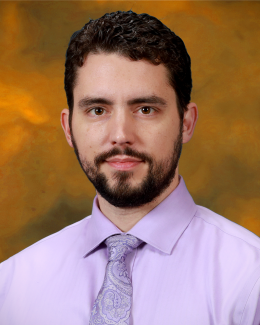
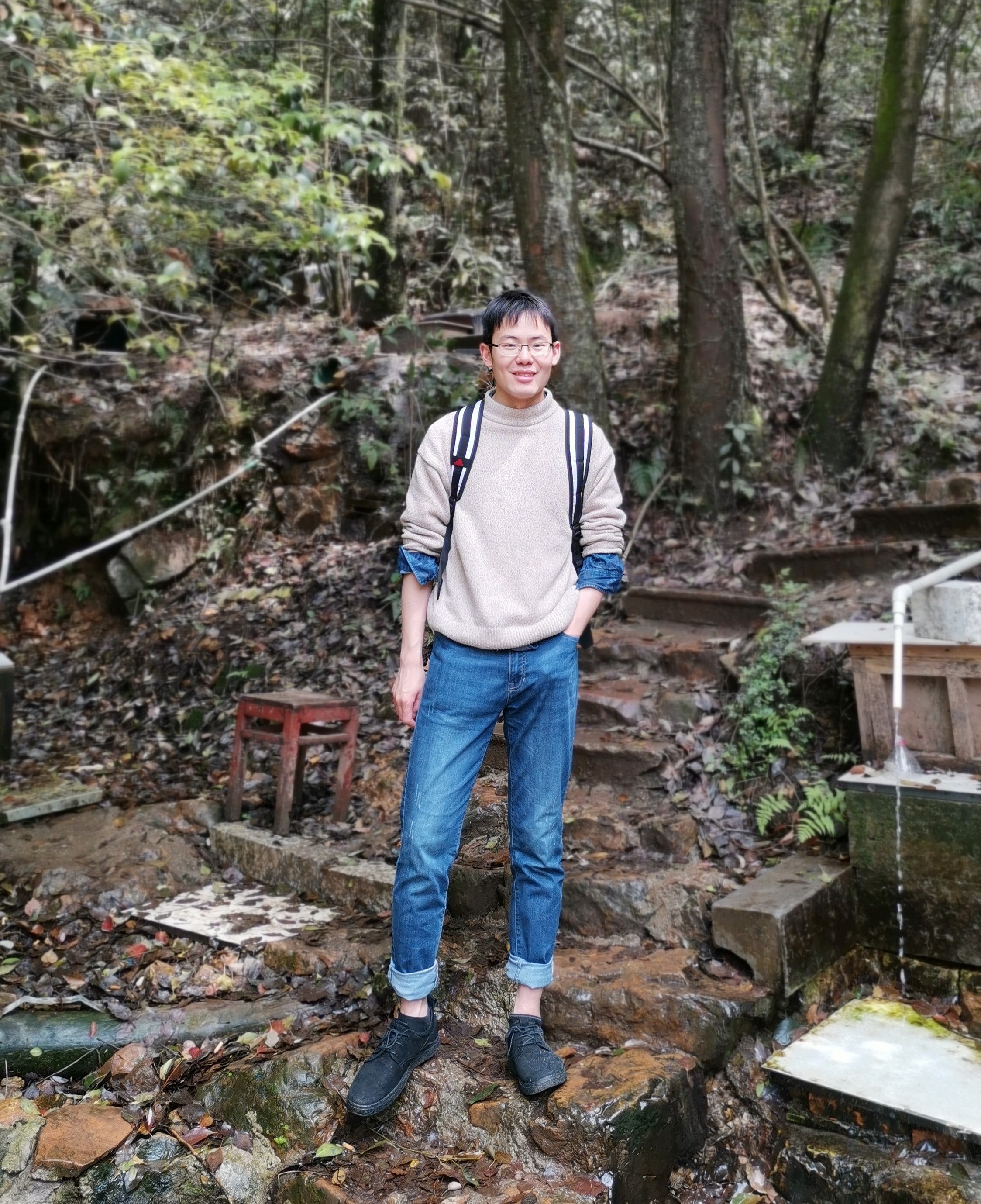
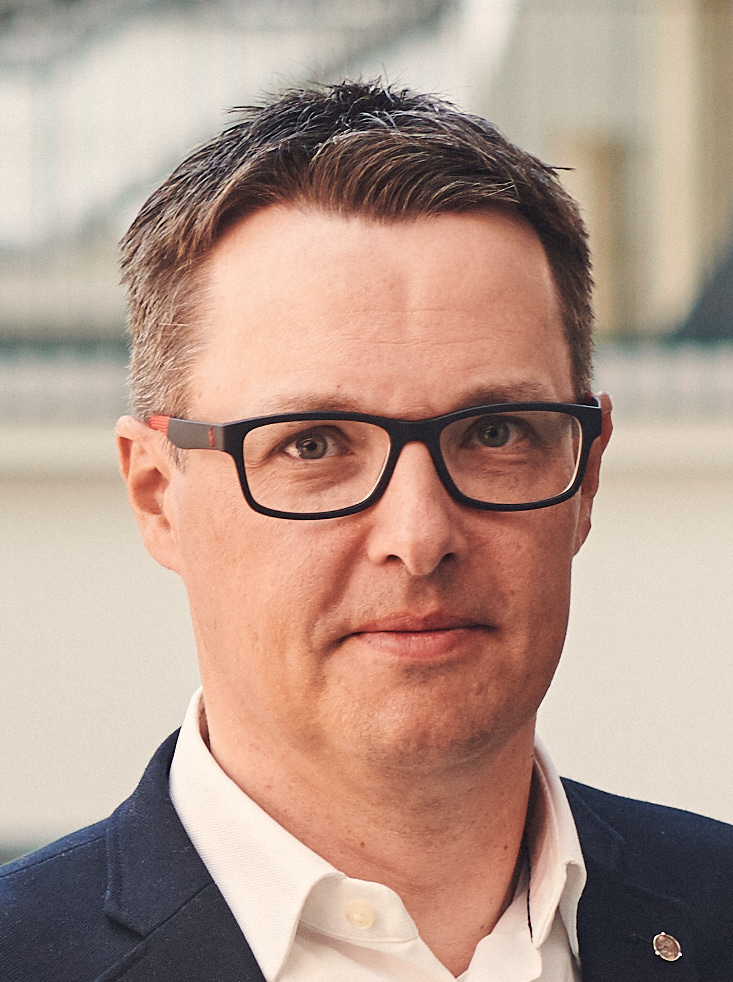
Marc Hodes is Professor in Mechanical Engineering and Mathematics at Tufts University. With a PhD from MIT, his research focuses on heat transfer phenomena with applications in electronics cooling, supercritical fluids, and thermoelectric systems. He directs the graduate program in Mechanical Engineering. Education: BS, University of Pittsburgh (1990) MS, University of Minnesota (1994) PhD, Massachusetts Institute of Technology (1998) Research Areas: Thermal management of electronics through microchannel cooling and liquid metal technologies; Apparent slip phenomena in microstructured surfaces; Mass transfer in supercritical CO 2 systems for aerogel processing; Thermoelectric module optimization for precision temperature control. Awards & Honors: NSF REU Fellowship (1989) E.T.S. Walton Visitorship Award Best Associate Editor, ASME Journal of Heat Transfer (2023) Research Leadership: Principal investigator on multiple NSF grants including projects on aerogel manufacturing, dropwise condensation, and analysis of convection in slip flows. Industry collaborations include Google, DARPA, and Bell Labs.
About Vipul Jain: Associate Professor Vipul Jain leads Supply Chain and Logistics Management at RMIT University’s School of Accounting, Information and Supply Chain Management. With over 20 years of academic experience, he has held senior roles at institutions like Victoria University of Wellington (NZ) and IIT Delhi (India), contributing to curriculum development, research strategy, and academic-industry collaboration. His international collaborations span over 20 global institutions, emphasizing interdisciplinary research in supply chain resilience, sustainability, and Industry 4.0. Education & Academic Leadership: Previously served as Programme Director for Master of Technology (Industrial Engineering) at IIT Delhi, leading the establishment of the Modelling and Analysis of Supply Chain (MASC) Lab. Holds editorial roles for journals like International Journal of Intelligent Enterprise and Computers & Industrial Engineering . Research Focus: Specializes in supply chain design, sustainability, circular economy, and business analytics. His work integrates ICT and big data to address complex supply chain challenges, with notable contributions to vaccine distribution, blockchain adoption, and post-pandemic resilience. Over 145 peer-reviewed publications, including high-impact journals like OMEGA and International Journal of Production Economics , reflect his prolific output. Industry Impact: Conducted management training for organizations like JCB and IBM. Served as an expert assessor for New Zealand’s Ministry of Business and Industry and advised the Indian Railways. His research has been funded by the Department of Science and Technology (India) and EU initiatives like FP6 I*PROMS. Awards & Recognition: Ranked #7 in India’s top logistics academics (2018), recipient of Literati Awards (2024, 2020), and multiple editorial leadership roles. Active in global conferences, including co-chairing ANZAM 2023. Labs & Collaborations: Founded MASC Lab at IIT Delhi. Collaborates with Coventry University, Monash University, Hong Kong Polytechnic, and institutions in Switzerland, Spain, Canada, and the U.S. Focus areas include sustainable supply chains, digital transformation, and crisis resilience.
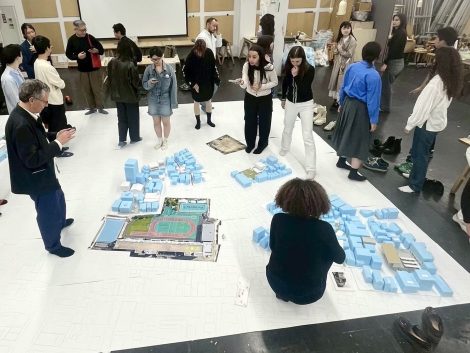
Keigo Kobayashi is an Associate Professor at Waseda University's Faculty of Science and Engineering, School of Creative Science and Engineering, Department of Architecture. He has served in this position since 2016, previously holding the rank of Assistant Professor from 2012 to 2016. His professional journey includes significant experience at the Office for Metropolitan Architecture (OMA) in Rotterdam, where he worked as a Senior Architect and Project Architect from 2007 to 2012. His educational background includes a Master of Architecture II from Harvard University's Graduate School of Design (2005), a Master of Architecture from Waseda University's Graduate School of Science and Engineering (2003), and a Bachelor's degree in Architecture from Waseda University's School of Science and Engineering (2002). Kobayashi's research focuses on architectural planning and city planning, with particular interests in food-related architecture, spatial behavior, and sustainable design. His work explores the intersection of architecture with everyday life, examining how spatial configurations influence human behavior and community formation. Recent research has investigated food systems in urban contexts, playful approaches to spatial design, and the relationship between architectural form and environmental performance. His publications demonstrate a strong focus on practical applications of architectural theory, with projects spanning from food truck design in Shodoshima to zero-energy housing solutions and innovative approaches to architectural education. His work shows a consistent interest in how architecture can respond to contemporary social challenges while maintaining theoretical rigor. Excellence in Concrete Construction Award 2019, American Concrete Institute (ACI), Qatar National Library / OMA Kobayashi actively contributes to architectural education through various committee memberships, including serving as Chief of the Subcommittee on Strategies for International Compatibility in Architectural Education at the Architectural Institute of Japan and leading the Caberra Accord Correspondence Subcommittee at the Japan Accreditation Board for Engineering Education. His teaching portfolio at Waseda University is extensive, covering architectural design studios from undergraduate to doctoral levels. He leads several research initiatives, including the Wakusei Project in Tosa, Kochi, NPO PLAT (Platform for Architectural Thinking), and the European Thinkbelt/McDonald's Radio University project which represents an innovative approach to architectural education and community engagement, particularly in contexts of migration and cultural exchange.
Patrick Kastner is an Assistant Professor at the School of Architecture and holds an adjunct appointment at the H. Milton Stewart School of Industrial and Systems Engineering at Georgia Tech. He directs the Sustainable Urban Systems Lab, focusing on environmental performance simulation and urban decarbonization. His work emphasizes software tools for sustainable urban decision-making, such as Eddy3D, a microclimate modeling toolkit widely adopted in academia and practice. Education: Ph.D. and M.S. in Systems Science and Engineering, Cornell University (2022, 2021) M.S. in Sustainable Building Science, Technical University of Munich (2017) B.S. in Energy Engineering, University of Erlangen–Nuremberg (2012) Research Interests: Environmental performance simulation, urban decarbonization, machine learning applications in urban systems, spatial analysis, and software development for sustainability. His work integrates computational fluid dynamics (CFD), surrogate modeling, and data-driven approaches to address urban climate challenges. Key Projects: Leads the Vertically Integrated Project SMUR (Surrogate Modeling for Urban Regeneration), fostering interdisciplinary collaboration across Georgia Tech. Developed Eddy3D, which streamlines microclimate simulations for architects and urban planners. Grants & Advising: Engages students from sophomore to graduate levels in sustainability research. Teaches at Cornell and UPenn previously. Advises on projects blending engineering, urban design, and climate science. Labs & Teams: Director of the Sustainable Urban Systems Lab, focusing on software tools for sustainable urban transformation. Collaborates with industry partners and global institutions on decarbonization strategies.
Dr. Samuel Cheng is an Associate Professor at the Gallogly College of Engineering , University of Oklahoma , specializing in Electrical and Computer Engineering . He holds a Ph.D. in Electrical Engineering from Texas A&M University (2004), preceded by M.S. and M.Phil. degrees from the University of Hawaii and Hong Kong University of Science and Technology. Education: B.S. (University of Hong Kong, 1995), M.Phil. (HKUST, 1997), M.S. (University of Hawaii, 2000), Ph.D. (Texas A&M, 2004) Professional Experience: Senior Research Engineer at Advanced Digital Imaging Research (2004-2005), prior internships at Microsoft Asia and Panasonic Technologies His research focuses on Information Theory , Signal and Image Processing , and Pattern Recognition , with applications in remote sensing, urbanization analysis, and disaster monitoring. His publications span topics including urban impervious surface mapping , nighttime light analysis , and machine learning for environmental data . His work often integrates multi-source datasets (e.g., Landsat, LiDAR, social media) for spatiotemporal modeling. Technical Expertise: Spectral unmixing, machine learning, thermal remote sensing, GIS integration Key Applications: Power outage detection, vegetation-crime correlation, PM2.5 estimation, smart meter data fusion Dr. Cheng holds three US patents in digital watermarking and is affiliated with IEEE, Sigma Xi, and AAAS. His recent articles demonstrate a trend toward leveraging AI for remote sensing challenges and analyzing urbanization impacts on ecosystems.
Prof. Dr. Yanjun Ren is a Professor at the College of Economics and Management, Northwest A&F University (NWAFU), China, and has been an IAMO Visiting Research Fellow since May 2024. Prior to his IAMO role, he conducted research at Christian-Albrechts-Universität in Kiel, Germany, from 2012 to 2019. PhD in Agricultural Economics focusing on Food Consumption, Income Inequality, and Health-related Issues in China Former Research Assistant/Associate at Kiel University’s Chair of Agricultural Market Analysis (2012–2019) Dr. Ren’s research spans food chains, consumer behavior, and applied econometrics. His work explores how socioeconomic factors, digital transformation, and policy interventions shape food consumption, nutritional outcomes, and environmental sustainability in China and Central Asia. Key themes include food waste reduction, carbon labeling, internet use in rural economies, and intergenerational health behaviors. His 15 most recent articles (2023–2025) emphasize digital agriculture, sustainable consumption, and health economics. Topics include carbon-labeled products, television/media’s role in nutrition, contract farming sustainability, and the socioeconomic determinants of dietary choices. His methodology integrates econometric modeling, eye-tracking experiments, and spatiotemporal analysis. Email: ren@iamo.de
Dr. Joshua New is a Distinguished R&D Staff Member at Oak Ridge National Laboratory (ORNL) and holds a Joint Faculty Position at The University of Tennessee since 2012. He leads research in building energy modeling, climate change science, and supercomputing. His work focuses on urban-scale energy systems, AI-driven analytics, and high-performance computing applications. Education: Ph.D. in Computer Science (University of Tennessee, 2009), M.S. in Computer Systems, B.S. in Computer Science and Mathematics (Jacksonville State University). His research interests include optimizing building energy efficiency, simulating climate impacts on urban infrastructure, and developing tools like AutoBEM and ModelAmerica to model 122.9 million U.S. buildings. He has over 150 peer-reviewed publications and led 45+ projects involving supercomputing, visual analytics, and AI for big data. Awards include the R&D 100 Award (2016), ASHRAE Distinguished Service Award (2018), and Lab-Corps (2015). His teams prioritize utility use cases and validate models against real-world data. He is a Senior IEEE member, Certified Energy Manager (CEM), and holds certifications in project management and energy efficiency. Key contributions include the Roof Savings Calculator Suite, AutoGen/AutoSim tools, and the ModelAmerica initiative. His work addresses national energy policy, heatwave resilience, and sustainable city design through interdisciplinary collaborations.
Harvey NEO is a Professorial Research Fellow at Singapore University of Technology and Design (SUTD), leading the Cities and Urban Science programme at the Lee Kuan Yew Centre for Innovative Cities (LKYCIC). He holds a PhD in Geography from Clark University, USA, and previously served as an Associate Professor at the National University of Singapore (NUS). His research focuses on urban sustainability, citizen-centric urban science, and nature-society interactions. He is the Southeast Asian editor for Human Geography and Frontiers in Sustainable Cities , and sits on multiple international advisory boards. Key roles include Director of SUTD's Master in Urban Science, Policy and Planning programme, and co-leader of the Tote Board's Future Ready Society initiative. Education: PhD, Graduate School of Geography, Clark University (2007); MSc, Geography, NUS (2002); BA (Hons), NUS. Research interests emphasize urban futures, participatory governance, and environmental policy, with a focus on Southeast Asian cities like Ho Chi Minh City, Jakarta, Manila, and Phnom Penh. His work bridges academia and practice through projects on electric vehicle policies, urban heat adaptation, and 3P+ (People, Public, Private + Academia) partnerships. Publications span urban mobility, pandemic responses, and eco-city development, reflecting a commitment to interdisciplinary solutions for sustainable urbanization. He has secured grants from Singapore’s Social Sciences Research Council and Housing Development Board, fostering collaborations across sectors to address societal challenges. Labs/Teams: LKYCIC's Urban Environmental Sustainability Programme and the Future Ready Society Initiative, which integrate research with policy and community action.
Kaiyang Liu is an Assistant Professor at the Department of Computer Science, Memorial University of Newfoundland. He holds a Ph.D. from Central South University (2019) and was a Postdoctoral Fellow at the University of Victoria, Canada. His research focuses on distributed cloud/edge computing, data center networks, and distributed machine learning, emphasizing optimization for data-intensive services. He is an IEEE Senior Member and has received prestigious awards, including the NSERC Discovery Grants and IEEE TCCLD Outstanding Ph.D. Thesis Award. Education: Ph.D. in Information Science and Technology, Central South University (2014–2019) M.Sc. in Information Science and Technology, Central South University (2012–2014) B.Eng. in Information Science and Technology, Central South University (2008–2012) Research Assistant at the University of Victoria (2016–2018) Research Interests: Kaiyang’s work bridges AI and cloud computing, exploring optimization strategies for next-generation systems. Key areas include learning-based congestion control, energy-efficient resource management, and scalable distributed storage solutions. His research has been published in top-tier journals like IEEE Transactions on Parallel and Distributed Systems and conferences such as IEEE ICDCS. Awards & Grants: NSERC Discovery Grants & Discovery Launch Supplement (2024) IEEE TCCLD Outstanding Ph.D. Thesis Award (2020) CSC-UVic Fellowship (2016–2018) Teaching: He teaches courses on Computer Networks, Advanced Computer Networks, and Operating Systems at Memorial University and previously at the University of Victoria. Labs & Teams: His research group focuses on Space Edge Computing, leveraging LEO satellites for resilient, low-latency networks. Ongoing projects include optimizing distributed systems for AI workloads and satellite-based data centers.
Jennifer Lynes is an Associate Professor at the University of Waterloo in the Department of Environment and Business, where she co-directs the Sustainability & Financial Management program. She also serves as Chair of REEP Green Solutions and co-founded the North American Sustainable Concerts Working Group. Current roles: Associate Professor, Co-Director (Sustainability & Financial Management), REEP Green Solutions Chair Education background: Marketing and Environmental Studies Her research bridges business and environmental sustainability, focusing on: Social and community-based green marketing Youth environmental engagement programs Residential energy conservation behavior Sustainable tourism and hospitality practices Recent publications analyze: Water efficiency programs and behavioral change Electric vehicle adoption strategies Textile waste management in fashion consumption Sustainable eating behaviors in Canadian universities Scientific recognition includes: Emerald Publishing Group Highly Commended Paper (2014) She teaches courses such as: ENBUS 102: Introduction to Environment and Business ENBUS 309: Applied Social Marketing ENBUS 630: Enterprise Strategies for Social Accountability
Tim Derdenger is an Associate Professor of Marketing and Strategy at Carnegie Mellon University’s Tepper School of Business. He holds a Ph.D. in Economics from the University of Southern California and a B.B.A. from George Washington University. His research focuses on technology markets and sports marketing, including platform dynamics, bundling strategies, celebrity endorsements, and dynamic demand modeling. He coordinates the Technology Strategy and Product Management Track for MBA students. As an Associate Editor for Management Science and editorial board member of Marketing Science , he contributes to academic publishing. His work spans empirical studies on golf equipment endorsements, EV subsidies, and AI regulation. He advises on topics like NIL in college football and generative AI bias. His affiliations include roles in executive education and industry panels on golf and tech strategy.
Professor Cameron Tonkinwise is a leading international expert in Design Studies and Transition Design, currently serving as Research Director at the Design Innovation Research Centre at the University of Technology Sydney (UTS). With a career spanning institutions like Carnegie Mellon University, Parsons The New School for Design, and UNSW Australia, he has significantly influenced global design education and practice through his advocacy for systemic sustainability and social responsibility. PhD in Philosophy, Art History and Theory from the University of Sydney (1999) His research focuses on the role of design in enabling structural transformations for sustainable futures, blending Transition Design, ethical considerations, and speculative practices. Recent work examines systemic change through everyday habits, ontological design, and service systems in sharing economies. Key trends in his publications include: Transition Design frameworks for climate futures and circularity Critical analysis of sustainable practices and design ethics Systems theory applications in sociotechnical change Projects currently led by Cameron involve: Transitioning Australian banks toward inclusive financial services Designing equitable distributed energy systems Developing cool public spaces to combat urban heat
Jukka Manner is a Full Professor (tenured) of Networking Technology at Aalto University's Department of Communications and Networking (Comnet), School of Electrical Engineering. With a career spanning over two decades in internet technologies, he leads research in networking, wireless systems, and energy-efficient ICT solutions. Dr. Manner received his MSc (1999) and PhD (2004) degrees in computer science from the University of Helsinki. His academic journey has been marked by significant contributions to internet standardization through the IETF since 1999, where he served as co-chair of the NSIS working group. Professor Manner's research focuses on networking, software and distributed systems, with particular emphasis on wireless and mobile networks, transport protocols, energy efficient ICT and cyber security. His work bridges theoretical advancements with practical applications, addressing critical challenges in modern communication systems, sustainable networking practices, and security frameworks. His research group has made significant contributions to 5G technologies, UAV communications, and energy-efficient network design. His extensive publication record shows a clear evolution toward sustainability in networking technologies, with recent work focusing on energy efficiency in 5G systems, sustainable web technologies, and the environmental impact of digital infrastructure. The research demonstrates strong interdisciplinary connections between telecommunications engineering, computer science, and environmental science, with particular emphasis on reducing the carbon footprint of digital systems while maintaining performance. Cross of Merit, Signals (2014) Medal for Military Merits for contributions in national defence and C4 (2015) Professor Manner has supervised over 200 MSc theses and more than 20 doctoral dissertations, establishing himself as a dedicated mentor in the field. He has been principal investigator and project manager for over 15 national and international research projects, including serving as Academic Coordinator for the Finnish Future Internet research programme (2008-2012). His leadership extends to conference organization, having served as local co-chair of Sigcomm 2012 in Helsinki, and active participation as a peer reviewer and member of various Technical Program Committees. As an active contributor to internet standardization through the IETF, Professor Manner's work has practical impact on global networking technologies. His research group maintains strong connections with industry partners and participates in shaping future networking standards and practices, particularly in the areas of sustainable networking, 5G evolution, and security frameworks for emerging technologies.
Thomas Berger is a Professor at the University of Hohenheim , affiliated with the Faculty of Agricultural Sciences and leading the Department of Economics of Land Use . He also contributes to the Computational Science Hub and Hohenheim Tropics initiatives. Focus Areas: Climate change adaptation, land-use modeling, biodiversity-productivity trade-offs, agent-based simulation, and machine learning in agricultural systems. Key Projects: Simulation frameworks for smallholder resilience in Ethiopia, bioeconomic modeling in the Amazon, and hybrid intelligence applications in European agricultural policy. Recent Publications: 2025 study on climate change effects on insecticide reduction in Germany, 2024 work on reconciling biodiversity with productivity via hybrid models, and 2023 methodological contributions to surrogate modeling and seasonal forecast integration. Research Trends: Interdisciplinary integration of climate science, agricultural economics, and computational modeling, with increasing emphasis on AI-assisted decision support systems and sustainability policy validation. Teaching & Outreach: Offers Agricultural Economics seminars and Hohenheim Tropics discussions, requiring advance email registration for office hours.
Dr. XiaoYue Cathy Liu is an Associate Professor in the Department of Civil & Environmental Engineering at the University of Utah. She holds a PhD in Transportation Engineering from the University of Washington and advanced degrees in Transportation Planning and Electronics Engineering. Her research focuses on sustainable transportation systems, shared mobility, public transit optimization, managed lanes, and intelligent transportation systems. She actively serves on committees including the Transportation Research Board's Highway Capacity Quality of Service (HCQS) Committee and chairs its Technology Transfer Subcommittee. She also advises the Utah Model Advisory Committee and previously served on Salt Lake City’s Transportation Advisory Board. Dr. Liu is a licensed professional engineer in Utah. Education: PhD, Transportation Engineering, University of Washington (2013) MA, Transportation Planning & Management, Texas Southern University BS, Electronics & Electrical Engineering, Beijing Jiaotong University Graduate Certificate, Global Trade & Logistics, University of Washington (2011) Research Interests: Electric vehicle infrastructure and charging networks Smart transportation systems and agent-based modeling GIS-based asset management for transportation infrastructure Snowplowing operations optimization and winter maintenance Managed lanes and high-occupancy toll (HOT) lane analysis Public transit equity and accessibility Her recent publications emphasize data-driven approaches to transportation challenges, including EV demand forecasting, drone delivery networks, and resilience in interdependent transit systems. She collaborates on projects addressing Utah’s unique transportation needs, such as optimizing snowplow routes and integrating renewable energy into public transport systems. Professional Contributions: Board member, Utah Model Advisory Committee Former Chair, Salt Lake City Transportation Advisory Board (2013-2016) TRB Managed Lane Committee member TRB Transit Capacity & Quality of Service (TCQS) Committee member (2016-2019) Dr. Liu’s work bridges transportation engineering with computational methods, focusing on equity, sustainability, and operational efficiency. She leads research initiatives involving large-scale modeling, geospatial analytics, and interdisciplinary solutions for modern mobility challenges.