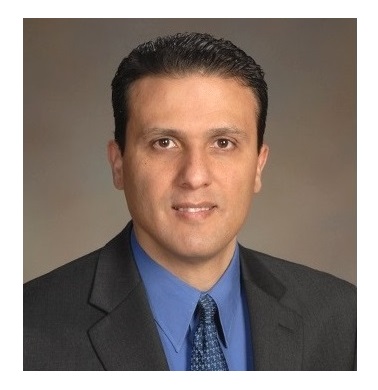
Dr. Wahab Hamou-Lhadj is a Professor and Chair at the Department of Electrical and Computer Engineering , Concordia University, and an Affiliate Researcher at NASA JPL, Caltech . He leads research in Artificial Intelligence for IT Operations (AIOps) , Software Observability , and Model-Driven Engineering , focusing on improving the reliability of digital systems in AI-driven environments.
Lu Zhang is The John W. Galbreath Chair in Finance and Professor of Finance at Fisher College of Business, The Ohio State University. He also serves as a Research Associate at the National Bureau of Economic Research (Asset Pricing program) and as Associate Editor for the Journal of Financial Economics and Journal of Financial and Quantitative Analysis. Previously, he taught at the University of Michigan and University of Rochester. Research Focus: Dr. Zhang specializes in asset pricing, integrating macroeconomics, corporate finance, labor economics, and capital markets research in accounting. His groundbreaking contributions include the investment CAPM and the q-factor model, which address asset pricing anomalies and serve as foundational tools in academic and investment management sectors. Recent Publications: His recent work spans topics such as firm-level irreversibility, endogenous disasters in economic modeling, and the integration of expected growth into the q-factor model. These studies reflect his focus on bridging macroeconomic dynamics with financial markets. Scientific Awards: Smith-Breeden Award for Best Paper (2005) Spängler IQAM Best Paper Prize (2019) Editor’s Choice, Lead Article (2015) Teaching: Dr. Zhang teaches courses ranging from undergraduate to PhD levels, including Investment Management, Derivative Securities, and Advanced Asset Pricing. In 2015, he received the Outstanding Working Professional MBA Elective Faculty Award at Ohio State.
Dr. Alireza Nili is a Senior Lecturer in Service Science at QUT's School of Information Systems within the Faculty of Science. His expertise spans digitization of customer-centric services, AI/chatbots, IoT/IIoT, and sustainable technologies. He holds a PhD from Victoria University of Wellington and has coordinated large-scale courses like IT Systems Design (IFB103), achieving top teaching scores. Nili's research focuses on service ecosystems, trust in digital services, and public/retail sector innovations. He has secured over $1.4M in industry grants for projects involving Cisco, Amazon, and Services Australia. His awards include the 2023 Educator of the Year and multiple top conference paper recognitions. Nili supervises PhD students at Level 3 mentoring status and contributes to major conferences as track chair/associate editor. Research highlights include frameworks for chatbot governance, IOT in agriculture, and AI ethics. His work appears in IEEE Software , Communications of the ACM , and MIT Sloan Management Review . Current projects address consumer trust in AI technologies and spatial data systems. Nili's interdisciplinary approach combines design science with empirical methodologies to bridge theory and practice in digital service innovation.
Abhinav Goyal is a Professor of Finance and Director of Global Engagement at Birmingham Business School, University of Birmingham. He is affiliated with the Department of Finance and plays a leadership role in shaping the school's international strategy. His research is widely published in premier finance journals, and he serves on editorial boards including as Associate Editor for British Accounting Review . Education: PhD in Banking and Finance, University College Dublin, Ireland (2013) MA in Financial Risk Management, Simon Fraser University, Canada (2007) BE (Hons) in Computer Science, India (2006) His research focuses on corporate finance , particularly IPOs, corporate governance, privatization, and dividend policy, with a strong emphasis on institutional and emerging market contexts. His work explores how legal, political, cultural, and media factors influence corporate financial decisions, especially in initial public offerings and payout policies. Using empirical methods, he investigates global patterns in financial markets, often drawing on cross-country datasets to assess the impact of governance reforms, ownership structures, and socio-political events. The recent articles reflect a consistent focus on IPO pricing dynamics, influenced by democracy, media, terrorism, board reforms, and legal frameworks. His research integrates insights from political economy, behavioral finance, and institutional theory, demonstrating a multidisciplinary approach to understanding financial markets. A recurring theme is the role of transparency, governance, and external shocks in shaping corporate financial behavior. Scientific Awards and Editorial Roles: Associate Editor, British Accounting Review Area Editor (Frontier Markets), Research in International Business and Finance Dr. Goyal has advised doctoral and postdoctoral researchers in finance, though specific names are not listed. He has secured research funding through collaborative projects reflected in his co-authored publications with international scholars. His past academic appointments include positions at University College Cork and the University of Liverpool, along with visiting roles at Monash University, Xi’an Jiaotong-Liverpool University, and Manipal University, indicating a strong global academic network. He teaches advanced courses such as Contemporary Topics in Banking and Finance (MBA) and Private Equity and Venture Finance (MSc), contributing significantly to graduate education. He leads no named research lab or center in the provided text, but his editorial roles and global engagement position suggest active participation in research communities and international academic collaborations.
Arthur Gervais is a Professor of Information Security at University College London's Department of Computer Science. His work focuses on blockchain systems, smart contract security, and decentralized finance (DeFi) risk analysis. He has published extensively on topics ranging from privacy technologies to systemic vulnerabilities in financial cryptography. Research Interests: Gervais investigates security challenges in blockchain ecosystems, including censorship mechanisms, zero-knowledge proofs, and DeFi liquidation risks. His interdisciplinary approach bridges computer science, cryptography, and financial systems. Publications Trends: Recent articles emphasize empirical studies of DeFi attacks, hybrid fuzzing for smart contract verification, and privacy trade-offs in blockchain mixers. His work spans conferences like ACM SIGMETRICS, IEEE Security & Privacy, and World Wide Web Conference.
Professor Alistair Brandon-Jones (PhD, PGDip, BSc Hons) is a Full Chaired Professor of Operations and Supply Chain Management at the University of Bath's School of Management since 2014. He serves as Head of the Information, Decisions and Operations Division (2020–present) and holds Visiting Professor roles at Hult International Business School and Danish Technical University. His career spans academic leadership positions at Manchester Business School, Bath, and Warwick Business School, where he completed his PhD. Research Interests : Digitalisation of operations and supply chains, professional service operations, healthcare operations, and cybersecurity in AI systems. His work combines empirical methods with cross-sector collaborations, supported by UKRI, ESRC, EPSRC, and the Welsh Assembly Government. Key themes include telehealth integration , responsible AI deployment , and value-based procurement . Teaching & Consulting : He teaches Operations Management, Supply Chain, and Project Management across executive, MBA, and undergraduate levels, with consulting experience for Maersk, NHS, and Qatar Leadership Centre. His textbooks like Operations Management (10th ed., 2022) are globally cited. Scientific Awards : Times Higher Education Teaching Excellence Prize Association of MBAs (AMBA) Award Production Operations Management Society (POMS) Recognition Hult International Business School Teaching Prize Supervision & Projects : Currently supervising doctoral students in digital transformation, he leads two major projects: ESRC Digital Security by Design Social Science Hub (2020–2025) and Welsh Government Healthcare Integration (2009–2009). His research aligns with UN SDG 12 (Sustainable Consumption and Production) through supply chain innovations.
Dr. Karim El-Basyouny is a Killam Laureate Professor and City of Edmonton Urban Traffic Safety Research Chair at the University of Alberta's Faculty of Engineering, where he serves as Associate Dean (Research Infrastructure and Innovation) in the Civil and Environmental Engineering Department. A licensed Professional Engineer in Alberta, he holds advanced degrees in Transportation Engineering from the University of British Columbia and has dedicated his career to advancing road safety through data-driven management frameworks. His academic credentials include: Doctor of Philosophy, Civil Engineering, University of British Columbia, 2011 Engineering Management Sub-specialization, Civil Engineering, University of British Columbia, 2010 Master of Applied Science, Civil Engineering, University of British Columbia, 2006 Bachelor's degree (ABET Equivalent), Civil & Environmental Engineering, United Arab Emirates University, 2003 El-Basyouny's research pioneers the integration of remote sensing, machine learning, and statistical modeling to enhance transportation safety. His work develops automated tools for infrastructure digitization, collision prediction, and speed management, treating safety as a systemic product requiring management frameworks. Key contributions include LiDAR-based road feature extraction, network-level safety evaluations, and frameworks for vision-zero outcomes that address both human-driven and autonomous vehicle contexts. His recent publications demonstrate a cohesive research trajectory centered on leveraging point cloud data and computational intelligence for safety management. Over 15 major publications since 2021 focus on automated infrastructure assessment (light pole detection, clear zone mapping, vertical clearance evaluation), weather-impact modeling, and enforcement resource optimization. This body of work bridges transportation engineering with computer vision and operations research to create scalable safety solutions. His scientific contributions have been recognized with prestigious honors including: 2024 Killam Annual Professorship Award 2024 Road Safety Achievement Award from TAC 2023 Donald Stanley Award for environmental engineering 2022 Faculty of Engineering Graduate Teaching Award 2021 Daniel B. Fambro Student Paper Award As an academic leader, El-Basyouny actively mentors graduate students and secures significant research funding through his endowed chair position. He currently recruits fully-funded PhD and postdoctoral candidates specializing in remote sensing applications, machine learning, and geomatics for road digitization projects. His research group collaborates with national safety committees and municipal agencies to translate findings into policy, while he serves on editorial boards for Transportation Research Record and Analytic Methods in Accident Research. The research group operates at the intersection of transportation engineering and computational science, developing automated frameworks that merge sensor technologies with data processing tools. Current projects focus on semantic segmentation of 3D point clouds, safety implications of infrastructure digitization, and machine learning applications for road feature extraction in both urban and rural environments.
Dr. Saad Khan is a Senior Lecturer in Cyber Security at the Department of Computer Science, School of Computing and Engineering, University of Huddersfield, United Kingdom. He is an active researcher and educator, supervising multiple PhD students and contributing to government-funded cybersecurity projects with Innovate UK, DCMS, and DASA. He is also a Fellow of the Higher Education Academy and serves on program committees for major conferences. His research focuses on intelligent systems for cyber security and digital forensics. Key areas include Security Information and Event Management (SIEM), access control, authentication, vulnerability assessment, anomaly detection, and image forensics. He aims to develop automated software tools that enhance digital infrastructure resilience against modern cyber threats. The recent publications reflect a strong trend in applying machine learning and AI to cybersecurity challenges, particularly in IoT security, zero-day attack detection, and human-centric security awareness. His work bridges technical innovation with practical implementation in real-world environments. Scientific Awards: Fellow of the Higher Education Academy Dr. Khan actively supervises PhD students and contributes to research grants through collaborations with UK government agencies. He has led work in three major funded projects and regularly reviews for top-tier journals and conferences. He is a member of the Centre for Cybersecurity at the University of Huddersfield, where he collaborates on interdisciplinary research initiatives focused on secure digital transformation and intelligent defense systems.
Academic Profile: Damir Filipovic is a Full Professor and the Swissquote Chair in Quantitative Finance at the College of Management of Technology (CDM) of École Polytechnique Fédérale de Lausanne (EPFL), Switzerland. He previously held academic positions at the University of Vienna, University of Munich, and Princeton University, and served as Head of the Vienna Institute of Finance. Research Focus: Quantitative finance, risk management, stochastic processes, term structure modeling, volatility risk, and machine learning applications in financial markets. Industry Collaboration: Co-developed the Swiss Solvency Test for insurance capital requirements while consulting for the Swiss Federal Office of Private Insurance. Publications: Contributed extensively to journals like Journal of Financial Economics, Mathematical Finance, and Annals of Applied Probability, with a textbook on Term-Structure Models. Academic Service: Editorial board member of multiple journals and organizer of advanced workshops on systemic risk and financial technology. Recent Research: His work emphasizes machine learning for portfolio risk management, kernel-based yield curve estimation, and robust stochastic modeling. Keynote speaker at international conferences on finance and insurance mathematics, with over 15 recent publications in 2023-2025 addressing high-dimensional financial problems, neural control systems, and causal inference in market data. Education: Ph.D. in Mathematics from ETH Zurich (2000). Graduate of ETH Zurich and University of Vienna. Teaching & Mentorship: Supervises current and former EPFL Ph.D. students in quantitative finance, including Nicolas Camenzind, Joshua Hayes, Andrea Ruglioni, and ten others. Former students like Damien Ackerer and Lotfi Boudabsa now lead research in risk management. Labs & Programs: Directs EPFL's Finance and Technology Programme, leads the Computational Finance Group (CSF) at EPFL, and contributes to Swiss Finance Institute initiatives. Scientific Leadership: Served on EPFL Committee of Academic Evaluation and Doctoral Program Finance committee.
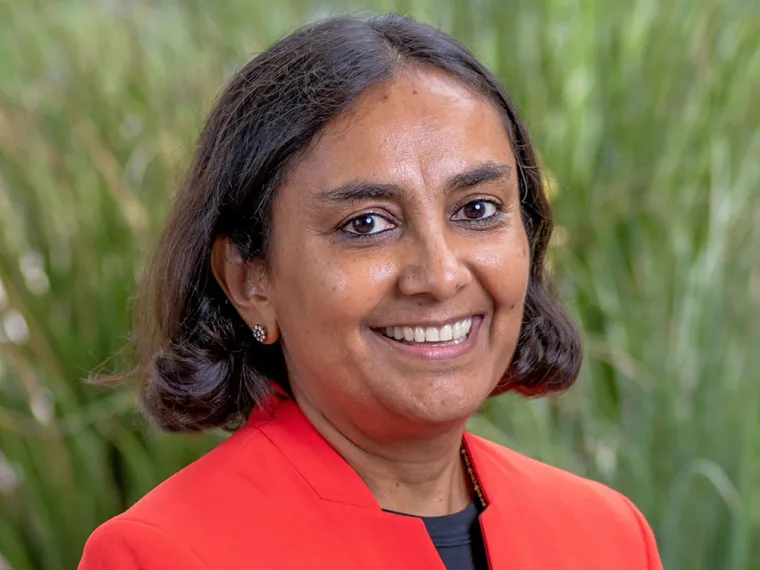
Sudha Ram is the Anheuser-Busch Endowed Professor of MIS, Entrepreneurship & Innovation at the Eller College of Management, University of Arizona. She holds joint faculty appointments as Professor of Computer Science and is a member of the BIO5 Institute and the Institute for the Environment. She is also the Director of INSITE: Center for Business Intelligence and Analytics, a leading research center in data-driven decision-making. Her research focuses on Big Data Analytics , Business Intelligence , Large Scale Network Science , and Machine Learning , with applications in healthcare, smart cities, environmental policy, and social media. She has pioneered methods in explainable AI, conceptual modeling, and multimodal data fusion, integrating statistical, ontological, and machine learning approaches. Recent publications demonstrate a strong trend in healthcare analytics (e.g., asthma, diabetes, fracture prediction), explainable AI (ROLEX, argumentation-based models), and urban/smart systems (mobility, wearables, environmental impact). Her work consistently appears in top-tier journals and conferences, reflecting sustained scholarly impact. AIS Fellow (2018) INFORMS ISS Distinguished Fellow IBM Faculty Award Peter Chen Award Best Paper Award, IEEE Smart Cities (2016) Best Paper Award, ACM Digital Health (2016) Woman of Impact Award, University of Arizona (2023) Dr. Ram has secured over $70 million in research funding from agencies like NSF, NASA, CIA, and corporations including IBM, Intel, and SAP. She has mentored numerous students and leads a multidisciplinary research team at INSITE. She has held editorial leadership roles in Information Systems Research , Journal of AIS , and is founding co-editor of the Journal of Business Analytics . She directs the INSITE Center, which fosters collaboration across business, computer science, and health domains, enabling large-scale data synthesis and knowledge discovery. The center supports projects in healthcare innovation, smart cities, and environmental policy analytics.
Steffi Haag is a Professor of Digital Innovation and Entrepreneurship at the Institute of Computer Science , Heinrich Heine University Düsseldorf (HHU) . She bridges the Faculty of Mathematics and Natural Sciences and Faculty of Business Administration and Economics , collaborating with the Center for Entrepreneurship Düsseldorf (CEDUS) to inspire tech startups. Her research focuses on sustainable information systems, digital experiences, and business models. Steffi Haag’s research integrates Shadow IT , Usable Cybersecurity , and Digital Idea Management . Her work emphasizes theoretical , quantitative , qualitative , and mixed-methods research , including experimental and survey methodologies. Steffi Haag’s publications (2018–2024) span Information Systems , Cybersecurity , Digital Twins , and Sustainable Design . Common themes include Shadow IT dynamics , user behavior in security , and innovation management . Hermann Gutmann Award for special scientific achievements (2023) Schöller Fellow (2020) HMD Best Paper Award (2018) Research Award in Data Protection and Data Security (2017) Dissertation Prize (2017) Steffi Haag has secured grants such as the TU Darmstadt Postdoctoral Fellowship for Female Researchers (2016–2018) and Deloitte Foundation Fellowship (2009–2011). She actively moderates conferences and serves as Associate Editor of Business & Information Systems Engineering .
Rosemary Monahan is a Professor in the Department of Computer Science at Maynooth University and an affiliate of the Hamilton Institute. She holds BSc and MSc degrees from University College Dublin and a PhD from Dublin City University. As Maynooth University's institutional lead for ADAPT (SFI Research Centre for AI-Driven Digital Content Technology), she focuses on advancing software dependability through formal methods and AI integration. Her research interests include safety-critical systems, dependable software, formal verification, and computational thinking education. She co-founded the VerifyThis competition series and leads projects such as MAIVV (Modular AI Verification and Visualisation) funded by SFI, and VALU3S (Verification and Validation of Automated Systems) funded by Horizon 2020. She has secured over €2.5M in EU funding for the Erasmus Mundus programs in dependable software systems. Monahan’s educational contributions include pioneering computational thinking resources (CoCoA and InSPECT projects) and teaching modules on software verification and rigorous software processes. She supervises PhD students in data science and advanced networks and collaborates with institutions like INRIA, Microsoft Research, and Amazon Web Services. Her professional roles include editorships in journals like Science of Computer Programming and leadership in conferences like iFM and FMICS. She actively promotes gender equality in computing through initiatives like INGENIC and TechMate toolkits.
Leysia Palen is a Distinguished Professor of Computer Science and Information Science at the University of Colorado Boulder. She was the founding chair of the Department of Information Science, which launched in 2015, and maintains appointments in both the Department of Information Science and Computer Science. Palen is also a faculty fellow with the Institute of Cognitive Science and ATLAS Institute. She received her PhD from the University of California, Irvine in Information and Computer Science in 1998 and has been a faculty member at CU Boulder ever since. Her educational background includes: BS in Cognitive Science from University of California, San Diego MS and PhD in Information and Computer Science from University of California, Irvine Palen is a leader in crisis informatics, an area she forged with her graduate students and colleagues. Her research integrates human-computer interaction (HCI), computer-supported cooperative work, and social computing to address socio-technical issues of societal importance. She conducts empirical research in the interpretivist tradition while adapting quantitative techniques for analyzing large-scale online interactions during crisis events. Her work has earned her the ACM Computer Human Interaction Social Impact Award in 2015, and she was elected to the ACM CHI Academy in 2016. Palen's research examines how people use technology to communicate during emergencies and disasters. Her work spans hurricane response, earthquake recovery, terrorist attacks, and pandemic situations, analyzing social media usage, risk communication patterns, and emergent information infrastructures. She directs Project EPIC (Empowering the Public with Information during Crisis) and co-directs the Center for Software & Society at CU Boulder. Her publication record demonstrates consistent contributions to understanding human-technology interaction in critical situations, with over 90 articles spanning two decades. Palen has secured approximately $5 million in research funding as Principal Investigator from the National Science Foundation, including an NSF CAREER award in 2006. She serves as an Associate Editor for both the Human Computer Interaction Journal (Taylor and Francis) and the Computer-Supported Cooperative Work Journal (Springer), reflecting her leadership in these academic communities. Palen has held positions at Xerox PARC, Boeing Commercial, USWEST Advanced Technologies, and Microsoft Commercial, and has been a faculty member at the University of Aarhus in Denmark and University of Agder in Norway.
Kartik Hosanagar is the John C. Hower Professor of Technology and Digital Business and a Professor of Marketing at The Wharton School, University of Pennsylvania. He is also the Co-Director of the Wharton Human-AI Initiative. His work spans the Department of Operations, Information and Decisions, focusing on the intersection of technology, business, and society. Education: PhD in Management Science and Information Systems, Carnegie Mellon University MPhil in Management Science, Carnegie Mellon University Masters in Information Systems, Birla Institute of Technology and Sciences (BITS, Pilani), India Bachelors in Electronics Engineering, Birla Institute of Technology and Sciences (BITS, Pilani), India Research Interests: Kartik’s research focuses on the digital economy, particularly the impact of AI, algorithms, and analytics on consumers, businesses, and society. His work explores internet marketing, e-commerce, digital media, information diffusion, platform economics, and the ethical implications of AI. He investigates how technology transforms business models and consumer behavior in online environments. Publication Trends: His recent research combines machine learning, causal inference, and behavioral modeling to study digital platforms, user behavior, and AI applications in marketing and operations. The articles reflect a strong focus on empirical analysis of social media, search engines, and platform design, with applications in advertising, content sharing, and product adoption. Scientific Awards: Best Information Systems paper published in Management Science, 2013-2016 Finalist for Best Information Systems paper in Management Science (2012-2015) Recognized as one of the world’s top 40 business professors under 40 Eleven-time recipient of teaching excellence awards at Wharton MBA Excellence in Teaching Award, 2007 “Goes above and beyond the call of duty” award (multiple years) Advising and Grants: While no formal PhD students are listed, Kartik has supervised independent studies and mentored numerous students through research projects. His entrepreneurial ventures, such as Yodle and Jumpcut Media, reflect real-world applications of his research. He has also secured significant industry engagement through consulting and executive education with major firms like Google, American Express, and Citi. His work is supported by academic recognition, editorial roles, and media outreach. Labs and Teams: Kartik co-directs the Wharton Human-AI Initiative, a research hub exploring the integration of human and artificial intelligence in business. He also leads research groups focused on digital platforms and AI ethics, collaborating with scholars across disciplines to advance understanding of algorithmic decision-making and its societal impact.
Oliver Hohlfeld is a Professor at the University of Kassel, where he leads the Distributed Systems group. He previously held academic positions at Brandenburg University of Technology and RWTH Aachen University, and was a visiting scholar at the University of Wisconsin–Madison. His research focuses on network security, Internet measurements, and Quality of Experience (QoE). He completed his Ph.D. in Computer Science at TU Berlin under Anja Feldmann and holds a B.Sc. and M.Sc. from Darmstadt University of Technology. He also worked at Fraunhofer IGD on telemedical network architectures. His research adopts a data-driven approach, combining large-scale Internet measurements, user studies, and machine learning to understand and improve Internet performance and security. Key areas include DDoS detection, QUIC, HTTP/2, TLS deployment, and BGP analysis. He investigates how protocols like QUIC and HTTP/2 impact user experience and network efficiency, often through empirical studies of real-world deployments. His recent publications highlight a strong trend in network security and protocol analysis, with significant work on DDoS attacks, traffic ingress detection, and web consolidation. He also explores social media dynamics and censorship circumvention through user reviews. 2022 IETF/IRTF Applied Networking Research Prize Best of CCR (2021) for TLS 1.3 deployment study ACM Senior Member (2020) IEEE QoMEX 2019 Best Reviewer Award ACM IMC Community Contribution Award (2018) He has advised numerous Master’s and Bachelor’s students, primarily at RWTH Aachen, and has been a principal investigator in major projects such as AIDOS (AI-based DDoS mitigation), DFG SFB MAKI, COMTEX, and the EU-funded SSICLOPS. He actively serves on the technical program committees of top-tier conferences including SIGCOMM, NSDI, IMC, and CoNEXT, and is a frequent reviewer for leading journals in networking and systems. He leads the Distributed Systems group at the University of Kassel, which conducts research on Internet observability, secure infrastructures, and scalable networking solutions.