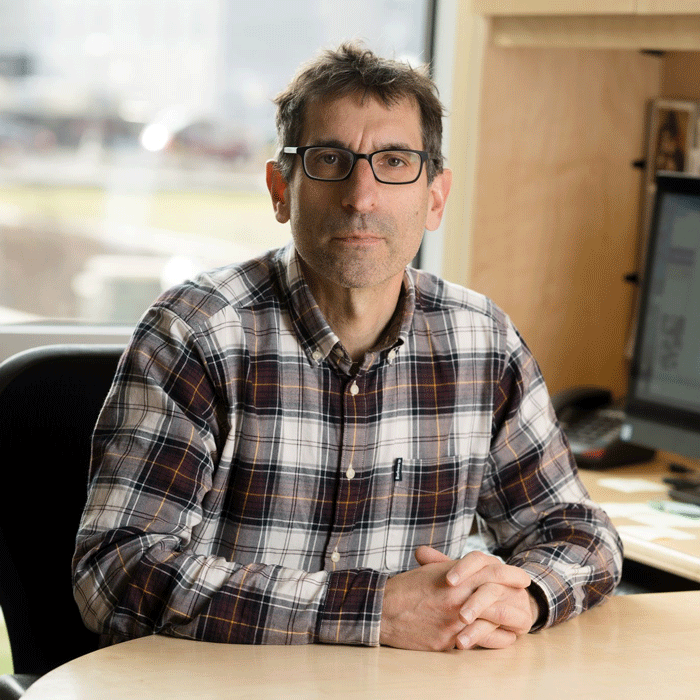
Claudia Egererمشاهده پروفایل
دانشیار
Claudia Egerer is an Associate Professor (Docent) at the Department of English, Stockholm University. She specializes in Environmental Humanities, Post-structuralism, and literary theory with a focus on issues of otherness, marginality, silence, and the nonhuman. Egerer co-founded the Environmental Humanities Network at Stockholm University and runs the research school theme in Environmental Humanities in collaboration with colleagues from Archaeology and History of Ideas. Her academic journey began with a doctorate received in 1996. She previously taught at the University of Trondheim/NTNU and was a visiting scholar at the Institute for Research in the Humanities at the University of Wisconsin, Madison. At Stockholm University, she served as deputy head from July 2006 to July 2009 and as head of department from July 2009 to July 2015. Egerer's research centers on rethinking the place of the human and the humanities in times of climate change. Her current book projects include 'Imaginings of Water: Storying Anthropocene Anxieties' and 'Wolf Matters.' She teaches courses such as 'Ecopoetics' and the MA course 'Literary Limits,' exploring the intersections between literature, environment, and philosophical inquiry. Her scholarship demonstrates consistent engagement with questions of boundaries, otherness, and human-nonhuman relationships, particularly through the lens of J.M. Coetzee's works. She has established significant international academic connections, initiating the English department's faculty exchange with the University of Wisconsin-Madison. She spent the fall semester of 2011 in Madison teaching a graduate course in posthumanism focused on 'the question of the animal.' In 2012, she instigated the English department's five-week-seminar series, and in 2014, participated in the inaugural meeting of the Global Academy of Liberal Arts (GALA), which has resulted in international research collaboration around 'lost waters.' Egerer's publications reveal a scholarly trajectory that combines literary analysis with philosophical inquiry, drawing on thinkers like Martin Heidegger, Jakob von Uexküll, and Giorgio Agamben. Her work on Coetzee examines moments of 'poetics of animacy' where literature provides access to 'unknowable worlds' and challenges conventional human-animal boundaries, contributing significantly to emerging fields of posthumanism and environmental humanities.