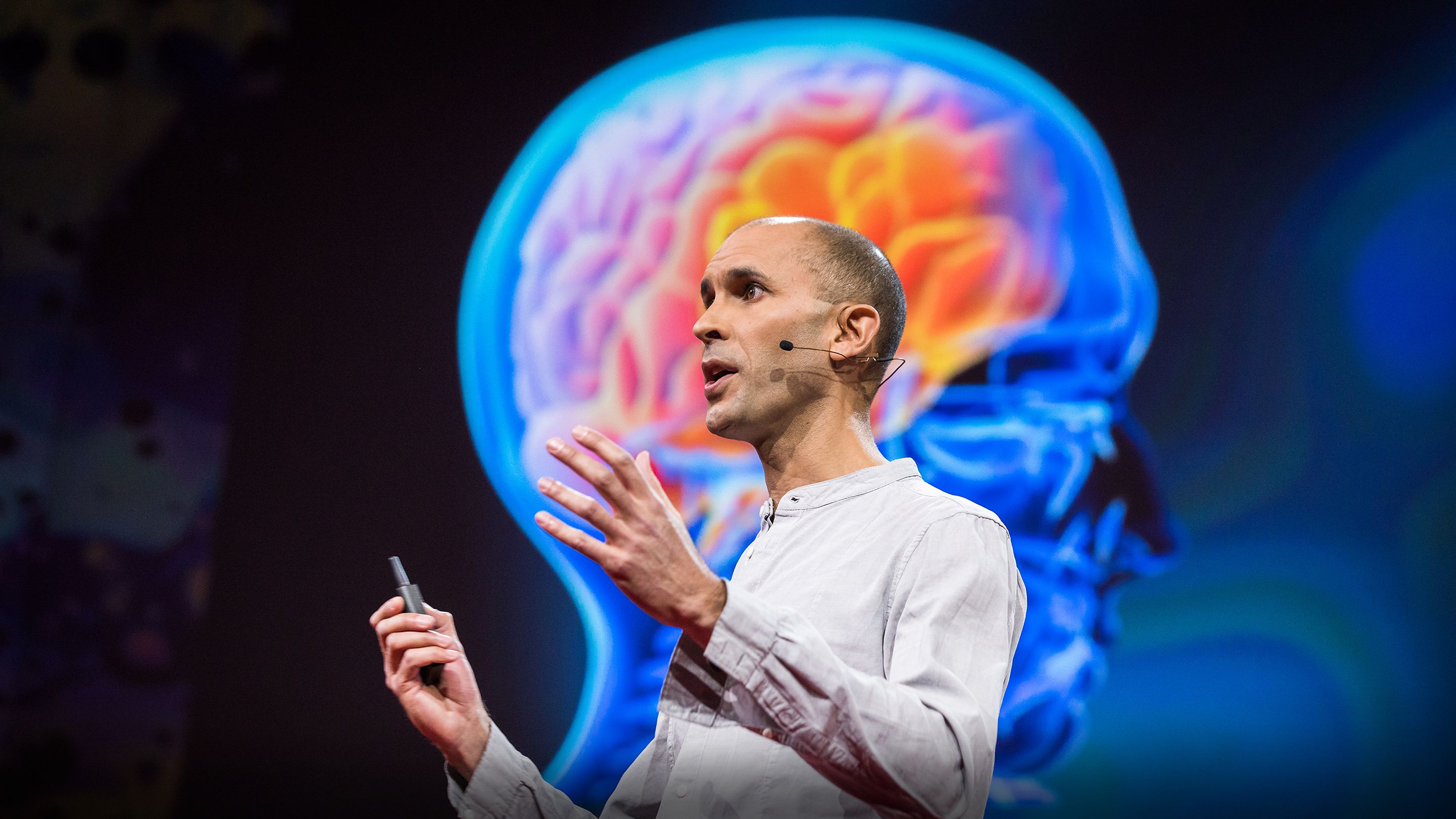
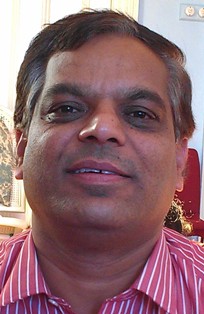
Stefano Fusi is an Associate Professor of Neuroscience at Columbia University's Vagelos College of Physicians and Surgeons, with joint affiliations at the Mortimer B. Zuckerman Mind Brain Behavior Institute and Kavli Institute. His laboratory focuses on computational modeling of neural circuits and neuromorphic engineering. Education PhD in Physics, Hebrew University of Jerusalem (1999) BS in Physics, Sapienza University of Rome (1992) Research Focus Fusi investigates how biological complexity supports neural computation through three primary domains: theoretical analysis of neural circuit dynamics, representational geometry in learning systems, and hardware implementations of brain-inspired algorithms. His work bridges machine learning, neurophysiology, and theoretical physics, emphasizing high-dimensional representations and memory optimization. Recent publications demonstrate consistent focus on neural coding principles across hippocampus, prefrontal cortex, and sensory systems, with innovations in modeling working memory, stress responses, and cross-species computational paradigms. Collaborations & Labs Leads an interdisciplinary laboratory collaborating with Columbia experimental neuroscientists, MIT engineers, and Stanford computational researchers to validate theoretical models. Current projects include neuromorphic hardware development and neural decoding of emotional states.
Professor Guy Williams is a leading academic at the University of Cambridge with a focus on imaging science and clinical neurosciences, affiliated with Downing College and the Wolfson Brain Imaging Centre . Holding a PhD in Physics from his initial Natural Sciences degree, he specializes in nuclear magnetic resonance (NMR) and MRI techniques for brain imaging. Education: BA, PhD in Physics His research centers on non-invasive imaging of brain structure and function, particularly in traumatic brain injury (TBI) and dementia. His work involves developing novel MRI pulse sequences and advanced data analysis algorithms, including AI-based diagnostic tools. He leads studies on white matter integrity post-trauma, longitudinal dementia assessment, and applications of MRI in disorders of consciousness and addiction. Recent publications highlight collaborations in traumatic brain injury outcomes, AI-guided dementia prediction, and neuroimaging of post-COVID cognitive deficits. His team's work on ultra-high field laminar fMRI and distortion correction methods has advanced clinical neuroscience applications. Key techniques include diffusion tensor imaging (DTI), 7 Tesla MRI, and positron emission tomography (PET/MR). His research spans from basic NMR physics to clinical translation, with a strong emphasis on multi-site studies and real-world diagnostic implementation.
Surya Ganguli is an Associate Professor in the Department of Applied Physics at Stanford University, with courtesy appointments in Neurobiology and Electrical Engineering. He serves as Senior Fellow at the Stanford Institute for Human-Centered AI and is affiliated with the Stanford Neuroscience Institute , Bio-X , and Wu Tsai Neurosciences Institute . His research spans theoretical neuroscience, machine learning, and statistical mechanics. Ph.D. , UC Berkeley, Theoretical Physics (2004) M.A. , UC Berkeley, Physics (2000) M.A. , UC Berkeley, Mathematics (2004) M.Eng. , MIT, Electrical Engineering and Computer Science (1998) B.S. , MIT, Physics (1998) B.S. , MIT, Mathematics (1998) B.S. , MIT, Electrical Engineering and Computer Science (1998) His lab explores how higher-level cognitive phenomena emerge from neural network dynamics, focusing on perception, memory, attention, and decision-making . Research themes include statistical mechanics of learning , neural representational geometry , and biologically plausible learning rules . Current work examines nonlinear interactions in neural networks through the Schmidt Science Polymath Award (2023). Key article trends reveal expertise in neural coding limits (2022 Nature), synaptic plasticity models (2022 Neural Computation), and deep learning theory (2022 NeurIPS publications). His 2019 Annual Review chapter on statistical mechanics of deep learning established foundational insights into network criticality. Scientific Awards : NSF Career Award (2019) Simons Foundation Investigator (2016) McKnight Scholar Award (2015) James S. McDonnell Foundation Scholar (2014) Sloan Research Fellow (2013) As advisor, he mentors 10+ doctoral students across Applied Physics, Neurosciences, and Computer Science, including Vamshi Balanaga and Mason Kamb. His lab collaborates with experimental teams at Stanford and beyond, supported by grants from NSF , Simons Foundation , and Swartz Foundation . The Neural Dynamics & Computation Lab unites physicists, mathematicians, and neuroscientists to decode cognition through interdisciplinary methods.
Dr. Kevin Kochersberger is an Associate Professor in the Department of Mechanical Engineering at Virginia Tech , with a career spanning academic research, technical innovation, and educational leadership. His work focuses on autonomous aerial systems , robotic control , and applied aerodynamics , particularly through the Uncrewed Systems Laboratory . Kochersberger's research has pioneered UAV-based radiation detection , 3D terrain mapping , and low-resource drone applications , including establishing the African Drone and Data Academy in Malawi . Education: Ph.D., Mechanical Engineering, Virginia Tech (1994) M.S., Mechanical Engineering, Virginia Tech (1984) B.S., Mechanical Engineering, Virginia Tech (1983) A.S., Engineering Science, Jamestown Community College (1981) Kochersberger's publications demonstrate expertise in UAV path planning , smart material actuation , and radiation source localization , with over $9M in research funding. His scientific awards include AIAA Associate Fellow (2009) and Aviation Week Aerospace Laureate (2003). Notable projects involve helicopter-deployable robotic systems and urban canyon navigation without GPS. Recent articles highlight BVLOS drone simulators , 2.5D terrain mapping , and autonomous negative obstacle traversal , reflecting his focus on real-time adaptive control and heterogeneous robotic systems . He teaches Drone Technology and Flight Operations and Advanced Design Projects , emphasizing student-driven innovation and industry collaboration .
Sungsoo Ray Hong is an Assistant Professor at George Mason University's Department of Information Sciences and Technology, directing the Alignment Lab (A-lab). His research focuses on bridging human mental models with AI systems through Human-Computer Interaction (HCI) and Computer-Supported Cooperative Work (CSCW). Dr. Hong earned his PhD in Human Centered Design and Engineering at the University of Washington. Research Domains: Human-AI Collaboration, Interactive Data Annotation, Steerable Deep Neural Networks, and AI-Driven Applications Key Grants: NSF Future of Work at the Human-Technology Frontier (2021-2024, $160K) Email: shong31@gmu.edu Hong's research explores how humans interact with machine learning systems to improve decision-making and task productivity. His lab develops tools for collaborative data annotation, interpretable model building, and AI-augmented creativity in professional contexts. Recent work includes applications for neurodiverse workers and comic professionals. The 15 most recent publications show strong focus on Human-AI collaboration (7 articles), interactive systems design (11 articles), and accessibility applications (5 articles). Topics span from explainable AI frameworks to collaborative annotation interfaces and creative industry tools. Dr. Hong maintains active collaborations with KAIST researchers, including Dr. Jaegul Choo and Dr. Juho Kim. His lab offers remote internships and accepts PhD students for summer positions.
Richard S. Sutton is a Professor in the Department of Computing Science at the University of Alberta , a Research Scientist at Keen Technologies, and the Principal Investigator at the Reinforcement Learning and Artificial Intelligence Lab . He also serves as the Canada CIFAR AI Chair at the Alberta Machine Intelligence Institute (Amii) and as Chief Scientific Advisor there. Additionally, he founded the Openmind Research Institute and is Chief Scientific Officer at ExperienceFlow. His research focuses on identifying general computational principles underlying intelligence and goal-directed behavior. He emphasizes the interaction between intelligent agents and their environment , exploring how goals, choices, and information sources emerge from this interaction. His work spans reinforcement learning (RL) , agent-environment dynamics, and ethical considerations in AI, such as robot rights and moral philosophy. His articles include technical works on RL, ethical frameworks, and philosophical essays like The Bitter Lesson (2019) and The Definition of Intelligence (2016). Canada CIFAR AI Chair Co-author of foundational RL textbook Developed Tile Coding Software for RL
Risto Miikkulainen is a Professor of Computer Science and Neuroscience at the University of Texas at Austin and VP of AI Research at Cognizant AI Lab. He directs the UTCS Neural Networks Research Group and is currently on leave from UT, working on Evolutionary Computation and Deep Learning at Sentient Technologies, Inc. Education: Ph.D. in Computer Science, UCLA, 1990 M.S. in Applied Mathematics, Helsinki University of Technology (now Aalto University), 1986 Risto Miikkulainen's research focuses on biologically-inspired computation such as neural networks and evolutionary computation. His work spans three main areas: (1) Neuroevolution, evolving complex deep learning architectures and recurrent neural networks for sequential decision tasks in robotics, games, and artificial life; (2) Cognitive Science, developing models of natural language processing, memory, and learning that shed light on disorders such as schizophrenia and aphasia; and (3) Computational Neuroscience, studying the development, structure, and function of the visual cortex, episodic memory, and language processing. His research combines theoretical understanding of biological information processing with practical applications for developing intelligent artificial systems. His recent publications (2025) show a strong focus on evolutionary approaches to AI development, particularly in neural architecture search, loss function optimization, and explainable AI. Many papers explore the intersection of evolutionary computation with deep learning, creating more efficient and transparent AI systems. His work spans theoretical foundations and practical applications in areas ranging from environmental control systems to cognitive modeling. Scientific Awards: College of Fellows, International Neural Network Society, 2024 Best Pathway to Impact Award, NeurIPS Climate Change workshop, 2024 AAAI Fellow, 2023 IEEE CIS Evolutionary Computation Pioneer Award, 2020 Gabor Award, International Neural Network Society, 2017 Outstanding Paper of the Decade Award, International Society for Artificial Life, 2017 IEEE Fellow, 2016 Multiple Best Paper Awards at GECCO, CIG, and CEC conferences Deployed Application Award, AAAI/IAAI-2013, AAAI/IAAI-2018 Miikkulainen has extensive experience mentoring students through undergraduate research courses like CS378 Computational Intelligence in Game Design I and II, where students develop independent research projects on the OpenNERO research platform. He has received multiple awards for deployed applications, demonstrating the practical impact of his research. His work has led to the development of the NERO game platform, which serves as both an educational tool and research platform for AI. He directs the UTCS Neural Networks Research Group, which focuses on neuroevolution, cognitive science models, and computational neuroscience. The group has developed the NERO (Neuro-Evolving Robotic Operatives) platform, a machine learning game that allows users to train intelligent agents through evolutionary computation. The group's work spans theoretical research and practical applications in AI, with connections to both academic and industry partners.
Nam Sung Kim is the W. J. "Jerry" Sanders III-Advanced Micro Devices Inc. Endowed Chair and holds a Professorship in Electrical and Computer Engineering at the University of Illinois. He is also affiliated with the Siebel School of Computing and Data Science, Coordinated Science Lab, and National Center for Supercomputing Applications (NCSA). His research focuses on computer architecture, memory systems, chiplet integration, and hardware security. Key areas include energy-efficient computing, processing-in-memory (PIM), and mitigating hardware vulnerabilities like rowhammer attacks. Kim has received prestigious awards including IEEE Fellow (2016), MICRO Hall of Fame (2018), NAI Fellow (2023), and NSF CAREER Award (2015). His work spans publications in top venues like ASPLOS and IEEE journals, addressing topics such as CXL-based memory systems, DRAM module optimization, and GPU architecture improvements. Collaborations emphasize interdisciplinary research in hardware-software co-design and emerging technologies. His labs and teams at Coordinated Science Lab and NCSA drive innovations in scalable computing, near-memory processing, and cloud infrastructure for AI workloads. Ongoing projects include developing resilient memory hierarchies and accelerating large-scale machine learning models through novel architecture designs.
Professor Bharat Bhuva is a faculty member in the School of Engineering at Vanderbilt University, holding the position of Professor of Electrical Engineering and Computer Engineering . His research focuses on radiation effects on integrated circuits, semiconductor device modeling, and VLSI design, with an emphasis on advancing the resilience of nanoscale electronics against single-event effects and total-ionizing-dose damage. He also investigates emerging technologies like FinFET and FDSOI for improved radiation hardness and performance. Education: Ph.D. in Electrical Engineering, North Carolina State University M.S. in Electrical Engineering, North Carolina State University B.S. in Electrical Engineering, Maharaja Sayajirao University Research Interests: Professor Bhuva’s work spans computer-aided design tools, semiconductor process modeling, and the mitigation of radiation-induced failures in advanced integrated circuits. His studies address challenges posed by scaling to smaller technology nodes (e.g., 3-nm FinFET) and the impact of environmental factors like temperature, bias conditions, and neutron exposure on circuit reliability. Key areas include multicell upsets, single-event upset (SEU) cross-section analysis, and the efficacy of radiation-hardened-by-design (RHBD) techniques. Awards & Recognition: None explicitly listed in the provided text. However, his extensive publications in top-tier journals like IEEE Transactions on Nuclear Science highlight his contributions to the field. Grants & Advising: Advises on projects related to advanced semiconductor technologies and radiation effects. His research has been supported by grants from institutions focusing on space electronics and nanotechnology. No specific grant details or student advisees are listed. Labs & Teams: Likely affiliated with Vanderbilt’s Cyber-physical Systems and Nano Science and Technology research neighborhoods, though specific lab names are not mentioned in the text.
David J. Crandall is the Luddy Professor of Computer Science at Indiana University's Luddy School of Informatics, Computing, and Engineering. He serves as Director of the Luddy Artificial Intelligence Center and leads the IU Computer Vision Lab. With joint appointments in Informatics, Cognitive Science, Data Science, and Statistics, his work spans computer vision, machine learning, and AI. He holds a Ph.D. from Cornell University and previously worked at Eastman Kodak Research Labs. His research focuses on developing statistical and machine learning methods to analyze visual information, including object recognition, human activity analysis in video, 3D reconstruction, social media mining, and computational studies of visual attention. Key applications include egocentric vision systems, social robotics for healthcare, and cross-disciplinary collaborations with developmental psychology. Recent publications demonstrate strong emphasis on egocentric video analysis (Ego4D), human-robot interaction (CHI/HRI), and explainable AI (IJCAI). Medical imaging, nanoscale security systems, and computational social science represent emerging interdisciplinary directions. His work consistently integrates deep learning with real-world applications in health, environmental monitoring, and cultural analytics. Tracy M. Sonneborn Award (2024) Distinguished Member of the ACM (2023) Luddy Professorship (2021) NSF CAREER Grant (2013) Trustees Teaching Award (2017) He has advised over 20 Ph.D. graduates, with current students working on computer vision, robotics, and AI ethics. Major grants include $20M for the NSF AI Institute on Engaged Learning, $4.4M for trusted AI research, and funding from NIH, Google, ONR, and NASA. He directs the Computer Vision Lab and collaborates with Selma Sabanović's robotics group on social agents for older adults.
Tosiron Adegbija is an Associate Professor in the Department of Electrical and Computer Engineering at the University of Arizona, where he serves as Director of Graduate Studies and Thomas R. Brown Endowed Fellow. He is a member of the Graduate Faculty and actively contributes to research and teaching in computer architecture and embedded systems. Education: PhD in Electrical and Computer Engineering, University of Florida, 2015 MS in Electrical and Computer Engineering, University of Florida, 2011 BS in Electrical Engineering, University of Ilorin, Nigeria, 2005 His research centers on energy-efficient computing with a focus on bio-inspired computer architecture , including spiking neural network (SNN) accelerators and in-memory computing. He also explores domain-specific architectures , adaptable memory systems , and microprocessor optimizations for IoT . His work leverages novel memory technologies like STT-RAM to enhance performance and reduce energy consumption in embedded and resource-constrained systems. Recent publications highlight trends in hybrid SNN acceleration, domain-specific accelerator generation, and system-level design space exploration. His research is increasingly focused on neuromorphic computing, automated hardware design, and ultra-efficient architectures using emerging materials like antiferromagnetic tunnel junctions. Scientific Awards: National Science Foundation (NSF) CAREER Award (2019) Elected IEEE Senior Member (2020) Best Paper Award at IEEE ISVLSI (2014) Teaching Award, University of Arizona (2018) ACM GLSVLSI Travel Award (2015) He advises numerous graduate and undergraduate students, many of whom have pursued careers at institutions like Pacific Northwest National Labs, Micron Technology, and Amazon. He has secured significant funding, including a $1.9M NSF FuSE2 grant for energy-efficient computing. His lab collaborates with UA Physics, CMU, and UNL. He has also developed educational tools for Chipyard and RISC-V, supporting hands-on learning in computer architecture. Labs and Research Teams: Leads a research group focused on bio-inspired and domain-specific computing, fostering innovation in energy-efficient hardware. The lab emphasizes hardware/software co-design, neuromorphic engineering, and real-world deployment in IoT and biomedical applications.
Robert Dick is a Professor in the Department of Electrical Engineering and Computer Science at the University of Michigan, part of the College of Engineering. He previously held roles as Associate Professor at Northwestern University and Visiting Professor at Tsinghua University. He earned his Ph.D. from Princeton University and a Bachelor's degree from Clarkson University. His research focuses on Embedded Systems, Learning Dynamics, Efficient Machine Learning, Privacy, and Censorship Resistance. Key themes include defining problems with correct costs/constraints, broadening access to information technology, mitigating negative tech impacts, and solving inference problems with limited resources. He leads the Embedded Systems Graduate Program and is a member of the Michigan Integrated Circuits Laboratory (MICL). His work spans thermal management, energy-efficient computing, and low-power wireless networks. Notable contributions include innovations in embedded system design, machine vision frameworks, and sensor networks. Courses taught include EECS 507 (Embedded Systems Research), EECS 373 (Embedded System Design), and ENGR 100 (Autonomous Systems). His recent publications emphasize AI model analysis, energy-efficient networks, and environmental sensing. Projects include MemX (attention-aware wearable tech) and LoRa-based LPWAN protocols. Dick co-founded Stryd, a company commercializing embedded systems innovations.
Sotirios Liaskos is an Associate Professor in the School of Information Technology at the Faculty of Science, York University. He is a leading researcher in requirements engineering and conceptual modeling, with a focus on goal models, empirical evaluation, and model-driven engineering. Research Interests: Requirements Engineering Goal and Conceptual Modeling Empirical Software Engineering Model-Driven Design and Automation Uncertainty and Decision-Theoretic Reasoning in Models Applications in Blockchain and Reinforcement Learning His recent work emphasizes the empirical validation of modeling constructs, the integration of decision theory into goal models, and the automated generation of secure workflows and AI training environments. He has led and co-authored numerous experimental studies on model comprehensibility and semantic quality. Publication Trends: His publications consistently appear in top venues like ER, RE, and iStar. The last five years show a strong trend toward empirical evaluation of modeling languages, decision-theoretic goal models, and applications of goal modeling in emerging domains such as blockchain and reinforcement learning simulation design. Scientific Contributions: Developed frameworks for empirical evaluation of modeling language ontologies (Peira framework). Advanced decision-theoretic approaches to goal modeling under uncertainty. Pioneered model-driven methods for generating blockchain simulators and reinforcement learning environments. Conducted foundational empirical studies on the comprehensibility of contribution links and visualization alternatives in goal models. Advising and Collaboration: He has advised several researchers including Ibrahim Jaouhar, Wisal Tambosi, Mehrnaz Zhian, and Saba Zarbaf. He maintains a highly collaborative research profile with frequent co-authorship with John Mylopoulos, Shakil M. Khan, and other international researchers. He has served as a co-editor for multiple iStar workshop proceedings, indicating leadership in the goal-oriented requirements engineering community. Labs and Teams: While no specific lab name is mentioned, his work is closely associated with research groups focused on requirements engineering and conceptual modeling, likely within York University’s software engineering research cluster. His collaborations span institutions in Canada, Europe, and beyond.
Professor Anil Seth is a leading cognitive and computational neuroscientist at the University of Sussex, where he holds a professorship in the School of Engineering and Informatics. He is Director of the Sussex Centre for Consciousness Science and Co-Director of the CIFAR Program on Brain, Mind, and Consciousness and the Leverhulme Doctoral Scholarship Programme. His research bridges neuroscience, psychology, philosophy, and AI to investigate the biological basis of consciousness and selfhood. His research interests include: Predictive processing approaches to perception Virtual and augmented reality in self-experience studies Mathematical modeling of perception and emergence Machine learning applications in subjective perception modeling Interoception and selfhood Neural mechanisms of conscious experience The recent publications reflect a strong focus on consciousness, neural dynamics, predictive models, and interdisciplinary approaches. Trends include the use of computational modeling, neurophenomenology, causal analysis, and the ethical implications of emerging neurotechnologies. His work increasingly integrates large language models and data-driven methods for analyzing subjective experience. His scientific awards include: Segerfalk Award Perspectives Award Highly Cited Researcher (Web of Science, 2019–2022) Royal Society Michael Faraday Prize (2023) Seth has secured substantial research funding from the European Research Council (ERC), EPSRC, Wellcome Trust, CIFAR, and the Sackler Foundation. He has supervised numerous research projects and doctoral students through interdisciplinary programs. He leads the Dreamachine project and has been an Engagement Fellow with the Wellcome Trust. He serves on editorial boards including Philosophical Transactions of the Royal Society B and is Editor-in-Chief of Neuroscience of Consciousness . He leads a multidisciplinary research group at the Sackler Centre, bringing together psychologists, mathematicians, neuroscientists, computer scientists, and philosophers. His team conducts innovative research using virtual reality, neuroimaging, and computational modeling to explore the nature of consciousness and self.
Dr. Rajkumar Buyya is a Redmond Barry Distinguished Professor at the University of Melbourne and Founder & CEO of Manjrasoft , a spin-off commercializing cloud innovations. He has held visiting roles at Imperial College London , University of Birmingham , and Tsinghua University . Research Interests : His work spans Cloud Computing , Edge Computing , Grid Systems , and Energy-Efficient Computing , focusing on utility-driven resource allocation, simulation tools, and scalable IoT application frameworks. He pioneered the CloudSim toolkit and Aneka Cloud technologies. Scientific Awards : IEEE Fellow (2015), Web of Science Highly Cited Researcher (2016-2021) Khwarizmi International Award (2020), Scopus Researcher of the Year (2017) Frost & Sullivan New Product Innovation Award (2010), IEEE TCSC Medal (2009) Impact : Authored over 850 publications, including the widely adopted textbook Mastering Cloud Computing . Graduated 54 PhD students now in leadership roles at institutions like Newcastle University and companies such as IBM , Google , and Amazon . His research has driven global adoption of cloud/edge technologies in 50+ countries.