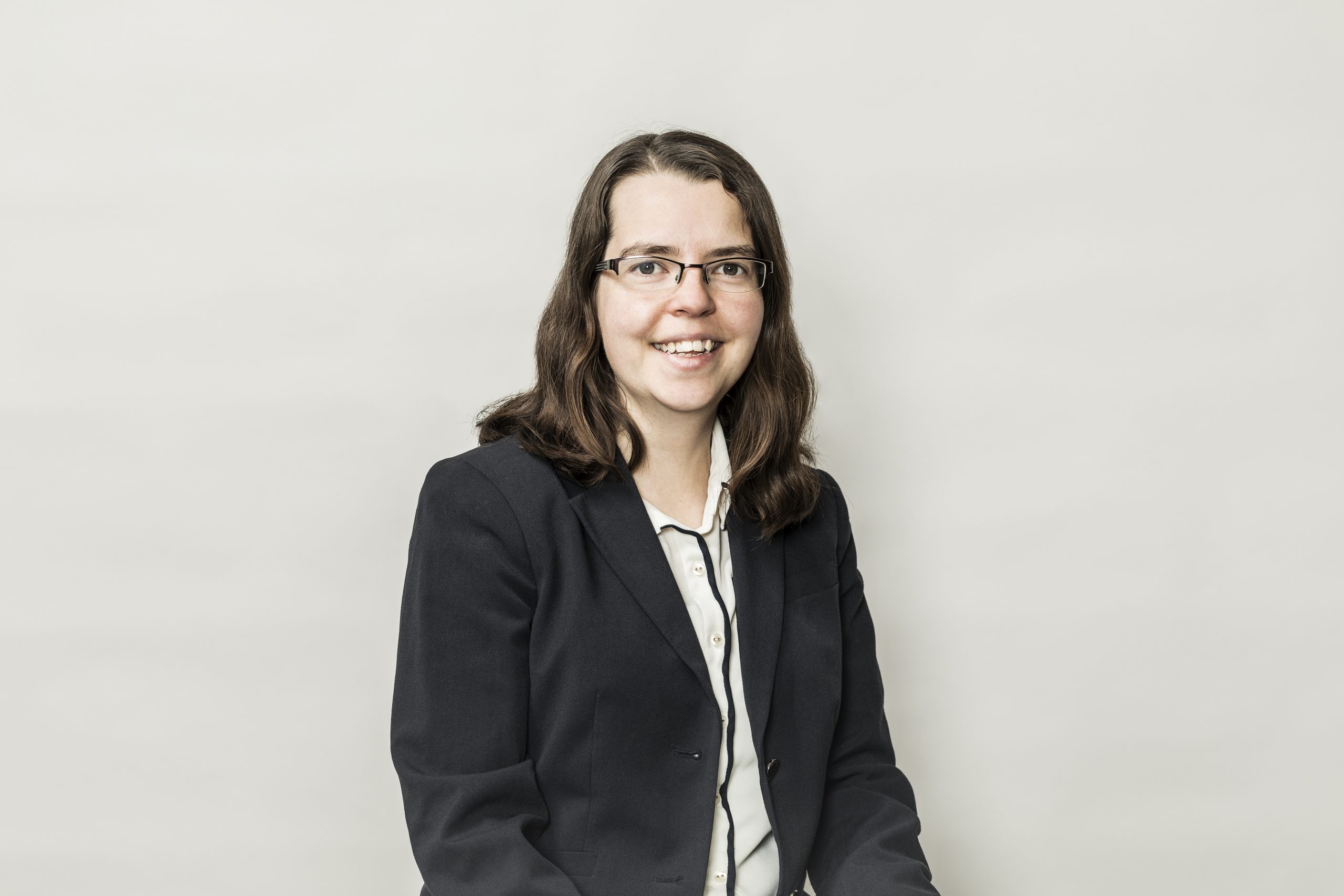
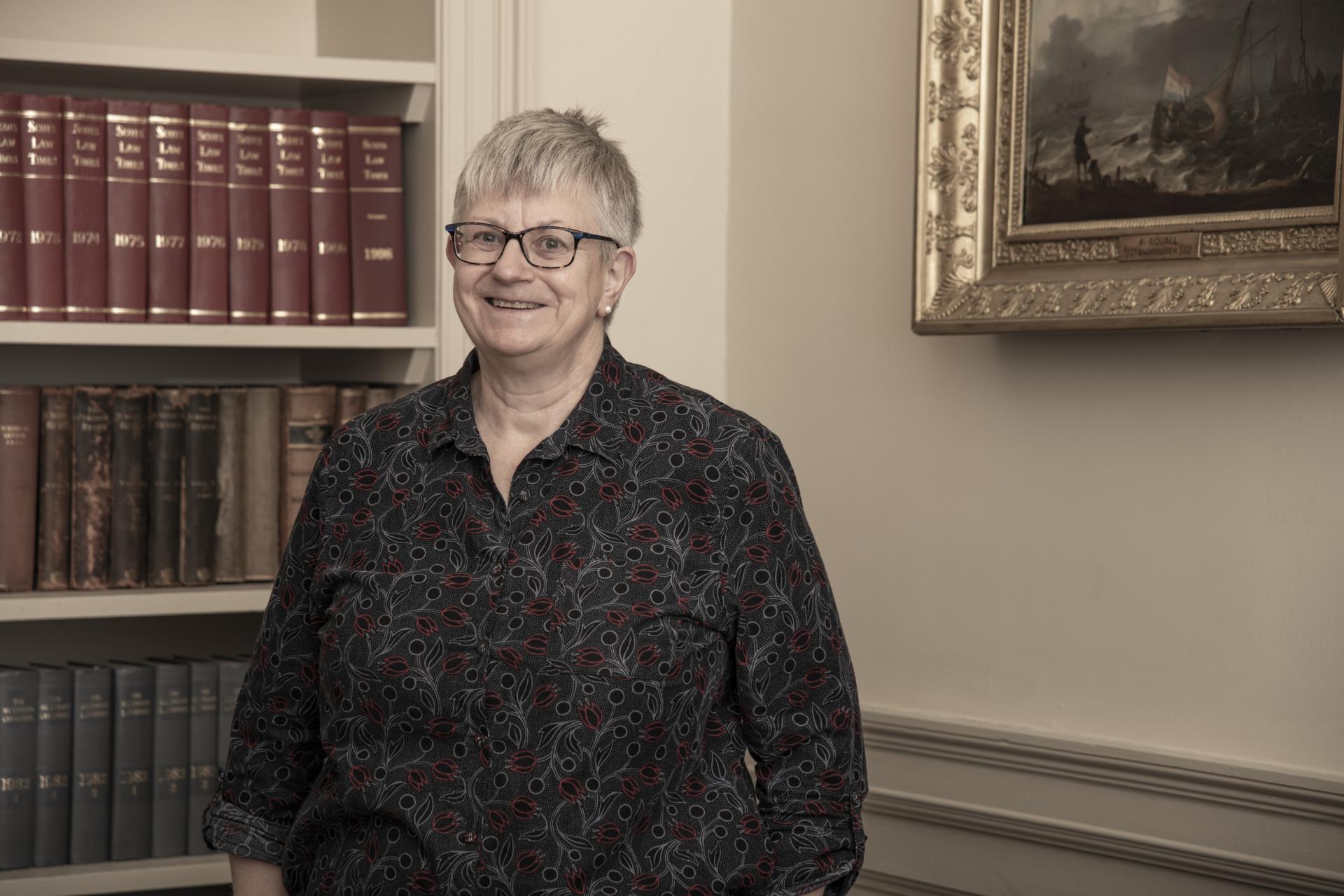
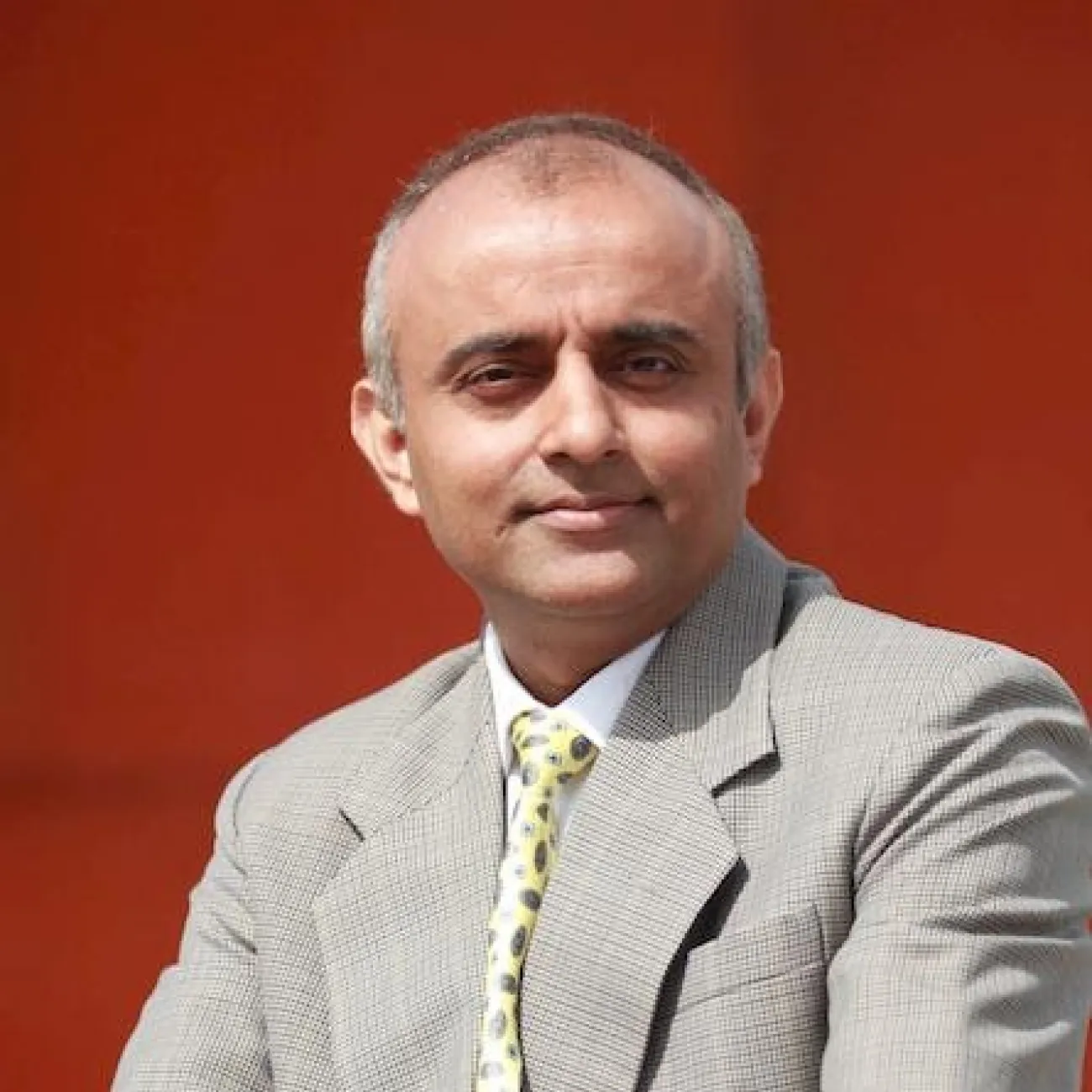
Assoc. Prof. Paul Leonard is an Associate Professor in Biotherapeutics at Dublin City University (DCU), leading the Biomedical Innovation Group (BIG) within the School of Biotechnology. His research focuses on biomolecular interaction analysis, single-cell technologies, and biologics discovery, addressing challenges in oncology, cardiovascular disease, and infectious disease diagnostics. He has 20+ years of academic and industry experience, co-founding Remedy Biologics Ltd and securing over €15M in funding. His entrepreneurial roles include CSO/CTO, Lean Six Sigma process improvements, and advisory work for life sciences companies. Research interests span high-throughput antibody discovery, immunoassay development, and environmental sensing. He collaborates with academia and industry, including projects like AquaBioSens for aquatic pollutant detection. His lab employs multidisciplinary teams and holds patents in biotechnology. Paul also serves as an external examiner for Technical University Dublin’s Biomedical Diagnostics program. Key achievements include technology spin-outs, patent filings, and leadership in EU-funded projects. His work bridges academic innovation with commercial applications, emphasizing rapid diagnostic tools and therapeutic advancements.
Marina Freire-Gormaly is an Assistant Professor in the Mechanical Engineering Department at York University's Lassonde School of Engineering. Her research focuses on renewable energy-powered water treatment systems, machine learning for smart design, advanced manufacturing, and sustainable engineering solutions for remote communities. She holds a PhD and M.A.Sc. from the University of Toronto, specializing in carbon capture and storage technologies. She has worked on nuclear energy projects at Ontario Power Generation and contributed to World Bank sustainability assessments. She currently chairs the Canadian Society of Mechanical Engineers' Student and Young Professional Affairs committee. Education: PhD in Mechanical Engineering, University of Toronto M.A.Sc. in Mechanical Engineering, University of Toronto Research Interests: She pioneers solar-powered reverse osmosis systems, energy recovery mechanisms, and IoT-driven smart systems. Her lab explores nanotechnology applications in environmental sustainability, including carbon capture and aquatic remediation. She integrates machine learning for optimizing energy-water nexus challenges in off-grid regions. Key Contributions: Developed models for membrane fouling in desalination systems, advanced pore network characterization for geologic CO2 storage, and designed automated renewable energy systems. Her work bridges engineering innovation with global sustainability goals. Grants & Collaborations: Engages with industries like Honda Canada and Trane Canada on sustainability initiatives. Supervises graduate students in emerging areas like nanobubble technology and direct air capture systems. Lab Activities: The Freire-Gormaly Lab focuses on clean energy-water systems, with current projects involving nano-technology for space applications (Canadian Space Agency collaboration) and life cycle assessments of carbon storage technologies.
Laura J. Holt is a Professor of Psychology at Trinity College, where she has been a faculty member since 2008. Her research focuses on addiction, substance use prevention, and community-based interventions. She holds a B.A. in Psychology from Trinity College, an M.S. and Ph.D. in Clinical Psychology from Rutgers University, and completed postdoctoral training at Yale University School of Medicine and the Department of Veterans Affairs. Her work emphasizes the role of family, peers, and societal factors in shaping psychological outcomes and effective treatment strategies. Holt’s research lab engages Trinity undergraduates in projects addressing healthier college relationships, substance use reduction, and community outreach. Students contribute through data collection, analysis, and publication preparation. She strongly advocates for liberal arts education, highlighting its role in fostering critical thinking, student-faculty collaboration, and community engagement. Her research themes include e-cigarette dependence, prescription stimulant misuse, and the intersection of mental health with substance use. She has explored motivational factors in substance use cessation and the impact of faculty-student rapport on academic success. Her lab’s activities emphasize practical skills for students pursuing clinical or counseling psychology careers. No scientific awards are explicitly listed in the provided materials. However, her extensive contributions to addiction research and mentorship are evident through her prolific publication record and collaborative projects. Holt advises students such as Alice Verdier ’22, Angie Delucia ’22, and Maddie Shapiro ’22, reflecting her commitment to undergraduate research. Her work integrates community partnerships and evidence-based interventions to address public health challenges, particularly among emerging adults. The Holt Research Lab serves as a hub for collaborative projects, offering students hands-on experience in qualitative and quantitative research methods (e.g., Atlas.ti, SPSS). This environment prepares students for graduate studies and careers in clinical psychology and related fields.
Thomas S. Dee is the Barnett Family Professor at Stanford University's Graduate School of Education (GSE), a Research Associate at the National Bureau of Economic Research (NBER), a Senior Fellow at the Stanford Institute for Economic Policy Research (SIEPR), and a Senior Fellow (Joint) at the Hoover Institution. He serves as the Faculty Director of the John W. Gardner Center for Youth and Their Communities and holds multiple administrative appointments including Member of the Executive Committee of Stanford's Public Policy Program. Professor Dee's research focuses on the use of quantitative methods to inform contemporary issues of public policy and practice, with particular emphasis on education policy, economics of education, and program evaluation. His work spans critical areas including pandemic education effects, chronic absenteeism, school choice, educational equity, STEM education, and research methodology. He has made significant contributions to understanding how quantitative analysis can shape effective educational policy and practice. Dee's recent publications reveal a strong focus on pandemic-related educational disruptions, examining issues like chronic absenteeism, enrollment declines, and school reopening preferences. His research demonstrates expertise in quasi-experimental methods and has increasingly addressed questions of educational equity, particularly regarding underrepresented students in STEM fields. His 2025 work on Advanced Placement computer science shows how course design can broaden participation among female and minority students. Outstanding Public Communication of Education Research Award, American Educational Research Association (2024) Peter H. Rossi Award for Contributions to the Theory or Practice of Program Evaluation, Association for Public Policy Analysis and Management (2024) Research-Practice Partnership Award (co-recipient), California Educational Research Association (2023) Community Outcomes and Impact Award, International Association for Research on Service Learning and Community Engagement (2020) Raymond Vernon Memorial Award, Association for Public Policy Analysis and Management (2019) Raymond Vernon Memorial Award, Association for Public Policy Analysis and Management (2015) Professor Dee actively contributes to academic discourse through editorial roles on journals including the American Educational Research Journal and Education Finance and Policy. His teaching portfolio includes advanced courses in quantitative policy analysis and quasi-experimental research design, reflecting his methodological expertise. While specific grant information isn't detailed in the provided text, his extensive publication record and leadership roles suggest significant research funding support. As Faculty Director of the John W. Gardner Center for Youth and Their Communities, Dee leads initiatives connecting Stanford with community organizations to address youth development challenges. His work bridges academic research with practical community applications, emphasizing the importance of research-practice partnerships in creating meaningful educational change.
Professor Jo Shaw holds the Salvesen Chair of European Institutions at the University of Edinburgh School of Law since 2005. She combines this with a part-time visiting position at Tampere University's New Social Research Programme (2018–present). Her leadership roles include Head of School (2017–present), Dean of Research for the College of Arts, Humanities and Social Sciences (2009–2013), and Director of the Institute for Advanced Studies in the Humanities (2014–2017). Her research focuses on Citizenship Regimes , exploring their legal, political, and social dimensions across the EU and post-Yugoslav states. She co-directs the Global Citizenship Observatory and has received major grants including the Leverhulme Major Research Fellowship (2018–2020) and EURIAS Fellowship (2017–2018). Her work intersects EU law, constitutionalism, and global governance. Recent publications analyze constitutional citizenship , soft law mechanisms , and pandemic-related legal challenges . Key trends include authoritarian threats to constitutionalism , EU electoral dynamics , and citizenship acquisition barriers in South America. She contributes to debates on Windrush justice , Scottish independence , and EU-UK immigration law conflicts . Scientific Awards : Fellow of the Royal Society of Edinburgh (FRSE) Fellow of the Academy of Social Sciences (AcSS) Leverhulme Major Research Fellowship (2018–2020) EURIAS Fellowship (2017–2018) She actively engages in PhD supervision and collaborates with institutions like the European Parliament , European University Institute , and CITSEE (Europeanisation of Citizenship in Former Yugoslavia project).
Kimberly Kay Hoang is a Professor of Sociology at the University of Chicago, renowned for her groundbreaking research on frontier markets, transnational capital flows, and gendered economic systems. With a Ph.D. from UC Berkeley and academic credentials from top institutions, she combines ethnographic rigor with critical theory to expose hidden power structures in global finance and intimate labor. Education: B.A., University of California-Santa Barbara (2005) M.A., Stanford University (2006) Ph.D., University of California-Berkeley (2011) Her research spans three core areas: Global Financial Networks : Exposing offshore wealth concealment mechanisms through Spiderweb Capitalism , which won five major awards Gendered Capitalism : Analyzing how intimacy and finance intersect in Dealing in Desire , recipient of seven prestigious accolades Embodiment in Global Markets : Investigating body commodification in Nigerian beauty pageants and Vietnamese sex work Her scholarship has earned extraordinary recognition across 14+ professional associations, including: 2020 Lewis Coser Theoretical Agenda Award 2018 Quantrell Teaching Excellence Award 26+ book/article prizes spanning ASA, NWSA, and AAS
Professor Paurav Shukla is the Professor of Marketing and Head of the Digital and Data Driven Marketing Department at the Southampton Business School, University of Southampton. His research focuses on luxury consumption, brand management, and cross-cultural consumer behavior, with a particular emphasis on emerging markets. He has held visiting professorships at institutions like Frankfurt School of Finance & Management and Aalto University. His work bridges academia and industry through corporate training, consulting, and advisory roles globally. Paurav is renowned for his contributions to luxury branding research, ranking in the top 2% globally in citations. He actively supervises PhD students in comparative consumer behavior and luxury marketing. Research Interests: Luxury consumption patterns and democratization Brand management strategies in global markets Self-identity and consumer behavior Cross-cultural marketing dynamics Emerging trends in digital economy and autonomous vehicles Awards: Stanford 2% Global Scientist Citation Rankings (2021) Best Track Chair (2021) Best Paper Award in International Marketing Track (2022) Teaching & Outreach: Teaches luxury marketing, brand management, and strategic marketing. Engages in executive training and consulting for organizations in Europe, Asia, and Africa. Current projects include studies on autonomous vehicles (via the UKRI TAS Hub) and health policy. Labs & Collaborations: Part of the India Centre for Inclusive Growth, Centre for Marketing Research, and C-BEAR (Behavioural Experimental Action and Research). Collaborates with industry partners on projects like the ECON study on convenience store regulation impacts.
Professor Bruce N. Walker holds a joint appointment in the School of Psychology and School of Interactive Computing at Georgia Institute of Technology, within the College of Sciences. His research focuses on human-centered technology design, emphasizing accessibility, auditory displays, and human-AI interaction. He leads the Sonification Lab, pioneering multimodal interfaces and inclusive technology solutions. He earned his Ph.D. in Human Factors and Human-Computer Interaction from Rice University in 2001. Research Interests: Trust in technology, accessible interfaces, sonification, AI-human collaboration, and HCI in non-traditional environments. Current projects include the AccessCORPS VIP initiative to enhance course accessibility and studies on automated vehicle interaction. Awards: Best Paper Award at AudioMostly 2014 for auditory weather reports research. Active in professional organizations like the International Community for Auditory Display and Human Factors and Ergonomics Society. Teaching: Courses include Research Methods for Human Factors, Sensation and Perception, and HCI Foundations. Supervises interdisciplinary teams in the Sonification Lab R&D Studio and AccessCORPS VIP. Labs/Teams: Sonification Lab (multimodal data exploration) and AccessCORPS (disability-inclusive course design). Collaborates on international projects like the Mwangaza initiative for learners with vision impairment in Kenya.
Dr. Andrew Curtis is a Professor in the Department of Population and Quantitative Health Sciences at Case Western Reserve University's School of Medicine. He also holds a joint appointment in the Department of Anthropology, College of Arts and Sciences. His research focuses on spatial epidemiology, context-driven spatial data collection, and spatial confidentiality, with methodological expertise in geospatial data collection and analysis. He previously directed the WHO Collaborating Center for Remote Sensing and Public Health and has advised numerous public health agencies internationally. His work addresses health disparities at neighborhood scales, disaster response, and spatial syndromic surveillance. Dr. Curtis has mentored 10 PhD graduates now working in academia and public health sectors globally. Education includes a PhD in Geography from SUNY Buffalo (1995), MA in Geography from SUNY Buffalo (1991), and a BA from Portsmouth Polytechnic (1987). He has taught courses in GIS for health, medical geography, and global health. His advisory roles include collaborations with the CDC, Red Cross, and public health departments in Ohio and internationally. His research has been applied to cholera outbreaks, opioid overdose patterns, and pandemic response strategies. He co-edited a special issue on health geography and serves on the editorial board of the Annals of the Association of American Geographers. Dr. Curtis' spatial video methodologies have enabled fine-scale mapping in informal settlements, disaster zones, and conflict-affected areas. His recent work includes geospatial support for Ohio hospitals during the pandemic and energy vulnerability analysis. He emphasizes participatory research and context-enriched data collection to bridge gaps between health research and actionable policy.
Christopher Cannon is the Bloomberg Distinguished Professor of English and Classics at the Johns Hopkins University, Krieger School of Arts & Sciences. He specializes in medieval literature, focusing on the emergence of English literature as a distinct category through intellectual, philological, and comparative lenses. His research emphasizes medieval Latin, grammar school learning, and theories of language. Dr. Cannon holds a PhD from Harvard University and has taught at NYU, Cambridge, Oxford, and UCLA before joining Johns Hopkins in 2017. His editorial roles include co-editing Oxford Studies in Medieval Literature and Culture and the Oxford Chaucer edition. He has been recognized with a Guggenheim Fellowship and the William Riley Parker Prize (MLA, 2014). His publications include From Literacy to Literature (2016), Grounds of English Literature (2004), and Making of Chaucer’s English (1998). His work explores Chaucer, Langland, and the Auchinleck Manuscript, emphasizing medieval educational systems and linguistic evolution. Research interests span medieval Latin’s impact on English literature, the interplay between orality and literacy, and the cultural contexts shaping literary history. His contributions to textual studies and historical methodologies have reshaped understandings of medieval literary production and transmission.
David Danks is a Professor of Data Science, Philosophy, and Policy at the University of California, San Diego. His work bridges AI ethics, causal inference, and policy, focusing on governance frameworks for emerging technologies. He leads research on trustworthy AI systems, healthcare technology applications, and sociotechnical risks. Danks is affiliated with the DIVER Lab, exploring interdisciplinary approaches to AI's societal impact. His research spans causal discovery algorithms, ethical AI design, and the intersection of science and policy. Notable themes include mitigating bias in quantum machine learning, dynamic certification for autonomous systems, and addressing unforeseen technological harms. He has contributed to national AI policy through roles like the National Artificial Intelligence Advisory Committee. Publications emphasize ethical challenges in AI development, such as algorithmic fairness, epistemic utility, and moral responsibilities in dual-use technologies. His work frequently intersects with healthcare innovation, including personalized hemodynamic models for surgical risk reduction. While no formal awards or grants are listed, Danks' involvement in high-profile initiatives like the CCC Whitepaper on pandemic prevention underscores his leadership in translational ethics and policy.
Amiya Nayak is a Professor at the School of Electrical Engineering and Computer Science of the University of Ottawa. His research focuses on Fault-Tolerant Computing , Distributed Systems , and Ad hoc and Sensor Networks . He specializes in cybersecurity, IoT security, blockchain integration, and machine learning applications in healthcare and vehicular networks. His work addresses challenges in secure communication protocols, distributed learning frameworks, and energy-efficient network designs. Notable research areas include: IoT Security : Developing frameworks for threat detection, privacy-preserving systems, and blockchain-empowered IoT defenses. Federated Learning : Enhancing healthcare predictions and IoT management through decentralized, privacy-aware machine learning. Vehicular Networks : Securing Vehicle-to-Everything (V2X) communication and optimizing QoS in cooperative internet of vehicles (IoV). Network Optimization : Leveraging deep reinforcement learning and graph neural networks for WDM network restoration and edge computing. His publications (2020–2025) highlight contributions to: Secure authentication protocols in medical sensor networks. AI-driven metaverse security solutions. Decentralized energy trading using NFTs. Energy-efficient sleep scheduling in wireless body area networks (WBANs). Nayak holds a Ph.D. and is a P.Eng. (Professional Engineer). His work bridges theoretical computer science with practical applications in telecommunications and healthcare systems.
Sanghoon Kim is an Assistant Professor (Fixed-Term) in the Department of Kinesiology at Michigan State University. He holds a Ph.D. from Texas A&M University. His research focuses on understanding sport consumers' interactions with technology-mediated environments such as social media, self-service technology, and virtual/augmented reality (VR/AR). His work emphasizes cognitive, social, and data-driven approaches to analyze consumer experiences and psychological/behavioral responses in digital spaces. Education: Ph.D., Texas A&M University. Research Interests: Kim's studies explore how emerging technologies shape consumer behavior in sports contexts, including VR/AR adoption, esports toxicity, digital ticketing, and art-infusion effects in retail. He examines themes like psychological well-being, social capital, and mediated empathy through virtual experiences. Articles Trends: Recent work highlights VR's role in sports advertising empathy, gamified suspense mechanics, and CSR-linked sponsorship effects. He also investigates paradoxical relationships between esports toxicity and coping strategies, as well as consumer adoption of mobile ticketing and AR in e-commerce. Advising/Grants: No specific grants or advisees listed. His research likely focuses on collaborative projects within MSU's College of Education. Labs/Teams: Affiliated with MSU's Kinesiology department, though specific lab names are not mentioned in the provided data.
Prof. Taco van der Vaart is a Professor and Department Chair at the Department of Operations, Faculty of Economics and Business, University of Groningen. His expertise lies in Supply Chain Management, Health Care Operations, and Buyer-Supplier Relationships. He holds a PhD in Business Administration (2000) and an MSc in Mathematics from the University of Groningen. Research Interests: His work focuses on supply chain sustainability, healthcare logistics, and the integration of operations management principles in complex systems. Notable contributions include studies on physician payment dynamics, emergency care coordination, and global value chain governance. Professional Roles: He has served as President of the European Operations Management Association (2019–2022), Director of Graduate Studies at the SOM Research School, and currently chairs the Department of Operations. He also contributes to ancillary roles like the Advisory Board of the Politecnico di Milano School of Management. Recent Research Trends: His recent publications emphasize healthcare operational challenges, such as patient flow management in emergencies and supplier sustainability in global supply chains. Collaborations span international institutions, reflecting his global impact in operations research.
Dr. Damian Arellanes is a Lecturer (Assistant Professor) in Computer Science at Lancaster University, UK, affiliated with the Software Engineering Group and Lancaster Centre for Intelligent, Robotic and Autonomous Systems (LIRA). He holds a PhD from The University of Manchester (2020) and a Postgraduate Certificate in Academic Practice from Lancaster University (2023). His research focuses on theoretical foundations of algebraic composition for high-level computation models, including emergent/self-organising systems and software composition. He has contributed to areas such as category theory, control-flow separation, and compositional programming for IoT systems. Education: PhD in Computer Science, University of Manchester (2020) Postgraduate Certificate in Academic Practice, Lancaster University (2023) MSc in Computer Science, supported by CONACYT (2012–2014) BEng in Computer Engineering, supported by PRONABES (2009–2012) Research Interests: Damian’s work emphasizes algebraic semantics, compositional models for software, and theoretical computer science principles. He explores how abstract mathematical frameworks (e.g., category theory) can formalize computational systems and enable scalable IoT solutions. Publications: Damian has published extensively on algebraic composition, IoT systems, and formal methods. Key themes include compositional programming, self-organizing software, and scalable service architectures. Awards: Official Nominator for the VinFuture Prize (2024) Honourable Mention for Most Outstanding Mexican Student in STEM (2021) Nick Sanders Kickstarter Fund (2019) Outstanding Doctoral Paper Award (2019) Best MSc Thesis in AI (2015) Advising & Grants: Damian supervises PhD students, such as Mina Yavari, and actively reviews for journals like IEEE TSC and conferences like TASE. He has secured scholarships and fellowships from CONACYT and the Mexican government. Labs/Teams: Member of LIRA’s Fundamentals Section and the Software Engineering Group at Lancaster University.