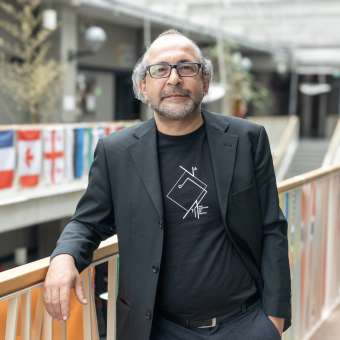
Aaron Courville is a Full Professor in the Department of Computer Science and Operations Research at the University of Montreal, and a Canada Research Chair in Learning Representations. He holds a PhD in Robotics from Carnegie Mellon University and degrees from the University of Toronto. His research focuses on deep learning models, probabilistic methods, and applications in vision and natural language processing. He co-leads the LISA lab and is Scientific Director at Mila, Quebec's AI institute. Education: PhD in Robotics, Carnegie Mellon University (2006) MSc in Electrical Engineering, University of Toronto BSc in Applied Sciences, University of Toronto Research Interests: Developing deep learning architectures, probabilistic models, and reinforcement learning techniques. Applications include computer vision, NLP, and generative models. His work emphasizes systematic generalization and scalable methods. Grants & Awards: Canada Research Chair (2022–2029) CIFAR Fellowship (Learning in Machines & Brains) NSERC Discovery Grants Mitacs Acceleration Funds Students & Collaborations: Supervised over 40 graduate students, many contributing to foundational AI work (e.g., Ian Goodfellow, inventor of GANs). Leads projects on generative models and reinforcement learning efficiency. Affiliations: Mila, IVADO, and member of CIFAR's AI program. Active in organizing conferences like ICLR and teaching at MIT/online.
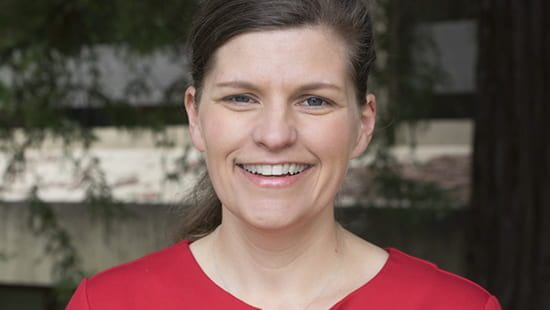
Christina N. Harrington is an Assistant Professor at Carnegie Mellon University, specializing in inclusive technology design with a focus on marginalized communities. Her work bridges human behavior, health, and technology through an intersectional lens, emphasizing equity and justice in design practices. Her research explores participatory AI, racial health equity, aging populations' technological needs, and Afrofuturist approaches to speculative design. Key areas include designing technologies for Black older adults, addressing language technology biases against African American Vernacular English, and advocating for Design Justice principles in education and pedagogy. She collaborates with community organizations to create user-centered solutions that center historically excluded voices. Her contributions span HCI conferences like CHI and CSCW, with a focus on critiquing systemic inequities in technology development. She actively participates in policy discussions around emerging technologies like the Metaverse, advocating for inclusive frameworks. Her pedagogical work includes redesigning curriculum for anti-racist design education through initiatives like the Design Justice Pedagogy Summit. Notable projects include the Denizen Designer Project (activist-led co-design), Healing Justice frameworks, and speculative design toolkits rooted in Afrofuturism. She has published over 50 peer-reviewed articles since 2017, consistently addressing intersections of race, age, disability, and technology access.
Arvind Satyanarayan is an Associate Professor of Computer Science at MIT, leading the Visualization Group within MIT CSAIL. His research focuses on intelligence augmentation through interactive data visualization, exploring how computational tools can amplify human cognition and creativity while respecting user agency. He holds a PhD from Stanford University, advised by Jeffrey Heer. Key research themes include visualization design tools, machine learning interpretability, accessible visualization for visually impaired users, and behavioral principles for information systems. His work has been recognized with an NSF CAREER Award and a 2024 Alfred P. Sloan Fellowship, alongside best paper awards at CHI and IEEE VIS. Education: PhD in Computer Science from Stanford University (Interactive Data Lab) Notable Achievements: Developed widely-used systems like Altair and Vega-Lite, impactful in data science communities Advising: Mentors over 20 graduate and undergraduate researchers, with notable alumni advancing to faculty roles at Brown CS and Utah CS Recent projects include tactile visualization systems (Tactile Vega-Lite), semi-formal programming frameworks (Pluto), and cultural interpretability of AI models. His lab emphasizes collaboration with diverse stakeholders to ensure inclusive design practices.
Rebecca Fiebrink is a Professor in the Department of Computing within the Faculty of Arts & Humanities at Goldsmiths, University of London. Her work bridges human-centered machine learning, music technology, and accessible computing, with a focus on developing tools that empower creative practitioners. She directs research in interactive machine learning systems with particular emphasis on real-time applications for artistic expression. Her research interests span Human-Computer Interaction , Creative Machine Learning , Accessible Computing , Music Technology , and Embodied Interaction . Fiebrink's work centers on making machine learning accessible to non-experts, particularly artists and musicians, through intuitive interfaces that prioritize human creativity over technical complexity. She investigates how ML can enhance creative workflows while maintaining expressive control for users. Her recent publications reveal strong trends in interactive ML tool development (particularly Wekinator and InteractML), application of ML to music and gaming contexts , and accessibility-focused design . Her work consistently demonstrates how machine learning can be reimagined as a creative partner rather than just a technical tool, with particular attention to user experience in creative domains. Fiebrink has made significant contributions to machine learning education for creative practitioners, developing pedagogical approaches that demystify complex concepts for artists and musicians. Her work on the Wekinator system has established new paradigms for real-time interactive machine learning applications in performance contexts.
Dr. Marion Koelle is a researcher at the University of Oldenburg and affiliated with the OFFIS Institute for Information Technology , the University of Duisburg-Essen , and the Embedded Interactive Systems Lab at University of Passau. Her work focuses on Human-Computer Interaction (HCI) , with particular emphasis on privacy-preserving wearable technologies , body-based interfaces , and social acceptability of emerging technologies . Marion Koelle's research explores how users interact with augmented reality , smart home ecosystems , and biomaterials for interactive devices . She investigates methods to balance technological innovation with ethical considerations , including gender-specific FemTech and privacy policy design . Her work often incorporates haptic feedback , electrical muscle stimulation , and biodegradable materials for sustainable interfaces. Recent publications highlight her leadership in privacy-preserving systems and socially acceptable wearable design . Koelle collaborates with institutions across Germany and internationally, contributing to journals like Proc. ACM Hum. Comput. Interact. and conferences such as CHI , MUM , and TEI . She actively explores biomaterials for prototyping and privacy mediation in public settings.
Theodore Koterwas is a Lecturer in Design Informatics at the University of Edinburgh’s School of Design and a CoSTAR Research Fellow in Embodied Realtime AI. Holding an MFA in New Genres from the San Francisco Art Institute, his practice bridges art, design, and music to explore human-technology-environment intersections through installations, performances, and software. Current affiliations: University of Edinburgh, Creative Informatics, DECaDE network Previous roles: Exploratorium (San Francisco), University of Oxford Research focus: Embodied AI interactions using haptics, computer vision, and reinforcement learning; data visceralisation; empathy in human-machine collaboration; philosophical implications of machine agency. His work interrogates: Physical engagement with AI systems Biometric data ethics AI’s role in creative processes Environmental technology metaphors The 12 listed works (2018–2025) demonstrate AI integration across tactile, visual, and performative domains, exploring themes like identity transformation, deepfake ethics, and planetary materialism. Scientific recognition includes Lumen Prize shortlistings. 2021: Lumen Prize shortlist for The Nth Wave 2024: Lumen Prize finalist for All the boys ate a fish As advisor to PhD student Yumeng Guo, he investigates AI’s societal implications through funded projects like Creative Informatics and Aberdeen Performing Arts collaborations. His practice challenges notions of intelligence, creativity, and humanity’s relationship with technology.
Giovanni Iacca is an Associate Professor at the University of Trento's Department of Information Engineering and Computer Science (DISI), where he serves as Coordinator of the Master's Degree in Computer Science and Deputy Director of the Information Engineering and Computer Science Doctoral School. He leads the Distributed Intelligence and Optimization Lab (DIOL) and teaches courses including Computer Architectures, Introduction to Machine Learning, Bio-Inspired Artificial Intelligence, and Optimization Techniques across multiple academic programs. PhD in Computer Science, University of Jyväskylä, Finland (2011) MSc in Computer Engineering, Technical University of Bari, Italy (2006) Professor Iacca's research focuses on the intersection of evolutionary computation, machine learning, and optimization with applications in distributed systems and robotics. His work spans from theoretical foundations of memetic computing and multi-objective optimization to practical implementations in soft robotics, embedded systems, and healthcare applications. Recent efforts emphasize interpretable AI, particularly in reinforcement learning contexts, where his team develops methods to make decision processes transparent while maintaining performance. His research bridges the gap between fundamental algorithmic development and real-world engineering challenges, with over 15 years of industrial experience in optimization applied to engineering, logistics, and scheduling. Analysis of his recent publications reveals a strong trend toward interpretable AI systems, particularly in reinforcement learning contexts, with significant contributions to federated learning optimization, evolutionary neural architecture search, and applications in healthcare scheduling. His work consistently combines evolutionary algorithms with modern machine learning techniques to solve complex optimization problems across diverse domains including soft robotics, batteryless edge computing, and supply chain management. Scientific Awards: EvoApplications Best Paper Award (2017) UKCI AWARENESS Best Paper Award (2012) IEEE CIS Outstanding Student-Paper Award (2011) Professor Iacca actively supervises a large research group with numerous PhD students across multiple doctoral programs, including Information Engineering and Computer Science, Industrial Innovation, and the National PhD in Artificial Intelligence for Society. His lab has secured significant research funding through collaborations with industry partners and international research consortia. Recent grants support work on interpretable reinforcement learning, federated optimization, and applications of evolutionary computation in healthcare and robotics. He has also been appointed to editorial roles for prestigious journals including IEEE Transactions on Evolutionary Computation and Evolutionary Intelligence. The Distributed Intelligence and Optimization Lab (DIOL) under Professor Iacca's leadership comprises over 30 researchers including postdocs, PhD students, and master's students. The lab maintains strong international collaborations and has developed specialized expertise in evolutionary computation, interpretable AI, and optimization for embedded systems. Current projects include work on the EIC Pathfinder Challenge "Awareness Inside," development of methods for batteryless edge intelligence, and applications of evolutionary algorithms to healthcare scheduling problems.
Luciano Serafini is a researcher at Fondazione Bruno Kessler in Trento, Italy, specializing in Artificial Intelligence with a focus on Neuro-Symbolic Integration and Knowledge Graphs . His work bridges Machine Learning and Symbolic Reasoning , emphasizing Planning , Relational Learning , and Visual-Textual Grounding . Key Research Areas : Neuro-symbolic systems, logic-based knowledge representation, planning under uncertainty, and computer vision. Recent Publications highlight trends in Embodied AI for open-world tasks, Weighted Model Counting , and Graph Generative Models . His contributions include Logic Tensor Networks for integrating deep learning with formal logic and methods to mitigate Data Sparsity through knowledge transfer. Collaborations span institutions like the University of Trento and research teams in Computer Vision and Reasoning , with applications in Social Navigation and Event Recognition .
Erika Larsson is an Associate Professor and Programme Coordinator in the Division of Art History and Visual Studies at Lund University's Department of Arts and Cultural Sciences within the Faculty of Humanities and Theology. She serves as program director for the master's programme in visual culture and conducts research at the intersection of photography theory and contemporary visual practices. Her work emphasizes embodied, situated, and affective dimensions of how images operate in the world, challenging traditional representational approaches to visual culture. Dr. Larsson's research focuses on photography theory, contemporary visual practices, cultural identity, and belonging. Her scholarly approach examines how contemporary photographers depict shifting understandings of cultural identity through what she terms "engaging" theoretical perspectives. She explores historical periods through contemporary lenses, with particular attention to the interwar period and its reinterpretation through artistic strategies. Her work frequently engages with archives, examining how contemporary artists reinterpret historical materials through affective and embodied approaches. Her publication record demonstrates consistent scholarly output across multiple venues, with recent work (2022-2024) focusing on topics such as erotic resistance in art, the relationship between artistic processes and healing, and the re-enlivening of historical textile industries. Her research shows a clear trajectory from early work on globalization and photography to more recent explorations of affect, care, and healing through visual practices, with particular emphasis on decolonization, historical trauma, and processing difficult histories through contemporary visual culture. Swedish Research Institute in Istanbul's Big Stipend (2011) Dr. Larsson has secured research funding for projects including "Visual Engagements; Belonging and Affective Encounters in Contemporary Photography" (2010-2016) and participation in "The research node for aesthetic studies" (2018-present). She maintains an active presence in academic discourse through numerous international conference presentations across Europe, with particularly active participation from 2019-2024 on topics including affect, care, belonging, and historical reinterpretation through visual practices. Dr. Larsson conducts her research in close collaboration with cultural institutions, particularly the Museum of Sketches (Skissernas Museum), where she is partly based for her current project investigating the relationship between artistic processes and healing. She is an active member of Lund University's research community, participating regularly in the Higher Seminar in Art History and Visual Studies and teaching courses including KOVN14 (Visual Culture: Body and Image) and KOVN16 (Methodology in Visual Culture Studies and Aesthetic Disciplines).
Alper Açık is an Assistant Professor at Özyeğin University, specializing in Cognitive Psychology and Neuroscience. Education: PhD (2015), MSc (2006), BA (2003) in Cognitive Science/Psychology Research Areas: Visual attention, eye movements, natural image statistics, embodied cognition His research focuses on understanding how humans process visual information, including bottom-up/top-down influences, perceptual mechanisms, and dynamic scene perception. He has contributed to surgical interface design through eye-tracking studies and created extensive eye-movement datasets for natural scene analysis. Publications span 2009-2018, covering topics like luminance contrast effects, developmental changes in visual behavior, and motion perception. He collaborates with institutions including Osnabrück University and Boğaziçi University.
Iris Laner is a Professor of Fine Arts and Art Education at the Department of Fine Arts and Design, School of Music & Arts Education (SOMA), Universität Mozarteum Salzburg. She leads the FWF solo project 'Joint Aesthetic Judgments' and coordinates the transdisciplinary #ConnectingMinds project 'Transforming Climate-Social Futures.' Her work bridges aesthetic, ethical, and political perspectives through collaborative and art-based research. Her research focuses on aesthetic judgment, collaborative practices with cultural artifacts, and the role of art education in fostering utopian visions and sustainability. She has co-edited book series like 'Experience-Oriented Educational Research' and 'Interjections: Transdisciplinary Texts on Art and Pedagogy.' Hertha Firnberg project: 'Aesthetic Practice and the Critical Faculty' Graduate school fellowship: 'Image and Time' (NCCR Image Criticism eikones) Publications include works on collective imagination, embodiment in education, digital media critique, and poststructuralist theories. She has contributed to journals and edited volumes in aesthetics, pedagogy, and cultural studies. Laner's teaching and research span institutions like the University of Basel, University of St. Gallen, KU Leuven, and Eberhard Karls University of Tübingen. Her methodological interests include theoretical, qualitative, participatory, and art-based research.
Jennifer M. Groh is a Professor at Duke University with appointments in Psychology and Neuroscience, Neurobiology, Biomedical Engineering, and Computer Science . She is a Faculty Network Member of the Duke Institute for Brain Sciences and a Center for Cognitive Neuroscience member. Ph.D. in Neuroscience, University of Pennsylvania (1993) M.S. in Psychology, University of Michigan, Ann Arbor (1989) Her research explores sensorimotor integration , particularly how vision and hearing interact to create embodied cognition . Key findings include demonstrating that eye position alters auditory pathway responses , challenging traditional views of sensory processing. Recent publications focus on eardrum oscillations , neural multiplexing , and cross-modal signal interactions . Awards include the Guggenheim Fellowship and Sloan Research Fellowship . Current grants investigate neural coding mechanisms and multisensory processes in hearing . Her lab examines auditory cortex dynamics , inferior colliculus function , and visual-auditory signal coordination through experimental and computational approaches.
Jen Munson serves as Assistant Professor in the Department of Learning Sciences at Northwestern University, where her research centers on mathematics teacher development through innovative coaching models and professional learning systems. Her work specifically investigates how teachers grow their pedagogical expertise through side-by-side coaching and video-based reflection practices. Her educational background includes a PhD in Teacher Education from Stanford University (2018) and a BS in Elementary Education from the University of Maine (2000), establishing a foundation for her current focus on elementary mathematics instruction. This trajectory reflects a deliberate shift from classroom teaching to teacher education research. Dr. Munson's research program examines critical tensions in mathematics education reform, particularly how micropolitical forces impact coaches' classroom access and how teachers develop professional vision through noticing student thinking. She pioneers side-by-side coaching methodologies where coaches work alongside teachers during live instruction, studying how these interactions foster responsive teaching and adaptive expertise. Her recent publications reveal increasing sophistication in analyzing coach-teacher discursive reasoning during real-time teaching moments. Analysis of her 2023-2025 publications shows consistent emphasis on three interconnected strands: (1) micropolitical navigation of coaching access, (2) video-based professional development for strengthening teacher noticing, and (3) rehearsal debriefs for developing pedagogical empathy. The work demonstrates methodological rigor through detailed discourse analysis of coaching interactions and teacher reflection processes. Scientific Awards: No scientific awards explicitly mentioned in source materials Advising and Grants: While the provided profile doesn't list current advisees, Dr. Munson's research on teacher learning pathways suggests strong mentoring capacity. Her publication record indicates active grant-supported work, particularly in elementary mathematics coaching interventions, though specific funding sources aren't detailed in the scraped text. Labs and Teams: The materials don't specify formal lab structures, but her research implies collaboration with school-based mathematics coaches and teacher educators across multiple districts, particularly through her side-by-side coaching studies and video analysis projects.
Reinhard Heil is a scientific Assistant and Researcher at the Institute for Technology Assessment and Systems Analysis (ITAS) at Karlsruhe Institute of Technology (KIT), where he leads the Research Group 'Digital Technologies and Social Change.' His work focuses on the intersection of technology, society, and ethics, with particular emphasis on artificial intelligence, transhumanism, and technology assessment methodologies. Heil holds a Master's degree in Philosophy, Literature and Sociology from TU Darmstadt (completed by 2003) and has been working at ITAS since 2010 as a Research Associate and Project Manager. His academic journey reflects a deep engagement with philosophical questions surrounding emerging technologies. His research interests span the social consequences of artificial intelligence, transhumanism and human enhancement, vision assessment methodologies, and the philosophical dimensions of technology. He has made significant contributions to understanding how AI systems impact society, particularly examining issues of explainability, trust, and the ethical implications of generative AI systems. His work often bridges theoretical philosophical frameworks with practical technology assessment. His recent publications show a clear trend toward analyzing the societal implications of AI, particularly focusing on explainable AI (XAI), the challenges of generative AI systems, and the philosophical questions these technologies raise about human cognition and experience. He has also maintained a consistent research thread on transhumanism and human enhancement, examining historical contexts and contemporary debates. Heil has led and contributed to numerous significant projects including 'Uncontrollable artificial intelligence: An existential risk?', 'Social trust in learning systems', 'Trust through explainability in verifiable online voting systems', 'Interdisciplinary approaches to deepfakes', and 'Deep Genomics – Opportunities and Challenges of the Convergence of Artificial Intelligence, Modern Human Genomics and Genome Editing'. He has also coordinated the 'Assessing Big Data (ABIDA)' project and managed 'Engineering Life'. As part of ITAS, Heil works within the broader context of technology assessment research, contributing to the institute's mission of analyzing emerging technologies from interdisciplinary perspectives. His work often involves collaboration with various research groups focused on digital technologies, sustainable energy, health technologies, and mobility futures. He frequently engages with policymakers and participates in public discourse on technology governance through lectures, workshops, and media appearances.
Adam Theo Müller serves as a researcher at Heilbronn University within the Faculty of Technology, affiliated with both the Interdisciplinary Center for Machine Learning (ZML) and the Research Laboratory for AI and Automated Driving. Holding a Master of Engineering degree, he actively contributes to research and teaching initiatives focused on autonomous systems and machine learning applications. His research expertise spans several critical domains in modern AI applications: Autonomous systems with specialized focus on perception systems and sensor fusion techniques Machine vision applications specifically designed for perception tasks in dynamic environments Cognitive robotics and embodied AI development Machine learning approaches for mobile robotic platforms and collaborative robots (cobots) Müller's recent publications demonstrate an interdisciplinary approach, applying machine learning to solve complex engineering challenges across aerospace systems, robotic interfaces, and advanced measurement methodologies. His work consistently bridges theoretical AI concepts with practical engineering implementations. He maintains an active role in academic supervision, mentoring numerous student projects including master's theses and research initiatives. These supervised works cover critical areas such as uncertainty quantification in perception systems, privacy-preserving techniques for autonomous vehicle data, multi-sensor integration, and digital twin development for campus infrastructure. Prior to his position at Heilbronn University, Müller developed professional experience across multiple sectors including mechatronics, aerospace engineering, and machine learning through various industry and research institution roles, establishing a robust interdisciplinary foundation for his current academic work.