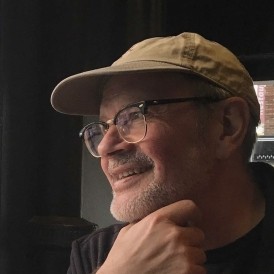
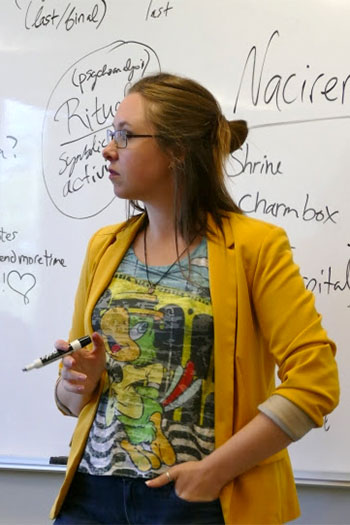
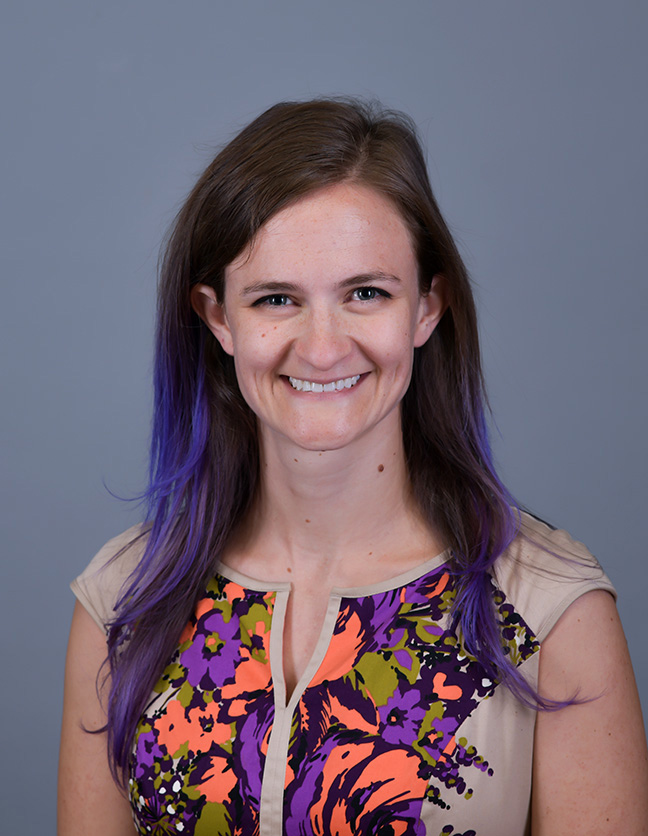
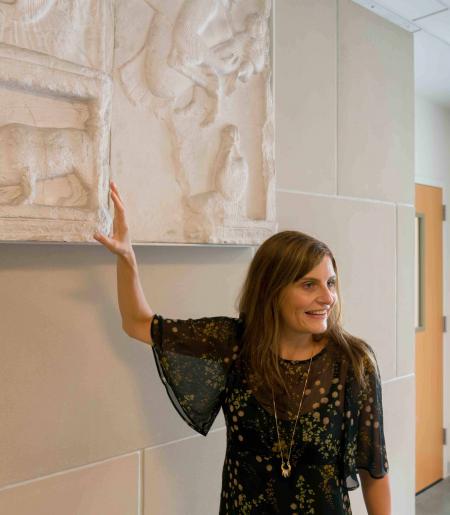
Brittany DeMone serves as a Sessional Instructor within the Faculty of Humanities at Mount Royal University, specializing in Classical Studies and teaching HUMN 2219: Ancient Greece from her office (3183A) with contact phone 403.440.8426. Her academic credentials include: PhD in Classics, University of Calgary MA in Classics, University of Nottingham BA in Greek & Roman Studies, University of Calgary Dr. DeMone's research program critically examines material and social dimensions of the ancient Mediterranean world, with particular focus on: Spatial analysis of Greek & Roman art and architecture Gender performance and sexual identities in antiquity Everyday social practices in Greco-Roman societies Numismatic evidence for economic and cultural history Her recent publication analyzes sensory experiences and gendered interpretations within Pompeian religious landscapes, demonstrating methodological innovation through the integration of material culture studies with gender theory. This work contributes significantly to emerging scholarship on embodied religion in Roman contexts. No scientific awards or research grants are documented in available materials. Current teaching responsibilities include undergraduate instruction in Ancient Greek civilization with no indicated graduate student supervision or laboratory affiliations.
Matthew Anderson holds the Gatto Chair in Christian Studies at St. Francis Xavier University (StFX) in the Department of Religious Studies, with an affiliate assistant professor role at Concordia University, Montreal. Born on Treaty 4 territory to settler parents, he earned a PhD in Religious Studies from McGill University (1999). His work bridges biblical studies with contemporary issues, emphasizing decolonization, pilgrimage, gender, and environment. Notable roles include ordained Lutheran minister (ELCIC Eastern Synod) and co-author of Our Home and Treaty Land (2022) and Prophets of Love (2023). Research focuses on Pauline studies, pilgrimage ethics, and aware-settler methodologies. Key grants include SSHRC (2020) and Canada Council grants (2020–2022). Public scholarship includes over 360,000 reads across media outlets like The Conversation Canada and Narwhal , culminating in his 2020 ‘Newsmaker of the Year’ award. Media appearances span CBC Radio, CTV, and international webinars. Publications span books, journal articles, and edited volumes addressing Indigenous land acknowledgments, Pauline rhetoric, and Leonard Cohen’s spiritual legacy. His The Good Walk (2024) explores prairie trails as decolonial pathways. Academic leadership includes co-editing Pilgrim Bodies: An Anatomy of Christian and Post-Christian Intentional Movement (2019) and curating the 1001 Lights art exhibition (2023). Grants and collaborations highlight interdisciplinary work: $8,437 secured for an artist talk, co-authored studies with Indigenous scholars like Ken Wilson (University of Regina), and global speaking engagements at institutions like the University of Nottingham and Université Laval. His research agenda prioritizes reconciliation through embodied practices, land ethics, and critical biblical interpretation.
Dr. Sara Wolf is a Researcher at the Institute for Human-Computer-Media, Julius-Maximilians-Universität Würzburg, specializing in participatory technology design and human factors. She holds a PhD in Human-Computer Interaction (2024) and has conducted research across healthcare, spirituality, and ritual technologies. Her work integrates design practices with interdisciplinary teams, emphasizing ethical and user-centric approaches. Education: B.Sc. in Human-Computer Systems (JMU Würzburg) M.Sc. in Human-Computer Interaction (JMU Würzburg) PhD in Human-Computer Interaction (2024) Research interests focus on rituals in HCI, techno-spirituality, and healthcare decision-support systems. She leads projects like SoulMate (2025+) and contributed to ForDemocracy and CoTeach . Her work explores multispecies co-creation, community-based spiritual technologies, and participatory design frameworks. Recent publications (2023–2025) address topics such as clinical decision-support systems in anesthesiology, interreligious blessing machines, and sensory cultural heritage preservation. Her PhD thesis Rituals and Interactive Technologies proposes novel design principles for ritual technologies. Projects and Grants: Project Manager of SoulMate (2025–present) Visiting Researcher at Newcastle University (2024) Contributions to EU-funded projects (e.g., CoTeach ) Labs/Teams: Member of the Psychological Ergonomics team, collaborating with Prof. Jörn Hurtienne and Dr. Tobias Grundgeiger on HCI innovations.
Jennifer Howell serves as Clinical Assistant Professor of Theology in Baylor University's Honors Program and Director of the Theology, Ecology, and Food Justice Program at Truett Seminary. She concurrently holds the position of Theologian in Residence at World Hunger Relief Farm, where all instruction occurs to integrate theological education with regenerative agricultural practice. Her academic preparation includes: Ph.D. in Theology, Baylor University M.Div., Duke Divinity School B.A. in English (Honors Program), Texas A&M University Dr. Howell's research centers on the doctrine of creation with specialized expertise in Dietrich Bonhoeffer's theology. Her work critically engages Ethics, Ecofeminism, and Womanism through Systematic and Practical Theology frameworks, consistently exploring intersections between theological reflection and ecological justice. This manifests in place-based pedagogy connecting Christian stewardship with sustainable food systems. Her publications reveal consistent thematic focus on theological ethics applied to real-world contexts: environmental philosophy (Wendell Berry analyses), Baptist identity in Christian higher education (Baylor case studies), and ethical responses to misconduct (John Howard Yoder investigations). This scholarship bridges academic theology with practical church concerns through eco-theological and justice-oriented lenses. No scientific awards are documented in available materials. Details regarding specific research grants or graduate student advising remain unspecified in current records. As Theologian in Residence at World Hunger Relief Farm, Dr. Howell operates within a functioning regenerative agriculture ecosystem that serves as primary pedagogical space. This setting enables experiential learning where students directly engage theological concepts through sustainable farming practices, food distribution initiatives, and community-based justice projects, embodying her conviction that 'informed love of place' must shape Christian ecological responsibility.
Judith Butler is the Maxine Elliot Professor in the Department of Comparative Literature and the Program of Critical Theory at the University of California, Berkeley. She is one of the most influential contemporary philosophers, particularly known for her groundbreaking work in gender theory, critical philosophy, and political thought. Her academic career spans several decades of influential scholarship that has reshaped feminist theory, queer studies, and ethical-political philosophy. Butler's research interests center on questions of power, identity, and embodiment. She is best known for developing the theory of gender performativity, which argues that gender is not an innate quality but rather a social performance constituted through repeated acts. Her work extends to examine how vulnerability, precarity, and mourning shape political life, and how these conditions might form the basis for more ethical forms of cohabitation. Butler has increasingly focused on questions of political assembly, resistance, and the ethical implications of our shared vulnerability in contemporary global contexts. Her scholarship consistently bridges continental philosophy, feminist theory, and political activism, creating theoretical frameworks that have practical implications for social justice movements worldwide. Her extensive publication record reveals consistent engagement with philosophical traditions while continually innovating new frameworks for understanding social and political life. Recent work demonstrates a deepening concern with questions of vulnerability, mourning, and the ethical-political implications of living in a pandemic world. Butler's scholarship has evolved from her foundational work on gender performativity to encompass broader questions of ethical responsibility, political resistance, and the conditions of precarious life in the 21st century. Butler's scholarly contributions have been recognized through numerous invitations to deliver prestigious lectures worldwide. Her work continues to inspire new generations of scholars across multiple disciplines, from philosophy and literature to political science and gender studies. As an advisor, Butler has mentored numerous doctoral students who have gone on to become influential scholars in their own right. Her intellectual leadership extends to collaborative projects examining vulnerability, resistance, and political assembly across global contexts. Butler's ideas continue to evolve in dialogue with contemporary political challenges, from pandemic responses to global movements for social justice, demonstrating the ongoing relevance and adaptability of her theoretical frameworks.
Aldea Mulhern serves as an Associate Professor in the Department of Philosophy within the College of Arts and Humanities at California State University, Fresno, where she maintains an active academic role with office location in Music 105 and direct contact via university email. Her research program critically examines intersections of religious practice and cultural theory, with specialized focus areas including: Anthropological approaches to religious systems Ethical frameworks in embodied performance Socio-philosophical dimensions of food culture Jewish and Islamic theological traditions Methodological innovations in religious studies Dr. Mulhern's work bridges continental philosophy with ethnographic inquiry, emphasizing practical ethics in lived religious contexts across diverse cultural settings. No scientific awards or honors were documented in the available faculty profile information. Details regarding graduate student mentorship, research grants, or external funding sources remain unspecified in current institutional records, though her teaching portfolio indicates active curriculum development in religious studies and philosophical ethics.
Kate Finley is an Associate Professor of Philosophy at Hope College, specializing in the intersection of philosophy of mind, cognitive science, and philosophy of religion. Her work focuses on perception, embodiment, mental disorder, religious experience, disability, and the problem of evil. She teaches courses including Philosophy of Mind, Philosophy of Disorders and Disabilities, Applied Ethics, and Hope's First Year Seminar and Cultural Heritage courses. Dr. Finley earned her Ph.D. and B.A. in philosophy and theology from the University of Notre Dame. Her educational background has shaped her interdisciplinary approach to philosophical inquiry, particularly in bridging philosophical analysis with psychological and religious perspectives on mental health. Her research interests span multiple domains including philosophy of mind and cognitive science (particularly perception and embodiment), philosophy of religion (focusing on religious experience and the problem of evil), epistemology, social philosophy, and bioethics & technology ethics. She is especially known for her work connecting mental disorder with religious experience and meaning-making. Dr. Finley's publication record reveals a strong interdisciplinary trend, with articles spanning philosophy of mind, philosophy of religion, bioethics, and the philosophy of psychopathology. Her recent work increasingly focuses on the intersection of mental disorder and religious experience, examining how individuals make meaning of psychological distress within religious frameworks. She also explores technology ethics, particularly regarding digital phenotyping in mental health contexts. Selected participant in SET Foundations seminar, 'Scientific and Theological Explanations of Mental Disorder,' Loyola University / John Templeton Foundation, 2021 'Transformative Religious Narratives & Mental Disorder,' Blueprint 1543 research grant ($14,644) and Hope College Nyenhuis research grant ($7,488), 2021 (principal investigator) 'Interactions between Mental Disorder & Components of Faith' Hope College Nyenhuis research grant ($7,088), 2020 (principal investigator) Selected participant in TheoPsych seminar, 'Self-Narrative and the Problem of Evil,' Fuller Theological Seminary / John Templeton Foundation, 2020 Certificate in Community Engagement and Public Scholarship from Notre Dame's Center for Social Concerns Dr. Finley has mentored 12 research students over recent years, many funded through external grants. Her collaborative approach extends to interdisciplinary work with colleagues in psychology, engineering, communication, and religious studies. She has secured multiple research grants totaling over $200,000 from institutions including Baylor University, Duke University, Hope College, and Calvin University. Outside traditional academic settings, she actively engages with community organizations including the National Alliance for Mental Illness (NAMI) and serves as a Court Appointed Special Advocate (CASA) for children in foster care. She leads research initiatives including the 'Hope-Western Prison Education Program' and has taught philosophy courses in correctional facilities and homeless shelters, demonstrating her commitment to community engagement and expanding philosophical discourse beyond university walls.
Deepak Sarma is a Professor of South Asian Religions and Philosophy at Case Western Reserve University . His academic career spans research in Indian philosophical traditions, post-colonial theory, and critical pedagogy. PhD in Philosophy of Religions, University of Chicago Divinity School BA in Religion, Reed College Research Interests focus on: Cultural theory and its intersections with religion Racism and identity in educational contexts Post-colonialism in South Asian studies Madhva Vedanta epistemology Decolonizing religious education The blog series and publications like An Introduction to Madhva Vedanta (2003) and Hinduism: A Reader (2008) demonstrate his engagement with Hindu philosophical traditions and contemporary social issues. Teaching Innovations include: Critically reimagining traditional pedagogical methods Exploring embodied teaching approaches Addressing power dynamics in theological education Integrating digital tools and anti-racist frameworks
Ben Williams is a Core Associate Professor of Hinduism and Yoga Studies at Naropa University, where he serves as faculty lead for the MA program in Yoga Studies. He holds a PhD in South Asian Studies from Harvard University, an MTS in Hindu Studies from Harvard Divinity School, and a BA in Religion from the University of Vermont. In 2025, he became the first scholar-in-residence for the Muktabodha Indological Research Institute while holding the Muktabodha Chair of Yoga Studies at Naropa until Spring 2028. His educational background includes: PhD in South Asian Studies, Harvard University MTS in Hindu Studies, Harvard Divinity School BA in Religion, University of Vermont Williams is an intellectual historian specializing in South Asian religions, particularly the history of Śaiva tantra. His research focuses on Indian philosophy, literature, and aesthetics through Sanskrit sources, with special attention to Abhinavagupta's works. He explores intersections between religious traditions, cognitive science, and contemplative practices, examining how philosophical frameworks from non-dual Śaivism can inform contemporary understanding of consciousness and education. His scholarly output reveals consistent focus on knowledge transmission across traditions, particularly examining how Abhinavagupta's theories bridge aesthetics, philosophy, and religious practice. Williams' work increasingly explores interdisciplinary connections between classical Indian thought and modern cognitive science, while maintaining deep engagement with textual scholarship and translation of primary sources. Williams serves as faculty lead for Naropa's MA program in Yoga Studies and is guiding initiatives related to the preservation, translation, and collaborative study of Sanskrit texts through his role with Muktabodha Indological Research Institute. His work with the Muktabodha digital library, which houses a vast corpus of digitized Sanskrit texts focused on Śaiva and Śākta tantric literature, represents a significant contribution to the field.
Matthew R. Hotham serves as Associate Professor of Religious Studies within the Department of History at Ball State University's College of Sciences and Humanities. His teaching portfolio includes foundational courses on Islam (RELS 275) and the Qur'an (RELS 208), alongside advanced seminars examining Animals and Religion, Religion Colonialism and Modernity, and Islamic Mysticism through experiential pedagogy incorporating role-playing, sensory elements, and museum visits. His academic credentials feature: PhD in Religious Studies, University of North Carolina at Chapel Hill (2016) MTS in Religious Studies, Harvard Divinity School (2009) MFA in Creative Writing, Syracuse University (2007) BA in English and Religion, Colgate University (2003) Dr. Hotham's research employs embodied, affective, and material frameworks to analyze religious phenomena across historical contexts. His scholarship bifurcates into two interconnected domains: (1) medieval Persian Sufi textual traditions, particularly Nizami Ganjavi's Treasury of Mysteries , and (2) contemporary Western constructions of Muslim identity through animal imagery in media. This work investigates how sensory experiences —olfactory, gustatory, and tactile practices—demarcate religious boundaries and construct the 'Muslim other'. His publication record reveals consistent interdisciplinary engagement with embodiment theory spanning Islamic mysticism, religious pedagogy, and postcolonial critique. Recent works bridge 13th-century Persian literature with modern cultural analysis, demonstrating how religious identity manifests through bodily comportment across temporal divides—a methodology reflecting his fieldwork across India, Iran, Malaysia, Morocco, Syria, and Turkey. As an institutional contributor, Dr. Hotham advises Religion Conversation Hour , a student-run weekly discussion forum exploring religious traditions, and chairs the Midwest Region American Academy of Religion section on Literature and Sacred Texts in the Study of Religion, facilitating scholarly exchange in his specialty area.
Paolo G. Carozza is Professor of Law and concurrent Professor of Political Science at the University of Notre Dame. Previously serving as director of the Kellogg Institute for International Studies (2012-2022), he has been a Kellogg Institute faculty fellow since 2003. His academic appointments include the Notre Dame Law School where he directs research initiatives in international studies and human rights. Carozza's research interests span comparative constitutional law, human rights, law and development, and international law, with particular focus on Latin America, Western Europe, and broader international themes. His work explores foundational principles of human rights law including human dignity, democracy, and subsidiarity, often examining the intersection of Catholic Social Teaching with contemporary legal frameworks. Current research focuses on the relationships between law, human rights, education, and integral human development. His publications reveal a consistent trajectory examining human rights frameworks across different cultural and legal contexts, with particular attention to Latin American traditions and European constitutional jurisprudence. Recent work shows increasing engagement with digital governance through his service on Meta's Oversight Board, where he addresses content moderation challenges through a human rights lens. Order of Merit of Bernardo O'Higgins (Chile's highest state honor for foreign citizens, 2012) Reinhold Niebuhr Award (2019) for contributions to social justice Notre Dame Faculty Award (2023) for outstanding service Member of the American Academy of Sciences and Letters (2024) Member of the Pontifical Academy of Social Sciences (appointed by Pope Francis, 2016) Carozza has directed Notre Dame's Center for Civil and Human Rights and its doctoral program in international human rights law for a decade. His leadership extends to the CAROL (Constitutionalism and the Rule of Law) policy and practice lab, where he contributes to research on constitutional adjudication. Significant grants include the Luksic Family Collaboration Grant (2017-18) on global Catholic education and multiple Kellogg Institute working group grants examining Catholic social tradition and human development.
Andreas Westergren is a Senior Lecturer and Associate Professor in Church History at Lund University's Centre for Theology and Religious Studies. His research focuses on late antique Christianity, monasticism, and integration of religious minorities in Sweden. Active in projects like "Integration and tradition: The Making of the Syriac Orthodox Church in Sweden" Co-editor of Patristica Nordica Annuaria Coordinator of the "Religious Roots of Europe" master's program His recent work examines liturgical embodiment, Syrian monasticism, and comparative religious traditions across Judaism, Christianity, and Islam. Current teaching includes courses on biblical studies, church and mission studies, and religious roots of Europe.
Professor Joseph Webster is a Professor of the Anthropology of Religion at the University of Cambridge's Faculty of Divinity, where he has held his position since 2019. He is also a Fellow and Director of Studies in Anthropology at Downing College, Cambridge, and serves as Graduate Tutor at Downing. His academic career bridges anthropology and religious studies, with a particular focus on Protestant communities in Scotland and beyond. Professor Webster's educational background includes: PhD in Social Anthropology (2008-2012), University of Edinburgh MScR in Social Anthropology with Distinction (2007-2008), University of Edinburgh MA Hons. in Social Anthropology and Sociology with First Class honors (2003-2007), University of Edinburgh Professor Webster's primary research focuses on the Anthropology of Religion, particularly examining Protestantism in Scotland and the global north. His work explores the intersection of religion, politics, and social identity through ethnographic studies of groups like the Exclusive Brethren and the Orange Order. His research interests span Protestant fundamentalism, millenarian and apocalyptic beliefs, ethno-religious nationalism, unionism, loyalism, fraternity structures, sectarianism, and the relationship between anthropology and theology. He has also conducted significant research on the Offensive Behaviour at Football and Threatening Communications (Scotland) Act 2012, serving as an expert witness to the Scottish Parliament Justice Committee. Professor Webster's scholarly output reveals consistent focus on religious anthropology, with particular attention to Protestant communities in Scotland. His publications demonstrate expertise in ethnographic methods applied to religious communities, examining how theological beliefs manifest in social practices and political engagement. His work often bridges anthropology and theology, creating innovative interdisciplinary approaches to understanding religious life. The thematic progression shows increasing attention to material religion, eschatology, and the spatial dimensions of religious belief. Professor Webster has received several prestigious awards for his work: Philip Leverhulme Prize (2020) for research on 'The Morality of Millenarianism' Teaching and Learning Fellow (2021) by the British Association for the Study of Religion Mentoring award for 'concern for professional development' (2024) from the University of Cambridge Research Culture Celebration As Director of Studies in Anthropology and Graduate Tutor at Downing College, Professor Webster plays a significant role in academic mentoring and student development. He co-founded the Cambridge Anthropology-Theology (CAT) Network in 2021, creating a platform for interdisciplinary dialogue between these fields. His commitment to teaching innovation was recognized with the Teaching and Learning Fellow award, reflecting his dedication to transforming the student learning experience. His mentoring excellence was further acknowledged in 2024 with a specific award for concern for professional development. Professor Webster co-founded the Cambridge Anthropology-Theology (CAT) Network with Susie Triffitt in 2021, establishing an online seminar series that explores new research dialogues between anthropology and theology. This initiative has created an important interdisciplinary space for scholars working at the intersection of these fields, fostering collaboration and innovative approaches to studying religion.
Jon Radwan is an associate professor of communication and director of the Institute for Communication and Religion at Seton Hall University's College of Communication and The Arts. His research explores intersections of rhetoric and religion, focusing on ethical communication, bodily interactions, and spiritual traditions. He earned a B.A. in Communication from the University of New Hampshire, an M.A. in Communication Studies from Northern Illinois University, and a Ph.D. in Speech Communication from Penn State University. Education: B.A. in Communication (University of New Hampshire), M.A. in Communication Studies (Northern Illinois University), Ph.D. in Speech Communication (Penn State University) Radwan's research spans contact rhetoric, religious communication, and organizational spirituality. He examines how ancient religious traditions shape modern public discourse, particularly in Catholic thought, the Bhagavad Gita, and ethical classroom engagement. His book Ethics in Contact Rhetoric (2025) and journal articles in Religions and Journal of Media and Religion highlight themes of reconciliation, transcendence, and power dynamics. His publications reveal trends in interfaith communication, rhetorical theory, and spirituality in organizational contexts. He integrates theological concepts with pragmatic communication frameworks, addressing issues like racial justice, digital media ethics, and contemplative pedagogy. Scientific Awards: Outstanding Article Award (2022) Researcher of the Year (2021) Outstanding Book Chapter Award (2020) Best Panel, Academy of Management (2019) Radwan advises the SHU Mock Trial Team and contributes to institutional governance as a member of the Faculty Senate, merit pay committees, and diversity coalitions. He co-chairs the Faculty Senate's University Core Curriculum Committee and leads initiatives at the Institute for Communication and Religion.
Verity Platt is a Professor in the Department of Classics at Cornell University 's College of Arts and Sciences. She specializes in Greek and Roman art history , focusing on the interplay between literary and visual cultures in the Hellenistic and Roman periods. Her research spans ancient theories of images , media and intermediality , and the historiography of ancient art , particularly through the lens of Pliny the Elder. She has co-edited Wonder and Wakefulness: The Nature of Pliny the Elder (2024) and The Frame in Greek and Roman Art (2017). Research Focus : Epistemic models in Hellenistic epigram, Pliny’s Natural History , environmental humanities, and the concept of the fold in sculpture Academic Leadership : Director of Cornell’s Humanities Scholars Program , co-curator of the Cornell Cast Collection Interdisciplinary Work : Explores intersections between art history, material studies, and ecological thought Recent publications include analyses of Roman wall-painting, eco-critical approaches to classical art, and embodiments of objects in antiquity. She has curated exhibitions like Wonder and Wakefulness (2023) and Cast and Present (2015). Notable Awards : Stephen H. Weiss Presidential Fellow Award