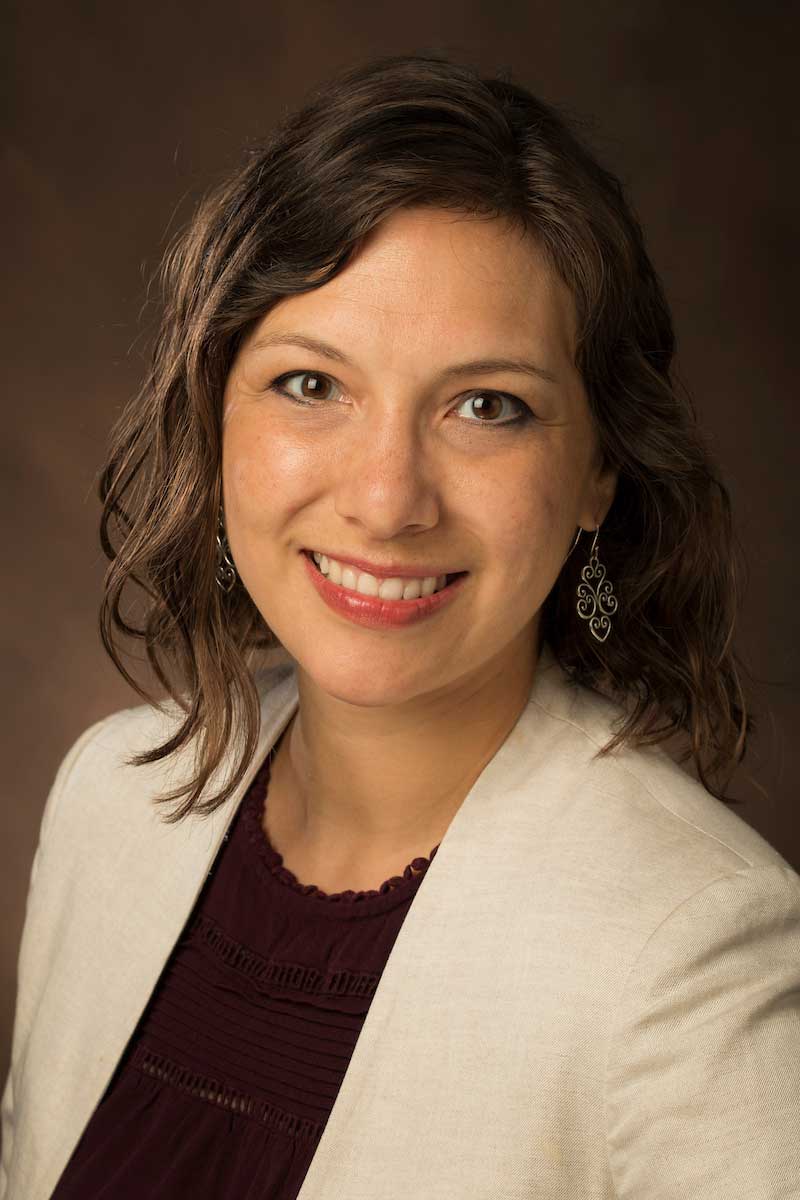
Associate Professor Wei Peng is a Principal Research Fellow in Industrial Artificial Intelligence at the School of Engineering, RMIT University. With over 15 years of experience, he specializes in AI research, commercialization, and strategic technology leadership. He holds a PhD from the University of Sydney (2007), focusing on cognitive agents. His roles include leading AI innovation at Huawei, directing research portfolios exceeding $10M USD, and supervising teams in generative AI and enterprise solutions. Previously, he served as Senior Lecturer at La Trobe University and held senior technical roles at Telstra, Lenovo, and AUSTRAC. He has published over 70 peer-reviewed papers, holds multiple patents, and serves on committees for top AI conferences (ACL, EMNLP, AAAI, NAACL). Education: PhD in Cognitive Agents, University of Sydney (2007) Research Focus: Large Language Models, Knowledge Representation, Embodied AI, and Multimodal Learning Leadership: Directed AI research teams at Huawei, managed $10M+ annual research portfolios His work bridges academia and industry, emphasizing practical AI applications in healthcare, finance, and smart grids. He actively collaborates with global universities and contributes to advancing human-centric AI solutions.
Heike Greschke is a Professor of Media Sociology at the Faculty of Sociology, Universität Bielefeld, where she has held a W3 professorship since 2023. She previously served as a W2 Professor of Comparative Cultural Sociology and Qualitative Social Research at Technische Universität Dresden (2016–2023) and as a W1 Professor at Justus-Liebig-Universität Gießen (2012–2016). Her academic affiliations reflect a strong interdisciplinary and trans-institutional engagement, including leadership roles such as Dean of the Faculty of Philosophy at TU Dresden (2022–2023) and Vice Dean for Research. Her research interests center on the mediatization of social life, with a focus on techno-social hybridization, transnational family structures, and the transformation of presence norms. She investigates how media reshape sociality, cultural knowledge, and belonging, particularly in contexts of migration, climate change, and intercultural interaction. Her recent work explores invectivity in intercultural training and the role of media in public shaming, reflecting a deepening interest in social conflict and polarization. The trends in her publications reveal a consistent engagement with qualitative and ethnographic methods, examining how digital and physical realms intersect in shaping identity, care, and community. Her work spans global online communities, transnational care practices, and urban cultural institutions, demonstrating a broad yet cohesive research agenda. She has led significant DFG-funded projects, including within the Collaborative Research Center 1285 on Invektivität. Member, Equal Opportunities Commission, Faculty of Sociology Equal Opportunities Officer, Faculty of Sociology Deputy Chairwoman, MA Complaints Committee for International Media Studies Module Responsible for multiple courses including Media Sociology and Media and Society She has received funding and conducted peer reviews for prestigious organizations such as the DFG, Volkswagen Foundation, and Studienstiftung des Deutschen Volkes. Her academic leadership includes spokesperson roles in the German Sociological Association and advisory board memberships at research centers in Gießen and Dresden. She supervises teaching modules and leads the Greschke Group at Bielefeld, contributing to both research and pedagogy in media sociology.
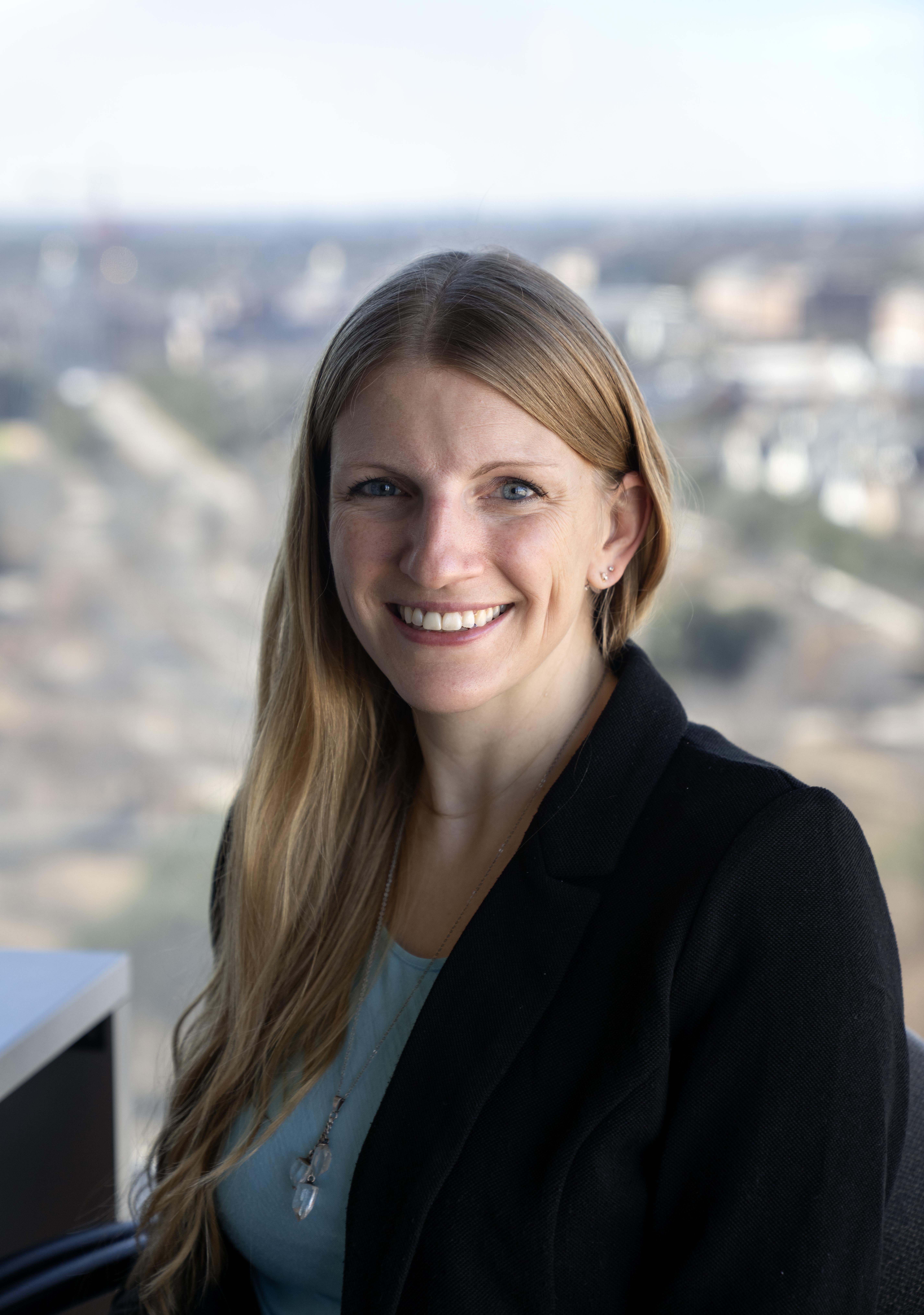
Sarah Kucker is an Assistant Professor in the Department of Psychology at Southern Methodist University, joining in January 2023. Her research focuses on cognitive development, language acquisition, digital media effects, and word learning in infants and toddlers. She employs a dynamic systems approach to examine how environmental contexts interact with individual differences in developmental outcomes. Education: Postdoctoral Fellowship, Callier Center for Communication Disorders, University of Texas Dallas M.A. and Ph.D., University of Iowa B.A. and B.S., Drake University Dr. Kucker's work explores topics such as novelty biases in word learning, embodied cognition, temperament influences on vocabulary, language delays in children, and caregiver-child STEM communication in museums. She currently holds an R15 grant from NICHD to study word learning mechanisms in digital media contexts. Her Google Scholar publications reveal trends in digital media effects on language development, temperament analysis, and dynamic models of word learning. Key sub-fields include socioeconomic status impacts, orthographic processing, shape biases, and dyadic communication. Scientific Awards: NICHD R15 grant for digital media and word learning research Dr. Kucker leads the SMU Kids In Development (KID) Lab, which emphasizes inclusive research practices and investigates pathways to successful cognitive and language development. She previously held faculty positions at Oklahoma State University and the University of Wisconsin Oshkosh.
Paul Dwyer is a Senior Lecturer at the Discipline of Theatre and Performance Studies within the Faculty of Arts and Social Sciences at the University of Sydney. He holds a PhD in Performance Studies from the University of Sydney and a DEA in Theatre Studies from Université Paris 8. His career bridges academic research and professional theatre practice, with particular focus on performance analysis, ethnography, and the intersection of theatre with social and legal processes. PhD, University of Sydney DEA, Université Paris 8 BA Hons, University of Sydney His research investigates performance's role in social change and restorative justice, analyzing contexts like the Aboriginal Tent Embassy, NSW juvenile justice conferences, and Bougainville's ritual reconciliation ceremonies. He co-develops creative practice-as-research through collaborations with Version 1.0 and Belvoir St Theatre, including works like The Bougainville Photoplay Project (2010) and Beautiful One Day (2012). Recent publications explore restorative justice frameworks in theatre practice, multimodal discourse analysis in legal contexts, and verbatim theatre's impact on healthcare education. The 2010 Melbourne Green Room Award-winning The Bougainville Photoplay Project exemplifies his hybrid approach to performance ethnography. Scientific Awards: Melbourne Green Room Award for Best Mise en Scène in Alternative/Hybrid Theatre (2010) He supervises research in theatre architecture, site-specific performance, community cultural development, and applied theatre intersections with linguistics and law. Grants include the 2016 DVC Education/Large Educational Innovation Grant for Grace Under Pressure and 2008 ARC Discovery Project Enacting Reconciliation . As co-founder of Version 1.0 theatre company, he develops documentary theatre works that interrogate political and social issues, including CMI (A Certain Maritime Incident) (2006) and The Wages of Spin (2005). His practice extends to healthcare education through verbatim theatre methods.
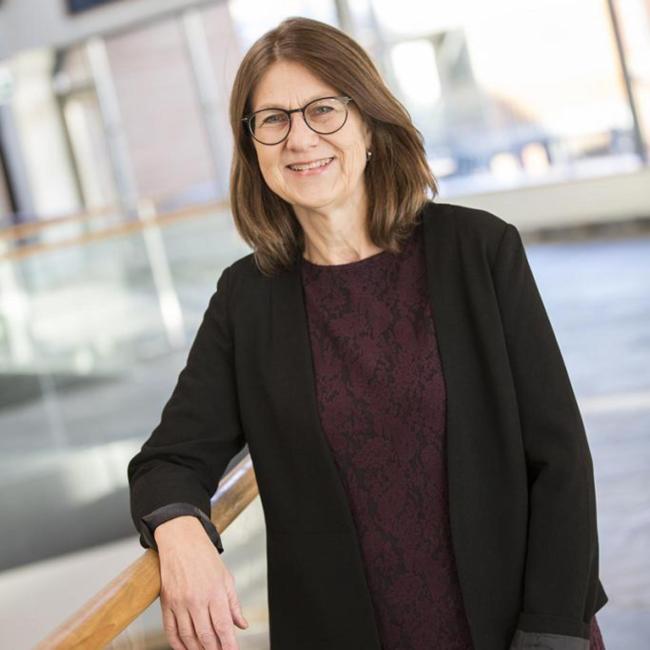
Ragnhild Sandberg Jurström is an Associate Professor in Music Education at Karlstad University. Her work focuses on assessment practices in music teacher education, multimodal communication in musical performance, and the sociocultural dimensions of artistic pedagogy. She has conducted extensive research on entrance auditions, admission criteria, and the role of embodied expression in singing instruction. Her research interests include analyzing how assessors construct quality standards in music education, the interplay between physicality and musical meaning-making, and the design of effective pedagogical frameworks for diverse musical genres. She frequently collaborates with scholars like Monica Lindgren and Olle Zandén on studies addressing power dynamics and equity in educational assessment. Key themes in her publications include critique of exclusionary assessment cultures, multimodal analysis of choir conductor communication, and the sociological implications of musical performance. Her work bridges musicology, educational theory, and critical pedagogy to reimagine music teacher training methodologies.
Pamela June is an Associate Professor of English in the Department of English at Ohio University’s College of Arts and Sciences, Eastern Campus. She is based in Shannon Hall and contributes to interdisciplinary scholarship in feminist theory, ecofeminism, and postmodern multiethnic literature. Education: Ph.D., Indiana University of Pennsylvania M.A., Indiana University of Pennsylvania B.A., University of Pittsburgh Her research centers on feminist literary criticism, with a focus on ecofeminism, animal ethics, and the representation of fragmented female identity in contemporary literature. She explores works by Alice Walker, Toni Morrison, and Gloria Naylor through intersectional lenses of race, gender, and environmental ethics. Her scholarship also examines inclusivity in virtual education and challenges heteronormative structures in narrative. The publication trends reveal a sustained engagement with feminist and postmodern themes, particularly the ethics of care for nonhuman beings, the politics of memory, and resistance through narrative form. Her works span monographs, journal articles, and contributions to edited volumes, reflecting a deep commitment to interdisciplinary dialogue. Scientific Awards: Pamela June has advised graduate students in English and feminist studies, though specific names are not listed. Her research has been supported through academic appointments and institutional affiliations, contributing to discourse on equity in virtual learning environments and ethical literary representation. She has published on pedagogical inclusivity and the role of empathy in teaching marginalized texts. Labs and Research Teams: While no formal lab or research team is mentioned, her work suggests collaboration with scholars in ecofeminism, animal studies, and digital pedagogy through publications and interdisciplinary journals.
Dr. Fabia Franco is an Associate Professor in Psychology at Middlesex University , specializing in developmental psychology, music therapy, and cross-modal communication. With over two decades of research, her work bridges music cognition, language acquisition, and social-emotional development across the lifespan. Key research themes include infant communication through pointing, musical predictors of language development, and therapeutic applications of music for cognitive disorders. Her interdisciplinary collaborations span neuroscience, music therapy, and autism studies. Recent publications (2021-2024) focus on neonatal intensive care soundscapes, music-based cognitive interventions for aging populations, and cross-cultural studies of infant-directed communication in hunter-gatherer societies. She also develops assessment tools like the Music@Home questionnaire to quantify early musical environments.
Laila Craighero is a full Professor at the University of Ferrara , affiliated with the Section of Human Physiology under the Department of Neuroscience and Rehabilitation. Her research focuses on the sensorimotor system's role in cognitive functions , particularly motor resonance , biological kinematics , and human-robot interaction . She has published extensively on topics such as stroke rehabilitation , neonatal development , and digital action semantics . Her recent publications (2024–2020) explore: Mechanisms of motor resonance in stroke and Parkinson’s patients Sensorimotor activation in fibromyalgia and newborns Timing in human-robot collaborative tasks Digital action recognition via smartphone typing dynamics She teaches Psychobiology and related courses across multiple degree programs, including Medicine and Surgery , Nursing , and Motors Sciences .
Xiaolong Wang is an Associate Professor in the Electrical and Computer Engineering Department at the University of California, San Diego with additional affiliations in the Computer Science and Engineering Department, Center for Visual Computing, Contextual Robotics Institute, and Artificial Intelligence Group. He serves on the Robotics team for the TILOS NSF AI Institute and has been faculty since 2020 after promotion from assistant to associate professor. Wang earned his Ph.D. in Robotics from Carnegie Mellon University under Abhinav Gupta, followed by a postdoctoral fellowship at UC Berkeley with Alexei Efros and Trevor Darrell. His academic journey includes collaborations with Berkeley AI Research, Facebook AI Research, and the Allen Institute for Artificial Intelligence. His research program focuses on exploiting structural information in data for visual representation learning, emphasizing spatial-temporal structures in videos and connections to 3D geometry and semantics. Key thrusts include self-supervised learning to eliminate manual labeling, video understanding for activity analysis, common sense reasoning for scene affordances, and robotic applications in dexterous manipulation and humanoid learning. The group develops comprehensive representations enabling robots to generalize across diverse physical environments through supervision signals from data, language, and common sense knowledge. Wang has received elite recognition including the Sloan Research Fellowship (2025), J.K. Aggarwal Prize (2024), and NSF CAREER Award (2023), alongside faculty honors from Intel, Cisco, Adobe, and multiple Amazon Research Awards. His fellowship pedigree includes Facebook, Nvidia, and Baidu Fellowships. Sloan Research Fellowship (2025) J. K. Aggarwal Prize (2024) NSF CAREER Award (2023) Intel Rising Star Faculty Award (2023) Cisco Faculty Award (2023) Adobe Data Science Research Award (2023) Amazon Research Award (2022 Spring) Amazon Research Award (2022 Fall) Amazon Research Award (2023 Fall) Sony Research Award (2021) Facebook Fellowship Nvidia Fellowship Baidu Fellowship He actively mentors award-winning students including Qualcomm Innovation Fellowship recipients (Jianglong Ye, An-Chieh Cheng, Yuzhe Qin, Yang Fu, Yinbo Chen, Jiarui Xu) and NVIDIA Graduate Fellow Nicklas Hansen. His research is funded by NSF, Amazon, Adobe, Sony, and industry grants while he serves as Area Chair for top AI conferences including ICLR, NeurIPS, CVPR, and ICCV. Wang leads a high-impact research group at UC San Diego with extensive industry partnerships (Amazon, NVIDIA, Qualcomm), producing award-winning work like the IROS 2024 Best Paper on Mobile Manipulation and ICRA 2024 Best Paper for Open X-Embodiment. The group's research spans foundational computer vision and machine learning to real-world robotics applications, with strong emphasis on technology transfer and embodied AI systems.
Rebecca L. Walkowitz serves as the Claire Tow Professor of English and Provost and Dean of the Faculty at Barnard College, where she has established herself as a leading scholar of 20th- and 21st-century literature with a focus on global literary studies. Her dual administrative and scholarly roles position her at the forefront of academic leadership and literary innovation. Dr. Walkowitz's educational background includes: Ph.D. in English and American Literature and Language from Harvard University (2000) A.M. in English and American Literature and Language from Harvard University (1997) M.Phil in English Literature and Critical Theory from University of Sussex (1995) A.B. in History and Literature from Harvard-Radcliffe Colleges (1992) Professor Walkowitz's research explores the intersections of cosmopolitanism, multilingualism, and world literature. Her work examines how writers create texts intended for global audiences and how multilingual futures of works affect our understanding of local and global communities. She investigates narrative structure, typography, and media in modernist and contemporary literature, with particular attention to how literature navigates linguistic boundaries. Her current book project, The New Multilingualism: Knowing and Not Knowing Languages in Literature, Culture, and the Classroom , addresses the future of language studies in higher education. Walkowitz's scholarly output reveals a consistent trajectory toward understanding literature's role in an increasingly interconnected world. Her publications demonstrate evolving interests from modernist studies to contemporary global literary phenomena, with a particular focus on multilingualism, translation, and the institutional frameworks that shape language education. Her work bridges theoretical literary criticism with practical concerns about language education and university administration. Among her numerous accolades are: Senior Research Fellowship, Freie Universität Berlin Board of Trustees Award for Excellence in Research, Rutgers University Walter Jackson Bate Fellowship in World Literature at the Radcliffe Institute for Advanced Study at Harvard Hurford Family Fellowship, National Humanities Center Class of 1955 Distinguished Teaching Award, University of Wisconsin, Madison ACLS/Andrew W. Mellon Junior Faculty Fellowship Jacob K. Javits Fellowship Marshall Scholarship Phi Beta Kappa As an academic leader, Walkowitz has held significant editorial and organizational roles that have shaped her field. She co-founded and co-edits the Literature Now series, which has published over 25 award-winning books in contemporary literary studies. Her leadership positions include serving as President of the Modernist Studies Association (2014-2015), Chair of MLA Divisions, and member of the American Council of Learned Societies Consortium Steering Committee. Her influential 2008 co-authored article 'The New Modernist Studies' helped redefine the field and remains one of the most-cited articles in PMLA. Through her editorial work on collections like Bad Modernisms and A New Vocabulary for Global Modernism , Walkowitz has fostered important scholarly conversations about the global dimensions of modernist and contemporary literature. Her collaborative approach extends to her role as Provost, where she works to create institutional frameworks that support innovative research and teaching across disciplines.
Ricardo Muñoz Martín is a Full Professor at the Department of Interpretation and Translation, University of Bologna (Italy). His academic career spans institutions including Universidad de Las Palmas de Gran Canaria, University of Granada, and University of California. He specializes in Cognitive Translation & Interpreting Studies, with expertise in translation technology, empirical research methods, and multilingual communication cognition. PhD in Hispanic Linguistics, University of California, Berkeley Diplomatura in Translation & Interpreting, Universidad de Granada Research interests integrate cognitive science with translation studies, focusing on process analysis, AI-assisted translation, and biometric metrics like heart rate variability. His work explores the indivisibility of translation acts and the evolution of empirical methodologies in the field. Recent publications emphasize quantitative empirical frameworks, cognitive load analysis in collaborative translation, and AI integration in interpreter training. Grants from Italy, Spain, Poland, and China support his research on translation technology and cognitive effort measurement. Co-director of the MC2 Lab (Cognitive Translation Summer School) Principal investigator in grants like "Big Sistah" (remote worker wellbeing) and "Attention, emotions and translation" He actively participates in international conferences, including keynote speeches at the 7th TTI Conference and panels at the 11th EST Congress.
Professor Eva Verena Schmid holds the Chair of Music Education at the Institute for Music Research within the Faculty of Philosophy at Julius Maximilian University of Würzburg since August 2021. She also serves as Managing Director of the Institute for Music Research since April 2023. Previously, she worked at the Institute for Music Education at Ludwig Maximilian University of Munich as research assistant, academic councilor, and senior academic councilor (2012-2015, 2018-2021), and held a visiting professorship at the University of Bremen (2015-2018). Her educational background includes: School music and German studies at the Stuttgart State University of Music and Performing Arts and University of Stuttgart Doctorate from Berlin University of the Arts (2008) with thesis "Oratorio and Music Festival: On the History of the Oratorio in Germany in the First Half of the 19th Century" Doctoral project funded by the German Research Foundation (DFG) Professor Schmid's research focuses on creative listening and its role in legitimizing music education, particularly examining how creative listening functions in adult education and the broader music education sector. Her work also explores teacher professionalization and the history of the oratorio in the first half of the 19th century. She is particularly interested in how aesthetic experiences can be articulated and how creative listening can bridge various educational domains. Her research often takes an interdisciplinary and inclusive approach, connecting music education with broader social and cultural contexts. Analysis of Professor Schmid's recent publications reveals a strong focus on creative listening as both a theoretical framework and practical approach in music education. Her work consistently addresses the legitimacy of music education through creative engagement, with increasing attention to inclusive practices, cross-cultural perspectives, and the integration of diverse musical traditions. There's a clear trajectory from historical musicological research toward contemporary music pedagogy, showing how historical understanding informs current educational practices. Her publications demonstrate a commitment to making music education relevant, accessible, and meaningful for diverse learners. Professor Schmid is actively involved in project work including the current "Counterpoint workshop on the topic of (Creative) Listening" in cooperation with the Schola Cantorum Basiliensis. Previous projects have included "BlickHör_._Raum" exploring creative perception of image, music, and space, and inclusive initiatives like making Mussorgsky's "Pictures at an Exhibition" accessible through multiple sensory modalities including sign language. She has organized symposia on interdisciplinary and inclusive music education, demonstrating her commitment to collaborative and innovative approaches in the field. Her international engagement is significant, with presentations at numerous conferences worldwide including in Brazil, Switzerland, Lithuania, Finland, Ireland, and Italy. This global perspective enriches her work in music education, allowing her to incorporate diverse viewpoints and practices into her research and teaching.
Dr. Philipp Kuhnke is a postdoctoral researcher affiliated with the Lise Meitner Research Group 'Cognition and Plasticity' in cooperation with Leipzig University, Germany. His work bridges cognitive neuroscience, linguistics, and neuroimaging methodologies. Ph.D. in Cognitive Sciences (2021), University of Potsdam / Max Planck Institute for Human Cognitive and Brain Sciences M.Sc. in Cognitive Science (2016), University of Osnabrück B.Sc. in Cognitive Science (2014), University of Osnabrück Dr. Kuhnke's research focuses on semantics and conceptual processing, grounded cognition, and neuroimaging techniques like fMRI and TMS. His studies explore how the brain retrieves semantic knowledge, adapts to language tasks, and recovers from neurological impairments. His recent publications highlight interdisciplinary approaches combining neurostimulation and neuroimaging to understand reading networks, semantic cognition, and post-stroke recovery. He investigates neural plasticity mechanisms in dyslexia and aphasia, analyzing effective connectivity patterns in language networks.
Racheal Rothrock is an Assistant Professor at Miami University (Ohio) within the Department of Teaching, Curriculum, and Educational Inquiry . She serves as a CHDLT Faculty Associate, Chair of the Graduate Literacy Committee, and Coordinator of the M.Ed. in Literacy and Language program. Ph.D. and M.A. in Curriculum and Instruction from The University of Texas at Austin B.A. in Graphic Design from St. Edward's University Her research focuses on equity and justice in K-12 education through a sociospatial lens , examining how concepts of 'community' shape educational experiences for historically marginalized students. She integrates cultural studies and critical pedagogies into her scholarship and teaching. The sociospatial analysis in her work highlights intersections between geography , identity , and pedagogical practices . Her 2020 publication explores Latina/Chicana embodied pedagogies of care, contributing to literature on culturally responsive education.
François Jacquenet is a Professor of Computer Science at the University of Saint-Etienne, where he is a member of the Machine Learning Team at the Hubert-Curien Laboratory. His research focuses on machine learning and data mining applications for natural language processing, with significant contributions to privacy-preserving systems including Hippocratic Multi-Agent Systems and Automata-Based Sequence Mining. His research interests span Machine Learning , Data Mining , Natural Language Processing , and Privacy-Preserving Systems . Jacquenet has led multiple research projects including the PASCAL II Network of Excellence (2008-2012), the Bingo2 project (2008-2010), and the Web Intelligence project (2006-2008), where he focused on ethical web design and privacy protection techniques. His work bridges theoretical foundations with practical applications in areas like fraud detection, meeting summarization, and video tag correction. Analysis of his recent publications reveals a consistent research trajectory in deep learning applications , privacy-preserving techniques , and cross-modal learning . His work shows a progression from foundational research in grammatical inference and automata theory to contemporary applications in neural networks and self-organizing systems. The publications demonstrate strong interdisciplinary connections between computer science, physics, and security applications. Best AI Paper Award at Conference (2006) Professor Jacquenet has supervised numerous PhD students including Maria Galvan, Hoang-Tung Tran, Ludivine Crépin, and Stéphanie Jacquemont. His research has been supported by significant grants including the French Research Agency (ANR), the Rhône-Alpes region, and international networks like PASCAL. He has organized multiple conferences including Privacy on the Web at the ACM Symposium on Applied Computing and the PASCAL Workshop on Teaching Machine Learning. He is actively involved with the Machine Learning Team at Hubert-Curien Laboratory , contributing to the PASCAL Network of Excellence and the REWERSE Network. His research group focuses on developing practical applications of machine learning while addressing fundamental theoretical questions in pattern mining and language learning.