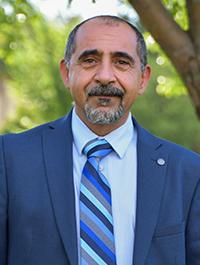
Dr. Jaafar Alghazo is an Associate Professor in the Math, Science and Technology Department at the University of Minnesota. He currently teaches courses in Information Technology Management and Software Engineering, including ITM 3900-E90: Internship, SE 2200-001: Intro to Software Engineering, and SE 4500-001: Senior Project I. Research Focus: Machine Learning, Deep Learning, Medical Image Analysis, Cybersecurity, IoT, UAV Communications Key Publication Trends: 15 most recent works span 2025–2023, emphasizing neural network optimization, Arabic sign language recognition, flood detection, and secure medical imaging techniques
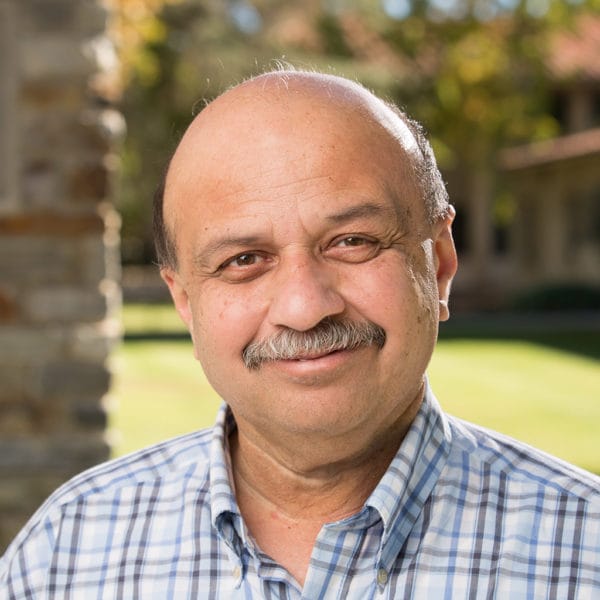
Hrushikesh Mhaskar is a Research Professor of Mathematics at Claremont Graduate University (CGU) since 2012, with a prior 32-year tenure at California State University, Los Angeles. He holds a PhD in Mathematics from Ohio State University, alongside an MS in Computer Science and an MSc from the Indian Institute of Technology, Mumbai. His research focuses on approximation theory, computational harmonic analysis, machine learning, and signal processing, with significant contributions to neural network theory and kernel-based methods. Mhaskar has authored over 150 papers, two books, and five edited volumes. His work includes pioneering studies on weighted polynomial approximation, Fourier domain conversions, and manifold learning. He currently serves on editorial boards for journals like Applied and Computational Harmonic Analysis and Journal of Approximation Theory , and collaborates with institutions like the University of California, Santa Barbara. Awards include five Alexander von Humboldt Fellowships and a John von Neumann Distinguished Professorship. His research is supported by the NSF and previously by the U.S. Air Force and intelligence agencies. Notable contributions include developing eignets for function approximation on manifolds and analyzing deep vs. shallow networks' approximation capabilities. His work bridges theoretical mathematics with practical applications in biomedical data analysis (e.g., blood glucose prediction) and signal processing.
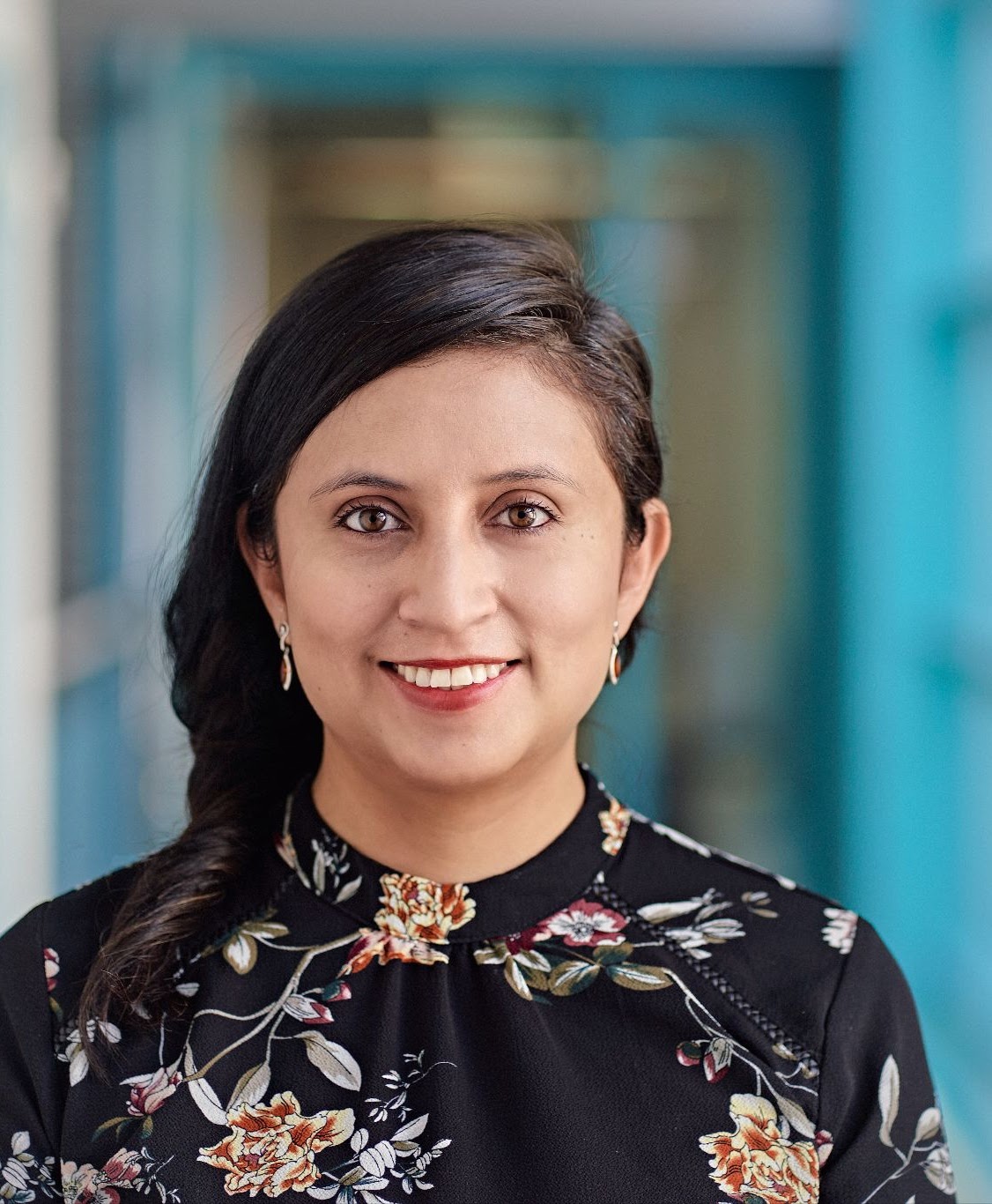
Diana Pamela Moya Osorio is Associate Professor at the Communication Systems Division, Department of Electrical Engineering, Linköping University, Sweden, and an ELLIIT recruited faculty. She previously held positions as Senior Research Fellow and Adjunct Professor at the Centre for Wireless Communications, University of Oulu, Finland, and Assistant Professor at the Federal University of São Carlos, Brazil. Education: B.Sc. in Electronics and Telecommunications Engineering, Armed Forces University, Ecuador (2008) M.Sc. in Electrical Engineering (Telecommunications and Telematics), University of Campinas, Brazil (2011) D.Sc. in Electrical Engineering (Telecommunications and Telematics), University of Campinas, Brazil (2015) Her research focuses on wireless communications , particularly signal processing for wireless systems , physical layer security , and integrated sensing and communications (ISAC) . These areas are central to the development of secure and efficient 6G networks. She investigates how wireless signals can be leveraged for both communication and environmental sensing, enhancing network intelligence and security through physical layer techniques. Her recent publications explore advanced topics such as fluid antenna systems , bistatic backscatter communication , beamforming design , and radio-over-fiber propagation . These works reflect a strong trend toward energy-efficient, secure, and high-resolution wireless systems, aligning closely with the goals of next-generation 6G networks. The integration of sensing and communication functionalities is a recurring theme, indicating a forward-looking research agenda focused on dual-use technologies. Scientific Service and Recognition: Associate Editor, IEEE Wireless Communications Letters Associate Editor, IEEE Communications Letters Associate Editor, IEEE Transactions on Information Forensics & Security Working Group Leader, Trustworthy 6G, Cost Action 6G-PHYSEC Diana Moya Osorio actively mentors PhD students and leads significant research initiatives. She is Principal Investigator (PI) for projects including HIGH-SENSE (ELLIIT), ALERT (WASP), and CO-ISAC (Vinnova), and holds leadership roles in 6GTANDEM (HORIZON-JU). Her grants are funded by major national and international agencies, reflecting the high impact and competitiveness of her work. As main supervisor, she advises Henrik Åkesson and Palatip Jopanya; as co-supervisor, she supports Ahmet Kaplan and Dexin Kong. She contributes to academic education by teaching graduate courses such as Information and Communications Engineering , Sensor Array Systems , and a PhD course on Modern Radar Systems . Her lab and research group are embedded within the Communication Systems Division at Linköping University, focusing on next-generation wireless technologies, particularly in the context of 6G and ISAC systems.
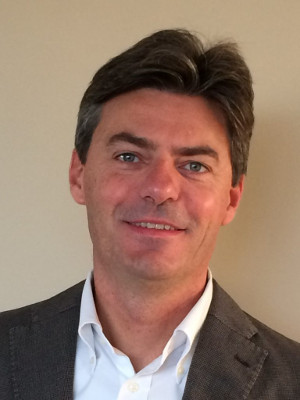
Luciano Bononi is a Full Professor and Deputy Head of the Department of Computer Science and Engineering at the University of Bologna. He holds a PhD in Computer Science (2002) and has been active in academia since 2001, progressing through roles like Researcher, Senior Researcher, Associate Professor (2011), and Full Professor (2020). His research focuses on Wireless Systems, IoT, Digital Twins, Smart Cities, and Mobile Applications , with over 160 peer-reviewed publications and major contributions to EU projects like Arrowhead and IoE. Education: MS (Laurea) in Computer Science, University of Bologna (1997, Summa cum Laude) PhD in Computer Science, University of Bologna (2002) Research Interests: Bononi's work spans Wireless Protocols, IoT Platforms, Digital Twin Integration with AI, Smart Mobility/ Energy Systems, and Edge Computing . He leads the WiLMA Lab and the ALMA-AI CoInnovation Lab , focusing on real-world IoT deployments and smart city solutions. Key Contributions: Coordinated EU projects like Arrowhead (2013-2017) and national initiatives like PNRR-Mobility-Spoke 7 Recipient of 4 Best Paper Awards and top rankings in global scientist databases Editorial roles at 7 journals including Wiley's Wireless Communications and Elsevier's Ad Hoc Networks Organized over 15 international conferences as Chair and participated in 200+ TPC roles Labs & Teams: Directs the WiLMA Lab (Wireless Systems and Mobile Apps) and the ALMA-AI CoInnovation Lab , emphasizing interdisciplinary collaboration between academia and industry.
Andrea M. Tonello is a Full Professor at the Institute of Networked and Embedded Systems, University of Klagenfurt, Austria, where he chairs the Embedded Communication Systems Lab. He previously held positions at the University of Udine, Italy, where he was an Associate Professor and founded the Wireless and Power Line Communication Lab (WiPLi Lab). His research spans power line communications, wireless systems, embedded communications, smart grids, and machine learning applications in signal processing. Doctor of Engineering, University of Padova (1996) Doctor of Research, Telecommunications, University of Padova (2003) His research interests focus on next-generation communication systems, including power line and wireless networks, signal processing, machine learning for communications, UAV systems, and smart grid technologies. He has made significant contributions to PLC channel modeling, full-duplex communications, and information-theoretic learning for communication systems. His work integrates theoretical innovation with practical implementation in real-world networks. The most recent publications highlight a strong trend toward integrating machine learning and information theory into communication systems, particularly in power line and wireless networks. Themes include f-divergence based classification, mutual information estimation, neural decoding (MIND), noise-robust receivers, and topology-aware machine learning for PLC quality prediction. There is also a notable focus on UAV control, full-duplex PLC, and digital pre-distortion techniques for high-speed converters. IET 2016 Premium Award Best Paper Award, ISPLC 2016 Best Student Paper Award, ISPLC 2016 Aerospace Best Paper Award, 2018 Best Paper Award, ISPLC 2021 Best PhD Dissertation Award, 2019 IEEE ComSoc Distinguished Lecturer (2018) Two Awards from IEEE ComSoc TC-PLC (2019) University of Klagenfurt Technology Scholarships (2019) Dr. Tonello has supervised numerous PhD and Master’s students, including notable advisees such as Nunzio A. Letizia, Davide Righini, and Babak Salamat. He has led over 10 institutional and multiple industrial research projects with a total funding exceeding 20 million euros. He played a key role in promoting international academic collaboration, including Erasmus agreements, joint PhD programs with INSA Rennes and Ecole Polytechnique de Grenoble, and a joint master’s program with the University of Klagenfurt. He founded and led the WiPLi Lab at the University of Udine, which received around 3 million euros in funding and involved over 60 researchers and students. He also founded WiTiKee s.r.l., a spin-off company specializing in PLC for smart grids. Currently, he chairs the Embedded Communication Systems Lab at the University of Klagenfurt, focusing on next-generation networked and embedded communication technologies.
Elias N. Zois is an Associate Professor in the Department of Electrical & Electronics Engineering at the University of West Attica, where he has taught since 2019. Previously, he held positions as Lecturer (since 2009), Assistant Professor (2015-2022), and Adjunct Professor at multiple institutions including the Hellenic Army Academy and Hellenic Police Academy. He received his B.Sc. (1994), M.Sc. (1997), and Ph.D. (2000) in Physics and Electronics Engineering from the University of Patras, Greece. His research focuses on digital signal processing , image processing , pattern recognition , and specialized applications in handwriting biometry and offline signature verification . Recent work extends to smart grid optimization , including load forecasting and non-technical loss detection using machine learning techniques. Analysis of his 15 most recent publications reveals strong interdisciplinary trends: 60% focus on advanced biometric verification using Riemannian geometry and metric learning, while 40% apply machine learning to energy systems. Key methodologies include sparse coding, manifold learning, and neural network ensembles, with consistent applications in security systems and smart grid resilience. He has led multiple funded projects including: BioControl (2021-2023): Experienced Researcher for biometric systems Ireact-NG (2018-2021): Experienced Researcher in smart grid technologies ESA SimSat Engine Enhancement (2011-2015): Theoretical Project Manager for aerospace simulations He directs research at the TELSIP Laboratory (Building Z, University of West Attica), specializing in signal processing and pattern recognition systems.
Serkan KESER is an Associate Professor in the Department of Electrical and Electronics Engineering at the Faculty of Engineering and Architecture, Ahi Evran University, Turkey. He has been serving as a full-time faculty member since 2018 and previously served as Head of Department from 2018-2021. His educational background includes a PhD in Electrical and Electronics Engineering from Eskişehir Osmangazi University (2009-2018), a Master's degree in the same field from the same institution (2005-2008), and a Bachelor's degree in Electrical and Electronics Engineering from Mustafa Kemal University (1999-2005). Dr. KESER's research focuses on three main areas: Audio and Speech Processing : Including speaker identification, isolated word recognition, and speech coding techniques Signal Processing : With applications in fiber optic sensor systems and acoustic positioning Image Processing : Covering face recognition, image compression, and denoising techniques His recent publications demonstrate a strong trend toward integrating machine learning and deep learning approaches with traditional signal processing methods. He has made significant contributions in applying subspace methods to various domains including speech recognition, image processing, and sensor technologies. His work often bridges theoretical signal processing concepts with practical applications in areas like smart home systems, medical imaging, and environmental monitoring. Dr. KESER has successfully supervised five Master's students to completion, with thesis topics spanning deep learning applications for class attendance systems, photovoltaic systems, speaker identification, brain tumor classification, and speech-controlled robotic arms. He has led four research projects, including development of fiber optic motion sensors, smart home models using Arduino microcontrollers, and science outreach initiatives. His teaching portfolio includes advanced courses in digital image processing, artificial neural networks, digital signal processing, and machine learning at both undergraduate and graduate levels. Dr. KESER's research impact is reflected in his publication metrics: 30 total publications with 117 citations (h-index 5) through the UNIS system, 25 publications with 180 citations (h-index 6) on Google Scholar, and strong representation in Scopus and Web of Science databases.
Dr. Ahmed AKGİRAY is an Assistant Professor in the Department of Electrical Engineering at Özyeğin University’s Faculty of Engineering. He earned his Ph.D. in Electrical Engineering from the California Institute of Technology (2013), an M.S. from the University of Illinois at Urbana-Champaign (2007), and a B.S. from Cornell University (2005). Prior to his Ph.D., he worked at NASA’s Jet Propulsion Laboratory as an RF/microwave engineer on two spaceflight missions: the Mars Science Laboratory and the Soil Moisture Active Passive (SMAP). Ph.D., Electrical Engineering, California Institute of Technology, 2013 M.S., Electrical Engineering, University of Illinois at Urbana-Champaign, 2007 B.S., Electrical Engineering, Cornell University, 2005 Dr. AKGİRAY’s research focuses on microwave circuits and systems, RF/microwave embedded circuits, electromagnetism, antennas, and remote sensing. His work emphasizes the development of active (radar) and passive (radiometer) microwave remote sensing systems for ground, airborne, and space-borne platforms, integrating advanced RF/microwave integrated circuits and electromagnetic analysis.
Murat Uysal is a Professor and Founding Chair of Electrical and Electronics Engineering at Özyeğin University, Istanbul, Turkey. He serves as Founding Director of the Center of Excellence in Optical Wireless Communication Technologies (OKATEM) and leads the CT&T Research Group. Previously, he was a tenured Associate Professor at University of Waterloo, Canada. B.Sc., M.Sc., and Ph.D. in Electrical/Electronics Engineering from Istanbul Technical University and Texas A&M Specializes in wireless and optical communication theory, with 400+ publications and 17,000+ citations Holds 3 US patents in vehicular and visible light communication Research focuses on physical layer aspects of wireless systems across radio and optical bands, including: Underwater and vehicular visible light communication Free space optical systems with UAV support Cooperative communication and diversity techniques Channel modeling for Li-Fi and industrial environments Recent publications show strong emphasis on: Underwater optical communication optimization UAV-assisted FSO systems LED response modeling for VLC Multi-hop relay systems Key scientific awards include: IEEE Fellow (2019) NSERC Discovery Accelerator Award Turkish Academy of Sciences Distinguished Young Scientist Award Multiple IEEE Best Paper Awards Advises 14 graduate students across M.Sc. and Ph.D. programs. His research group maintains collaborations with: IEEE Transactions on Communications (Area Editor) IEEE standards development (802.11bb, 802.15.7r1) Hyperion Technologies (co-founder)
Alessandro Aimasso is a PhD student in Aerospace Engineering (38th cycle, 2022-2025) at the Polytechnic University of Turin's Department of Mechanical and Aerospace Engineering (DIMEAS), where he also serves as an external lecturer and teaching assistant. He contributes to research activities at the ASTRA group (Additive Manufacturing for Systems and Structures in Aerospace) and the interdepartmental Center for Photonic Technologies PhotoNext. His research focuses on optical sensors for aeronautical and space applications, particularly Fiber Bragg Grating (FBG) technology for system lifecycle management. Specific interests include: Augmented reality visualization of sensor data Thermal and structural monitoring of aerospace systems Smart composites manufacturing with embedded sensors Lunar habitat construction technologies Real-time monitoring systems for spacecraft Analysis of his recent publications shows strong focus on experimental validation of FBG sensor applications in extreme environments, development of real-time monitoring systems, and integration of augmented reality for data visualization. His work frequently involves rapid prototyping and multidisciplinary approaches to aerospace challenges. He holds two patents: USE AND INTEGRATION OF SENSORS IN THE STRUCTURE AND EQUIPMENT OF COMPLEX MACHINES FOR THE DEVELOPMENT OF INTELLIGENT MONITORING SYSTEMS AND CREATION OF MULTIFUNCTIONAL VIRTUAL SENSORS Gas-dynamic nozzle for an end-jet engine, specifically a launcher As a teaching assistant, he contributes to courses on Modeling, Simulation, and Testing of Aerospace Systems, and Photonics in the Digital Revolution. His laboratory work involves the ASTRA group's facilities focusing on additive manufacturing and photonic technologies.
Karl Deisseroth is the D.H. Chen Professor of Bioengineering and of Psychiatry and Behavioral Sciences at Stanford University, where he leads a research laboratory focused on developing innovative technologies for neuroscience. He is also an Investigator with the Howard Hughes Medical Institute (HHMI) and serves as an attending physician at Stanford Hospital and Clinics. Deisseroth earned his A.B. in Biochemical Sciences from Harvard University in 1992, followed by an M.D. and Ph.D. in Neuroscience from Stanford University in 1998. He completed his medical internship and psychiatry residency at Stanford University School of Medicine. Deisseroth is renowned for pioneering two revolutionary neurotechnologies: optogenetics, which uses light to control specific neurons, and hydrogel-tissue chemistry (including CLARITY and STARmap), which makes biological tissues transparent for detailed examination. His research integrates these technologies to study neural circuit function in both healthy and diseased states, with particular emphasis on understanding the neural basis of psychiatric disorders. His work spans multiple disciplines including neuroscience, bioengineering, and psychiatry, with applications in understanding depression, anxiety, addiction, and other neurological conditions. Analysis of his recent publications reveals a continued focus on advancing both optogenetics and hydrogel-tissue chemistry technologies while applying them to increasingly complex questions in neural circuit function. His work has evolved from foundational technology development to sophisticated applications examining causal relationships in neural circuits underlying behavior and disease. National Academy of Medicine (2010) National Academy of Sciences (2012) National Academy of Engineering (2019) Breakthrough Prize in Life Sciences (2016) Kyoto Prize (2018) Albert Lasker Award for Basic Medical Research (2021) Japan Prize (2023) As a mentor, Deisseroth has guided numerous students and postdoctoral fellows who have gone on to establish their own successful research programs. His laboratory has received substantial funding from the NIH, HHMI, and various private foundations to support its innovative work at the intersection of engineering, neuroscience, and psychiatry. The Deisseroth Lab at Stanford maintains a strong emphasis on interdisciplinary collaboration, bringing together experts from diverse fields to tackle complex problems in brain science. The Deisseroth Lab operates as a highly collaborative environment where engineers, neuroscientists, and clinicians work together to develop and apply cutting-edge technologies. The lab has established numerous resources for the scientific community, including detailed protocols for optogenetics and tissue-clearing techniques, fostering widespread adoption of these methods across neuroscience research worldwide.
Stefan Hägele is a researcher at the Chair of Media Technology, Technical University of Munich, affiliated with the Munich Institute of Robotics and Machine Intelligence (MIRMI). He completed his B.Sc. and M.Sc. in Electrical and Computer Engineering at TUM, graduating with distinction in 2022. B.Sc. in Electrical and Computer Engineering, TUM (2019) M.Sc. in Electrical and Computer Engineering, TUM (2022) His research focuses on signal processing applications in communications, radar, and image processing, combined with applied machine learning. Key areas include mmWave radar analysis, WiFi-based indoor positioning, privacy-preserving rehabilitation systems, and complex-valued neural networks. Recent publications highlight his work in radar-based object classification (using MIMO architectures), material recognition (SMCNet), visible light positioning (VLP-KAN), and skeleton estimation for rehabilitation (PoinTS). His contributions also appear in projects like 6G-Life, DFG Teleoperation over 5G, and CeTI (Tactile Internet).
Slimane Ben Slimane is an Associate Professor and University Lecturer at the Royal Institute of Technology (KTH) in Stockholm, Sweden, where he is affiliated with the School of Electrical Engineering and Computer Science. His academic position combines teaching responsibilities with active research in communication systems. Dr. Ben Slimane's research focuses on critical areas of modern wireless communications: Wireless Communication Systems and 5G/6G Technologies Radio Network Design and Optimization Signal Processing for Communication Systems Network Coding and Cooperative Communications IoT Security and Industrial Wireless Networks Cognitive Radio and Spectrum Management His publication record demonstrates a strong progression from fundamental wireless communication research to addressing contemporary challenges in next-generation networks. Recent work focuses on mmWave communications, beam alignment issues in 3GPP standards, C-RAN architectures for beyond 5G, and security solutions for industrial IoT deployments. His research consistently bridges theoretical frameworks with practical implementation challenges faced by industry. At KTH, Dr. Ben Slimane serves as examiner and course coordinator for numerous advanced courses including Wireless Communication Systems (IK2507), Radio Networks (IK2510), and Signal Processing (II1303). He also oversees degree projects across multiple programs in computer science, electrical engineering, and information technology. Dr. Ben Slimane actively contributes to academic development through examination of bachelor's and master's theses, with particular focus on communication systems, embedded systems, and ICT innovation specializations. His teaching portfolio reflects the interdisciplinary nature of modern communication engineering education at KTH.
Dr. Khoi Dang Ly is a Postdoctoral Research Associate at Cornell University, specializing in robotics with a focus on embedded control systems and soft robotics. He holds a Ph.D. in Mechanical Engineering (2021) from the University of Colorado Boulder and a B.Sc. in Mechanical Engineering (2017) from Texas Tech University. His research targets the integration of high-speed electro-hydraulic actuators, self-sensing mechanisms, and model predictive control to advance the autonomy of soft robotic systems. Ph.D. in Mechanical Engineering (University of Colorado Boulder, 2021) B.Sc. in Mechanical Engineering (Texas Tech University, 2017) Dr. Ly's work bridges theoretical innovation and practical application, with projects on soft robotic shape displays, electro-hydraulic rolling wheels, and magnetic sensing for actuator control. His research extends to tactile interfaces, bio-inspired locomotion, and energy-efficient designs. He has secured over $800,000 in grants from ARPA-E and DOE for robotics applications in subterranean excavation and renewable energy harvesting. His 15 most recent publications highlight expertise in soft robotics, nonlinear control, and embedded sensing technologies. Key areas include high-speed actuation, magnetic displacement sensing, and model predictive control for hybrid dynamic systems. While no formal scientific awards are explicitly listed, his grants and patent filings underscore significant contributions to the field. Advised 5 students on projects ranging from wave tanks to HASEL actuator characterization Developed embedded high-voltage power systems and control algorithms Co-invented 3 U.S. patents, including a magnetic sensing method for soft actuators Dr. Ly's work aligns with future goals of applying system design innovations to human-centric challenges, such as improving sensorimotor function for the elderly and enhancing human-robot interaction through tangible interfaces.
Wesam Bachir, PhD, is an Assistant Professor at the Institute of Metrology and Biomedical Engineering, Faculty of Mechatronics, Warsaw University of Technology (Politechnika Warszawska). His expertise lies at the intersection of biomedical engineering, laser spectroscopy, and optical diagnostics for medical applications. Research Interests Dr Bachir’s core research areas include: Biomedical optics & spectroscopy: developing diffuse reflectance and transmittance methods for non-invasive monitoring of tissue oxygenation, hemodynamics, and vital signs. Laser-tissue interaction & photodynamic therapy: optimizing light dosimetry, photosensitizer selection, and treatment planning for breast and skin cancers. Optical phantoms & Monte Carlo modeling: creating tissue-mimicking phantoms from everyday materials (milk, intralipid, India ink) and validating optical properties through advanced simulations. Smartphone-based sensing: leveraging mobile devices and their built-in light sources for point-of-care photoplethysmography and respiratory monitoring. Publication Trends Across 36 peer-reviewed publications (h-index 6 Scopus, 5 WoS), Dr Bachir demonstrates a consistent upward trajectory in both clinical translation and fundamental optical modeling. His 2024–2025 papers emphasize AI-enhanced spectroscopy and ultra-short-term physiological monitoring, while earlier work (2019–2022) concentrated on Monte Carlo algorithms for PDT planning and phantom characterization. The portfolio spans experimental validation, computational modeling, and proof-of-concept clinical studies. Supervision & Grants He has successfully supervised four doctoral theses to completion and currently leads or co-leads three active research projects funded by national and international agencies, focusing on non-contact respiratory monitoring, AI-driven spectral diagnostics, and optimized fiber-coupled light delivery for photodynamic therapy. Laboratory & Collaboration Dr Bachir’s laboratory is embedded within the Institute of Metrology and Biomedical Engineering, providing access to state-of-the-art laser sources, integrating sphere systems, and high-resolution spectrometers. He collaborates extensively with clinicians at local medical centers and maintains active partnerships with research groups in Europe and the Middle East to accelerate technology transfer from bench to bedside.