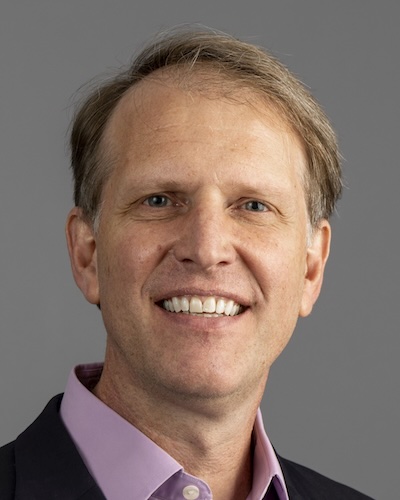
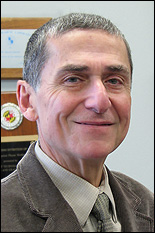
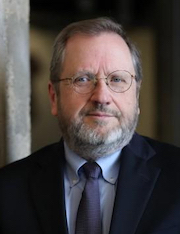
Elyse Rosenbaum is the Melvin and Anne Louise Hassebrock Professor in Electrical and Computer Engineering at the University of Illinois at Urbana-Champaign. She also serves as the Acting Associate Dean for Research at the Grainger College of Engineering. She is the director of the NSF-supported Center for Advanced Electronics through Machine Learning (CAEML), a collaboration between the University of Illinois, North Carolina State University, and Penn State University. Education: Ph.D. in Electrical Engineering, University of California, Berkeley, 1992 M.S. in Electrical Engineering, Stanford University B.S. in Electrical Engineering, Cornell University (with distinction) Research Interests: Her research focuses on machine learning applications in electronics, ESD-robust high-speed I/O circuit design, compact modeling, behavioral modeling of circuits, and CDM-ESD protection for advanced packaging technologies. Scientific Awards: IEEE Fellow for contributions to electrostatic discharge reliability of integrated circuits Best Student Paper Award, IEDM Outstanding and Best Paper Awards, EOS/ESD Symposium Technical Excellence Award, SRC NSF CAREER Award IBM Faculty Award ESD Association’s Industry Pioneer Recognition Award Advising and Grants: She supervises graduate and undergraduate researchers, primarily focusing on those with strong academic records and relevant experience. Her work is supported by NSF and other prominent organizations. Labs and Teams: She leads the CAEML center, which aims to apply machine learning to optimize microelectronic circuits and systems, enhancing design automation and reliability.
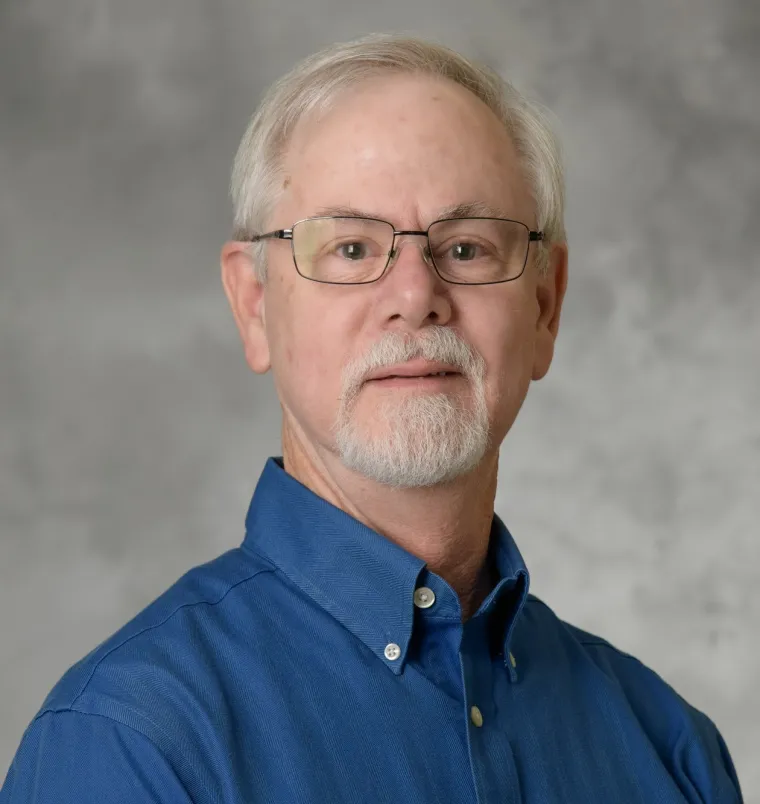
Simon Rowland is a Professor of Electrical Materials at the University of Manchester's Department of Electrical and Electronic Engineering, affiliated with the High Voltage Group. He previously served as Head of School (2015-2019) and transitioned from industrial R&D roles at STC, BICC, and Corning Cables to academia in 2003. His expertise centers on electrical insulation materials, polymeric systems, and asset management for power systems. He leads research in the UK’s largest HV laboratory, focusing on solid insulation interfaces and funded by National Grid and EPSRC. He holds 13 patents, primarily in overhead line technology, and is a Fellow of the IEEE and IET. Education: BSc, PhD, FHEA, FIET, FIEEE. Research interests include dielectric reliability, overhead line design, and low-current arcs. Collaborations span materials science and engineering disciplines. Recent awards include the 2025 IEEE Eric O. Forster Distinguished Service Award and 2022 Bhattacharyya Award Finalist. Professional roles include Treasurer of the IEEE Dielectrics and Electrical Insulation Society (2020–present).
Prof. Juin J. Liou serves as the UCF Pegasus Distinguished Professor and Lockheed Martin St. Laurent Professor of Engineering in the Department of Electrical and Computer Engineering at the University of Central Florida, where he has held faculty positions since 1987. Education: B.S. (Honors) in Electrical Engineering, University of Florida, 1982 M.S. in Electrical Engineering, University of Florida, 1983 Ph.D. in Electrical Engineering, University of Florida, 1987 Research Focus: Prof. Liou specializes in Electrostatic Discharge (ESD) protection systems critical for integrated circuit reliability, semiconductor device modeling, and RF circuit design. His pioneering work addresses ESD challenges in next-generation technologies including silicon nanowire, organic semiconductors, and gallium nitride (GaN) devices, where miniaturization intensifies vulnerability to electrostatic damage. His research bridges theoretical modeling with practical implementation to solve industry-critical protection failures. Awards and Leadership: Ten teaching/research excellence awards from University of Central Florida Six major awards from IEEE IEEE-EDS Distinguished Lecturer Multiple honorary professorships Research Impact: Secured over $14.5 million in funding from NSF, DARPA, NASA, NIST, and semiconductor industry leaders including Intel, Texas Instruments, and Analog Devices. Authored 10 books, 270+ journal papers (18 invited reviews), and 220+ conference papers while holding 8 U.S. patents (4 pending). Served as IEEE EDS Vice-President, Treasurer, and Board of Governors member, plus editorial roles for Microelectronics Reliability and IEEE journals.
Lukas Graber is an Associate Professor and Sutterfield Family Early Career Professor at Georgia Tech's School of Electrical and Computer Engineering (ECE). His primary affiliations include the Plasma and Dielectrics Laboratory, focusing on high-voltage engineering, superconductivity, and cryogenic systems. He holds a Ph.D. and M.S. from ETH Zurich (2009 and 2002), with postdoctoral and research faculty experience at Florida State University's Center for Advanced Power Systems. His technical expertise spans gas-insulated switchgear, superconducting power cables, and high-speed mechanical switches. Key research areas include dielectric materials for supercritical fluids, fault current limiters, and insulation coordination for power systems. He has authored/co-authored 40+ publications and holds multiple patents in energy-related technologies. Research interests emphasize commercialization of novel energy technologies, with a focus on cryogenic electronics and eco-friendly alternatives to SF 6 . Notable awards include the ETG Innovation Prize (2010) and Electrosuisse Best Paper Award (2009). His work integrates fundamental research with applied engineering solutions for naval, aerospace, and grid systems. Labs/Teams: Director of the Georgia Tech Plasma and Dielectrics Laboratory, collaborating on projects like the TESLA Breaker and cryogenic link systems for aircraft propulsion. Active in IEEE and the Cryogenics Society of America.
Pål Stabel Keim is an Associate Professor and Deputy Head of Education at the Department of Electric Energy , Norwegian University of Science and Technology (NTNU) , within the Faculty of Information Technology and Electrical Engineering . His work focuses on high voltage apparatus, electrical machines, and power electronics with a system-oriented perspective. University: NTNU School: Faculty of Information Technology and Electrical Engineering Department: Department of Electric Energy Academic Rank: Associate Professor Keim's research emphasizes insulation design for HVDC, HVAC, and inverter-fed machines, partial discharge analysis, and system-oriented design of electric machines. His work integrates digital tools to enhance electrical system design from generation to consumption. His recent publications explore modular HVDC wind drive trains, multi-agent control systems, aerospace power electronics, and dielectric insulation under combined voltages. These span disciplines including Electrical Engineering , Renewable Energy , and Aerospace Systems . 2015 : Nowitech Innovation award 2016 : Grønn fases energipris Keim has supervised Jaume Martí Cascalló (Master's thesis, 2020) and co-authored extensive research on high-voltage systems. He teaches courses in electrical machines, power systems, and energy infrastructure.
Olin Hartin serves as a Professor of Practice in Arizona State University's School of Electrical, Computer and Energy Engineering, leveraging over 30 years of Fortune 500 industry experience in science and technology. Based at the Tempe campus (GWC 340, Mailcode 5706), he maintains an active research profile with 25 patents and more than 60 scholarly publications. His academic credentials include: Ph.D. in Electrical Engineering M.S. in Electrical Engineering M.S. in Physics B.S. in Physics Hartin's research centers on advanced device technologies and materials, with demonstrated expertise in nanoengineering, RF circuit design, and semiconductor physics. His work bridges theoretical modeling with practical fabrication challenges, particularly in gallium nitride transistor development and electromagnetic compatibility. Recent projects address thermal management in high-power devices and noise isolation techniques for mixed-signal integrated circuits, driven by industry applications in wireless infrastructure. Analysis of his publication history reveals sustained focus on GaN HEMTs since 2010, with increasing emphasis on machine learning applications for FPGA deployment. His work consistently targets real-world implementation challenges, reflecting his industry background through patents in antenna design, ESD protection, and RF component optimization. Professional recognition includes: Senior Member of IEEE In teaching, Hartin supervises senior design laboratories (EEE 488/489) and instructs core courses including Hardware Design Language/Programming Logic (EEE 333), Circuits II (EEE 334), and Machine Learning with FPGA Deployment (EEE 405). His industry perspective enriches curriculum development, though specific grant funding details are not publicly documented. While no dedicated research lab is specified, his patent portfolio indicates ongoing collaboration with semiconductor industry partners.
Professor Shankar Madathil holds the Chair in Power Electronic Systems at the University of Sheffield , within the School of Electrical and Electronic Engineering . His academic journey began with a PhD in Engineering from Cambridge University (1992), preceded by a Master's in Semiconductor Technology (1986) and MSc in Applied Sciences (1984) from PSG College of Technology , India.
Daryl G. Beetner is a Professor in the Department of Electrical and Computer Engineering at Missouri University of Science and Technology (Missouri S&T), where he has been employed since 1998. He currently serves as Director of the Missouri S&T Electromagnetic Compatibility Laboratory and the NSF-funded Center for Electromagnetic Compatibility. Previously, he held leadership roles as Department Chair (2014–2020) and Associate Chair for Computer Engineering (2006–2009). Education: D.Sc., Electrical Engineering, Washington University in St. Louis (1997) M.S., Electrical Engineering, Washington University in St. Louis (1994) B.S., Electrical Engineering, Southern Illinois University Edwardsville (1990) Dr. Beetner’s research focuses on electromagnetic compatibility (EMC) across scales from integrated circuits to systems, including emissions, immunity, power integrity, and modeling. His work also addresses the detection and neutralization of electronic triggers in explosive devices, with applications in military and civilian safety. Recent publications highlight advancements in PCB coupling models, wireless power transfer efficiency, and corona discharge analysis. His accolades include the IEEE Fellow distinction (2024), Risaburo Sato Award for Best Paper at EMC Japan/APEMC (2024), IEEE EMC Society Technical Achievement Award (2020), and multiple best paper awards. Missouri S&T has recognized him with the Faculty Research Award (2024) and four Faculty Excellence Awards (2021, 2019, 2008, 2003). Service: Chair, IEEE Medal for Environmental and Safety Technologies Committee Chair, IEEE EMC Society TC-4 Electromagnetic Interference Control EMC Education Grants Chair Grants: Over $35M in total sponsored research expenditures Personal contribution: >$8M
Kenneth L. Cummins serves as a Research Professor in the Department of Aerospace, Physics and Space Sciences at Florida Institute of Technology and a Research Associate in Hydrology and Atmospheric Sciences at the University of Arizona. His expertise centers on atmospheric electricity research, utilizing advanced instrumentation including high-speed video systems, lightning location networks, and satellite sensors for comprehensive lightning studies. He earned a PhD in Electrical Engineering from Stanford University (1978), specializing in digital and statistical signal processing and physiological modeling. This foundation enabled his transition into atmospheric physics instrumentation and data analysis. Dr. Cummins' research focuses on two interconnected domains: (1) lightning physics phenomenology, examining cloud-to-ground behavior differences over land/ocean, upward leader dynamics, terrain effects on strike location, and quasi-static electric field evolution; and (2) remote-sensing validation, particularly cross-calibrating GOES Geostationary Lightning Mappers with ground-based networks like NLDN. His methodologies integrate tower measurements, electromagnetic field sensors, and multi-platform observations to capture microsecond-scale processes. Recent publication trends reveal strong emphasis on satellite-based lightning observations for climate monitoring, with significant work on GLM performance validation, mega-electromagnetic pulses from extreme currents, and high-resolution terrain-lightning interaction mapping. His research directly supports National Climate Assessments and lightning safety applications. He has made substantial contributions to lightning detection network evaluation, space launch safety criteria development, and infrastructure protection standards, particularly for Smart Grids and national park lightning risk management. His work bridges fundamental atmospheric physics with practical meteorological applications.
Ioannis F. Gono is an Assistant Professor at the School of Electrical and Computer Engineering, National Technical University of Athens (NTUA), specializing in the Division of Industrial Electric Devices and Decision Systems. He holds a PhD in Electrical and Computer Engineering (2002), a Diploma in Pedagogy (1997), and a Diploma in Electrical Engineering (1993), all from NTUA. His research focuses on power systems protection, lightning protection, grounding systems, and electromagnetic compatibility. He has authored numerous publications in journals like IEEE Transactions and Electric Power Systems Research , and has contributed to international conferences such as ISH, ICLP, and MEDPOWER. His work explores topics including transient grounding behavior, soil ionization, and nanofluid-based insulation materials. Prof. Gono has held roles as a lecturer (2013–2015) and researcher at NTUA's High Voltage Laboratory (2002–2013). He has organized conferences, served on technical committees, and advised on projects like the DEFKALION-THALIS initiative for ship lightning protection. His expertise spans experimental and computational methods in high-voltage engineering, with a focus on practical applications in renewable energy systems and grid resilience.
Prof. Donciu Codrin is a full professor at the Department of Electric Power Engineering, Technical University of Iasi. His research spans interdisciplinary fields including signal processing, image processing, earthquake early warning systems, and textile engineering. He leads projects on seismic response analysis using uniaxial shaking tables, non-invasive eye safety systems (e.g., Opto-Guard), and ESD-protective textiles. His work integrates hardware design (e.g., electrodynamic actuators) with advanced algorithm development for applications like video-based distance measurement and apparel sizing estimation. Research projects include: Signal Processing : OFDM modulation, DFT/FFT algorithms, and seismic waveform analysis Computer Vision : Pattern recognition, 3D reconstruction, and human-centric interface design Structural Engineering : Earthquake simulation platforms and early warning system validation Textile Innovation : Conductive fabric development for ESD protection and functional garments Recent publications focus on seismic wave analysis (2023–2025), optoelectronic safety systems (2022), and ultrasonic sensing technologies (2020–2021). His work bridges theoretical signal processing with real-world applications in disaster preparedness and ergonomic design.
Dr. Ajoy Opal is a Professor in the Department of Electrical and Computer Engineering at the University of Waterloo, Canada. He serves as a Faculty Advisor and has held academic roles since completing his doctoral studies at the same institution. His research focuses on circuit theory, numerical algorithms for analog and switched circuits, and mixed analog-digital systems. He has co-authored a book and published extensively in VLSI, CMOS technology, and ESD protection circuits. Education: Doctorate in Electrical Engineering, University of Waterloo, 1987 Master's in Electrical Engineering, University of Waterloo, 1984 Bachelor's in Electrical Engineering, Indian Institute of Technology Delhi, 1981 Research Interests: Dr. Opal's work spans circuit simulation, analog filter design, VLSI systems, and low-leakage ESD protection circuits. His recent publications emphasize CMOS-based solutions for ESD clamps and power supply noise mitigation. He employs numerical algorithms to optimize circuit performance and reliability. Teaching: Recent courses include ECE 106 (Electricity and Magnetism) and ECE 140 (Linear Circuits), taught in 2020–2024. His academic contributions blend theoretical circuit analysis with practical VLSI applications. Labs/Teams: While no specific lab names are provided, his research aligns with advanced circuit design and VLSI systems, likely conducted through collaborative projects at the University of Waterloo's engineering facilities.
Professor Aris Christou is a distinguished faculty member at the University of Maryland, holding professorships in the Department of Materials Science and Engineering, Mechanical Engineering, and the Graduate Program in Reliability Engineering. He earned his Ph.D. from the University of Pennsylvania in 1971 and has established himself as a leading expert in materials science, semiconductor reliability, and device physics. As President of the Federation of Materials Societies in Washington D.C. and an IEEE Fellow, Professor Christou has made significant contributions to both academia and industry. Professor Christou's research spans multiple cutting-edge areas including Compound Semiconductor Reliability, Physics of Failure, Device Physics and Modeling, Electronic Materials, Flexible Electronics and Displays, Biomolecular Sensing, and New Device Development. His work focuses on understanding degradation mechanisms in electronic materials and devices, with particular emphasis on reliability issues in compound semiconductors like GaAs and GaN. He has pioneered research in flexible electronics, graphene applications, and reliability of LEDs for medical applications. His laboratory, the Laboratory for Reliable Nanoelectronics, is equipped with advanced facilities for semiconductor device process development and reliability testing. Professor Christou's recent publications demonstrate a consistent focus on reliability engineering across multiple platforms. His work bridges fundamental materials science with practical applications in flexible electronics, semiconductor devices, and photonics. A significant portion of his research addresses electromigration, fatigue properties of novel materials, and physics of failure mechanisms in next-generation electronic devices. His expertise spans from theoretical modeling to practical implementation in real-world applications. Professor Christou has received numerous prestigious awards throughout his career: 2012 Micro & Nano Scientific Society Award 2010 iNEER Award for Engineering Education 2007 ASM Burgess Memorial Award 2006 FMS Recognition Award 2004 iNEER Award for Achievement on International Engineering Education and Research 1999 University of Maryland Invention of the Year Award 1993 Fellow of the IEEE 1987 Millenium Medal from the University of Bologna Professor Christou has been actively involved in mentoring students and securing research funding. His recent Maryland Offshore Wind Energy Challenge Grant (2013) with Professor Pat McCluskey demonstrates his ability to secure significant funding for interdisciplinary research. He has served as an editor for multiple prestigious journals including IEEE Transactions on Device and Materials Reliability and IEEE Transactions on Electron Devices. His service extends to conference organization, with leadership roles in numerous international conferences on materials science and semiconductor reliability. At the University of Maryland, Professor Christou directs the Laboratory for Reliable Nanoelectronics, a state-of-the-art facility equipped with UHV Atomic Layer Deposition systems, high density plasma etch tools, and advanced analytical equipment. This laboratory supports research in semiconductor device process development, test structure design for reliability, and reliability measurements. The lab has been instrumental in advancing research in graphene electronics, flexible displays, and reliability of compound semiconductor devices.
Ali Toptaş is an Assistant Professor in the Department of Textile Engineering at Istanbul Technical University. His research focuses on nanofiber engineering, filtration technology, and biodegradable materials, with a strong emphasis on applications in air filtration systems and food preservation. He leads projects like the ATQ Yüklü PVP Nanoliflerin İlaç Salım Etkinliğinin İncelenmesi and has published extensively in journals such as Journal of Polymer Science and Food Science and Biotechnology . His work includes developing advanced nanofiber-based filters, optimizing filtration efficiency through bimodal structures, and incorporating essential oils for shelf-life extension in food products. Research interests span nanomaterials, polymer science, and electrospinning techniques, with contributions to both academic and industrial applications. Collaborations include international studies on piezoelectric properties of nanofibers and the role of annealing in material performance. His projects address environmental and health challenges through material innovation.
Dr. Truell Hyde is a Professor of Physics and Director of CASPER (Center for Astrophysics, Space Physics and Engineering Research) at Baylor University. He holds a Ph.D. in Physics from Baylor University (1988) and has over four decades of academic and research leadership experience. His roles include Vice Provost for Research (2001–2018) and Director of the Baylor Research and Innovation Collaborative (2009–2018). Education: Ph.D. - Physics, Baylor University, 1988 M.S. - Physics, Baylor University, 1980 B.S. - Physics and Mathematics, Southern Nazarene University, 1978 His research focuses on experimental and theoretical studies of complex plasmas, space physics, and astrophysical phenomena. Key areas include dusty plasma dynamics, lunar dust mitigation, hypervelocity impact studies, and protoplanetary disk evolution. He has led numerous grants totaling over $20M, including NASA-funded projects on lunar surface electrostatics and dusty plasma simulations. His awards include the NASA Group Achievement Award (2022) for lunar dust research. He advises over 30 graduate students and collaborates internationally on facilities like the ISS-based PK-4 experiment. Current teaching includes Space Plasma Physics and Astrophysics graduate courses. Labs/Teams: CASPER Hypervelocity Impacts & Dusty Plasma Lab (HIDPL) Baylor Research & Innovation Collaborative (BRIC) International Space Station (ISS) PK-4 Collaboration