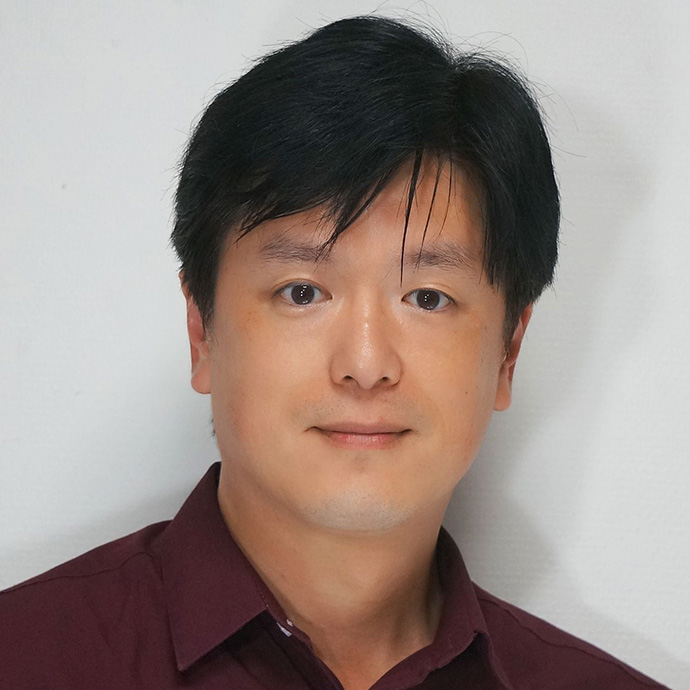
Gregory Dick, PhD, is a Research Professor in the Department of Physiology & Anatomy at the University of North Texas Health Science Center's College of Biomedical and Translational Sciences. His research focuses on ion channel regulation in coronary arteries, particularly how potassium channels control vascular tone under normal and pathological conditions (e.g., obesity, diabetes). He has led multiple NIH-funded projects exploring coronary vascular dysfunction and metabolic signaling. Education: Bachelor of Science in Physiology, Oklahoma State University Doctor of Philosophy in Physiology, University of Missouri Research Interests: Electro-metabolic signaling in coronary vasodilation Role of K+ channels in coronary blood flow regulation Impact of metabolic syndrome and obesity on cardiovascular health Vascular smooth muscle plasticity in disease states Key Projects (2024–2026): Role of potassium as a coronary metabolic vasodilator (Principal Investigator) Disentangling the Mechanisms of Coronary Dysfunction (Co-Investigator) Grants & Funding: NIH R01 Grant: Mineralocorticoid Receptor-Dependent Coronary Vascular Dysfunction in Obesity Multiple collaborative grants with University of Michigan and University of Missouri Collaborations: Active partnerships with institutions studying coronary autoregulation, metabolic syndrome, and swine models of cardiovascular disease.
Majid Taghavi is a Research Fellow at the Department of Bioengineering, Faculty of Engineering, Imperial College London. He leads the Soft Robotic Transducer Lab, focusing on developing advanced soft actuators for healthcare and robotics applications. Previously, he held a postdoctoral position at the University of Bristol’s SoftLab, where he pioneered artificial muscle technologies. He earned his PhD in BioRobotics from Scuola Superiore Sant'Anna with highest honors and an Italian Institute of Technology (IIT) scholarship. His research interests include soft robotics, materials engineering, and actuator design. Key projects involve creating monolithic soft robots with self-sensing, variable stiffness, and high contraction actuators. Recent work explores applications in wearable, implantable, and surgical robotics. Notable achievements include developing electric actuators with 98% contraction and human-muscle-equivalent power density. His articles highlight advancements in electrostatic actuators, dielectric elastomers, and biomimetic designs. Awards include the IIT scholarship and academic honors for doctoral work. He advises on open positions in his lab and collaborates across disciplines. His labs (Soft Robotic Transducers Lab and Robotics Forum) drive innovations in soft robotics systems and transducers.
Jose Gabriel Martinez Gil is an Associate Professor at Linköping University, affiliated with the Department of Physics, Chemistry and Biology (IFM) and the Sensor and Actuator Systems (SAS) research unit. His work focuses on electroactive materials, particularly conducting polymers, for applications in soft robotics and multifunctional devices. Education: PhD in Electrochemistry from Universidad Politécnica de Cartagena (2015) Current Role: Research Fellow at Linköping University His research addresses the limitations of traditional rigid robotics by developing soft, lightweight actuators that mimic biological systems. These materials undergo reversible changes in volume, color, and porosity, enabling innovations like soft exoskeletons and glucose-powered artificial muscles , as highlighted in 2019 and 2022 news items. Recent publications emphasize double coiled yarn actuators , bioelectroactive surfaces , and 3D-printed textile actuators . These studies explore electro-chemo-mechanical processes and material optimization for soft robotics. Awards include recognition for his PhD dissertation as the best at Universidad Politécnica de Cartagena and the Antonio Aldaz award from the Spanish Royal Society of Chemistry. He is part of the Bionics and Transduction Science unit and the interdisciplinary Forum Scientium Graduate School , reflecting his multidisciplinary background in electronics, robotics, and electrochemistry.
Dr. Khoi Dang Ly is a Postdoctoral Research Associate at Cornell University, specializing in robotics with a focus on embedded control systems and soft robotics. He holds a Ph.D. in Mechanical Engineering (2021) from the University of Colorado Boulder and a B.Sc. in Mechanical Engineering (2017) from Texas Tech University. His research targets the integration of high-speed electro-hydraulic actuators, self-sensing mechanisms, and model predictive control to advance the autonomy of soft robotic systems. Ph.D. in Mechanical Engineering (University of Colorado Boulder, 2021) B.Sc. in Mechanical Engineering (Texas Tech University, 2017) Dr. Ly's work bridges theoretical innovation and practical application, with projects on soft robotic shape displays, electro-hydraulic rolling wheels, and magnetic sensing for actuator control. His research extends to tactile interfaces, bio-inspired locomotion, and energy-efficient designs. He has secured over $800,000 in grants from ARPA-E and DOE for robotics applications in subterranean excavation and renewable energy harvesting. His 15 most recent publications highlight expertise in soft robotics, nonlinear control, and embedded sensing technologies. Key areas include high-speed actuation, magnetic displacement sensing, and model predictive control for hybrid dynamic systems. While no formal scientific awards are explicitly listed, his grants and patent filings underscore significant contributions to the field. Advised 5 students on projects ranging from wave tanks to HASEL actuator characterization Developed embedded high-voltage power systems and control algorithms Co-invented 3 U.S. patents, including a magnetic sensing method for soft actuators Dr. Ly's work aligns with future goals of applying system design innovations to human-centric challenges, such as improving sensorimotor function for the elderly and enhancing human-robot interaction through tangible interfaces.
Dr. Marissa Wechsler, a first-generation Hispanic biomedical engineer, returned to her alma mater The University of Texas at San Antonio (UTSA) in 2021 as an Assistant Professor in the Margie and Bill Klesse College of Engineering and Integrated Design. As UTSA's first biomedical engineering undergraduate student (class of 2015), she now leads a 12-member research team in her biomaterials and cell engineering lab while teaching advanced courses like BME 4443: Stem Cell Engineering. Academic Journey: UTSA BME program pioneer (2015) → NSF Graduate Research Fellowship → Ph.D. from UT Austin Leadership Roles: Founding faculty member of UTSA Sigma Xi chapter (2023), SWE faculty advisor, ESTEEMED mentor Research Focus: Specializes in biomaterials engineering with emphasis on: Stimuli-responsive hydrogels for drug delivery and tissue regeneration Stem cell engineering through controlled microenvironments Biosensing platforms using nanoparticle-hydrogel hybrids Regenerative medicine applications for vascular diseases Recent publications demonstrate expertise in RNA-based vaccine delivery systems , nanoparticle engineering , and mitochondrial dysfunction analysis in peripheral artery disease. Her work combines material science innovation with clinical translation potential. Award Highlights: 2023: Sigma Xi Grant-in-Aid of Research 2021: National Science Foundation Graduate Research Fellowship (during studies) Mentorship Impact: As a former participant in federal research programs (RISE, MARC), she now mentors through: Leading 12-member research team (undergraduate to postdoctoral) Sigma Xi leadership (President-elect) Faculty advisor for Society of Women Engineers ESTEEMED program mentor
David J. Cornell is an Associate Professor in the Department of Physical Therapy and Kinesiology at the University of Massachusetts Lowell. He serves as Interim Director of the Doctor of Physical Therapy (DPT) Program and Assistant Director of the Health Assessment Laboratory (HAL). His expertise spans Sports Medicine, Musculoskeletal Injury Prevention, and Human Performance Enhancement. Key research areas include Autonomic Nervous System Physiology, Electro-Mechanical Muscle Function, and optimization of health for tactical operators (firefighters/police), elite athletes, and clinical populations. Education: BS in Exercise Science, Carroll University MS in Kinesiology, University of Wisconsin-Milwaukee PhD in Health Sciences, University of Wisconsin-Milwaukee Doctor of Physical Therapy (DPT), University of Wisconsin-Milwaukee Research Interests: Cornell employs both laboratory and clinical methods to study musculoskeletal injury prevention, non-invasive autonomic nervous system assessment, and performance enhancement. His work bridges clinical practice and scientific inquiry, emphasizing translational applications for tactical athletes and occupational laborers. Notable contributions include studies on firefighter cardiovascular health, functional movement screening validity, and wearable technology validation. Awards: ACSM Fellow (2023) Teaching Excellence Award (2022) New Investigator Award (2022) His work has been recognized through grants and fellowships from organizations like the American College of Sports Medicine and National Strength and Conditioning Association. Advising & Grants: Leads the Tactical Athlete Special Interest Group for the American Academy of Sports Physical Therapy. Active in securing funding for research on firefighter health and tactical athlete performance. Labs & Teams: Co-directs the Health Assessment Laboratory (HAL), focusing on translational research for occupational and athlete populations.
William Boley is an Assistant Professor of Mechanical Engineering at Boston University, with a primary appointment in the Department of Mechanical Engineering and affiliations in Materials Science & Engineering. His research focuses on additive manufacturing, functional printing, self-assembly, and thermal fluid science to develop novel materials and devices for applications in electronics, optics, sensors, and soft robotics. He holds a PhD in Mechanical Engineering from Purdue University. Professor Boley's research integrates materials science, thermal fluid dynamics, and design optimization to create multi-scale architectures in additive manufacturing. His work emphasizes programmable materials, 4D printing, and liquid metal systems for flexible electronics. He has affiliations with Energy, Sustainability & Climate and the Materials by Design initiative. Key honors include the Air Force Office of Scientific Research Young Investigator Program (2020) and the NSF CAREER Award (2021). His contributions span over 30 peer-reviewed articles, with recent work focusing on liquid metal emulsions, neural network-enabled fluid control, and shape-shifting lattice structures. The Additive Assembly Laboratory, led by Boley, explores cutting-edge manufacturing techniques to bridge material synthesis and functional device fabrication.
Jorge Grasa is an Associate Professor at the Department of Mechanical Engineering, University of Zaragoza. His research focuses on computational mechanics with applications in biomechanics, food engineering, and material fatigue analysis. He holds a Ph.D. (2007) and M.Sc. (2001) in Mechanical Engineering from the University of Zaragoza. Research Interests: His work spans computational modeling of biological tissues (tendons, muscles, ocular lenses), finite element methods for soft tissue mechanics, food cooking simulation, and digital twin technologies for industrial processes. He has pioneered studies on tendon scaffold fabrication, non-contact tonometry for intraocular pressure assessment, and muscle fatigue mechanisms linked to calcium signaling. Awards: Received the Quercus Hernández Best Thesis Award from SEMNI. His research bridges engineering and medicine, with applications in presbyopia mechanisms, tendon repair strategies, and food quality optimization. Key Contributions: Developed validated models for abdominal wall hernia repair, steak cooking dynamics, and 3D muscle contraction simulations. His work integrates multi-scale approaches and machine learning (e.g., POD-NN for corneal property estimation).
Johnathan Tune, PhD, is a Professor and Chairman of Physiology & Anatomy at the College of Biomedical and Translational Sciences, University of North Texas Health Science Center. His research focuses on mechanisms of coronary blood flow regulation in health and disease, particularly in obesity and diabetes. He leads projects funded by the National Heart, Lung, and Blood Institute and the American Heart Association, investigating myocardial oxygen delivery and ischemic injury. Key interests include metabolic syndrome's effects on coronary function and translational studies using large animal models. Over 119 publications span coronary vasodilation, ion channel physiology, and therapeutic interventions for cardiac dysfunction. Notable projects address heart failure with preserved ejection fraction and post-partum myocardial oxygen imbalances. His work integrates experimental and computational approaches to unravel complex cardiovascular mechanisms. Education: BA in Biology from University of North Texas, PhD in Physiology from University of North Texas Health Science Center. Research emphasizes integrative physiology, combining in vivo/ex vivo models to study coronary circulation. Active collaborations include multi-scale modeling of myocardial perfusion and investigating SGLT2 inhibitors' cardioprotective roles. Current grants explore post-partum coronary dysfunction and HFpEF mechanisms. Lab activities focus on ion channels, metabolic signaling, and vascular dysfunction in metabolic disorders.
Christian Éthier is an Associate Professor in the Department of Psychiatry and Neuroscience at the Faculty of Medicine, Université Laval. His research focuses on understanding and leveraging neuronal plasticity to repair neural circuits after injury or stroke, particularly through neuroprosthetics and brain-computer interfaces. Current position: Associate Professor, Université Laval Research focus: Neuronal plasticity, motor recovery, neuroelectronic interfaces Lab affiliation: Ethier Lab Dr. Éthier investigates how electrochemical neuronal activity modulates neural connections, aiming to develop neuroprostheses that restore motor function in paralyzed patients. His work bridges engineering and neuroscience, emphasizing cortical and spinal motor network reorganization. Recent publications highlight collaborations in wireless electro-optic platforms for optogenetics, corticospinal excitability studies, and neurostimulation applications for stroke rehabilitation. His lab at Université Laval, part of the CERVO Brain Research Centre, specializes in neuroprosthetic devices tested in primate and rodent models. Dr. Éthier’s team explores methods to guide neural reorganization using electrical/optical stimulation, targeting impairments from spinal cord injuries. While no specific scientific awards are mentioned in the provided text, his interdisciplinary approach is reflected in publications spanning neuroscience, engineering, and rehabilitation journals.
M Taher A Saif is the Edward William and Jane Marr Gutgsell Professor in the Department of Mechanical Science and Engineering at the University of Illinois, College of Engineering. His research focuses on mechanics of nanoscale materials and living cells, with emphasis on cellular mechanics, cancer metastasis, and biohybrid robotics. He has held academic positions since 1997, including visiting roles at Leibniz Institute (Germany) and the University of Vienna. His educational background includes a Ph.D. from Cornell University (1993) and degrees from Bangladesh University of Engineering and Technology (B.S.) and Washington State University (M.S.). Research Interests: Biomechanics: Neuronal tension, cancer metastasis, and mechanotransduction Nanomechanics: Size effects in materials (e.g., brittle-to-ductile transitions in silicon) Design and study of biohybrid robots using engineered living systems Awards: Member, National Academy of Engineering (2024) Fellow, AAAS (2023) Warner T. Koiter Medal (ASME, 2018) Edward William and Jane Marr Gutgsell Professorship (2010–present) Key Contributions: Discovered reversible plasticity in nanocrystalline metals Developed biohybrid robots powered by living cells Linked neuronal tension to synaptic function Advanced understanding of cancer metastasis via tumor microenvironment mechanics Labs/Teams: MEMS/Micromechanics Lab, collaborating with interdisciplinary teams on biohybrid systems and cancer research.
Tongfei Tian is a Lecturer in Engineering (Dynamics) at the School of Science and Engineering, University of the Sunshine Coast. He holds a B.Eng from Beihang University, M.Sc and M.Res from University of Wollongong, and PhD in Engineering from the same institution. His professional experience includes research positions at the University of Wollongong and Tohoku University's Institute of Fluid Science. Tian's research focuses on functional smart materials with emphasis on: Magnetorheological elastomers (MREs) with enhanced sensing and stiffness properties Shear thickening fluids (STFs) for energy absorption applications Temperature-dependent behavior of smart materials Particle alignment techniques in composite materials Industrial applications in brakes, dampers, and vibration control systems His experimental work employs advanced fabrication methods and characterization techniques to develop adaptive materials with tunable mechanical properties. Recent publications demonstrate innovations in rotational brake design using STFs and temperature-responsive materials for cryogenic environments. Research Grants and Honors: Research Partnerships Grant, University of Wollongong ($9,500, 2014) Enterprise Connect Researchers in Business Funding ($64,228, 2013-2014) Best Post Award, ISEM2017 (France) National Award for Outstanding Self-Financed Chinese Students Abroad Multiple Three Minute Thesis competition awards Tian teaches dynamics and computational mechanics while maintaining memberships in professional societies including the Japan Fluid Power System Society.
Dr. Jinsook Roh is an Associate Professor in the Department of Biomedical Engineering at the University of Houston (Cullen College of Engineering). She directs the graduate program and leads the REIGN Laboratory (Rehabilitation Engineering and Intelligent Neuroengineering Group). Her research focuses on neural mechanisms of motor coordination in stroke survivors, developing rehabilitation robotics and neuromodulation strategies to enhance motor recovery. Education: Ph.D., Systems and Computational Neuroscience, Massachusetts Institute of Technology (MIT) B.S. in Physics (Summa Cum Laude), Ewha Womans University, Seoul, South Korea Research Interests: Neural mechanisms of post-stroke motor impairment Neuromodulation and rehabilitation robotics Automated quantification of motor dysfunction Motor coordination learning and plasticity Key Contributions: Her lab develops synergy-based rehabilitation strategies using human-machine interfaces and exoskeletons to restore upper limb function. Recent work includes electro-tactile neuromodulation and computational models for closed-chain arm dynamics. Awards: 2022 NSF CAREER Award AHA Postdoctoral Fellowship AHA Scientist Development Grant Grants & Collaborations: NIH-funded studies on stroke rehabilitation Clinical partnerships with Shirley Ryan AbilityLab (formerly Rehabilitation Institute of Chicago) Laboratory: The REIGN Lab integrates robotics, neuroscience, and computational modeling to advance neurorehabilitation technologies. Visit reignlaboratory.com .
Huaxiong Huang is a Full Professor of Mathematics and Statistics at York University and Executive Director of the Joint Math Centre. He holds a BSc from Fudan University and a PhD from the University of British Columbia's Institute of Applied Mathematics. His research spans fluid mechanics, scientific computing, and their applications in biology, medicine, and finance, with over 100 publications and editorial roles at leading journals. He has held visiting positions at the University of Tokyo, University of Canterbury, and University of Paris VI. His honors include the Fields Institute Industrial Mathematics Prize and lifetime fellowship from the Fields Institute. Research interests focus on mathematical modeling of biomedical systems (e.g., optic nerve microcirculation, cellular ion transport), machine learning applications in healthcare diagnostics (e.g., PPG-to-ECG reconstruction), and advanced materials science (e.g., polymeric fluid dynamics). Recent work integrates deep learning with biomedical signal processing and electrochemical systems. His articles highlight interdisciplinary approaches combining computational methods with experimental validation. Scientific Awards: Fields Institute Industrial Mathematics Prize (Canadian Industrial and Applied Mathematics Society) Lifetime Fellow, Fields Institute for Research in the Mathematical Sciences Advising focuses on graduate research in applied mathematics and interdisciplinary projects. He has contributed to grants in health analytics, materials science, and computational modeling. His research team collaborates with the Joint Math Centre to bridge academic-industry partnerships in applied sciences. Labs/Teams: Executive Director of the Joint Math Centre, fostering collaborative research in applied mathematics across disciplines.
Shoji Takeuchi is a Professor and Principal Investigator at the Department of Mechano-Informatics, Graduate School of Information Science and Technology, The University of Tokyo. He also serves as Director of the Center for International Research on Integrative Biomedical Systems (CIBiS) at the Institute of Industrial Science (IIS). His interdisciplinary work bridges mechanical engineering, informatics, and biological sciences to create innovative biohybrid systems that integrate biological functionality with micro/nano engineering. Takeuchi received his B.E., M.E., and Dr. Eng. degrees in mechanical engineering from the University of Tokyo in 1995, 1997, and 2000, respectively. His educational background in mechanical engineering provided the foundation for his transition into bio-integrated systems research. His laboratory investigates eight main research areas: Biohybrid Robotics (using skeletal muscle tissue for robot movement), Biohybrid Sensors (ultra-sensitive chemical sensors using cellular receptors), 3D Tissue Construction (including cultured meat development), Artificial Cells/Cell Membrane systems, Implantable Devices, Neural Networks, MEMS/Microfluidic Devices, and Design/Art applications. The research focuses on creating hybrid systems by fusing mechanical components with biomaterials such as biological cells and molecular machines to overcome limitations of purely artificial micromachines. His publications reveal a consistent progression from microfluidic technologies toward increasingly sophisticated integration of biological components with engineered systems. Early work focused on fundamental microfabrication techniques, evolving to complex tissue constructs and functional biohybrid robots. His research spans fundamental biophysics of cell membranes to applied medical devices, demonstrating a clear trajectory toward creating practical biohybrid technologies with real-world applications. MEXT Young Scientists' Prize (2008) JSPS prize (2010) ACS Analytical Chemistry Young Innovator Awards (2015) With over 160 peer-reviewed publications and more than 70 patents filed, Takeuchi leads an active research group mentoring numerous students across multiple disciplines. His laboratory welcomes students from engineering backgrounds to the Department of Mechano-Informatics and students with scientific backgrounds to the Department of Life Sciences. The group has received significant recognition, with Assoc. Prof. Yuya Morimoto winning The Young Scientists' Award of The Commendation for Science and Technology by the Minister of Education in 2021 and Morimoto being awarded Pioneer of New Research Fields Award in 2020. Takeuchi directs the Biohybrid Systems Laboratory at the University of Tokyo, which has gained international recognition with research featured in major media outlets including The Guardian, ABC NEWS, and CNN. The lab's work on cultured meat was highlighted in NIKKEI Asia, and their skin robot research was featured in Matter magazine. The laboratory maintains strong global partnerships and actively participates in international research collaborations, positioning itself at the forefront of biohybrid technology development.