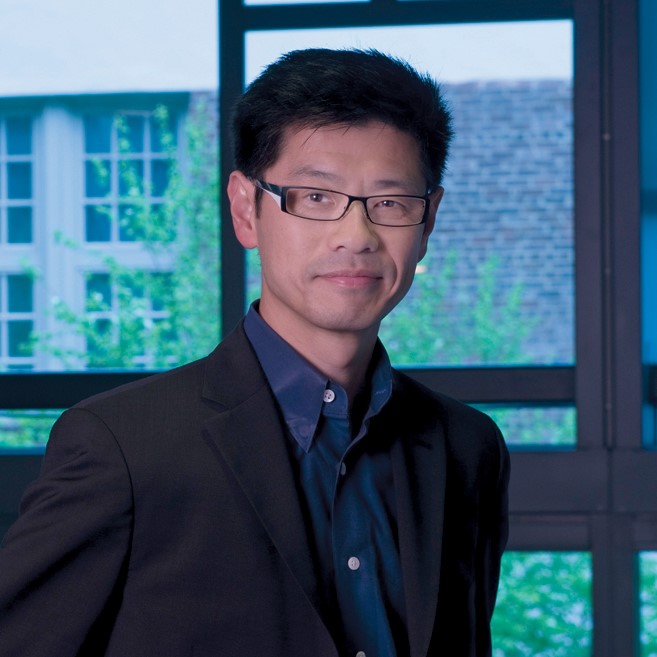
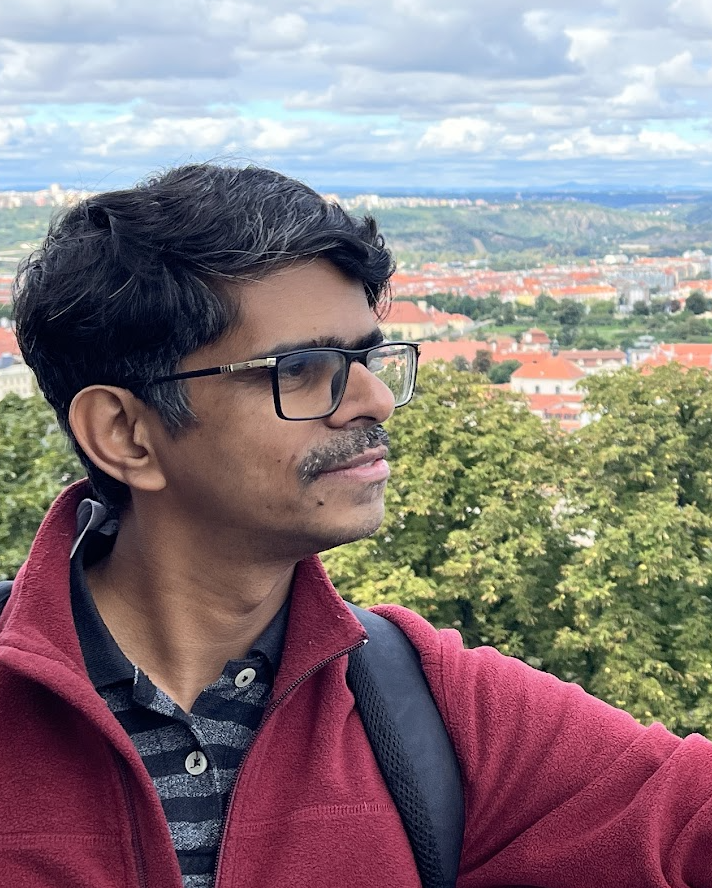
James C. Gee is a Professor of Radiologic Science in Radiology at the University of Pennsylvania's Perelman School of Medicine. He serves as Director of the Penn Image Computing and Science Laboratory and Co-Director of the Translational Biomedical Imaging Center , with affiliations in Bioengineering and Applied Mathematics graduate groups. His research focuses on biomedical image analysis, specialization in segmentation, registration, and morphometry applied to neurodegenerative diseases and multi-organ systems. Education : B.S. in Computer Science/Electrical Engineering (University of Washington, 1987), Ph.D. in Computer and Information Science (University of Pennsylvania, 1996) Research : Quantitative medical imaging methods, brain connectomics, neurodegeneration mapping, and translational imaging technologies Publications : 15+ recent works on AI-driven image analysis for Alzheimer's disease, cardiac amyloidosis, and radiomics applications Leadership : Directs MSE-DS Online Degree Program, co-chairs Radiology DCOAP Committee, and founded RISE (Radiology Initiative to Support Inclusive Excellence) His laboratory develops advanced computational tools like ITK-SNAP for biomedical imaging, with applications in both in vivo clinical imaging and ex vivo histology . The work spans cross-disciplinary collaborations in computer science, neuroscience, and clinical medicine.
Lauri Heikonen is a University Lecturer at the Department of Educational Sciences, University of Helsinki, where he is affiliated with the Research and Training Group for Educational Leadership KAJO and the University of Helsinki Centre for Educational Evaluation HEA. He serves as a supervisor in the Doctoral Program in School, Education, Society and Culture and maintains an active research profile with 39 publications to date. Dr. Heikonen's research focuses on educational sciences and educational psychology, with particular emphasis on teacher education, school leadership, and educational evaluation. His work examines factors influencing teacher motivation, professional development, and the attractiveness of teaching as a profession. He has conducted significant research on teacher efficacy, school leadership practices, and educational reform implementation at various levels, often employing both qualitative and quantitative methodologies to address complex educational issues in the Finnish context and beyond. His recent publications demonstrate a strong focus on contemporary educational challenges, including the impact of the COVID-19 pandemic on teaching communities, supervisory practices in teacher education, and collaborative approaches to school development. His research consistently addresses practical educational issues while contributing to theoretical understanding in the field. Dr. Heikonen is actively involved in multiple significant research projects, including 'EDUCA: Koulutus tulevaisuutta varten' (Education for the Future, 2024-2028), 'Cornér Solveig: SFV 23672 SkolForsk' (2024-2026), 'Ahtiainen: OPH VEPO voimaa johtamiseen' (2023-2025), 'Elevating Teacher Training Programs in the UAE' (2023-2024), and 'Erasmus+ Cooperation partnerships in school education: Co-creating inclusive school communities' (2021-2024). These projects reflect his commitment to advancing educational practices through research and international collaboration. As a supervisor in the doctoral program and through his active participation in conferences and peer review activities, Dr. Heikonen contributes significantly to the development of future educational researchers and practitioners, sharing his expertise in educational leadership and evaluation.
Professor Li Hui serves as the executive dean of the School of Network and Information Security at Xidian University, where he holds the position of second-level professor and doctoral supervisor. He is nationally recognized as a distinguished teacher and serves in multiple prestigious roles including member of the National Steering Committee for Postgraduate Education in Cryptography, inaugural president of ACM SIGSAC CHINA, and director of several major academic societies related to cryptography and information security. Professor Li's research spans cryptographic information security, privacy computing, information theory, and coding theory, with significant contributions to network and cyberspace security. His work demonstrates a strong focus on both theoretical foundations and practical applications, particularly in developing security protocols for emerging technologies like blockchain, federated learning systems, and IoT environments. His research output shows consistent innovation in balancing security requirements with computational efficiency across diverse application domains. With over 300 publications and more than 15,000 Google Scholar citations (H-index 60), Professor Li's scholarly impact is substantial. His recent publications demonstrate increasing emphasis on privacy-preserving machine learning, secure multi-party computation, and cryptographic protocols for distributed systems, reflecting the evolving security challenges in the AI era. Three second-class national teaching achievement awards Special prize and first-class national teaching achievement awards Four first-class provincial and ministerial science and technology progress awards Privacy Computing Theory award (Qian Weichang Chinese Information Processing Science and Technology Award) Multiple patents with over 80 granted inventions Professor Li leads the Cyber Changan Team and serves as head of the Shaanxi Provincial Innovation Team for Mobile Internet Security. He has successfully supervised numerous doctoral and master's students who have gone on to win prestigious competitions like the National College Student Information Security Competition. His research is supported by major national grants including a National Key R&D Program project and key projects from the National Natural Science Foundation of China.
Karin Kreutzer is Professor of Social Business at EBS Business School, EBS University of Business and Law, holding the Chair of Social Business while serving as Head of the Impact Institute and Vice Dean of Research. Her academic leadership bridges theoretical rigor with practical social impact through extensive engagement with social enterprises and nonprofit organizations. Her educational foundation includes a doctorate from the University of St. Gallen complemented by studies at Bocconi University, Universities of Passau and Parma, and a visiting scholar position at ESADE Business School in Barcelona. This diverse academic background informs her interdisciplinary approach to social business research. Professor Kreutzer's research program centers on social entrepreneurship, corporate social responsibility, strategic NGO-corporate partnerships, and nonprofit strategic management, employing qualitative methodologies to dissect organizational identity dynamics and hybrid institutional logics. Her work reveals how social enterprises navigate inherent tensions between social missions and business sustainability, particularly during scaling phases and organizational transitions. Analysis of her 2021-2024 publications shows evolving focus on age-diverse volunteer teamwork, discursive construction of social entrepreneurship in pitch contexts, and career transitions of corporate managers entering nonprofit sectors. These studies consistently appear in premier outlets like Academy of Management Journal , Journal of Management Studies , and Journal of Business Ethics , demonstrating methodological sophistication and theoretical contribution. She actively translates research into practice through board memberships in social enterprises and advisory roles for nonprofits and public sector entities. Her teaching spans bachelor's, master's, MBA, and PhD programs covering business administration, CSR, social entrepreneurship, and qualitative research methods. As Head of the Impact Institute, she directs a research hub fostering social innovation through academic-practitioner collaboration, with current projects examining organizational responses to human rights challenges during conflicts and sustainability managers' moral engagement.
Dr. Geoffrey L. Herman serves as the Severns Teaching Professor in the School of Computing and Data Science at the University of Illinois at Urbana-Champaign. He earned his Ph.D. in Electrical and Computer Engineering from UIUC as a Mavis Future Faculty Fellow and completed postdoctoral research at Purdue University's School of Engineering Education. His research focuses on understanding how students learn engineering and computing concepts and developing systemic approaches to improve teaching methods in higher education. With over $7 million in research funding and more than 120 peer-reviewed publications, his work spans educational technology, cognitive aspects of learning, and faculty development initiatives. His recent publications demonstrate a consistent focus on evidence-based instructional practices, assessment methodologies, and collaborative learning approaches, with particular emphasis on computer science education, proof writing tools like Proof Blocks, and mastery learning techniques. These works collectively advance the understanding of effective educational strategies in STEM fields. IEEE Education Society Mac Van Valkenburg Early Career Teaching Award Scott H. Fisher Computer Science Teaching Award Best paper award in the first 50 years of the ACM Special Interest Group, Computer Science Education As a mentor, Dr. Herman guides graduate students interested in engineering and computing education research, focusing on designing better instruction. He also works with undergraduates on improving educational experiences through platforms like PrairieLearn. His leadership extends to founding the Grainger College of Engineering's Strategic Instructional Innovations Program, which has secured millions in external funding. He serves on the Computer Research Association Education committee and as associate editor for the Journal of Engineering Education. Dr. Herman leads national workshops on professional development for computer science teaching faculty and has created peer mentoring networks through the Teaching Professionals Program, significantly impacting faculty development in engineering education.
Professor James Im serves as Professor of Materials Science in the Departments of Earth and Environmental Engineering and Applied Physics and Applied Mathematics at Columbia University, with an office at 1106 S.W. Mudd (Mail Code 4701). His academic career spans over three decades at Columbia, where he progressed from Assistant Professor (1991-1994) to Associate Professor (1995-2002), and ultimately to full Professor (2002-present), including a tenure as Chair of the Materials Science and Engineering Program (2002-2014). His educational background includes a B.S. with Distinction in Materials Science from Cornell University (1984) and a Ph.D. in Electronic Materials from MIT (1989), followed by postdoctoral research at Caltech (1989-1991). Cornell University: B.S. Materials Science (1984) MIT: Ph.D. Electronic Materials (1989) Caltech: Postdoctoral Scholar (1989-1991) Im's research centers on ultra-rapid phase transitions in beam-irradiated thin films, specifically focusing on laser crystallization of silicon films , energy-beam-induced melting and solidification , and nucleation in discontinuous phase transitions . His work employs experimental, computational, and theoretical approaches to develop innovative semiconductor materials for advanced displays, solar cells, and integrated circuits. Notably, his invention of Sequential Lateral Solidification (SLS) technology has been licensed to major display manufacturers (Samsung, LG, Sharp) and implemented in products by Apple, Blackberry, and Nokia. Current research focuses on advancing the Spot-Beam Crystallization (SBC) platform using fiber lasers for next-generation microelectronics. His publication record spans environmental aerosol studies (2019-2024), oilfield operations technology (2002-2014), and foundational atmospheric research (1980s), reflecting interdisciplinary expertise bridging materials science, environmental engineering, and petroleum technology. The most recent works emphasize low-cost sensor development and aerosol monitoring. Professional recognition includes membership in prestigious societies: Bohmisch Physical Society Sigma Xi Alpha Sigma Mu Materials Research Society American Physical Society Im's research group maintains strong industry connections through technology licensing and collaborative projects, particularly in display manufacturing. His leadership as former department chair demonstrates administrative commitment alongside scientific innovation. The laboratory leverages state-of-the-art laser systems and beam delivery optics for materials development, with recent focus shifting toward environmental monitoring applications while maintaining core semiconductor research.
Ronny Scherer is Center Director and Professor at CEMO (Center for Educational Measurement) and Deputy Director at CREATE (Center for Research on Equality in Education) at the University of Oslo's Faculty of Educational Sciences. His work bridges educational measurement, assessment, and evaluation with a focus on research syntheses and complex sampling surveys. Dr. Scherer's research spans two interconnected domains: substantive areas including digital divides, equity and equality in education, and measurement of complex cognitive skills (such as complex problem solving, adaptability, computational thinking, and executive functioning); and methodological areas focusing on advanced meta-analytic techniques, multilevel structural equation modeling, and spatial analysis of complex survey data. His work frequently utilizes international large-scale assessment data from PISA, ICILS, TIMSS, PIRLS, PIAAC, and TALIS. His publication record demonstrates a clear trajectory toward increasingly sophisticated meta-analytic approaches, with recent work focusing on second-order meta-analyses, AI-assisted screening methods, and advanced techniques for handling complex survey data. His research consistently addresses critical educational challenges related to equity, digital literacy, and measurement of 21st century skills. Dr. Scherer has secured significant research funding for projects including ARISE (Academic resilience in mathematics and science among vulnerable students), DiDiRes (Digital inequalities in education), and ADAPT21 (Educational assessments of the 21st century: Measuring and understanding students' adaptability in complex problem solving situations). Co-director of CREATE (Centre for Research on Equality in Education) since 2023 Professor of Educational Assessment and Measurement at CEMO since 2019 Extensive experience with international large-scale assessments including ICILS, TALIS, and PIAAC As an educator, Dr. Scherer teaches advanced courses in measurement models, multilevel models, meta-analysis, and equity in education. He actively supervises graduate students interested in his research areas and has developed numerous workshops on structural equation modeling and meta-analytic methods for international audiences.
Professor Tineke Brunfaut is a leading academic in Applied Linguistics at Lancaster University 's School of Social Sciences. Her work focuses on language testing , second language reading , listening , and integrated/multimodal skills . She coordinates the Language Testing Research Group and has received prestigious awards including the ILTA Best Article Award , e-Assessment Award , and TOEFL Outstanding Young Scholar Award . Key research areas: Cognitive and affective factors in testing, methodological innovations (eye-tracking, discourse analysis), and language test development. Recipient of multiple grants from the British Council, Trinity College London, and British Academy. PhD supervision interests: Language testing, integrated skills, assessment literacy, and validation. Recent publications explore technology-enhanced assessment , multimodal viewing-to-write tasks , and the impact of delivery modes on test performance . She has consulted for global institutions on test design and evaluation. Scientific Awards : ILTA Best Article Award e-Assessment Award for Best Research TOEFL Outstanding Young Scholar Award Her teaching includes MA programs in Language Testing, TESOL, and Applied Linguistics, covering Test Construction , Research Methods , and Statistical Analyses .
Brian Kavanagh, MD, MPH is a Professor and Department Chair of Radiation Oncology at the University of Colorado Anschutz Medical Campus School of Medicine. He serves as Department Chair and maintains clinical practice at multiple UCHealth locations including the University of Colorado Cancer Center, Cherry Creek Medical Center, Longs Peak Medical Center, and the Rocky Mountain Gamma Knife Center. His leadership extends to serving as Chair of the American Society for Radiation Oncology since 2017. MD, Tulane University School of Medicine (1988) MPH, Tulane University (1988) BSE, Tulane University (LA) (1984) Internship: Tulane University Program (1989) Residency: Duke University Hospital Program, Radiation Oncology (1993) Dr. Kavanagh's research primarily focuses on stereotactic body radiation therapy (SBRT), functional lung avoidance radiation therapy using 4DCT-ventilation imaging, and treatment of brain metastases from oncogene-driven lung cancers. His work bridges clinical practice, medical physics innovation, and outcomes research, with particular emphasis on optimizing radiation therapy techniques while minimizing toxicity. Recent publications demonstrate his leadership in developing novel approaches to image-guided radiation therapy, including antiscatter grid technology for CBCT imaging and functional avoidance techniques for lung cancer treatment. Analysis of Dr. Kavanagh's recent publications (2019-2024) reveals a strong focus on precision radiation therapy for lung cancer and brain metastases. His research spans technical innovations in medical physics (such as 2D antiscatter grid development), clinical trials evaluating functional avoidance radiation therapy, and studies examining outcomes for patients with oncogene-driven cancers. A significant portion of his work addresses the integration of radiation therapy with targeted therapies for lung cancer with brain metastases, reflecting the evolving treatment paradigms in this field. Top Doctor, 5280 Magazine (2023) Dr. Kavanagh has been instrumental in developing national radiation oncology curriculum frameworks through stakeholder consensus processes. His leadership in the American Society for Radiation Oncology has positioned him to influence practice guidelines and educational standards in the field. His research has been supported through multi-institutional clinical trials and collaborations with major cancer centers across the United States. Dr. Kavanagh leads research efforts in the Rocky Mountain Gamma Knife Center and contributes to the University of Colorado Cancer Center's radiation oncology program. His work with 4DCT-ventilation imaging has established a clinical research program focused on functional avoidance radiation therapy, which aims to preserve lung function while effectively treating tumors.
Asunción Gómez Pérez is a Spanish computer scientist and Full Professor at the Technical University of Madrid (UPM) . She currently serves as Vice-Rector for Research, Innovation and Doctoral Studies at UPM and holds a seat at the Real Academia Española . She has authored over 300 publications and accumulated 20,000 citations. Education : PhD in Computer Science (UPM, 1993), MBA (Comillas Pontifical University) Leadership Roles : Director of the Department of Artificial Intelligence (2008–2016), Academic Director of AI Master’s/PhD programs (2009–2016), Executive Director of UPM’s Artificial Intelligence Lab (1995–1998) Her research focuses on Semantic Web and Ontology Engineering , with applications in knowledge representation, machine-machine communication, and multilingual data integration. She pioneered methods for ontology validation, metadata licensing, and AI-driven social inclusion. Key publication trends include: Ontology evaluation frameworks (e.g., OOPS!) Linked Data quality models and validation tools Multilingual and cross-lingual AI applications Interoperability solutions for smart cities and healthcare Machine Learning for social exclusion prediction Ontology-driven library and lexicography systems Scientific Awards Fellow of the European Academy of Sciences Ada Byron Prize She has led projects like the NeOn Methodology for ontology development and contributed to the European framework for linked data rights (LD Terms). Her work bridges theoretical research with practical implementations in AI and Semantic Technologies.
Silje C. Wangberg is a Professor of Public Health and serves as Vice Dean for Research Education and Practice for Nursing BSc and further education programs at UiT The Arctic University of Norway, Campus Narvik. She is a psychologist with a holistic perspective on health and disease, focusing on supporting individuals in taking the best possible care of themselves to live a good life with optimal physical, mental, emotional, social, and spiritual well-being. Her primary research interests include: eHealth and mHealth applications Health behavior and behavior change Health promotion and prevention Physical activity and smoking cessation Diabetes and heart disease management Social inequality in health Mindfulness, yoga, and meditation Dr. Wangberg's extensive publication record demonstrates consistent focus on digital health interventions, particularly examining how internet and mobile technologies can support health behavior change across various populations. Her recent work shows increasing emphasis on specialized populations including individuals with intellectual disabilities and exploration of emerging technologies like augmented reality in healthcare education. She maintains a strong interest in addressing health inequalities through technological solutions while recognizing the continued importance of human factors in health management. She is an active member of the HEL research group focused on Public Health and Rehabilitation, and participates in the One Health project at Campus Narvik.
James Meek is the Associate Director of the Yale Emerging Infections Program at the Yale School of Public Health , collaborating with the Connecticut Department of Public Health and CDC. His roles include overseeing population-based surveillance systems for tickborne, foodborne, respiratory, and other emerging infections, and implementing applied public health research to evaluate prevention strategies. Education: Master of Public Health (MPH) from the University of Connecticut (2000) His research spans infectious disease epidemiology , focusing on zoonoses , vector control , and healthcare-associated infections , particularly through the Connecticut Emerging Infections Program . Publications highlight work on COVID-19 hospitalization trends , C. difficile recurrence risks , and tickborne disease prevention . Recent articles emphasize surveillance methodology (Bayesian modeling), vaccine effectiveness (JYNNEOS, SARS-CoV-2), and environmental interventions (4-Poster tick control devices). Collaborations include researchers from CDC, Connecticut DPH, and Yale departments like Epidemiology of Microbial Diseases and Biostatistics . Meek's work trains over 300 MPH and doctoral students through internships and thesis projects, while engaging in public health practice across respiratory viruses , antimicrobial resistance , and epidemiological modeling .
Patrick C. Shih is an Associate Professor of Informatics in the Luddy School of Informatics, Computing, and Engineering at Indiana University Bloomington, where he also serves as the Director of Graduate Studies for Data Science and Co-Director of the Animal Informatics MS and PhD track. He directs the Societal Computing Lab (SoCo Lab) and is a core faculty member of the Health Informatics PhD track. Dr. Shih's research focuses on how to better support health and wellbeing, specifically that of underserved and vulnerable populations, through the design, development, and evaluation of sociotechnical systems and community-based mechanisms. His work also designs technologies to amplify human and animal capabilities in animal-assisted interventions, improve animal welfare, and cultivate empathy for others. His research spans human-computer interaction, social media, collective intelligence, crowdsourcing, and online and geographic communities, with a particular emphasis on leveraging awareness of individual and community activities embedded in social media for civic engagement platforms. His recent publications reveal a strong trend toward health equity research, particularly focused on African American/Black communities, Alzheimer's disease and related dementias, breast cancer survivorship, and autism spectrum disorder. His work increasingly integrates generative AI, mobile health applications, and community-based participatory design approaches to address health disparities in vulnerable populations. ACM Senior Member (2020) NSF CAREER Award recipient Indiana University Trustees Teaching Award (2018-19) IU Groups Scholars Program STEM Mentor of the Year (2018-19) Multiple best paper awards at top-tier conferences Dr. Shih has successfully secured significant funding for his research, including a $3.7 million award to investigate inequities in environmental stressors and cognitive decline in urban and rural older adults. He serves on numerous editorial boards and program committees for leading HCI and computing conferences. His teaching portfolio includes courses on usable AI, mobile and pervasive design, and social computing. He leads the Societal Computing Lab, which focuses on developing technologies that address societal challenges through community engagement and participatory design.
Stephen D. Hart is a Full Professor in the Department of Psychology at Simon Fraser University, with expertise in clinical-forensic psychology. His work focuses on assessment in criminal and civil settings, particularly violence risk and psychopathic personality disorder. He has also served as a Visiting Professor at the University of Bergen since 2000 and provides violence risk assessment and management services through Protect International Risk and Safety Services. Dr. Hart completed his education at the University of British Columbia, obtaining a BA in 1984, MA in 1987, and PhD in 1993. He began teaching at Simon Fraser University in 1990 and was appointed a regular faculty member in 1994. His primary research interest is clinical-forensic assessment, with specific focus on violence risk (including intimate partner violence, sexual violence, stalking, workplace violence, and terrorism) and psychopathic personality disorder. He co-developed the Structured Professional Judgment (SPJ) approach to violence risk assessment and has co-authored numerous SPJ violence risk assessment guides including HCR-20, RSVP, SVR-20, SARA, B-SAFER, SAM, PATRIARCH, MLG, and EARLI. He also developed the Comprehensive Assessment of Psychopathic Personality (CAPP) concept map with colleagues at Glasgow Caledonian University and the University of Liverpool. His publication record shows consistent output with significant contributions to understanding violence risk assessment across cultures and settings, as evidenced by his work on cases like Ewert v. Canada. His recent publications focus on economic analysis of crime costs associated with psychopathic personality disorder, stalking recidivism, and online stalking behaviors. Distinguished Contributions Award, American Academy of Forensic Psychology (2019) Distinguished Achievement Award, Association of Threat Assessment Professionals (2009) Career Achievement Award, Section on Clinical Emergencies and Crises (Section VII) of the Society of Clinical Psychology (2003) Jerome Fisher Memorial Lecture Award (2001) Saleem Shah Award for Early Career Research Excellence (1995) Dr. Hart has supervised numerous graduate and undergraduate students at Simon Fraser University and other institutions, and has acted as external examiner for graduate students worldwide. His research has received substantial funding, enabling the development and validation of multiple assessment instruments that have become standards in forensic practice. He has also served as Editor of the Journal of Threat Assessment and Management, further demonstrating his leadership in the field. Dr. Hart leads or significantly contributes to research teams focused on violence risk assessment and psychopathy assessment, collaborating with international colleagues across multiple disciplines including psychology, psychiatry, criminology, and law. His work bridges academic research and practical application in forensic settings globally.
Chester Rebeiro is an Associate Professor at the Department of Computer Science and Engineering within the Indian Institute of Technology Madras . His work spans hardware and software security with a focus on cryptographic implementations and microarchitectural vulnerabilities. Research interests include hardware security, applied cryptography, side channel analysis, and operating system security. He develops frameworks for automatic vulnerability detection and mitigation in cryptographic systems. Editorial Board: Associate Editor at Journal of Hardware and Systems Security (Springer, 2021-2024) Conference Leadership: General Co-Chair for SPACE 2024, Program Co-Chair for ATS 2024, and Program Co-Chair for INDOCRYPT 2023 Professional Activities: Organizer of e-CTF Embedded Capture The Flag and contributor to cybersecurity workshops across India and abroad Scientific contributions highlight two major awards: a Distinguished Paper Award at USENIX Security 2024 and a Best Paper Award at IEEE HOST 2020. His research focuses on practical security solutions for processors and cryptographic systems. Advising includes mentoring 11 PhD students and 7 MS by Research candidates, with notable co-guided projects in fault attack detection and side-channel mitigation. He actively contributes to educational initiatives through courses on Secure Processor Microarchitecture and Operating Systems.