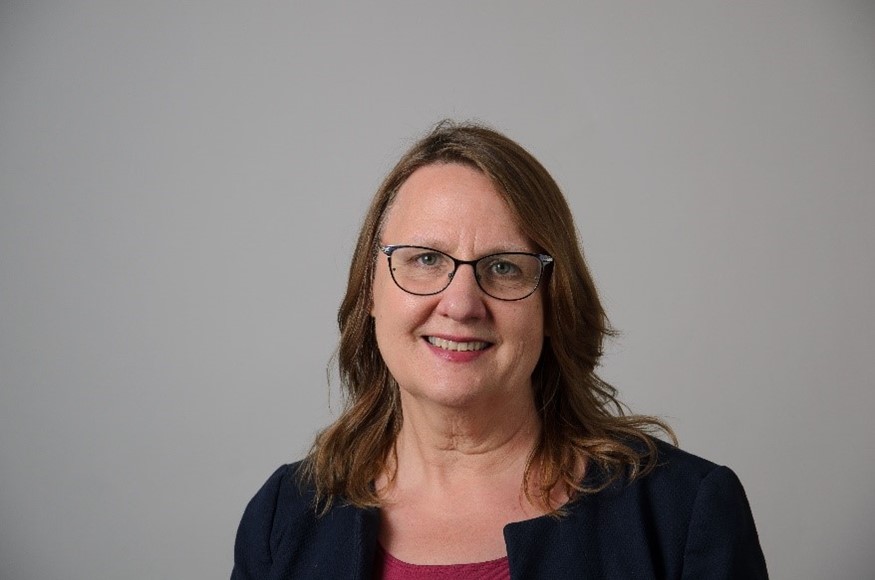
Alexander M. Petersen is an Associate Professor and Graduate Chair in the Management of Complex Systems (MCS) department and the Ernest and Julio Gallo Management of Innovation Sustainability and Technology (MIST) graduate group at the University of California Merced (UCM). He is affiliated with the School of Engineering and serves as a key faculty member driving research and academic programs in complex systems and innovation management. His educational background includes a Ph.D. (2011) and M.A. (2008) from Boston University, and a B.S. (2003) in physics and mathematics from the University of Utah. Prior to joining UC Merced, he was a tenure-track faculty member at the IMT Institute for Advanced Studies Lucca in Italy. Petersen's research focuses on the evolution of large multiscale socio-economic systems by applying concepts and methods from complex systems, statistical physics, management, and innovation science. His work spans Science of Science, Computational Social Science, Complex Systems, Quantitative Finance, and Sports Analytics. He has made significant contributions to understanding research collaboration networks, innovation dynamics, convergence science, and the impact of socio-economic shocks on various systems. His publication record demonstrates a clear trend toward increasingly complex interdisciplinary work, particularly in convergence science and network analysis. His most recent publications (2024-2025) focus on global science structure, disruption metrics, national park systems, and the impact of crises on economic behavior. These works often integrate multiple disciplinary perspectives and leverage large-scale data analysis. NSF award #1738163 for research on convergence science Petersen has advised numerous graduate students, including current PhD student Andrea del Pilar Montaño Ramirez and former students Felber J. Arroyave Bermudez (PhD in Environmental Systems) and Dr. Dong Yang (MCS Postdoctoral Scholar). His research has been supported by competitive grants and has resulted in publications in high-impact journals including Nature Communications, Science Advances, and Research Policy. He is actively involved in developing new academic programs, including upcoming B.A. majors in Management of Innovation, Sustainability & Technology (2025) and Data Science & Analytics (Fall 2024). His lab focuses on complex systems analysis, with current projects examining university digital media networks, disruption metrics in science, and the integration of regional innovation systems. The research group maintains an active presence in the science of science community, regularly presenting at conferences like the Science of Team Science conference (INSciTS).