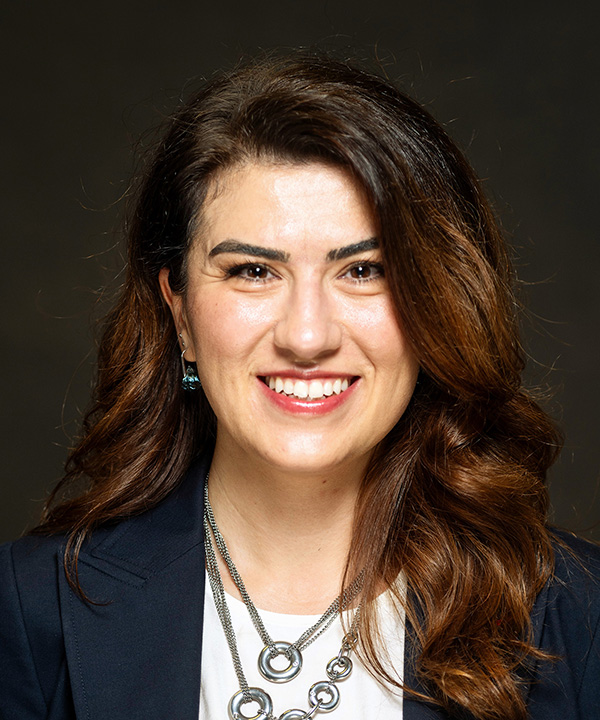
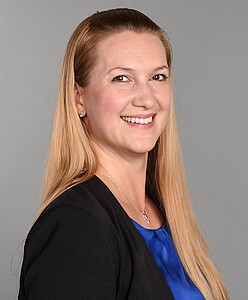
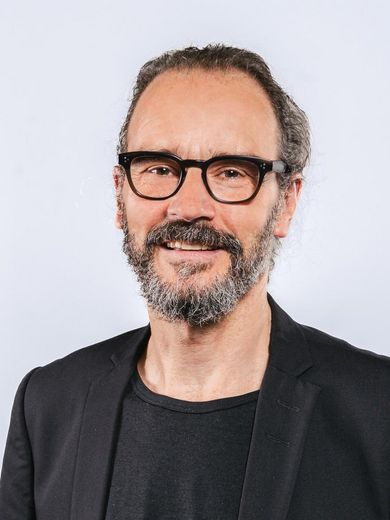
Zeynep Temel is an Assistant Professor at Carnegie Mellon University's College of Engineering, jointly appointed in the Biomedical Engineering and Robotics Institute. She leads the Zoom Lab, focusing on bio-inspired compliant mechanisms for robotic systems. Current research emphasizes adaptable robots for complex environments through mechanical intelligence and embedded control . Key application areas include surgical robotics , search-and-rescue , and micromanipulation . Her work spans bio-inspired design, compliant robotics, and human-centered applications. Recent publications highlight advancements in: Swarm robotics for collaborative exploration Soft actuators using bioplastics and gelatin Dexterous manipulation via delta robot frameworks The Zoom Lab trains students in robotic fabrication and biological modeling, with members transitioning to roles in academia and industry.
Prof. Dr. habil. Katrin Giller leads the Department of Molecular Nutrition Science (140a) at the University of Hohenheim, Garbenstraße 30, Bio Building I, Room 151, Stuttgart. Her research focuses on livestock nutrition, with specific interests in methane mitigation, antioxidant mechanisms, and metabolic syndrome in agricultural animals. Department: Molecular Nutrition Science (140a) Contact: katrin.giller@uni-hohenheim.de Office Hours: By appointment Her work spans nutritional biochemistry , ruminal fermentation , and sustainable livestock systems , often examining interactions between dietary compounds (e.g., spirulina, polyphenols, n-3 fatty acids) and animal physiology. Recent studies investigate antioxidant gene expression , transgenerational metabolic impacts , and feed efficiency . Current advisees include B.Sc. Viola Gauly, Fernando Giugno, Jana Kornherr, Mira Kühn, Daniel Obermüller, and Helen Pötzsch. The department's website details research projects, teaching events, and publications.
Henry Jäger is a Professor in Food Technology at the University of Natural Resources and Life Sciences, Vienna (BOKU) since 2014. Previously, he worked as a Project Manager at Nestlé (2012-2014) and Lecturer at TU Berlin (2012-2017), following his PhD/Postdoc at TU Berlin (2006-2012) and Diploma in Food Technology (2000-2006). His research focuses on electrotechnologies in food processing , particularly pulsed electric fields (PEF) and ohmic heating , for microbial inactivation, food preservation, and quality optimization. He explores applications in plant material processing , gluten-free baking , and novel food preservation methods . His work also addresses edible insect processing for allergenicity reduction and protein recovery. Recent publications (2025-2024) analyze synergies between PEF and ohmic heating, biofilm imitation systems for hygiene validation, and computational models for sterilization processes. These studies span food safety , sustainable processing , and functional food design . Henry Jäger actively contributes to scientific communities, serving on the EFFoST managing board , as scientific advisor for food conferences, and as reviewer for journals like Food Chemistry and Trends in Food Science & Technology . He has organized workshops on PEF applications and contributed to EU food technology initiatives.
Hannah van Zanten is a Full Professor in Earth Systems and Global Change at Wageningen University & Research, specializing in sustainable food systems, regenerative agriculture, and biodiversity conservation. Her work emphasizes circular food systems, livestock production optimization, and environmental impact mitigation. She has received multiple awards, including the Storm-van der Chijs award (2015) and several Best Oral Presentation accolades at academic conferences. Her research spans topics like protein upcycling, soil biodiversity, and the environmental implications of livestock feed. She supervises PhD projects on regenerative agriculture, circular food transitions, and ecosystem services in South American grasslands. Recent projects include redesigning European food systems to enhance food security under climate change and modeling circularity impacts. Key research interests include: sustainable diets, land-use efficiency, and the integration of biodiversity conservation with agricultural practices. She has published extensively on topics like earthworm farming, circular protein systems, and the compatibility of animal-sourced foods with circular principles. Awards: 5 major prizes for academic contributions, including innovation in animal sciences and sustainability. Grants/Projects: Leading 19 active projects, including EU-funded initiatives on sustainable livestock and circular food system modeling. Labs/Teams: Collaborates with interdisciplinary teams on projects like SUSFANS (Sustainable Food Systems) and Re-Livestock (resilient livestock systems).
Prof. Dr.-Ing. Jörg Müssig serves as a Professor at Bremen University of Applied Sciences within Faculty 5 (Department 2), focusing on sustainable composite materials development. His research bridges engineering and environmental science through innovation in natural fiber applications for industrial use. His primary research domains encompass natural fiber composites, biobased materials, and sustainable material systems, with specialized expertise in flax, hemp, and nettle fiber reinforcement. He investigates mechanical properties, interfacial adhesion mechanisms, flame retardancy solutions, and processing techniques like injection molding and filament winding, emphasizing sustainability metrics and biomimetic design principles. Analysis of his 2024-2025 publications reveals dominant themes in natural fiber composite optimization, particularly regenerated cellulose systems and coupling agent-free interfaces. Emerging trends include consumer perception studies of biobased materials and integration of ecological parameters into industrial design processes, reflecting expanding interdisciplinary approaches. Prof. Müssig leads extensive grant-funded projects including edible mushroom mycelium composites (2024-2026), sulfur-based flame retardants (2024-2026), natural fiber sector market analysis across Europe (2024-2025), and marine durability studies (2024-2025), demonstrating sustained research leadership with significant industry and cross-institutional collaborations. His work operates within a robust research ecosystem at Bremen University of Applied Sciences, where his project portfolio indicates leadership of a specialized team focused on sustainable material innovation, though specific lab infrastructure details remain unmentioned in source materials.
Professor Dietrich Darr is a faculty member at Hochschule Weihenstephan-Triesdorf (HSWT), specifically within the Department of Agriculture, Food, and Nutrition. His academic journey includes previous professorship at Hochschule Rhein-Waal (2012-2024) and visiting positions at Universidade de Brasília (2023-2024), Vietnam National University of Forestry (2020), and ICRAF Central Asia office (2018). Dr. Darr's research focuses on sustainable and resilient farming and food systems with particular expertise in agribusiness, corporate management, and sustainable resource utilization. His work prominently features baobab tree applications in African and European food industries, agroforestry systems, non-timber forest products, and sustainable land management. His international research projects span Sub-Saharan Africa, Central Asia, and Southeast Asia. His recent publications reveal strong trends in sustainable value chain development, climate-smart agriculture, and innovative approaches to rural livelihood improvement. The articles demonstrate consistent focus on practical applications of agroforestry systems, analysis of non-timber forest products commercialization, and sustainable land management solutions for smallholder farmers in developing regions. Dr. Darr leads numerous research projects including SUFACHAIN (2022-2025) on sustainable agroforestry value chains in Central Asia, CONFARMED (2024) on edible insects for circular food economy in Uganda, and previously led BAOQUALITY (2019-2022) on baobab quality improvement for food security in Africa. His projects are primarily funded by German institutions including BMBF, BMEL, and DFG. As an active member of professional organizations including ATSAF, EFARD, IUFRO, DeFAF, and EURAF, Dr. Darr contributes to international agricultural research communities with focus on tropical and subtropical agriculture, agroforestry, and forest research.
Wilfried Andlauer is a Professor at the Institute of Life Sciences within HES-SO Valais-Wallis School of Engineering. His research focuses on bioactive compounds , non-thermal food processing , and bioavailability studies , particularly in agricultural by-products like grape cane, walnut press cake, and Spirulina algae. He has developed advanced methods for solid-state fermentation , cold plasma decontamination , and bioactives fingerprinting . Key projects include optimizing microwave-assisted extraction for stilbenoids, analyzing iron absorption from insect flour , and developing microfluidic antioxidant assays . His work integrates nutraceutical research with practical applications in food safety and sustainable processing . Collaborations span Switzerland and Asia , with expertise in analytical chemistry and bioprocessing .
Jinsoo Hwang is a Professor in the Department of Foodservice Management at Sejong University's College of Hospitality & Tourism Management, where he has served since 2016 with progressive promotion to full Professor in 2022. He concurrently holds leadership roles including Head of the Graduate Program of Foodservice Management (2024) and previously led Sejong University's Graduate School of Tourism (2019-2022). Education: Ph.D. in Hospitality Management, Kansas State University (2011) M.S. in Hospitality Management, Florida International University (2007) M.B.A. in Hospitality and Tourism Management, Sejong University (2005) B.L. in Law, Cheongju University (2003) His research centers on service marketing dynamics and technology adoption in hospitality contexts, with particular expertise in consumer innovativeness, brand loyalty, and rapport building. Recent work examines emerging technologies including robot food delivery, facial recognition payments, and smart farm restaurant systems through cross-cultural lenses. His studies frequently apply theoretical frameworks like UTAUT, TAM, and social penetration theory to analyze consumer behavior in airline, restaurant, and golf resort settings. Publication trends reveal consistent high-impact output with 192 SSCI-indexed papers through 2025, averaging 20+ annual publications since 2019. His work predominantly appears in Q1 hospitality journals like International Journal of Hospitality Management (IF=11.7), focusing on technology-service intersections and cross-national consumer behavior comparisons. Key awards: 2024 Highly Cited Researcher (Web of Science) Sejong University Distinguished Professor (2023-2025) Research.com Top 4 Business Scientist in Korea (2024) SciVal Top 3 Author in Korean Business Research (2018-2023) Albert Nelson Marquis Lifetime Achievement Award (2018) Hwang directs the Gwang603 Laboratory and serves as Head of Sejong University's Smart FM Track under the LINC+ industry-university cooperation program. His leadership extends to editorial roles in major hospitality journals where he frequently reviews submissions on technology adoption and consumer behavior. Current research initiatives focus on human-robot service interactions and sustainable foodservice innovations.
Professor Jim Morton serves as Dean of the Faculty of Agriculture and Life Sciences at Lincoln University, New Zealand, while maintaining his position as Professor in the Department of Wine Food & Molecular Biosciences. With a PhD from the University of Canterbury and advanced degrees from the University of Otago, he has established himself as a leading researcher in protein biochemistry with applications to food science and agriculture. His research interests focus on protein modification and proteases , with particular emphasis on meat quality, cataract development in sheep models, and the application of proteomic and metabolomic approaches. Professor Morton has developed innovative research programs examining how proteins change during cooking and processing, with significant work on sheep cataract models that led to novel calpain inhibitors. His current research investigates meat color stability and tenderization processes while applying protein characterization expertise to diverse food and wine projects. Professor Morton's publication record demonstrates consistent high-impact research, with recent work focusing on pulsed electric field technology for meat processing, protein modifications in meat, and bioactive compounds in plant foods. His research shows strong translational value, connecting fundamental biochemistry with practical agricultural and food industry applications. As Dean since 2021, Professor Morton provides leadership for one of New Zealand's premier agricultural faculties while continuing active research supervision and collaboration. His work bridges multiple disciplines including biochemistry, food science, veterinary science, and molecular biosciences, reflecting the interdisciplinary nature of modern agricultural research. Professor Morton has supervised numerous graduate students across diverse topics including edible insects, hemp protein hydrolysates, consumer food behavior, and lamb color stability. His collaborative approach is evident in the wide range of co-authors across his publications, demonstrating engagement with both national and international research communities.
Davide Menozzi is an Associate Professor at the Department of Food and Drug of the University of Parma, specializing in Agri-food Economics. He teaches courses such as Agri-Food Economics and Consumer Behavior across undergraduate and graduate programs in Food Science, Gastronomic Science, and Quality Procurement. His research focuses on sustainability of agri-food systems, consumer behavior regarding novel foods (e.g., edible insects, GMOs), and Mediterranean diet adherence. Education: Bachelor's in Economics (University of Parma, 1999) MSc in Sustainable Development of Agri-Environmental Systems (University of Bologna, 2001) PhD in Agri-food Economics (University of Parma, 2006) Research highlights include EU projects like ALTERNATIVA (alternative proteins), BALANCE (aquaculture sustainability), and STRENGTH2FOOD (sustainable procurement). He has also led national projects ONFOODS and AGRITECH under Italy’s National Recovery Plan. Scientific Awards: Fellow of the European Association of Agricultural Economists (EAAE) Fellow of the Italian Association of Agricultural and Applied Economics (AIEAA) He is Deputy Chairman for the Gastronomic Science and Quality Procurement degree programs and has served on committees for UNESCO’s Parma Creative City of Gastronomy. His lab focuses on consumer-driven innovations in sustainable food systems.
Dr. José Garcia-Bravo is an Associate Professor at the Purdue Polytechnic Institute, Department of Mechanical Engineering Technology, specializing in fluid power systems, additive manufacturing, and smart manufacturing using Industrial Internet of Things (IIoT) technologies. His work bridges applied research with educational innovation, including the development of a miniature electro-hydraulic excavator arm and the Fluid Power Student Club. Education: Ph.D. in Engineering (Fluid Power), Purdue University, 2011 M.Sc. in Engineering, Purdue University, 2006 M.A. in Teaching of Spanish, Purdue University, 2004 B.Sc. in Mechanical Engineering, Universidad de Los Andes, 2002 His research interests span fluid power & motion control, digital twins, reverse osmosis systems, and mixed reality applications in manufacturing. He focuses on optimizing hydraulic systems for heavy-duty vehicles, embedding sensors in 3D-printed components, and advancing water purification technologies. Recent publications highlight innovations in digital hydraulics, bio-based packaging materials, and reverse osmosis efficiency. He has secured patents for 3D-printed lens gratings and processes for additive manufacturing. Scientific Awards: Purdue Polytechnic Outstanding Faculty in Learning Award (2019) Purdue Polytechnic Outstanding Faculty in Engagement Award (2022) Dr. Garcia-Bravo actively engages in globalizing fluid power education, facilitating student exchanges with Latin American countries and contributing to international standards for hydraulic components through ISO committees.
Heath MacMillan is an Associate Professor in the Department of Biology at Carleton University, Faculty of Science. His research focuses on integrative insect physiology, particularly how environmental stressors like extreme temperatures, microplastics, and dietary changes affect molecular, biochemical, and whole-organism performance. Research Themes: Cold tolerance mechanisms, ionoregulatory collapse, microplastic pollution impacts, thermal acclimation physiology, and nutritional ecology for edible insects. Model Systems: Drosophila melanogaster, Gryllodes sigillatus, Aedes aegypti, and tropical butterflies. Techniques: Transcriptomics, metabolomics, in vitro osmoregulation assays, thermal gradient devices, and fluorescent microplastic tracking. His lab collaborates with Environment and Climate Change Canada, Dr. Jennifer Provencher, and Entomo Farms to address both fundamental physiological questions and applied problems in sustainable insect protein production. Current work explores how thermal plasticity and cross-tolerance mechanisms interact with ecological stressors like hypoxia and desiccation. Publications highlight his team's development of the ionoregulatory collapse model for cold tolerance, discovery of microplastic impacts on cricket growth, and characterization of thermal acclimation's role in maintaining central nervous system function. Research integrates molecular mechanisms with ecological predictions about species distribution and abundance under climate change. Lab opportunities emphasize collaborative, interdisciplinary work across physiology, biochemistry, and ecology. Graduate students and postdocs are encouraged to develop independent projects within the lab's existing frameworks. Undergraduates gain hands-on experience through volunteer work and independent studies.
Prof. Remko Boom is a Full Professor of Food Process Engineering at Wageningen University & Research. His research focuses on sustainable food systems, plant-based alternatives, and advanced food processing technologies such as 3D food printing, membrane filtration, and protein functionalization. Key areas include edible robotics, animal-free cheese alternatives via artificial casein micelles, and functional ingredient extraction from plant and insect-based sources. He collaborates globally on biorefinery processes and contributes to edible robotic systems through material science innovations. Education Background: PhD in Food Technology (exact details not specified) Master's/Undergraduate degrees in relevant engineering disciplines (not explicitly stated) Research Interests: Prof. Boom's work spans food process engineering with emphasis on: - Development of plant-based protein ingredients using mild fractionation techniques - 3D-printed food materials with tailored mechanical properties - Electrophoretic and membrane-based separation technologies for food components - Engineering edible casein micelles for cheese analogues - Biodegradable robotics using food-grade materials Recent Research Trends: Publications from 2024-2025 highlight advancements in: - 3D-printed starch cryogels and protein-based composites - Oleosome extraction and encapsulation of bioactive compounds - Functional characterization of artificial casein micelles - Edible robots powered by Marangoni propulsion Awards & Recognition: No specific awards listed in available data, though his work has received significant media attention including features on edible robotics and sustainable food innovations. Advising & Collaboration: Supervising 87+ PhD projects including work on: - Electrohydrodynamic drying - Brewer's spent grain valorization - Recombinant protein purification Active in industry partnerships for scaling-up electrophoretic separation and 3D food printing technologies Labs & Teams: Leads research groups focused on: - Advanced Food Processing Technologies - Sustainable Ingredient Development - Biorefinery Applications in Food Systems
Associate Professor Myfany Turpin is an Associate Dean of Indigenous Strategy and Services at the Sydney Conservatorium of Music, University of Sydney. Her research focuses on ethnomusicology, linguistics, and ethnobiology, with a particular emphasis on Central Australian Indigenous cultures. She collaborates extensively with Indigenous communities to document and revitalize endangered languages and performance traditions. Education & Research: PhD in Musicology (2005) Specialization in Kaytetye and Warlpiri language documentation Leader of ARC-funded projects investigating dingo lexicon and traveling songs Research Interests: Turpin explores intersections between language and music, including poetic meter in Aboriginal song-poetry and biocultural knowledge embedded in ceremonial practices. She develops innovative tools like the Kaytetyemoji app to support language revitalization. Grants & Collaborations: ARC Discovery Project (2025-2028): Dingo Lingo ARC Indigenous Discovery Project (2024-2029): Recirculating Travelling Songs Modularised Cultural Heritage Archives (2022-2024) Awards: Received Honorable Mention from International Council for Traditional Music (2021) for work on Warlpiri seed ceremonies. Labs & Teams: Co-director of Sydney Southeast Asia Centre and member of Charles Perkins Centre. Collaborates with Batchelor Institute and Australian Institute of Aboriginal and Torres Strait Islander Studies.
Brian Fisher is a Curator of Entomology and Patterson Scholar at the California Academy of Sciences. His work focuses on ant biodiversity in Africa and Madagascar, integrating taxonomy, evolution, and conservation. Fisher leads initiatives like Insects and People of the Southwest Indian Ocean (IPSIO) , which promotes edible insect farming to address malnutrition and protect habitats. His research emphasizes leveraging ants as ecological indicators and developing tools for biodiversity monitoring. Education: Earned a biology degree from the University of Iowa, with early fieldwork in Panama and Costa Rica. Transitioned to entomology during studies at the Smithsonian Tropical Research Institute. Research Interests: Ant diversity and evolution, Madagascar’s ecosystems, and applying insect farming to solve food insecurity. Projects include the Breakfast Before Conservation initiative, which scales cricket farming to reduce lemur hunting and deforestation. Collaborations: Partnerships with Madagascar Biodiversity Center, Entomo Farms, and international scientists. Spearheads genomic and metabarcoding projects to track insect biodiversity across 50 Malagasy sites. Labs/Teams: Fisher Lab at the California Academy of Sciences and Madagascar-based research networks. Develops open-access resources like AntWeb and AntCat for global ant documentation.