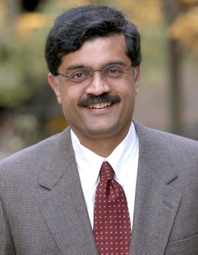
Prof. Dr. Michael Gröschel is a Professor of Business Informatics at the Faculty of Computer Science, Mannheim University of Technology. His expertise spans Business Process Management (BPMN, Process Mining), Digital Transformation, and innovative Business Models. He teaches courses on BPM, project management, and e-business, often collaborating with industry clients through student projects. As a consultant, he specializes in BPMN training and IT-driven business strategy. His work emphasizes practical applications of IT tools like RPA and low-code platforms. Recent publications focus on RPA bot performance evaluation, AI in automotive trade, and business model-IT alignment. Prof. Gröschel’s research bridges academic insights with real-world challenges, particularly in leveraging technology for business innovation. He has authored books and articles on business intelligence tools, mobile business strategies, and digital customer care. His consulting services include executive coaching for academic career advancement and enterprise IT management best practices. Office: Building A, Room 007c | Phone: +49 621 292-6764 | Professional website available for further engagement opportunities.
Shannon D. M. Moore is an Associate Professor at the Faculty of Education , University of Manitoba , where she teaches media education , social studies education , social justice pedagogy , and research methodologies. Her work critically examines the impacts of neoliberal reforms on public education, hockey culture , and gender-based sexual violence in schools. Education: 2014 — PhD, University of British Columbia 2008 — MA, University of British Columbia 2000 — BEd, University of British Columbia 1999 — BA, University of British Columbia Her research focuses on media literacies , neoliberalism , and creative pedagogies . Recent projects include the SSHRC-funded study We Interrupt this Programming , which analyzes institutional responses to gender-based violence, and co-planning the Hockey Conference 2025 in Winnipeg. She also serves as managing editor of the Manitoba Social Science Teachers' Association Journal and co-hosts the podcast Public Good . Recent publication trends include critiques of EdTech neoliberalism , education privatization , and homophobic/transphobic discourses in mainstream media. Her work bridges critical pedagogy with policy analysis and cultural studies , emphasizing the intersection of public education and social justice . Scientific Awards: Invited to testify before the House of Commons' Standing Committee on the Status of Women (2024) for her research on hockey culture and gendered violence Community & Leadership: As a founding member of People for Public Education and organizer of the Hockey Conference 2025, she advocates for systemic resistance to neoliberal education policies and works to amplify marginalized voices in educational discourse.
Dr. Omkar Prabhakar Dastane is a Senior Lecturer and Director of Postgraduate Studies at the Malaysia School of Business, Monash University Malaysia. He holds a PhD in Business from Curtin University and certifications including Certified Management and Business Educator (CMBE) from CABS, UK, and HRDF-approved trainer status in Malaysia. His research focuses on technological impacts on businesses, digital consumer behavior, and customer value perception, with publications in A-ranked journals like the Journal of Retailing and Consumer Services and Asia Pacific Journal of Marketing & Logistics . He has secured MYR 157,549 in research grants and received notable awards like the Best Paper Awards (2017/2018) and Emerald Literati Award (2024). Dr. Dastane has held leadership roles including Head of MBA Programs and Head of Postgraduate Studies at top-tier institutions. He actively contributes to editorial roles for journals like Arab Gulf Journal of Scientific Research and reviews for SSCI/SCIE-indexed publications. His teaching emphasizes strategic branding and services marketing, integrating AR/VR tools for immersive learning. He has also led educational visits across ASEAN countries. His research interests span metaverse applications in business, immersive technologies, and contemporary consumer behavior trends. Recent work explores AI-driven services, live-stream commerce, and digital transformation's role in achieving UN SDGs. He has advised on over 200 research projects and secured multiple teaching grants including the 2025 Learning & Teaching Grant.
Dustin Tingley is a Professor of Government at Harvard University and holds a joint appointment at the Harvard Kennedy School of Public Policy . He serves as Interim Vice Provost for Advances in Learning and directs the Data Science and Technology Group and the Harvard Initiative on Learning and Teaching . He earned a PhD in Politics from Princeton and a BA in political science and math from the University of Rochester. Key Roles : Deputy Vice Provost (past), Chair of Harvard's Standing Committee on Climate Education Research Focus : Climate change politics, data science, causal inference, and international political economy His recent work explores the political economy of climate transitions , public opinion on carbon policies , and machine learning applications in social sciences . He co-founded ABLConnect , a repository for active learning pedagogy, and organized conferences on causal mechanisms , teaching with AI , and equitable classrooms . Awards : Gladys M. Kammerer Award (2015) for co-authored book Sailing the Water’s Edge Notable Publications : Uncertain Futures: How to Unlock the Climate Impasse (2023, with Alex Gazmararian) The Political Economy of the Clean Energy Transition (2025)
Michael D. Smith is a Professor of Information Technology and Public Policy at Carnegie Mellon University, with joint appointments at Heinz College and Tepper School of Business. His research employs economic and statistical methods to analyze digital markets, focusing on firm and consumer behavior in online environments. Education: B.Sc. in Electrical Engineering (Summa Cum Laude), University of Maryland M.Sc. in Telecommunications Science, University of Maryland Ph.D. in Management Science and Information Technology, MIT Research Interests: Professor Smith investigates the economics of digital information markets, consumer behavior in online platforms, and policy implications of technological disruption. His work spans copyright enforcement, digital advertising, and the impact of piracy on legal media consumption. Publications: His recent studies examine AI’s role in copyright policy, effectiveness of anti-piracy measures, and market dynamics in digital streaming. Articles often bridge economics, computer science, and public policy. Awards: National Science Foundation CAREER Award Multiple Best Teacher Awards at CMU Recognized as a Top 100 Emerging Engineering Leader (NAE, 2020) Best Paper Runner-Up (Information Systems Research, 2006) Editorial and Industry Roles: Served as Senior Editor at Information Systems Research and Associate Editor at Management Science . Prior to academia, he worked in telecommunications at GTE and Booz Allen Hamilton, earning a patent for AI applications in network design. Contact: mds@cmu.edu | Office: 4800 Forbes Avenue, Hamburg Hall 2204, Pittsburgh PA 15213
Tariq Fancy is Lecturer in Management at Stanford Graduate School of Business, specializing in critiques of sustainable finance. As former CIO for Sustainable Investing at BlackRock, his work challenges ESG efficacy as a driver of systemic change. His viral essay series analyzes financial industry incentives and advocates for regulatory reforms to combat climate change and inequality. Fancy argues market-based sustainability initiatives often serve as 'dangerous placebos' delaying policy action. He founded Rumie, an edtech nonprofit delivering digital learning to underserved communities globally.
Bruna Damiana Heinsfeld serves as Assistant Professor of Learning Technologies within the Department of Curriculum & Instruction at the University of Minnesota's College of Education and Human Development. Her research critically examines the intersections of technology, society, and education through the lens of Critical Studies of Education and Technology (CSET), with emphasis on power dynamics and social justice implications. Her academic credentials include: Ph.D. in Interdisciplinary Learning and Teaching (Learning Design and Technologies concentration) from UTSA M.A. in Education (Digital Languages, Media and Education concentration) from PUC-Rio, Brazil Multiple Postgraduate Certificates from Brazilian institutions: Media Discourse Analysis, Ontology and Epistemology, Philosophy/Sociology/Social Sciences, and Distance Learning Management B.A. in English Language and Literature from UERJ, Brazil Dr. Heinsfeld's research program centers on critical discourse analysis of educational technology narratives across corporate, policy, and educational contexts. She investigates how technological discourses are constructed and operationalized, particularly regarding digital equity, participatory exclusion, and the sociopolitical dimensions of technology adoption. Her methodological approach combines Critical Discourse Analysis (CDA) with critical pedagogy to unpack ideological, cultural, and economic factors shaping educational technology implementations. She examines epistemological foundations of technological beliefs and challenges neoliberal narratives in EdTech through rigorous deconstruction of policy documents and marketing materials. Analysis of her recent publications (2019-2023) reveals consistent focus on corporate influence in educational technology, with particular attention to Google and Microsoft's marketing narratives, pandemic-era remote learning disparities, and Latinx student experiences. Her work demonstrates how technological solutions often reinforce existing inequalities through participatory exclusion mechanisms, while her policy analyses expose contradictions between equity rhetoric and actual implementation. Recurring methodological threads include discourse analysis of educational landscape reports and critical examination of public policy frameworks. No scientific awards were documented in the provided materials. As an advisor, Dr. Heinsfeld cultivates a supportive environment grounded in social justice principles, emphasizing critical consciousness development and student autonomy. Her advising philosophy centers on accessible feedback, interdisciplinary exploration, and preparation for meaningful societal engagement. She teaches foundational courses including CI 4311W Technology and Ethics in Society (examining algorithmic bias, privacy concerns, and AI ethics) and CI 8147 Critical Discourse Analysis in Educational Research (focusing on language-power dynamics in educational contexts). While specific research laboratories aren't detailed, her collaborative work spans international contexts with Brazilian institutions and U.S. colleagues, particularly evident in joint publications with researchers like V. Marone and M. Pischetola. Her research trajectory indicates ongoing critical engagement with emerging technologies like AI in education policy, as evidenced by upcoming 2025 conference presentations.
Venkatram Ramaswamy is the Hallman Fellow of Electronic Business and Professor of Marketing at the Ross School of Business, University of Michigan. He is a globally recognized thought leader in innovation, strategy, and co-creation, with expertise spanning marketing, branding, IT, and organizational dynamics. His work emphasizes the transformative potential of co-creating value with stakeholders across industries and sectors. Education: PhD in Marketing, The Wharton School, University of Pennsylvania (1989). Research Interests: Venkat’s work focuses on co-creation paradigms, experience innovation, digital ecosystems, and stakeholder collaboration. He pioneered the concept of co-creation as a revolutionary approach to business value, detailed in his seminal books The Future of Competition (2004) and The Power of Co-Creation (2010). His recent work explores AI-human interactional creation and platformed ecosystems. Key Contributions: He has advised global firms like Mahindra, Hitachi, and Infosys on co-creation strategies. His frameworks integrate strategic risk management, digital platforms, and lived-experience ecosystems to drive sustainable value. He has delivered keynotes at events worldwide, including the Drucker Forum and InnovationsKongress. Awards: Recipient of the MIT-PwC Award (2003), Emerald Literati Award (2009), and Best Speaker Award at the Baptie Marketing Focus (2005). Grants & Labs: Collaborations with institutions like the International University of Japan (IUJ) and involvement in initiatives like the India Philanthropic Co-Creation Project reflect his commitment to systemic social impact. His research is supported by grants exploring digitalized societal ecosystems and wellbeing-focused platforms.
Ira Chatterjee is an Assistant Professor of Management and Organization at the School of Business and Economics, Vrije Universiteit Amsterdam. She holds a Ph.D. in Entrepreneurship from the Hanken School of Economics (2022) and an MBA from the Indian Institute of Foreign Trade, New Delhi. With 12 years of industry experience before academia, her research focuses on entrepreneurship, social innovation, and organizational change in emerging markets, particularly in low-income settings. She currently supervises theses at Upgrad Edtech UK and serves as a Global Professor of the Practice at Golden Gate University. Education: Ph.D. in Entrepreneurship, Management, and Organization, Hanken School of Economics (2022) MBA, Indian Institute of Foreign Trade, New Delhi Research Interests: Her work explores how entrepreneurship drives social and economic development through social innovations and organizational change. Key areas include women’s entrepreneurship, well-being at the base of the pyramid, and the role of intermediaries in qualitative research. She also investigates structuration theory and its applications in organizational studies. Advising & Ancillary Roles: Thesis Supervisor at Upgrad Edtech UK (2024–2026) Global Professor of the Practice at Golden Gate University (2025–present) Labs/Teams: No specific lab mentioned, but her research collaborations span international institutions, including the University of Chester and San Francisco-based universities.
Dr. Sylvie Albert is a Professor of Strategy and Leadership at the University of Winnipeg, former Dean of the Faculty of Business and Economics, and past Associate Dean of Laurentian University's Faculty of Management. With 15 years in academia, she has extensive experience in municipal/provincial governance, management consulting, and economic development. A leading expert in smart cities and digital urban innovation, her work bridges academia, policy, and practice through roles like Senior Advisor to Infrastructure Canada's Smart Cities Challenge and lead jurist for the Intelligent Community Forum. Her research focuses on sustainable urban development, digital governance, and community telecommunication networks, informed by activism on local-to-international boards and think tanks. She is authoring her fourth book on smart cities and has led projects nationwide through her consultancy, Planned Approach Inc. Education & Experience: 12 years in government roles 10 years in management consulting Founder/owner of Planned Approach Inc. (economic development consulting) Leadership roles in Northern Ontario economic development corporations Research Interests: Her interdisciplinary work examines strategy development , entrepreneurship , innovation ecosystems , and the intersection of digitalization with urban policy. Key themes include: Smart/intelligent/sustainable city frameworks Community wireless networks and ICT adoption Online learning pedagogy in business education Labour market barriers for immigrant professionals Grants & Advising: Her advisory contributions include: Global Forum on Digitalization in Europe (yearly participation) Infrastructure Canada's Smart Cities Challenge (Senior Advisor) UN Voluntary Local Reviews methodology development Her consultancy work emphasizes economic development projects and smart community planning across Canada. Labs & Collaborations: Engaged with global networks like the Intelligent Community Forum and cross-sectoral partnerships to advance urban innovation, digital equity, and participatory governance models.
Dr. Ben Williamson is a Senior Lecturer in Digital Education at the University of Edinburgh's Moray House School of Education and Sport, affiliated with the Institute for Education, Community & Society (IECS) and the Centre for Research in Digital Education. His work critically examines how digital technologies, data infrastructures, and biometric/neurotechnological practices shape educational futures. Key areas of focus include the role of venture capital in education, algorithmic governance, and the privatization of educational systems. His research has been funded by the Leverhulme Trust and the Economic and Social Research Council (ESRC). Notable publications include Big Data in Education: The Digital Future of Learning, Policy, and Practice (2017). He maintains the Code Acts in Education blog and is active on Twitter as @BenPatrickWill. Williamson’s research explores intersections between biology and education (e.g., educational genomics), financial markets in schooling, and the governance of educational data by tech corporations. He critiques how platforms like Google Classroom and investors such as Amazon reshape educational practices and policies. His work emphasizes sociotechnical and infrastructural analyses of educational change. He supervises PhD students focusing on data-centric education policies, digital technology in education governance, and emerging biometric sciences in learning contexts. His articles analyze global EdTech dynamics, pandemic-driven privatization, and the ethical implications of biosocial education. Williamson’s affiliations include the Edinburgh Futures Institute, where he collaborates on future-oriented educational research. He has contributed to policy innovation labs and studies the impact of corporate actors like Pearson and the Chan Zuckerberg Initiative on educational systems.
Dr. Doaa Shohaieb is a Teaching Fellow in Marketing at Aston Business School (Aston University), part of the College of Business and Social Sciences. She specializes in Marketing Psychology, Marketing Strategies, and Tourism Marketing. Her research bridges marketing, tourism, and business history, with a focus on crisis management in tourism sectors. She holds a PhD in Management from the University of York (2018) and a PG Cert in Higher Education (2022). Education: PhD in Management (Marketing), University of York, 2018 PG Cert in Higher Education, University of Portsmouth, 2022 Postgraduate Studies in Management, Menoufia University, 2007 BSc (Hons) in Management, Menoufia University, 2006 Research Interests: Dr. Shohaieb’s work explores consumer behavior, marketing strategies in crises, and the integration of AI in education. Her recent studies include corporate governance, ESG initiatives, and online learning challenges for mature students. She co-founded the Nations of York Collective to promote community cohesion and actively organizes the global Marketing Research Camp at Aston University. Awards: Fellowship in the Higher Education Association (FHEA), 2022 Advising & Grants: External examiner at Coventry University, London Metropolitan University, and the University of Hertfordshire. She has secured research funding and presented at international conferences. Labs/Teams: Organizes the Marketing Research Camp, a global academic platform, and co-founded the Nations of York Collective.
Dr. Michael Flavin is a Professor at King’s College London, holding the position of Reader in Global Education at the African Leadership Centre within the School of Global Affairs. He earned a degree, three master’s degrees, and two doctorates: one in 19th-century literature (University of Kent, 1999) and another in Education with a focus on technology-enhanced learning (Open University, 2014). His work bridges education technology, disruptive innovation, global leadership, and 19th-century literature. Flavin’s research spans technology-enhanced learning strategies, leadership in conflict contexts (e.g., Northern Ireland’s Troubles), and the sociopolitical dimensions of higher education. His 2018 work on technology-enhanced learning was a runner-up in the ALT Research Project of the Year award. He has authored numerous books, including novels like The Voice Hearer (2024) and One Small Step (2022), and edited Research in Learning Technology . He reviews for major publishers like Palgrave Macmillan and Routledge. His recent publications analyze leadership failures in Irish paramilitary groups, neoliberal values in university prospectuses, and the evolution of learning technology research. Flavin’s interdisciplinary approach integrates literary analysis, policy critique, and educational innovation.
Dr. Alexa Fox is an Associate Professor in the Department of Marketing at the College of Business, The University of Akron, where she teaches undergraduate and graduate courses in Social Media Marketing, Digital Marketing, and Consumer Behavior. She earned her Ph.D. in Business Administration (Marketing) from The University of Memphis, and holds an MBA and BBA from The University of Akron. Ph.D., Business Administration (Marketing), The University of Memphis M.B.A., The University of Akron B.S.B.A., The University of Akron Her research centers on digital marketing, online privacy, and sharenting, with a focus on how consumers, particularly parents, share children's information online. She investigates the psychological and emotional dimensions of consumer behavior through physiological measurement and explores the ethical implications of digital marketing practices. Her work bridges marketing, public policy, and consumer well-being, with a strong emphasis on responsible research. The recent publications of Dr. Fox reflect a cohesive and impactful research agenda centered on digital consumer behavior, privacy, and emotional responses. Her work spans topics such as sharenting, AI in consumer products, ad blockers, social media fatigue (e.g., Fexit), and bereavement marketing. These studies employ diverse methodologies including physiological measurement, surveys, and content analysis, and are published in high-impact journals across marketing, psychology, and policy. Dr. Fox has received numerous scientific honors, including: The University of Akron’s 2024–2025 Outstanding Researcher—Early Achievement in Research Award College of Business Dean's Service Excellence Award (2025) Best Reviewer Award, International Journal of Advertising (2023) AMA-EBSCO-RRBM Award for Responsible Research in Marketing (2022) Dean’s Research Excellence Award (2020) Outstanding Paper, Journal of Consumer Marketing (2019) She has secured multiple research grants, including principal investigator roles on projects related to sharenting and children's digital well-being, funded by The University of Akron and the Association for Consumer Research. She mentors students and serves as Faculty Advisor for honors programs and student organizations. Her service includes leadership in curriculum development, faculty mentoring, and university committees. Dr. Fox is actively involved in academic and public discourse. She serves on the editorial review boards of five top marketing journals, including the Journal of Public Policy & Marketing and Journal of Marketing Education . She also contributes to public understanding through media engagements with Forbes, PBS, and The Washington Post on topics like sharenting and digital privacy.
J.F. Matos is a Professor at the Faculty of Social Sciences, Education and Administration (FCSEA) of Lusophone University, Portugal. His work focuses on education, pedagogy, teacher training, and digital education , with a strong emphasis on integrating technology into teaching practices and curriculum design. Education: PhD in Mathematics Education, University of Lisbon (1988–1991) Research Interests: Matos is active in research methodology, educational technology, virtual reality pedagogy, and policy analysis . His projects like ReMASE and EDU-LAB explore innovative frameworks for teacher training, work-based learning, and labor market alignment. Scientific Output Trends: Recent work includes immersive virtual reality pedagogical models, digital textbook implementation in Madeira, and collaborative research on educational methodologies in Portugal. His publications span peer-reviewed journals, commissioned reports, and books , reflecting interdisciplinary collaborations. Projects: EDU-LAB (2022–2027): Focus on work-based learning and investment policy. ReMASE (2022–2023): Analyze research methods in advanced education studies. Collaborations: Matos works with institutions like the European Research Executive Agency and COFAC , leveraging international networks to address educational challenges in Portugal and beyond.