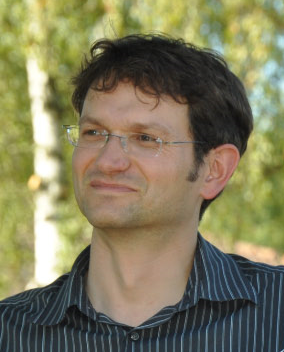
Andy Ball is a Distinguished Professor in the School of Science at RMIT University, specializing in environmental microbiology and biotechnology. He leads the ARC Training Centre for the Transformation of Australia’s Biosolids Resource and has held key roles at institutions including the University of Essex and Flinders University. His research focuses on bioremediation, organic waste treatment, and environmental pollution solutions, with over 300 peer-reviewed publications and significant industry collaboration. Andy's academic career spans 30 years, with roles such as Director of the Centre for Environment and Society at Essex and Director of Flinders Bioremediation. He has attracted >$22M in research grants, particularly in applied environmental microbiology. His awards include the Royal Society of Victoria Medal (2021) and RMIT Research Excellence Award (2018). Research interests emphasize sustainable remediation of contaminated environments, leveraging microbial ecology and biotechnology. His teaching spans environmental science and biotechnology programs at RMIT. Andy advises on projects addressing bioremediation, bioenergy, and pathogen survival, with active collaborations with industries like Shell and Melbourne Water.
Ian Bradley is an Assistant Professor in the Department of Civil, Structural and Environmental Engineering at the University at Buffalo, State University of New York. His research focuses on creating sustainable biological processes to address needs in engineered and natural systems for water and wastewater treatment and resource recovery. Education: PhD in Environmental Engineering, University of Illinois at Urbana-Champaign (2017) MS in Environmental Engineering, University of Illinois at Urbana-Champaign (2011) MS in Civil Engineering (Structures), University of Illinois at Urbana-Champaign (2010) Research Interests: Dr. Bradley specializes in microalgal-based nutrient recovery, wastewater surveillance for public health monitoring, PFAS degradation using nanomaterials, and sustainable resource recovery systems. His work integrates biological processes with environmental engineering to optimize wastewater treatment efficiency and develop predictive models for water quality and health outcomes. Publications: His recent research includes advancements in microalgal cultivation (EcoRecover process), wastewater-based epidemiology for SARS-CoV-2 tracking, and computational enzyme design for PFAS remediation. These studies demonstrate interdisciplinary expertise spanning environmental engineering, biotechnology, and public health analytics.
Professor Lorraine Maltby , OBE, is a distinguished academic at the University of Sheffield , specifically within the School of Biosciences and the Department of Animal and Plant Sciences . She currently serves as the Deputy Vice-President for Research at the university (2017–2022). With a career spanning over three decades at the University of Sheffield, she has held various significant roles including Head of the Department of Animal and Plant Sciences (2008-2012) and progression from Lecturer to Professor of Environmental Biology (2004). PhD – University of Glasgow (1984) BSc – University of Newcastle (1981) Research Interests: Professor Maltby is a leading expert in freshwater ecology and ecotoxicology , focusing on the impacts of anthropogenic activities on freshwater ecosystems. Her research examines how pollution and climate change affect these delicate environments and the ecosystem services they provide. She aims to develop a mechanistic understanding of key ecosystem services and the ecological processes that underpin them, particularly how they are affected by human inputs and activities. Her recent publications reflect her research focus on topics such as spatial variation in macroinvertebrate sensitivity to chemicals, linking ecotoxicity to ecosystem service damage , and heterogeneity in biological assemblages for chemical risk assessment. Scientific Awards and Recognition: Officer of the Most Excellent Order of the British Empire (OBE) for services to Environmental Biology and Animal and Plant Sciences (2020) Elected Fellow of the Royal Society of Biology (2021) Elected Fellow of the Freshwater Biological Association (2019) Portrait of a Woman Exhibition (2017) Elected Fellow of the Society of Environmental Toxicology and Chemistry (2016) Society of Environmental Toxicology and Chemistry Environmental Education Award (2009) Society of Environmental Toxicology and Chemistry Exceptional Service Award (2005) Professional Activities: Professor Maltby has significant leadership and service roles in her field, including: Chair of UK-SCAPE Programme Advisory Board Chair of Irish Research Council COALESCE International Review Panel Member of NERC peer review panels Member of European Centre for Ecotoxicology and Toxicology of Chemicals Scientific Committee (2010-) Member of European Food Safety Authority Stakeholder Bureau (2023-) Member of SETAC Panel on Chemicals Management (2023 - )
Professor Bing-Jie (Bruce) Ni is an Adjunct Professor at the University of Technology Sydney (UTS) within the School of Civil and Environmental Engineering and a full Professor at UNSW Sydney. He is an internationally recognised leader in environmental engineering, wastewater treatment, greenhouse-gas mitigation, microplastics fate, electrocatalysis and sustainable energy systems. Education PhD in Environmental Engineering, University of Science and Technology of China, Hefei (2005–2009) Research Interests Professor Ni’s research integrates process engineering, microbial biotechnology, materials science and mathematical modelling to develop sustainable technologies for high-efficiency pollutant removal, minimal carbon footprint and maximal energy recovery from wastewater. He is a global pioneer in: Modelling and control of nitrous oxide (N₂O) and methane (CH₄) emissions from wastewater systems, Micro- and nano-plastics ecotoxicity and mitigation in anaerobic digestion, Transforming sewage sludge into high-value liquid bio-energy (medium-chain fatty acids and long-chain alcohols), Designing cost-effective electrocatalysts from natural minerals for green hydrogen production and wastewater electrolysis. Research Output & Impact Over the last decade he has published 2 research books, 30 book chapters and >400 refereed journal papers , including 35 in Environmental Science & Technology and 85 in Water Research . His work has influenced global policy: the IPCC adopted his nitrous-oxide-emission model in 2019 to revise national greenhouse-gas inventories for the first time in 13 years. Awards & Recognition ARC Future Fellowship & ARC DECRA Fellowship Clarivate Analytics Highly Cited Researcher (Web of Science) Royal Society of Chemistry Highly Cited Researcher (2020–present) Mendeley Data Top 2 % Cited Researchers worldwide Listed among “Australia’s Most Innovative Engineers” (Engineers Australia, 2018) 50+ additional awards including Scopus Young Researcher Award, South Australian Water Awards, UQ Research Excellence Awards, and Outstanding Doctoral Dissertation Awards. Research Funding & Leadership He has secured ≈ AUD $10 million in competitive funding (six major ARC grants plus >20 government, university and industry projects). He serves as: Lead Guest Editor, Water Research Editorial Advisory Board, Environmental Science & Technology Associate Editor for Journal of Cleaner Production , Environmental Chemistry Letters , Environmental Research , Journal of Environmental Management Editorial Board member for five additional high-impact journals. Teaching & Supervision At UTS he teaches Renewable Energy Technologies , Environmental and Sanitation Engineering , Process Dynamics and Control , and Water and Wastewater Treatment . He is available to supervise Masters and PhD students in environmental biotechnology, process modelling and sustainable energy systems. Laboratory & Commercial Translation He heads active research teams at both UNSW and UTS and is the inventor of >10 granted patents , some of which are currently being commercialised to deliver real-world impacts in greenhouse-gas-neutral wastewater treatment and renewable energy production.
Henrik Rasmus Andersen is a Professor at the Department of Environmental and Resource Engineering, Water Technology & Processes at the Technical University of Denmark (DTU). His research focuses on water treatment processes, particularly the occurrence, transformation, and removal of micropollutants like pharmaceuticals and hormones. Key Research Areas: Chemical analysis, bioassays, ozonation, biofilter optimization, by-product profiling, and advanced oxidation processes. Projects: Leads initiatives like BIZON (ozone technology for fish farms) and Sustainable Industrial Laundry Wastewater Treatment , emphasizing sustainable solutions. Collaborations: Works with institutions such as University of Copenhagen and industry partners on municipal and industrial wastewater challenges. Education: Master of Science in Environmental Chemistry from Copenhagen University (1998).
M.T.O. (Chiel) Jonker is an Assistant Professor at the Faculty of Veterinary Medicine , Utrecht University , affiliated with the Institute for Risk Assessment Sciences (IRAS) and its Toxicology division . He specializes in exposure assessment of hydrophobic organic chemicals (e.g., PFAS , PAHs , PCBs ), focusing on sorption processes , bioaccumulation dynamics , and passive sampling techniques in both in vivo and in vitro settings. His research emphasizes methodological innovation for high-quality chemical analysis (GC-MS, LC-MS) and environmental risk assessment . Recent work includes PFAS degradation , sediment toxicity testing , and temperature/salinity effects on contaminant partitioning. His 2018-2024 publications highlight passive sampling calibration , mechanistic toxicity models , and bioavailability prediction using polyoxymethylene and silicone rubber samplers .
Professor Awadhesh N. Jha is a Professor in Genetic Toxicology and Ecotoxicology at the School of Biological and Marine Sciences , University of Plymouth, UK. He has been a leading figure in environmental toxicology since joining the university in 1996, rising to full professorship in 2010. He leads the Environmental and Applied Biology Research Group and the Genetic Toxicology and Ecotoxicology Research Group, and served as REF UoA6 Coordinator (2014–2022). His educational background includes a PhD in Radiation Cytogenetics from Banaras Hindu University, India (1989), followed by post-doctoral work at Leiden University, Netherlands, and a role at ICI/Zeneca’s marine toxicology lab before transitioning to academia. Professor Jha’s research focuses on the genotoxic and ecotoxic impacts of environmental stressors such as radionuclides, engineered nanoparticles, PAHs, and emerging contaminants on aquatic organisms. He employs multidisciplinary and innovative methodologies, including in vitro models like fish cell spheroids (‘Virtual Fish’ project), to assess DNA damage, develop biomarkers, and reduce reliance on live animal testing. His work integrates molecular biology, chemistry, and environmental science to evaluate risks to marine ecosystems and human health. The recent research articles reflect a strong trend in marine pollution, radiation biology, and environmental risk assessment , with increasing emphasis on emerging issues like tritium release from nuclear facilities, AI-assisted landfill risk modeling, and sunscreen toxicity. His studies often involve international collaborations and real-world policy implications. Scientific Awards and Recognitions: Jim Parry Award, UKEMS (2021) Fellow of the Royal Society of Biology (FRSB, 2015) VC’s World Class Researcher Award Finalist (2010, 2012) Plymouth Pioneers Recognition UK Nominated Expert, UN WOA III (2023) Supervision and Grants: Professor Jha has supervised 26 PhD students to completion and mentored over 10 post-doctoral researchers. He has led major funded projects including TRANSAT (€5M, Horizon 2020), SPHERTOX , and TITANS , funded by EU, NERC, BBSRC, IAEA, and industry partners like AstraZeneca and Unilever. His work directly informs environmental policy and nuclear safety regulations. Laboratories and Teams: He leads the Genetic Toxicology and Ecotoxicology Research Group and is central to the Environmental and Applied Biology Research Group at Plymouth. His team collaborates internationally with institutions in France, Italy, Spain, Brazil, and India, and contributes to the South West Nuclear Hub. The lab specializes in advanced analytical methods, comet assays, and 3D cell culture models.
Professor Frederic Coulon holds the position of Professor of Environmental Chemistry and Microbiology at the Cranfield Water Science Institute, part of Cranfield University's School of Management. His work focuses on transdisciplinary environmental science, including soil and water chemistry, bioremediation, wastewater treatment, and risk assessment. He leads research on microbial interactions in engineered systems, biodegradation of petroleum hydrocarbons, and emerging contaminants. His professional interests span soil and water chemistry, fate of chemicals in environmental systems, hazardous waste site remediation, and policy-influencing research. Key collaborators include BBSRC, NERC, Defra, and the European Commission. He has advised on contaminated land management and developed solutions for pragmatic risk-based remediation strategies. Research activities include microbial adaptations in cold environments, environmental monitoring technologies, and anaerobic digestion optimization. Over 200 peer-reviewed articles highlight his contributions to environmental engineering and science, with a focus on bioremediation, bioaerosol risk assessment, and sustainable waste management. Current projects address challenges in low-carbon remediation, landfill mining, and antimicrobial resistance in agricultural environments. He supervises multiple PhD students and collaborates internationally on initiatives like the UK-India vWa project and the REGENERATIS program for metallurgical site regeneration.
Prof. dr hab. inż. Łukasz Chrzanowski is a faculty member at the Institute of Chemical Technology and Engineering of the Poznań University of Technology , Poland. He holds a habilitation in Technical Sciences, Biotechnology (2013) and a PhD in Chemical Sciences, Chemical Technology (2005), both from Poznań institutions. His academic journey began with an MS in Chemical Technology (2001) at Poznań University of Technology. Current Roles: Professor, Department of Organic and Bioorganic Chemistry; Editorial Board Member of Polish Journal of Microbiology , Molecules , Polish Journal of Environmental Studies , and Toxics . Collaborations: Helmholtz Centre for Environmental Research (Germany), Technical University of Denmark, University of Applied Sciences and Arts Northwestern Switzerland, BOKU-University of Natural Resources and Life Sciences (Austria), The University of Alabama, and Université Rennes 1 (France). His research focuses on biodegradation of xenobiotics (surfactants, hydrocarbons, pharmaceuticals, herbicides, ionic liquids) in natural environments, emphasizing microbial adaptation mechanisms , plant-microbe interactions, and geomicrobiological processes . Recent work explores herbicidal ionic liquids, bioaugmentation strategies, and biosurfactant impacts on environmental remediation. Key trends in his publications include: Bioremediation of diesel/biodiesel blends and PAHs Microbial degradation of ionic liquids and pharmaceuticals Soil-water microbial dynamics and surfactant ecology Applications of geomicrobiology in pollution management Awards: Minister of Science and Higher Education Scholarship for Young Scientists (2012) Nowicki Foundation/Deutsche Bundesstiftung Umwelt grant He has supervised over 40 scientific popular articles and edited multiple journals, including Polish Journal of Microbiology and Molecules .
Allen Burton is a Professor at the University of Michigan's School for Environment and Sustainability and Department of Earth & Environmental Sciences . He holds an Honorary Doctorate from the University of Roskilde (Denmark) and serves as Editor-in-Chief of Environmental Toxicology & Chemistry . His research spans global ecosystems, with Visiting Scientist roles in China, Denmark, Italy, New Zealand, and Portugal. Education: PhD in Environmental Science (Aquatic Toxicology), University of Texas at Dallas MS in Environmental Science, University of Texas at Dallas MS in Microbiology, Auburn University BS in Biology and Chemistry, Ouachita Baptist University Dr. Burton's research focuses on chemical bioavailability , stressor causality in aquatic systems , and ecological risk assessment . He develops innovative tools like the in situ Toxicity Identification Evaluation (iTIE) and DEEAR (Drifting Exposure and Effects Assessment Ring) for oil spill monitoring. His work addresses contaminants in freshwater/marine sediments, stormwater, and microplastics, with a strong interest in hyporheic zone dynamics and metal remediation . Key article trends include: Contaminant bioavailability in sediments Metal speciation and toxicity Microplastics as pollutant vectors Oil spill assessment technologies Groundwater-surface water interactions Multi-stressor impacts on ecosystems Scientific honors include: Honorary Doctorate, University of Roskilde Brage Golding Distinguished Professor of Research Fellow, Society of Environmental Toxicology & Chemistry Dr. Burton leads the Burton Lab , emphasizing interdisciplinary approaches to diagnose ecologically significant stressors in human-dominated ecosystems. His team investigates contaminants across urban, agricultural, and industrial landscapes, integrating chemical, biological, and hydrological data for ecosystem management.
Mariam Abdulkareem is a Postdoctoral Researcher at the School of Energy Systems, Lappeenranta University of Technology (LUT), specializing in Sustainability Science, with additional affiliation at the Natural Resources Institute Finland (LUKE). Her work bridges environmental technology and practical sustainability solutions for industrial and municipal systems. Her academic foundation includes: Doctoral degree in Sustainability Science from Lappeenranta University of Technology (2018-2021) Master's degree in Sustainability Science from Lappeenranta University of Technology (2015-2017) Dr. Abdulkareem's research centers on environmental technology and circular economy implementation , employing advanced life cycle assessment (LCA) methodologies to evaluate waste management systems, sustainable materials, and renewable energy integration. She focuses on quantifying environmental trade-offs in emerging technologies like printed electronics and industrial by-product valorization, with particular emphasis on end-of-life management and resource efficiency optimization. Her cross-disciplinary approach integrates ecological modeling with engineering solutions to address real-world sustainability challenges. Analysis of her 15 most recent publications (2021-2025) reveals a concentrated research trajectory in waste valorization and sustainable materials , with dominant themes including LCA of printed electronics waste streams, geopolymer concrete development from industrial side streams, and comparative analysis of recycling versus incineration pathways. Her work consistently applies multi-objective optimization frameworks to balance environmental performance, economic feasibility, and technical functionality across diverse regional contexts.
Sanne van den Berg is a Researcher at Wageningen University & Research, specializing in Ecotoxicology and Environmental Risk Assessment. She leads projects such as the Technological Innovations for Ecosystem Monitoring (TIEM) and contributes to initiatives like the EthoCRED framework, which guides behavioral ecotoxicology studies. Her work focuses on pesticide impacts, chemical sensitivity across species, and aquatic ecosystem health. She collaborates on projects assessing groundwater protection and pesticide policy, emphasizing methodological rigor and cross-species extrapolation. Her research interests include behavioral ecotoxicology, precision ecotoxicology leveraging pharmacological targets, and the development of standardized protocols for toxicity testing. She has co-supervised PhD candidates in species sensitivity modeling and adverse outcome pathways. Notable contributions include frameworks for evaluating behavioral ecotoxicity studies and impact analyses of pesticide restrictions in groundwater protection areas. Publications span ecotoxicological methodologies, pesticide effects on bees, and chemical stress impacts on freshwater invertebrates. She actively participates in interdisciplinary teams addressing ecological monitoring and risk assessment challenges.
Dr. Uta Passow is a Professor and Canada Research Chair Tier 1 in Biological Oceanographic Processes at the Memorial University of Newfoundland . She leads the AEON Laboratory (Anthropogenic Effects on the Oceanography of Newfoundland) at the Ocean Sciences Centre, focusing on ocean-climate interactions and pollutant impacts. Specializes in Biological Carbon Pump dynamics under climate change Investigates oil spill and microplastic pollution mechanisms Conducts lab and field research in Labrador Sea and Gulf of Mexico Her lab AEON Laboratory explores: Marine snow aggregation and fragmentation Microplastic transport pathways Oil biodegradation in freshwater and marine ecosystems Scientific contributions include: Fellow of The Royal Society of Canada Lead researcher in Transforming Climate Action and Multi-Partner Research Initiative projects Collaborations with Nunatsiavut communities and Fisheries and Oceans Canada Recent publications address oil-marine snow interactions , microplastic sedimentation , and storm impacts on carbon flux . Her work informs ocean policy and spill response strategies.
Jochen A. Müller is a Senior Scientist at the Helmholtz Centre for Environmental Research - UFZ in Leipzig, Germany, within the Department of Molecular Environmental Biotechnology . His research focuses on microbial transformations of organic pollutants, particularly using molecular tools to quantify biocatalysts and analyze microbial roles in contaminated systems. He previously held academic positions at Morgan State University and conducted postdoctoral research at Stanford University and the University of Maryland. Education: Diploma in Microbiology (1996), University of Konstanz Ph.D. in Microbiology (2000), University of Konstanz His research interests span environmental biotechnology, microbial ecology, and genomics, with emphasis on anaerobic degradation of chlorinated ethenes, aromatic compounds, and sulfur-metabolizing microbes. His publications (2012–2023) explore antibiotic resistance gene dynamics, toluene degradation pathways, constructed wetland systems, and innovative single-cell genomics techniques like scMAR-Seq. Professional service includes editorial board membership for Applied and Environmental Microbiology and Saline Systems since 2009. He has contributed to funded projects such as Genomics of Beggiatoa alba (NSF, JGI/DOE) and participated in interdisciplinary collaborations across environmental engineering, biotechnology, and bioeconomy. For contact , he is affiliated with the UFZ in Leipzig. Detailed institutional affiliations and further information can be found in the full description below.
Jennifer Field is a Professor in the Environmental and Molecular Toxicology Department at Oregon State University’s College of Agricultural Sciences. Her research focuses on the development and application of quantitative analytical methods for organic micropollutants and their transformation products in natural/engineered systems, with pioneering work on PFAS occurrence and behavior. She has served as Executive and Associate Editor for Environmental Science & Technology (2008–2023). Her work addresses PFAS in groundwater, wastewater, landfills, and specialized materials. Notable contributions include PFAS fingerprinting, landfill gas characterization, and biomimetic chromatography for bioaccumulation assessment. Education: Ph.D. in Geochemistry from Colorado School of Mines. Current projects involve forensic source allocation of PFAS, PFAS behavior in engineered systems, and thermal degradation studies. Awards include the 2023 Agilent Thought Leader Award for PFAS research. Collaborations with Drs. Patrick Reardon and Gerrad Jones leverage advanced statistical and analytical methods. Research interests span PFAS toxicity, environmental fate, and remediation. Her lab employs LC/GC-HRMS and NMR for PFAS analysis. Key grants include multiple SERDP projects (e.g., ER-4250, ER-1375) addressing PFAS behavior, forensics, and mitigation strategies. Publications emphasize PFAS in environmental matrices, ecotoxicity, and analytical method development. The lab’s recent work highlights PFAS enrichment in surface microlayers, vapor-phase emissions from materials, and developmental toxicity in zebrafish.