Thomas Beckerمشاهده پروفایل
پژوهشگر
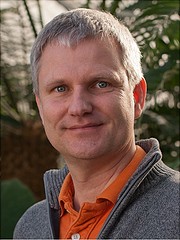
Dr. Thomas Becker is a Researcher in the Department of Geobotany at the Faculty of Regional and Environmental Sciences, University of Trier, Germany, a position he has held since March 2012. His research focuses on botanical-ecological studies at both species and community levels, with particular emphasis on conservation and restoration ecology, population biology of endangered and invasive plants, vegetation change analysis, and eco-informatics related to vegetation databases. Becker earned his Dr. rer. nat. in biology with a focus on plant ecology from the University of Göttingen in 2003, with his doctoral thesis examining "Consequences of long-time fragmentation on populations of the relictic steppe grassland plant Astragalus exscapus (Fabaceae)." Prior to this, he completed his Diploma at the Systematic-Geobotanical Institute of the University of Göttingen in 1996, with a thesis on "Vegetation of rock ledges and dry grasslands in the lower Unstrut river valley (Saxony-Anhalt)." His educational background includes a biology degree (with botany and zoology) and soil science studies at the University of Göttingen from 1990 to 1996. Dr. Becker's research interests center on fundamental and applied botanical-ecological research, particularly focusing on conservation and restoration ecology of endangered plant species and habitats. His work extensively examines population biology of endangered and invasive plants, with special attention to steppe grassland species that are relicts of past climatic conditions in Central Europe. He conducts detailed vegetation change analyses, tracking how plant communities respond to environmental pressures such as land-use change, atmospheric deposition, and climate change over decades. His vegetation classification work particularly focuses on grasslands, and he has developed expertise in eco-informatics through managing vegetation databases. His recent publication record demonstrates a strong focus on dry grassland ecosystems across Europe, particularly examining biodiversity patterns, vegetation classification, and responses to environmental change. His work spans multiple spatial scales, from local population studies of specific endangered species to continental-scale analyses of grassland biodiversity. A notable trend in his research is the integration of historical vegetation data with contemporary surveys to document long-term ecological changes, providing valuable insights for conservation planning. PhD with distinction (Dr. rer. nat.) from the University of Göttingen (2003) Diploma with distinction from the University of Göttingen (1996) Doctoral stipend from the German Federal Foundation for Environment (DBU) (1998-2001) Dr. Becker actively supervises BSc and MSc theses on topics related to vegetation analysis, population biology of rare plants, and ecological assessment of habitats. His research has been supported by various funding sources, including the European Union's LIFE Programme for his work on reintroducing endangered steppe plants in Thuringia, and the State of Lower Saxony's Cluster of Excellence "Functional Biodiversity Research" for his BioChange-Germany project. He has been an associate editor of Tuexenia since 2012 and guest-editor of the annual EDGG Dry Grassland Special Feature. Becker is actively involved with several research databases and networks, including VIOLETEA (Heavy Metal Grasslands with approximately 650 relevés in Germany), Dry Grassland Central Germany Database (approximately 3000 relevés), forestREplot (Forest herb layer resurvey plots), and GrassVeg.DE (Dry grasslands of Germany). His work connects with international networks such as the Eurasian Dry Grassland Group (EDGG) and the International Association of Vegetation Science (IAVS), facilitating collaborative research across Europe.