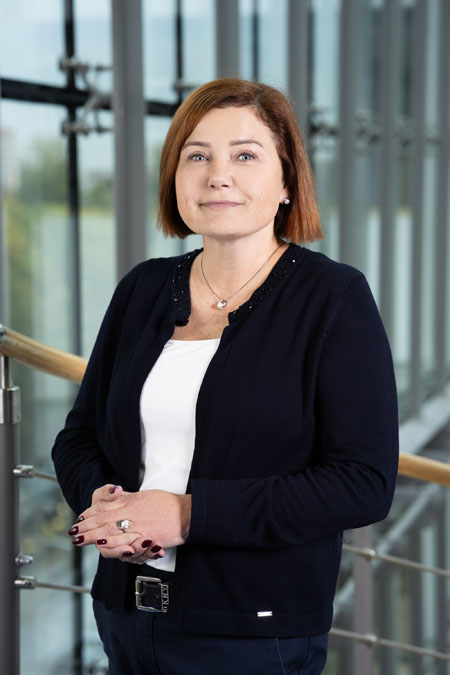
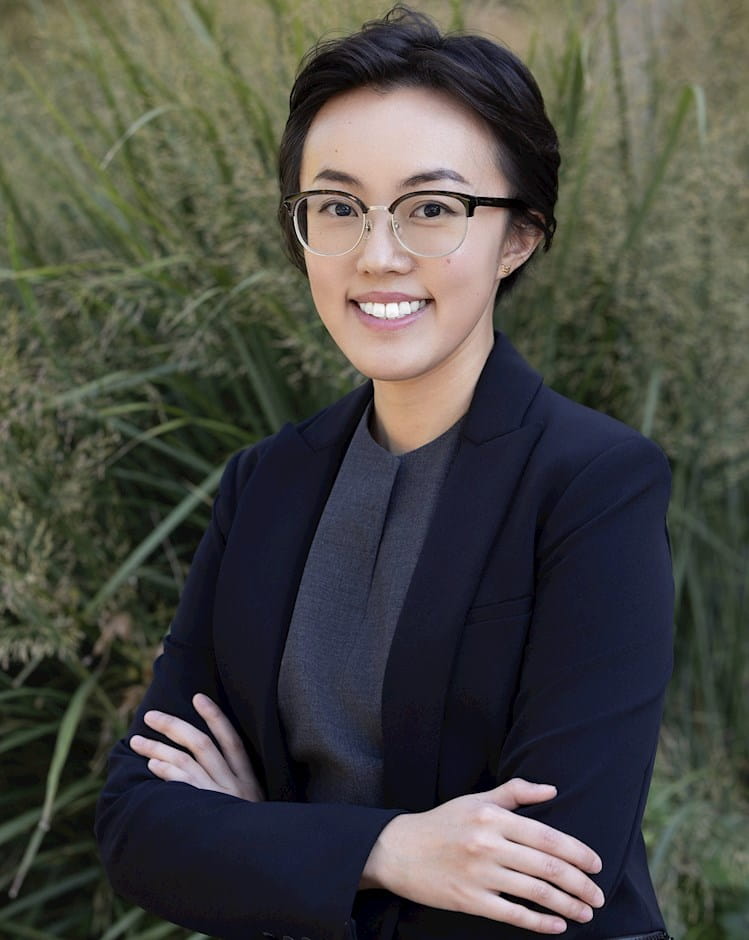
Andra-Ioana Horcea-Milcu is a Professor at the University of Kassel , leading the Cultures of Sustainability section within the Faculty of Humanities and Cultural Studies. She is a sustainability scientist with expertise in transdisciplinary research for sustainability transformations, focusing on values as leverage points and inner dimensions of cultural change. Academic Affiliation : University of Kassel, Germany Education : PhD in Social-Ecological Systems (Leuphana University), MA in Environmental Sciences (Université Libre de Bruxelles), License in Systems Ecology (University of Bucharest) Her research bridges social-ecological systems and transdisciplinary knowledge co-creation , emphasizing how values can drive sustainability innovation. Recent work explores transformative research methodologies , conflict resolution in sustainability science , and scaling impact through co-production . She has contributed to major global assessments as a lead author for IPBES and served as a Marie Skłodowska-Curie Fellow and IASS Fellow . Her editorial role at Sustainability Science underscores her influence in the field. Notable scientific contributions include: 2024: Transformative research frameworks 2023: Mobilizing values for sustainability 2022: IPBES assessments and co-productive agility
Gorm Kipperberg is a Professor of Economics at the UiS School of Business, University of Stavanger , specializing in environmental, resource, and energy economics. His work bridges ecological economics with applied microeconometrics, focusing on valuation of ecosystem services and benefit-cost analysis. Email: gorm.kipperberg@uis.no Office: EOJ 234 His research explores stated preferences , choice architecture , and public goods management , particularly in wind energy acceptance and circular economy frameworks. Recent publications include studies on psychological ownership in renewable energy preferences and meta-analyses of air travel emission reductions. He actively engages in public discourse through seminars and workshops, emphasizing practical applications of environmental valuation in climate policy and sustainable development.
Jacek Bednarz is an Assistant Professor at the Department of Economic Policy and Banking, Institute of Economics and Finance, Faculty of Social Sciences, John Paul II Catholic University of Lublin, Poland. His research focuses on economic policy, financial systems, agricultural economics, and market analysis. Current Affiliation: John Paul II Catholic University of Lublin (Assistant Professor) Research Areas: Economic policy, financial markets, agricultural subsidies, cryptocurrency dynamics, monetary transmission mechanisms International Engagement: Visiting Professor at Catholic University in Ružomberok, Slovakia His research explores phenomena such as regional disparities in subsidy absorption, cryptocurrency market reactions to interest rate curves, and historical financial system reforms proposed by Frederick Soddy. Recent publications analyze interbank market impacts on stock prices and knowledge-intensive business services. Scientific achievements include memberships in the World Economic Association (2016) and Polish Network of Philosophy of Economics (2015). He has presented at international conferences and published in journals like European Research Studies Journal and Annals of Economics and Management.
Katherine Ellen von Stackelberg is a Senior Research Scientist in the Department of Environmental Health at Harvard T.H. Chan School of Public Health. She holds leadership roles as Team Leader for the Biogeochemistry of Global Contaminants Group (Sunderland Lab) and Director of Research Translation for the Harvard Superfund Research Program (MEMCARE). Her interdisciplinary work bridges environmental science, risk assessment, and policy development. Education: AB, cum laude in General Studies from Harvard College (1988) ScM in Environmental Health and Health Policy from Harvard School of Public Health (1998) ScD in Environmental Science and Risk Management from Harvard School of Public Health (2006) Her research focuses on the intersection of environmental exposures, ecosystem services, and human health. Key areas include: Risk assessment frameworks for environmental contaminants (PFAS, metals, PCBs) Valuation of natural capital and biodiversity through ecosystem integrity indices Development of probabilistic bioaccumulation models for aquatic systems Socio-ecological approaches to planetary health and regenerative futures She teaches courses on socio-ecological systems that analyze economic drivers of environmental degradation. Her scholarly publications demonstrate consistent focus on environmental risk assessment methodologies, with recent expansion into global contaminant distribution, ecosystem service valuation, and health impacts in vulnerable populations. Research frequently incorporates machine learning, spatial modeling, and decision-analytic frameworks. Dr. von Stackelberg has served on the US EPA's Board of Scientific Counselors and National Academies panels, and regularly reviews for the European Commission Horizon program. She leads multiple projects on risk assessment frameworks and contaminant bioaccumulation modeling.
Søren Hvidkjær is a Professor of Finance and currently serves as the Dean of Research at Copenhagen Business School (CBS). His academic career includes roles as an Associate Professor at INSEAD and the R.H. Smith School of Business at the University of Maryland before joining CBS in 2008. He is actively involved in research, policy analysis, and academic leadership, focusing on empirical asset pricing, market microstructure, and behavioral finance. His work has been published in leading journals such as the Journal of Finance and the Review of Financial Studies, earning accolades like the Journal of Finance Smith Breeden Distinguished Paper Prize. As Dean of Research, he advocates for reforms in PhD programs and addresses systemic challenges in academic funding and governance. His research explores liquidity dynamics, informed trading, and ESG investing, with notable contributions to understanding market efficiency and investor behavior. Beyond academia, he serves on boards for financial institutions and advises on investment strategies. His interdisciplinary approach bridges finance theory with practical policy solutions, addressing societal challenges through collaborative research initiatives. Research Interests: Empirical asset pricing, market microstructure, behavioral finance, liquidity management, and ESG investing. Awards: Journal of Finance Smith Breeden Distinguished Paper Prize (2002). Professional Activities: Board member at Danske Invest Management A/S, expert witness, and contributor to policy reports on financial regulation and educational equity. His articles span topics like co-illiquidity management, policy impacts of PhD program structures, and the role of universities in societal problem-solving. Hvidkjær’s work emphasizes quantitative analysis and real-world applications, making him a prominent figure in financial academia and policy circles.
Dean Učkar is a Professor and Dean at the Faculty of Economics and Tourism, University of Primorska (Pula, Croatia). He holds a doctoral degree (dr. sc.) and specializes in finance, economics, and financial institutions. His academic roles include teaching courses such as Corporate Finance, Financial Markets, and Investment Analysis. He is affiliated with the Department of Finance (Katedra za financije). His research focuses on macroeconomic variables, financial markets efficiency, banking sector analysis, capital structure optimization, and the impact of tourism on economic sectors. His work often employs econometric models and policy analysis. Key contributions include studies on Croatian housing market dynamics, bank lending channels in the EU, and the efficiency of insurance companies. Prof. Učkar has published extensively in academic journals and conference proceedings, addressing topics such as capital market integration, risk management, and corporate finance strategies. His research highlights Croatia’s economic challenges and opportunities within the European context. He actively contributes to international scientific conferences, including the annual Economic and Social Development series. As a faculty member, he oversees academic programs in finance and tourism management, emphasizing practical applications of financial theories. His work bridges theoretical research and policy implications for Croatia’s economic development.
Dr hab. Patrycja Kowalczyk-Rólczyńska, prof. UEW holds the position of Associate Professor at the Department of Insurance, Wroclaw University of Economics and Business. She also serves as the Rector's Plenipotentiary for Economic Affairs at the University of Children. Her academic career includes a PhD in Economic Sciences and habilitation in Economics and Finance, focusing on equity release mechanisms and retirement financing for elderly households. Education: MSc in Mathematics, University of Wrocław Doctorate in Economic Sciences, Wrocław University of Economics Habilitation in Economics and Finance, Wrocław University of Economics Research interests center on retirement security, including voluntary pension schemes, reverse mortgages, senior housing finance, financial literacy, and demographic policy. She explores how socio-economic factors influence retirement decisions and supplementary savings behavior across Europe. Her recent articles analyze retirement strategies in defined contribution pension systems, the impact of digital inequality during the pandemic, and equity release product design in Poland. She has contributed to over 60 publications and co-authored books on household finance and pension system reforms. Collaboration includes work on EU pension policies and cross-country comparisons of elderly financial stability. Her research often employs quantitative methods like logistic regression and structural equation modeling to assess policy impacts.
Dr. Joanna Koczar is an Assistant Professor and Head of the Distance Learning Development Office at the Department of Accounting, Reporting and Financial Analysis, Wrocław University of Economics. She specializes in accounting practices, financial analysis, sustainable development, and educational technology integration in accounting education. Her research spans ESG factors in business valuation, project finance, regional economic systems, and cross-country comparisons of fiscal policies. She collaborates internationally, evidenced by her ResearchGate and ORCID profiles. Her academic work addresses topics such as financial stability assessment via cluster analysis, anti-avoidance tax rules in Russia, and digital transformation of financial markets (e.g., P2P lending in Belarus). She also focuses on innovative teaching methods in accounting education and the impact of urbanization on socio-economic development. Her recent articles emphasize sustainability, green finance, and infrastructure investments. Education: Not explicitly listed in the provided text. Languages: English, Polish, Russian Consultations: Online via Microsoft Teams every Thursday 8:00–9:30 during the 2024/2025 winter semester. Affiliations: Faculty of Management, Wrocław University of Economics. Labs/Teams: Leading the Distance Learning Development Office, fostering educational innovation. Ms. Koczar’s publications span over two decades, with a focus on Russian and Eastern European economic policies, financial systems, and educational methodologies. Her work bridges theoretical frameworks with practical implementation in regional development, fiscal compliance, and sustainable financing strategies.
Professor Kevin Fox is a distinguished academic at the University of New South Wales (UNSW), serving as Professor in the School of Economics within the UNSW Business School. He holds the position of Director of the UNSW Centre for Applied Economic Research and serves on the Leadership Executive of the UK Economic Statistics Centre of Excellence. His career demonstrates a strong commitment to research-led public policy engagement, with significant contributions to economic measurement methodologies used by statistical agencies worldwide. His educational background includes a Ph.D. in Economics from the University of British Columbia (1995), an M.A. from the University of British Columbia (1992), an M.Com. from the University of Canterbury (1990), a B.Com. from the University of Canterbury (1989), and a Diploma in Japanese Language from the Japan Missionary Language Institute, Tokyo (1985). Professor Fox's research primarily focuses on economic measurement, with particular emphasis on productivity and prices. His work bridges theoretical economic concepts with practical policy applications, especially in the areas of inflation measurement, digital economy valuation, and productivity analysis. He has made significant contributions to understanding how digital technologies impact economic measurement, particularly in addressing the 'productivity paradox' where technological advancements don't immediately translate to measurable productivity gains. His research portfolio demonstrates a clear trajectory from traditional economic measurement toward addressing contemporary challenges posed by the digital economy, with recent work focusing on measuring inflation during pandemic conditions, accounting for free digital goods, and developing new methodologies for capturing digital innovation value in national accounts. His research has direct policy impact, evidenced by the Australian Bureau of Statistics implementing methodological changes based on his team's work to maximize the use of transactions data in compiling the Consumer Price Index from the December 2017 quarter. Similar methodologies have been adopted by Statistics New Zealand since the September 2014 quarter. Indigo Prize 2017 for addressing 21st-century economic measurement challenges Fellow of the Academy of the Social Sciences in Australia Elected member of Society for Economic Measurement (2014) Elected member of U.S. Conference on Research in Income and Wealth (2011) Professor Fox has secured substantial research funding through multiple Australian Research Council grants, including a Discovery Grant (2015-2019) and several Linkage Grants addressing productivity measurement, property markets, and scanner data applications. He has held influential positions including Advisor to the Australian Treasury (2016), chair of the 16th Series CPI Review Advisory Group (2009-2010), and President of the International Association for Research in Income & Wealth (2020-2022). He leads the UNSW Centre for Applied Economic Research and actively participates in international statistical initiatives, including the UN/IMF/OECD/World Bank/Eurostat Intersecretariat Working Group on National Accounts.
Maria Giuseppina Bruno is an Associate Professor in the Department of Methods and Models for Economy, Territory, and Finance (MEMOTEF) at Sapienza University of Rome's Faculty of Economics. She has been serving in this capacity since December 29, 2003, specializing in the scientific disciplinary sector STAT-04/A (Mathematical Methods of Economics and Actuarial and Financial Sciences). Her institutional email is Giuseppina.Bruno@uniroma1.it and she maintains office hours at room 149 on the first floor, wing B of the MEMOTEF Department. Her academic background includes a PhD in 'Mathematics for Financial Market Analysis' from the University of Brescia (1995), where she defended her thesis 'Memory functions as a tool for evaluating American options,' and a first-class honors degree in Economics and Commerce from LUISS University of Rome (1990) with thesis 'Valuation of convertible bonds. An interpretation using physics models.' Professor Bruno's research spans financial and actuarial mathematics, quantitative methods for economics and finance, derivative instrument valuation, risk management models, stochastic processes, and computational methods. Her work demonstrates strong interdisciplinary connections between mathematics, finance, insurance, and even physics through her interest in econophysics and applications of physical models to financial problems. Her recent publications show a consistent focus on innovative insurance products, risk modeling, and financial engineering. From Tailor-made CDOs (2024) to Pay-as-you-drive insurance models (2023) and specialized insurance products like ALEA and MICROTAKAFUL (2021), her research addresses contemporary challenges in risk transfer mechanisms and insurance market dynamics. Her work on long-term care annuities (2020) and option pricing with stochastic volatility (2019) demonstrates expertise in both theoretical and practical aspects of financial mathematics. As a respected academic, she serves as Managing Editor of Annali MEMOTEF and referees for prestigious journals including Insurance: Mathematics and Economics. She has been actively involved in professional organizations including AMASES, AAI, and Istituto Italiano degli Attuari. Professor Bruno currently teaches Actuarial Mathematics for Private Insurance (Master's Degree in Finance and Insurance) and Basic Mathematics course (Bachelor's Degree in Economics and Finance). She has extensive experience in curriculum development, serving as reference teacher for the Master's Degree Course FINASS and as tutor for the Bachelor's Degree in Economics and Finance. Her institutional service includes membership on various committees related to quality assurance, publications, and doctoral programs. Her professional activities extend beyond academia, with participation in Bank of Italy examination boards (2016, 2019, 2023) and previous teaching roles for financial professionals at INPDAP and Banca di Roma. Her technical expertise includes programming in C++, VBA, and Python, which supports her computational research in financial mathematics.
Beidi Hu serves as an Assistant Professor of Marketing at the University of Chicago Booth School of Business. Her academic appointments include teaching Marketing Strategy (37000) and Marketing Workshop (37601) during Winter and Spring quarters through 2026. Her research focuses on consumer behavior and judgment under uncertainty, specifically examining how consumers and marketers navigate decisions when outcomes are unpredictable. Key questions driving her work include: methods to help overconfident consumers recognize uncertainty, optimal corporate communication of service uncertainties (e.g., food delivery estimates), and consumer valuation of goods acquired through uncertain processes like lotteries. Dr. Hu holds a PhD in Decision Processes from the Wharton School at the University of Pennsylvania, where she also earned her BA summa cum laude in Philosophy, Politics, and Economics. Her scholarly approach integrates behavioral science with marketing strategy to address real-world decision challenges. She maintains active academic engagement through social media platforms like Bluesky (@beidiwho.bsky.social), where she connects with the decision science community. No scientific awards or student advisement details are publicly documented in the provided sources.
Audrius Aleknavičius is a Researcher at Vytautas Magnus University's Bioeconomy Research Institute, specializing in land management and consolidation. Previously serving as Professor (2010-2020) and Head of the Department of Land Management (2008-2012), he has been affiliated with the Agriculture Academy since 1997, when it was known as the Lithuanian University of Agriculture until 2011, and later as Aleksandras Stulginskis University (2011-2018). Dr. Aleknavičius earned his Doctor of Technological Sciences degree in 2002 after graduating from the Lithuanian Academy of Agriculture in 1995. He furthered his education at the Royal Institute of Technology in Stockholm, completing studies there in 2007. His international experience includes internships in Sweden (1999, 2000, 2001) and Taiwan (2003), which have informed his comparative approach to land management systems. His research focuses on critical aspects of land administration, with particular expertise in land consolidation, agricultural land use development, and real estate valuation. Dr. Aleknavičius has pioneered methods for optimizing large farm holdings, analyzing land market dynamics across Lithuanian municipalities, and adapting European land consolidation models to different national contexts including Ukraine. His work bridges theoretical land management principles with practical applications for improving agricultural efficiency and rural development. Recent publications reveal a strong trend toward practical solutions for land fragmentation issues, with significant attention to municipal-level land planning schemes and pre-emption rights for farm owners. His research increasingly incorporates comparative analysis of Baltic states' land administration systems while addressing contemporary challenges in land markets following Lithuania's land reform completion. Dr. Aleknavičius has supervised numerous master's theses covering diverse aspects of land management, from agricultural land use in specific municipalities to land lease processes and special land use conditions. His academic mentorship has produced research addressing practical land administration challenges across Lithuania's regions. Working within the Department of Land Use Planning and Geomatics, he contributes to the Agriculture Academy's mission of advancing sustainable land management practices. His current research activities focus on optimizing land holdings for large agricultural enterprises, analyzing land market intensity across Lithuanian municipalities, and developing more efficient land administration models through comparative analysis of European systems.
Maria A Rodas is an Assistant Professor in the Department of Business Administration at the Gies College of Business, University of Illinois. Her research focuses on Consumer Behavior , Cultural Marketing , and Brand Equity , with a particular emphasis on bicultural consumers and sensory experiences. Academic Rank: Assistant Professor University: University of Illinois School: Gies College of Business Department: Business Administration Research Trends: Recent work explores the interplay of cultural frameworks and brand positioning , including studies on iconic brands , sensory perception , and political factors in branding . Her 2025 paper on creative ideation highlights its role in fostering consumer-brand emotional connections, while 2024 publications delve into topics like global marketing strategies and cultural audits . Awards: MSI Young Scholar (2023) Collaborations: Active partnerships with institutions like Stanford University, focusing on collaborative environments and Bayesian methods in marketing research.
Dr. Diego Alejandro Tejada Arango serves as a Visiting Professor in the Energy Systems Modeling area at the Institute for Research in Technology (IIT) of Comillas Pontifical University's School of Engineering. His academic journey includes a BSc in Electrical Engineering from Universidad Nacional (Colombia, 2006), an MSc from Universidad de Antioquia (Colombia, 2013), and ongoing MSc studies in Research in Engineering Systems Modeling at Universidad Pontificia Comillas. BSc Electrical Engineering, Universidad Nacional, Medellin (2006) MSc Electrical Engineering, Universidad de Antioquia (2013) MSc Research in Engineering Systems Modeling, Universidad Pontificia Comillas (in progress) His research focuses on developing advanced modeling tools for energy sector analysis and planning, with particular expertise in optimization techniques for generation capacity expansion. Dr. Tejada's work bridges theoretical advancements with practical applications in power system operations and planning. His research interests span optimization methodologies, unit commitment formulations, generation and transmission expansion planning, and energy storage integration within modern power systems. Analysis of his publication record reveals a strong focus on improving computational efficiency in energy system modeling while maintaining accuracy, with recent work addressing temporal resolution flexibility, hydrogen infrastructure integration, and interpretable machine learning applications for power system operations. His research demonstrates consistent evolution from traditional power system planning toward addressing contemporary challenges of renewable integration and decarbonization. 4th EASE Student Award for PhD thesis on energy storage co-optimization Dr. Tejada has contributed extensively to collaborative research projects with industry partners including Endesa and Enel Iberoamerica, focusing on generation expansion, renewable integration, and strategic network planning. His technical reports for the Spanish Ministry of Economy demonstrate engagement with policy-relevant research. As a reviewer for leading power systems journals including IEEE Transactions on Power Systems and International Journal of Electrical Power & Energy Systems, he contributes to scholarly discourse in the field.
Elena Fregonara is a professor in the Department of Architecture and Design at Politecnico di Torino, where she conducts research at the intersection of sustainable architecture, real estate economics, and environmental policy. Her work emphasizes life cycle thinking, circular economy principles, and the integration of environmental costs into financial decision-making in the construction sector. Institution: Politecnico di Torino Department: Department of Architecture and Design Research Focus: Sustainable Architecture, Life Cycle Assessment, Real Estate Appraisal, Circular Economy Her research interests revolve around sustainable urban development, with a strong emphasis on the economic evaluation of building sustainability. She investigates how embodied energy, carbon emissions, daylight, and green attributes influence real estate values and investment decisions. Her work bridges theoretical economics with practical applications in public procurement, urban regeneration, and building retrofitting. The trends in her recent publications show a consistent focus on integrating environmental externalities into traditional economic models. She employs life cycle costing (LCC), life cycle assessment (LCA), structural equation modeling, and net present value (NPV) frameworks to evaluate sustainability across scales—from materials to urban systems. Her research increasingly addresses policy implications, especially in public procurement and urban governance. Elena Fregonara has contributed to significant research initiatives such as the “Circular Design for Natural Fibers” (CD4NF) project under the PNRR, reflecting her engagement with national sustainability strategies. She has no listed scientific awards in the provided data. She has collaborated extensively with researchers such as Diego G. Ferrando, Alice Barreca, and Irene Rubino on topics including building upcycling, discount rate modeling, and sustainable public procurement. While her mentorship of students is not explicitly detailed, her collaborative work suggests active engagement in research teams and academic networks. She is involved in developing methodological tools like the “Smart SPP LCC-CO2 Tool” for sustainable decision-making. Her research lab or team is not explicitly named, but her involvement in EU and PNRR-funded projects indicates leadership or key roles in interdisciplinary research groups focused on sustainable construction and urban development.