Elena L. Daly is a Lecturer in Law at Stanford Law School (SLS). She is also an independent legal expert and founder of EM Conseil, a Paris-based consultancy specializing in sovereign debt management and international financial transactions. Her career spans senior roles at institutions like the NYSE, Citigroup, and Nomura International PLC, alongside advising on high-profile sovereign debt restructurings (e.g., Argentina, Greece). She advises the ICRC on humanitarian debt conversion mechanisms and contributes to public policy debates on post-crisis reconstruction (e.g., Ukraine). Key affiliations: Stanford Law School, Queen Mary University of London (CCLS), HEC Paris, SciencesPo Courses taught: International Business Transactions, Regulation and Litigation Her research focuses on blending legal frameworks with innovative financial instruments to address sovereign debt challenges and humanitarian needs. She has published extensively, including the Oxford University Press volume Sovereign Debt Management (2014). Notable engagements include advising on 12 sovereign debt restructurings and participating in international legal debates on financial crisis recovery strategies.
Dr. Grzegorz Iwanicki is a Lecturer at the Department of Socio-Economic Geography, Faculty of Earth Sciences and Spatial Management, Maria Curie-Skłodowska University. He holds a PhD in Earth Sciences (Geography, 2017) from UMCS and a postgraduate pedagogy degree (2015) from Lublin University of Technology. Supervised by dr hab. Anna Dłużewska (UMCS) Teaches: Travel agency operations, Tourism transport, Client service, Tourism research projects Coordinates dark sky park research initiatives Research Focus: Specializes in urban tourism, astrotourism, and light pollution analysis. Key interests include sustainable development, dark sky parks, and emerging tourism forms. His work connects geographical analysis with tourism policy. Scientific Output Trends: 15 most recent publications (2015–2023) address dark sky conservation, urban nightlife dynamics, and stag/city-break tourism. Collaborates with Croatian, Czech, and UK researchers. Uses interdisciplinary methods combining geographical analysis with sociocultural studies. Grants & Projects: Recipient of NCN and MNiSW grants (2019–2021) for dark sky park research. Participated in light pollution studies (2014) and Arctic river sediment transport projects (2013). Conducted fieldwork in Spitsbergen. Conferences: Presented at 10+ events (2013–2021) on dark sky impacts, urban tourism, and light policy. Key talks at International Light Pollution Conference (Łódź, 2021) and MEKON conference (Ostrava, 2015).
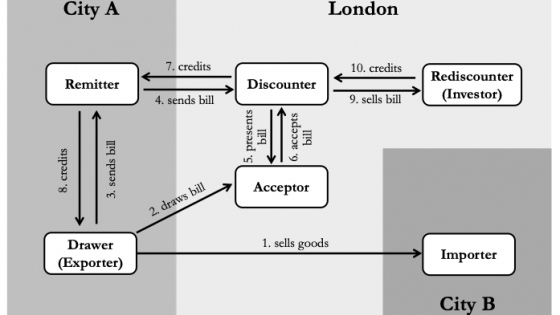
Olivier Accominotti is Professor of Economic History at the London School of Economics and Political Science and a Research Fellow at the Centre for Economic Policy Research. Previously, he held research and visiting positions at Princeton University, the University of California Berkeley, the European University Institute, and the Bank of France. His research spans the history of global financial systems and crises, with emphasis on international crisis propagation, global capital flows, foreign exchange markets, currency speculation, sovereign debt defaults, international trade finance, and global money market structures. He specializes in historical analysis of the first globalization era and interwar period, particularly using 1930s case studies to examine debt restructuring and financial contagion mechanisms. Analysis of his recent publications reveals consistent focus on sovereign default dynamics, financial network resilience using hyperstructure models, and historical trade finance structures. His work demonstrates how pre-WWII financial instruments like Sterling bills of exchange created systemic vulnerabilities, with contemporary relevance for understanding contagion pathways and monetary policy transmission during crises.
Professor Dr. Andreas Piekenbrock is a leading German legal scholar specializing in civil law, insolvency law, and banking law. Since 2009, he has held the Chair of Civil Law and Insolvency Law at Heidelberg University’s Faculty of Law, where he also served as dean of studies (2010–2014) and director of the Center for Lawyer-Oriented Legal Education. His research bridges doctrinal analysis and comparative law, with a strong focus on European harmonization of private law. Education: Doctorate (Dr. iur.), University of Freiburg, 1996 Habilitation, University of Freiburg, 2005 Research Focus: Professor Piekenbrock’s work centers on three inter-related domains: Banking Law: consumer protection, standard terms, payment services, and fee litigation. Insolvency Law: cross-border proceedings, restructuring mechanisms, consumer over-indebtedness, and comparative insolvency regimes. Civil Procedure: evidence, limitation periods, and interface with European procedural instruments. He regularly addresses how European legislation reshapes German private law and contributes to commentaries and legislative reform debates. Publications & Impact: His monographs include the seminal comparative study Time Limitation, Statute of Limitations, Concealment and Forfeiture (2006) and the practitioner-oriented ZPO-Examinatorium (with Florian Kienle). His more than 200 essays and case notes illuminate evolving jurisprudence of the Bundesgerichtshof, the European Court of Justice, and comparative courts. Recurring themes are the judicial control of banking fees, the architecture of the European Insolvency Regulation, and the constitutional dimensions of procedural guarantees. Scientific Awards & Honors: While no specific prizes are mentioned, his editorship of leading commentaries, co-editorship of the Festschrift für Rolf Stürner , and invitations to contribute to authoritative handbooks attest to high scholarly recognition. Doctoral Supervision & Grants: Under his supervision, 28 doctoral theses have been completed, covering topics such as consumer insolvency, cross-border restructuring, and civil-procedure evidence. He directs an active research team including post-docs and research assistants, supported by third-party funding for projects on European insolvency law and legal-clinic methodology. Labs & Teams: The Chair operates within the Institute for Civil Law, Labor Law and Insolvency Law, maintaining close collaboration with the university’s Center for Lawyer-Oriented Legal Education and participating in the transnational research network on European private law.
Thilo N. H. Albers serves as an Assistant Professor for Economic and Social History at the University of Münster within the School of Business and Economics. He holds a WID Fellowship at the World Inequality Database, contributing to international research on inequality dynamics. His academic profile centers on empirical investigations spanning short-term and long-term economic transformations. Albers' research primarily explores intersections of economic history, political economy, and urban/regional economics. His work rigorously examines how political decision-making and economic forces shape inequality patterns, public finance systems, and urban organizational structures. Key methodological approaches include quantitative analysis of historical datasets to address contemporary socioeconomic questions, with particular focus on wealth distribution mechanisms and spatial economic dynamics. His recent publications reveal a concentrated scholarly trajectory investigating inequality drivers across historical contexts. Notable themes include the economic foundations of political extremism (evidenced in studies of Nazi Party support), spatial modeling of urban development, and century-scale analyses of German wealth distribution. This body of work demonstrates consistent collaboration with leading international scholars and acceptance in premier journals including the Review of Financial Studies and Journal of the European Economic Association . Scientific recognition includes: WID Fellow at the World Inequality Database Albers actively leads research initiatives through the university-wide Migration, Diaspora, and Citizenship (MDC) program, where he recruits quantitative researchers for interdisciplinary postdoctoral positions. His collaborative networks span Political Science and Economics departments, facilitating cross-disciplinary projects on historical economic phenomena. Current grant activities focus on supporting postdoctoral researchers through the MDC initiative with comprehensive funding packages covering research travel and institutional secondments. He maintains active research groups centered on economic history methodologies and inequality analysis, operating within the University of Münster's Center for Economic and Social History framework. These teams emphasize quantitative approaches to historical data and maintain strong connections with the World Inequality Database consortium.
Igor Z. Vojnovic is a Professor at Michigan State University with appointments in the Department of Geography, Environment and Spatial Sciences and the School of Planning, Design and Construction. He is affiliated with the Global Urban Studies Program and has held editorial leadership roles at the Journal of Urban Affairs . His research focuses on urban (re)development processes , infrastructure investment , and urban design , examining socio-economic, environmental, and health impacts across North America, Europe, and Asia. PhD, Geography, University of Toronto (1997) MScPl, Urban Planning & Design, University of Toronto (1992) Bachelor of Arts (Economics, Political Science), York University (1990) Dr. Vojnovic’s research spans urban governance , local taxation , municipal restructuring , and sustainability , with publications in Environment and Planning A , Urban Geography , and PLOS ONE . His recent work analyzes place attachment in China , food access in Detroit , and gentrification in Hong Kong . As an advisor, he has mentored PhD and Master’s students like Zeenat Kotval-K. , Timothy LeDoux , and Jieun Lee , many of whom now hold academic or leadership roles. He has taught interdisciplinary courses in Urban Studies , Environmental Studies , and Urban Design at MSU and other institutions, including Education Abroad programs in Rome and Sydney . Dr. Vojnovic has served as Editor-in-Chief of the Journal of Urban Affairs (2015-2021) and held editorial board roles at Cities , GeoJournal , and The Urban Book Series . His international collaborations include work in China , Italy , and Canada , with fieldwork in Guangzhou , Rome , and Toronto .
Stratos Pahis is an Associate Professor of Law and Co-Director of the Dennis J. Block Center for the Study of International Business Law at Brooklyn Law School. He holds a J.D. from Yale Law School, an A.B. in Economics from Dartmouth College (summa cum laude), and a Master’s in International Development from the Universidad Complutense de Madrid. His expertise spans International Economic Law, Trade Law, Investment Law, and Sovereign Debt. He has practiced international arbitration at WilmerHale and held visiting faculty positions at Columbia Law School, NYU, and Wake Forest University. His research addresses foundational challenges in international law, including WTO reform, the role of investment treaties, and trade-national security tensions. Notable contributions include the 2022 Francis Deák Prize-winning article on sovereign debt and work cited in Christoph Schreuer’s investment law treatise. He teaches International Trade Law, Public International Law, and Contracts. Recent publications analyze Trump’s tariffs, WTO judicial crises, and plurilateral trade agreements. His current projects explore climate change in investment law and U.S.-China trade dynamics. Fluent in five languages, Pahis has practiced in multiple jurisdictions and contributed to global legal initiatives like the International Commission of Jurists.
Dr. Sergey Sosnovskikh is a Senior Lecturer in International Business at the Manchester Metropolitan University Business School , where he also serves as Level 7 Year Tutor. He holds a PhD in International Business and Economics (University of Greenwich, 2018) and is a Certified Management and Business Educator (CMBE) and Fellow of the Higher Education Academy (FHEA). His career spans academic roles at the University of Salford, De Montfort University, the University of Greenwich, and Ural Federal University (Russia), alongside industry experience in banking, maritime transport, and public services. PhD , International Business and Economics, University of Greenwich (2018) PGCert , Academic Practice in Higher Education, De Montfort University (2021) MSc , International Management, University of Roehampton (2010) BSc , International Economics, Ural Federal University (2009) BA , Teaching Foreign Languages, Ural State Pedagogical University (2009) Research Interests focus on the intersection of political economy, corruption, and institutional economics within international business contexts. He investigates industrial clusters, supply chain disruptions, and the impact of geopolitical tensions on trade , with a particular emphasis on emerging economies like Russia and China. His work often combines qualitative and quantitative methods to analyze policy effectiveness, entrepreneurial behavior, and technological transformations in business environments. Recent publications highlight his interdisciplinary approach, including studies on sanctions and corporate exit strategies (Journal of World Business, 2024), agglomeration economies in Russian regions (Regional Studies, 2025), and blockchain’s role in mitigating corruption (Europe-Asia Studies, 2025). These works reflect his expertise in institutional analysis, sustainable investment, and regional economic development . Awards and Memberships include accreditation as a Certified Management and Business Educator (2022–present), Fellowship of the Higher Education Academy (FHEA), and memberships in the Regional Studies Association, British Association for Slavonic and East European Studies, and World Interdisciplinary Network for Institutional Research. He actively mentors PhD students and serves as economics stream organiser for the British Association for Slavonic & East European Studies conference.
Felix Reiche is an Honorary Professor and Lecturer at Wedel University of Applied Sciences since 2016 and 2012, respectively. He specializes in Corporate Taxation and Private Commercial Law , aligning with the university’s Business Department . His expertise bridges legal and fiscal domains, particularly in business transactions and M&A. Research Interests: Corporate Taxation Private Commercial Law Mergers and Acquisitions (M&A) Tax Compliance and Reform Legal Liability in Business Transactions Publications: Reiche’s work focuses on corporate tax reforms, partnership taxation, and legal liability in acquisitions. Key trends include analysis of German Civil Code (BGB) implications, international tax law harmonization, and debt-financed acquisition strategies. Professional Background: Partner at AHB Rechtsanwälte Steuerberater, Hamburg (2013–present) Honorary Professor at Wedel University of Applied Sciences (2016–present) Lecturer at Wedel University of Applied Sciences (2012–present) Former roles at Freshfields Bruckhaus Deringer and Esche Schümann Commichau Education: Doctorate in Law, Christian-Albrechts-University of Kiel (1999) First and Second State Examinations in Law (1998, 2001) Labs & Teams: Reiche collaborates with Wedel’s Business Department on taxation frameworks and legal advisory for business transformations.
Eman Momeni is an Assistant Professor of Accounting at Northern State University, joining in August 2020. He holds a Ph.D. in Accounting (University of Isfahan, 2017) and a Master’s in Accounting (California State University, Fullerton, 2011). Education : Ph.D. in Accounting (University of Isfahan, Iran, 2017); Master’s in Accounting (California State University, Fullerton, 2011) His research focuses on international accounting standards convergence, value relevance of financial data, forensic accounting education, and emerging markets. His recent publications analyze fraud incentives via Prospect Theory, financial statement restructuring, and legislative impacts on market efficiency in Iran. Current research includes audit report lag, forensic accounting curricula, and earnings co-movement under uncertainty. Dr. Momeni teaches courses such as International Financial Reporting Standards (IFRS) and Forensic Accounting. Scientific Awards : Sanford Faculty Development Award (2022); Becker Professional Education Award (2010)
Roland Bartl Andreoli is a Lecturer at Kalaidos University of Applied Sciences, where he teaches Project Management & Coaching in the Master's program. He is also a Principal Consultant and Member of the Management Board at Talent Solutions ManpowerGroup, specializing in career and talent management. His research and professional interests span AI in HR, coaching, change management, organizational development, leadership, and the role of humor in counseling. He emphasizes individualized employee support, agility in leadership, and the human-centric approach to digital transformation. The publications highlight trends in modern workforce dynamics, focusing on restructuring, AI in communication, leadership in change, and demographic inclusivity. His work bridges academic insights with practical consulting in organizational psychology and career development. Member of Management Board, Talent Solutions ManpowerGroup Principal Consultant, Career Management Former IT Project Manager and Enterprise Architect Co-founder of Techshare, an organization stemming from development work in Cameroon He has contributed to discussions on employability, leadership, and the future of work through articles in WEKA Knowledge, PersonalSchweiz, NZZ Jobs, FH Schweiz, and HR Today. No formal awards or students are listed. He is actively involved in professional networks such as LinkedIn and Xing and advocates for diversity, ethical leadership, and lifelong learning. His teaching and consulting reflect a deep commitment to human-centered organizational change.
Prof. Dr. Christoph Spengel holds the Chair of General Business Administration and Business Taxation II at the University of Mannheim. His academic focus lies in corporate taxation, international tax policies, and legal form optimization. He actively contributes to research on cross-border taxation, tax harmonization, and tax reform. Recent engagements include advising on cum-cum transaction regulations and presenting at the North Rhine-Westphalia State Parliament in 2025. Spengel co-authored influential works like *Corporate Taxation and Legal Form* (2015), a standard reference for German company taxation. He leads the MaFAT e.V. initiative, fostering collaboration in accounting and taxation education. His research spans global minimum tax, EU tax base harmonization, and tax incentives for innovation.
Visnja Vukov is a University Assistant (Assistant Professor) at the Institute of Political Science, University of Vienna, affiliated with the Faculty of Social Sciences. She joined in May 2022 after serving as a tenure-track Assistant Professor at Pompeu Fabra University (Barcelona) and as a Senior Researcher at the Johns Hopkins University-Pompeu Fabra University Public Policy Center. Her research focuses on comparative/international political economy, European integration, and East European politics/societies. She holds a PhD in Political and Social Sciences from the European University Institute (2013) and an MSc in Sociology from the University of Oxford (2007). Her work examines how EU integration interacts with domestic politics to shape economic transformations and growth models in peripheral EU countries. Notable publications include analyses on dependency theory in Europe's peripheries, exclusionary development in Romania, and transnationalized capitalism in Eastern Europe. She was awarded the CEP/CES-GPE 2014 Early Career Scholar Prize for her 2016 article on competition states. Professionally, she combines teaching and research on European political economy, maintaining active collaborations across European institutions. Her advisory activities and grant projects focus on EU policy impacts in peripheral regions. She is based at the New Institute Building in Vienna, with consultation hours by appointment.
Prof. Dr. Lars Klöhn is a full-time Professor of Civil Law and Commercial Law at Humboldt University of Berlin's Faculty of Law since 2016. He previously held professorships at the Universities of Bremen, Bonn, Hamburg, and Munich. His research focuses on corporate law, capital markets, banking law, and interdisciplinary law & economics studies. Klöhn earned his doctorate and habilitation under Prof. Spindler in Göttingen, following studies in Göttingen and Cambridge, MA (LL.M. from Harvard). Key research areas include corporate governance, securities regulation, judicial decision-making, and financial market integrity. He co-edits the Zeitschrift für Bankrecht und Bankwirtschaft and serves on the editorial board of Zeitschrift für Investmentgesetzlichkeit . Notable publications address insider trading, ad hoc disclosure obligations, climate lobbying reporting, and regulatory frameworks for crowdfunding and cryptocurrencies. Prof. Klöhn's recent work explores legal-economic intersections in corporate accountability (e.g., issuer liability for non-disclosure) and insolvency reforms. He advises on EU market regulations and frequently collaborates with institutions like BaFin. His team includes researchers like Dr. Julian Franke (insolvency law) and Dr. Jannik Adam (financial regulation).
Stefan Seifermann is a Professor for Production and Logistics at the Faculty of Industrial Engineering, Technische Hochschule Mannheim, since March 2019. He became Prodekan (dean) of his faculty in July 2022 and previously served as Studiengangleiter (program director) for the Master in Industrial Engineering from July 2019 to March 2023. Diploma in Industrial Engineering (TU Kaiserslautern, SFU Vancouver 2004) Dr.-Ing. (2017, TU Darmstadt) for dissertation on hybrid production cell automation His research focuses on Energy Flexibility in Manufacturing , Renewable Energy Systems , Lean Production , Production Process Optimization , Production Automation , and Industry 4.0 . He leads funded projects like the Kopernikus SynErgie series and FLoW-mIT. Recent publications analyze blockchain for supply chain traceability, deglobalization trends in manufacturing, and energy-flexible factories. He holds an office at Building L, Room 254, reachable at +49 621 292 6837. 2025 : KPI standardization in shopfloor management 2024 : Cost-benefit analysis of energy flexibility options 2023 : Environmental assessment of geothermal plants 2022 : Blockchain tracking, techno-economic flexibility studies 2018 : Value stream method 4.0, CNC automation 2017 : Flexible lean systems design in logistics He contributes to the Kopernikus Projects (SynErgie2-3) and FLoW-mIT (2023-2025), addressing energy grid stabilization and adaptive production systems. His work bridges technical feasibility with economic viability.