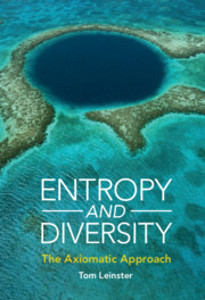
Tom Leinster is a mathematician at the University of Edinburgh, specializing in category theory, metric geometry, and their applications to areas such as algebra, topology, and mathematical biology. His research focuses on the concept of magnitude, a measure for metric spaces and enriched categories, as well as entropy and diversity. He has authored influential books including *Basic Category Theory* and *Entropy and Diversity: The Axiomatic Approach*. Leinster's work bridges foundational mathematics with interdisciplinary applications, emphasizing the interplay between abstract structures and concrete problems. His research interests span category theory, metric geometry, algebraic topology, and mathematical biology. Key contributions include foundational work on magnitude and its connections to geometric measure theory, entropy characterization, and categorical frameworks for diversity measurement. Leinster also engages in mathematical education and ethics, advocating for responsible research practices. Notable publications include recent advancements in magnitude homology of Euclidean sets, extremal magnitude in metric spaces, and entropy modulo primes. His work often highlights interdisciplinary applications, such as biodiversity quantification and information-theoretic foundations.
Amanda Giang serves as Assistant Professor at the University of British Columbia's Faculty of Applied Science, Department of Mechanical Engineering, holding a Canada Research Chair in Environmental Modelling for Policy. She maintains a joint appointment with the Institute for Resources, Environment and Sustainability (IRES). Her educational background includes a B.A.Sc. from the University of Toronto, followed by M.S. and Ph.D. degrees from MIT, with postdoctoral training at MIT and Harvard. Dr. Giang's research employs interdisciplinary approaches to develop modeling tools for environmental policy analysis, focusing on pollution assessment, environmental injustice, and the intersection of air quality, decarbonization, and equity. Her work emphasizes action-oriented partnerships with community organizations and government health/environment agencies. Current projects address freight transport decarbonization equity, cumulative impact assessment methodologies for overburdened communities, and holistic environmental impact evaluation in technology design. Her recent publications demonstrate expertise across environmental modeling, policy analysis, and justice frameworks, with significant contributions to understanding spatial inequities in environmental risk distribution and developing community-engaged research methodologies. UBC Killam Research Prize, 2023 Dr. Giang actively collaborates with community groups and government authorities through her LEAP (Learning, Environmental Assessment, and Policy) research group. Her work integrates technical modeling with real-world policy applications, particularly in urban environmental planning contexts where equity considerations are paramount. She has developed innovative frameworks for cumulative impact assessment and environmental justice analysis that directly inform regulatory decision-making processes. Her research laboratory focuses on developing open-source modeling tools for environmental policy analysis while maintaining strong community partnerships that ensure research addresses pressing local environmental justice concerns.
Professor Desheng Liu is affiliated with the Department of Geography at The Ohio State University , within the College of Arts and Sciences . His research focuses on developing spatial and statistical methodologies for environmental monitoring and ecological processes. He holds a Ph.D. in Environmental Science from UC Berkeley (2006) and additional degrees in Statistics, Environmental Science, and GIS. Education: Ph.D., 2006: Environmental Science, University of California, Berkeley M.A., 2004: Statistics, University of California, Berkeley M.S., 2003: Environmental Science, University of California, Berkeley B.E., 2001: GIS, Wuhan University, China Research interests include Remote Sensing , Spatial Statistics , GIScience , and Land Cover Change . His work emphasizes statistical modeling of spatial-temporal dynamics in environmental systems. Recent publications (2008–2012) explore topics like land-cover trajectory reconstruction, thermal infrared downscaling, and object-based classification techniques. No scientific awards are explicitly listed in the provided text. Advising and grants information is not detailed here, though his CV may contain additional details. He is involved in teaching advanced courses such as Quantitative Geographical Methods and Spatial Statistics.
Dr. Eiko Fried is an Associate Professor at Leiden University's Faculty of Social and Behavioural Sciences, where he works at the intersection of clinical psychology, psychiatry, epidemiology, methodology, and complexity science. His research focuses on improving psychological science through open science practices and innovative measurement approaches. PhD in clinical psychology, Free University of Berlin Postdoctoral training at KU Leuven and University of Amsterdam Promoted to Associate Professor at Leiden University in 2021 Key research areas include: Psychopathology measurement and classification Network analysis in mental health research Ecological momentary assessment (EMA) methodology Open science advocacy and implementation Dynamic systems modeling in psychology Transdiagnostic approaches to mental disorders Recent publications demonstrate expertise in: Symptom network analysis across disorders Improving depression measurement standards Transdiagnostic assessment protocols Mental health data integration challenges Psychological theory construction Methodological innovations in clinical research
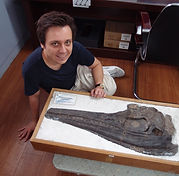
Daniel J. Field is Professor of Vertebrate Palaeontology in the Department of Earth Sciences and the Strickland Curator of Ornithology at the University of Cambridge Museum of Zoology. He is a Fellow of Christ's College, Cambridge, where Charles Darwin studied as an undergraduate, and serves as the founding director of the Darwin-Hamied Centre at Christ's College. Field also maintains research associate positions at the Denver Museum of Nature and Science and the Natural History Museum (London). Field is an evolutionary biologist and palaeontologist whose research focuses on deciphering the origins of modern avian biodiversity using fossil, anatomical, and molecular data. His work spans multiple themes including clarifying how birds survived and diversified following the mass extinction of non-avian dinosaurs, studying the evolutionary histories of major living bird groups, and understanding the evolutionary origins of distinctive biological features such as the modern bird skull. In 2020, his team announced the discovery of Asteriornis maastrichtensis (the 'Wonderchicken'), the oldest-known modern bird fossil and an early relative of the group that gave rise to living chickens and ducks. Field's publication record shows consistent research output across multiple areas of avian evolution, with recent work focusing on avian palate evolution, skeletal pneumaticity, developmental patterns in bird skulls, and the evolutionary relationships among major bird groups. His research integrates cutting-edge techniques including CT scanning, geometric morphometrics, and phylogenetic analysis to address fundamental questions about vertebrate evolution. Field leads an active research group comprising postdoctoral researchers, PhD students, and master's students from around the world. His lab has produced significant work on topics including the evolution of flightlessness in ratites, the developmental underpinnings of avian morphological diversity, and the phylogenetic relationships among major bird lineages. The lab maintains strong international collaborations and has been instrumental in training the next generation of evolutionary biologists and palaeontologists. Field is passionate about natural history and science outreach, and enjoys photographing Earth's vertebrate biodiversity in the field. His work bridges the gap between traditional palaeontology and modern evolutionary biology, contributing significantly to our understanding of how modern bird diversity arose from their dinosaurian ancestors.
Hans Christopher Bernstein is a Professor at the Norwegian Fisheries College, UiT The Arctic University of Norway, and affiliated with the Arctic Centre for Sustainable Energy (ARC). His research focuses on biotechnology, microbial ecology, synthetic biology, and microalgal carbon capture and utilization. University: UiT The Arctic University of Norway School: Norwegian Fisheries College Research Group: Microalgae & Microbiomes Research Centers: Arctic Centre for Sustainable Energy (ARC) Bernstein’s work explores the intersection of biotechnology and microbial ecology, particularly in synthetic biology applications for carbon capture. His research includes modeling microbial processes, studying lipidome plasticity in Arctic diatoms, and developing engineered genetic circuits for microbial consortia. Key trends in his publications involve marine microbiome dynamics, cold seep ecosystems, and daylight-driven carbon exchange in structured microbial communities. Recent articles highlight advancements in microalgal biotechnology for industrial carbon capture, synthetic genetic circuits, and spatiotemporal metabolic network models. His work spans both theoretical modeling (e.g., neighbor-dependent interaction inference) and applied biotechnological solutions (e.g., EcoFABS fabricated ecosystems).
Gunnar Blohm is an Assistant Professor in the Department of Biomedical and Molecular Sciences at Queen's University, affiliated with the School of Medicine and Faculty of Health Sciences. His research focuses on sensorimotor neuroscience, particularly 3D sensorimotor control, eye-hand coordination, and computational modeling of neural processes. He holds a Ph.D. from Université Catholique de Louvain and has held postdoctoral positions at York University and his alma mater. Cross-appointed to the School of Computing, Department of Psychology, and Department of Mathematics and Statistics, he is also Vice-Director of the Connected Minds initiative. His research integrates behavioral experiments, brain imaging (MEG/EEG), and patient studies to understand how sensory information is transformed into goal-directed actions. Key areas include visuomotor transformations, multisensory integration, and Bayesian processes in neural computations. Blohm leads the Computational Sensorimotor Neuroscience Lab, emphasizing collaborative projects like Neuromatch Academy and contributions to open science initiatives. Affiliated with Queen's Centre for Neuroscience Studies and Ingenuity Labs, his work bridges computational approaches with clinical applications, aiming to develop frameworks for understanding brain dysfunction and clinical tools. His recent articles explore topics like saccade dynamics, pupil responses, and generative adversarial collaborations in scientific discourse.
Leandro "Leo" Pongeluppe serves as an Assistant Professor of Management at the Wharton School of the University of Pennsylvania, holding the distinguished position of Leonard J. Horwitz Faculty Scholar. His academic journey culminated with a PhD from the Rotman School of Management at the University of Toronto, positioning him at the forefront of research at the intersection of business and societal challenges. Pongeluppe's research program centers on understanding how organizational design and governance mechanisms influence the achievement of United Nations Sustainable Development Goals. His work spans multiple continents and contexts, with field research conducted in Brazilian favelas, the Amazon rainforest, worldwide desalination plants, and African HIV/AIDS treatment clinics. Methodologically, he employs innovative mixed-methods approaches that combine econometric causal inference with ethnographic techniques to tackle complex socio-environmental challenges. His publication portfolio reveals a consistent focus on stakeholder management within contexts of socioeconomic development and environmental sustainability. The research demonstrates how businesses can effectively address global challenges through strategic stakeholder engagement, showing particular promise in environmental conservation efforts and inclusive business models. His work on the Amazon rainforest reveals how companies like Natura have successfully preserved forests through stakeholder alignment, while his favela research exposes the complex social consequences of economic mobility. Wharton AI & Analytics Initiative Research Funding (2024) Wharton Teaching Excellence Awards (2023-24) Wiley Blackwell Outstanding Dissertation Award (Academy of Management, 2023) Multiple Best Paper Awards from Strategic Management Society and Academy of Management conferences Wharton Global Initiatives and ESG Initiative Funding (2023) Prior to his academic career, Pongeluppe co-founded Insper Metricis, a research group focused on socio-environmental impact evaluation, where he contributed to Brazil's first Social Impact Bond in partnership with São Paulo State Government and international development institutions. His professional experience also includes three years as an associate researcher at the Accenture Institute for High Performance, working on inclusive innovation projects across Brazil, China, Ghana, India, Mozambique, Nigeria, and South Africa. This practical experience deeply informs his scholarly work and teaching approach, particularly in his course on Managing Established Enterprises which addresses strategic challenges facing incumbent firms.
Prabir Burman is a Professor in the Department of Statistics at the University of California, Davis, with a career spanning over three decades. His research focuses on nonparametric function estimation, model fitting/selection, image analysis, time series, and discrete data. Education: Ph.D. (1982) and Master of Statistics (1977) from University of California, Berkeley; Bachelor of Statistics (1976) from Indian Statistical Institute, Calcutta. His work bridges theoretical statistics and applied problems, including ecological studies (e.g., coyote parasites, mountain lion tracking), biomedical research (e.g., metabolic syndrome in bipolar patients), and time series forecasting. He has secured multiple NSF and NSA grants for projects on multivariate analysis, shape modeling, and covariance estimation. Recent publications highlight his expertise in predictive model fitting, stock return analysis, and stroke survivor studies. While not explicitly listing awards, his editorial roles (e.g., Journal of Multivariate Analysis) and collaborative grants underscore his academic leadership.
Emily Falk is a Professor of Communication, Psychology, Marketing, and Operations, Information, and Decisions at the University of Pennsylvania, where she serves as Vice Dean of the Annenberg School for Communication, Director of the Communication Neuroscience Lab, and Director of the Climate Communication Division of the Annenberg Public Policy Center. Her interdisciplinary work bridges communication science, psychology, and neuroscience to understand behavior change and message effectiveness. Dr. Falk received her B.A. in Neuroscience from Brown University and her Ph.D. in Psychology from the University of California, Los Angeles. Her educational background reflects the interdisciplinary approach that characterizes her research program. Dr. Falk's research focuses on the science of behavior change, examining what makes messages persuasive, why and how ideas spread, and what makes people effective communicators. Her work employs tools from psychology, neuroscience, and communication to investigate neural predictors of message effectiveness, social influence, and the spread of ideas through networks. Key research areas include health communication (particularly tobacco use), climate communication, political communication, and the neuroscience of choice and decision-making. Her groundbreaking work has demonstrated how fMRI brain imaging in small groups can predict large-scale public health campaign success. Dr. Falk's research has been recognized with numerous prestigious awards, including early career awards from the International Communication Association and the Society for Personality and Social Psychology Attitudes Division, a Fulbright grant, Social and Affective Neuroscience Society award, DARPA Young Faculty Award, and the NIH Director's New Innovator Award. She was also named a Rising Star by the Association for Psychological Science. As an advisor, Dr. Falk has mentored numerous graduate students who have gone on to successful careers in academia, government, non-profit, and business sectors. Her lab, the Communication Neuroscience Lab, is funded by major organizations including DARPA, NIH, Google, and the Mind & Life Institute. The lab operates with a mission to increase health and happiness for people and the planet through communication science. The Communication Neuroscience Lab is an interdisciplinary research group that uses tools from biological, social, and network sciences to motivate choices that benefit individuals, communities, and the planet. Current major research projects include BB-PRIME (Brain-based Prediction of Message Effectiveness), BB-PRIME Phase II focusing on climate change interventions, and the GeoScan Smoking Study examining tobacco marketing effects.
Jiyun Kang serves as an Associate Professor at Purdue University's White Lodging-J.W. Marriott, Jr. School of Hospitality and Tourism Management within the College of Health and Human Sciences. Her research examines consumer behavior, well-being, and sustainable practices across fashion, luxury, and retail sectors, with emphasis on artificial intelligence applications, crisis management, and corporate social responsibility initiatives. Her academic credentials include: PhD in Human Ecology from Louisiana State University (2010) MS in Business/Marketing from Seoul National University (2005) BA in English Language and Literature from Korea University (2002) Dr. Kang's research spans consumer psychology, sustainable consumption, and digital innovation in retail. She investigates decision fatigue in luxury contexts, AI-driven mitigation of purchase hesitation, and psychological ownership in fashion subscription models. Her work consistently employs quantitative methods including machine learning and causal modeling to analyze brand-consumer dynamics during ethical crises and sustainability transitions. Analysis of her 2022-2025 publications reveals three dominant trends: (1) blockchain/NFT applications for luxury authentication, (2) AI ethics in retail crisis management, and (3) intersectional approaches to sustainable fashion through psychological ownership frameworks. Methodologically, she increasingly integrates natural language processing with traditional consumer behavior models to examine corporate social responsibility perceptions. Scientific awards: No awards are documented in the provided materials. Advising and grants: The source text contains no information regarding graduate student mentorship or externally funded research projects.
David M. Higdon is a Professor and Department Head of the Department of Statistics at Virginia Tech within the College of Science. He specializes in Bayesian statistical modeling of environmental and physical systems, focusing on integrating physical observations with computer simulations for prediction and inference. Previously, he spent 14 years at Los Alamos National Laboratory as a scientist and group leader in the Statistical Sciences Group. Education: Ph.D. in Statistics, University of Washington, 1994 M.A. in Mathematics, University of California San Diego, 1989 B.A. in Mathematics, University of California San Diego, 1987 Research Interests: Higdon’s work spans space-time modeling , inverse problems in hydrology and imaging , statistical modeling in ecology and environmental science , and multiscale models . He develops methods for parallel processing in posterior exploration , statistical computing , and Monte Carlo simulations . His research addresses critical challenges in uncertainty quantification (UQ), including climate modeling, nuclear density functional theory, and geophysical imaging. Publications Trends: His recent articles emphasize Bayesian methodologies applied to complex systems, such as climate forecasting, materials science, and cosmology. A recurring theme is the development of emulators and surrogate models to handle computationally intensive simulations. Awards: Fellow of the American Statistical Association Advising & Grants: While no specific advisees are listed, Higdon has contributed to interdisciplinary collaborations in UQ and statistical modeling. His work has been supported by grants from agencies such as the National Science Foundation and Department of Energy. Labs/Teams: He leads the Statistics Department’s efforts in UQ and computational statistics, fostering collaborations across engineering, environmental science, and physics.
Professor Nir Oren is a faculty member at the School of Natural and Computing Sciences , University of Aberdeen. His research focuses on multi-agent systems , formal argumentation , computational trust theory , and norm-based reasoning . He currently supervises PhD students in Computing Science and serves as Dean for Research Performance. Research Specialisms: Artificial Intelligence, Operational Research Contact: n.oren@abdn.ac.uk Research Trends (2022–2025): Nir Oren's publications span argumentation theory , BDI agent modeling , resilience in autonomous systems , and human-machine collaboration . His recent work addresses responsibility-aware AI , medical explainability , and environmental sensor networks . Key methods include probabilistic reasoning , game theory , and logical formalisms .
Sebastian Pokutta is a Professor at Technische Universität Berlin, Vice President at the Zuse Institute Berlin (ZIB), and Chair of the Cluster of Excellence MATH+ and MODAL. His research lies at the intersection of Artificial Intelligence, Optimization, and Machine Learning, with applications in sustainability, quantum computing, and mathematical discovery. Research Interests: Development of novel optimization algorithms, particularly Frank-Wolfe and Conditional Gradient methods. Integration of machine learning with decision-making and combinatorial optimization. AI for Science (AI4Science), including applications in quantum mechanics and ecology. AI and creativity, human-AI co-creativity, and social science modeling using multi-agent LLMs. His recent publications (2025) demonstrate a strong focus on scalable optimization, interpretability, and algorithmic foundations. The work spans theoretical advances in convergence analysis, practical implementations in Julia (FrankWolfe.jl), and real-world deployments in biomass estimation and quantum certification. Scientific Awards: Gödel Prize (2023) STOC Test of Time Award (2022) Science Prize of the Association for Pediatric Orthopedics (2025) Google Research Awards (2021, 2020) NSF CAREER Award (2015) He advises a vibrant research group, with former students and postdocs securing faculty positions at institutions like Inria, Carlos III University, and James Madison University. His group has received funding from Google, DFG, and Math+, and he leads major collaborative efforts such as the Thematic Einstein Semester on Mathematical Optimization for Machine Learning. Labs and Teams: Interactive Optimization and Learning Lab at TU Berlin and ZIB. Leadership in MODAL and MATH+ research clusters, fostering interdisciplinary collaboration in mathematical optimization and AI.
Joséphine Gantois is an Assistant Professor in Human Dimensions of Biodiversity Conservation at the University of British Columbia, jointly appointed in the Institute for Resources, Environment and Sustainability (IRES) and the Food and Resource Economics Program within the Faculty of Land and Food Systems. Her work bridges economics, ecology, and data science to address ecological footprints in agricultural and natural landscapes. She holds a Ph.D. in Sustainable Development from Columbia University, an M.P.A. in International Development from the London School of Economics, and advanced degrees in economics and the sciences from École Polytechnique. Research Focus: Dr. Gantois investigates practical solutions for reconciling land use incentives with conservation goals, particularly in agricultural areas. Her research emphasizes causal inference methods, integrating remote sensing, machine learning, and qualitative tools like interviews. Key areas include biodiversity monitoring, policy impact assessment, and ecosystem function analysis. She has explored habitat restoration in Ontario grain farms during her postdoctoral work under Dr. Claire Kremen at UBC. Teaching & Engagement: She teaches in the Master of Food and Resource Economics (MFRE) program, focusing on interdisciplinary approaches to sustainability challenges. Her work highlights the intersection of human behavior, policy design, and ecological outcomes, aiming to inform actionable conservation strategies.