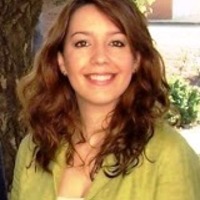
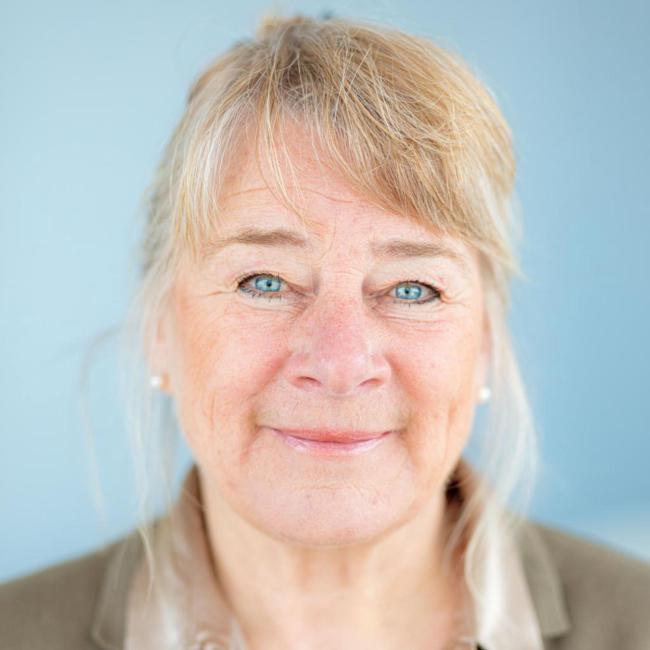
Dite Liepa is an Assistant Professor at the College of Social Sciences, Riga Stradins University. She specializes in sociolinguistic research, language education, and easy-to-read language development. Roles: Assistant Professor, Curriculum Validation Expert Key collaborations: Rīgas Tehniskā universitāte, Latviešu valodas aģentūra Research interests focus on: Language acquisition and sociolinguistic dynamics in Latvia Easy-to-read language applications for vulnerable populations Lexical and word formation analysis Media language quality assessment Prejudice in educational contexts Special needs language accessibility Recent publications (2024) highlight trends in language simplification , minority teacher challenges , and cognitive accessibility for people with special needs. Her work bridges academic linguistics with practical language policy implementation.
Gabrina Pounds is a Senior Lecturer in Applied Linguistics at the University of East Anglia, affiliated with the School of Media, Language and Communication Studies. She also holds the title of Honorary Research Fellow and is a member of the Area Studies, Language and Communication Studies, and Migration Research Network groups at UEA. BA Hons (German Language and Linguistics), University of East Anglia, 1989 PhD (Discourse Analysis), University of East Anglia, 2003 Her research centers on discourse analysis, particularly using Systemic Functional Linguistics and Appraisal Theory. She investigates how attitude, emotion, and empathy are expressed in professional communication, including medical consultations, police interviews, media, advertising, and political discourse. Her work also examines person-centeredness and cultural awareness in communication, with a growing interest in accessible language for people with intellectual disabilities. Her recent publications (2019–2024) reveal a strong trend in applying linguistic theory to real-world contexts—especially in health and justice. Key themes include the impact of linguistic simplification on comprehension, the role of empathy in building rapport during police interviews, and how environmental values are linguistically constructed in argumentative texts. These works span disciplines such as health communication, forensic linguistics, and environmental discourse studies. There are no scientific awards mentioned in the provided text. Gabrina Pounds has been actively involved in advising and collaborative research, particularly in interdisciplinary projects linking linguistics with healthcare and emergency services. She has engaged with the East of England Ambulance Service Trust, the International Academies of Emergency Dispatch, and the College of Policing to support research on optimizing communication practices. She has also worked with patient groups to inform research on empathy and patient care, demonstrating a commitment to public and professional engagement. No formal grants are listed, but her activities suggest externally engaged research initiatives. She is associated with several research networks at UEA, including the Migration Research Network and Language and Communication Studies. Her involvement in public seminars like the Norwich City of Interculture events highlights her outreach and interdisciplinary collaboration.
Prof. PhDr. Zuzana Bohušová, PhD is a distinguished Professor at the Department of German Studies, Faculty of Arts, Matej Bel University in Banská Bystrica, Slovakia. She serves as the person responsible for German language study programs (main guarantor), coordinator of two CEEPUS networks for MBU, and is editor-in-chief and chair of the scientific board of the journal Nová Filologická revue. Her academic journey includes earning her Mgr. degree from the Faculty of Arts, UPJŠ in Prešov (1992), PhDr. from the Faculty of Philology, University of Bratislava (2004), PhD from the Faculty of Arts, Comenius University in Bratislava (2006), becoming an Associate Professor at Comenius University (2010), and achieving the rank of Professor at UCM in Trnava (2018). Bohušová's research spans multiple linguistic domains with a particular focus on Easy-to-Understand Languages, as evidenced by her leadership of the VEGA 1/0549/22 project 'Accessible! Linguistics of Easy-to-Understand Languages' (2022-2024). Her scholarly work demonstrates expertise in phonetics and phonology of German, interpreting and translation studies, transcultural communication, and linguistic hybridity. She has conducted extensive international research collaborations, including Erasmus and CEEPUS teaching mobility programs at universities in Vienna, Ostrava, Miskolc, and Zlín. Her recent publications reveal a strong trend toward linguistic accessibility research, with numerous articles exploring comprehensibility strategies, feature neutralization, and the development of easy-to-understand language frameworks. These works span both theoretical linguistic investigations and practical applications in medical communication, professional environments, and cross-cultural contexts. Her research bridges traditional linguistic scholarship with contemporary accessibility needs, particularly for vulnerable populations. Bohušová has actively supervised doctoral and master's students, including Adriana Tarajová, Adam Valko, and Desana Kiselová, who have worked on projects related to accessible language, intralingual translation, and linguistic comprehensibility. She has secured significant research funding through VEGA projects, Jean Monnet Modules, and international collaborations, demonstrating her ability to lead substantial research initiatives. Her academic leadership extends to editorial roles, including as editor-in-chief of Nová Filologická revue, and participation in scientific boards of multiple international journals. She has organized and contributed to numerous international conferences, particularly the Linguistische Treffen in Wrocław and various GeSuS Fachtagung events across Europe.
Ana María Medina Reguera is a Full Professor in the Department of Philology and Translation at Universidad Pablo de Olavide, Spain. Her academic journey began with a PhD in Seville (2004), focusing on German graphematics. She leads the COMINTRAD research group on specialized translation and multilingual communication, with a strong focus on economic texts and easy-to-read adaptations. Education: PhD in Philology from the University of Seville (2004), thesis supervised by Dr. Rafael López-Campos Bodineau. Her research spans translation theory, contrastive linguistics, corpus-based studies, and accessibility translation . She has pioneered comparative analyses of economic quantifiers and acronyms in Spanish-German media, and developed methodologies for web localization and cognitive accessibility. Recent work explores easy-to-read practices across Europe and pictographic communication in legal contexts. While her Google Scholar articles highlight the 2025-2024 period covering diverse genres from agri-food specifications to augmented legal communication, her work consistently addresses translation's role in business internationalization and inclusive education. No scientific awards are explicitly mentioned, though her 17+ publications and 6 co-authorships demonstrate substantial academic engagement. As faculty member at Universidad Pablo de Olavide since 2007, she contributes to the Philological, Translation and Cultural Studies doctoral program. Her projects examine corporate web localization, economic press translation, and specialized text typology, particularly in agri-food and viticultural sectors.
Dr. Ku In (Kyuin) Kim serves as a Lecturer in Korean Language at the School of East Asian Studies within the School of Languages, Arts and Societies at the University of Sheffield, where she has been employed since 2018. She earned her PhD in Korean Language Pedagogy from Ewha Womans University in 2021. Her academic credentials include: Bachelor of Arts from the University of California, San Diego Master of Arts from Ewha Womans University Doctor of Philosophy from Ewha Womans University Dr. Kim's research centers on intercultural competence in Korean language education, examining how cultural awareness is perceived, acquired, measured, and implemented in pedagogical practices. She critically analyzes cultural representations in Korean language textbooks and develops frameworks for integrating language proficiency with cross-cultural communication skills. Her teaching methodology emphasizes student-centered, interactive learning environments that build confidence through practical cultural engagement. Her publication history reveals a consistent trajectory in Korean language pedagogy research, with increasing methodological sophistication from critical discourse analysis to mixed-methods studies. Recent work demonstrates specialized focus on culturally embedded teaching materials, particularly through food culture as a pedagogical vehicle, reflecting her commitment to developing practical resources for language educators. Dr. Kim actively leads professional initiatives including the current '[K-Series] Learning Korean through Cultural Keywords' textbook development project and previously directed Sungkyunkwan University's 'Daebak Easy Korean' Udemy curriculum, which innovatively combined Korean language instruction with cultural content focused on Korean Foods.
Dr. Rebecca Sudore is a distinguished Professor of Medicine at the University of California, San Francisco (UCSF), where she serves as an ARC Core Faculty member. She is a geriatrician and palliative medicine physician who directs the Innovation and Implementation Center in Aging & Palliative Care (I-CAP) and the Vulnerable Populations Aging Research Core of the NIA-funded Pepper Center. Recognized for her exceptional contributions to healthcare, she received the prestigious 2025 UCSF Founders Day Award for her exemplary service to the university and community. Dr. Sudore's educational journey at UCSF includes: M.D. from the UCSF School of Medicine (1999) Residency at the UCSF School of Medicine (2002) Geriatrics Clinical Fellowship at the UCSF School of Medicine (2003) Advance Training in Clinical Research at the UCSF School of Medicine (2004) Certificate in Implementation Science from CTSI, UCSF (2013) Dr. Sudore's research program focuses on improving advance care planning (ACP) and medical decision making for culturally and ethnically diverse older adults. Her work addresses critical healthcare disparities by designing patient-centered tools including an easy-to-read advance directive available in multiple languages and the interactive PREPARE for Your Care website (www.PREPAREforYourCare.org). She has published groundbreaking research demonstrating how limited literacy affects mortality in elderly patients and has developed interventions to improve informed consent processes for patients with literacy challenges. Her work has called for a shift in ACP from DNR/DNI checklists to preparing patients and their loved ones for medical decision making. Her recent scholarly output demonstrates a consistent focus on improving communication, decision-making, and care planning for vulnerable populations. Dr. Sudore's research spans multiple domains including geriatrics, palliative care, health literacy, and health equity, with particular attention to racial, ethnic, and language disparities in healthcare. Her work often involves developing and testing interventions to prepare patients and their families for complex medical decisions, with numerous publications examining virtual versus in-person palliative care, social isolation in chronic disease, and strategies to improve serious illness communication. Dr. Sudore's significant contributions to medicine have been recognized with numerous prestigious awards: UCSF Founders Day Award (2025) Academic Senate Distinction In Mentoring Award, UCSF (2024) Excellence in Scientific Research in Palliative Care, American Academy of Hospice and Palliative Care (2020) Induction into the American Society for Clinical Investigation, ASCI (2016) Outstanding Scientific Achievement for Clinical Investigation, American Geriatrics Society (2015) Junior Investigator of the Year, Society of General Internal Medicine (2012) Physician Faculty Scholar, RWJ (2009-2012) Junior Investigator of the Year, American Geriatrics Society (2009) Throughout her career, Dr. Sudore has demonstrated exceptional commitment to mentoring the next generation of researchers and clinicians. Her work with the PREPARE for Your Care program has secured significant funding to develop and test innovative approaches to advance care planning. She has led numerous clinical trials and implementation studies that have transformed how healthcare systems approach patient-centered decision making for vulnerable older adults, with particular focus on improving care for racially, ethnically, and linguistically diverse populations. Dr. Sudore directs the Innovation and Implementation Center in Aging & Palliative Care (I-CAP), which focuses on translating research findings into practical tools and interventions that can be implemented across healthcare systems. Her Vulnerable Populations Aging Research Core supports research on aging among diverse and underserved populations, addressing critical gaps in our understanding of how to improve care for these communities. From 2002 to 2023, she provided primary care to vulnerable older Veterans in the Geriatrics clinic at the San Francisco VA Medical Center and continues to attend on the inpatient Palliative Care Service there.
Dr. Carlo Eugeni is an Associate Professor of Audiovisual Translation at the School of Languages, Cultures and Societies, University of Leeds. He serves as Programme Leader for the MA Audiovisual Translation and Localisation, while teaching live subtitling, media access services, and conference interpreting. Co-founder of the International Symposium on Live Subtitling Co-funder of the International Association of Respeaking on A.I.R. Designer of the live subtitling self-assessment tool MARS Member of the UN International Telecommunications Unit experts group on accessibility in the metaverse His research focuses on Easy Language, Plain Language, Diamesic Translation, and accessibility for the deaf and hard-of-hearing , including subtitling strategies and conference interpreting. He has contributed to Erasmus+ projects LTA (live subtitlers) and T2V (Easy-to-Read validators), and currently collaborates on the Erasmus+ CCUV project on Easy Italian writing and the Horizon iDEM project on accessibility in decision-making processes. Scientific award: Honorary Award by APIC (2018) for empowering deaf individuals through subtitling He supervises postgraduate researchers like Yuehan Zhou and holds professional memberships including the International Federation for Information and Communication Processing, Intersteno Italia, and the Accademia Italiana di Multimedialità della Scrittura e della Comunicazione.
Camilla Forsberg is a Senior Lecturer in Swedish Language and Education at Malmö University's Faculty of Education. She specializes in pedagogy, school development, and early literacy instruction, with a particular focus on upper secondary diplomas, preschool writing, and collaborative teacher learning. Her work bridges research and practice through projects like Differentierad undervisning för högre måluppfyllelse and Skrivandets gränser . PhD in Science (Linnaeus University, 2010) Master's in Education (Malmö University, 2012) Bachelor's in Social Science (Kristianstad University, 2009) Swedish Language Consultant Certification Her research explores Swedish language education , normative writing practices , and collegial learning models . Recent work analyzes writing instruction boundaries and preschoolers' agency in literacy development. Articles emphasize educational equity , curriculum innovation , and discourse analysis . Projects highlight her leadership in school development initiatives, including collaborative consensus-building for diploma standards. Forsberg actively disseminates research through invited talks and peer-review contributions , notably for the journal Folkmålsstudier . She contributes to the Learning in Language and Literature (LiLL) research group, focusing on pedagogical practices across preschool to upper secondary education. Her work integrates play-based learning , student autonomy , and policy implementation frameworks.
Justina Bružaitė–Liseckienė serves as an Assistant (mapped to Lecturer rank) at Vilnius University's Department of Lithuanian Studies since 2016, teaching MA courses in Corpus Linguistics and Research Methods alongside Lithuanian language instruction for international students. Her work bridges academic research and practical language education within the Faculty of Philology. She holds a PhD in Humanities from Vilnius University (2021) with a thesis on object marking in Lithuanian among Russian-high-school pupils, supervised by Prof. Dr. Loreta Vilkienė. Her academic foundation includes a Master's in Applied Linguistics and a Bachelor's in Lithuanian Philology and Spanish Language from the same institution. Her research centers on foreign language acquisition, easy language, and corpus linguistics, investigating how sociolinguistic factors and frequency effects impact Lithuanian learning—particularly among Russian-speaking students. She actively promotes accessible communication through science outreach, including public articles and radio interviews on easy language. Recent publications reveal consistent focus on sociolinguistic dynamics in multilingual education and practical guidelines for language simplification. Her 2021 co-authored book established foundational protocols for easy-language text preparation, directly supporting social inclusion initiatives. Dr. Bružaitė–Liseckienė participates in NŠA-funded projects developing Lithuanian language proficiency testing systems and studies language motivation under State Commission of Lithuanian Language grants. As a member of the Lithuanian Applied Linguistics Association and EALTA, she contributes to national language policy and European assessment standards.
Inga Daraškienė is a Lecturer at Vilnius University's Faculty of Philology, Department of Lithuanian Studies. She holds advanced degrees in applied linguistics and education policy, specializing in Lithuanian language education and linguistic pragmatics. Master in Applied Linguistics (VU, 2015) Master in Educology (Education Policy) (VU, 2007) Bachelor in Classical Philology (Latin and Old Greek) (VU, 2005) Her research focuses on sociolinguistic patterns, Lithuanian as a foreign language, and pragmatic aspects of communication. She actively develops digital teaching tools, including the Short Online Lithuanian Course at www.olc.flf.vu.lt . Her 2019 publication on conversation strategies in children's language reflects her interests in language acquisition and pragmatic development. She contributes to the 'Lengvai skaitomos kalbos' (Easy-to-Read Language) research project targeting social inclusion. Additional roles include administering the Department of Lithuanian Studies' Facebook account since 2017 and organizing seasonal Lithuanian language and culture courses. She previously served as a Council member for the Faculty of Philology (2019-2020) representing doctoral students.
Päivi Kuusi is a University Lecturer in Translation Studies at the University of Helsinki's Department of Languages and serves as Supervisor for the Doctoral Programme in Language Studies. She holds a PhD in Translation Studies from Tampereen yliopisto (2011) and is an Authorised Translator (Russian-Finnish) certified in 2013. Research Focus: Her work spans Translation Studies and Literature, with emphasis on: Easy Language (Selkokieli) accessibility tools Multilingual crisis communication (particularly COVID-19) Literary translation methodologies Translation quality and awareness Comparative text analysis Publication Trends: Recent works (2024-2025) demonstrate strong focus on practical applications of translation theory, including crisis communication tools, Easy Language accessibility, and literary translation frameworks, often addressing multilingual challenges in public health contexts. Projects & Grants: Principal investigator for 'Selkokielelle kääntäminen' (Translation into Easy Language, 2019-ongoing) Researcher in Kone Foundation project 'Translation, migration, and democracy' (2022-2026) Co-managed digital education project for Master's program (2018-2019) Kone Foundation Grant Researcher (2022-2025) Leadership: Steering Group Member: Klaara-network (Finnish Easy Language research, 2023-2025) Examination Board Member: Authorised Translators (2023-2027)
Christina Olin-Scheller is a Professor of Literature in Education and Applied Pedagogy at Karlstad University, Sweden, and holds a guest professorship at Høgskolen i Innlandet, Norway. She leads the Centre of Language and Literature Education (CSL) and coordinates the Research on Subject-specific Education (ROSE), a university profile area. Her work bridges educational research with practice, focusing on literacy, digital media, and teacher development. Olin-Scheller also chairs the Nordic network KOSS, promoting cross-disciplinary collaboration. She earned a PhD in Comparative Literature and has extensive experience in teacher education and doctoral supervision. Her research explores literacy practices in digital environments, including fan fiction, easy-to-read literature, and classroom smartphone use. Key projects include 'Net Shadow' (2012–2015) and 'Platform Pedagogy' (2020–2024), examining media's role in education. She collaborates internationally with institutions like University College London and Helsinki University. Her professional engagements include the Teacher Union’s research council, editorial roles in ForskUL , and frequent invited lectures on literacy, such as at the Jonsered Conference (2022) and Gothenburg Book Fair (2022).
Polly Barton is a Visiting Professor at the Faculty of Asian and Middle Eastern Studies , University of Cambridge. She specializes in Japanese literature translation and cultural studies, with a focus on contemporary narratives and language dynamics. Her work bridges Japanese literary traditions with global audiences through meticulous translations and critical essays. Key roles include organizing and presenting at academic events such as the East Asia Seminar Series, where she discussed translation's role in dissolving cultural barriers. She has translated seminal works by authors like Aoko Matsuda and Mieko Kanai, emphasizing themes of gender, labor, and identity. Awards: 2019 Fitzcarraldo Essay Prize for Fifty Sounds , a seminal exploration of Japanese language and society. Translations: Where the Wild Ladies Are , There's No Such Thing as an Easy Job , and Mild Vertigo . Her research intersects translation practice with critical analysis, contributing to debates on literary representation and cross-cultural communication. She frequently collaborates with institutions like Felicity Bryan Associates for professional engagements.
Isabel Schwenk is a Researcher at the Institute for Media, Theatre and Popular Culture at the University of Hildesheim since 2021, affiliated with the DFG Research Training Group 'Aesthetic Practice'. Her work focuses on inclusive theatre practices, particularly exploring 'Theatre and Easy Language' for vulnerable audiences. She holds a Master’s in Art and Media Staging from Hildesheim. Her research integrates documentary and autobiographical approaches with non-professional performers, critically examining power structures through comedic methods. She collaborates with collectives like Tanzerei and Markus&Markus on projects such as 'Kultur macht stark', involving intergenerational storytelling and inclusive art with individuals of diverse abilities. She actively participates in international conferences, including the 14th International Research College of Theatre Arts and the 'S-PLOT' congress, presenting on accessibility and inclusive theatre methodologies. Her pedagogical work includes theatre workshops for children, youth, and adults, emphasizing participatory and accessible art practices. She also contributed to the edited volume 'BIOGRAFIEren auf der Bühne' (2020), analyzing biographical performance techniques in theatre.
David Guerrero Martos is an Associate Professor in the Department of Electronic Technology at the University of Seville. His primary research focuses on microelectronics, embedded systems, and hardware security solutions. He leads the 'Digital Research and Development' group and has participated in numerous national and international grants, including the 'USECHIP: Chair in Microelectronics' project (TSI-069100-2023-001) and the 'Easy-to-deploy intelligent network for independent living for our seniors (RIING)' initiative (IPT-2012-0645-300000). His academic contributions include pioneering work on FPGA-based IoT security (e.g., E-LUKS), high-precision timing systems, and low-power digital circuit design. He has published extensively in journals like IEEE Access and Electronics , and his research spans topics such as trigonometric function computation, hardware bootloaders (NanoBoot), and SoC integration frameworks (evercodeML). Guerrero Martos has over 20 years of experience in both academic and applied research, with notable contributions to teaching methodologies in electronics. He holds patents for innovative digital circuits and has collaborated on open-source hardware projects, emphasizing practical applications of embedded systems.