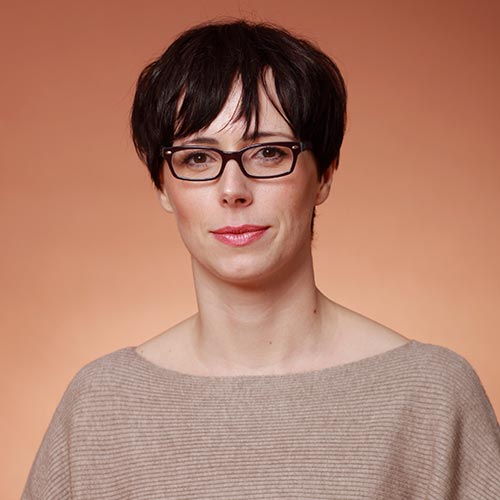
Daniel Przywara serves as a Lecturer at the Department of Bridges, Geotechnics and Construction Processes within the Faculty of Civil Engineering and Architecture at Opole University of Technology, where he contributes to civil engineering education and research. His expertise centers on critical infrastructure domains with emphasis on: Bridges Engineering : Structural design, load analysis, and longevity assessment of bridge systems Geotechnical Engineering : Soil mechanics, foundation engineering, and earthwork stability Construction Processes : Methodology optimization, safety protocols, and material application in building projects Infrastructure Resilience : Durability assessment under environmental and operational stresses Through scheduled student consultations and academic supervision, he advances practical engineering knowledge while maintaining active engagement in departmental research initiatives focused on modern construction challenges.
Prof. Catalin Fetita is a Professor at Telecom SudParis within the ARMEDIA department, specializing in medical imaging and computational modeling of respiratory diseases. His work focuses on pulmonary mechanics, lung disease analysis, and AI-driven diagnostic tools. He collaborates with institutions like SAMOVAR, contributing to advancements in CT imaging, poromechanical modeling of fibrotic diseases, and teleoperation systems in healthcare. Research Interests : His research integrates medical imaging, biomechanical modeling, and AI to study asthma, COPD, interstitial lung diseases, and post-COVID-19 pulmonary complications. Key areas include quantitative CT analysis, personalized lung modeling, and computational tools for clinical decision support. Key Contributions : Over 150+ publications span computational methods for airway segmentation, AI applications in radiology, and interdisciplinary projects linking imaging to biomechanics. Recent work addresses fibrotic disease modeling and teleoperation interfaces for medical training. Labs/Teams : Active in the SAMOVAR research lab at Telecom SudParis, focusing on medical imaging and computational health technologies.
Andreja Đuka is an Associate Professor at the Faculty of Forestry and Wood Technology, University of Zagreb. Their primary affiliation is within the Department of Wood Technology. They have held academic roles since 2008, progressing from assistant to associate professor. Professional experience includes work at Hrvatske vode (Water Management Legal Entity) and active involvement in European educational projects like Technodiversity. Research focuses on timber harvesting systems, forest road design, and environmental sustainability. Key interests include mechanized forestry operations, soil impact analysis from machinery, and GIS applications in forest management. Publications emphasize practical solutions for optimizing forest accessibility and reducing environmental degradation. Lectures are conducted in Croatian and English, covering courses like Timber Harvesting. Consultations are by appointment, and they actively contribute to academic conferences (e.g., FORMEC) and international collaborations.
Prof. Dr. Lutz Heinrich Benner is an Honorary Professor and Lecturer at the Georg Agricola University of Applied Sciences, affiliated with the Department of Georesources and Process Engineering. His career spans over 40 years in geotechnical and hydrochemical systems, with a focus on coal mining and environmental impact mitigation. Education: Physical Geography and Geology (Hydrogeology and Geotechnics) from Ruhr University Bochum; Doctorate (Dr. rer. nat.) from Clausthal University of Technology Research interests include methane gas production, hydrochemistry, shallow drilling, geotechnical systems, environmental net studies, and waste management in mining contexts. His work addresses methane migration, groundwater contamination, and geotechnical safety measures. Publications highlight expertise in methane emission control using geotextiles, geotechnical modeling, and mine waste management. Key topics span hydrogeology, coal mining safety, and environmental engineering. Benner has held leadership roles at Deutsche Montan Technologie GmbH (DMT) and operates an independent office for geotechnical systems since 2007. He has collaborated extensively on mine gas utilization and hazard prevention.
Faridaddin Vahdatikhaki is an Associate Professor at the University of Twente's Faculty of Engineering Technology, specializing in Civil Engineering and Geosciences. His research focuses on digital twin technologies, urban heat island mitigation, construction automation, and virtual reality applications in education and industry. He has contributed over 74 publications with a Scopus h-index of 1263 and 17 h-index, demonstrating significant academic impact. Research interests include: Integration of digital twins in infrastructure management Data-driven analysis of urban microclimates Operator training systems for construction equipment Technological mediation in construction processes Key contributions include: Development of VR-based training simulators for heavy equipment operators Pioneering semantic digital twin frameworks for road distress management Analysis of urban heat island effects using street typology models He received prestigious awards including the ECIU European award for Innovation in Teaching (2017) and multiple teaching excellence recognitions from the University of Twente. His work bridges academia and industry through collaborations with institutions like Chalmers University of Technology and the Digital Society Institute.
Claudio Benghi is an Assistant Professor in the Architecture and Built Environment Department at Northumbria University. He holds a PhD in Engineering awarded in March 2004. His research focuses on Building Information Modeling (BIM), optimization algorithms, interoperability in construction technologies, and sustainability in construction. Key areas include geometric optimization of BIM models, collaborative workflows in construction projects, and development of interoperable BIM software tools like the xBIM Toolkit. Dr. Benghi has produced 18 research outputs including peer-reviewed articles, book chapters, and conference papers. His work addresses challenges in MEP project optimization, IFC model validation, and digital plan of work automation. He collaborates with international researchers on projects like geometric optimization algorithms and constraints in BIM component design. His contributions span theoretical advancements and practical tools, such as the XBIM.Essentials library for interoperable applications. Recent research emphasizes circularity data integration in BIM standards and leveraging big data for construction value optimization. His publications highlight trends in BIM interoperability, AI applications in interactive art installations, and 5D modeling systems linking cost, schedule, and 3D models. He actively participates in conferences and journals like Automation in Construction and The Journal of Open Source Software. Notable projects include longitudinal interoperability tests for BIM components and automated verification of collaborative workflows. His work bridges civil engineering, computer science, and construction management to advance digital construction practices and sustainable building strategies.
Omer Tatari is an Associate Professor in the Department of Civil, Environmental, and Construction Engineering at the University of Central Florida's College of Engineering and Computer Science. His research and academic contributions are centered on sustainability in infrastructure and construction systems. Education: Ph.D. in Engineering, University of Maryland, College Park M.S. in Industrial Engineering, Purdue University, West Lafayette M.S. in Construction Management, Istanbul Technical University His research interests span Sustainable Engineering , Life Cycle Assessment , Green Buildings , and Sustainable Infrastructure Systems . He has made significant contributions to sustainable construction methodologies, infrastructure decision-making, and environmental impact reduction through optimization and systems modeling. As the Subject Editor of the International Journal of Life Cycle Assessment , he plays a key role in advancing scholarly discourse in sustainability science. The recent publications reflect a strong trend in applying optimization techniques—particularly multi-objective and genetic algorithms—to construction and infrastructure problems, with a focus on socio-economic and environmental sustainability. His work bridges civil engineering with systems analysis, environmental science, and policy, emphasizing real-world applications in urban transportation, earthwork, and public-private partnerships. Scientific Awards: No formal awards listed in the provided content. Tatari has advised a total of 20 graduate students, including 14 doctoral and 6 master’s students, demonstrating a strong commitment to academic mentorship. His research is supported by extensive publication output—over 100 scientific papers—with no mention of specific grants, though his editorial role and publication volume suggest active research funding. He is not described as part of any named lab or research team, but his work implies leadership in sustainability-focused engineering research at UCF.
Prof. Dr.-Ing. habil. Jens Engel is a Professor of Geotechnics at the Faculty of Civil Engineering, HTW Dresden. He serves as Dean of the faculty and heads the Professorship for Geotechnics. His expertise spans soil and rock properties, geotechnical project management, and foundation engineering. Teaching Areas: Soil mechanics fundamentals Foundation and dam construction Numerical methods in geotechnics Excavation techniques Research Focus: Prof. Engel leads projects like PrAG (integrated geotechnical project archive), Geo-DATe (laboratory data evaluation), and TeRRaS (soil/rock characteristic database). He also explores novel foundation elements and earthwork construction on loose soils. Administration: As Dean, he oversees faculty operations and collaborates on interdisciplinary projects, including German-Czech training initiatives in earthwork construction.
Marti Chaatsmith serves as Interim Director of the Newark Earthworks Center at The Ohio State University Newark, where she leads initiatives centered on Indigenous perspectives of the Hopewell Ceremonial Earthworks. Her work focuses on building sustainable relationships with tribal nations—particularly the Eastern Shawnee Tribe of Oklahoma—advocating for Native American inclusion in World Heritage processes since 2007, and examining earthworks as living cultural landscapes of spirituality and power. Chaatsmith's research bridges archaeology, cultural heritage, and social justice through projects like the Land-Grant Truth and Reconciliation initiative, which documents tribal perspectives on historic land seizures benefiting universities. She explores earthworks' contemporary significance through artistic collaborations, tribal leadership interviews, and community-engaged scholarship that centers Indigenous knowledge systems in heritage management. Her publication record (2016-2023) reveals consistent focus on decolonizing research methodologies, with recent work analyzing earthworks through Indigenous concepts of time and documenting tribal stewardship frameworks. This scholarship appears in Tribal College Journal, university press anthologies, and interdisciplinary forums addressing cultural memory and heritage preservation. Chaatsmith has received significant recognition: 2012 Ohio State Newark Ohio Central Technical College Diversity Award As Interim Director, she mentors students through community-based research projects and secures major grants including National Endowment for the Humanities funding for the Virtual World Heritage GIS Web Map. Her work creates pathways for tribal co-management of heritage sites through collaborations with Miami University's Myaamia Center, Ohio History Connection, and tribal cultural departments. The Newark Earthworks Center operates as an interdisciplinary hub where Chaatsmith facilitates partnerships between tribal nations, academic researchers, and public institutions. Current initiatives include developing tribal-led interpretation frameworks for earthworks sites and creating educational resources that integrate Indigenous perspectives into public understanding of these ancient monuments.