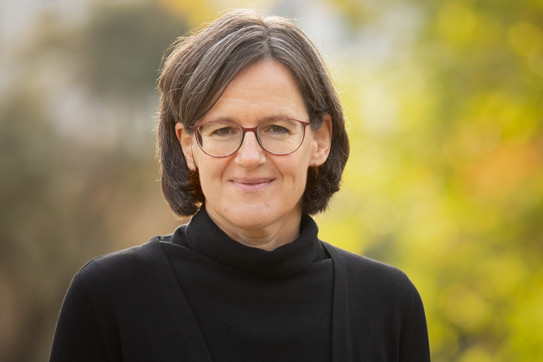
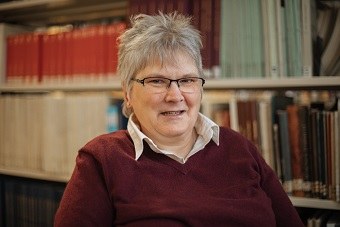
Marina Schramm is a researcher and doctoral candidate specializing in foreign language didactics, with a focus on spelling education for German as a second language and implicit learning through classroom interactions. She is affiliated with a university's Department II (English Studies team) and teaches English and German at a Realschule plus, operating in multilingual and multicultural settings from early childhood to tertiary education. Educational Background: MA in European Bilingual Education (Karlsruhe) 1st and 2nd State Examinations for primary/secondary school teaching (Karlsruhe/Pforzheim) European teaching qualification for Content and Language Integrated Learning (CLIL) Research Focus: Her work explores tacit knowledge acquisition in teacher education, the role of lyrical/narrative texts in authentic classroom practices, and the integration of linguistic chunks in second language processing. Recent projects include action research on skills-oriented literary English lessons and didactic frameworks for future tense instruction. Publications: Three peer-reviewed works center on second language didactics, spanning nominal compounds in language teaching, future tense pedagogy, and the interplay between tense/mood in language acquisition.
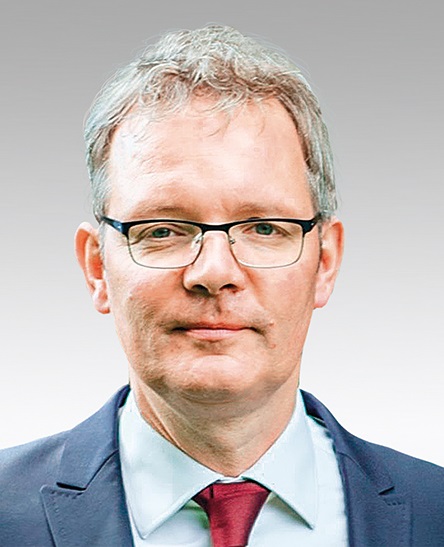
Prof. Dr. Annika Goeze holds the Chair of Educational Science with a focus on professional and company-based continuing education at the Eberhard Karls University of Tübingen since April 2021. She was previously a professor at TU Chemnitz (2019-2021) and has held visiting positions at Ruhr University Bochum and Karl-Franzens University of Graz. Her work centers on professional development , digital media in education , and implementation research in adult education. Her research includes: Video case-based teaching for competence development Digital sovereignty in language education Personnel diagnostics in continuing education Teacher training program evaluation Implementation research in educational systems Recent article trends emphasize digital media integration in teacher training, leadership development, and evidence-based professional development. She leads the DFG-funded DigiNICs project and has secured grants from BMBF and the State of Baden-Württemberg. Scientific awards include the Leibniz Mentoring Program scholarship and DFG Young Researchers’ Academy admission. Grants & Projects : "Digitally Supported Networked Improvement Communities" (BMBF, 2023-2025) "Quality Offensive for Teacher Training" (BMBF, 2021-2023) Leadership training evaluation (Baden-Württemberg, 2023) Ongoing DFG/DIE research on personnel diagnostic competencies (since 2013) Labs & Teams : She co-leads the Institute of Educational Science at Tübingen and coordinates research groups within the Tübingen School of Education . Her collaborative work includes the development of the Online Case Laboratory (www.videofallarbeit.de).
Prof. Dr. Susanne Ehrenreich holds the Chair for Applied Linguistics and English Language Education at the Technical University of Dortmund since 2010. Previously, she served as lecturer and assistant professor at LMU Munich (2002-2010) and held acting professorships at Catholic University of Eichstätt-Ingolstadt. A fully qualified teacher with secondary school experience in Germany, she specializes in English as a Lingua Franca (ELF) and its Business English variant (BELF), focusing on intercultural communication and language education . PhD summa cum laude (2004) on 'Residence Abroad and Teacher Education' Co-organized ELF/BELF research workshops (2012-2022) Editorial board member for Journal of English as a Lingua Franca (2012-present) Her research examines language use in German multinational corporations , communities of practice , and pedagogical implications of ELF/BELF . She has conducted extensive qualitative-ethnographic research in international business contexts, including landmark studies at Siemens and Daimler. Her work bridges language contact theory with corporate communication practices. Key publication themes include: Linguistic diversity in business Multilingual negotiation strategies Intercultural teacher education Study abroad impacts on language acquisition ELF/BELF in digital wilds She serves as an external examiner for PhDs in Japan, UK, and Austria, and mentors junior scholars through the Paderborn University program. Her courses at TU Dortmund focus on applied linguistics , pedagogical approaches , and pragmatic analysis of ELF .
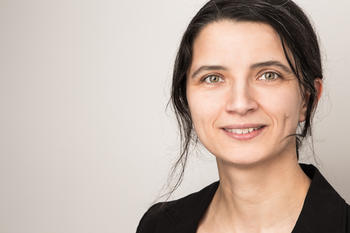
Prof. Stefan Faas is a Professor of Social Pedagogy and its Didactics at PH Schwäbisch Gmünd, leading research on early childhood education quality, professionalization, and diversity. He directs the Centre for Quality Research and Monitoring in Child and Youth Welfare (ZQM) and serves as Academic Director of the pädquis Stiftung Berlin. Research Interests: Early childhood education, family pedagogy, quality assessment, professionalization in social work, cultural education, migration integration in childcare. Projects: Leads quality monitoring initiatives in daycare centers across Mössingen (2023–2026), Schwäbisch Gmünd (2024–2026), Offenburg (2022–2027), and other German regions. Evaluates policies like the KIQUTG law and internationalization frameworks. Publications: Authored/edited 10+ books on media education, parental involvement, and competency models. Published in journals like Global Education Review and Frühe Bildung . Collaborations: Partners with Springer VS, Palgrave Macmillan, and researchers like Sabine Kluczniok and Simone Geiger.
Miriam Tekath is a Research Associate at the Center for Conflict Research (Zentrum für Konfliktforschung) at Philipps University of Marburg, working in Prof. Dr. Thorsten Bonacker's team. She currently serves as Research Coordinator at EUPeace (the European University for Peace, Justice, and Inclusive Societies) since May 2024 and previously held positions as Research Fellow at RWTH Aachen University (2023-2024) and as a political advisor in peace and conflict research since 2022. Academic Background: Certificate in Professional University Teaching (2023) Mediator certification with focus on non-violent communication (2018) MA in Peace and Conflict Studies, Philipps University Marburg (2016-2018) MA in Political Science: Democratic Governance and Civil Society, University of Osnabrück (2015-2019, with distinction) Bachelor in Political Science (Major) and French (Minor), University of Bremen (2011-2015, with distinction) Tekath's research sits at the intersection of political science and micro-sociology, examining social conflicts in societies polarized by secessionist movements. Her doctoral project investigates the meaning-making significance of politicized differences in everyday conflict interactions, using Quebec (Canada) and Casamance (Senegal) as empirical frameworks. She analyzes universities as micro-contexts of societal polarization, exploring how academic community members navigate the tension between politicization and cooperation. Her methodological expertise includes qualitative content analysis, group discussions, and situational analysis, with regional focus on Canada, Senegal, Francophone countries, and Southeast Europe. Analyzing her publication record reveals a consistent trajectory examining how social actors navigate politicized differences in polarized contexts. Her work demonstrates growing methodological sophistication in understanding the simultaneity of conflict and cooperation in academic settings within divided societies. A distinctive feature of her scholarship is the application of relational perspectives to everyday conflict interactions, particularly in educational institutions serving as microcosms of broader societal divisions. Scientific Recognition: DAAD International Conference Scholarship (2024) RWTH Aachen Early Career Support (2023) Marburg Research Academy Travel Grant (2023) DAAD Conference Funding (2022) DAAD Short-term Doctoral Scholarship (2020/21) International Council for Canadian Studies Scholarship (2020) Association for Canadian Studies Research Award (2018) Tekath has developed an extensive teaching portfolio in peace and conflict studies, including courses on institutional conflict regulation, relational dimensions of peace studies, and mediation in multicultural contexts. She pioneered innovative teaching methods like combining 'Elevator Pitch' with 'Speed-Dating' techniques to address complexity-reduction challenges in conflict education. As spokesperson for the 'Curriculum and Didactics' working group of the German Association for Peace and Conflict Studies since 2020, she has significantly influenced pedagogical approaches in the field. Her current leadership role at EUPeace represents the culmination of her trajectory from student research assistant (2014-2018) to Research Coordinator, demonstrating her growing influence in European peace education initiatives. Her ongoing doctoral work examining everyday conflict interactions in polarized societies positions her at the forefront of contemporary conflict research methodology.
Markus Kötter is a Professor at the University of Siegen within Faculty I , specializing in Teaching English as a Foreign Language (TEFL) . His research focuses on vocabulary acquisition, inclusive education, formative assessment, and educational standards in early foreign language learning. Research Areas: Vocabulary integration, private speech analysis, formulaic language patterns, and inclusive pedagogical frameworks. Projects: Currently working on the Diagnose Englisch initiative with Klett publishers during his research semester in winter 2024/25. Publications span topics including: Vocabulary instruction in primary/secondary education Assessment methodologies and error analysis Technology-enhanced language learning (MOOs, CALL) Teacher education reforms (Praxissemester) Inclusive teaching practices and institutional challenges For courses, see his unisono.uni-siegen.de profile. Contact via koetter@anglistik.uni-siegen.de as he will be off-campus during the winter 2024/25 research semester.
Prof. Dr. Matthew Königsberg is an Associate Professor at the East Asian Seminar, Japanese Studies department of Freie Universität Berlin, with a focus on premodern and modern Japanese literature, structuralist and comparative literary studies, and language didactics. He holds a doctorate from the University of Tübingen (1988) and a habilitation from the University of Hamburg (2001), supported by a DFG scholarship (1998). Doctorate Thesis: Kobayashi Hideo's 'Watakushi shōsetsu ron' (1988) Habilitation Thesis: Realism in Japan, the Ken'yūsha School, and the Testing of New Novel Techniques (1998) His research spans structuralist analysis of Japanese prose, intertextuality in Konjaku monogatari, Meiji period stylistic reforms, and queer themes in Ihara Saikaku's work. He has published extensively on topics including Korean minority literature in Japan, Buddhist themes in Japanese fiction, and the evolution of the Bildungsroman in Japan-Europe comparisons. Scientific awards include renaturalization as a German citizen under Article 116, No. 2 of the Basic Law (1986) and a DFG habilitation scholarship (1998). He has served as a visiting associate professor at Washington University in St. Louis (2002/2003), a lecturer at Freie Universität Berlin (2004), and provided intercultural training for managers at Bremen University of Applied Sciences (1991). Notable Editorial Roles: Consultant for Kindler's Literature Lexicon (2009), Convenor at EAJS Conference literature section (2008) Professional Affiliations: Gesellschaft für Natur- und Völkerkunde Ostasiens, European Association for Japanese Studies, Association of Asian Studies, Deutsche Japan-Gesellschaft
Christine Paul serves as a Scientific Associate in the Department of German Didactics within the Department of Education and Psychology at Freie Universität Berlin, specializing in linguistic and cultural education. Currently on leave while fulfilling duties at Technische Universität Dresden, her expertise spans multilingual pedagogy, German as a second language, and conversation analysis, with significant contributions to corpus linguistics through the Wendekorpus project documenting German reunification narratives. Education: PhD in Linguistics (2016), Freie Universität Berlin First State Examination in German and Spanish (2006), Freie Universität Berlin Graduate Fellowship, Evangelisches Studienwerk Villigst (2009-2013) Study Abroad, Pontificia Universidad Católica del Peru, Lima (2001-2002) Research Focus: Dr. Paul investigates multilingual identity construction in educational settings, analyzing how students navigate spoken vs. academic language varieties through conversation analysis and cognitive linguistics frameworks. Her work bridges theoretical linguistics with classroom practice, particularly examining meaning negotiation in multilingual dialogues and historical language shifts in post-reunification Germany, often utilizing corpus-based methodologies to reveal subtle pragmatic patterns. Publication Evolution: Early career works (2010-2015) established her expertise in temporal inference and retrospective utterances within conversation analysis. Recent publications (2019-2023) demonstrate strategic expansion into digital education spaces and multilingual identity, culminating in 2023's examination of linguistic diversity on school websites. Her research consistently centers on language as a tool for identity construction within institutional contexts, with growing emphasis on intersectional factors like gender and migration background. Academic Engagement: As co-developer of the Wendekorpus audio archive and contributor to the Learning and Research Workshop for Literary Education, she actively shapes pedagogical resources. Her 2024 conference presentation on multilingual female students' self-identification continues her trajectory of connecting linguistic theory to real-world educational challenges through empirical discourse analysis.
Catholic University of Eichstätt-IngolstadtGermany
Heiner Böttger is a Full Professor of English Didactics and EFL (English as a Foreign Language) at the Catholic University of Eichstätt-Ingolstadt, Germany, where he has served since 2007. He holds the Professorship for Didactics of English Language and Literature within the Faculty of Languages and Literature. His academic journey includes positions at the University of Erlangen-Nuremberg and visiting professorships at institutions including Akdeniz University in Turkey, Aristotle University in Greece, and Long Island University in New York. Professor Böttger's research focuses on the intersection of language education and neuroscience, with particular expertise in foreign language anxiety (xenoglossophobia), sensitive phases of language development, multilingual didactics, and evidence-based foreign language teaching. His work bridges theoretical knowledge with practical classroom applications, emphasizing how insights from neuroscience can transform language teaching methodologies. He has pioneered approaches to early foreign language learning, corporate language instruction, and the psychological aspects of language acquisition including memory, resilience, and mindfulness. His extensive publication record demonstrates a clear trajectory toward integrating neuroscientific findings with language education. Recent works focus on language educational neurosciences (LEN), outdoor language learning, storytelling techniques, and the neuromotor foundations of speaking skills. Böttger's research shows increasing sophistication in connecting brain-based learning principles with practical language teaching strategies across diverse contexts from primary education to corporate settings. As an active academic, Böttger serves as Chairman of the Early language learning advisory board BIG (foundation Lernen, Munich) and as an External Academic Reviewer to the Greek state. His professional activities demonstrate a commitment to advancing evidence-based language education through both theoretical contributions and practical implementation.
Dr. Almud Gembus is an Academic Councillor in the Department of English at Weingarten University of Education, where she has been actively contributing since 1999. Her work bridges academic research and practical pedagogy in early foreign language education. Research Interests: Her expertise lies in narrative teaching methods, particularly in primary school English instruction for grades 1 and 2. She focuses on storytelling, action research, and innovative language teaching methodologies tailored to young learners. Her work emphasizes practical classroom application and teacher training. The recent publications reflect a consistent focus on early English language acquisition through narrative and project-based approaches . Themes such as storytelling, thematic units (e.g., potatoes, sports), and creative projects (e.g., big books) dominate her scholarly output, indicating a strong commitment to engaging, child-centered pedagogy. Professional Activities: Academic Councillor, English Department, Weingarten University of Education (since 2010) Prior roles include technical school councilor and seconded teacher at the same institution Presented research at national conferences including DGFF and FFF She has advised on curriculum development and teacher training, though no formal graduate students are listed. Her publications include journal articles, teaching materials, and a completed dissertation on narrative methods.
Prof. Dr. Sandra Ballweg is a Professor at Paderborn University in the Department of German as a Second Language, German as a Foreign Language and Multilingualism under the Faculty of Arts and Humanities. She leads the Zentrum für Sprachlehre (Language Teaching Center) and holds affiliations with institutions like the University of Limerick since 2015. Her work bridges language education, multilingualism, and sociolinguistic research.
Prof. Dr. Felicitas Schmieder is a full professor at the Historical Institute of the Faculty of Cultural Studies, FernUniversität Hagen, where she holds the chair for 'History and Present Day of Ancient Europe'. She has been a faculty member since 2004 and previously served as a lecturer and senior lecturer at Goethe University Frankfurt from 1987 to 2004. She has held visiting professorships at institutions including Central European University and Stockholm University. Her main research areas include medieval cultural contacts , prophecy as political language , medieval German urban history , pre-modern cartography , and the history of Europe in the Middle Ages . She explores how medieval societies perceived foreigners, constructed identity, and represented the world through maps and texts. Her recent publications and ongoing projects reflect a strong focus on medieval maps , prophetic texts , and the interplay between religion and politics . She has examined topics such as Alexander Minorita’s apocalyptic exegesis, hand-drawn regional maps in Westphalia, and the role of prophecy in crisis management. Her work bridges historical analysis with cultural and spatial studies. She has received notable recognition, including the Research Award from Riksbankens Jubileumsfonds (2018/19) and a visiting professorship at Stockholm University under the Humboldt framework. She is a member of the Academia Europaea and serves on several editorial and advisory boards. Research Award Riksbankens Jubileumsfonds (2018/19) Humboldt Professor (Visiting), University of Stockholm (2018/19) She has advised on the distance learning course 'Historic City' and contributes to academic governance as a permanent delegate and treasurer in her faculty. Her international review activities span multiple countries and funding bodies, underscoring her global academic influence.
Karen Glaser is a Professor of TEFL in Primary School at Leipzig University since 2022. She holds a PhD in English Applied Linguistics from Leuphana University Lüneburg and an MA in TESL from Kent State University. Her academic journey includes Junior Professorship at Leipzig University (2015-2022), Visiting Professorship at University of Potsdam (2011-2014), and teaching roles at TU Chemnitz, TU Dresden, and Kent State University. Education: PhD in English Applied Linguistics, MA in TESL, Magister in English Linguistics and Communication Science Research interests focus on L2 pragmatic development, classroom interaction, literacy in primary EFL contexts, teacher professionalization, and digital tools in language teaching. She emphasizes the integration of social interaction in language classrooms and the practical application of pedagogical theories. Publications include co-editing open-access volume Early Language Education in Instructed Contexts (John Benjamins, 2025) and special issues in journals like System and Classroom Discourse . Her work addresses pragmatic competence acquisition, literacy scaffolding, and classroom discourse analysis. Teaching spans ESL/EFL instruction for diverse age groups and university-level courses in linguistics and pedagogy. She supervises BA, MA, State Examination, and PhD theses and contributes to in-service teacher development. Recent courses include seminars on Primary EFL planning, Methods for Communicative Language Teaching, and Practicum mentoring.
RWI — Leibniz-Institut für WirtschaftsforschungGermany
Aurélien Saussay is an Assistant Professorial Research Fellow at the London School of Economics' Grantham Research Institute, specializing in environmental economics. He currently holds a Leverhulme Early Career Fellowship (2022-2025) and will be visiting Harvard Kennedy School in Fall 2024. His primary research focuses on the interaction between economic inequality and climate change mitigation policies, aiming to address social and political acceptance challenges that hinder effective decarbonization. His research interests span Environmental Economics, Empirical Econometrics, Machine Learning, Natural Language Processing, and Macroeconomics. Saussay employs empirical methods to estimate the impacts of climate change mitigation on economic agents, with the goal of improving decarbonization policy design. His work often combines economic modeling with data science techniques to analyze climate policy impacts. His recent publications reveal a strong focus on understanding the distributional impacts of climate policies, green job transitions, and international dimensions of environmental policy. He has developed sophisticated methodologies using firm-level data, job advertisements, and macroeconomic modeling to assess how climate policies affect different economic sectors and social groups. His research demonstrates particular expertise in analyzing the ThreeME model (Multi-sector Macroeconomic Model for the Evaluation of Environmental and Energy policies), which is used across multiple countries. Scientific Awards: Leverhulme Early Career Fellowship (2022-2025) Saussay previously worked as an economist at OFCE, Sciences Po, where he led the environmental economics team. He remains an associate researcher there and is one of the main co-authors of the ThreeME model, which is used extensively in France, the Netherlands, Mexico, and Indonesia. His work on climate policy visualization, including the Climate Nightmares project that used AI to interpret IPCC reports, demonstrates his commitment to making climate research accessible to broader audiences. His upcoming visiting position at Harvard Kennedy School further highlights his standing in the environmental economics research community.
Dr. Juliane Lensch is a Research Fellow at the Institute of Romance Studies, Didactics Department, Justus Liebig University Giessen. Her work focuses on the intersection of music, culture, and education, with a particular emphasis on marginalized musical traditions and their pedagogical applications. Educational Background: Master's degree in Musicology, Music Education, and Theology (2002) from Justus Liebig University Giessen. Promotion (PhD) in 2009 with a dissertation on "The Music of Eastern Jewish Klezmer in the USA in the Early 20th Century". Dr. Lensch's research explores the music of peripheral groups, including Klezmer, Roma, and French suburban hip hop, alongside themes of music and religion, music's role in language acquisition, and the cultural representation of Jewishness in cinema. Her recent publications analyze cross-cultural musical exchanges, such as Klezmer's evolution in the USA and Hip Hop's integration into French language pedagogy. She has contributed to academic projects like "Youth Cultures of Romance-Speaking Countries, Focus on Hip Hop" since 2006, transitioning to private teaching roles in cello and mathematics while maintaining her research affiliations.