Glenn Roisman is a Professor at the Institute of Child Development , University of Minnesota. He holds the Distinguished McKnight University Professor and Robert Holmes Beck Chair of Ideas in Education titles, reflecting his scholarly influence and teaching excellence. Education: PhD (2002), University of Minnesota Roisman’s research examines how early relationship experiences shape lifespan psychological, interpersonal, physical, and cognitive health . His work integrates longitudinal data from birth to adulthood, focusing on normative and atypical caregiving environments. Recent publications analyze the predictive validity of attachment assessments (Strange Situation, Adult Attachment Interview), genetic/environmental contributions to attachment styles, and pathways from early adversity to cardiometabolic health. His projects leverage data from the NICHD Study of Early Child Care and Youth Development , Minnesota Longitudinal Study , and Minnesota Twin Registry . Scientific Awards : Distinguished McKnight University Professor Robert Holmes Beck Chair of Ideas in Education Roisman’s collaborations with institutions like Pennsylvania State University and grants from NHLBI , NICHD , and NIA underscore his leadership in developmental science. He is open to advising new PhD students in 2026, emphasizing multi-method and multi-informant research approaches.
Elizabeth Widen, Ph.D., RD, serves as a Courtesy Associate Professor in the Department of Pediatrics and Department of Women's Health at Dell Medical School, and as an Associate Professor in the Department of Nutritional Sciences within the School of Human Ecology at the College of Natural Sciences, The University of Texas at Austin. She maintains dual institutional affiliations as a faculty member at the Dell Pediatric Research Institute and faculty research associate at the Population Research Center. Her educational background includes: Ph.D. in Nutrition from the University of North Carolina at Chapel Hill As a nutritional and perinatal epidemiologist, Dr. Widen employs a life course approach intersecting nutrition, perinatal/pediatric epidemiology, behavioral nutrition, and human biology. Her methodology combines advanced analytics to elucidate early-life nutrition's impact on lifelong health outcomes with interdisciplinary intervention programs targeting pregnancy, infancy, and early childhood nutrition improvement. Her scientific recognition includes: Norman Kretchmer Award in Nutrition & Development American Society for Nutrition 2025 Mid-Career Award (Community & Public Health Nutrition Research Section) American Society for Nutrition 2023 Honors Professional society memberships reflect her research focus: American Society for Nutrition Society for Pediatric and Perinatal Epidemiologic Research The Obesity Society Through her Dell Pediatric Research Institute and Population Research Center affiliations, she contributes to integrated research frameworks addressing systemic health challenges in Central Texas with national implications for maternal-child health interventions.
Professor Louis Schmidt is a leading academic in the Department of Psychology, Neuroscience & Behaviour at McMaster University , with a research focus on developmental psychophysiology, temperament, and the long-term effects of early adversity. His work bridges neuroscience, psychology, and behavioral science, emphasizing the interplay between brain function and socio-emotional development across the lifespan. Key research themes: Shyness, social anxiety, autism spectrum disorder, schizophrenia, and outcomes of extremely low birth weight. Recognized for mentoring postdoctoral fellow Kristie Poole, who was celebrated as a role model in the Child Emotion Laboratory. Scientific Awards : Royal Society of Canada recognition for contributions to research and scholarship. Research Trends from 15 recent publications include: Neurophysiological mechanisms of shyness (EEG, ERP, RSA) Impact of antenatal corticosteroids on adult brain function Intergenerational effects of maternal mental health interventions Cross-cultural comparisons of temperamental shyness Developmental consequences of preterm birth Behavioral and neural correlates of social anxiety in diverse populations Grants & Collaborations : Led the SNACS randomized controlled trial on antenatal corticosteroids, with applications in obstetrics and developmental neuroscience. Collaborates extensively on topics like autism spectrum disorder, schizophrenia, and emotion regulation. Labs & Teams : Directs the Child Emotion Laboratory at McMaster University, fostering interdisciplinary research on developmental psychopathology and neural mechanisms of temperament.
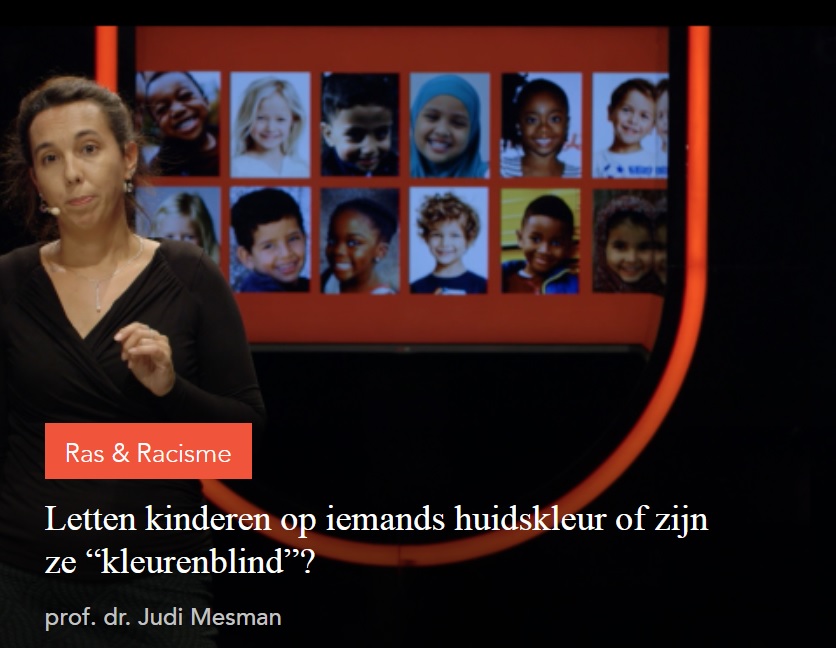
Judi Mesman is a Professor of the Interdisciplinary Study of Social Challenges at Leiden University, where she also holds the position of University Professor of Societal Responsibility and Impact since 2024. She is affiliated with the School of Governance and Global Affairs and the Department of Education and Child Studies. Previously, she served as Dean of Leiden University College The Hague from 2016 to 2022 and as Scientific Director of the Institute of Education and Child Studies from 2012 to 2016. Mesman's research focuses on social (in)justice, particularly intergenerational issues at individual and institutional levels. Her work examines how social and cultural norms in children's upbringing and education influence their self-image and worldview, with special attention to how children perceive and internalize norms regarding sexuality, ethnicity, and gender. She investigates how parents and educators unintentionally transfer prejudices to children through subtle messages and implicit stereotyping. Mesman's research program has significant societal impact, as demonstrated by her receipt of the prestigious Stevin Prize in 2021, the highest award in the Netherlands for researchers who effectively translate knowledge into societal benefits. Her work has influenced educational publishers, teacher training programs, and diversity initiatives. She has conducted studies on implicit stereotyping in schoolbooks and developed interventions to promote anti-racist education. Stevin Prize (2021) Member of Royal Netherlands Academy of Arts and Sciences (2018) Member of Royal Holland Society of Sciences and Humanities Recipient of NWO Veni, Vidi, Vici grants Recipient of ERC Starting and Consolidator Grants Mesman has supervised 26 PhD students to completion and teaches Intercultural Pedagogy in the Bachelor's program in Educational Sciences. She has developed the minor 'The (Un)Just Society' and created a podcast series on working with youth in a multicultural society, for which she received a teaching award. Her current research focuses on how norms and values about gender, ethnicity, and sexuality are transferred among professionals who work with children, including in teacher training programs.
Anu Sepp is a Senior Lecturer in Music Pedagogy at the Estonian Academy of Music and Theatre (part-time since 2019) and a University Lecturer in Music Education at the University of Eastern Finland (full-time since 2023). Her career includes roles as a post-doctoral researcher at the University of Helsinki, Associate Professor at EAMT, and extensive experience as a secondary school music/English teacher and choir conductor in Estonia and Finland. Education: PhD in Education, University of Helsinki (2008–2014) Master of Educational Sciences, Tallinn Pedagogical University (1999–2001) English Teacher Certification, Tallinn Pedagogical University (1992–1994) Music Teacher & Choir Conductor Diploma, Tallinn State Conservatoire (1981–1986) Her research explores music pedagogy, teacher training, curriculum innovation, and technology in education, with a strong focus on comparative studies between Estonia and Finland. She investigates interactive teaching methods, equity in music education, and the development of sustainable pedagogical frameworks. Her publications (2018–2023) predominantly analyze music teacher education, piano pedagogy, technology-enhanced learning, and curriculum design. Trends include longitudinal studies on student-teacher development, comparative education models, and integrating traditional pedagogical values with digital innovation. Scientific Awards: Riho Päts Foundation Laureate (2015) DKG International Scholarship (2013) Kristjan Jaagu Scholarship (2012) Ministry of Education Awards (2010, 2001) Teacher of the Year (1996) She has supervised 9 master’s theses and contributed to national curriculum reforms in Estonia. As a choir conductor, she led award-winning ensembles (1987–2023). She serves on committees for ISME, EAMT’s Scientific Board, and co-organizes international conferences like MISTEC.
Brett Laursen is a Professor of Psychology at Florida Atlantic University's Charles E. Schmidt College of Science, with additional Docent Professor appointments in Educational Psychology at the University of Helsinki and in Social Developmental Psychology at the University of Jyväskylä in Finland. His research focuses on developmental psychology, particularly adolescent development, peer relationships, and social dynamics. Dr. Laursen earned his Ph.D. and M.A. in Child Psychology from the Institute of Child Development at the University of Minnesota and his B.A. in Psychology from Nebraska Wesleyan University. He also holds an Honorary Ph.D. from Örebro University in Sweden. His research program examines influence within close relationships, with particular focus on peer relationships during childhood and adolescence. Current projects include longitudinal studies of elementary and middle school children in Florida, Lithuanian youth transitioning from middle to secondary school, and child characteristics affecting parent engagement in literacy activities. His work consistently explores how social dynamics shape development, with special attention to friendship formation, dissolution, and influence processes. Analysis of his recent publications reveals a strong focus on peer relationships, social status, and developmental transitions. His research employs sophisticated longitudinal and genetically informed designs to examine how social contexts shape development across childhood and adolescence, with particular emphasis on the mechanisms through which peer influence operates. Fellow, American Psychological Association (Division 7, Developmental; Division 8, Social) Fellow and Charter Member, Association for Psychological Science Fellow, International Society for the Study of Behavioural Development Distinguished Alumnus, College of Education and Human Development, University of Minnesota Florida Atlantic University Scholar of the Year (2023-24 and 2016-17) Dr. Laursen has mentored numerous doctoral and master's students who have gone on to successful careers in academia and research. His research has been supported by major funding sources including the US National Institute of Child Health and Human Development, the US National Institute of Mental Health, the US National Science Foundation, Trygfonden, the Jacobs Foundation, and the European Social Fund. As Editor-in-Chief of Merrill Palmer Quarterly and Founding Editor of Cambridge Elements in Research Methods for Developmental Science, he plays a significant role in shaping the field's scholarly discourse. The Laursen Lab operates as a collaborative research team involving current students, alumni, and international collaborators including Professors Goda Kaniušonytė and Rita Žukauskienė of Mykolas Romeris University in Lithuania. The lab regularly presents research at major conferences including the Society for Research on Child Development.
Maureen Kendrick is a Professor and Deputy Department Head in the Department of Language & Literacy Education at the University of British Columbia's Faculty of Education. Her research examines literacy and multimodality as integrated communicative practices, addressing social and cultural issues in diverse contexts with particular emphasis on visual communication and refugee/migrant education. Her research interests span digital literacies, multiliteracy and multimodality, and international perspectives on literacy education. She investigates how youth from refugee backgrounds use multimodal approaches to construct identities and engage with learning, often through digital storytelling and visual methodologies. Her work extends to health literacy in Ugandan contexts and the role of play in early childhood literacy development across Canada, Kenya, and Uganda. Analysis of her recent publications reveals consistent focus on refugee/migrant education, digital storytelling, and multimodal literacy. She examines how digital tools empower marginalized youth to express identities while addressing challenges in language learning and cultural integration. Her research also explores HIV/AIDS education through makerspaces and the intersection of arts-based practices with science literacy. Dr. Kendrick's scientific recognition includes: Canadian Committee for Graduate Students in Education (CCGSE) Mentorship Award (2024) Killam Teaching Prize (2012-13) Alan C. Purves Award (2013) She actively supervises graduate students across doctoral and master's programs, with current research focusing on refugee education and multilingual learners. Her SSHRC-funded projects include the 2025-2029 grant 'Digital Multimodal Composing-To-Learn' and the 'Language and Literacy Learning Among Refugee and Migrant Background Children' initiative, involving collaborators from UBC, York, and Western universities. Dr. Kendrick leads international research teams across Canada, Uganda, and Kenya, developing community-engaged approaches to literacy education that bridge academic research and classroom practice.
Dr. Angeline Lillard is Commonwealth Professor of Psychology and Director of the Montessori Science Program at the University of Virginia. She leads the Early Development Lab, focusing on children's social and cognitive development, particularly Montessori education's impact on learning and wellbeing. A Fellow of AAAS, APA, and APS, she earned her BA in English Literature from Smith College and PhD in Psychology from Stanford University. Research Interests: Dr. Lillard's work bridges Montessori pedagogy with developmental psychology, analyzing how play, educational environments, and culturally responsive teaching shape child outcomes. She explores standardized testing disparities, discipline equity, and the neurobiological underpinnings of pretend play. Key themes in her 15 most recent publications include Montessori's role in reducing educational inequality, the cognitive effects of fantasy in media, and the use of multilevel modeling to assess school discipline patterns. Her research spans preschool to adult wellbeing, emphasizing self-determination theory and longitudinal data. Scientific Recognition: Awarded the Nancy Staub Award for Puppetry Research (2024) Recognized for her book with the Cognitive Development Society Book Award (2006) James McKeen Cattell Sabbatical Fellow (2005-06) Albert Bandura Graduate Research Award (2016-17) Advising and Grants: Mentored 15+ graduate students including Lee LeBoeuf and Christina Carroll. Secured IES funding for a 600-child study on public Montessori preschools and Arnold Foundation support for kindergarten data collection.
William John Moss is a Professor in the Department of Epidemiology at the Johns Hopkins Bloomberg School of Public Health, where he also holds joint appointments in International Health and Molecular Microbiology and Immunology. He serves as Executive Director of the International Vaccine Access Center (IVAC) and Deputy Director at the Johns Hopkins Malaria Research Institute. His work spans multiple centers including the Center for Global Health, Center for Humanitarian Health, and Johns Hopkins Vaccine Initiative. Dr. Moss earned his MD from Columbia University in 1984 and his MPH in 1995. As a pediatrician with subspecialty training in infectious diseases, he has conducted extensive field research across multiple countries including Ethiopia, Kenya, South Africa, Zambia, Zimbabwe and India. His research focuses on the epidemiology and control of childhood infections in resource-poor settings, with particular emphasis on measles-HIV interactions, malaria transmission in southern Africa, serosurveillance for immunization programs, and care of HIV-infected children in rural Zambia. His recent work (2024-2025) demonstrates continued focus on measles epidemiology, malaria transmission dynamics, and vaccine implementation research, with numerous publications examining immunity gaps, human mobility patterns, and malaria vector biology in African settings. Scientific Awards: Wyeth-Lederle Vaccines and Pediatrics Young Investigator Award in Vaccine Development (1999-2001) Gustave J. Martin Innovative Research Fund Fellow (2001) Advising, Mentoring and Teaching Recognition Award (2007-2008) Dr. Moss leads multiple research projects including studies on HIV-infected children's immune reconstitution, malaria transmission dynamics in southern Zambia, and strengthening immunization systems through serosurveillance. His work bridges clinical medicine, epidemiology, and public health policy to address critical challenges in global infectious disease control.
Bruno Palier is a CNRS Research Director at Sciences Po, affiliated with the Centre d'études européennes et de politique comparée (CEE) and a key member of the Laboratoire interdisciplinaire d’évaluation des politiques publiques (LIEPP). He is a leading scholar in comparative politics and public policy, focusing on the reform of social protection and pension systems in France and Europe. University: Sciences Po School: Centre d'études européennes et de politique comparée Academic Rank: Researcher (CNRS) His research interests lie at the intersection of political science, sociology, and public policy. He is a foremost expert on the political economy of welfare state reform, social investment strategies, and the dynamics of pension reforms. His work examines how political institutions, economic pressures, and social actors shape the evolution of social policies across advanced democracies. Palier's recent projects center on the contemporary crisis of work in France. He coordinated the 2023 collective work What Do We Know About Work? , which brought together 60 social scientists to document the realities of working conditions, management practices, digitalization, and inequalities. This project has sparked a major public and academic debate, leading to a follow-up initiative, Working Better , which aims to translate research findings into concrete policy proposals for improving the quality of work. Major Works: What do we know about work? (2023) Working Better (2025, forthcoming) The World Politics of Social Investment (2022, 2 vols.) Refonder le système de protection sociale (2014) Réformer les retraites (2021) Throughout his career, Palier has led major research initiatives, including serving as the director of LIEPP (2014-2020) and coordinating the European Network of Excellence RECWOWE. He has also held visiting professorships at Harvard, Tokyo, and Stockholm universities, demonstrating his international academic standing. His work is highly influential in both academic circles and public policy debates, particularly in France. He has a strong record of scientific mediation, actively engaging with the media and policymakers to bridge the gap between academic research and public discourse. His current work on the future of work and social investment represents a significant contribution to understanding and addressing some of the most pressing social challenges of our time.
Gerald Pruckner is a Professor at the Department of Economics, Johannes Kepler University Linz (JKU), where he serves as Head of the Institute of Health Economics and Dean of the Kurt Rothschild School of Economics and Statistics (RoSES). His academic career spans over three decades with significant leadership roles including heading the Christian Doppler Laboratory for Aging, Health, and the Labor Market (2014-2021), and serving on the board of the Austrian Health Economics Association (ATHEA). He teaches multiple courses including Introductory Microeconomics, Empirical Economics, and Health Economics for the 2025W semester. Pruckner earned his PhD in Economics from the University of Linz in 1993. His academic journey began as an Assistant Professor at JKU (1989-2002), followed by a Professorship at the University of Innsbruck (2002-2006), then returning to JKU as Associate Professor (2006-2010) before his current Professorship (since 2011). He has held visiting positions at the University of Adelaide and UC Berkeley. His research focuses at the intersection of health economics, behavioral economics, and aging, examining healthcare systems, physician behavior, and the relationship between labor markets and health outcomes. Recent work investigates hospital crowding effects, gender differences in medical practice, chronic disease screening effectiveness, and child health services. His research consistently applies economic principles to understand healthcare delivery with emphasis on the Austrian context, often utilizing register data for evidence-based policy insights. Analysis of Pruckner's publication trends shows a sustained focus on practical healthcare issues with policy relevance. His work spans hospital management challenges, gender differences in medical practice, chronic disease screening effectiveness, and child health services. The research consistently bridges academic inquiry with practical health policy applications, with increasing attention to pandemic impacts and digital transformation in healthcare. Board member of Austrian Health Economics Association (ATHEA) since 2015 Member of Health Economics Committee (Verein für Socialpolitik) since 2013 Deputy head of national research network 'The Austrian Center for Labor Economics and the Analysis of the Welfare State' (2008-2013) Head of Christian Doppler Laboratory for Aging, Health, and the Labor Market (2014-2021) Pruckner actively mentors graduate students through dissertation colloquia and master's thesis supervision. His research portfolio includes 23 projects with significant funding, including current work on health services research in Upper Austria and empirical analysis of Linz healthcare provision. As Dean of RoSES and Head of the Health Economics Institute, he provides institutional leadership while maintaining an active research agenda with over 100 publications. He leads multiple research teams focused on health services research, with current projects examining healthcare provision in Linz, health indicators for the region, and broader health system analysis. His work bridges academic research and practical health policy applications through collaborations with regional health authorities and participation in professional associations.
Michael C. Frank is the Benjamin Scott Crocker Professor of Human Biology at Stanford University and Director of the Symbolic Systems Program. He leads the Stanford Language and Cognition Lab and has pioneered large-scale collaborative projects including Wordbank (open vocabulary data), MetaLab (developmental meta-analyses), ManyBabies (replication network), childes-db (language transcripts), and Peekbank (eye-tracking repository). His research examines children's language learning and its interaction with social cognition, utilizing computational modeling, large datasets, and open science frameworks. Key interests include: Mechanisms of early language acquisition Pragmatic inference in social contexts Cross-cultural variability in cognitive development Data-driven approaches to developmental science Reproducibility and meta-scientific innovation Recent publications (2022-2025) demonstrate strong emphases on: 1) Novel methods for measuring language environments and cognitive abilities, 2) Computational models of learning and perception, 3) Cross-cultural investigations of social cognition, and 4) Infrastructure for open developmental science. The majority employ multimodal data, meta-analytic techniques, and large-scale collaborations. He teaches courses including Experimental Methods, Developmental Psychology, and interdisciplinary seminars on language, cognition, and computation. His lab maintains active research teams across multiple continents through initiatives like ManyBabies and LEVANTE.
Elizabeth Burke Bryant is a Professor of the Practice of Health Services, Policy & Practice at Brown University School of Public Health, affiliated with the Hassenfeld Child Health Innovation Institute. Her work focuses on closing health disparities through policy advocacy and systems change, particularly in maternal/child health equity and family mental health. She holds a JD from George Washington University Law School (1985) and BA from University of Vermont (1979). Former Executive Director of Rhode Island KIDS COUNT (1994–2022) Co-Chair, Partnership for America’s Children Advisor, National Campaign for Grade-Level Reading Her advocacy has driven major state policy successes including universal pre-K, full-day kindergarten, childhood lead poisoning reduction, and criminal justice reform for juveniles. Recipient of over a dozen prestigious awards including USA TODAY’s 2023 Rhode Island Woman of the Year and honorary doctorate from Rhode Island College. Teaches public policy advocacy strategies in Brown’s MPA program, emphasizing strategic communication for systemic change. Served as Director of Policy and Housing Court Prosecutor in Providence, and advisor to the Women’s Prison Mentoring Program.
Rafael Pérez-Escamilla is a Professor of Public Health (Social and Behavioral Sciences) and serves as Director of the Office of Public Health Practice, the Global Health Concentration, and the Maternal and Child Health Promotion Track at the Yale School of Public Health. He leads the Yale-Griffin CDC Prevention Research Center with over $70 million in extramural funding, focusing on improving breastfeeding outcomes, maternal-child nutrition, food security, and early childhood development through community health worker interventions. He holds a BS in Chemical Engineering from Universidad Iberoamericana (Mexico City), an MS in Food Science, and a PhD in Nutrition from the University of California, Davis. His postdoctoral training at UC Davis explored the link between nutrition and early childhood development. His research interests emphasize breastfeeding promotion , maternal and child health equity , food security measurement , and implementation science . He co-leads studies in vulnerable communities, including U.S. communities of color, and has published over 340 articles, three books, and numerous technical reports. Key publications from 2024–2025 highlight innovations in addressing food insecurity, hypertension disparities, and the evaluation of global nutrition programs. His work bridges research and practice, advocating for scalable interventions. Awards: Lifetime Achievements Award in Global Nutrition (2020) Elected to U.S. National Academy of Medicine (2019) Doctor Honoris Causa from Universidad de Guadalajara (2016) Patricia Martens Award for Excellence in Breastfeeding Research (2015) As a senior advisor to WHO, UNICEF, and U.S. federal agencies, he collaborates on global nutrition policies and measurement frameworks. His grants fund programs like the FOOD4MOMS initiative and the Criança Feliz Program in Brazil. He mentors students through the Maternal and Child Health Promotion Track and oversees Yale’s Global Health and Public Health Practice initiatives. Active in interdisciplinary teams such as the Becoming Breastfeeding Friendly (BBF) initiative and the Center for Methods in Implementation and Prevention Science (CMIPS), he promotes collaboration between academia, communities, and policymakers.
Laura Ascenzi-Moreno serves as Professor of Bilingual Education and Bilingual Program Coordinator in the Childhood, Bilingual and Special Education Department at Brooklyn College, City University of New York (CUNY), School of Education. Her academic leadership focuses on developing educators capable of serving linguistically diverse student populations through equity-centered pedagogical frameworks. Her educational foundation includes a B.A. in Anthropology and Education from Swarthmore College (1994), an M.A. in Individualized Studies in Education from Harvard Graduate School of Education (1999), New York State Permanent Certification for PreK-6 (2002), a Bilingual ESL and Teacher Leadership Program from Bank Street College (2004), and a Ph.D. in Urban Education from CUNY Graduate Center (2012). Dr. Ascenzi-Moreno's research pioneers translanguaging applications across literacy instruction, assessment, and computational learning environments. She investigates how emergent bilinguals' linguistic repertoires can transform reading development, teacher knowledge construction, and multimodal assessment practices. Her work consistently centers equity through frameworks like syncretic reasoning and accompáñamiento, challenging deficit ideologies while promoting asset-based approaches to multilingual education. Analysis of her 2020-2024 publications reveals an accelerating interdisciplinary trajectory where translanguaging principles increasingly intersect with computer science education. This evolution demonstrates strategic expansion from foundational literacy research into computational literacies, with growing emphasis on co-design methodologies and teacher agency in developing multilingual CS curricula. Her scientific recognition includes the 2024 NCTE Outstanding Elementary Educator Award, Language Arts Distinguished Article Award, and major NSF grants totaling $1.3 million for computational literacy projects. Additional honors encompass Fulbright Scholarship work in Colombia, PSC-CUNY research awards, and Westinghouse Science Talent Search distinction. As Principal Investigator of NSF-funded PiLa-CS and former CUNY-NYSIEB Associate Investigator, she secures substantial grant support while mentoring teacher candidates. Her service includes NCTE Elementary Steering Committee leadership (2022-2026), journal reviewing, and Brooklyn's New York Teacher Table participation addressing educator recruitment/retention. Dr. Ascenzi-Moreno co-directs the Participating in Literacies in Computer Science project and maintains active collaboration with NYC schools through translanguaging professional development initiatives. Her work with the CUNY-NYSIEB project established foundational frameworks now implemented across New York bilingual programs.