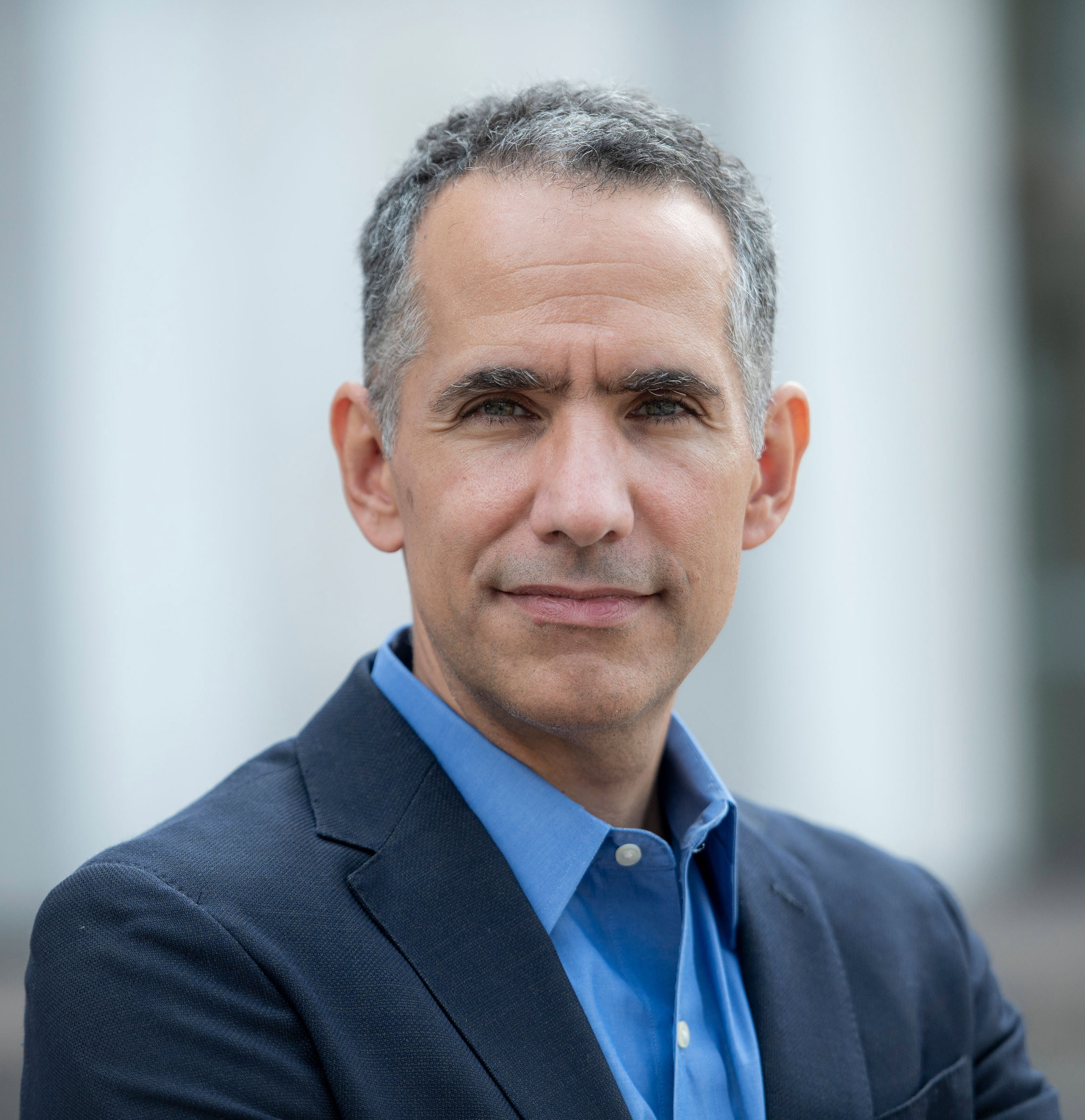
Prof. Dr. Jörg E. Drewes is a Full Professor and Chair at the Research Institute for Urban Water Management, Technical University of Munich (TUM), Germany. He also serves as Academic Program Director for Environmental Engineering at TUM and is a co-founder of Waterloop Solutions GmbH. His work spans advanced water treatment technologies, wastewater reuse, and environmental health surveillance. Affiliations : TUM, Colorado School of Mines, King Abdullah University of Science and Technology, UNSW Water Research Centre Research focuses on advanced oxidation processes , membrane fouling mitigation , micropollutant removal , and wastewater epidemiology for public health. His team develops integrated systems for water-energy-food nexus applications and graphene oxide-based treatment solutions. Recent publications address PFAS remediation , UVC-LED pre-treatment for biofouling control, and GIS-based wastewater surveillance models . Awards include the Bayerische Staatsmedaille (2023) and William Dunbar Medal (2022). 2023 : Bayerische Staatsmedaille 2022 : William Dunbar Medal 2018 : IWA Fellow He leads the Nexus@TUM initiative and contributes to EU water resilience strategies. Collaborations include projects in Germany, China, India, and Spain, focusing on climate-resilient water systems and resource recovery .
Hernan Galperin is a Professor of Communication and Director of Doctoral Studies at the USC Annenberg School for Communication and Journalism. His expertise lies in Internet policy, digital inequality, and the intersection of technology adoption with social stratification. He holds affiliations with institutions like the Annenberg Research Network on International Communication (ARNIC) and the USC Annenberg Innovation Lab. Galperin has authored four books and published in leading journals such as Telecommunications Policy and New Media & Society. His research, funded by organizations like the Pew Charitable Trust and the Inter-American Development Bank, focuses on broadband accessibility, digital inclusion, and policy impacts. Notable awards include membership in the World Economic Forum’s Global Future Council and top paper awards from the International Communication Association (2020, 2022). Education background: While not explicitly detailed in the provided text, his academic roles and publications imply advanced training in communication studies, public policy, or related fields. His work integrates quantitative methods with policy analysis to address global challenges in technology access. Research highlights include studies on broadband’s role in poverty reduction (Ecuador), geographic discrimination in the gig economy, and the gender digital divide in Latin America. He has contributed policy briefs on the Affordable Connectivity Program and digital inclusion in public housing, demonstrating real-world policy impact. His affiliations with global institutions reflect a focus on international collaboration in addressing digital divides. Grants and awards: His funding sources include the Pew Charitable Trust, IDRC-Canada, and the Internet Society. Awards highlight his contributions to cyberpolicy and global media governance. His work often bridges academic research with actionable policy recommendations, particularly in underserved regions. Labs and teams: He directs ARNIC and collaborates with the USC Annenberg Innovation Lab and USC Price Center for Social Innovation, fostering interdisciplinary approaches to communication and technology challenges.
Ryan Stones is a Lecturer at the City Law School , City, University of London, specializing in competition law, behavioral economics, and the intersection of legal philosophy with antitrust enforcement. His work critically examines the application of the formal rule of law to EU competition policy and analyzes historical schools of antitrust thought like the Chicago School and Ordoliberalism.
Professor Andrew Murray is a leading academic in Law with expertise in New Media and Technology Law. He holds the position of Professor of Law at the LSE Law School and directs the LSE Law, Society and Technology Group. His research focuses on digital rights, AI ethics, and regulatory frameworks for emerging technologies. Murray has held roles including Fellow of the Royal Society for the Arts and advisor to the Saudi Arabian government on e-commerce law. He has advised parliamentary committees, including the House of Lords Communications Committee on digital regulation, and delivered the prestigious TMC Asser Lecture on AI and human agency. Education: LL.B. Hons from Edinburgh University (1994), followed by academic roles at Stirling University and LSE since 2000. Professional memberships include the Society of Computers and Law (SCL) and the Higher Education Academy (HEA). He has been a visiting professor at Amsterdam Law and Technology Institute and Sciences Po Paris. Research interests span cyberspace regulation, AI governance, and the intersection of technology with human rights. Key publications include Human Rights in the Digital Age (2004) and The Regulation of Cyberspace (2007). Awards include recognition as an Independent Expert in Nominet UK dispute resolution (2001–2008) and a 2024 Leibniz Prize reviewer. Advocacy includes contributions to EU e-commerce directives and UK surveillance law debates. His work emphasizes balancing innovation with legal accountability in digital spaces.
Professor Elaine Fahey is a leading scholar in EU law and global governance at the City Law School, City St George's, University of London, where she serves as Professor of EU Law and Deputy Head of Department (academic programmes). She is co-convener of the Institute for the Study of European Law (ISEL) and the UACES James Madison Trust EUFUtures initiative (2022–2025). Her academic career includes visiting professorships at Washington College of Law (American University), Keio University, and NYU, as well as fellowships at the European University Institute and the University of Graz. LLB, Trinity College Dublin LLM, Sidney Sussex College, University of Cambridge PhD, Trinity College Dublin Barrister-at-Law, Honorable Society of King’s Inns, Ireland Attorney-at-Law, State of New York Senior Fellowship, Higher Education Authority UK Her research focuses on the intersection of EU law with global governance, digital regulation, transatlantic relations, and the Area of Freedom, Security and Justice. She explores how the EU navigates legal frameworks beyond the nation-state, particularly in digital trade, cybersecurity, and data protection. Her work critically examines the EU’s role as a global regulatory actor and its interactions with international institutions. Her extensive publication record includes the monograph The EU as a Global Digital Actor (Hart, 2022) and numerous articles on digital sovereignty, data transfers, and transatlantic cooperation. Recent research analyzes the EU–US Trade and Technology Council (TTC), the evolution of the Privacy Shield, and strategic litigation in digital rights. Her work reveals a strong trend toward understanding how soft law, institutional design, and judicial decisions shape EU external relations and digital governance. Erasmus+ Jean Monnet Chair in Law & Transatlantic Relations (2019–2022) Emile Noël Fellow, NYU Law School Max Weber Fellow, European University Institute Senior Land Steiermark Fellow, University of Graz Senior Fellowship, Higher Education Authority UK Professor Fahey has supervised multiple PhD students, including Isabella Mancini, Giulio Kowalski, and Christos Karetsos, on topics such as algorithmic collusion, digital markets, and investment law. She has led significant research projects, including the ESRC-funded TRILATTRADE grant and the Marie Curie ITN on EU and Transatlantic Investment and Trade (EUTIP). She previously held leadership roles as Associate Dean (International) and interim Associate Dean (Research) at the City Law School. She is an elected member of the EU Studies Association (EUSA) Executive (2021–2025). She has also contributed to public policy through briefings for the Welsh Parliament and reports on CJEU litigation in Ireland. She is associated with research initiatives such as the Institute for the Study of European Law (ISEL) and has collaborated on interdisciplinary projects on Facebook regulation, transatlantic relations, and EU technological sovereignty. Her work bridges legal scholarship, policy, and international academic collaboration.
Adriana Tapus is a Full Professor at ENSTA Paris, affiliated with Institut Polytechnique de Paris, leading the Autonomous Systems and Robotics Laboratory (SAR) within the Computer Science and Systems Engineering Unit (U2IS). She holds an HDR (Habilitation) and a PhD from EPFL, Switzerland, with postdoctoral experience at USC. Her research focuses on socially assistive robotics, human-robot interaction (HRI), and personalized therapy for individuals with physical/cognitive impairments. She directs the IP Paris Doctoral School and coordinates national/international projects like the EU-funded ENRICHME and SWEET. Education: PhD in Mobile Robotics, EPFL (2005) Habilitation (HDR), ENSTA Paris (2011) M.S. Computer Science, University Joseph Fourier Engineer, Politehnica University of Bucharest Research Interests: Tapus pioneers socially assistive robotics, integrating machine learning, human modeling, and multimodal communication (verbal/non-verbal/para-verbal). Her work addresses adaptive therapies for vulnerable populations using robotics, physiological data interpretation, and context-aware interaction. Key themes include: Human-robot cooperation and trust Emotion recognition and expression Personalized rehabilitation systems AI ethics and human-centered design Publications: Over 150 articles, with recent work exploring humor in HRI, teleoperation trust models, and cross-cultural intelligent vehicles. Notable 2025 contributions include studies on robot laughter efficacy and multimodal facial expression frameworks. Awards: 2025: 4 IROS papers accepted 2016: 25 Women in Robotics recognition 2010: Romanian Academy Award Multiple conference best paper awards (RO-MAN, ICRA, etc.) Advising & Grants: Supervised over 20 PhD students and led projects like EU Horizon 2020 ENRICHME. Current students focus on teleoperation dynamics, robot humor, and haptic interfaces. Active in editorial roles (IJSR, THRI) and conference organization (HRI General Chair 2019). Labs/Teams: Founder of RoboticsByDesign lab and co-initiator of the Hi! Paris interdisciplinary AI center. The SAR lab develops systems for healthcare, education, and human-robot collaboration.
Matteo Cagnoni is a Researcher at the Department of Electronics and Telecommunications (DET) of Politecnico di Torino . His research focuses on Density Functional Theory , Quantum Chemistry , and Thermoelectric Materials for Solar Cells . He is actively involved in the European Union’s MIRACLE project , developing photonic meta-concrete for radiative cooling solutions. Research Interests: Development of cement-based radiative coolers for solar cell thermal management Computational discovery of intermediate-band solar cell materials Electronic properties of semiconductors and insulators Teaching: Electronic transport in crystalline and organic semiconductors Advanced experimental physics Scientific Contributions: Matteo has published extensively on radiative cooling, perovskite/silicon tandem solar cells, and thermoelectric materials. His work spans journals like Nature Communications , Advanced Functional Materials , and Progress in Photovoltaics , with a focus on simulation engineering , photonic devices , and energy-efficient materials . Labs & Collaborations: He works within the Microwave and Optoelectronics Group (MOG) at DET, collaborating with international institutions on EU-funded projects.
Sakari Melander is a Professor at the Faculty of Law , University of Helsinki, specializing in Criminal Law , with a focus on constitutionalization, Europeanization, and sentencing policies. His work bridges theoretical criminal law with practical legislative and policy challenges. Key research areas include EU criminal law, constitutional constraints on criminal legislation, and general doctrines of criminal law. He has extensive experience in parliamentary legal consultation, providing expert opinions to Finland’s Legislative Committees (e.g., on immigration control, anti-corruption directives, and digital evidence handling). Recent publications address topics like EU corporate sanction policies, constitutionalization of criminal law, and reforms in Finnish sentencing systems. His 2025 article in the New Journal of European Criminal Law explores balancing administrative and criminal sanctions in the EU. Scientific awards include: Hilkka ja Otto Brusiin Foundation Thesis Prize (2001) Magister Bonus – Good Teacher Award (2014) Primustohtori Award (2010) Year’s Teacher (2010) Year’s Opponent (2008) He leads research projects such as Criminal Law Under Pressure: Differentiation and Harmonization (2012-2015) and Assessment of Human Trafficking Sanction Practices (2021-2022), and supervises doctoral theses on criminal law topics.
Dr. Winnie Yip is a Professor of the Practice of Global Health Policy and Economics at the Harvard T.H. Chan School of Public Health. She serves as Faculty Director of the China Health Partnership and recently concluded her role as Acting Director at Harvard's Fairbank Center for Chinese Studies. Previously, she was a Professor at the University of Oxford and led the Global Health Policy Program. She holds a PhD in Economics from MIT and a BA from UC Berkeley. Her research focuses on systemic healthcare interventions, policy design, and aging populations' impact on health systems. She collaborates closely with governments and international agencies like the World Bank and WHO, advising on reforms in Asia. Her work emphasizes equitable access, health system efficiency, and innovative eldercare solutions. Dr. Yip’s academic leadership includes roles as past President of the International Health Economics Association and editorial positions at journals like Social Science & Medicine . Her grants include funding from NSF, Bill & Melinda Gates Foundation, and EU Commission. Key areas of study include telemedicine, long-term care financing, and healthcare delivery in low-income regions.
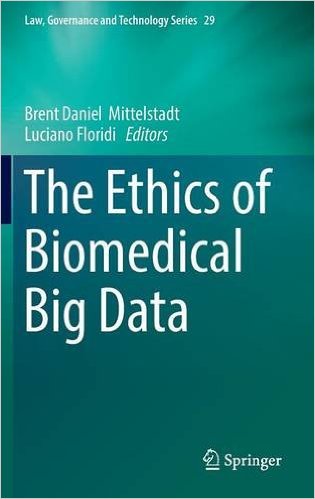
Professor Brent Mittelstadt is a leading academic in data ethics and AI governance at the University of Oxford's Oxford Internet Institute (OII), serving as Professor of Data Ethics and Policy and Director of Research. He coordinates the Governance of Emerging Technologies (GET) programme, focusing on ethics, law, and technology interplay. His work bridges academic research with policy impact, contributing frameworks like 'counterfactual explanations' and fairness metrics ('Conditional Demographic Disparity') used globally. He leads high-profile projects such as Trustworthiness Auditing for AI and A Right to Reasonable Inferences in Advertising and Financial Services. Research interests span AI ethics, medical ethics, technology governance, and non-discrimination law. He has pioneered ethical frameworks addressing algorithmic bias, GDPR compliance, and AI accountability. His work has influenced policy bodies like the UK Information Commissioner’s Office and the European Commission, and is implemented by tech giants such as Google and Microsoft. Awarded O2RB Excellence in Impact Awards (2018, 2021) and PLSC Best Paper (2019) Funded by Wellcome Trust, Sloan Foundation, and others Advisory roles for NHSx, GSK Consumer Healthcare, and regulatory bodies Recent work focuses on AI regulation (EU AI Act), generative AI ethics, and healthcare AI governance. He co-leads the OxonFair toolkit for algorithmic fairness and investigates societal impacts of deepfake proliferation and large language models.
M. Granger Morgan is the Hamerschlag University Professor of Engineering at Carnegie Mellon University , with appointments in the Department of Engineering and Public Policy , Department of Electrical and Computer Engineering , and H. John Heinz III College . He co-directs the NSF Center for Climate and Energy Decision Making and the Electricity Industry Center at CMU. Education: Ph.D., Applied Physics and Information Science, University of California, San Diego (1969) M.S., Astronomy and Space Science, Cornell University (1965) B.A., Physics, Harvard College (1963) His research spans science, technology, and public policy with focus areas in energy systems , climate change mitigation , electric grid resilience , and uncertainty characterization in policy analysis . Recent publications analyze hydrogen market barriers , carbon sequestration timelines , and interdependent energy infrastructure risks . Scientific leadership includes: Member, National Academy of Sciences Member, American Academy of Arts and Sciences Co-chair, NAS Report Review Committee Board member, International Risk Governance Council Foundation Advisory Board, E.ON Energy Research Center, RWTH Aachen DOE Electricity Advisory Committee member Former EPA Science Advisory Board Chair Fellow of AAAS, IEEE, and Society for Risk Analysis Contact: Office 5220 Wean Hall, Phone 412-268-2672, Email granger.morgan@andrew.cmu.edu
Jakob Merane is a postdoctoral researcher at ETH Zurich's Professorship of Law, Economics and Business, and a visiting researcher at the Max Planck Institute and Harvard Law School. He holds a Ph.D. from ETH Zurich and law degrees from the University of Basel, with additional studies in applied statistics. His research focuses on AI-driven legal enforcement, legal technology, and compliance-by-design approaches, leveraging computational and empirical methods. Merane's work includes developing tools like SwiLTra-Bench for multilingual legal translation and LEXam for benchmarking AI legal reasoning. He has contributed to GDPR compliance studies, automation of legal enforcement processes, and quantitative analyses of Swiss legal datasets. Awards include the 2024 Young Scholar Prize from the German Law and Economics Association. Teaching responsibilities include ETH's Law & Tech course since 2020, emphasizing AI regulation and interdisciplinary collaboration between law and computer science. Merane's research also addresses AI liability in medical contexts, digital advertising regulations, and ethical AI integration in legal systems. His work bridges legal theory with practical applications, aiming to enhance justice accessibility through technology.
Esteban Rossi-Hansberg is the Glen A. Lloyd Distinguished Service Professor of Economics at the University of Chicago's Kenneth C. Griffin Department of Economics (since 2021). Previously, he held professorships at Princeton University (2005–2021) and Stanford University (2002–2005). He earned his Ph.D. in Economics from the University of Chicago in 2002. He serves as a Research Associate at the National Bureau of Economic Research (NBER) and a Research Fellow at the Center for Economic Policy Research (CEPR). He co-directs the Becker Friedman Institute's International Economics and Economic Geography Initiative and is Lead Editor of the Journal of Political Economy . His research focuses on international trade, regional and urban economics, growth, organizational economics, and climate change. Key topics include city structure, offshoring impacts, spatial frictions, climate adaptation, and agglomeration effects. His work has been published in major economics journals, and he has received prestigious awards such as the Alfred Sloan Fellowship (2007), August Lösch Prize (2010), and election to the American Academy of Arts and Sciences (2022). Recent work explores the economic geography of climate change, including adaptation strategies and migration dynamics. He has analyzed spatial distribution of economic activity under climate scenarios and the role of carbon taxes in reshaping global economies. His studies often use dynamic spatial models to quantify local and global economic impacts. His contributions span theoretical frameworks and empirical analyses, addressing policy questions like optimal industrial strategies, spatial equity, and adaptation to environmental challenges. He collaborates widely, with co-authors including Klaus Desmet, Stephen Redding, and others, producing influential papers on migration, trade, and urban systems.
Prof. Dr. Joachim Wuermeling is a Professor at ESMT Berlin and an attorney at A&O Shearman in Frankfurt. He previously served as a member of the Deutsche Bundesbank’s Executive Board, where his responsibilities included banking supervision, IT, data, and organizational governance. He was also part of the ECB’s Single Supervisory Mechanism Supervisory Board, the Basel Committee on Banking Supervision, and the German Financial Stability Board. Education: Holds degrees from the University of Bayreuth and the European University Institute in Florence. Prior roles include Member of the European Parliament, German State Secretary for Economics and Technology, and leadership positions in the German Insurance Association and Sparda-Banken Association. His research and professional focus centers on financial regulation, banking supervision frameworks, and the intersection of law with financial systems. He has contributed to shaping EU and global financial policies through his involvement in key regulatory bodies.
Professor Rainer Böhme is a prominent academic in the field of IT security and privacy at the University of Münster's School of Business and Economics, Department of Information Systems. He also holds a professorship for Security and Privacy at the University of Innsbruck's Institute of Computer Science. His research spans multiple dimensions of digital security, with particular expertise in steganography, digital forensics, privacy-enhancing technologies, and the economic aspects of cybersecurity. Dr. Böhme earned his Doctoral Degree from TU Dresden's Faculty of Computer Science in 2008, following studies in Communications, Economics and Computer Science at Technische Universität Dresden and Université Paris XII. His academic journey includes positions as Assistant Professor at the University of Münster (2010-2015), Postdoctoral Fellow at the International Computer Science Institute in Berkeley (2009-2010), and Scientific Staff at TU Dresden's Chair of Privacy and Data Security. His research interests focus on steganography and steganalysis, digital forensics, privacy-enhancing technologies, security and usability, economic and behavioral aspects of information privacy, virtual currencies, and the economics of information security. His work bridges technical security mechanisms with economic and behavioral considerations, creating a unique interdisciplinary approach to cybersecurity challenges. Analysis of his recent publications reveals a strong trend toward the economics of security, particularly regarding blockchain technologies, cryptocurrency, and privacy valuation. His work increasingly examines the intersection of technical security mechanisms with market dynamics, regulatory frameworks, and user behavior. The research spans theoretical game-theoretic models, empirical studies of user behavior, and practical applications in digital forensics and privacy protection. Program Co-Chair, Financial Cryptography and Data Security (2015) Program Co-Chair, New Security Paradigms Workshop (NSPW) (2015) General Chair, 8th International Conference on IT Security Incident Management & IT Forensics (2014) Organizer and Program Co-Chair, 1st Workshop on Bitcoin Research (2014) Associate Editor, Electronic Commerce Research (since 2013) Associate Editor, EURASIP Journal on Information Security (since 2013) Professor Böhme has supervised multiple Master's theses in Information Systems, including work on static code analysis for smart contracts, remote maintenance protocol security, and application protection requirements in retail banking. His research is supported by significant grants from the German Federal Ministry of Research, Technology and Space, the DFG, and the EU FP7 program, with projects focusing on digital forensics, privacy-enhancing technologies, and cryptocurrency crime prevention. He leads the IT Security Research Group at the University of Münster, which investigates theoretical and applied aspects of information security with particular emphasis on the economic dimensions of security decisions.