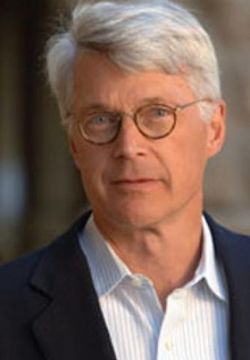
Jeffrey A. Cooper is a Professor of Law at Quinnipiac University School of Law , where he teaches courses in estate planning, wills and trusts, and taxation. He previously served as Associate Dean for Research and Faculty Development and is currently faculty adviser to the Quinnipiac Probate Law Journal . Education: AB from Harvard University, JD from Yale University, LLM from New York University Research Interests: His work focuses on tax policy , estate and gift taxation , and the intersection of federal tax law with state probate systems . He specializes in trust enforceability , uniform trust code , and historical analysis of tax legislation. Publications: Recent articles address perpetual trusts , state death tax decline , and curriculum reforms in estate planning education. His scholarship is widely published in national law journals and cited in casebooks. Scientific Awards: Academic Fellow, American College of Trust and Estate Counsel (ACTEC) Faculty Scholar, Quinnipiac University Professional Background: Before academia, Cooper practiced law for over a decade as a principal at Cummings & Lockwood, senior officer at United States Trust Company, and special counsel to Shipman & Goodwin. He also served as a senior adviser to Fiduciary Trust Company International.
Azizjon ALIMOV is a Full Professor at IÉSEG School of Management (University of Lille, France), specializing in Corporate Finance, Mergers and Acquisitions, and Law and Finance. He holds a Ph.D. in Finance from the University of Oregon (2007) and an MBA from Central Michigan University (2001). His HDR (Habilitation) in Management Sciences was awarded by the University of Lille in 2023. His research focuses on corporate governance, cross-border M&A dynamics, and the interplay between legal frameworks and financial decision-making. Key themes include intellectual property rights' impact on corporate debt costs, product market competition effects on corporate cash holdings, and government borrowing influences on acquisition strategies. His work frequently examines global contexts, with studies spanning North America, Asia, and Europe. Notable publications include analyses of IPO staging mechanisms (2024), managerial discipline through trade liberalization (2023), and the role of labor protection laws in loan contracting (2015). His recent work emphasizes reproducibility in management science methodology (2023) and cross-border regulatory challenges in M&A. No scientific awards are explicitly listed; however, his extensive publication record reflects sustained academic contributions. He has advised students across institutions including City University of Hong Kong and the Sauder School of Business, though specific advisee names are not documented here. His professional experience includes roles at the University of Arizona (2008–2010), California State University (2007–2008), and as an HSBC Visiting Assistant Professor at the University of British Columbia (2016–2018). He currently leads the Finance Track at IÉSEG, contributing to programs like the Grande École Master’s in Finance and MSc Corporate Finance courses.
Prof. Dr. Alexander Stroh-Steckelberg is Professor of Political Science with a focus on African Politics & Development Policy at the University of Bayreuth since 2022. He serves as Deputy Head of the Bayreuth International Graduate School of African Studies (BIGSAS) until 2025 and has held prior roles as Junior Professor and Senior Fellow at BIGSAS (2015–2021). His academic career includes research associate positions at the GIGA German Institute of Global and Area Studies (2006–2015) and teaching roles at the Universities of Abomey-Calavi, Heidelberg, and Lüneburg. Stroh-Steckelberg’s research spans comparative democracy studies , judicial politics , electoral systems , political party dynamics , and development policy in Africa, with regional expertise in Francophone West Africa and Rwanda . His work emphasizes institutional diffusion, informal networks in courts, and the interplay between formal and informal governance structures. Recent publications reveal a focus on judicial appointment policies , electoral manipulation , and local governance challenges across Africa. He contributes to methodological advancements in comparative area studies and network analysis , particularly in non-Western democracies. Stroh-Steckelberg is actively involved in academic communities including the American Political Science Association , German Political Science Association , and Association for African Studies in Germany .
Scott D. Sagan is the Caroline S.G. Munro Professor of Political Science at Stanford University and a Senior Fellow at the Freeman Spogli Institute for International Studies. He serves as Co-Director of the Center for International Security and Cooperation (CISAC) and holds the position of Bass University Fellow in Undergraduate Education. Sagan also co-chairs the American Academy of Arts and Sciences' Committee on International Security Studies, demonstrating his significant influence in the field of international security. Sagan received his Ph.D. in Political Science from Harvard University in 1983 and his B.A. in Government from Oberlin College in 1977. Prior to joining Stanford, he taught at Harvard University and served as special assistant to the director of the Organization of the Joint Chiefs of Staff in the Pentagon, providing him with valuable practical experience in defense policy. Professor Sagan's research primarily focuses on nuclear weapons policy, international security, arms control, and nonproliferation. His work examines the organizational, political, and ethical dimensions of nuclear strategy, with particular attention to the risks of nuclear accidents, the effectiveness of nonproliferation policies, and public attitudes toward nuclear weapons use. He has pioneered important theoretical frameworks regarding the organizational causes of nuclear accidents and the normative constraints on nuclear weapons use. Sagan's publications reveal a consistent focus on nuclear deterrence theory, the organizational aspects of nuclear command and control, and the ethical dimensions of nuclear weapons policy. His work bridges theoretical analysis with practical policy implications, often challenging conventional wisdom about nuclear strategy and proliferation. Recent publications show increasing attention to public opinion on nuclear weapons use, the evolving nature of nuclear deterrence in the contemporary security environment, and the relationship between international law and nuclear strategy. Thérèse Delpech Memorial Award (2022) Susan Strange Award, International Studies Association (2017) William and Katherine Estes Award, National Academy of Sciences (2015) International Security Studies Section Distinguished Scholar Award (2013) Stanford's Dean's Award for Distinguished Teaching (1998-99) Stanford's Hoagland Prize for Undergraduate Teaching (1996) International Studies Association's Innovative Teaching Award (2008) Monterey Institute for International Studies' Nonproliferation Education Award (2009) Sagan has been instrumental in shaping the research agenda at CISAC, mentoring numerous students and junior scholars in the field of international security. His work has been supported by various research grants from foundations and government agencies focused on nuclear security issues. At Stanford, he has led numerous research initiatives examining nuclear weapons policy, arms control, and nonproliferation challenges. As Co-Director of CISAC, Sagan oversees one of the world's leading research centers on international security, nuclear policy, and arms control. The center brings together scholars, practitioners, and students to address pressing security challenges through interdisciplinary research, policy-relevant analysis, and educational programs. Under his leadership, CISAC has maintained its position as a premier institution for security studies research and policy engagement.
Ryan Stones is a Lecturer at the City Law School , City, University of London, specializing in competition law, behavioral economics, and the intersection of legal philosophy with antitrust enforcement. His work critically examines the application of the formal rule of law to EU competition policy and analyzes historical schools of antitrust thought like the Chicago School and Ordoliberalism.
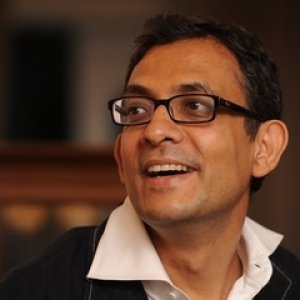
Abhijit Banerjee is the Ford Foundation International Professor of Economics at MIT and Director of the Abdul Latif Jameel Poverty Action Lab (J-PAL). A 2019 Nobel laureate in Economic Sciences, his research focuses on development economics, political economy, and poverty alleviation. He co-authored influential books like Poor Economics and Good Economics for Hard Times , emphasizing evidence-based policies and randomized controlled trials. Banerjee’s work addresses global challenges such as education, health, and social welfare, with notable contributions to microfinance, public health interventions, and anti-poverty programs. He holds leadership roles in global initiatives like the Global Education Evidence Advisory Panel and has advised governments worldwide. His research spans topics from police resource allocation in India to the impact of information during crises like demonetization and the pandemic. Education: Bachelor’s in Statistics, Presidency College, Kolkata M.A. in Economics, Jawaharlal Nehru University PhD in Economics, Harvard University Key Contributions: Co-founder of J-PAL, promoting evidence-based poverty reduction strategies. Pioneer in using randomized controlled trials (RCTs) for policy evaluation. Research on microfinance, education reforms, and health interventions in developing countries. Awards: Nobel Prize in Economics (2019), Infosys Prize in Social Sciences (2009), Member of the National Academy of Sciences (2020). Grants/Advisory Roles: Collaborations with institutions like the World Bank, UN, and governments on poverty, health, and education policies. Labs/Teams: J-PAL global network, Abdul Latif Jameel Poverty Action Lab.
London School of Economics and Political Science (LSE)United Kingdom
Professor Andrew Murray is a leading academic in Law with expertise in New Media and Technology Law. He holds the position of Professor of Law at the LSE Law School and directs the LSE Law, Society and Technology Group. His research focuses on digital rights, AI ethics, and regulatory frameworks for emerging technologies. Murray has held roles including Fellow of the Royal Society for the Arts and advisor to the Saudi Arabian government on e-commerce law. He has advised parliamentary committees, including the House of Lords Communications Committee on digital regulation, and delivered the prestigious TMC Asser Lecture on AI and human agency. Education: LL.B. Hons from Edinburgh University (1994), followed by academic roles at Stirling University and LSE since 2000. Professional memberships include the Society of Computers and Law (SCL) and the Higher Education Academy (HEA). He has been a visiting professor at Amsterdam Law and Technology Institute and Sciences Po Paris. Research interests span cyberspace regulation, AI governance, and the intersection of technology with human rights. Key publications include Human Rights in the Digital Age (2004) and The Regulation of Cyberspace (2007). Awards include recognition as an Independent Expert in Nominet UK dispute resolution (2001–2008) and a 2024 Leibniz Prize reviewer. Advocacy includes contributions to EU e-commerce directives and UK surveillance law debates. His work emphasizes balancing innovation with legal accountability in digital spaces.
Peter Henderson is an Assistant Professor at Princeton University with joint appointments in the Department of Computer Science and the School of Public and International Affairs. He is affiliated with the Center for Information Technology Policy (CITP), Princeton Language and Intelligence Initiative (PLI), Center for Statistics and Machine Learning (CSML), and Program in Law & Public Policy (PLAW). J.D./Ph.D., Stanford University, 2023 M.Sc., McGill University and Montréal Institute for Learning Algorithms Henderson's research focuses on the critical intersection of artificial intelligence and law, with particular emphasis on AI safety, methods to improve reasoning in foundation models, interdisciplinary approaches to law and AI, and AI governance. His work spans language-grounded reinforcement learning, alignment techniques, strategic decision-making in legal contexts, and public interest artificial intelligence. He investigates how legal frameworks can guide the development of AI systems that benefit society while addressing potential harms. Henderson's recent publications reveal a strong trajectory toward addressing the safety, governance, and legal implications of foundation models. His work combines rigorous technical AI research with deep legal analysis, particularly examining how intellectual property law interacts with AI development, regulatory pathways that balance innovation with harm prevention, and the role of law in shaping responsible AI deployment. A significant thread throughout his research is the development of better evaluation methodologies for AI systems, especially in critical domains like law. SEAS Excellence in Teaching Award (2025) Henderson leads the Princeton Law+Language, AI, & Society (POLARIS) Lab, where he advises students and researchers working at the intersection of AI and legal studies. His research has been supported through collaborations with government agencies, including work with the IRS on audit selection algorithms. His findings have informed practical applications in government efficiency and equity, as well as legal system improvements. Henderson runs the POLARIS Lab at Princeton, which focuses on developing AI systems that work for the public interest, particularly in legal contexts. His team develops sequential decision-making systems for government efficiency, foundation models capable of reasoning about law, and improved safety evaluation frameworks for AI systems. The lab maintains strong connections with legal practitioners and policymakers to ensure research has real-world impact.
Associate Professor Kiat Boon, Daniel SENG is a leading academic at the National University of Singapore (NUS), specializing in technology law and infocommunications law. He currently serves as Director of the LLM (Intellectual Property & Technology Law) program and IT Coordinator. Previously, he held roles as Director of Research at the Singapore Academy of Law (2001–2003), partner and head of technology practice at Rajah & Tann, and non-residential fellow at Stanford Law School’s Center for Legal Informatics (CodeX). His education includes a JSD and JSM from Stanford University, BCL (Oxford, Rupert Cross Prize recipient, 1994), and LLB (NUS with first-class honors). His research employs machine learning, NLP, and big data to analyze digital law challenges, particularly in copyright takedown notices and AI governance. Research interests span information technology law, empirical legal studies, quantitative research, and AI’s intersection with legal reasoning. He contributes to global legal reform via advisory roles at the World Intellectual Property Organization (WIPO), focusing on copyright exceptions, music licensing, and intermediary liability. Key awards include the 1994 Rupert Cross Prize. His work bridges law and technology through publications on digital evidence, metaverse legal frameworks, and AI’s impact on private law. He is actively involved in shaping Singapore’s legal infrastructure through government committees and academic initiatives.
Associate Professor Mark Humphery-Jenner is a distinguished faculty member at the University of New South Wales (UNSW) Business School, specifically within the School of Banking and Finance. With an exceptional academic pedigree including multiple PhDs from prestigious institutions worldwide, he has established himself as a leading researcher at the intersection of finance, law, and corporate governance. Dr. Humphery-Jenner's educational background demonstrates remarkable breadth and depth, featuring PhDs from UNSW, Tilburg University, and Leiden University, along with master's degrees from Columbia University and the University of Washington. His undergraduate achievements include a BCom with First Class Honours and University Medal, and an LLB with First Class Honours, both from UNSW. This multidisciplinary foundation spanning business, law, and finance informs his comprehensive research approach. His research spans corporate finance, venture capital, and law, with particular focus on how legal frameworks shape financial decision-making and corporate behavior. Humphery-Jenner has published extensively in top-tier finance journals including the Journal of Financial Economics, Journal of Financial and Quantitative Analysis, Review of Finance, and Journal of Corporate Finance, as well as leading management journals such as Strategic Management Journal and Journal of International Business Studies. His scholarly contributions address critical issues in executive compensation, securities litigation, corporate governance, and private equity markets. Analysis of his recent publications reveals a sophisticated research trajectory increasingly focused on the relationship between litigation risk and financial reporting practices, corporate governance mechanisms, and investor protection frameworks. His work demonstrates particular attention to Australian regulatory contexts while maintaining a strong international comparative perspective, especially regarding Asian capital markets and cross-border investment. With substantial industry experience including work in investment banking and consulting for hedge funds, Humphery-Jenner brings practical insights to his academic work. He has been teaching in various capacities since 2006 and has served as an assistant professor in finance since 2012, contributing significantly to business education at UNSW. His professional background enhances his ability to bridge theoretical research with real-world financial practice.
Swiss Federal Institute of Technology in LausanneSwitzerland
Maksym Andriushchenko is an incoming faculty member at the ELLIS Institute Tübingen and Max Planck Institute for Intelligent Systems , where he will lead the AI Safety and Alignment group as a principal investigator. Currently, he is a Doctoral Assistant at the Theory of Machine Learning Laboratory (TML) within the Department of Computer Science (IINFCOM) at Swiss Federal Institute of Technology in Lausanne (EPFL) . His work focuses on AI safety, adversarial robustness, and alignment of large language models (LLMs) with societal values.
Dr. Jeni Mitchell is a Lecturer in the Department of War Studies at King’s College London, affiliated with the School of Security Studies under the Faculty of Social Science & Public Policy. She specializes in future war studies, space security, and the evolution of rebellion, serving as co-director of the Future Threats Lab within the Centre for Science & Security Studies. Her work emphasizes human-centric approaches to analyzing existential threats and their societal impacts. Her education includes a PhD from King’s College London, where her doctoral research focused on civilian victimization by non-state armed groups. She has held positions at Chatham House, the Brookings Institution, and the Middle East Institute. Teaching responsibilities include MA modules on future warfare, spacepower, and insurgency, while she also directs the MA International Relations and War program. Mitchell’s research explores future threat perceptions (particularly in space), futures research methodologies, and the intersection of war, genocide, and utopian ideologies. Her methodological innovations, termed ‘future-crafting,’ employ creative formats like films and games to model conflict scenarios. Notable collaborations include work with the Freeman Air and Space Institute and King’s Wargaming Network. Recent publications address Ukraine’s apocalyptic imaginary, space-based threat analysis, and refugee-warrior dynamics. Her research group activities include the Environmental Security research group and contributions to widening participation initiatives like the 2024 Summer School in international security.
Mr. Dr. Gerdien Oldenhuis is an Assistant Professor at the Faculty of Law of the University of Groningen, specializing in Labor Law and Social Security Law. He holds multiple roles including Coordinator and Head Teacher of the post-academic social security law course (PAO), Member of the Supervisory Board of the Groninger Leergang Arbeidsrecht, and Coach for the National Team of the Hugo Sinzheimer Moot Court Competition. His expertise spans work contract law, social security claims, and legal policy analysis. He contributes to academic publications such as the Tijdschrift voor Ontslagrecht and Tijdschrift Arbeidsrechtpraktijk . Oldenhuis teaches courses on work contracts, social law fundamentals, legal research methodologies, and thesis supervision. His research focuses on labor transitions, dismissal law, and the intersection of employment and social security policies. Ancillary activities include roles at the Bestuursacademie Nederland, Schuldhulpacademie, and editorial work for legal journals. He actively participates in policy discussions and legal education initiatives, emphasizing practical applications of law in real-world scenarios.
Rosa Ferrer is a Serra-Hunter Associate Professor at Universitat Pompeu Fabra and an Associate Research Professor at the Barcelona School of Economics. She also serves as a Research Affiliate at CEPR in London and as Co-Director of the Master in Competition, Regulation & Markets program. Her academic journey began with a PhD from Vanderbilt University, establishing a strong foundation for her research career in economics. Dr. Ferrer's research spans several key areas within economics, with a particular focus on Law and Economics, Industrial Organization, and the Digital Economy. She combines empirical and theoretical methods to explore consumer choice, demand estimation, gender economics, and law enforcement challenges. Her work is inspired by Gary Becker's view on economic incentives beyond monetary rewards, applying industrial organization and applied microeconomics to diverse applications. She has made significant contributions to understanding gender gaps in professional performance, particularly in the legal profession, as well as consumer behavior in product-harm crises and digital markets. Her publication record demonstrates consistent scholarly output across high-impact journals including Management Science, Journal of Political Economy, and Review of Economic Studies. Her recent work focuses on digital economy challenges, gender differences in media consumption, and career trajectories in professional settings. This research portfolio shows a clear progression from foundational work in law enforcement and decision theory to contemporary issues in digital markets and gender economics. As Co-Director of the Master in Competition, Regulation & Markets, Dr. Ferrer plays a significant role in shaping the next generation of economists and policy experts. Her leadership in this program reflects her commitment to bridging academic research with practical policy applications in competition and regulatory frameworks.
Professor Marilyn Pittard is a leading academic in the Faculty of Law at Monash University, currently serving as Associate Dean Engagement. She has held numerous leadership roles including Interim Dean, LLM Director, and Associate Dean (Research), with a career spanning over two decades in academic administration and legal scholarship. Her research focuses on Labour Law, Employment Rights, and Human Rights, with significant contributions to understanding workplace relations, vulnerable workers, and the intersection of criminal records with employment access. She has secured grants from the Australian Research Council and other institutions for projects like The Other Side of Security and Living Down the Past . Recent publications highlight trends in employment law, including anti-slavery practices, redundancy frameworks, and digital-era workplace challenges. She chairs the Victorian Legal Admissions Board’s Academic Course Appraisal Committee and contributes to the Australian Labour Law Journal and Employment Law Bulletin .