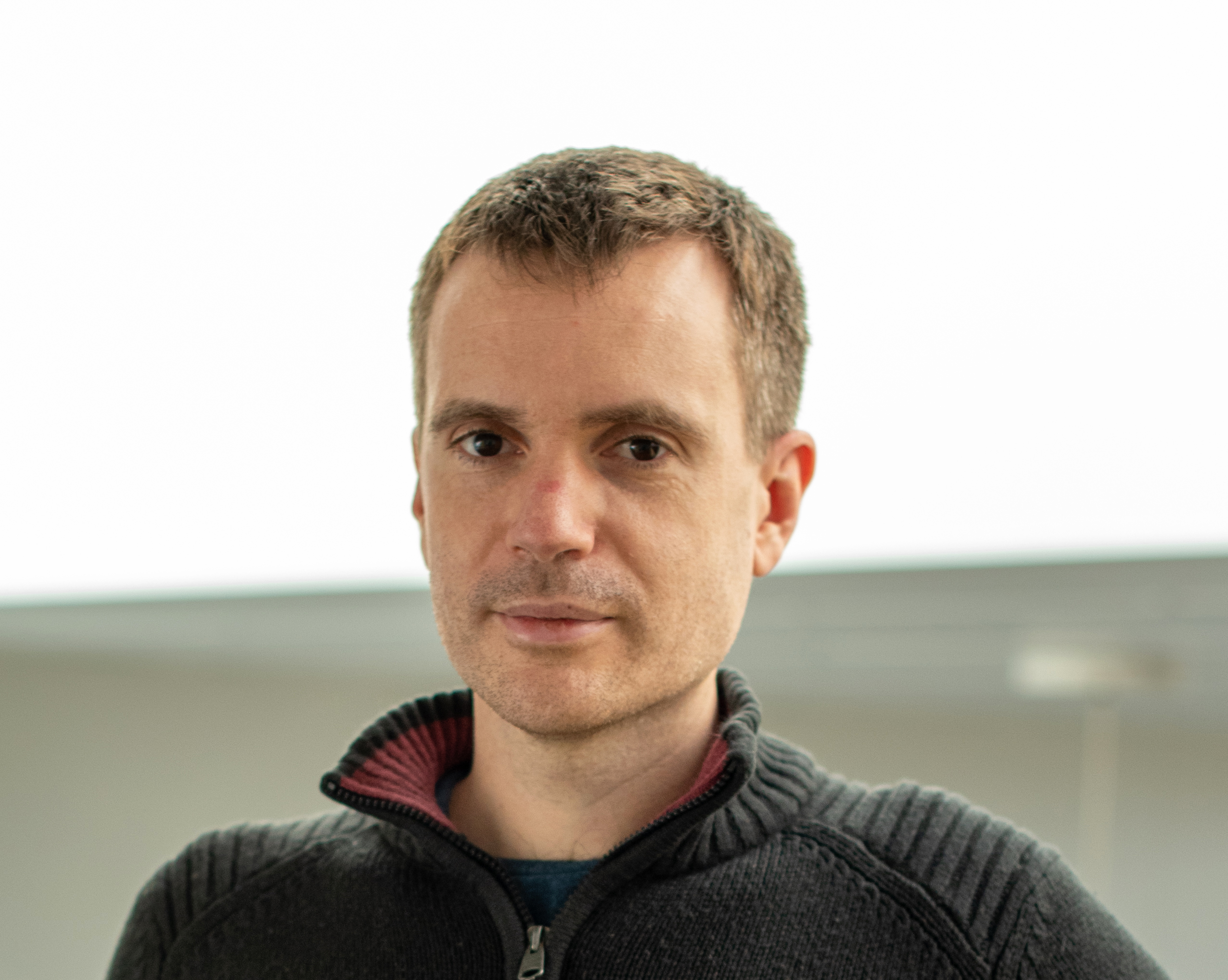
Professor Tomas Ward is a Full Professor in the School of Computing at Dublin City University. His research develops neurotechnology and brain-computer interfaces for healthcare applications, including EEG-based art preference decoding, motor imagery classification, and Long COVID symptom monitoring. Recent work focuses on digital health interventions for clinical trials, athlete pain assessment frameworks, and self-powered wearable sensors. Publications demonstrate expertise in translating neuroengineering concepts into clinical and sports medicine applications.
Claudia Mazo is Assistant Professor at Dublin City University's School of Computing, specializing in AI for medical imaging. Her research develops machine learning methods for brain tumor detection, stroke diagnosis, and surgical planning. Holder of a Marie Curie Fellowship and management committee member for a European brain cancer network. Publications focus on explainable AI in neuroimaging, transfer learning for pathology, and multimodal medical fusion. Dual Ph.D. from Universidad de León and Universidad del Valle.
Professor Habib Benali is a faculty member in the Department of Electrical and Computer Engineering at Concordia University. His research focuses on computational neuroscience, neurodegenerative diseases, and translational biomedical engineering. Key areas include traumatic brain injury (TBI) outcomes, Alzheimer's disease modeling, and sleep physiology. He leads projects involving large-scale clinical cohorts (e.g., CENTER-TBI, TRACK-TBI) and develops novel imaging techniques for brain network analysis. His work bridges engineering, mathematics, and clinical neuroscience, with contributions to biomarker discovery and neurotechnology. Research interests prominently feature: Computational models of brain lactate metabolism Mathematical modeling of tau protein propagation Machine learning applications in neuroimaging Sleep-dependent memory consolidation mechanisms Biomarker development for TBI and neurodegenerative disorders Publications emphasize interdisciplinary approaches, combining experimental data with advanced statistical methods (e.g., Bayesian workflow) and computational simulations. Recent work explores closed-loop neurostimulation protocols and phase aberration correction in ultrasound imaging. The BHealthyAgeLab under his direction investigates aging-related neurological challenges through integrated systems approaches.
Aaron Johnson is an Associate Professor in the Department of Psychology at Concordia University, serving concurrently as Associate Vice President Research for Strategic Institutional Initiatives and Innovation, and Interim Executive Director of District 3 Innovation. He holds a PhD from the University of Glasgow. His research focuses on the interplay between vision, attention, and cognitive function, particularly in populations with visual impairments like macular degeneration, hearing loss, and dyslexia. Methodologically, he employs advanced techniques including EEG, gaze-contingent displays, virtual reality, and computational neuroscience. Education: PhD in Psychology, University of Glasgow Research Interests: Visual attention mechanisms in aging and disability Neuroplasticity through eccentric viewing training Ethical implications of erotic robotics Technology accessibility in STEMM conferences Airline pilot cognitive resilience under stress His work bridges basic cognitive science and applied domains like aviation human factors and low vision rehabilitation. Article Trends: Recent publications emphasize technology-mediated solutions for vision impairment (e.g., iPad accessibility studies), neurohormonal modulation (oxytocin effects), and societal implications of emerging technologies (sex robots, erotic AI). A consistent theme is cross-modal sensory interactions in clinical and everyday environments. Awards: No awards listed. Advising & Grants: No advisees listed. Research supported through Concordia institutional initiatives and external grants not detailed here. Labs & Teams: Directs the Concordia Vision Labs, collaborating with aviation safety experts and assistive technology developers to create inclusive solutions for visually impaired populations.
Farouk Nathoo is a Professor and Canada Research Chair (Tier 2) in Biostatistics at the University of Victoria's Department of Mathematics and Statistics, within the Faculty of Science. His research focuses on Bayesian methods, neuroimaging statistics, and spatial/spatiotemporal data analysis with applications to cancer and neurodegenerative disorders. He holds a PhD from Simon Fraser University and has held academic roles since 2006, progressing from Assistant to Associate Professor before becoming Full Professor in 2020. Education: BSc (UBC, 1998), MMath (Waterloo, 2000), PhD (SFU, 2006). Research interests include statistical modeling for brain imaging, cancer bioinformatics, and high-dimensional data analysis. He has authored/co-authored over 50 peer-reviewed publications and secured major grants including NSERC Discovery Grants, CIHR projects, and TFRI funding. Awards include the Canada Research Chair and recognition for student mentorship. Teaching spans courses like Bayesian Statistics, Data Analysis, and Time Series. He has supervised numerous graduate students and postdocs, contributing to interdisciplinary research teams. Active in editorial roles for journals such as the Canadian Journal of Statistics and Entropy.
Dr. Unal 'Zak' Sakoglu is an Associate Professor of Computer Engineering at the University of Houston-Clear Lake's College of Science and Engineering. He holds a B.S., M.S., and Ph.D. in Electrical and Computer Engineering from the University of New Mexico (UNM). His research focuses on signal/image processing, medical imaging analysis, machine learning, and neuroimaging applications. He has contributed to the development of non-uniformity correction algorithms for infrared sensors, dynamic functional connectivity analysis in fMRI, and space-filling curve methodologies for multidimensional data analysis. His work has been supported by grants from DOD, AFOSR/AFRL, and private industry. Education: Ph.D. in Electrical and Computer Engineering (UNM), Albuquerque, NM Postdoctoral Work: UNM Neurology Department BRAIN Imaging Center, UT Southwestern Medical Center, Abbott Laboratories Dr. Sakoglu's research interests include advancing brain function understanding through machine learning applied to neuroimaging data, with applications in schizophrenia, Gulf War Illness, and multiple sclerosis. He has pioneered techniques for improving fMRI classification accuracy and developing novel sampling methods for data visualization. Recent articles highlight advancements in lesion segmentation using U-Net architectures, fMRI-based connectivity analysis, and infrared sensing for environmental monitoring. He has received teaching accolades including UHCL Piper Teaching Award nominations and multiple AFOSR/AFRL fellowships. Grants: DOD CDMRP Grant (2016-2018), NCSI XSEDE EMPOWER Grants (2020-2021) Lab Focus: Neuroimaging software development, medical data analysis tools, and interdisciplinary collaborations in neuroscience and engineering
Arun Kulshreshth is Associate Professor and Director of the Human-Computer Interaction Laboratory in the School of Computing & Informatics at University of Louisiana at Lafayette. His research focuses on educational applications of virtual reality, exploring how VR technologies enhance learning experiences while developing tools to detect and mitigate student distraction in immersive environments. Kulshreshth leads significant research initiatives including a $311,010 Collaborative Tools for Scouting Locations in Virtual Reality project funded by Louisiana Board of Regents. His recent publications examine distraction classification using multimodal sensing, VR-based teaching interfaces, and eye-tracking applications for education. Honors include two SIGCHI Best of CHI Honorable Mention Awards for contributions to human-computer interaction research. Kulshreshth holds a Ph.D. in Computer Science from University of Central Florida and serves as Senior Member of both IEEE and ACM. Awards: SIGCHI Best of CHI Honorable Mention Award (2016, 2014) Recent Grants: Collaborative Tools for Scouting Locations in Virtual Reality ($311,010 - Louisiana Board of Regents)
Prof George D. Magoulas is a distinguished academic with a focus on interdisciplinary research at the intersection of machine learning, medical imaging, and educational technology. His work emphasizes deep learning applications in healthcare diagnostics and adaptive systems for learning environments. Recent research includes developing neural network frameworks for dementia identification using MRI, transfer learning in medical and financial contexts, and real-time service management solutions. Research interests span both technical and applied domains, including advanced deep learning architectures, ensemble methods, EEG-based autism detection, and the design of context-aware systems for education. He has contributed significantly to educational technology through projects like MOOC design patterns, inquiry-based lifelong learning frameworks, and adaptive feedback systems for mathematics education. His articles reflect a trend toward applying AI innovations in healthcare and education, with a particular emphasis on transfer learning, ensemble techniques, and neural network optimization. While no explicit awards or grants are listed, his publications highlight sustained engagement with high-impact areas such as dementia diagnosis and smart technology integration.
Rig Das is an Assistant Professor in the Computer Science and Computer Engineering Department at the University of Wisconsin-La Crosse (UWL), USA. His research focuses on Brain-Computer Interfaces (BCI), Biometrics, EEG Signal Processing, and AI, with applications in neurorehabilitation and medical diagnostics. He holds a Ph.D. in Applied Electronics Engineering from Roma Tre University, Italy, and has held roles including Research Scientist at the University of Nebraska Medical Center and Postdoctoral Researcher at Technical University of Denmark and the University of Luxembourg. Education: Ph.D. in Applied Electronics Engineering (2018) – Roma Tre University, Italy M.Tech. in Computer Science & Engineering (2012) – NERIST, India B.Tech. in Computer Science & Engineering (2007) – WBUT, India Research Interests: EEG Signal Processing for Parkinson’s Disease and Sleep Studies BCI Systems for Neurorehabilitation and Assistive Technologies Deep Learning in Biometric Identification (e.g., Finger-Vein, Facial Recognition) Medical Image and Signal Processing Grants & Projects: NIH BRAIN Initiative Grant (UH3 NS113769) – Research Scientist, UNMC (2020–25) EU H2020-ENCASE Project – Biometric Privacy Research (2016–19) UWL Faculty Research Grant ($12,200) – Parkinson’s Disease Study (2024–25) Awards: 2018 European Biometrics Research Award for PhD Thesis 2017 EUSIPCO 3MT Presentation Finalist Teaching and Advising: Current Courses: Digital Signal Processing, Programming Language Concepts, Software Design Past Roles: Instructor at UNMC Neurosurgery Dept., Assistant Professor at Assam Don Bosco University Labs & Collaboration: Developed the “Brainy Home” BCI system for smart home control Collaborates with institutions like GN Audio (Denmark) and Bar-Ilan University (Israel)
Vincent Gripon is a Full Professor at IMT Atlantique, France's leading engineering institutions. He leads the BRAIn team within Lab-STICC (CNRS UMR 6285), focusing on Artificial Intelligence intersections with Deep Learning, Signal Processing, and Neuroimaging. IMT Atlantique Lab-STICC (CNRS UMR 6285) Mathematical and Electrical Engineering (MEE) Department Research Interests span Artificial Intelligence with specialization in: Few-Shot Learning Neural Network Pruning & Quantization Brain-Computer Interfaces Graph Signal Processing Thrifty AI for Edge Computing Geometry-Driven Model Optimization Selected Publications demonstrate his focus on efficient AI systems through: Training-free adaptation techniques for large models Quantization-aware hardware design Manifold intrusion prevention methods Neuroimaging data analysis frameworks Honors & Distinctions : CVPR 2025 publication (ProKeR) AMD Open Hardware Competition winner (2023) DCASE 2023 Task 5 Jury Award
Prof. Björn Schuller is a Full Professor of Health Informatics at the Technical University of Munich (TUM) and holds a joint appointment at Imperial College London as Professor of Artificial Intelligence. He leads the Chair of Informatics in Healthcare at TUM and heads the Group on Language, Audio & Music (GLAM) at Imperial. His research focuses on the intersection of computer science and medicine, particularly in biosignal analysis, affective computing, and AI-driven healthcare solutions. Schuller has held academic positions at multiple institutions, including the Universities of Augsburg and Passau, and serves as a key figure in global AI and health research communities. Education: Received diploma (1999), doctorate (2006), and habilitation (2012) in electrical engineering/IT from TUM. He is a Fellow of IEEE, ISCA, ACM, and ELLIS, among others. Awards include the World Economic Forum Young Scientist (2015), ERC Starting Grant (2013), and IEEE Signal Processing Society Distinguished Lecturer (2024). Research interests span machine learning applications in healthcare, emotion recognition, and AI ethics. He has authored over 1,500 publications and secured >€15M in research funding, including ERC grants and Horizon 2020 projects. His company, audEERING GmbH, commercializes intelligent audio engineering technologies. Leadership roles include Editor-in-Chief of AI Open Journal and Field Chief Editor of Frontiers in Digital Health. He actively chairs international conferences (e.g., ACII 2025) and drives initiatives like the MPDD Challenge for depression detection.
Dimitrios Adamos is an Honorary Senior Research Fellow in the Department of Computing at Imperial College London, Faculty of Engineering. He specializes in brain wave decoding for virtual environments and clinical rehabilitation, with a focus on translating neurotechnology into practical applications through AI-driven solutions. His academic work bridges theoretical advancements and real-world applications in brain-computer interfaces (BCI) and healthcare technologies. Dr. Adamos holds a Ph.D. in Neuroinformatics and co-founded Cogitat, an Imperial spinout company where he serves as CTO. At Cogitat, he develops ML/AI technologies for BCI applications, securing patents and pre-seed funding. His research emphasizes ethical challenges in GenAI-powered BCIs and causal perspectives in brainwave modeling. Key achievements include leading a team to first place in the 2021 NeurIPS EEG Transfer Learning Competition and partnering with NHS for neurotechnology in stroke rehabilitation. His research interests span biomedical engineering, artificial intelligence, cognitive sciences, and clinical applications of EEG signal processing. Dr. Adamos collaborates with institutions like the Science Museum London and media outlets such as BBC News and The New Statesman, highlighting his work on mind-controlled VR for healthcare and BCI ethics. His publications focus on EEG decoding, graph theory in brain signal analysis, and causal inference in neurotechnology.
Henrik Rasmus Thomsen is a Researcher at the Institute of Geophysics, ETH Zürich, affiliated with the Exploration and Environmental Geophysics (EEG) group. He holds a doctoral degree from ETH Zürich (2021) and previously served as a Postdoctoral Researcher at the Chair of Structural Mechanics and Monitoring. His research focuses on metamaterials, elastic wave propagation, and non-destructive testing (NDT) using advanced techniques like ultrasound computed tomography and full-waveform inversion. He leads the Innosuisse-funded project developing quantitative methods for NDT of composite materials. Key projects include the MATRIX project (machine for time reversal and immersive wave experimentation) and the MetaVEH project (metasurface energy harvesting). His work spans theoretical, experimental, and applied domains, with contributions to metamaterial design, wavefield control, and structural health monitoring. Recent publications explore guided wave-based digital twins, phononic metamaterials for speech classification, and elastic wave control in granular media. Thomsen collaborates with institutions like the Acoustical Society of America and journals including Advanced Functional Materials and Philosophical Transactions of the Royal Society .
Alireza Malekmohammadi is a doctoral student and researcher at the Technical University of Munich's Department of Electrical and Computer Engineering, affiliated with the Institute for Cognitive Systems. He holds a BSc in Electrical Engineering from Shahid Beheshti University (2013) and an MSc in Digital Electronics Engineering from Sharif University of Technology (2015). His research focuses on signal processing (EEG, LFP, MEG), machine learning applications for brain-computer interfaces, and decoding neural responses to auditory stimuli. Key areas include: Brain-sound computer interfaces Hardware implementation of biomedical algorithms Neural correlates of music perception Recent publications explore musical familiarization effects on brain connectivity patterns and oscillatory dynamics, employing advanced EEG analysis techniques. Research demonstrates consistent focus on neuromodulation during auditory processing across multiple frequency bands. He contributes to teaching in biosignal processing courses and mentors students in practical neural signal analysis.
Professor Wei Chen is Head of the School of Biomedical Engineering at the University of Sydney. She holds a B.Eng. and M.Eng. from Xian Jiaotong University, China, and a Ph.D. from the University of Melbourne (2007). Her international experience includes positions at Bell Laboratories Germany and Eindhoven University of Technology. Professor Chen's research focuses on biomedical signal processing, wearable sensors for healthcare, and neural engineering applications. Research Interests: Development of wearable sensor systems for medical monitoring Neural signal processing and brain network analysis Sleep staging algorithms and neonatal monitoring technologies Biomedical instrumentation and sensor design Her recent publications demonstrate strong focus on neural signal processing, novel biosensor development, and AI applications in healthcare. Research trends show interdisciplinary work combining biomedical engineering with materials science, AI, and clinical neurology. Professional Service: Editorial roles for multiple IEEE journals including Transactions on Biomedical Engineering Former Chair of IEEE Sensor and Systems Council China Chapter IEEE EMBS AdCom Asia/Pacific representative