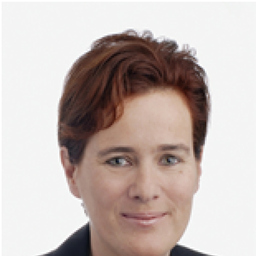
Marcus Gastaldello is a doctoral student and third-party funded research assistant in the Department of Geosciences at the University of Fribourg. He holds a Master’s degree in Mechanical Engineering (Fluid Dynamics) from the University of Warwick, UK, and transitioned into glaciology through subsequent academic programs at the University of Fribourg. Education : PhD Candidate, University of Fribourg (2023–present) Master’s in Mechanical Engineering, University of Warwick, UK (specialisation in Fluid Dynamics) Research Interests : Focuses on englacial warming dynamics in high-altitude Swiss Alps, with emphasis on cold firn monitoring and modeling around Colle Gnifetti (Monte Rosa massif). Integrates climate change impacts, glaciological processes, and numerical modeling techniques. Labs/Teams : Part of the Department of Geosciences’ glaciology research group, contributing to fieldwork and computational studies in alpine environments.
Dr. Anastasiia Grynko is a Lecturer at the Lucerne School of Business (HSLU) within the Lucerne University of Applied Sciences and Arts. She leads the Intercultural Competence module in the Bachelor’s programs of Business Psychology and Business Administration , focusing on workplace diversity and intercultural marketing strategies. Her academic role integrates teaching, research, and professional expertise in corporate communication and media studies. Dr. Grynko holds a PhD in Digital Communication (summa cum laude) from the Autonomous University of Barcelona, an MA in Journalism, and a BA in Sociology. Her research explores crisis communication, digital disinformation, and media ethics in Eastern Europe. Notable collaborations include roles at Columbia University’s School of International and Public Affairs, the University of Göttingen, and the Mohyla School of Journalism in Ukraine. Her recent work analyzes disinformation campaigns linked to the Ukraine war, with a focus on Swiss media landscapes. She has published widely on media transparency, fake news education, and the historical evolution of public relations in Ukraine. Professional memberships include the Swiss Association for Crisis Communication (VKK), the Swiss Association for Communication and Media Research (SGKM), and SIETAR Switzerland. Anastasiia supervises Master’s theses in intercultural communication and has designed training programs for corporate and journalistic audiences. Her career spans global marketing research (Synovate) and PR agency roles (Weber Shandwick Group), emphasizing reputation management and brand localization in Eastern Europe.
Andreas Jäger Fontana is a Lecturer at the Lucerne School of Business (Lucerne University of Applied Sciences and Arts), affiliated with the Institute of Business and Regional Economics (IBR). He holds a PhD from the University of Basel (1998), focusing on the mathematization of modern economics in the 19th century. Parallel to his academic career, he has been a senior HR professional at Roche since 2010, leading projects in organizational development and leadership. His research interests span Human Resource Management, Change Management, Business Ethics, and Leadership. Notable contributions include studies on charismatic leadership dynamics, employer attractiveness strategies, and team development frameworks. He has collaborated with institutions like the University of Basel’s Center of Organization and Work Sciences (ZOA) and the IE Business School. His academic roles include teaching Economics at Swiss secondary schools and at the University of Basel. Professional competencies include HR Business Partnering, Total Rewards Management, and Agile Innovation Processes. He has co-authored multiple publications, including a book on economic science history and peer-reviewed articles on organizational behavior. Key projects include leadership development initiatives at Roche and cross-cultural HR studies in Spain. His work integrates academic rigor with practical HR solutions, emphasizing employee engagement and organizational culture.
Prof. Dr. Andreas Luible is a Lecturer and Head of the Institute of Civil Engineering (IBI) at Lucerne University of Applied Sciences and Arts. He leads the Competence Center for Building Envelopes and Civil Engineering (CC GH+IB), focusing on advanced structural engineering, façade technologies, and sustainable materials. His expertise spans glass construction, adaptive façades, wind engineering, and energy-efficient building systems. He has held leadership roles in international research networks, including the COST Action TU1403 (Adaptive Facades Network), and chairs key industry standards committees such as the SIA Normenkommission 268 for glass construction. Education: Trained as a carpenter, he earned a civil engineering degree from TU Munich and a PhD from EPFL on glass element stability. His career includes academic roles and industry experience with global façade projects in Europe, the Middle East, and Asia. Research Interests: Structural glass and building envelopes Adaptive façade systems Wind engineering and climatic loads 3D-printed construction materials Energy-efficient and green façade designs Grants & Projects: Led over 50 research projects, including EU-funded initiatives. Active in standardization through SIA and CEN committees. Labs & Teams: Directs the IBI’s research programs and collaborates internationally on façade innovation and sustainable construction technologies.
Katja Mair is a Lecturer at the Lucerne School of Music's Institute of Jazz and Folk Music, specializing in Jazz Vocal and Jazz Ensemble instruction. She has held teaching roles since 2001, including workshops on stage presence and theoretical training. Her career spans diverse musical genres from Hard Dub to mainstream jazz, with notable projects like slowly we bleed , Kaama , and Second Land . Education: Classical rhythmics and dance at Zurich Conservatory; jazz vocals under Lauren Newton and others Leadership: Directed the Frauenchor Hombrechtikon (2012–2016), led Jazzlabor in Rapperswil (2014–2016), and co-founded Open Door 67 (2020) Her research interests include vocal techniques, jazz improvisation, and cross-genre musical fusion. Awards include the Montreux Jazz Chrysler Award 2001 and CARA awards for her work with Urban Voices . She maintains active involvement in big band projects, studio recordings, and interdisciplinary arts. Professional highlights include founding Open Door 67 and leading educational initiatives like the Pre College program (2002–2010). Her discography spans over 10 albums across experimental and mainstream jazz formats.
Seraina Mohr is a Lecturer and Head of the Competence Center for Communication Management at the Lucerne School of Business (HSLU Wirtschaft). She holds a Lic. phil I in Germanistik und Geschichte NDS from the Universität Zürich and specializes in Digital Communications, Social Media Strategies, and Content Strategy. Her roles include leading the MAS Digital Marketing and Communication Management program and overseeing various research and service projects focusing on topics like generative AI in marketing, sustainable consumer behavior, and community-oriented sponsorship. Her research spans digital transformation, online community management, and the integration of innovative technologies into marketing practices. Notable projects include studies on AI applications in marketing (2023), cognitive dissonance in sustainable behavior (2023), and the impact of creative education on business attitudes (2020). She has authored multiple publications, including books on innovation and social media strategies for museums. Awards include the 2016 Best Paper Award (GMW) for work on organizational development. Mohr actively contributes to conferences and collaborates on initiatives like the 'WRITE-UP!' creative writing project and EUKO conferences on economic communication. Her expertise bridges academic research, practical marketing strategies, and organizational leadership in digital realms.
Meike Müller is a Lecturer and Project Manager at the Lucerne School of Social Work (Hochschule Luzern – Soziale Arbeit). She holds a Master of Arts in Social and Communication Sciences and a Bachelor of Arts in Sociology, with a focus on urban and regional development. Her research emphasizes sociocultural dynamics in urban spaces, including public space utilization, social sustainability, and qualitative research methodologies. She has led projects on topics ranging from refugee rights to pandemic impacts on volunteer engagement. Education: 2017: CAS in Management and Roles in Community/Regional Development (HSLU) 2014: MA in Social and Communication Sciences (University of Lucerne) 2008: BA in Sociology (KU Eichstätt-Ingolstadt) Her professional competencies span urban sociology, spatial development, gender-equitable urban planning, and mixed-methods research. Key projects include evaluations of violence prevention programs, analyses of social sustainability in high-rise housing, and studies on volunteer engagement during the pandemic. Her publications explore topics like refugee rights handbooks, professional trajectories in sociocultural animation, and the role of virtual influencers in tourism marketing. She has collaborated with institutions like gfs.bern and the Canton of Basel-Stadt’s Justice and Security Department.
Donald Olsen is a Lecturer at the Lucerne School of Engineering and Architecture (HSLU) within the Institute of Mechanical Engineering and Energy Technology. His work focuses on industrial energy efficiency, particularly thermal energy systems and process integration using pinch analysis. He holds a Bachelor of Applied Science in Chemical Engineering from the University of British Columbia and a Master of Engineering in Chemical and Petroleum Engineering from the University of Calgary. Olsen's research emphasizes optimizing energy use in industrial processes through advanced methodologies like hybrid genetic algorithms and nonlinear programming. Key projects include integrating solar thermal systems in breweries, developing thermal energy storage strategies for batch processes, and applying pinch analysis for heat pump integration. He has collaborated on major initiatives such as the SWEET DeCarbCH project and the SCCER-Efficient Industrial Processes consortium. His publications span topics like multi-period heat exchanger retrofit optimization, energy storage management in non-continuous processes, and graphical approaches for batch process integration. Olsen has extensive industry experience, including roles at Hyprotech Ltd., Rosen Inspection Technologies, and as a Senior Scientist at HSLU, bridging academic research with practical industrial applications.
Patrick Renz is a Professor at the Department of Economics and a Lecturer at the Lucerne School of Computer Science and Information Technology at Lucerne University of Applied Sciences and Arts (HSLU). He holds a Lic. oec. from the University of Zurich and a Dr. oec. from the University of St. Gallen (HSG). His professional activities include serving as a member of the Management Board responsible for Continuing Education, Research, and DL at FHNW, as well as leadership roles in various organizations such as National Director of migratio (Swiss Bishops' Conference) and founder of Governance Technology AG. His research focuses on governance models in nonprofit organizations, subsidiary governance, and ethical leadership. Key research areas include Subsidiary Governance, Nonprofit Management, and Integrity Management. He has authored/co-authored influential publications like "Integrität im Managementalltag" (2023) and "Niederlassungen führen" (2012). His work emphasizes holistic governance frameworks for social organizations and improving leadership effectiveness in nonprofit sectors. Renz has held academic roles across universities in Switzerland and internationally, including guest lectureships and executive education programs. He is actively involved in organizations like Alliance Sud and the Fastenopfer Foundation. His professional competencies span leadership development, ethical management, and strategic governance in both corporate and nonprofit contexts.
Christian Rohrdantz is a Lecturer at the Lucerne School of Computer Science and Information Technology (HSLU), where he teaches Data Science in the 'Economics and Data Science in Mobility' program. He holds a Dr. rer. nat. and Master/Bachelor degrees in Information Engineering from Universität Konstanz. His professional roles include co-founding Vidatics GmbH (specializing in Data Science services) and serving as a project leader in Transferforschung at Universität Konstanz. Rohrdantz's research focuses on visual analytics, sentiment analysis, and natural language processing, with notable contributions to data visualization techniques for complex datasets. Education: Dr. rer. nat., Fachbereich Informatik und Informationswissenschaft, Universität Konstanz Master of Science in Information Engineering, Universität Konstanz Bachelor of Science in Information Engineering, Universität Konstanz Research Interests: His work emphasizes innovative visual methods for analyzing textual and temporal data, including sentiment analysis, event detection, and linguistic pattern recognition. He has developed algorithms for visualizing dynamic datasets like calendar-based event correlations and spatiotemporal sentiment trends. Rohrdantz's interdisciplinary approach bridges computer science with social sciences, focusing on applications in political discourse analysis, medical informatics, and user feedback systems. Scientific Achievements: He received the Airbus Group Research Prize for his doctoral work and holds patents related to visual analytics systems. Over 30 publications demonstrate expertise in topics like topic modeling with pixel-based bubbles, deliberative communication measurement, and real-time text stream analysis. Recent work explores automated disease identification from clinical text and phonotactic pattern visualization in linguistics. Notable Projects: Leading 'Gesellschaftliches Verständnis von Massnahmen gegen den Klimawandel in Rotkreuz' project Co-developed MooVis tool for movie rating prediction Contributed to VAST Challenge educational frameworks Labs/Teams: Affiliated with Universität Konstanz's Lehrstuhl für Datenanalyse und Visualisierung and collaborates with Hewlett-Packard Research Labs on advanced visualization technologies.
Ann-Kathrin Seemann is a Lecturer at the Lucerne School of Business (HSLU) in Switzerland, serving as Program Director for the BSc International Business Administration. Previously, she held a Junior Professorship in Public and Nonprofit Management at the Albert-Ludwigs-Universität Freiburg (2014-2019), focusing on mobility/logistics and public housing. She earned her PhD in Economics (Dr. rer. pol.) from Freiburg University in 2013, followed by postdoctoral research at Emory University in Atlanta. Her research spans sustainable mobility, public policy, urban development, and behavioral economics. Notable projects include analyzing mobility concepts’ impact on travel behavior, co-production in public services, and collaborative housing initiatives. She explores topics like civic engagement, ethical purchasing, and healthcare provider preferences through interdisciplinary approaches. Her publications emphasize empirical studies in journals like Public Management Review and Journal of Environmental Psychology . Key themes include the intersection of religion and business ethics, patient loyalty strategies, and spatial perception in urban environments. She actively engages in policy-oriented research through projects like the UrbanMicro initiative and the Tourism Forum Switzerland. Seemann’s work bridges academic inquiry with practical applications in public sector innovation, urban policy design, and nonprofit management. Her research frequently addresses societal challenges like climate change mitigation and sustainable urban mobility solutions.
René Stalder serves as Head of the Institute for Social Pedagogy and Social Policy at Lucerne University of Applied Sciences' School of Social Work since 2024, previously leading the Institute for Social Management, Social Policy and Prevention (2022-2024) and serving as Deputy Head of the Institute for Social Pedagogy and Education (2015-2022). He has been a lecturer and project manager at HSLU since 2012, with prior research roles at the Swiss Center for Special Education and University of Zurich. His educational background includes: PhD in Special Education, University of Zurich (2012) Licentiate in Special Education, University of Zurich (2005) Primary School Teacher Diploma, Teacher Seminar St. Michael Zug (1995) Professional development encompasses Higher Education Management (2025), Leadership and Governance (2020), and University Didactics (2016). Stalder's research centers on quality assurance in special/social educational services, quality of life for dependent populations, and Swiss social policy implementation. His work bridges theory and practice through participatory approaches, emphasizing UN Convention on the Rights of Persons with Disabilities compliance. Key themes include deinstitutionalization, housing/employment integration, and measurement of social service outcomes, reflecting his commitment to client-centered frameworks and systemic reform in disability services. Recent publications reveal evolving trends toward participatory methodology and quality-of-life metrics in disability research. His work increasingly focuses on housing autonomy, inclusive employment, and policy implementation at cantonal levels, with growing emphasis on self-advocacy and co-design with disabled individuals. The sensiQoL model forms a consistent methodological thread across his 15-year publication history. Stalder actively contributes to strategic social policy development through cantonal commissions and organizational boards, including the Lucerne Social and Society Commission and Swiss Handicap patronage committee. His project leadership spans service evaluation (luniq), housing needs analysis (Luzern canton), and tourism integration initiatives, demonstrating applied research impact on Swiss disability policy. He directs the Institute for Social Pedagogy and Social Policy, coordinating research teams on projects including BRK implementation frameworks, employment integration, and housing autonomy studies. Current work focuses on translating UN Convention principles into measurable service outcomes through cantonal partnerships and participatory design methodologies.
Ursula Stalder is a Lecturer at the Lucerne School of Business, part of the Lucerne University of Applied Sciences and Arts (HSLU), where she leads the Institute of Communication and Marketing (IKM). She specializes in digital marketing, content strategy, and crossmedia campaigns. Her professional qualifications include a lic.phil.I in Communication Science, German Studies, and Economic/Social History from the University of Zurich, alongside certifications in Excellence in Teaching and Digital Marketing from HSLU. She co-leads multiple postgraduate programs such as the CAS Digital Marketing and Communication and the MAS Brand Journalism & Corporate Storytelling. Her research focuses on digital transformation, content marketing strategies, and the effectiveness of digital out-of-home displays. She has published extensively on topics like crossmedia campaign integration, renewable energy marketing communication, and visual literacy in advertising. Stalder is also a co-founder and Managing Partner of Achtgrad AG, a Zurich-based digital marketing agency, and serves on advisory boards for organizations like IG DOOH and the Content Marketing Forum. In addition to her academic roles, she has held leadership positions in marketing and design management, including roles at Assai Interactive AG and Wirz Interactive AG. Her work bridges academic research with practical industry applications, emphasizing the strategic use of digital media in public spaces and corporate storytelling.
Thomas Steiner is a Lecturer and Project Manager at the Lucerne School of Social Work (HSLU SA), part of Hochschule Luzern - Soziale Arbeit. He holds a Diploma in Civil Engineering (1990), an Executive Master in Urban and Regional Development (2004), and a Diploma of Advanced Studies in Evaluation (2010). His work focuses on urban public space, community planning, noise/acoustics, and evaluation methodologies. He has led numerous projects addressing urban development challenges such as public space management, sustainable land use, and community-driven planning processes. Education: 2010: Diploma of Advanced Studies in Evaluation, University of Bern 2004: Executive Master in Urban and Regional Development, Lucerne School of Social Work 1990: Civil Engineering Diploma, Ingenieurschule Beider Basel Key Research Interests: Public space design and governance Urban quarter development strategies Acoustic environment assessment Community participation in planning Professional Roles: Project Lead for initiatives like 'Zentrum Öffentlicher Raum ZORA' and 'ITC Quartierklima' Cooperative urban development advisor for projects in Luzern and peripheral municipalities Steiner's work emphasizes collaborative approaches to urban challenges, integrating technical expertise with sociocultural dimensions of urban life. His projects frequently address tensions between urbanization pressures and community well-being, particularly in public space management and sustainable development. He has contributed to policy frameworks for municipal planning through reports like 'Wege zum Einzonungskonsens' and 'Kooperative Arealentwicklung im Dialog'. His research also explores innovative methods for evaluating urban interventions, as seen in the 'Evaluation Industriestrasse Luzern' project.
Malin Anna Wenzke is a Researcher at the Institute of Tourism and Mobility (ITM) within the Lucerne School of Business at HSLU. Her work focuses on behavioral economics, consumer psychology, and sustainable mobility. She holds a Master of Science (2020–2022) and Bachelor of Science (2017–2020) in Economic Psychology from the Hochschule für Technik Stuttgart. Education: Master & Bachelor in Wirtschaftspsychologie, Hochschule für Technik Stuttgart Her professional experience includes roles as a Behavioral Designer/Consultant at FehrAdvice & Partners AG (2023–2024), freelance research assistant (2018–2023), and Strategic Product Management at Mercedes-Benz AG (2021–2022). She has supervised Bachelor theses and taught statistical methods at the Hochschule für Technik Stuttgart. Her research projects include analyzing behavioral nudging for sustainable transportation, climate-neutral travel solutions, and road safety prevention programs. She has published in Behavioral Economics Guide and presented at the FINT Conference 2025 in Genoa. Lab/Team Affiliations: Institute of Tourism and Mobility (ITM) at HSLU.