- Polymer Science
- Rheology
- Polyelectrolytes
- +۳ مورد دیگر
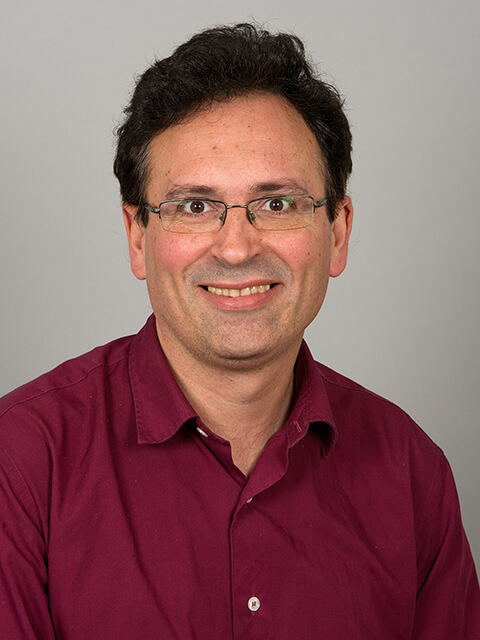
Carlos Gonzalez Lopez is an Assistant Professor in the Department of Materials Science and Engineering at Pennsylvania State University's College of Earth and Mineral Sciences. Joined in 2024, he leads research on soft matter systems with a focus on polyelectrolytes, poly(ionic liquid) gels, and colloidal dispersions. His work bridges fundamental polymer physics with practical applications in industrial settings. PhD in Chemical Engineering, Imperial College London MSc in Experimental and Theoretical Physics, University of Cambridge Dr. Lopez's research program investigates the structure-property relationships in complex polymeric systems. His work combines advanced experimental techniques including rheology, neutron scattering, and microfluidics to understand fundamental mechanisms governing polymer behavior in solution. His expertise spans polyelectrolyte solutions, cross-linked poly(ionic liquids), polysaccharide rheology, and polymer-ion interactions, with applications ranging from industrial detergents to advanced materials design. Recent publications reveal a strong focus on polyelectrolyte behavior under varying ionic conditions, nanoparticle-polymer interactions, and the rheological properties of complex biopolymer systems. His work demonstrates consistent innovation in understanding how molecular structure translates to macroscopic material properties, with particular attention to electrostatic effects and chain conformation in solution. Julia Higgins Centenary Prize for PhD work at Imperial College, London Dr. Lopez's research has attracted significant attention, with publications in high-impact journals including Macromolecules, Angewandte Chemie, and Soft Matter. His work on polyelectrolyte solutions has established him as a rising expert in polymer physics, particularly in understanding how counterion effects influence polymer conformation and solution properties. He maintains active collaborations with researchers in Germany and the United States, continuing his interdisciplinary approach to soft matter research.