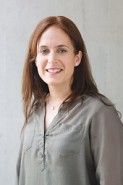
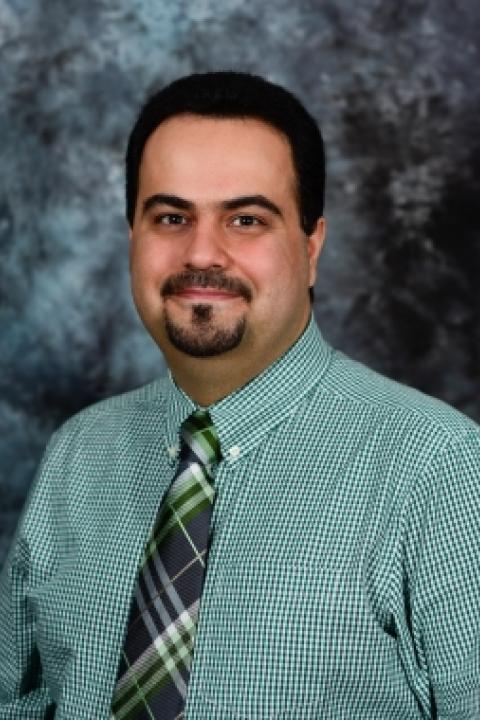
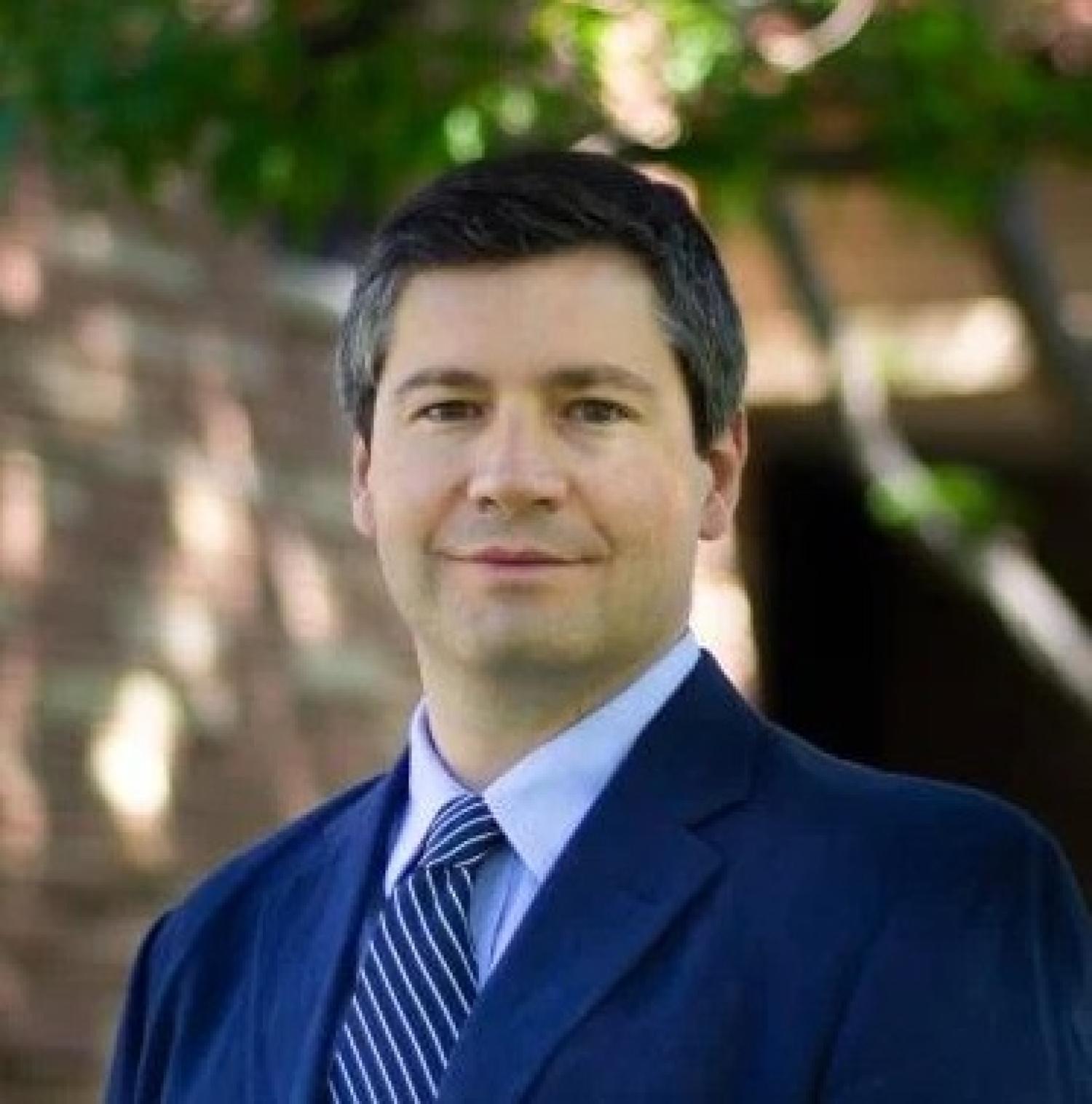
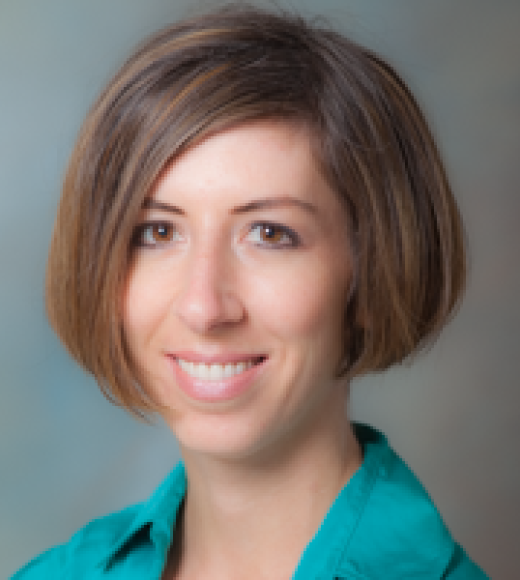
Ram Rajagopal is an Associate Professor of Civil and Environmental Engineering and Electrical Engineering at Stanford University, and a Senior Fellow at the Precourt Institute for Energy. He leads the Stanford Sustainable Systems Lab (S3L), focusing on large-scale monitoring, data analytics, and stochastic control for infrastructure networks, particularly power systems. His research emphasizes renewable energy integration, smart distribution systems, and demand-side data analytics. Education: PhD in Electrical Engineering and Computer Sciences & MA in Statistics (UC Berkeley), MS in Electrical and Computer Engineering (UT Austin), and BEng in Electrical Engineering (Federal University of Rio de Janeiro). Research interests include power grid optimization, renewable energy systems, and data-driven approaches to infrastructure challenges. He has pioneered work in grid flexibility, distributed energy resources, and machine learning applications for energy systems. His lab develops technologies like Smart Dim Fuses and the EV-EcoSim platform for EV charging infrastructure optimization. Received NSF CAREER Award, Powell Foundation Fellowship, and Berkeley Regents Fellowship Over 30 patents and best paper awards Advises/founded companies in sensor networks, power systems, and data analytics Labs/Teams: Stanford Sustainable Systems Lab (S3L), Powernet Project. His work spans grid resilience, energy equity, and scalable energy solutions.
Prof. Gabriela Hug is a Full Professor at ETH Zurich's Department of Information Technology and Electrical Engineering, serving as Deputy Head of the Department and Deputy Head of the Power Systems and High Voltage Lab. She leads the Energy Science Center (ESC) and holds adjunct roles at Carnegie Mellon University. Her research focuses on modeling, control, and optimization of electric power systems for sustainable energy transitions. Education: PhD in Information Technology and Electrical Engineering, ETH Zurich (2004–2008) MSc in Information Technology and Electrical Engineering, ETH Zurich (1999–2004) Research Interests: Her work addresses challenges in smart grid integration, renewable energy systems, and advanced control strategies. Key areas include vehicle-to-grid technologies, distribution network optimization, and energy storage system planning. She emphasizes data-driven approaches and collaborative frameworks for grid resilience and flexibility. Key Achievements: Recipient of the 2019 ALEA Award (ETH Zurich) NSF Career Award (2013) IEEE Outstanding Young Engineer Award (2013) Leadership & Roles: Co-Director, NCCR Automation (Swiss National Centre of Competence in Research) Board Chair, Energy Science Center (ESC) Adjunct Faculty, Carnegie Mellon University Labs & Teams: Power Systems Laboratory (ETH Zurich) Energy Science Center (multi-disciplinary research hub)
Majid Ghayoomi is a Professor and Civil Engineering Undergraduate Coordinator in the Department of Civil and Environmental Engineering at the University of New Hampshire's College of Engineering and Physical Sciences. His research focuses on geotechnical engineering and geomechanics, particularly unsaturated soil mechanics and geotechnical earthquake engineering. He teaches courses such as Soil Mechanics, Engineering Behavior of Soils, and Geotechnical Modeling. Dr. Ghayoomi holds a Ph.D. from the University of Colorado at Boulder, an M.S. from Sharif University, and a B.S. from the University of Tehran. His research interests include bioremediation, hazards mitigation, soil-structure interaction, and materials testing. He leads the Geotechnical Modeling and Innovation lab, advancing bio-inspired solutions and remote sensing applications in geotechnical systems. His recent work emphasizes climate change impacts on seismic resilience, microbial stabilization of soils, and satellite-based soil moisture monitoring. Key contributions include studies on liquefaction mitigation, seismic site response, and infrastructure vulnerability in dynamic environments. His research spans theoretical, experimental (centrifuge modeling), and computational approaches to address complex geotechnical challenges.
Teo Chung Piaw is the Stephen Riady Professor and Executive Director of the Institute of Operations Research and Analytics (IORA) at the National University of Singapore (NUS). He holds a PhD in Operations Research from MIT (1996) and has held academic positions including Head of Department and Acting Deputy Dean at NUS Business School. His research focuses on optimization under uncertainty, supply chain management, and combinatorial optimization. He serves as a department editor for Management Science and has led strategic initiatives in Singapore's Smart Nation Program. Teo's educational journey includes a Bachelor of Science (Honors) in Mathematics from NUS (1990). His corporate experience spans roles at Unilever, Hewlett Packard, and PSA International. He has received prestigious awards including the NUS Faculty Outstanding Researcher Award (2003, 2006) and has been a Fellow of the Singapore-MIT Alliance Program. His research addresses operational challenges in smart cities, healthcare scheduling, and supply chain resilience. Notable contributions include work on appointment scheduling under patient no-show behavior, disruption risk mitigation in supply chains, and flexible production network design. He has authored over 100 publications and serves on editorial boards of leading journals like Operations Research and Management Science .
Felipe Csaszar is a Professor of Strategy and Chair of the Strategy Department at the University of Michigan's Ross School of Business. His research focuses on decision structures' impact on innovation, financial performance, and social outcomes, with particular attention to cognitive frameworks, organizational processes, and AI's role in decision-making. He holds a PhD and MA from the Wharton School, University of Pennsylvania. Education: PhD in Strategy, University of Pennsylvania (2009) MA in Strategy, University of Pennsylvania (2007) Research Interests: Strategic decision-making under AI integration Cognitive and structural drivers of innovation Organizational decision processes and design Formal modeling and empirical strategy research Editorial Roles: Senior Editor, Strategy Science and Management Science Former Editor, Organization Science Co-editor, Handbook of AI and Strategy Professional Experience: Prior role: Assistant Professor at INSEAD Previous career: CEO of an internet startup and Head of Research at an asset management firm Labs/Teams: Leading the Strategy Science division at INFORMS Co-chair of the SMS Behavioral Strategy division
Adèle Garnier is an Associate Professor at the Department of Geography, Université Laval's Faculty of Forestry, Geography and Geomatics. She serves as Director of undergraduate geography programs and the certificate in sustainable tourism. Her research focuses on political geography, migration dynamics, and humanitarian governance, particularly examining refugee labor market participation, temporary migration policies, and technological impacts on immigration systems. Education : PhD in Political Science (Macquarie University/Universität Leipzig, 2012), MA in Political Science (Universität Leipzig, 2006), Diploma in Political Science (Paris, 2002) Her research integrates political geography , migration studies , and geographies of inequality , analyzing power structures in migration governance. Recent work explores Canada's digitalization of immigration, multiscalar impacts of refugee policies, and settler-colonial migration frameworks. Current research trends focus on technological governance of migration , refugee resettlement , and marketization of humanitarian services , with interdisciplinary approaches bridging political science and geography. Research Units : Graduate School of International Studies (ESEI), Immigration Research Team (ERIQA), Cultures-Arts-Societies Center (CELAT) Collaborations : Study Group on Ethnic Relations (Flers), Center for Refugee Studies (York University), Peace Research Institute Oslo She supervises graduate students in geography and co-leads multiple funded projects, including Liberating Migrant Labour (2023-2030) and digital migration governance research (2023-2028).
Todd Sorensen is an Associate Teaching Professor at the University of California, Merced (UC Merced), affiliated with the School of Social Sciences, Humanities & Arts and the Economics and Business Management department. He holds fellowships at IZA (Institute of Labor Economics) and GLO (Global Labor Organization). Prior to UC Merced, he served as an Associate Professor at the University of Nevada, Reno (2014–2023) and an Assistant Professor at UC Riverside (2007–2014). His professional journey includes a visiting role as Visiting Associate Professor at UC Merced before his current appointment in 2022. Education: PhD in Economics, University of Arizona, 2007 Research Interests: Todd's work focuses on labor market structures , exploring topics like monopsony power and wage-setting dynamics; immigration , including its demographic and policy implications; and discrimination , particularly in criminal sentencing and labor markets. His research has been published in journals like ILR Review , Labour Economics , and the Journal of Population Economics , with findings cited in the U.S. Economic Report of the President. Scientific Awards: Fellow at IZA (2022–present) Fellow at GLO (2022–present) Advising & Grants: Todd has advised students across various levels but no specific advisees are listed. His grants and funding sources are not detailed in the provided text. He collaborates with interdisciplinary teams and maintains affiliations across UC campuses through his and his spouse’s academic careers. Labs/Teams: Engaged with research networks at IZA and GLO, focusing on labor market policies and migration studies. Active in collaborative projects analyzing immigration trends, labor market competition, and discrimination metrics.
Michel M. Maharbiz is a Professor in the Department of Electrical Engineering and Computer Science at the University of California, Berkeley. He leads research on miniaturized bioelectronic interfaces, including neural dust implants and cyborg insects. He holds affiliations with the Berkeley Sensor & Actuator Center (BSAC), Center for Neural Engineering & Prostheses (CNEP), and SWARM Lab. His education includes a Ph.D. in EECS from UC Berkeley (2003) and a B.S. in EE from Cornell University (1997). Maharbiz's research integrates MEMS, ultrasonic systems, and synthetic biology to develop wireless neural interfaces, implantable sensors, and biohybrid devices. Key focus areas are neural dust technology for peripheral nerve recording, magnetoelastic strain sensors for medical applications, and electrochemical biosensing using bacterial flagellar motors. His publications emphasize neural interfaces, ultrasonic implants, and biomedical monitoring. Recent articles explore ultrasonic power delivery (2025), radiation detectors for oncology (2025), and fracture-healing smart plates (2019). Trends include miniaturization of wireless implants, closed-loop therapeutic systems, and novel biomaterials. Scientific Awards: McKnight Technological Innovations in Neuroscience Award (2017) Chan-Zuckerberg Biohub Investigator (2017) NSF CAREER Award (2009) MIT TR10 Top Emerging Technology (2009) Bakar Fellows Spark Award (2012) He directs the Maharbiz Lab, advancing neural dust and bioelectronic interfaces. Projects include impedance-based fracture monitoring, carbon fiber neural arrays, and hernia repair sensors. Funding includes NSF and industry partnerships for implantable device development.
Robert MacCurdy is an Assistant Professor at the Department of Mechanical Engineering, University of Colorado Boulder . He leads the Matter Assembly Computation Lab (MACLab) focused on automating robot design and fabrication. His research bridges computational design and advanced manufacturing to create "robots that walk out of the printer." The lab develops tools like OpenVCAD , an open-source volumetric multi-material geometry compiler.
Dr. K. Max Zhang is a Professor in the Sibley School of Mechanical and Aerospace Engineering at Cornell University. He is the director of the Energy and the Environment Research Laboratory (EERL) and a fellow at the Atkinson Center for a Sustainable Future. His research is deeply interdisciplinary, focusing on sustainable energy systems, air quality, and environmental justice, with significant impacts on policy and community development in New York and beyond. Ph.D., Mechanical Engineering, University of California-Davis, 2004 B.S., Thermal Engineering, Tianjin University, 1998 B.A., English Language, Tianjin University, 1998 Dr. Zhang’s research centers on the integration of energy and environmental systems. He investigates air pollution dynamics using advanced numerical models like CTAG, with applications in near-source pollution, indoor air quality, and environmental justice. His work on renewable energy systems includes designing sustainable solar farms and managing distributed energy resources such as heat pumps to enhance grid flexibility. He also leads a pioneering initiative to create the first statewide public IoT network in the U.S., enabling hyperlocal weather forecasting and microclimate monitoring. His recent publications reflect a strong trend toward agrivoltaics, peer-to-peer energy markets, and IoT-based environmental monitoring. These works demonstrate a consistent focus on data-driven modeling, community-scale energy solutions, and the integration of social considerations into technical systems. The keywords across his articles highlight expertise in sustainability, machine learning, air quality, and energy transition. Cornell Town-Gown Achievement Award (2022) Engaged Scholar Prize, Cornell University (2017) People's Choice Sign of Sustainability Award, Sustainable Tompkins (2016) Scientific and Technological Achievement Award, Environmental Protection Agency (2015) Fellow of the American Society of Mechanical Engineers Dr. Zhang is actively involved in mentoring students and securing research grants from agencies such as the National Science Foundation (NSF) and the New York State Energy Research and Development Authority (NYSERDA). His projects often involve interdisciplinary collaboration across eight Cornell colleges and 16 academic departments. He has led initiatives such as the Cornell Atkinson Academic Venture Fund projects and the development of a county-level energy roadmap for Tompkins County. He also teaches courses in engineering thermodynamics, future energy systems, and air quality, emphasizing experiential and community-based learning. Dr. Zhang leads the Energy and the Environment Research Laboratory (EERL) and collaborates with the Atkinson Center for a Sustainable Future. His lab functions as a hub for innovation in sustainable communities, combining advanced modeling with real-world applications. Through partnerships with community organizations, government agencies, and industry, his team develops science-driven solutions to urban and rural sustainability challenges.
James R. Eagan is an Associate Professor in the Computer Science and Networks Department (Infres) at Télécom Paris , part of the Institut Polytechnique de Paris. He is also a Visiting Professor at the University of Colorado, Boulder for the 2024–25 academic year. His research focuses on making computers more expressive tools for human interaction, emphasizing malleable software, collaborative dynamic media, and multi-surface environments. His work spans Human-Computer Interaction , Data Visualization , and User Interface Programming . A key theme involves adapting software for user-driven customization, exemplified by projects like Webstrates (shareable dynamic media) and SchemeLens (semantic zoom for technical diagrams). He also explores uncertainty in data analytics and gesture-based interfaces for experts. Recent publications from 2020–2024 address Explainable AI (XAI) , Financial Crime Detection , and Interactive Data Analysis . His tools Tarantula and SchemeLens have received acclaim, including the 2015 ACM SIGSOFT Impact Award and Best Paper at UIST 2015. Scientific accolades include: Prix de l’Impact 2015 d’ACM SIGSOFT Best Paper Award at UIST 2015 Honorable Mention at CHI 2017 He teaches courses in Mobile Application Development , Human-Computer Interaction , and Data Visualization . His lab, DIVA (Design, Interaction, Visualization & Applications), operates within the Information Processing and Communication Laboratory (LTCI). He actively recruits PhD candidates and postdocs for research in these domains.
Christopher Turbill is an Associate Professor in Animal Science at Western Sydney University's School of Science, where he maintains an active research program focused on animal physiological ecology. He is affiliated with the Hawkesbury Institute for the Environment and serves as a Principal Investigator on multiple research projects while accepting HDR candidates for supervision. PhD from University of New England (2006) Thesis: Thermoregulatory Ecology of Tree-roosting Bats Supervised by Prof. Fritz Geiser Postdoctoral fellowships from Austrian Science Fund and Australian Research Council (DECRA) Former ecologist with NSW Government Professor Turbill's research integrates thermal and metabolic physiology with behavioral ecology to understand animal-environment interactions. His work has revealed significant ecological consequences of controlled body temperature variation in mammals and birds, linking these processes with metabolic energy expenditure, activity patterns, and life-history strategies. He specializes in bat biology and investigates conflicts between human environmental change and animal conservation requirements. His research keywords include ecophysiology, thermoregulation, energy expenditure, life-history ecology, body temperature, torpor, hibernation, and wildlife conservation. Analysis of Turbill's recent publications reveals a strong focus on thermal biology and conservation physiology, particularly regarding bats and birds. His work examines how animals manage energy through torpor, respond to climate change through thermal regulation, and adapt to anthropogenic disturbances. The research spans field studies of flying-foxes, microbats, and passerine birds across Australian ecosystems, with increasing emphasis on conservation applications related to white-nose syndrome, fire impacts, and wind energy development. Turbill leads significant research projects including the Ecology of the eastern horseshoe bat and its sensitivity to fire impacts (2024-2027), Vulnerability of Australian bats to white-nose syndrome (2021-2026), and Torpor use and burrowing behaviour in an arid zone passerine (2024). His work attracts funding from diverse sources including the Australian Research Council, Department of Planning and Environment, and various conservation organizations. Professor Turbill directs the BatsLab research group, which maintains a virtual hub for bat research at Western Sydney University. His team employs advanced methodologies including thermal imaging, GPS tracking, and physiological monitoring to study animal responses to environmental challenges. Current work focuses on developing conservation interventions for heat-stressed flying-foxes and assessing vulnerabilities of Australian bat species to emerging diseases.
Alison Ledgerwood is a Professor in the Department of Psychology at the University of California, Davis, and Principal Investigator of the Attitudes and Group Identity Lab. Her research examines how social context shapes attitudes and preferences, with a focus on open and inclusive scientific practices. Ph.D., Social Psychology, New York University (2008) M.A., Psychology, New York University (2006) B.A., Psychology, Amherst College (2003) Her research explores psychological distance , framing effects , and system justification theory , while methodologically advancing preregistration , collaborative science , and equity in publishing . She also investigates group identity dynamics and implicit/explicit bias measurement . Recent publications highlight her work on racial bias methodology , open science reform , and contextual framing . Awards include the 2024 Distinguished Service to the Society award, 2021 UC Davis Advising and Mentoring Award, and 2017 SPSP Service to the Field award. 2024 Distinguished Service to the Society, SPSP 2021 UC Davis Graduate Advising and Mentoring Award 2017 Service to the Field, SPSP Hellman Fellowship (2010-2011), UC Davis UC Davis Chancellor's Fellow APS Fellow SESP Fellow Ledgerwood advises on scientific integrity through roles like Chair of the Transparency and Openness Promotion (TOP) II Guidelines Task Force and Anti Colorism and Eurocentrism in Methods and Practices (ACEMAP) Task Force. Her lab fosters contextual evaluation studies and psychological distance frameworks .
Dr. Gregor Schuhknecht is a Researcher and incoming Max-Planck Research Group Leader at the Max Planck Institute for Brain Research in Frankfurt, Germany. Starting December 2025, he will lead the Brain Algorithms and Circuits Group, focusing on computational neuroscience and neuronal circuitry in larval zebrafish. His work bridges experimental and computational approaches to understand brain algorithms enabling flexible behaviors. Education PhD in Neuroscience (2014–2019), Institute for Neuroinformatics, University of Zurich and ETH Zurich MSc in Biology (Neuroscience) (2012–2019), ETH Zurich BSc in Biosciences (2009–2012), Heidelberg University His research investigates how synaptic circuitry implements computational algorithms for sensorimotor processing, evidence accumulation, and behavior. Experimental approaches include functional imaging, optogenetics, connectomics, and computational modeling. The group will explore neuronal circuits across scales, from synapse to behavior, with a focus on biophysical properties and dynamic environmental adaptation. Recent publications highlight correlative light/electron microscopy, developmental activity-free circuit formation, and neocortical synapse analysis. Scientific Awards Meselson Prize (2024) Aspirational Neuroscience Award (2023) Best Publication Award (2021) Swiss National Science Foundation Fellowships (2021, 2019, 2018) Gregor Schuhknecht's lab will welcome graduate and postdoctoral researchers starting December 2025, focusing on experimental and computational systems neuroscience. He previously collaborated with Harvard University's Department of Molecular and Cellular Biology and the Department of Moritz Helmstaedter for connectomic analyses.
Tom A.E. Oomen is a Full Professor in the Department of Control Systems Technology at the Eindhoven University of Technology (TU/e). He holds affiliations with the Mechanical Engineering School and the EAISI High Tech Systems institute. His research focuses on data-driven control, motion control of mechatronic systems, and system identification, with applications in industries like automotive, medical, and energy systems. Academically, he earned his MSc and PhD from TU/e, and held visiting positions at KTH (Sweden) and the University of Newcastle (Australia). He has received notable grants (NWO Veni/Vidi) and awards, including IEEE and Mechatronics Paper Prize recognition. Oomen is a Senior Member of the IEEE and serves as an Associate Editor for IFAC Mechatronics and IEEE Control Systems Letters. His work bridges fundamental research and industry collaboration, emphasizing advanced motion control and learning algorithms. Projects include PROACTHIS (projection-based control) and ML4CONTROL (AI-driven motion control). He has supervised 99+ works and contributed to over 500 research outputs.