Wladislaw Millمشاهده پروفایل
استادیار
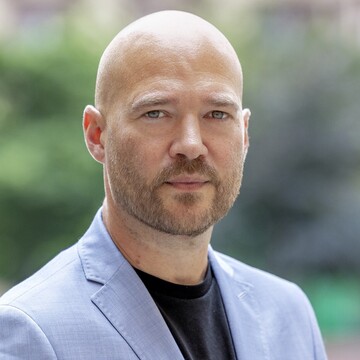
Wladislaw Mill is a non-tenured Assistant Professor of Behavioral Economics in the Department of Economics at the University of Mannheim, Germany. His research investigates the intersection of morality and economic systems, focusing on the "dark side" of human behavior including discrimination, corruption, power abuse, tax evasion, war experiences, and spiteful economic decisions. Mill's research program spans Applied Microeconomics, Experimental and Behavioral Economics, Labor Economics, Political Economy, Public Economics, Economic Theory, and Economics of Crime. He employs a methodological toolkit combining theoretical modeling with laboratory, online, and field experiments, supplemented by big-data approaches (web-scraping) and machine learning tools (computer vision) to establish causal relationships in complex social settings. His work addresses critical questions about how discrimination shapes job networks, what drives power abuse, how war experiences affect religiosity, and how spiteful preferences manifest in economic behavior. His recent publications (2021-2025) reveal a cohesive focus on experimental investigations of destructive social dynamics, norms, and behavioral anomalies. Key thematic clusters include spite in strategic interactions (auctions, litigation), discrimination in professional contexts, the socio-psychological impacts of conflict and war, and the economic consequences of polarization. This body of work consistently bridges theoretical innovation with empirical validation through diverse experimental methodologies. Scientific Awards: No awards were mentioned in the provided text. Advising and Grants: The available documentation does not specify doctoral advisees, research grants, or funding sources. Labs and Teams: Mill is affiliated with the Collaborative Research Center TR 224 (CRC TR 224) at the University of Bonn as indicated in their member directory, while maintaining his primary appointment at the University of Mannheim. His research leverages both institutional environments for experimental and field-based investigations.