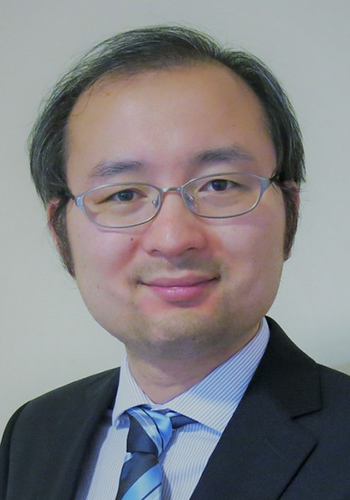
Ted Tschang is Associate Professor of Strategic Management at Lee Kong Chian School of Business, Singapore Management University. His research examines innovation processes across creative industries, with particular focus on design thinking, business model innovation, and the organization of innovation systems. Research Domains: Platform ecosystems and digital entrepreneurship AI's impact on employment and automation Video game development as innovation model Creative industry globalization His recent work investigates how COVID-19 accelerated AI disruption and the role of entrepreneurs in expanding platform ecosystems. Tschang's empirical studies span virtual worlds, gaming prototypes, and creative outsourcing networks.
Dr. Bin Hu is an Assistant Professor in the Department of Engineering Technology at the University of Houston (2022–present) and previously held the same position at Old Dominion University (2019–2022). He earned a Ph.D. in Electrical Engineering from the University of Notre Dame (2016), an M.S. in Control Science from Zhejiang University (2010), and a B.S. in Electrical Engineering from Hefei University of Technology (2007). His research focuses on resilient Cyber-Physical Systems (CPS), AI-human collaboration safety, machine learning-driven control, and vehicular networks. Key projects include NASA-funded work on adaptive human-autonomy responsibility allocation (2023–2026) and NSF-supported AI-human collaboration in autonomous vehicles (2020–2023). He has secured over $1.2 million in grants, including a $700k NASA grant (pending) and an ONR Rapid Solutions grant ($42k). Dr. Hu’s work bridges control theory, machine learning, and human factors. Recent contributions include safer leader-follower robotic systems, fault-tolerant UAV control, and studies on driver trust in AI-driven vehicles. His research has been recognized through awards like the 2024–2025 APeX Excellence Speaker Series. Teaching experience includes courses on C++ programming and electrical engineering fundamentals at both the University of Houston and Old Dominion University. He advises multiple undergraduate and graduate students in projects ranging from LiDAR systems to cyber-physical security. Key Labs/Teams : NAIL Lab (Networked Autonomous Intelligence & Learning), part of the University of Houston’s Cybersecurity and Robotics initiatives. Grants : NASA TTT Grant ($700k), NSF CHS Grant ($500k), ONR RSLP Project ($42k).
J. Peter Murmann is a Full Professor of Strategic Management and Director of the Institute of Management & Strategy at the University of St. Gallen, Switzerland (since 2018). Previously, he held roles including AGSM Fellow (UNSW, 2016–2020), Professor at UNSW Business School (2016–2018), and positions at institutions like Wharton School, Harvard Business School, and Kellogg School of Management. He holds a Ph.D. in Management from Columbia University (1998) and a B.A. in Philosophy from UC Berkeley (1990). His research focuses on strategic management, innovation, strategic forecasting, and business history. Key interests include long-term competitive advantage, China’s innovation capacity, and the coevolution of industries and institutions. He has authored influential works like Knowledge and Competitive Advantage (2003), which received the Schumpeter Prize and Stanley Reiter Award. Murmann’s awards include the 2025 Management and Organization Review Distinguished Editor Award, Gomory Award (2024), and IACMR Best Macro Conference Paper Award (2024). He has advised numerous PhD students, including Gunnar Hauptman (2019) and Jing Zhu (2017). His editorial roles include Deputy Editor-in-Chief of Management and Organization Review . He is affiliated with the Academy of Management, Society for the History of Technology, and serves on editorial boards of leading journals. Teaching expertise spans strategic management, industry evolution, and innovation policy. Languages include German (native), English (proficient), and French (satisfactory).
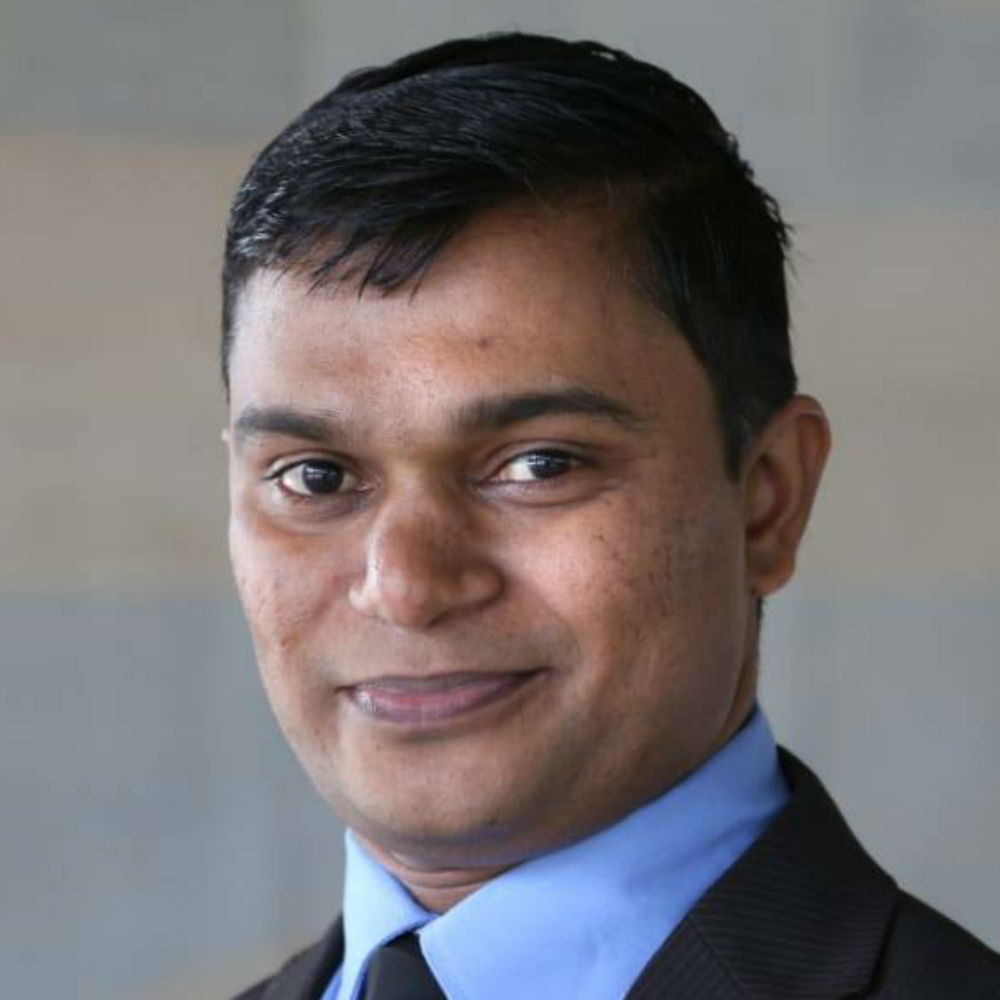
Dr. Chaminda Wijethilake serves as a Senior Lecturer in Accounting at Essex Business School, University of Essex, where he contributes to sustainability accounting education and research. His academic journey spans Sri Lanka, Taiwan, and Australia, culminating in impactful work at the intersection of accounting, sustainability, and governance across diverse global contexts. Education: Bachelor of Commerce with First Class Honours, University of Peradeniya, Sri Lanka (2007) Master of Business Administration, National Cheng Kung University, Taiwan (2011) PhD in Accounting and Corporate Governance, Macquarie University, Australia (2016) Chaminda's research pioneers the application of accounting frameworks to urgent sustainability challenges, particularly examining how management control systems mediate organizational responses to environmental pressures. His work spans waste management governance, sustainable supply chains in emerging economies, and accountability mechanisms during disasters, consistently revealing how formal control systems interact with cultural and institutional factors to drive (or hinder) sustainability outcomes. Current projects investigate digitalization in NGOs and sustainability core values in risk management. His publication portfolio demonstrates a clear trajectory toward increasingly complex global sustainability challenges, evolving from firm-level sustainability controls to transnational waste governance and pandemic response systems. Recent work shows growing emphasis on Global South contexts and the political dimensions of environmental accountability. Scientific Awards: President’s Award for Scientific Research by the Government of Sri Lanka Best International Impact Research Award by the University of Essex Chaminda actively supervises four PhD candidates researching sustainability management accounting in healthcare, Thailand's primary care system, and public sector accountability. His research program is supported by significant grants from PEFA-World Bank Group, Innovate UK, and the Global Challenges Research Fund, including a 2021 ESRC IAA project developing an Essex employability toolkit and a 2020 GCRF project integrating climate change into South Asian public finance policies.
Dr. Amara Cynthia Ajaegbu is a Senior Teaching Fellow in the Operations and Information Management Department at Aston Business School (Aston University). Her expertise spans technology innovation, servitisation in manufacturing, and digital transformation. She holds a PhD in Digitalisation, IoT, Servitisation, and Value Co-Creation from Aston University (2019). Education: BSc. Business Information Systems MSc. Information Systems and Business Analysis PhD: The role and impact of digital capabilities on value co-creation of servitising organisations (Aston University) Her research focuses on AI, IoT, data sharing, and servitisation's impact on value creation. She is a Senior Fellow of the UK Higher Education Academy (SFHEA) and actively contributes to teaching enterprise systems, digital transformation, and technology management. Awards: 2017 Mentor of the year award Her grants include projects on hybrid learning environments using game-based methods. She supervises PhD topics on ERP systems in digital transformation and supply chain resilience. Amara is involved with professional bodies like the British Academy of Management and British Computer Society.
Christoph Lechner holds the position of Full Professor of Management with special focus on Strategic Management at the University of St. Gallen's Institute of Management. His leadership includes research direction and academic oversight in strategic management domains. Lechner's research examines strategic transformation through ecosystem governance models and corporate initiative programs. Core investigations focus on orchestrator roles in digital platforms, evolutionary dynamics of business ecosystems, and programmatic approaches to organizational change. His work integrates complexity perspectives with practical governance frameworks. Recent publications demonstrate sustained interest in digital ecosystem management, particularly coordination mechanisms and leadership challenges within evolving value networks. Methodological approaches combine case-based research with theoretical modeling across insurance and professional service contexts.
Nathaniel Alan Brunsell is a Professor and Director of the Environmental Studies Program at the University of Kansas. His research focuses on biometeorology, remote sensing of surface energy balance, and climate change impacts. He leads the Environmental Studies Program, overseeing interdisciplinary environmental research and education. Key research areas include land-atmosphere interactions, turbulence measurements using scintillometry and eddy covariance, and the ecological consequences of regional climate change. He collaborates on NASA missions like ECOSTRESS to advance evapotranspiration measurement capabilities. His grants include leadership in the Konza Cluster for the AmeriFlux Network and contributions to studies on urban heat islands and carbon cycle science. Brunsell teaches courses such as Land-Atmosphere Interactions, Atmospheric Turbulence, and Microclimatology, integrating theoretical and applied aspects of environmental science. His work bridges field observations, remote sensing, and numerical modeling to address challenges in climate science, sustainable agriculture, and environmental policy.
Forrest E. Morgan is a Senior Lecturer at the Carnegie Mellon Institute for Strategy & Technology (CMIST), where he has been affiliated since 2017. He retired from the RAND Corporation in 2019 after a 16-year tenure as a senior political scientist specializing in defense strategy and military applications of emerging technologies. Prior to RAND, he spent 27 years in the U.S. Air Force, serving in roles such as signals intelligence analyst, space operations officer, and professor at the Air University School of Advanced Air and Space Studies (SAASS). His research focuses on deterrence theory, crisis stability, military AI ethics, space policy, and nuclear strategy. Morgan holds a PhD in Policy Studies from the University of Maryland. His work bridges academic analysis with operational military challenges, addressing topics such as escalation management in conflicts, the strategic implications of AI, and organizational frameworks for space warfare. He has authored/co-authored influential studies on China's nuclear posture, future warfare scenarios, and the creation of a dedicated U.S. Space Force. His publications (2010–2020) reflect a sustained engagement with cutting-edge defense issues, including space deterrence, AI ethics, and hybrid warfare dynamics. While no formal awards are listed, his extensive contributions to defense policy analysis and military education underscore his impact in strategic studies. His affiliation with CMIST positions him at the intersection of technology and global security challenges.
Isabella Weber is an Associate Professor of Economics at the University of Massachusetts Amherst and an Associate in Research at Harvard University’s Fairbank Center. Her work focuses on inflation dynamics, China’s political economy, and global trade. She holds a dual Ph.D. in Economics (The New School for Social Research) and Development Studies (University of Cambridge). Research Interests: Her primary areas include inflation and monetary policy, China’s economic reforms, and the history of economic thought. Her book How China Escaped Shock Therapy won multiple international awards and was translated into five languages. Grants & Leadership: She leads major grants like the Open Society Foundation’s “Essential: Towards a New Stabilization Paradigm” (2024–2026) and has advised policymakers globally. She was a principal investigator for the ESRC-funded Rebuilding Macroeconomics project on global export patterns. Awards: Time 100 Next (2023) Bloomberg 50 Ones to Watch (2023) Four international book awards for How China Escaped Shock Therapy Teaching & Outreach: Teaches courses such as Intermediate Macroeconomics (UMass Amherst) and advises doctoral students. She also co-founded Surplus , a German economics magazine, and organizes workshops like the Political Economy Workshop at UMass. Languages: German (native), English (fluent), Chinese (fluent), French (advanced), Thai (basic).
Jemma Bridgeman is a Researcher at Cardiff University's School of Social Sciences, working within WISERD's Building Social Value and Fair Work Project. She focuses on social procurement in construction and its impact on marginalized communities' access to education and employment in Wales. Her research explores the Social Partnership and Public Procurement (Wales) Act's effects and collaborations between construction and civil society organizations. Her work includes co-developing SROI studies to evaluate construction training initiatives reducing youth homelessness and analyzing school exclusion practices across the UK. She has led projects like the Excluded Lives study, examining school exclusion policies and costs. Notable outputs include the CITB's Clean Slate Cymru Toolkit for ex-offender reintegration and reports like A Roadmap to Ending Youth Homelessness in Wales . Research interests span social value measurement, construction industry social impact, education policy, fair work practices, and youth homelessness. Her recent articles address school exclusion narratives, parent participation dynamics, and infrastructure's role in student behavior. Jemma's career bridges academia and policy, with collaborations across government, NGOs, and industry. She contributes to Cardiff University's research on participatory democracies and workplace practices, emphasizing marginalized voices in policy design.
Chris Hughes is a Professor of International Politics and Japanese Studies at the University of Warwick's Politics and International Studies (PAIS) department within the Faculty of Social Sciences. He specialises in Japan’s foreign and security policies, US-Japan alliance dynamics, and Asia-Pacific regional security. Previously serving as Pro-Vice Chancellor (Education) from 2016–2023, he led Warwick to achieve top rankings in UK teaching excellence. His research focuses on Japan's military modernization, defense industrial strategy, and geopolitical strategy under leaders like Abe. He has held visiting roles at Harvard, the University of Tokyo, and Nanyang Technological University. Co-editor of The Pacific Review , Hughes frequently engages in media commentary on Japan’s evolving security posture and international relations. Key research interests include Japan’s grand strategy, defense transformation driven by new technologies, and regional security challenges such as North Korea and China relations. He has authored influential works like Japan as a Global Military Power (2022). His work bridges academic analysis with policy implications, addressing topics like cybersecurity, maritime security, and the implications of Japan’s shifting antimilitarist norms. Hughes has advised on education policy reforms and contributed to global dialogues on East Asian security through think tanks like RUSI and IISS. Recent media engagements include analysis of Japan’s response to Trump’s foreign policy, defense exports, and its role in the Indo-Pacific. His podcast appearances and lectures, such as the 2024 Japan and North Korea discussion with IISS, highlight his active role in disseminating strategic insights. Hughes’ career combines academic leadership with applied policy analysis, emphasizing Japan’s evolving role as a military and geopolitical actor.
Stephen E. Gent is a Professor of Political Science at the University of North Carolina at Chapel Hill. He holds a B.A. from the University of Mississippi (1999), and M.A. and Ph.D. from the University of Rochester (2003, 2005). His research focuses on conflict processes, particularly the role of third parties in international and civil conflicts, and how economic competition drives territorial disputes. His influential 2021 book Market Power Politics examines how states pursue market dominance through conflict and mediation. Gent has also published widely in journals like the Journal of Politics and Journal of Conflict Resolution . Education : B.A., University of Mississippi, 1999 M.A., University of Rochester, 2003 Ph.D., University of Rochester, 2005 His research interests include mediation effectiveness, rebel group behavior, civilian victimization in war, and the strategic use of military intervention. He has received the 2022 Hedley Bull Prize in International Relations for his theoretical contributions. His work bridges formal theory, quantitative methods, and real-world case studies, with a focus on how power dynamics shape international conflict outcomes. Gent’s articles analyze topics like peace agreement durability, NGO accountability dilemmas, and the political economy of arbitration. His recent work addresses contemporary issues such as China’s South China Sea strategy and partisan polarization’s impact on U.S. foreign policy credibility. Awards : 2022 Hedley Bull Prize (European Consortium for Political Research) Grants/Advising : While specific grants are not detailed, his extensive publication record indicates sustained research funding. He has advised multiple students in political methodology and conflict studies, though explicit student names are not listed in available texts.
Dr. Nicola Cortinovis is an Assistant Professor in the Department of Economic Geography at Utrecht University's Faculty of Geosciences. His research focuses on regional economic performance, industrial dynamics, and the role of knowledge spillovers in shaping regional development. He explores topics such as smart specialization, green innovation, and the impact of multinational enterprises on local economies. Education: PhD in Economic Geography (2016, Utrecht University) Teaching: Courses include Geographies of Multinationals, Location in a Globalized World, and Methods for Economic Geography. Research interests span institutional drivers of regional diversification, the relationship between spatial structure and productivity, and the application of AI in research data processing. He contributes to initiatives like the LSE GILD Blog and collaborates on projects such as PILLARS (Pathways to Inclusive Labour Markets). Recent work examines green innovation in EU regions, export dynamics in China, and wage inequality in the Netherlands. He is affiliated with the Foundations of Complex Systems and Institutions for Open Societies (IOS) research groups.
Dr. Nadia Zahoor is a Senior Lecturer (Associate Professor) in Strategy at Queen Mary University of London's School of Business and Management. She previously taught at the University of Strathclyde, University of Central Lancashire, and University of Huddersfield. She holds a PhD in Management from the Huddersfield Business School and an MBA (Distinction) in International Business from the University of Greenwich Business School. Her research focuses on strategic alliances, innovation, SME internationalization, and sustainability practices in emerging markets. Key areas include alliance networks dynamics, SME value creation, and contributions to UN Sustainable Development Goals (SDGs 3, 8, 9, 11, 16). Her work has been supported by £48,000+ in grants and published in journals like British Journal of Management and International Small Business Journal . Nadia sits on the editorial board of the Journal of Asia Business Studies and has received awards such as the Top Cited Article (2020–2021) and Best Paper at AIB MENA 2021. She collaborates globally and supervises PhD students in strategic alliances, SME internationalization, and sustainability. Her teaching emphasizes interactive learning in strategy, entrepreneurship, and international business.
Associate Professor Marcus Kitchen is affiliated with Monash University's School of Physics and Astronomy and the Victorian Heart Institute. He specializes in developing advanced X-ray imaging techniques, including Phase Contrast Imaging, Compton Scatter Imaging, and Ultra-Low Radiation Dose methods. His research focuses on enhancing diagnostic capabilities in lung and brain imaging while minimizing radiation exposure. Collaborations with institutions like the Hudson Institute aim to improve neonatal care, particularly for preterm infants with underdeveloped lungs. Key projects include translating synchrotron-based methodologies for clinical and industrial applications. Research interests span biomedical imaging, material discrimination, and radiation dose reduction. He leads or co-leads over 30 projects, including 'X-ray Scatter Imaging: Vast Information with Minimal Radiation' (2025–2028) and 'IMPACT: IMplementation of x-ray PhAse-Contrast Tomography to transform cancer diagnosis' (2022–2026). His work aligns with UN Sustainable Development Goals focused on health and innovation. Publications emphasize novel imaging modalities and their applications in respiratory and neurological disorders. Despite no explicit awards listed, his contributions to reducing radiation exposure and advancing lung mechanics research are significant. He supervises graduate students and actively seeks PhD candidates. His lab integrates theoretical, computational, and experimental approaches to bridge gaps between fundamental physics and clinical medicine.