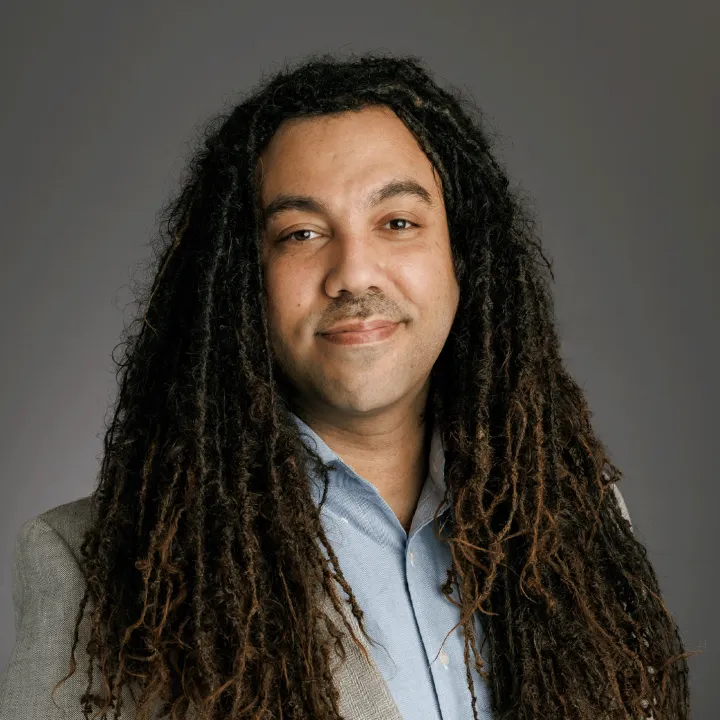
Matthew L Becker is the Hugo L Blomquist Distinguished Professor of Chemistry at Duke University, with additional appointments in Mechanical Engineering and Material Science, and Biomedical Engineering. His research focuses on polymer chemistry, bioconjugate chemistry, molecular imaging, additive manufacturing, and degradable materials for bone, soft tissue, neural, and vascular tissue engineering. Education: B.S. from Northwest Missouri State University (1998), M.A. (2000) and Ph.D. (2003) from Washington University in St. Louis Research interests include developing tunable degradable polymers for flexible electronics, tissue engineering (bone, neural, vascular), and additive manufacturing. His group is pioneering 3D printing of bioresorbable medical devices and custom inks for biomaterials. Recent work explores stereochemistry-dependent polymer properties, mechanochromism, and machine learning-driven biomaterials design. Key applications: Drug delivery systems Biodegradable adhesives Tissue regeneration scaffolds Scientific honors include: Fellow, National Academy of Inventors (2022) Fellow, American Chemical Society (2020) Carl S. Marvel Award in Creative Polymer Chemistry (2019) Fellow, American Institute for Medical and Biomedical Engineering (2018) Fellow, Royal Society of Chemistry (2017) Biomacromolecules/Macromolecules Young Investigator Award (2015) He teaches advanced courses in mechanical engineering and polymer chemistry, with a focus on 3D printing and biomaterials. His group has developed novel medical devices including resorbable suture anchors, hernia mesh coatings, and neuroprosthetic scaffolds.
Prof. Eleni Chatzi is a Full Professor and Chair of Structural Mechanics at ETH Zurich's Department of Civil, Environmental and Geomatic Engineering. She holds a PhD from Columbia University (2010) and has held roles from Assistant to Full Professor at ETH since 2010. Her research focuses on intelligent structural monitoring and data-driven asset management, emphasizing nonlinear dynamics and sensor integration. Affiliations : Institute of Structural Engineering, European Academy of Wind Energy (EAWE President), Swiss Community for Computational Methods (SWICCOMAS Chair) Research interests include Structural Health Monitoring (SHM), system identification, and advanced simulation tools. She pioneered work on data-driven diagnostics and self-aware infrastructure, supported by grants like the ERC Starting Grant (2015). Awards include the 2020 Walter L. Huber Prize and 2024 SHM Person of the Year Award. Her work spans wind energy infrastructure, metamaterials for vibration control, and AI-driven structural analytics. Over 600 publications and 200k+ citations highlight her impact. She teaches computational science and structural dynamics in ETH's programs and collaborates globally on sustainable infrastructure projects.
Weiping Tang is a Professor of Pharmaceutical Sciences and Chemistry at the University of Wisconsin-Madison, holding the Janis Apinis Professorship in the School of Pharmacy and the Vilas Distinguished Achievement Professorship. He also serves as Director of the Medicinal Chemistry Center at the School of Pharmacy and maintains a faculty appointment with the Department of Chemistry in the College of Letters and Science. Janis Apinis Professor of Pharmaceutical Sciences Vilas Distinguished Achievement Professor Director of Medicinal Chemistry Center Faculty Appointment with Department of Chemistry Dr. Tang received his B.S. in Chemistry from Peking University in 1997, M.S. in Chemistry from New York University in 1999, Ph.D. in Organic Chemistry from Stanford University in 2005, and completed a postdoctoral fellowship in Medicinal Chemistry, Chemical Biology and Drug Discovery at Harvard University in 2007. Dr. Tang's research program focuses on drug discovery for cancer, infectious diseases, and neurodegenerative disorders through three interconnected areas: Organic Synthesis (advancing glycoscience through novel carbohydrate synthesis technologies), Medicinal Chemistry (developing small molecules that selectively remove disease-associated proteins), and Chemical Biology (dissecting biological pathways using novel small molecule probes). His group operates as an interdisciplinary team where chemists and biologists collaborate closely on drug discovery projects, with particular emphasis on developing novel degraders for disease-causing proteins. Analysis of Dr. Tang's publication record reveals a significant shift toward targeted protein degradation technologies, particularly PROTACs and molecular glues, while maintaining strong foundations in carbohydrate chemistry. His most impactful recent work includes developing degraders for extracellular and membrane proteins (previously considered 'undruggable'), creating rapid synthesis platforms like Rapid-TAC and Rapid-Glue, and advancing understanding of ternary complex formation for novel PROTAC design. His research spans both chemical methodology development and therapeutic applications across multiple disease areas. Vilas Distinguished Achievement Professorship Janis Apinis Professorship Numerous high-impact publications in leading chemistry and pharmacology journals Editor's pick and hot paper designations for significant contributions Dr. Tang mentors a diverse team of graduate students, postdoctoral fellows, and staff scientists with expertise spanning synthetic chemistry, medicinal chemistry, carbohydrate chemistry, computational chemistry, biochemistry, and cell biology. His group has developed innovative platforms for the rapid synthesis of protein degraders and has made significant contributions to understanding the mechanisms of action for these novel therapeutics. Current research includes developing selective degraders for cancer targets like RIPK1, BRD4, and CARM1, as well as advancing delivery systems for clinical translation. The Tang Research Group maintains state-of-the-art facilities within the School of Pharmacy at UW-Madison, equipped for comprehensive chemical synthesis, compound characterization, and biological evaluation. The group actively collaborates with researchers across campus and with industry partners to advance discoveries toward clinical applications, with particular focus on cancer therapeutics and protein degradation technologies.
Marc V Fuccillo is an Associate Professor of Neuroscience at the Perelman School of Medicine, University of Pennsylvania, where he leads a research laboratory focused on understanding the neural circuit mechanisms underlying behavioral control. His work bridges molecular, synaptic, and behavioral approaches to investigate how striatal circuits regulate mouse behavior from simple motor patterns to complex goal-directed actions. Fuccillo holds dual appointments in the Neuroscience and Cell and Molecular Biology Graduate Groups at Penn and maintains an active laboratory investigating the synaptic and circuit basis of neuropsychiatric disorders. Education: B.A. in Molecular and Cellular Biology and Music Performance (Violin) from Brown University (1998) Ph.D. in Developmental Genetics from New York University School of Medicine (2007) M.D. from New York University School of Medicine (2008) Fuccillo's research centers on the synaptic and circuit mechanisms of behavioral control, with particular emphasis on striatal circuits. His laboratory employs a range of technologies including mouse genetics, in vitro electrophysiology, in vivo imaging, and quantitative behavioral analysis to explore how neural circuits of the striatum regulate behavior and how disruptions in these circuits contribute to neuropsychiatric disorders. His work has particularly focused on autism-associated abnormalities in behavioral control, examining how synaptic adhesion molecules like neuroligins and neurexins shape circuit function and behavior, with significant findings regarding D1 dopamine receptor positive medium spiny neurons in the nucleus accumbens. Analysis of Fuccillo's recent publications reveals a strong focus on striatal circuit function across multiple dimensions. His work spans molecular neuroscience (examining synaptic adhesion molecules), cellular physiology (studying specific neuron types in striatal circuits), systems neuroscience (mapping circuit connectivity), and behavioral neuroscience (quantifying motor learning and decision-making). A unifying theme is how disruptions in specific molecular pathways lead to circuit-level abnormalities that manifest as behavioral phenotypes relevant to neuropsychiatric disorders, with particular attention to autism, OCD, and schizophrenia models. Scientific Recognition: Publications in high-impact journals including Nature Neuroscience, Current Biology, Cell Reports, and Neuron Research supported by multiple NIH grants including NIMH F32, NIMH K01, and HHMI Gilliam Fellowship awards for lab members Fuccillo actively mentors a diverse group of trainees including postdoctoral fellows, graduate students, and undergraduates. His laboratory has produced numerous successful alumni who have gone on to faculty positions, medical residencies, and graduate programs at prestigious institutions. His mentoring approach emphasizes technical skill development across multiple neuroscience disciplines while fostering independent scientific thinking. Current research in his lab is supported by NIH funding focused on understanding the molecular architecture of striatal circuits and their role in behavioral control, with three major research directions exploring molecular logic of striatal circuits, circuit mechanisms of behavioral control, and striatal dysfunction in neuropsychiatric disease models. The Fuccillo Laboratory operates within the Department of Neuroscience at the University of Pennsylvania, with access to state-of-the-art facilities for molecular, electrophysiological, imaging, and behavioral neuroscience research. The lab maintains active collaborations with other neuroscience research groups at Penn and beyond, creating a rich intellectual environment for studying the neural basis of behavior. Current research directions include investigating whether there is a molecular logic to striatal circuit composition, how striatal circuits shape behavioral control, and what mouse models of autism, schizophrenia, and OCD can reveal about striatal circuit dysfunction in disease pathophysiology.
Michael Bartlett is an Associate Professor in the Department of Mechanical Engineering at Virginia Tech , leading the Soft Materials and Structures Lab within the College of Engineering. His research focuses on bio-inspired materials , soft robotics , and multifunctional composites with applications in adaptive adhesives , stretchable electronics , and self-healing systems . Education: Ph.D., Polymer Science & Engineering, University of Massachusetts Amherst (2013) B.S.E., Materials Science & Engineering, University of Michigan (2008) His work explores the intersection of soft materials , morphing structures , and functional composites , leveraging techniques like kirigami and liquid metal integration to create innovations such as octopus-inspired underwater gloves and shape-shifting drones . His recent articles highlight advancements in programmable adhesion , liquid metal conductors , and multiscale material design . Scientific Awards: National Academy of Inventors Senior Member (2024) NSF CAREER Award (2023) Office of Naval Research Young Investigator Award (2021) Soft Matter Emerging Investigator (2021) DARPA Director’s Fellowship (2020) Adhesion Society Early Career Scientist (2020) DARPA Young Faculty Award (2018) 3M Non-Tenured Faculty Award (2017) Bartlett has mentored over 40 undergraduate students and numerous graduate researchers, resulting in 12 peer-reviewed articles with student co-authors. His lab receives funding from federal agencies like NSF , ONR , and DARPA , as well as industry partnerships. The group also engages in K-12 outreach programs and collaborates with institutions such as University of Nebraska-Lincoln and Iowa State University .
James Van Etten is the William Allington Distinguished Professor of Plant Pathology at the University of Nebraska-Lincoln, affiliated with the School of Biological Sciences and Nebraska Center for Virology. His research focuses on chloroviruses—large dsDNA viruses infecting Chlorella-like algae—with emphasis on DNA replication, restriction systems, and membrane transport proteins. Key research themes include: Viral DNA modification systems Host-virus interactions Structural virology Evolution of organellar genomes Recent work analyzed: SMRT sequencing of viral methylation patterns Chlorovirus cryopreservation methods Potassium channel biophysics Host chemical signaling mechanisms Lab webpage: vanettenlab.unl.edu
Prof. Waldemar Kolanus leads the Molecular Immunology and Cell Biology department at the University of Bonn's Life & Medical Sciences Institute (LIMES) . His research bridges immunoregulation , stem cell dynamics , and metabolic stress responses in immune cells. Unit 2 member at LIMES Principal investigator in SFB 704 and ImmunoSensation Cluster Leads a multidisciplinary lab with postdocs, PhD students, and technical staff His work focuses on intracellular signaling pathways connecting immune activation to tissue homeostasis, particularly through: Cytohesin proteins in integrin-mediated adhesion and migration TRIM71 in stem cell regulation and congenital hydrocephalus High-salt environments affecting macrophage function Publication trends show expertise in immune cell migration , genetic models , and chemical inhibition , with frequent use of mice and zebrafish for in vivo studies. Key articles explore: TRIM71's dual role in auditory development and germ cell maintenance Cytohesin family's Golgi regulation and insulin signaling Ruxolitinib's off-target migration inhibition of dendritic cells Contact details: Address: LIMES Institute, Carl-Troll-Straße 31, Bonn Email: kolanus.sekretariat@uni-bonn.de Phone: +49 228 73-62788
Assoc Prof Ng Teng Yong is an Associate Professor at the School of Mechanical & Aerospace Engineering (NTU), specializing in numerical modeling and simulation. With a background as Research Manager at A*STAR Institute of High Performance Computing, his work spans materials science, nanotechnology, and aerospace engineering. Current focus on graphene-based desalination membranes Expertise in molecular dynamics simulations Investigates nanoscale fluid mechanics and structural dynamics Recent publications highlight advancements in energy-efficient electrodialysis, smart robotics, and nonlinear vibration analysis. His interdisciplinary approach integrates computational methods with experimental validation in additive manufacturing and soft material mechanics.
Xianguo Li is a Professor in the Department of Mechanical and Mechatronics Engineering at the University of Waterloo, Canada. He holds prestigious fellowships including Fellow of the Canadian Academy of Engineering (FCAE), Fellow of the Engineering Institute of Canada (FEIC), and Fellow of the Canadian Society for Mechanical Engineering (CSME). His primary research focuses on thermal fluid science, energy systems, and fuel cell technology, with a strong emphasis on green energy solutions. **Education**: 1989: Doctorate in Mechanical Engineering, Northwestern University, USA 1986: Master's in Mechanical Engineering, Northwestern University, USA 1982: Bachelor's in Thermal Energy Engineering, Tianjin University, China **Research Interests**: His work spans fuel cells, spray dynamics, fluid dynamics, heat and mass transfer, power generation, and renewable energy systems. He leads the Fuel Cell and Green Energy Lab, advancing innovations in energy storage, propulsion systems, and sustainable technologies. **Awards**: Outstanding Performance Award (University of Waterloo, 2007) Frank Walk Service Award (2001) Best Paper Award (2003) Recipient of the Simpson Fellowship (1988) **Advising & Grants**: He supervises graduate students and research associates in projects funded by NSERC, Auto 21, CFI, and industry partners. His lab collaborates on fuel cell durability, thermal management, and green energy policy initiatives. **Editorial Roles**: Founding Editor-in-Chief of the International Journal of Green Energy , Field Chief Editor of Frontiers in Thermal Engineering , and serves on dozens of editorial boards. He chairs major conferences like the International Green Energy Conference and the World Fuel Cell Conference series.
Mine Uysal is a Researcher at Yıldız Technical University, Faculty of Mechanical Engineering, Department of Mechanical Engineering. Her academic journey includes a BSc (2005), MSc (2010), and PhD (2015) in Mechanical Engineering from Pamukkale University and Yıldız Technical University, respectively. She began postdoctoral research at the University of Kentucky (College of Engineering) in 2017. PhD, Mechanical Engineering (2015, Yıldız Technical University) MSc, Mechanical Engineering (2010, Pamukkale University) BSc, Mechanical Engineering (2005, Pamukkale University) Her research focuses on advanced materials behaviors, including functionally graded materials, polymers, adhesively bonded joints, and finite element modeling for engineering systems. Key areas include composite structures, thermal/mechanical loading effects, and sustainable manufacturing techniques like nanofluid-assisted machining. Scientific contributions include 15 recent articles spanning topics such as delamination analysis in bonded beams, sustainable machining optimization, buckling behavior of graded polymers, and fracture mechanics in composite materials. Her work integrates finite element methods with experimental validation for adhesive joints and sandwich structures. Collaborative projects include research funded by The Scientific and Technological Research Council of Turkey (TUBITAK) and international postdoctoral work at the University of Kentucky.
Yayue Pan is a Professor at the Department of Mechanical and Industrial Engineering, University of Illinois Chicago (UIC) , and serves as the Director of NASA MIRO Center for In-Space Manufacturing: Recycling and Regolith Processing (CISM-R2) . Her research focuses on advancing Additive Manufacturing (AM) technologies for applications in biomedical engineering , energy storage , and smart structures . Ph.D., Industrial and Systems Engineering, University of Southern California (2014) M.S., Mechanical Manufacturing and Automation, Zhejiang University, China (2010) B.S., Industrial Engineering, Zhejiang University of Technology, China (2007) Her work addresses technical challenges in AM such as multi-material printing , multi-scale fabrication , and field-assisted processes . Notable projects include: Development of electrostatically-assisted direct ink writing (eDIW) for high-speed, high-resolution printing Continuous projection stereolithography for rapid solid object manufacturing Acoustic field-assisted particle patterning for smart composites Light-curable hydrogels for corneal repair applications Her 15 most recent publications (2022–2025) span topics in: Multi-material AM (conductive polymers, hierarchical composites) Biomedical applications (soft robotics, corneal repair) Energy components (battery electrolytes, supercapacitors) Field-assisted processes (acoustic, electrostatic, magnetic) Scientific Awards : 2024 ASME Chao and Trigger Young Manufacturing Engineer Award 2022 UIC Researcher of the Year Rising Star Award 2020 ASME CIE TC Leadership Award 2019 UIC Outstanding Teaching Award 2017 SME Outstanding Young Manufacturing Engineer Award NSF REU Supplements (2023–2024) Advising : Mentored 24+ graduate/undergraduate researchers, including 17 NASA/GPIP interns. Former advisees hold academic positions at University at Buffalo and University of North Carolina at Charlotte , and industry roles at Apple , GE Healthcare , and ANSYS . Grants : Recipient of a $4.65M NASA grant and multiple NSF awards. Collaborations include Northwestern University, University of Michigan, and NASA centers.
Michael Murrell is an Associate Professor of Biomedical Engineering at Yale University, with additional appointments in the Physics Department and the Molecular, Cellular and Developmental Biology Track. He holds a B.S. from Johns Hopkins University and a Ph.D. from MIT. His research focuses on understanding cellular mechanics through biomimetic systems and soft matter physics, aiming to bridge biological principles with technological innovation. Key interests include the mechanical basis of cell division, migration, and energy dynamics in cytoskeletal networks. Selected honors include the Postdoctoral Fellowship from the Institute for Complex Adaptive Matter (2010–2012), an NIH Biotechnology Training Grant (2005–2008), and the MIT Presidential Fellowship (2004). His lab, the Laboratory of Living Matter, investigates how physical properties of cells drive life processes, using tools from synthetic biology and computational modeling. Recent work explores energy localization in cytoskeletal networks and mechanical memory in actin systems. Publications highlight advancements in actomyosin contractility, cortical flows, and biophysical energy conversion. The lab actively seeks PhD students and postdocs to join interdisciplinary projects at the Yale Systems Biology Institute and the Physical Engineering and Biology Program.
Dr. Julie N.L. Albert is an Assistant Professor in the Department of Chemical and Biomolecular Engineering at Tulane University, holding the Robert and Gayle Longmire Early Career Professorship. She is affiliated with the School of Science and Engineering and serves as co-director of the SMART REU NSF-funded program. Her research focuses on engineering nano- and micro-structured polymeric materials for energy, health, and environmental applications, emphasizing self-assembly processes in block copolymers and polymer blends. Key areas include nanoporous membranes, biocompatible surfaces, and stimuli-responsive materials. Dr. Albert earned her B.S. in Chemical Engineering from the University of Florida (2005) and her Ph.D. from the University of Delaware (2012). She conducted postdoctoral research at North Carolina State University. Her work has been supported by prestigious grants, including the NSF CAREER Award and a Gulf Research Program Fellowship. Her research group explores topics like polymer crystallization, polyorganosiloxanes, and block copolymer architectures. Notable achievements include developing methods for controlling polymer morphology via solvent vapor annealing and surface chemistry gradients. She advises numerous graduate and undergraduate students and mentors organizations like the Society of Women Engineers. Education: B.S., Chemical Engineering, University of Florida, 2005 Ph.D., Chemical Engineering, University of Delaware, 2012 Research Interests: Self-assembly of block copolymers, nanoporous membranes, biocompatible materials, and energy applications. Awards: NSF Graduate Research Fellowship, Gulf Research Program Early-Career Fellowship, AIChE Travel Award. Dr. Albert’s lab houses advanced facilities such as AFM, spectral reflectometry, and GPC, enabling cutting-edge polymer characterization. Her contributions bridge polymer science, materials engineering, and environmental sustainability, addressing challenges in energy recovery and biomedical technologies.
Konstantinos Anastassiadis is a Professor at the Center for Molecular and Cellular Bioengineering (CMCB) of Dresden University of Technology , leading the Stem Cell Engineering group at the Biotechnology Center (BIOTEC) . His research focuses on unraveling molecular pathways regulating stem cell self-renewal and lineage commitment, with a strong emphasis on genetic engineering tool development and epigenetic mechanisms during cellular reprogramming. The lab utilizes mouse and human embryonic stem cells, neural stem cells, mesenchymal stromal cells, and induced pluripotent stem cells (iPSCs) in their investigations. Core Research Areas: Molecular regulation of stem cell fate Epigenetic mechanisms (e.g., UTX/UTY histone demethylases) Genetic engineering tool development (Flp, Dre, Vika recombinases, CRISPR protocols) Conditional immortalization systems for rare cell expansion Publications highlight his contributions to understanding: Role of histone methyltransferases (MLL1, MLL2, Setd1b) in hematopoiesis and cancer Epigenetic regulation during mouse development and spermatogenesis Genetic tools for protein tagging, transposon-mediated BAC transgenesis Interactions between stem cells and niche microenvironments Transcriptional and mechanical markers during reprogramming Collaborations span immunology , developmental biology , and bioinformatics . The lab actively participates in teaching activities at CMCB and maintains a focus on translational applications of stem cell research.
Associate Professor Anna Waterhouse is a Robinson Fellow and Head of the Cardiovascular Medical Devices Group at the Charles Perkins Centre, School of Medical Sciences, University of Sydney. Her research focuses on developing antithrombogenic materials and bioinspired medical devices to address cardiovascular diseases. She holds affiliations with the University of Sydney Nano Institute and the Australiasian Society for Biomaterials and Tissue Engineering as Treasurer and Secretary. Education includes a BSc (1st class hons) in Cell Biology from the University of Manchester and a PhD in bioengineering from the University of Sydney. She completed postdoctoral training at Harvard University’s Wyss Institute. Research interests span biomaterials, thrombosis prevention, and medical device engineering. Key projects include liquid-infused surfaces for anti-thrombotic coatings and biomimetic in vitro models. Her work integrates bioengineering, nanotechnology, and surface modification to improve medical device compatibility. Scientific awards include the Robinson Fellowship and CPC Mid-Career Researcher Support Award. Grants funded by ARC, Heart Foundation, and NSW Health support projects like slippery nano-coatings for medical devices. She advises PhD students in biomolecular nanotechnology, endothelial cell studies, and DNA nanostructures. Labs and collaborations involve Sydney Nano Institute and Charles Perkins Centre, focusing on translational research in cardiovascular and biomedical engineering.