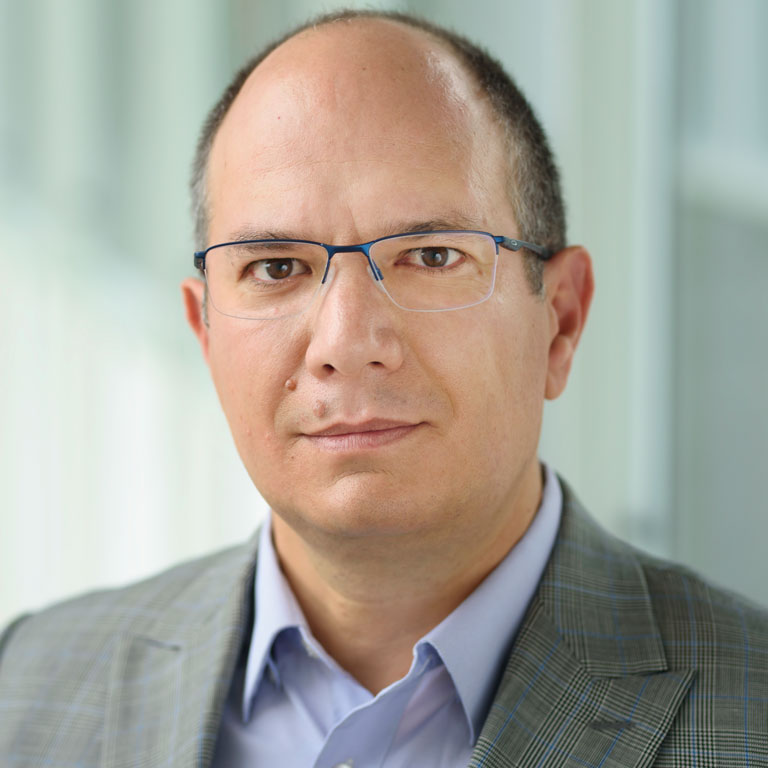
Vineeth N Balasubramanian is a Professor in the Department of Computer Science & Engineering at the Indian Institute of Technology Hyderabad, with affiliate faculty status in the Department of Artificial Intelligence. His research focuses on the intersection of deep learning, machine learning, and computer vision, emphasizing explainability, robustness, and real-world applications. He leads Lab 1055, which investigates problems such as Explainable and robust AI/ML systems Lifelong learning in evolving environments Multimodal vision-language models Applications in agriculture, autonomous navigation, and human behavior analysis His recent work includes causal reasoning in transformers, vision-language model capabilities, and drone-based object detection. Funded by organizations like Google, Microsoft, Intel, and DST, he has received multiple awards including the World's Top 2% Scientists (2022-23), INSA/INAE Fellowships, and Best Paper recognitions. Lab 1055 collaborates with institutions like CMU, UBC, and Monash University, contributing to cutting-edge advancements in AI.
Wendy Ju is an Associate Professor of Information Science at Cornell Tech, with appointments in the Cornell Ann S. Bowers College of Computing and Information Science, the Jacobs Technion-Cornell Institute, and the Technion-Israel Institute of Technology. Previously, she served as executive director of interaction design research at Stanford University's Center for Design Research and as an associate professor of interaction design at the California College of the Arts. Her work bridges human-computer interaction, design, and robotics with a focus on how interactive devices can communicate with people without interrupting them. PhD in Mechanical Engineering from Stanford University Master's degree in Media Arts and Sciences from MIT Professor Ju's research centers on implicit interactions, human-robot collaboration, and automotive interfaces. She investigates how people interact with automated systems in natural contexts, develops methods for early-stage prototyping of autonomous technologies, and examines the social implications of robotics in urban environments. Her work spans from theoretical frameworks to practical applications, with particular emphasis on designing systems that integrate seamlessly into human activities without demanding constant attention. Her recent publications reveal a strong trajectory toward understanding human-robot interaction in public urban spaces, with increasing focus on robot navigation in city streets, the social implications of autonomous vehicles, and the integration of generative AI in design processes. Her work consistently bridges theoretical HCI frameworks with practical applications in transportation, urban design, and everyday robotics. Inducted into the ACM SIGCHI Academy (2025) Multiple Honorable Mention Awards at ACM CHI and DIS conferences Best Paper Award at Multimodal Technologies and Interaction (2023) Best Student Paper Award at IEEE Intelligent Vehicles Symposium (2017) Best Demonstration Award at HRI (2017) Professor Ju actively mentors numerous PhD and master's students, many of whom have become leading researchers in HCI and robotics. Her research has been supported by significant grants from NSF and industry partners, enabling extensive field studies of human-robot interaction in real-world settings. She has pioneered methodologies for studying autonomous vehicle interactions through both simulated and naturalistic driving environments. Her work with the Jacobs Technion-Cornell Institute supports interdisciplinary research at the intersection of computing, design, and urban technology. She has established research partnerships with transportation authorities, automotive companies, and urban planning organizations to study how emerging technologies can enhance urban mobility while respecting human needs and social contexts.
Professor Dr. Michael Woywode is a full professor and holds the Chair of SME Research and Entrepreneurship at the University of Mannheim , within the Business School . His research and teaching are embedded in the Institute for SME Research and Entrepreneurship (ifm Mannheim) , a central research institute of the university, and the Mannheim Center for Entrepreneurship and Innovation (MCEI) , which offers entrepreneurship courses university-wide. Research Interests: Family Firms: Succession planning, leadership transitions, and post-succession innovation. Entrepreneurship: Founder behavior, startup ecosystems, and entrepreneurial decision-making. Digitalization in SMEs: Competitiveness, digital transformation, and innovation in small and medium-sized enterprises. Self-Employment & Labor Markets: New forms of self-employment and their societal implications. Teaching: Prof. Woywode teaches across Bachelor’s, Master’s, and Doctoral levels, offering courses such as Strategic and International Management , Introduction to Entrepreneurship , and Managing the Family Business . Research Output: His recent publications span high-impact journals including Organization Science , Family Business Review , and Journal of Small Business Management , with a clear focus on entrepreneurship, family business, and institutional theory. Team & Collaboration: He leads a multidisciplinary team including postdocs, PhD candidates, and research associates, working closely with the MCEI and ifm Mannheim to foster entrepreneurship research and education.
Jun Hwa (Jacky) Cheah is an Associate Professor in Marketing at the Norwich Business School, University of East Anglia (UEA), a position he has held since February 2023. Before joining UEA, he served as a Senior Lecturer at Universiti Putra Malaysia and Universiti Teknologi Malaysia in Malaysia. He holds a PhD in Business Economics and an MBA in International Business from Universiti Putra Malaysia, along with a Bachelor of Management in Marketing from Universiti Malaysia Terengganu. His research focuses on digital marketing, technology marketing, consumer behavior, data analytics, and statistical modeling. He has published extensively in top journals such as the Journal of Business Research , European Journal of Marketing , and Psychology & Marketing . He currently serves as a Guest Editor, Associate Editor, and Editorial Board member for multiple academic journals. Dr. Cheah has received several accolades, including the Emerald Young Researcher Award (2021) and a Young Researcher Award from his former university. He has supervised PhD students, one of whom successfully completed their doctoral program. He is actively engaged in PhD supervision and collaborative research, with a strong emphasis on advancing quantitative methodologies and addressing contemporary marketing challenges.
Edward Lank was a Professor at the Cheriton School of Computer Science, University of Waterloo, and held an Inria International Research Chair at Inria Lille-Nord Europe (2019–2023). His research focused on Human-Computer Interaction (HCI), including intelligent user interfaces, mobile/multi-touch interaction, gesture recognition, and mathematical software design. He earned a BSc from the University of Prince Edward Island and a PhD from Queen's University. Research Highlights: Pioneered work on gesture-based interaction, including MathBrush for mathematical expression recognition. Explored large-display interaction, powerwall design, and mass user engagement with public displays. Investigated kinematics of user input, endpoint prediction, and mode inference in interfaces. Collaborated on persuasive technology for energy demand management and health-related serious games. Awards & Recognition: National Science Foundation Career Award (2004) Best of CHI Nominee (2008) Inria International Research Chair (2019–2023) Grants & Funding: Supported by Google, NSERC, GRAND NCE, and the ORF Program. His research addressed challenges in wearable tech, VR/AR, and sustainable HCI practices. Legacy: Edward Lank passed away on March 21, 2022. His contributions to HCI, including foundational work on gesture recognition and user-centered design, continue to influence the field. His courses, such as CS 889 (HCI Seminar) and CS 449 (HCI Fundamentals), emphasized user-centered design and empirical methods.
Dr. Debraj Roy is a Visiting Professor at the University of Amsterdam (UvA), affiliated with the Faculty of Science, Mathematics and Computer Science and the Informatics Institute. His research focuses on agent-based modeling, socio-economic dynamics, environmental resilience, and blockchain technology. He investigates complex systems such as urban slums, disaster recovery, and climate adaptation using computational methods like remote sensing and machine learning. His work bridges theory and practice, offering insights into policy design for sustainable development and social equity. Key research interests include slum dynamics, poverty traps, and the application of blockchain oracles for decentralized systems. He employs advanced techniques such as global sensitivity analysis and manifold learning to explore multi-scale socio-environmental challenges. His recent articles highlight trends in carbon pricing, flood risk valuation, and multi-agent systems. Earlier work concentrated on urban inequality in cities like Bangalore and Mexico City, leveraging geospatial and statistical tools. No scientific awards or grants are explicitly listed. His advising and team collaborations are unspecified in the provided text.
Jamie Collins is a Professor in the Department of Management at Texas Tech University's Rawls College of Business. He holds a PhD in Strategy & Entrepreneurship from Texas A&M University, along with an MBA and BS in Finance. Prior roles include Professor and UC Chair of Strategy at the University of Canterbury (New Zealand) and Director of Sam Houston State University's Center for Entrepreneurship. His research focuses on strategic leadership perceptions, innovation investments, and teaching approaches' impact on student success. He has taught at Clemson, Texas A&M, and Baylor, with visiting roles in Belgium and Italy. Collins teaches strategic management, entrepreneurship, and international management courses. Key research areas include entrepreneurial intuition, venture creation, and the intersection of gender/equality in business programs. His 2020-2024 publications emphasize innovation strategies, educational methodologies, and behavioral skills development. He has collaborated across disciplines from military training to sports performance optimization.
Charles Spence is Professor of Experimental Psychology at the University of Oxford and Fellow of Somerville College, where he heads the Crossmodal Research Laboratory. His work bridges cognitive neuroscience with real-world applications in multisensory design, spanning food science, human-computer interaction, and environmental psychology. Spence's research centers on how the brain integrates sensory inputs (sight, sound, touch, taste, smell) to form unified perceptual experiences. This foundational work drives innovations in sensory marketing, product design, and human factors engineering, with significant implications for optimizing everyday interactions with technology and environments. His approach combines rigorous laboratory experimentation with industry collaborations to translate theoretical insights into practical solutions. Recent publications demonstrate a clear trajectory toward applied crossmodal research, particularly in consumer contexts. His 2025 output reveals growing emphasis on digital commerce environments, nature-food perception interactions, and multisensory flavor enhancement—showcasing how sensory cues can be strategically deployed to influence behavior in retail, dining, and digital platforms. His major recognitions include: 10th Experimental Psychology Society Prize British Psychology Society Cognitive Section Award Paul Bertelson Award (Young European Cognitive Psychologist of the Year) Friedrich Wilhelm Bessel Research Award 2008 IG Nobel Prize for Nutrition (for 'sonic crisp' research) Spence maintains extensive industry partnerships, having consulted for Toyota on multisensory warning systems, ICI on environmental psychology, and Heston Blumenthal's Fat Duck restaurant on culinary innovation. His research attracts significant commercial funding through these collaborations, though specific grant details aren't publicly itemized. The Crossmodal Research Laboratory operates as an interdisciplinary hub where psychologists, neuroscientists, and industry partners investigate sensory integration mechanisms. Current projects focus on optimizing driver alert systems, designing immersive food experiences, and understanding how built environments affect cognitive performance—maintaining Spence's legacy of translating basic science into tangible human benefits.
Professor Chengang Wang is Chair in International Business and Director of Research at the Department of Strategy and International Business, Birmingham Business School, University of Birmingham. He previously held academic positions at the University of Bradford, University of Surrey, and the University of Manchester, with over 17 years of service at Bradford where he served as Head of Research Centre and Director of PhD Programme. PhD in Economics, Aston University, 2003 Postgraduate Certificate in Higher Education Practice, University of Bradford, 2006 His research centers on the intersection of international business and innovation , particularly examining how firm internationalization influences innovation, knowledge spillovers, and green technology adoption. His recent work investigates eco-innovation in emerging markets, the role of digital economy policies, and institutional effects on innovation performance. He frequently studies Chinese and BRICS firms, focusing on outward FDI, intellectual property, and technology transfer. The analysis of his recent publications reveals a strong trend toward sustainability-driven innovation , with increasing emphasis on green innovation, environmental regulation, and digital policy impacts. His work combines international business theory with innovation economics, often using empirical methods to study real-world firm behavior in emerging economies. Key themes include knowledge spillovers from MNCs, the role of IPR regimes, and the interplay between institutional environments and firm strategy. His scientific recognition includes: Fellow of the Higher Education Academy (FHEA) He has contributed to major research projects funded by the UK’s DFID and China’s Natural Science Foundation and Ministry of Science and Technology. He has served on the editorial boards of Management and Organization Review and International Business Review . His teaching includes International Business Strategy, Business Economics, and Research Methods. Professor Wang leads research in his department and mentors PhD students in international business and innovation. He has published in top journals including Journal of International Business Studies , Research Policy , and Technological Forecasting and Social Change . He is actively involved in scholarly communities and contributes to advancing knowledge on international business dynamics in emerging economies, particularly China. His departmental leadership as Director of Research underscores his influence in shaping research strategy and academic excellence.
Dr. Gomaa Agag serves as Associate Professor of Marketing at Nottingham Business School, Nottingham Trent University, bringing over a decade of academic experience across Egypt, UAE, and UK institutions. His leadership in digital marketing research and pedagogical excellence has established him as a key contributor to contemporary marketing scholarship. His academic credentials include: PhD in Marketing, University of Plymouth MPhil in Marketing PGCE (Postgraduate Certificate in Education) PGCHE (Postgraduate Certificate in Higher Education) BA (Hons) in Marketing Agag's research program centers on digital transformation in consumer behavior, with emphases on e-commerce ethics, AI-driven tourism marketing, and cross-cultural social commerce dynamics. His methodology integrates structural equation modeling (AMOS/WARPPLS) and fsQCA to analyze complex consumer decision pathways, particularly examining how technological adoption intersects with cultural variables in online retail environments. Recent work investigates pandemic-induced behavioral shifts and sustainability-driven consumption patterns. His publication trajectory reveals evolving focus from foundational e-commerce trust studies toward contemporary AI applications in tourism marketing and circular economy models. The 15 most recent articles demonstrate consistent output in premier journals like Journal of Retailing and Consumer Services and Tourism Management , with increasing emphasis on longitudinal methodologies and cross-national comparative frameworks addressing digital marketing agility, green consumption, and post-pandemic recovery. Research recognition includes: Teaching Honour Roll (multiple inclusions) Best Teaching Award (2016) Best Teaching Award (2017) Agag actively shapes scholarly discourse as Associate Editor of the International Journal of Customer Relationship Marketing and Management while mentoring doctoral candidates through NTU's graduate programs. His external collaborations with industry partners like Booking.com and academic networks across 12 institutions demonstrate translational research impact. Current initiatives focus on AI optimization in hospitality performance metrics and cross-cultural analysis of sustainable consumption drivers, positioning him at the forefront of digital marketing evolution. His collaborative projects with international researchers and industry partners form dynamic research collectives examining digital marketing ethics and tourism technology adoption, though no dedicated physical laboratory is specified in available documentation.
Dr. Uwe Grünefeld is a Visiting Professor at the Faculty of Computer Science , Institute for Computer Science and Business Information Systems (ICB) of the University of Duisburg-Essen. He has been actively contributing to Human-Computer Interaction research through multiple publications in 2025-2022 focusing on Virtual Reality , Augmented Reality , and Robotics . Research Interests span across immersive technology applications for health behavior change (situated artifacts, weight visualization mirrors), haptic feedback systems (EMS for weight perception, vibrotactile directional cues), and behavioral biometrics (hand tracking identification, gaze-based user recognition). His work addresses cross-reality system design , collaborative robotics , and human-in-the-loop simulation methodologies . Key Publications demonstrate significant contributions to VR/AR user engagement, with particular focus on Physical activity promotion through situated artifacts Advanced haptic feedback techniques for immersive environments Behavioral biometric identification systems Robot motion intent communication Cross-reality transition visualization His research often employs mixed-method approaches combining technical implementations with user studies involving quantitative and qualitative data collection.
Professor Nicole Koenig-Lewis is a leading academic in Marketing at Cardiff Business School , with affiliations to the Centre for Climate Change and Social Transformations (CAST) and the International Society for the Circular Economy (IS4CE) . Her career spans over two decades, including roles at Swansea University and Cardiff University, culminating in her current professorship since 2023. Professor of Marketing - Cardiff Business School (2023-present) Reader in Marketing - Cardiff Business School (2018-2023) Senior Lecturer - Cardiff Business School (2016-2018) Research Focus : Her work bridges Sustainable Consumption , Access-Based Consumption , and Consumer Behavior Change , particularly through Sport/Cultural Events and Circular Economy frameworks. Recent projects include developing sustainability toolkits for rugby events and analyzing the psychological drivers of eco-packaging adoption. Publication Trends (2025-2019): Over 40 publications in journals like Journal of Business Research , European Journal of Marketing , and Journal of Environmental Psychology , with recurring themes in Behavioral Indicators , Event Sustainability , and Circular Consumption . Scientific Recognition : Recipient of multiple ESRC/UKRI grants, Outstanding Contribution Awards , and Best Paper Prizes . Notably led interdisciplinary teams to Highly Commendable 'Outstanding Partnership Impact' (2025) and 'Excellence in Environmental Sustainability' (2022) . Supervised 9 PhD students (current and past) Co-led 7 sustainability toolkits/conference impact projects Contributed to Routledge Companion to Marketing & Sustainability (2025) Labs & Collaborations : Co-founded the Cardiff University Festival Research Group , collaborating with organizations like The R&A , Pledgeball , and Welsh Government to transform events into sustainability catalysts. Currently mentors 4 active PhD students in circular economy and behavioral change.
Luis Felipe Cisneros Martinez is a Professor at HEC Montréal’s Department of Entrepreneurship and Innovation. He also serves as Director of the Institut d'entrepreneuriat Banque Nationale and Scientific Director of the Pôle Entrepreneuriat/Repreneuriat/Familles en Affaires. His expertise spans family business dynamics, entrepreneurship, and small business management. Education: M.Sc. (Administration) from Universidad Autónoma de Aguascalientes, DEA (Systèmes Comptables d’Information) from Université Paris IX–Dauphine, and a Doctorat ès sciences (gestion) from HEC Paris. Research focuses on family business succession, entrepreneurial resilience, and innovation in SMEs. Notable contributions include studies on socioemotional wealth (SEW) across borders, crisis management in family firms, and gender dynamics in entrepreneurship. Over 15 recent articles highlight his work in journals like Journal of Family Business Strategy and Entrepreneurship & Regional Development . Received recognition as one of the TLN 10 Most Influential Hispanic Canadians 2023 . Supervised master’s theses on family succession and women entrepreneurs’ performance, alongside project supervision on innovation strategies and immigrant entrepreneur support systems. Leadership roles include directing research initiatives on family business governance and entrepreneurship education, contributing to policy recommendations for sustainable firm development.
Professor Jamie Carlson is a Professor of Marketing and Deputy Head of School - Research at the Newcastle Business School, University of Newcastle. His expertise lies at the intersection of marketing, consumer behavior, and technology, with a focus on how organizations can better engage customers in increasingly digital environments. He has held significant leadership roles including Assistant Dean Research and Engagement (2018-2020) and Head of Marketing Discipline (2017-2018). Professor Carlson's educational background includes: PhD (Management) from the University of Newcastle Bachelor of Business (Honours) from the University of Newcastle Bachelor of Business from the University of Newcastle Professor Carlson's research program focuses on customer experience management, particularly at the customer-technology interface. His work spans three core areas: understanding customer engagement with physical and virtual channels, examining service design and consumer behavior in service industries, and investigating consumer adoption of e-health services. He emphasizes how consumers actively shape their consumption journeys, seeking both individualized and communal brand experiences across touchpoints, and how technology both creates value and presents challenges for consumer well-being. An analysis of Professor Carlson's recent publications reveals a strong emphasis on digital transformation in marketing, with particular focus on omnichannel retailing, metaverse applications, social media engagement, and the psychological aspects of consumer behavior in digital environments. His work demonstrates increasing interdisciplinary collaboration, connecting marketing with information systems, psychology, and healthcare domains to address complex consumer behavior questions in our technology-driven world. Professor Carlson has received numerous prestigious awards for his scholarly contributions: 2025 Jay Lindquist Best Conference Paper Award at the Academy of Marketing Science World Marketing Congress 2023 Best paper in Digital and Social Media Marketing Track at Academy of Marketing Multiple Top Cited/Downloaded Article recognitions from International Journal of Information Management (2022) 2022 Best paper award in the Australasian Marketing Journal Multiple best paper awards at Academy of Marketing conferences (2014-2017) 2010 Vice-Chancellor's Citation for Outstanding Contribution to Student Learning As a principal supervisor for PhD, DBA, and Honours students, Professor Carlson has mentored numerous successful researchers who have gone on to academic positions at institutions worldwide including Maastricht University (Netherlands), Dortmund University (Germany), Macquarie University, UTS, and the University of Adelaide. His students have received faculty medals, best paper awards, and the prestigious Arizona State University Center for Service Leadership Research Scholarship. His supervision focuses on customer engagement in digital media, service experience management, relationship quality, emotional appeals in advertising, and drivers of group travel behavior. Professor Carlson's research is conducted through multinational and interdisciplinary collaborations aligned with the Australian government's 'Growth Through Innovation' agenda and the UN Sustainable Development Goals. His work connects marketing with information systems, psychology, and healthcare to develop frameworks for understanding e-service quality, online flow experiences, customer engagement, and value creation in digital environments.
Dr. Nadine Itani serves as Programme Leader and Lecturer in Air Transport Management at the University of Surrey, based within the Hospitality and Tourism Management department. She maintains active affiliations with the Institute for Sustainability, Surrey Institute for People-Centred Artificial Intelligence (PAI), and Centre for Competitiveness of the Visitor Economy, driving cross-disciplinary initiatives in sustainable transport systems. Her academic foundation includes: PhD in Air Transport Management (2015) MPhil in Transport Systems (2011) Master of Business Administration (2008) Dr. Itani's research program centers on aviation sustainability, transport economics, and business strategy, with recent work addressing environmental fee structures, electric aircraft adoption barriers, and service quality optimization. Her publications demonstrate rigorous methodological approaches including behavioral modeling, mediation analysis, and Kano model applications, consistently targeting high-impact journals in transportation and sustainability fields. Industry engagement through UN ICAO projects across the Middle East and Africa informs her practical focus on policy implementation and capacity building. Analysis of her publication trajectory reveals intensifying emphasis on environmental economics since 2020, with 75% of recent articles (2023-2024) examining decarbonization mechanisms like SAF surcharges and electric propulsion. Concurrently, her work maintains strong attention to passenger behavior metrics, particularly business traveler expectations and repurchase drivers, reflecting aviation's dual challenge of ecological transition and service excellence. Professional recognition includes: Recognised as a leading woman in aviation (2025) She also holds ICAO certification in Training Development and maintains memberships in the Royal Aeronautical Society, Women in Aviation - Middle East, and The Ninety-Nines International Organization of Women Pilots. As co-Programme Leader for the MSc in Air Transport Management, Dr. Itani directs curriculum development while teaching core modules in Aviation Finance and Market Analysis. Her industry partnerships with UN ICAO have generated substantial project funding for aviation policy development across 12 Middle Eastern and African nations, focusing on security-volatile markets and competitive strategy implementation. Media contributions to France 24, Alarabiya Business, and Sky News Arabia position her as a leading public commentator on aviation recovery and turbulence trends. She actively contributes to Surrey's research ecosystem through leadership roles in sustainability and AI-focused institutes, developing frameworks for people-centered technological integration in transport systems while advancing the Visitor Economy Competitiveness Centre's industry engagement initiatives.