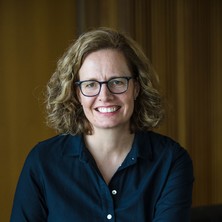
Stefan Gössling is a Professor of Tourism Research at Linnaeus University and Human Ecology at Lund University. His research focuses on the sustainability of tourism, transport, and mobilities, with particular attention to climate change, carbon emissions, and policy design. Key Research Areas: Climate change mitigation in tourism, transport sustainability, environmental impact assessment, carbon management, and mobility studies. His recent publications analyze global air transport emissions, net-zero aviation challenges, decarbonization strategies, and climate risks to tourism in the European Union. Collaborative work with international colleagues explores economic, behavioral, and policy dimensions of sustainable tourism. Selected Trends: Articles reveal growing emphasis on carbon inequality, transport justice, climate policy barriers, and systemic changes in urban and aviation contexts. Many studies employ interdisciplinary methods combining environmental science, economics, and behavioral analysis.
Jason Schwebke is an Assistant Professor of Accounting at Texas Tech University's Rawls College of Business. He holds a PhD from the University of Central Florida and advanced degrees from Northern Illinois University. His expertise spans taxation, data analytics, and behavioral decision-making in accounting contexts. Education: PhD in Accounting, University of Central Florida (2021) MS in Accounting Science (Tax), Northern Illinois University (2012) BS in Finance, Northern Illinois University (2010) Research Focus: Tax compliance mechanisms, tax policy implications, ethical issues in taxation, and data analytics applications in accounting education and practice. He explores topics such as taxpayer behavior in automated systems, decision-making under tax autonomy, and fraud detection through digital tools. Teaching: Specializes in taxation and data analytics courses at undergraduate and graduate levels, with notable curriculum development in Power BI and Microsoft tools integration. Professional Affiliations: Enrolled Agent (IRS), Series 65 Financial Advisor, and operates a part-time tax consultancy. Served as litigation expert in U.S. District Court (2021–2022). Honors: 2025 Texas Tech Alumni Association New Faculty Award 2025 Lyons School Research Fellowship 2024 Big XII Faculty Research Fellowship Service: Associate Editor for Accounting and the Public Interest , coordinates Rawls College's Research Workshop, and chairs PhD committee initiatives. Active in conference organizing and peer-review activities for top accounting journals.
Dr. Dirk C. Moosmayer is a Professor in the Strategy Department at KEDGE Business School, Bordeaux, specializing in responsible management and sustainability. He holds a PhD from the University of Hannover and previously spent eight years at the University of Nottingham Ningbo in China, with visiting positions at Imperial College London. His educational background includes: PhD from University of Hannover Moosmayer's research integrates business, consumer, and civil society perspectives around responsible management, with a focus on supply chain responsibility and Chinese consumer behavior regarding social/environmental concerns. His work examines how cosmopolitan values influence brand perception and explores humanistic leadership in German 'Hidden Champion' firms. He investigates the dual role of guanxi in Chinese sustainable supply chains and the psychological drivers of ethical consumption in Confucian contexts. His 15 most recent publications reveal a dominant focus on business ethics (60%), sustainability education (25%), and consumer behavior (15%), with emerging trends in virtue ethics frameworks and mobile technology for responsible management learning. Key thematic clusters include Chinese market dynamics, transdisciplinary competence development, and the practical implementation of sustainability in operations. Moosmayer serves as Associate Editor for Business Ethics: A European Review and previously for Academy of Management Learning & Education (2015-17). He is on the editorial boards of Journal of Business Ethics , Business & Society , and Journal of Management Inquiry , shaping discourse in responsible management scholarship.
Professor Francesco Pilla is a Full Professor of Smart and Sustainable Cities at University College Dublin's School of Architecture, Planning and Environmental Policy, where he also serves as Co-Director of the Spatial Dynamics Lab. Previously, he held positions as MSc Director (2018-2019) and Undergraduate Director for the School of Architecture. With over 15 years of experience in GIS modeling and spatial data analysis, Professor Pilla's work bridges technology, urban planning, and community engagement to create more sustainable cities. Professor Pilla's research focuses on developing geospatial analysis tools and environmental pollution models (air, noise, water) using GIS platforms to facilitate interoperability between research teams and end users. His approach integrates environmental pollution models with pervasive and community sensing applications for calibration and validation. A key innovation in his work is the integration of co-design principles through Living Labs in urban planning and citizen science initiatives to improve city life from an environmental perspective. His recent publications reveal a strong focus on urban sustainability challenges, with significant contributions to air quality monitoring, sustainable transportation, climate adaptation, and citizen science methodologies. His work increasingly incorporates advanced AI techniques, including large language models and machine learning algorithms, to analyze urban systems and develop data-driven solutions for complex environmental problems. The research demonstrates a clear trend toward integrating diverse data sources and developing practical tools for urban governance and planning. Haagen-Smit Prize (2024) - Recognizing outstanding papers published in Atmospheric Environment Best eMobility Project - Electric Vehicle Awards 2024 All Ireland community & council awards - Best Community Transport Initiative 2024 Academic research award: tipping point for action from Financial Times (2023) Professor Pilla leads numerous significant research projects including iSCAPE (H2020-SC5) as Coordinator, OPERANDUM (Principal Investigator for UCD) focusing on flood risk reduction with nature-based solutions, WeCount (Principal Investigator for UCD), and Connecting Nature (Principal Investigator for UCD). He has also secured funding through SFI Investigator grants for 'Scalable, Privacy-Enhanced Analytics for sharing mobility systems' and several Environmental Protection Agency projects. His collaborative work extends to partnerships with MIT through Fulbright/EPA TechImpact awards and IBM through Faculty Awards. At the Spatial Dynamics Lab, Professor Pilla oversees research that combines geospatial analysis, environmental monitoring, and community engagement. His innovative 'Bike Library' initiative, which has expanded to multiple schools in Dublin, exemplifies his commitment to translating research into practical community solutions. The lab's work integrates advanced sensing technologies, GIS platforms, and citizen science to address urban environmental challenges through collaborative approaches.
Philipp Wassler, PhD, is an Associate Professor at the Department of Business Sciences, University of Bergamo, Italy, since 2021. His academic career spans multiple continents, including senior lecturing at Bournemouth University (2017-2021), assistant professorship at University of Science & Technology Macau (2016-2017), and postdoctoral research at The Hong Kong Polytechnic University (2015-2016). He holds a PhD in Tourism Management from The Hong Kong Polytechnic University and a Master's from Breda University of Applied Sciences.
Wenlong Jin is a Professor in the Department of Civil and Environmental Engineering at the Samueli School of Engineering, University of California, Irvine. His research focuses on intelligent transportation systems , traffic flow theory , and transportation network analysis , with applications to evacuation control, eco-driving algorithms, and connected/autonomous vehicle systems. Ph.D., Applied Mathematics, University of California, Davis (2003) M.S., Applied Mathematics, University of California, Davis (2000) B.S., Automatic Control, University of Science and Technology of China (1998) Recent research trends include: Developing generalized bathtub models for network trip flows and evacuation control Advancing car-following models with safety guarantees for autonomous vehicles Optimizing dynamic pricing schemes for high-occupancy toll lanes Investigating capacity drop phenomena at traffic bottlenecks Creating eco-driving algorithms using vehicle-to-infrastructure communication He actively contributes to transportation network resilience and cybersecurity in intelligent transportation systems .
Dr. Saidi Siuhi serves as an Associate Professor of Civil Engineering at South Carolina State University, where he teaches undergraduate and graduate courses while conducting research and providing institutional service across departmental and university levels. His academic credentials include: Ph.D. in Civil Engineering from the University of Nevada, Las Vegas (2009) M.Sc. in Civil Engineering from Florida State University (2006) B.Sc. in Civil Engineering from the University of Dar-es-Salaam (2003) Specializing in transportation engineering, Dr. Siuhi's research focuses on traffic safety, transportation planning, and microscopic traffic simulation. His work addresses critical transportation challenges including distracted driving/walking behaviors, traffic management during special events (notably the 2017 solar eclipse), and the application of advanced computational methods to transportation networks. He integrates emerging technologies like virtual reality, machine learning, and deep learning to develop innovative safety solutions for complex transportation systems. Analysis of his recent publications (2021-2025) reveals a strong trajectory toward computational transportation safety, with increasing emphasis on AI-driven solutions for pedestrian safety, driver behavior analysis, and infrastructure monitoring. His work consistently bridges theoretical transportation models with practical safety applications, particularly in distracted behavior analysis and event-based traffic management. Dr. Siuhi actively mentors students through senior design projects (CE 459/460) and graduate coursework, though specific advisee names aren't documented. His service contributions span departmental, college, and university committees, supporting academic operations and strategic initiatives within the engineering program.
Professor Richard Bailey is Professor of Environmental Systems at the University of Oxford's School of Geography and the Environment. He serves as a Tutorial Fellow and Dean of St Catherine's College, a Senior Research Fellow at the Institute for New Economic Thinking, and a member of the Oxford Biodiversity Institute. Bailey co-directs the Oxford Luminescence Dating Laboratory and leads the CoHESys-lab research group focused on complex human-environmental systems. Richard's research centers on the dynamics of natural environmental systems and coupled human-environment interactions across various timescales. His work employs mathematical modeling, numerical simulations, and empirical data analysis to understand complex systems, with a strong focus on sustainability applications, particularly in ocean systems. The CoHESys-lab develops models that integrate machine learning methods to explore implementable policies for environmental challenges. His recent publications demonstrate a strong trend toward interdisciplinary research combining environmental science, computational modeling, and sustainability. Bailey's work spans from theoretical explorations of complex systems to applied projects addressing pressing issues like plastic pollution, fisheries management, and climate change impacts on marine ecosystems. His research increasingly incorporates agent-based modeling and machine learning approaches to tackle coupled human-environment challenges. Co-Director of Oxford Martin School Programme on Sustainable Oceans Co-Director of Oxford Luminescence Dating Laboratory Leader of CoHESys-lab research group Professor Bailey currently supervises graduate students Maike Nowatzki (focusing on dunefield morphology using deep learning) and Thomas Youngman (working on macroeconomic modeling for UK climate transition). His recent advisees include Emily Neil (rewilding impacts at Knepp Estate) and Diana Bailey (LM OSL analysis techniques). His research is supported through collaborations with organizations including Ocean Conservancy, Stanford University, George Mason University, and the University of California at Santa Barbara, with computational support from Amazon Web Services. Bailey leads the CoHESys-lab (Complex Human Environmental Systems Simulation Laboratory), which develops sophisticated models for understanding coupled human-environment systems. His OSIRIS framework (Ocean Systems Interactions, Risks, Instabilities and Synergies) represents a significant contribution to analyzing multiple stressors on marine systems. The lab maintains strong collaborations with environmental organizations and academic institutions worldwide to address sustainability challenges through innovative computational approaches.
Yu Jiang is an Associate Professor at the School of Software, Tsinghua University, China. His research focuses on software security with emphasis on fuzz testing, embedded systems, and database security. He leads the Software System Security Assurance Group which has discovered over 1,000 bugs in major system software with 300+ CVEs registered. Dr. Jiang's research interests include Software Engineering , Embedded Systems Security , and Cross-Layer Fuzzing . His work addresses vulnerabilities in operating systems, databases, communication protocols, and IoT firmware through innovative fuzzing frameworks. Key contributions include semantic-aware fuzzing for heterogeneous software stacks and learning-based vulnerability detection for embedded systems. His recent publications demonstrate strong trends in database security (Hulk, PUPPY, THANOS), ransomware defense (Fawkes, Preventing Disruption), and web security (JANUS). Research spans both theoretical advances in fuzzing techniques and practical industrial applications, with significant impact evidenced by numerous distinguished paper awards. Career Award, NSFC: 2026 Distinguished Paper Award, ISSTA: 2025 First Prize for Technical Invention, CCF: 2024 Distinguished Paper Award, USENIX Security: 2024 SIGSOFT Distinguished Paper Award, FSE: 2022 Dr. Jiang has advised over 50 graduate students including 20 PhD candidates. His research is supported by major grants including NSFC projects ($600,000 for Software Trustworthiness Construction and $350,000 for Distributed Database Reliability), Huawei ($80,000 for LLM-Powered Fuzzing), and Tencent ($120,000 for LLM-Powered Unit Testing). The Software System Security Assurance Group maintains strong industry partnerships with Huawei, Alibaba, Tencent, and Webank. The group operates cutting-edge infrastructure for fuzz testing across multiple domains including database systems, operating kernels, blockchain platforms, and industrial control systems. Current projects integrate LLM technologies with traditional fuzzing techniques to enhance vulnerability detection in complex software stacks.
George Shaker is an Adjunct Associate Professor in the Department of Electrical and Computer Engineering at the University of Waterloo, Canada, and Lab Director of the Wireless Sensors and Devices Laboratory at the Schlegel-UW Research Institute for Aging. He is also Chief Scientist at Spark Technology Labs. His research focuses on wireless sensor technologies for healthcare, autonomous systems, and IoT. He earned his bachelor's from Cairo University and master's/PhD from the University of Waterloo. Education: Bachelor’s degree, Cairo University, Egypt Master’s degree, University of Waterloo, Canada PhD, University of Waterloo, Canada Research Interests: Dr. Shaker’s work spans advanced wireless sensor systems for healthcare monitoring, UAVs, and automotive applications. His lab developed the MIRADA initiative for aging populations and pioneered radar-based non-invasive glucose monitoring. Key areas include mm-wave radar, antenna design, bioelectromagnetics, and machine learning integration. He has co-authored over 200 publications and holds 35+ patents, collaborating with companies like Google, Apple, and Toyota. Recent Article Trends: His 2025 work emphasizes AI-driven radar systems for activity recognition, bio-sensing metasurfaces, and UAV classification using digital twins. Projects include 4D radar imaging, low-cost milk quality monitoring, and smart furniture for cardiac health. Awards: IEEE AP-S Best Paper Award IEEE MTT-S Graduate Fellowship arXiv Top Downloaded Medical Article URSI Young Scientist Award Multiple student awards (see full list above) Advising & Grants: He advises graduate students in ECE and has led projects funded by NSERC and industry partners. His students have won Velocity Fund, NASA Tech Briefs, and Canadian Space Agency awards. Collaborates with over 40 companies including Amazon, Microsoft, and Medella Health. Labs & Initiatives: Leads the Wireless Sensors & Devices Lab and co-founded MIRADA, a smart apartment for aging healthcare. Active in Spark Labs for wireless innovation.
Dr Sjaanie Koppel is an Associate Professor at Monash University's Accident Research Centre (MUARC), specializing in road safety research. She leads MUARC's Behavioural Science team and holds multiple leadership roles including Board Director of AAAM, ACRS Executive Member, and Associate Editor for Traffic Injury Prevention . Her research focuses on vulnerable road users, driver health assessment, and emerging mobility technologies. She leads major projects like NORTISS and smart vehicle systems for dementia drivers. Koppel holds a PhD in Psychophysiology and has received awards including the 2024 Women in Road Safety Award. Key collaborations include Safe Kids Worldwide and TÜV SÜD. Her work addresses older driver mobility, child occupant safety, and workplace road safety through innovative methods like driving simulations and naturalistic studies. She manages the National Road Safety Partnership Program (NRSPP) to improve corporate road safety practices. Recent research includes rideshare safety, pregnancy seatbelt use, and automated vehicle takeover behavior. Koppel has published 227+ outputs since 2002 and actively engages in policy advocacy through 56+ professional activities.
Amanda Stephens serves as a Senior Research Fellow at Monash University Accident Research Centre (MUARC), Australia’s largest multidisciplinary research hub for injury prevention in transport. With over a decade of international road safety experience across England, Scotland, and Ireland, she joined MUARC in 2013 and has established herself as a leading expert in driver psychology, particularly regarding aggressive and anti-social driving behaviors. Her work bridges academic research with real-world policy implementation through active engagement with government bodies and industry stakeholders. Stephens' research program centers on psychological mechanisms behind risky driving, with emphasis on emotional regulation during transport, workplace driving safety, and compliance with road rules. She investigates how stress, anxiety, and anger manifest in driver behavior, developing evidence-based behavior modification programs for fatigued and emotionally compromised drivers. Her expertise extends to human factors in automated vehicle systems and distraction prevention across diverse road user groups. Recent publications reveal strong thematic consistency in Stephens' work, with 2025 outputs focusing on psychological determinants of road safety including driver drowsiness in automated vehicles, technology-induced distraction in cycling, national patterns of aggressive driving, and community acceptance of alcohol detection technologies. Her research consistently integrates human factors perspectives with practical interventions, demonstrating growing emphasis on emotional regulation frameworks and cross-cultural applicability of safety programs. Scientific recognition includes: Advancing Women's Research Success Grant (2019) Best Paper Award - Researcher (2023) Best Research Paper 2019 (2019) Best Research Paper 2021 (2021) MUARC 2024 Seeding Grant for autonomous driving research (2024) Stephens actively supervises PhD candidates in driver behavior psychology and leads substantial research funding through 21 projects including major initiatives on automated vehicle implementation for high-risk drivers (2025-2027), Road Rule 79A effectiveness evaluation (2024-2026), and national driver distraction roadmaps. Her collaborative approach involves partnerships with government agencies, industry stakeholders, and international research teams to address complex transport safety challenges. As a core member of MUARC's multidisciplinary team, Stephens contributes to Australia's premier road safety research ecosystem through regular media commentary (31 press appearances), public seminars on driver psychology, and advisory roles with Road Safety Education Limited. Her work directly translates research findings into judicial education programs, corporate safety policies, and public awareness campaigns addressing emotional and fatigued driving.
Patryk Perkowski is an Assistant Professor of Strategy and Entrepreneurship at the Sy Syms School of Business, Yeshiva University. He holds a PhD from Columbia Business School and completed a postdoctoral fellowship in Business, AI, and Democracy at Columbia. His research focuses on the intersection of information technology, human resource management, and causal inference, examining how technological advancements like AI reshape talent competition and organizational strategies. He also develops methodological tools for empirical business research. Education: PhD and Postdoctoral Scholar at Columbia Business School. Research interests include AI's impact on workplaces, internal talent markets, labor discrimination trends, and algorithmic hiring. He publishes in top journals such as the Strategic Management Journal and Management Science. His work analyzes modern workforce dynamics, including automation effects, team coordination, and central banking AI applications. Notable studies address gender representation in hiring algorithms and long-term discrimination trajectories through meta-analyses. Advising: No advisee list provided. Grants and funding details not specified. His research bridges theory and practice, offering insights for firms to leverage human capital strategically in tech-driven environments.
Professor Sheleigh Lawler is a health psychology expert and Head of the Faculty of Health, Medicine and Behavioural Sciences at The University of Queensland. Her research focuses on health behaviors, psychosocial factors, and communication strategies in public health contexts. She leads interdisciplinary teams addressing chronic disease prevention, Indigenous health equity, and behavioral interventions. She holds a PhD from The University of Auckland and has extensive experience in program evaluation, including the '10,000 Lives' smoking cessation initiative and cancer screening equity projects. Education: Bachelor of Arts, The University of Auckland Masters (Coursework), The University of Auckland Doctor of Philosophy, The University of Auckland Research Interests: She investigates psychosocial variables influencing health behaviors, blended learning pedagogy in public health, and behavioral interventions for chronic diseases. Her work emphasizes health equity, particularly for Indigenous populations, and integrates mHealth/eHealth solutions. Grants and Funding: Current NHMRC Synergy Grant (2024–2029): Achieving Equity in Cancer Screening for First Nations Peoples Queensland Health Grant (2023): Tobacco Reduction Reforms and Skin Cancer Prevention Past NHMRC Project Grant (2008–2013): Telephone Counselling for Diabetes Advising and Supervision: Supervises PhD and Master's students on topics like cancer survivorship care, mHealth for hypertension management, and AI-driven smoking cessation tools. Current projects include evaluating social inclusion programs and Indigenous cancer screening equity. Labs/Teams: Active in initiatives such as the 'Stepping Stone Clubhouse' mental health program evaluation and the development of the Quin chatbot for smoking cessation. Collaborates with government agencies and industry on public health campaigns.
Tom Barratt is a Senior Lecturer in the Department of Management and Organisations at the UWA Business School and holds a Senior Research Fellow (DECRA) position in the same department. His research bridges industrial relations and human geography, with a focus on the gig economy and resource peripheries. He has collaborated extensively with governmental bodies, including submissions to Parliamentary Inquiries and Fair Work Commission proceedings, alongside media engagement through outlets like The Conversation. Languages: English (fluent, native) and Maruitian Creole (conversational). He contributes to UN Sustainable Development Goals, particularly addressing labor rights and sustainable cities. His current projects include an ARC-funded DECRA Fellowship (2023-2025) examining gig economy fragmentation and a FIFA-funded study on elite female football dynamics. His work often intersects policy analysis, labor market dynamics, and socio-spatial frameworks. Grants: ARC Australian Research Council: Work fragmentation in the gig economy (2023–2025) FIFA: Multiple Job Holding and Elite Female Football (2022–2024) Key Collaborations: Dr. Caleb Goods (UWA), Dr. Alex Veen (University of Sydney), and Dr. Brian Smith. His articles analyze gig economy challenges, psychosocial workplace hazards, and teacher wellbeing in higher education. He has engaged with policymakers to shape fair work legislation and welfare systems, particularly in Australia. His DECRA Fellowship underscores his research leadership in this domain. Awards: ARC DECRA Fellowship (2023-2025)