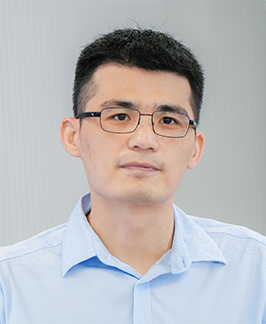
Dr. Yingyu Liang is an Associate Professor at the University of Hong Kong (HKU), affiliated with the Department of Computer Science and the Musketeers Foundation Institute of Data Science. Previously, he held an Associate Professor position at the University of Wisconsin-Madison and was a postdoc at Princeton University. He earned his PhD from Georgia Tech and holds M.S. and B.S. degrees from Tsinghua University. His research focuses on theoretical foundations of machine learning, particularly optimization and generalization in deep learning, robust machine learning, and practical applications. Key contributions include analyzing neural network feature learning, adversarial robustness, and contrastive learning efficiency. Education: PhD (Georgia Tech, 2014), M.S. (Tsinghua, 2010), B.S. (Tsinghua, 2008) Awards: NSF CAREER Award Labs/Groups: Research Group focused on theoretical ML and algorithm design Publications span top venues like NeurIPS, ICML, and ICLR, addressing topics such as deep learning theory, adversarial robustness, and graph representation learning.
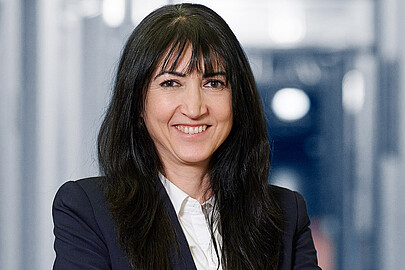
Prof. Dr.-Ing. Selin Kara is a Professor at the Institute of Technical Chemistry, Faculty of Natural Sciences, Leibniz University Hannover. She leads research in biocatalysis and bioprocessing, with a focus on sustainable and innovative enzyme-based technologies. Her leadership roles include Spokesperson of the Curriculum and Teaching Committee for Life Science and Chairperson of the Admissions Board for MSc Life Science. Full Name: Selin Kara Institution: Leibniz University Hannover Faculty: Faculty of Natural Sciences Department: Institute of Technical Chemistry Academic Rank: Professor Email: selin.kara@iftc.uni-hannover.de Her research interests center on biocatalysis and bioprocessing , particularly in redox biocatalysis , enzyme immobilization , non-conventional media such as deep eutectic solvents, biocatalytic cascades , and flow biocatalysis . She explores enzyme kinetics and process engineering to enhance efficiency and sustainability in chemical synthesis. Her group develops novel reactor systems and materials, including hydrogels and 3D-printed microfluidics, for advanced biocatalytic applications. She emphasizes green chemistry principles, aiming to replace traditional chemical processes with eco-friendly enzymatic alternatives. The most recent publications (2024–2025) demonstrate a strong trend in deep eutectic solvents , fusion enzymes , immobilization techniques , and sustainable synthesis of bio-based chemicals . Her work integrates experimental and computational methods to understand enzyme behavior and optimize reaction systems. Key themes include process intensification, solvent engineering, and industrial scalability, with applications in pharmaceuticals, fragrances, and sustainable materials. She holds leadership positions in academic governance, including: Spokesperson, Curriculum and Teaching Committee, Life Science (BSc/MSc) Chairperson, Admissions Board for MSc Life Science Executive Board Member, Institute of Technical Chemistry Deputy Representative for Professors in Faculty Council and Examination Boards Her research is highly collaborative, involving interdisciplinary teams and international partners, and is consistently published in high-impact journals such as Green Chemistry , ACS Catalysis , and ChemSusChem . While specific scientific awards and student advisees are not listed in the provided text, her extensive publication record and leadership roles reflect significant academic contributions.
Rahul Kapoor is a Professor at the Wharton School of the University of Pennsylvania, where he also serves as the Chair of the Management Department. His research focuses on innovation management, business ecosystems, and technology strategy, with a particular emphasis on how firms navigate technological and organizational challenges in dynamic industries. University: University of Pennsylvania School: Wharton School Department: Management Department Academic Rank: Professor His research explores the interplay between organizational design, external collaboration, and innovation outcomes. Recent work includes studies on forecasting strategies, ecosystem interdependencies, and the role of setbacks in technology development. He has contributed to leading journals such as Strategic Management Journal and Research Policy , with a recurring focus on technology ecosystems and modular innovation. Kapoor’s research spans both theoretical and applied dimensions. He has examined how firms can optimize value creation in business ecosystems, the impact of organizational design on invention sourcing, and the dynamics of technology emergence. His studies often integrate historical case analyses and simulation models to uncover patterns in innovation management. Scientific Awards: Inaugural Academy of Management Emerging Scholar Award Strategic Management Journal Best Paper Prize Wharton Teaching Excellence Award (multiple years) Editorial Roles: Associate Editor, Strategic Management Journal Contributing Editor, Strategy Science Teaching: Undergraduate, MBA, Executive MBA, and PhD courses on technology and innovation strategy Leadership in Wharton’s Executive Education programs He has advised firms on innovation initiatives and draws on over seven years of industry experience in high-tech, including roles at Texas Instruments and co-founding a startup, to inform his academic work.
Joseph Holden holds the Chair of Physical Geography at the School of Geography, University of Leeds , and serves as Director of water@leeds and the Yorkshire Integrated Catchment Solutions Programme (iCASP) . His expertise spans peatlands , hydrology , soil dynamics , and carbon cycling under environmental change. Education: MA Geography (Cambridge), PhD Peatland Hydrology (Durham) Key Roles: Pro-Dean for Research (2013-2019), NERC Freshwater Quality Programme Champion (2022-2027) Research focuses on peatland hydrology , agricultural impacts on water quality , and hazard cascades like flooding and pollution. He leads major projects including: EU-funded WaterLANDS (wetland restoration, 2021-2026) West Yorkshire Flood Innovation Programme (£300k+ UKSPF, 2022-2025) Environmentally Sensitive Hydropower (Nature Water, 2022) Scientific awards include: 2007 Philip Leverhulme Prize (outstanding research contribution) 2011 Gordon Warwick Medal (British Society for Geomorphology) Fellowships: Royal Geographical Society, Royal Meteorological Society He supervises 13 PhD students globally and leads £30M+ in active grants, including the £6M iCASP and £8.4M NERC Freshwater Quality Programme. His work combines field research, modeling, and policy engagement across Southeast Asia, Europe, and Africa.
Huiyan Li, PhD, P.Eng., is an Associate Professor in the Department of Biomedical Engineering at the University of Guelph. Her research focuses on developing micro/nanoscale biosensors and lab-on-a-chip technologies for cancer diagnostics and personalized medicine. Dr. Li holds a Ph.D. in Biomedical Engineering from McGill University and completed postdoctoral training at Harvard Medical School/Massachusetts General Hospital. Her multidisciplinary research integrates biosensing, micro/nanofabrication, bio-optics/electronics, and computational tools to study cancer molecular complexity. Current openings exist for M.A.Sc. students interested in biosensing research. Key research areas include extracellular vesicle analysis, multiplexed immunoassays, magnetic/nanoparticle-enhanced bioassays, and graphene-based biomedical sensors. Recent work emphasizes point-of-care diagnostics and enhanced protein detection via novel material integration. Teaching responsibilities include ENGG 6301 (Advanced Micro/Nano Biotechnology) and undergraduate courses in bio-instrumentation and biomedical signal processing. Her work spans biomaterials classification, microfluidic systems, and antimicrobial nanocomposite development. Research outputs emphasize scalable microarray formats, EV-based biomarker discovery, and sensor sensitivity enhancement through nanomaterial innovations. Current projects address EV concentration measurement, 3D antibody microarrays, and magnetic-responsive hydrogel discs for bioassay improvements.
Dr. Jonathan Bones is an Associate Professor in the School of Chemical and Bioprocess Engineering at University College Dublin (UCD) and Principal Investigator of the Characterisation and Comparability Group at NIBRT. His research focuses on analytical methods for biopharmaceuticals, including liquid chromatography-mass spectrometry (LC-MS) for protein characterization, glycomics, and process optimization. He holds a BSc and PhD in Analytical Chemistry from Dublin City University. His work has been recognized through inclusion in the Medicine Maker Power List. He leads a team of 18 researchers, supported by SFI, EI, and industry partnerships. Education: BSc in Analytical Science (Chemistry), Dublin City University PhD in Analytical Chemistry, Dublin City University Research Interests: Development of advanced LC-MS platforms for glycomics, proteomics, and bioprocess analysis. Key areas include: Quantitative proteomics/metabolomics for bioprocess monitoring Liquid phase separations for complex bioanalysis Process analytical technology (PAT) His group collaborates with ThermoFisher Scientific on analytical workflows for biopharmaceutical characterization. Articles Trends: Recent work emphasizes analytical methods for AAV vector characterization, biosimilar comparability via MAM/iMAM, and process clearance of excipients. Over 126 publications highlight his contributions to biopharmaceutical quality control and process understanding. Awards: Medicine Maker Power List (2023): Top 100 influential scientists in biopharmaceutical manufacturing and analysis Advising & Grants: Supervises PhD students in bioprocessing and analytical chemistry Funding from Science Foundation Ireland (SFI), Enterprise Ireland (EI), and EU FP7 Industry collaborations with ThermoFisher Scientific and Bristol Myers Squibb Labs & Teams: Leads the Characterisation and Comparability Lab at NIBRT, focused on cutting-edge analytical tools for bioprocess development and product quality assurance.
Alois Jungbauer is a full Professor and Head of the Institute of Biochemical Engineering at the University of Natural Resources and Life Sciences Vienna (BOKU), within the Department für Biotechnologie und Lebensmittelwissenschaften. He is a leading expert in bioprocess engineering, with a focus on downstream processing, continuous manufacturing, and sustainable biopharmaceutical production. Doctorate, University of Natural Resources and Life Sciences Vienna Habilitation, 1991 His research interests center on advanced purification technologies for biologics, including monoclonal antibodies, viral vectors, virus-like particles (VLPs), and gene therapy products. He is a pioneer in continuous integrated biomanufacturing, real-time process monitoring, and the development of platform processes for non-mAb proteins. His work integrates computational modeling, digital twins, and process intensification to improve efficiency and reduce environmental impact. He has made significant contributions to affinity chromatography, membrane adsorbers, and non-chromatographic separation methods. Recent publications highlight trends in continuous downstream processing, water conservation, in-situ buffer preparation, and the purification of complex biomolecules like secretory IgA and VLPs. His work spans both fundamental biophysical studies and industrial applications, reflecting a strong industry-academia interface. His scientific awards include: ISMR Thermo Fischer Award for Affinity Technologies (2011) Bia Separations Award (2000) Fulbright Award, Austrian-American Fulbright Commission (1996) Award of Japanese Society for Promotion of Science (1994) Golden Award 93 Professor Jungbauer actively supervises university theses and leads a dynamic research group. He has delivered numerous lectures and keynotes worldwide, indicating active engagement in knowledge transfer. His research is supported by ongoing projects and collaborations, with a strong emphasis on environmental and economic modeling of bioprocesses. He is affiliated with the Institute of Biochemical Engineering at BOKU, a hub for innovation in bioprocessing and industrial biotechnology.
David Latulippe is a Professor in the Department of Chemical Engineering at McMaster University. He joined McMaster in 2012 after postdoctoral work at Cornell University and a PhD at Penn State University, focusing on membrane filtration for DNA purification. His industrial experience includes roles at ZENON Environmental (now GE Water) in hollow-fiber membrane design for water treatment. Research interests include Membrane science and technology Bioprocessing of therapeutic viruses Microscale systems for biological applications Environmental engineering solutions for water treatment Current projects involve collaborations with industry partners like Ceapro and Aevitas, and the development of a biomanufacturing automation lab with Sartorius. Recent publications highlight advancements in Nanofiltration and microfiltration for viral vectors Conductive membranes for electrochemical applications Microfluidic systems for DNA analysis Environmental monitoring of biocides and microplastics Scientific recognition includes the Young Membrane Scientist Award (2014). Teaching activities focus on Fluid Mechanics (CHEMENG 2O04) and Industrial Separation Processes (CHEMENG 4M03).
Prof. Xing Yang is a Professor at KU Leuven's Institute for Sustainable Metals and Minerals (ISM2), leading the Process Engineering for Sustainable Systems (ProcESS) research group. His work focuses on developing membrane-based technologies for sustainable resource recovery and environmental protection, with strong emphasis on metallurgical and wastewater applications. His research centers on advanced membrane engineering for separation processes, particularly membrane distillation, electrodialysis, and solvent extraction-based systems. Key interests include designing stimuli-responsive membranes, optimizing ion-selective transport, and developing energy-efficient processes for metal recovery from end-of-life batteries and industrial waste streams. His work bridges materials science, chemical engineering, and environmental sustainability to address critical resource scarcity challenges. Analysis of his 15 most recent publications (2024-2025) reveals a dominant focus on lithium and transition metal recovery through electro-driven membrane processes. He pioneers innovations in membrane architecture – including macrocycle-based channels, zwitterionic coatings, and PVDF modifications – to achieve unprecedented selectivity in complex matrices. His research consistently targets industrial applicability, with demonstrated applications in battery recycling, wastewater valorization, and CO 2 capture systems. The ProcESS research group operates within KU Leuven's Institute for Sustainable Metals and Minerals, collaborating across metallurgy, environmental engineering, and materials science disciplines. Their work integrates experimental membrane fabrication with process modeling to develop scalable solutions for circular economy implementation in resource-intensive industries.
Prof. Jacco van Ossenbruggen is a Full Professor in Intelligent Information Systems at Vrije Universiteit Amsterdam (VU), affiliated with the Network Institute. He serves on the Management Board of ODISSEI, a national research infrastructure for social sciences and economics. His academic background includes a PhD in Computer Science (2001) from VU’s Faculty of Science, focusing on hypermedia processing. Research Interests: His work centers on cultural AI, FAIR data principles, ontology engineering, and semantic web technologies. Key areas include inclusive cultural heritage metadata, bias mitigation in AI systems, and knowledge discovery via linked data. Recent projects involve leveraging large language models (LLMs) for metadata enrichment and ontology construction. Key Contributions: He leads initiatives like the Cultural AI Lab, exploring AI applications for cultural heritage. His research bridges technical innovations (e.g., semantic integration of restricted-access data) with societal impacts (e.g., ethical AI frameworks for public-sector applications). Developed frameworks for evaluating entity alignment in knowledge graphs Pioneered FAIR-aligned data management plans for scientific communities Designed tools like Alter Heritage for collaborative metadata curation Grants & Projects: Principal Investigator of the ODISSEI Portal project (2020–2024), advancing open data infrastructures. Active in funding initiatives promoting reproducible research and ethical data practices. Labs/Teams: Cultural AI Lab at VU, focusing on AI-driven solutions for cultural heritage preservation and accessibility.
Dr. Francisco Vitor Santos da Silva is a Senior Lecturer at University College Cork (UCC), Ireland, with a joint appointment between the School of Microbiology and the School of Engineering and Architecture. He holds a PhD from Otto von Guericke University Magdeburg (2017, Summa Cum Laude) and a first-class honours degree from Federal University of Paraná (2012). His research focuses on reducing uncertainty in bioprocess development through hybrid modelling techniques combining first-principles and statistical inference. He has contributed to novel strategies for monoclonal antibody capture and sustainable biopharmaceutical production. Key academic milestones include a FAPESP postdoctoral fellowship (2018) and leadership roles in the Bernal Bio Labs at University of Limerick. His work has been published in journals like Journal of Chromatography A and supported by grants from FAPESP and CAPES. He actively engages in science communication, including Wikipedia contributions and public outreach events. Dr. da Silva teaches bioprocess design using modern data-driven approaches and serves as a peer reviewer for multiple journals. His research spans bioprocess optimization, PAT implementation, and sustainable chemical/biotechnological processes for food and pharmaceuticals. Education: BSc (Hons) Bioprocess Engineering & Biotechnology, Federal University of Paraná (2012) PhD (Summa Cum Laude), Otto von Guericke University Magdeburg (2017) Awards: Top Student of the Year Award, Federal University of Paraná (2012) Summa Cum Laude PhD Distinction (2017) Grants: FAPESP Postdoctoral Fellowship (2018) CAPES Brazil grants His professional activities include organizing international conferences, reviewing PhD funding applications, and advising on industry collaborations. He leads UCC's efforts in integrating cutting-edge simulation tools into bioprocess education and research.
Sean Welleck is an Assistant Professor at Carnegie Mellon University's School of Computer Science, specifically within the Language Technologies Institute (LTI). He leads the L3 Lab and serves as an advisor for the AI for Math Fund. His academic journey includes a PhD from New York University under Kyunghyun Cho and postdoctoral positions at the Allen Institute for Artificial Intelligence and the University of Washington with Yejin Choi. Dr. Welleck's educational background shows a strong foundation in computer science. He earned his PhD in Computer Science from New York University, where he worked under the mentorship of Kyunghyun Cho and Zheng Zhang. Prior to this, he completed his MSE and BSE in Computer Science from the University of Pennsylvania, demonstrating a long-standing commitment to the field. Dr. Welleck's research focuses on bridging informal and formal reasoning with AI, with particular emphasis on developing learning, inference, and evaluation algorithms for large language models. His work spans multiple cutting-edge areas including mathematical reasoning , code generation , inference algorithms , and AI reasoning agents . A significant portion of his recent work involves combining AI with formal methods for mathematics, where he has developed frameworks like Llemma (an open-source language model for mathematical reasoning) and meta-generation (for inference-time algorithms). His research is characterized by a strong theoretical foundation coupled with practical applications that push the boundaries of what AI systems can achieve in formal reasoning domains. Analysis of Dr. Welleck's recent publications reveals a clear research trajectory focused on enhancing language models' capabilities in formal reasoning and mathematical problem-solving. His work demonstrates an evolution from foundational research in neural text generation to increasingly sophisticated approaches that integrate formal methods with deep learning. Key trends include the development of inference-time algorithms that improve model performance without additional training, frameworks for mathematical reasoning that connect informal and formal proofs, and novel evaluation methodologies for language models. His publications consistently appear in top-tier conferences including NeurIPS, ICLR, ICML, and ACL, reflecting the high impact of his contributions to the field. Dr. Welleck's scientific achievements have been recognized with several prestigious awards: NAACL 2025 Best Paper Award ICLR 2025 Oral Presentation (Top 2%) ICLR 2025 Spotlight Presentation (Top 5%) NeurIPS 2021 Outstanding Paper Award (Top 0.1%) for MAUVE NVIDIA AI Labs Pioneering Research Award (2017 and 2018) As an educator and mentor, Dr. Welleck actively guides the next generation of AI researchers. He currently advises multiple PhD students including Pranjal Aggarwal, Weihua Du, Andre He, and Seungone Kim (some co-advised with other faculty), along with MS students Riyaz Ahuja, Jiewen Hu, Qinyue Tan, and Thomas Zhu, and undergraduate Tate Rowney. At CMU, he teaches advanced courses such as Neural Code Generation and Advanced NLP, and has previously taught at New York University and the University of Washington. His commitment to education extends to creating resources like the Thesis Review Podcast and developing tutorials on neural theorem proving that have been presented at major conferences. Dr. Welleck leads the L3 Lab at CMU, which focuses on the intersection of language, learning, and logic. The lab brings together students and researchers to tackle challenging problems in AI reasoning, with particular emphasis on mathematical reasoning and code generation. Recent initiatives include the development of Llemma, an open-source language model specialized for mathematical reasoning, and work on inference-time algorithms that enable language models to improve their performance through additional computation during inference rather than through additional training.
Dr. Hongwei Wang is a Senior Researcher at Tencent AI Lab Seattle , specializing in applied machine learning for Natural Language Processing and Interconnected Systems . His work bridges Knowledge Graphs , Recommender Systems , and Graph Neural Networks , with a focus on large language models and retrieval-augmented generation. Ph.D. (2018), B.E. (2014) in Computer Science from Shanghai Jiao Tong University Postdoctoral Researcher : Stanford University (2019-2021), University of Illinois Urbana-Champaign (2021-2022) Dr. Wang’s research explores integrating Knowledge Graphs with Graph Neural Networks to enhance recommendation systems, language models, and information retrieval. His work spans Retrieval-Augmented Generation , Representation Learning , and GAN-based Graph Modeling , with recent papers on State-Space Exploration for LLM agents and Semantic Watermarking . His 15 most recent publications (2022-2024) focus on Retrieval Granularity , Interactive Memory , and Agent Systems , with keywords spanning Computer Science , Machine Learning , and Knowledge Graphs . Trends highlight advancements in Token-Level Semantic Matching , Schema-Guided Event Prediction , and Multi-Document Summarization . Scientific Awards: 2020 CCF Outstanding Doctoral Dissertation Award 2018 Google Ph.D. Fellowship Dr. Wang contributes to open-source projects like DKN and RippleNet , with 11 repositories on GitHub. He actively engages in Knowledge Graph Conferences (KDD, WWW, AAAI) and studies Chinese Classical Poetry and Film Arts .
Dr Xinchen Zhang is a Grant-Funded Researcher (A) at the University of Adelaide's Department of Mechanical Engineering within the School of Electrical and Mechanical Engineering. His research focuses on integrating machine learning with computational fluid dynamics (CFD) to enhance predictive capabilities for multiphase flow solutions, particularly in sustainable energy applications like decarbonization technologies. He holds a PhD (2022) with a Dean's Commendation for Doctoral Thesis Excellence, emphasizing fluid and particle dynamics in particle-laden flows. His work addresses challenges in net-zero industrial processes such as limestone calcination and hydrogen production via methane pyrolysis, leveraging advanced CFD and ML-augmented methodologies. Key research areas include turbulence modeling, particle dispersion in jets, and flow regime analysis in horizontal particle-laden pipe systems. He is eligible to supervise Masters and PhD students as a co-supervisor. Dr Zhang's publications span 2018–2024, with recent trends focusing on physics-informed machine learning for turbulence modeling and multiphase flow optimization. His contributions advance computational efficiency and accuracy in predicting complex fluid-particle interactions.
David Mohrig is a Professor in the Department of Earth and Planetary Sciences at the Jackson School of Geosciences, University of Texas at Austin, holding the Peter T. Flawn Centennial Chair in Geology. His research focuses on sedimentary deposits, transport processes, and the evolution of terrestrial and submarine landscapes. He employs laboratory experiments, field studies, and remote sensing to investigate channel formation, sediment dynamics, and subsurface deposits. Research Interests: Sedimentary Geology and Stratigraphy Geomorphology of Rivers, Deltas, and Coastlines Submarine Channels and Sediment-Gravity Currents Basin Analysis and Seismic Interpretation Key Contributions: Mohrig’s work integrates experimental methods with field observations to understand sediment transport mechanisms and their preservation in geological records. His research group has advanced understanding of fluvial and submarine processes, including deltaic deposits on Mars and coastal dynamics on Earth. Advising & Grants: Mohrig has advised numerous doctoral, master’s, and undergraduate students. He acknowledges support from grants like the IHS Markit Educational Grant for geoscience software. His lab facilities include state-of-the-art flumes and wind tunnels for sediment dynamics studies. Labs/Teams: The Mohrig Research Group uses specialized facilities such as the Deep Tank and 2D Wind Tunnel to simulate sediment transport and depositional processes. Collaborations span geology, engineering, and planetary science.