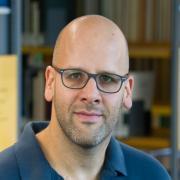
Stephen Benjamin is a Professor of Fluid Dynamics and Director of the Automotive Engineering Applied Research Group at Coventry University. His research focuses on applied fluid dynamics in automotive emissions after-treatment systems and simulation techniques for exhaust catalyst efficiency. He has extensive industry experience, including roles at Rover Group and MIRA, where he led combustion studies and CFD groups. Benjamin holds a BSc in Mathematics and a PhD in air pollution meteorology from Imperial College, followed by postdoctoral work at the University of Calgary. He has secured over £3 million in grants, including a £450K EPSRC project on selective catalytic reduction for light-duty vehicles. He collaborates closely with automotive OEMs and has published over 90 technical papers. Research interests include fluid dynamics, automotive emissions, CFD modeling, and catalytic converter design. He leads a research group emphasizing industrial partnerships and mentorship for junior engineers.
Jing Zhou is a Lecturer in Statistics at the University of East Anglia, affiliated with the School of Engineering, Mathematics and Physics. Their research focuses on high-dimensional statistical methodologies, including variable selection, false discovery rate control, and robust estimation techniques. Dr. Zhou actively contributes to peer review for journals like Statistics and Computing and Statistics , and has presented at conferences such as the 2024 IMS International Conference on Statistics and Data Science. Research interests emphasize advancing statistical methods for social science and big data applications, particularly leveraging model-X knockoffs and black-box model assessments. Recent work explores trade-offs in false discovery vs. true positive rates in logistic regression and nonparametric quantile regression via vine copulas. Collaborative efforts include interdisciplinary projects addressing replication crises through methodological improvements. No scientific awards are explicitly listed. Advising activity and grants information is not provided in the text. Zhou is engaged in academic activities including invited talks and editorial work, contributing to both theoretical and applied statistical research.
Riaz Ahmed Shaikh is an Associate Professor in Computing Sciences at the University of East Anglia (UEA), affiliated with the School of Computing Sciences and the Cyber Intelligence and Networks research group. He holds a PhD from Kyung Hee University (2009) and completed a Postdoc at Université du Québec en Outaouais (2009-2012). Previously, he served as an Assistant and Associate Professor at King Abdulaziz University (2012-2022). His expertise spans Privacy, Security, Trust Management, Policy Validation, and IoT/VANET systems, with contributions to UN Sustainable Development Goals in education and technology. Education: Postgraduate Certificate in Higher Education Practice, University of East Anglia (2024) PhD in Computing Sciences, Kyung Hee University (2009) Research Interests: Dr. Shaikh focuses on securing next-generation networks, including IoT, IoMT, and vehicular systems. His work emphasizes trust management frameworks, intrusion detection, and privacy-preserving protocols. Recent projects include AI-driven anomaly detection and fog computing-based DDoS mitigation. He also explores authentication schemes and policy validation in distributed systems. Grants & Collaborations: Lead on Innovate UK-funded projects: SPARC (Connected Vehicles Security, 2025-2025) and AI-driven Medical IoT Trust Management (2024-2025) Collaborations across Europe, Asia, and North America in cybersecurity and networking Labs & Teams: Active member of the Cyber Intelligence and Networks group at UEA, leading efforts in secure IoT and vehicular systems. Engages in conference organization (e.g., Ambient Computing conferences) and peer-review roles for journals like IEEE Transactions on Consumer Electronics.
Apostolos Kourtis is an Associate Professor in Finance at Norwich Business School (University of East Anglia), serving as Head of the Finance Group from 2015 to 2024. He also holds visiting roles as a Professor for the MSc in Blockchain and Digital Currency at the University of Nicosia and as a Visiting Researcher at Durham University’s IHHR Forecasting Laboratory. He is a member of the American and European Finance Associations and a Fellow of the Higher Education Academy. Education: BSc in Mathematics, University of Athens MSc in Applied and Computational Mathematics, University of Oxford Doctorate in Finance, Athens University of Economics and Business Research Interests: Portfolio selection, forecasting, risk management, blockchain finance, and sustainable finance. His work focuses on portfolio choice under estimation risk, return moment forecasting, and blockchain applications in finance. His research has been published in top journals like the Journal of Banking and Finance and Journal of Empirical Finance , and featured in media outlets such as the Financial Times and Bloomberg. Recent Research Trends: His articles emphasize empirical finance, with a focus on quantifying market behaviors (e.g., aesthetics in digital art markets) and regulatory challenges (e.g., green finance for energy systems). His methodologies often blend computational modeling with real-world financial data. Awards: 2014 Augusto Gonzalez Linares Award for attracting international talent, 2010 Basic Research Funding Competition (Athens University). Advising & Grants: Currently supervising six PhD students and leading the Horizon Europe-funded project "Beyond the horizon: A human-friendly deployment of artificial intelligence and related technologies" . He co-organizes the International Symposium in Finance (ISF), a paper development workshop. Labs & Teams: Active in the IHHR Forecasting Laboratory (Durham University) and serves on editorial boards, including Forecasting and Journal of the British Blockchain Association .
Stephen Gregory is a Senior Statistician at the University of East Anglia's School of Environmental Sciences, specializing in conservation biology and statistical ecology. He holds a PhD from the University of Paris-Sud and an MSc from the University of Oxford. His research focuses on population modeling, Allee effects, and fisheries management, with applications to species like Galapagos rodents and Malaysian orangutans. Academic Background: PhD in Ecology & Statistics (Paris-Sud XI), MSc (Oxford), BSc (Swansea) Professional Affiliations: Royal Statistical Society Fellow, ICES Working Groups on North Atlantic Salmon His work integrates statistical methods with ecological challenges, including spatial population dynamics and conservation strategies under global change. Recent research explores Tweedie distributions for patchy ecological data and co-occurrence patterns using simulation approaches. Awards: Fellow of the Royal Statistical Society Key contributions include studies on salmonid recruitment dynamics and the environmental drivers of fish population structures.
Marius Somveille is a Lecturer in Ecology & Conservation at the University of East Anglia, affiliated with the School of Environmental Sciences and the Centre for Ecology, Evolution and Conservation. His research focuses on avian migration patterns, conservation biology, and climate impacts on ecosystems. He leads projects like modeling interventions for avian influenza outbreaks and assessing wind farm impacts on Houbara Bustards. His work integrates ecological data with computational models to address biodiversity challenges. Key projects include: Wind Farm Monitoring for Asian Houbara Bustards (ACWA Power) HPAI Outbreak Modeling (Biotechnology & Biological Sciences Research Council) Research interests span migratory connectivity, climate tracking, and ecosystem processes. His datasets include bird migration simulations and genetic connectivity studies. Collaborations span global institutions, with recent work published in Ecology Letters and Nature Communications .
Dr. Umar Raza serves as a Senior Lecturer in Networking, IoT and Smart Systems at Manchester Metropolitan University's Department of Engineering, where he concurrently manages the Cisco Network Academy. His academic career includes prior lecturing roles in Robotics and Computing at Staffordshire University, with research spanning industrial applications of emerging technologies. His educational credentials include a PhD in Wireless Sensor Networks from the University of Bradford (2014), Postgraduate Certificates in Research Methods and Professional Higher Education from Staffordshire University (2005, 2007), an MSc in Electronics and Computer Systems from Huddersfield University (1995), and a BSc in Engineering Electronics from DeMontfort University Leicester. Dr. Raza's research centers on Internet of Things applications integrated with Machine Learning across industrial, agricultural, and healthcare domains. Current projects address IoT/ML solutions for domicile care monitoring, cognitive impairment assistance, natural disaster early warning systems, and smart farming in Pakistan, with emphasis on practical implementations in real-world environments. His recent publications demonstrate a pronounced interdisciplinary trajectory, particularly at the IoT-Machine Learning nexus for healthcare innovation (cardiac diagnostics, autism support wearables) and agricultural technology. Significant contributions also appear in blockchain scalability, vehicular network security, and 5G propagation modeling, reflecting both theoretical rigor and industry-relevant problem solving. Professional recognition includes: Fellow of the Higher Education Academy (FHEA) Dr. Raza actively supervises two MSc and two PhD candidates while leading multiple funded projects: Principal Investigator for KTP projects with Kindus Solutions (completed) and Trumeter Ltd Project Advisor for KTP with RAIT Ltd Lead researcher on NATO Science for Peace Security grant for natural disaster warning systems Principal Investigator for Ignite National Technology Fund smart farming initiative in Pakistan As Cisco Network Academy Manager, he drives industry-academia collaboration in networking education, developing curricula that integrate cutting-edge IoT and cybersecurity concepts while maintaining strong professional engagement through IEEE, IET, and BCS memberships.
Dr Nasser Matoorianpour is a Senior Lecturer in Computer Science and Head of Computing at the School of Computing and Engineering, University of West London. His expertise spans mobile and distributed computing, machine learning for IoT, and signal processing. With extensive experience in large-scale distributed applications, he focuses on integrating small devices into advanced systems. Dr Matoorianpour holds a Senior Lecturer role alongside his administrative duties as Head of Computing. He teaches across a broad range of undergraduate and postgraduate programs, including BSc/MSc degrees in Computer Science, Cyber Security, Software Engineering, and Artificial Intelligence. His interdisciplinary approach bridges theoretical research and practical application. Research Interests: - Mobile and Distributed Computing Systems - Machine Learning for IoT Applications - Signal Processing and Recovery Techniques - Development of End-to-End Distributed Applications Though no specific publications or awards are listed, his teaching portfolio includes over 20 courses spanning gaming technology, IT management, data analysis, and software engineering. He also supervises research degrees in Computer Science.
Benjamin Aziz is an Associate Professor at Buckinghamshire New University, where he leads courses in Software Engineering, Cyber Resilience, and Computer Science. Previously, he was a Senior Lecturer at the University of Portsmouth's School of Computing (2010-2023) and worked as a Senior Research Scientist at Rutherford Appleton Laboratory. He holds a Ph.D. in Computer Science from Dublin City University (2003) and an M.Sc. in Networks and Distributed Systems from Trinity College Dublin (1999). His research focuses on formal methods, cybersecurity, IoT systems, and data-driven approaches to systems security. Key affiliations include Fellow of Advance HE and memberships with IEEE, IET, BCS, and ERCIM. He has contributed to EU projects like GridTrust and Consequence, and serves as Associate Editor for Wiley's Security and Communication Networks journal. His work spans over 160 peer-reviewed publications and two books, emphasizing formal analysis of protocols, steganography detection, and incident response metrics. Research interests include: Cybersecurity frameworks for IoT and cloud systems Formal specification and verification of security protocols Data-driven approaches for anomaly detection Attribute-based access control models Recent articles explore requirements engineering matrices, healthcare monitoring logic models, and Korean police dataset analysis. He has advised on cyber resilience strategies and contributed to tools like Trusty for social network data sharing.
Peter H. Aaen is a Reader in Microwave Semiconductor Device Modeling at the University of Surrey, with expertise in RF and microwave device modeling and characterization. His work focuses on developing advanced methodologies for high-power and high-frequency electronic devices, with applications in telecommunications and quantum technologies. Dr. Aaen received his B.A.Sc. in Engineering Science and M.A.Sc. in Electrical Engineering from the University of Toronto, Canada, and his Ph.D. in Electrical Engineering from Arizona State University, USA, in 1995, 1997, and 2005 respectively. Prior to joining the University of Surrey, he was the manager of the RF Modeling and Measurement Technology team at Freescale Semiconductor Inc (formerly Motorola Inc.), bringing significant industry experience to his academic work. Dr. Aaen's research spans several critical areas in microwave engineering, with a particular emphasis on developing multi-physics based modeling methodologies for high-power and high-frequency electronic devices. His expertise includes calibration techniques for microwave measurements, package modeling, development of compact models for microwave power transistors and RFICs, and efficient electromagnetic simulation methodologies for complex packaged environments. He has made significant contributions to understanding frequency dispersion in RF LDMOS transistors, electro-thermal modeling, and the development of measurement techniques for extreme impedance devices. His publication record demonstrates a clear progression from fundamental device modeling to advanced measurement techniques and applications in next-generation communications systems. Recent work has focused on multiphysics measurements, electro-optic field imaging, and the application of nanowire technologies to microwave switches, reflecting the evolving challenges in 5G and beyond communications infrastructure. Dr. Aaen is a Senior Member of the IEEE and active in several technical committees including the IEEE Technical Committee (MTT-1) on Computer-Aided Design, the technical program committee of the IEEE Conference on Electrical Performance of Electronic Packaging and Systems (EPEPS), and the executive committee of the Automatic RF Techniques Group (ARFTG). Dr. Aaen has supervised numerous PhD students whose research has advanced the field of microwave engineering, particularly in areas related to measurement uncertainty, multiphysics characterization of high-power transistors, and nanoscale device integration. His collaborative work spans multiple institutions and has resulted in significant advancements in understanding device behavior under complex operating conditions. His laboratory work focuses on developing novel measurement techniques that combine electro-optic systems with nonlinear vector network analyzers and load-pull measurement systems, enabling unprecedented visualization of electromagnetic field distributions within operating transistors. This work has led to breakthroughs in understanding oscillation mechanisms and thermal behavior in high-power devices.
Rachel Newton is a Reader (Associate Professor) in Number Theory at King’s College London’s Department of Mathematics, part of the Faculty of Natural, Mathematical & Engineering Sciences. She holds a Future Leaders Fellowship from UKRI. Her research focuses on rational points on algebraic varieties, local-global principles, Brauer groups, and arithmetic statistics. Education: PhD in Mathematics from the University of Cambridge (2012 under Tim Dokchitser), followed by postdoctoral positions at Universiteit Leiden, Max Planck Institute for Mathematics (MPIM Bonn), and IHÉS. Previously, she held roles at the University of Reading. Research interests include: Brauer-Manin obstructions and transcendental Brauer groups Genus numbers of abelian fields Prescribed norms in number fields Applications of machine learning to modular multiplication Grants: Active projects include a UKRI Future Leaders Fellowship (2021-2025) and EPSRC funding (2021-2022). Her work bridges arithmetic statistics with cohomological methods. Labs/Teams: Collaborates internationally on Diophantine equations and local-global principles. Her research contributes to King’s strong number theory tradition.
Dr. Marina Riabiz is a Lecturer in Statistics at King's College London's Department of Mathematics, within the Faculty of Natural, Mathematical & Engineering Sciences. She holds a PhD from the University of Cambridge and a Master’s in Mathematical Engineering from Politecnico di Milano. Her research focuses on computational statistics, probabilistic machine learning, Bayesian inference, and medical engineering applications. She co-leads the DT4Health Centre for Doctoral Training, which develops digital twins for healthcare innovation. Key projects include uncertainty quantification in cardiac models and virtual patient cohort simulations. Her work spans MCMC optimization, Gaussian approximation, and state space models with stable processes. She has contributed to high-impact journals and conferences, including Annual Review of Statistics and IEEE Transactions. Education: PhD in Signal Processing, University of Cambridge (UK) MSc in Mathematical Engineering, Politecnico di Milano (Italy) BSc in Mathematical Engineering, Politecnico di Milano (Italy) Research Interests: Bayesian computational methods Medical data science Uncertainty quantification Machine learning integration with statistical inference Publications Overview: Riabiz’s recent work emphasizes MCMC postprocessing, optimal thinning algorithms, and Gaussian approximation for stable noise systems. Her cardiac modelling research bridges computational statistics with biomedical applications, including electrophysiology model calibration and virtual patient cohorts. These contributions advance both theoretical statistics and translational healthcare technologies. Awards: No specific awards listed. Grants and Collaborations: Active in multidisciplinary teams at King’s College London and the Alan Turing Institute. Leads DT4Health’s recruitment and mentoring initiatives. Labs/Teams: Cardiac Electro-Mechanics Research Group (BMEIS), Centre for Doctoral Training in DT4Health.
Prof. Ori Weisel is a Senior Lecturer in the Organizational Behavior group at the Coller School of Management, Tel Aviv University. His academic journey includes a BA in Computer Science and Humanities (2002, Tel Aviv University), an MA in Cognitive Science (2005, Hebrew University of Jerusalem), and a PhD in Social Psychology and Rationality (2011, Hebrew University). He held postdoctoral fellowships at the Max Planck Institute for Economics (Jena, Germany) and the University of Nottingham (UK) before joining Tel Aviv University in 2016. Weisel's research focuses on cooperation dynamics, unethical behavior in collaborative settings, inter-group conflict, and decision-making under uncertainty. His work bridges social psychology and experimental economics, examining how group identity, moral reasoning, and social structures influence behavior in competitive and cooperative scenarios. His publications span journals like Proceedings of the National Academy of Sciences and Nature Communications , addressing topics such as corrupt collaboration, inter-group conflict motives, and the moral dimensions of teamwork. Recent work explores waste aversion, trust in leadership, and the global variation in prosocial behavior linked to social mindfulness. Prof. Weisel’s research has contributed to understanding how cooperation can lead to corruption, the role of victim perception in dishonesty, and the impact of leadership on group ethics. His studies often involve experimental designs to dissect complex social interactions and their ethical implications.
Ignacio Carlucho is an Assistant Professor at Heriot-Watt University's School of Engineering & Physical Sciences, affiliated with the Institute of Sensors, Signals & Systems. He holds a PhD from the National University of Central Buenos Aires (2019) and completed postdoctoral research at Louisiana State University (2020–2021) and the University of Edinburgh (2021–2023). His research focuses on intelligent robots, particularly in underwater robotics, reinforcement learning, multi-agent systems, and cooperative autonomy. **Education:** PhD in Robotics, National University of Central Buenos Aires, 2019 Postdoctoral Researcher, Louisiana State University, 2020–2021 Postdoctoral Researcher, University of Edinburgh, 2021–2023 **Research Interests:** Underwater Robotics Reinforcement Learning Multi-Agent Systems Autonomous Systems Human-Robot Interaction Simulation Frameworks (e.g., MarineGym, Stonefish) His work emphasizes cooperative robotics, underwater vehicle control, and ad hoc teamwork in dynamic environments. **Publications:** Over 46 research outputs, with recent contributions focusing on underwater robotics simulation, reinforcement learning algorithms, and digital twins for teleoperation. Key frameworks include MarineGym (underwater RL platform) and Stonefish (machine learning support for marine robotics). **Awards:** No scientific awards explicitly listed in the provided texts. **Advising & Grants:** Accepting PhD students in reinforcement learning, robotics, and multi-agent systems. Collaborations include projects on underwater vehicle autonomy and ad hoc teamwork. **Labs & Teams:** Active in the Institute of Sensors, Signals & Systems, contributing to interdisciplinary robotics and marine technology initiatives.
Oleksandr Letychevskyi is an Assistant Professor at the School of Mathematical & Computer Sciences, Department of Computer Science, Heriot-Watt University, UK. He is currently accepting PhD students for 2025. His research focuses on integrating Formal Methods and AI Technology into Blockchain, Cybersecurity, and Cyber-Physical Systems. Key areas include Smart Contracts, Digital Twins, Hardware Design, and Software Engineering (testing, verification, re-engineering). His work emphasizes secure and autonomous systems leveraging historical data and team-member collaboration. Recent research output includes a 2025 conference abstract on self-learning smart contracts, exploring formal methods and AI-driven systems. No scientific awards are explicitly listed. No grants or lab affiliations are detailed in the provided text.