Victoria Degeler is an Assistant Professor at the University of Groningen’s Faculty of Science and Engineering, affiliated with the Bernoulli Institute. Her research focuses on AI-driven solutions for complex systems, combining expertise in artificial intelligence, software engineering, and service-oriented computing. She actively contributes to EU Horizon initiatives through her role in evaluating projects for the EC REA and EASME. Her work emphasizes real-world applications such as digital twins for infrastructure optimization, machine learning for IoT systems, and adaptive service architectures. Her research interests span digital twins in water distribution networks, quality-aware IoT processing, and machine learning methodologies. Notable projects include developing self-adaptive service selection frameworks and analyzing human activity recognition biases. She collaborates widely, evidenced by co-authored publications in top-tier conferences and journals.
Olav Torvund is a Professor at the Department of Private Law, University of Oslo. His research focuses on intellectual property law, contract law, property law, and forensic informatics. He explores legal challenges in the information age, digital rights management, and regulatory frameworks for emerging technologies. His work intersects technology and law, addressing issues like copyright, digital commerce, and cybersecurity. Recent publications highlight themes such as digital consumer contracts, restoration rights for media, and legal implications of hyperlinking. His research also examines free software, financial privacy, and cross-border tax regulations for digital services. Torvund contributes to academic discussions through articles in journals like NIR and Scandinavian Studies in Law . He is affiliated with the Law and Technology (JOT) and Markets, Innovation, and Competition (MIK) research groups. His work bridges legal theory and practical challenges in modern technological landscapes.
Leandro Soriano Marcolino is a Lecturer (Assistant Professor) in Data Engineering at Lancaster University's Computing and Communications Department. He holds a PhD from the University of Southern California (USC), advised by Milind Tambe, and completed his master's in Japan under a Monbukagakusho Scholarship and his undergraduate studies at Universidade Federal de Minas Gerais in Brazil, where he graduated with top honors. His research focuses on multi-agent systems, machine learning, and robotics, emphasizing teamwork, online learning, and real-world applications in domains like swarm robotics, computer games, and architectural design. Education: PhD in Computer Science, University of Southern California (USC), 2016 Master's Degree in Japan (Monbukagakusho Scholarship) Undergraduate Degree in Computer Science, Universidade Federal de Minas Gerais (Brazil), 2009 Research Interests: Multi-agent teamwork and coordination Online learning and planning Robotics (swarm robotics, real-time strategy games) Applications in computer vision, social networks, and bioinformatics Highlights: Recipient of the Best Dissertation and Best Research Assistant Awards at USC (2016, 2015) Best Paper Nomination at AAMAS 2011 and Best Undergraduate Paper in Brazil (2009) Active in PhD supervision, mentoring students in AI, multi-agent systems, and robotics Co-founder of the COLAB research group at Lancaster University Labs/Teams: Lancaster Intelligent, Robotic and Autonomous Systems Centre (LIRAS), LIRA - Fundamentals, SCC (Data Science).
Antonio Carzaniga is a Full Professor and founding member of the Faculty of Informatics at Università della Svizzera italiana (USI), where he has been active since 2004. Previously, he served as an Assistant Research Professor at the University of Colorado at Boulder from 2001 to 2007. He holds a Ph.D. in Computer Science and a Bachelor’s degree in Electronic Engineering from Politecnico di Milano. Full Professor, Faculty of Informatics, Università della Svizzera italiana (2004–Present) Assistant Research Professor, Department of Computer Science, University of Colorado at Boulder (2001–2007) Ph.D. in Computer Science, Politecnico di Milano Bachelor’s in Electronic Engineering, Politecnico di Milano His research spans distributed systems and software engineering, with a strong focus on content-based addressing networks, publish/subscribe systems, middleware, software fault tolerance, and verification. He has pioneered work in information-centric networking and developed the Siena project, a scalable publish/subscribe service. His recent work extends into programmable networks, GPU-accelerated matching, and performance annotations for cloud systems. The 15 most recent publications highlight a consistent trajectory in scalable, high-performance networking and adaptive software systems. Key themes include content-based communication, packet subscriptions, information-centric networking, and leveraging redundancy for fault tolerance and testing. His work bridges theoretical foundations with practical implementations, often involving system-level software and performance evaluation. Best Paper Award, ACM SIGCOMM Workshop on Information-Centric Networking (ICN'13) Carzaniga has advised multiple graduate students, including Michele Papalini, Koorosh Khazaei, and Daniele Rogora, and has collaborated on funded research projects in distributed systems and networking. He has contributed to software development through projects like the Siena Fast Forwarding engine and the Synthetic Workload Generator. His service includes organizing workshops and contributing to major conferences in software engineering and computer systems. He leads research initiatives such as Siena and Content-Based Networking, focusing on scalable, decentralized communication infrastructures. His lab has developed key tools for evaluating publish/subscribe performance and implementing high-speed forwarding algorithms.
Greg Hamerly is a Professor and former Interim Chair (2022–2025) in the Department of Computer Science at Baylor University’s School of Engineering and Computer Science. He holds a PhD from the University of California, San Diego (2003) and specializes in machine learning, particularly unsupervised learning and data clustering, with real-world applications in medical imaging and ecological monitoring. PhD, University of California San Diego (2003) MS, University of California San Diego (2001) BS, California Polytechnic State University (1999) His research centers on the development and application of efficient machine learning algorithms. Key areas include improving k-means clustering techniques, federated learning, and applying AI to early detection of retinoblastoma through leukocoria in photographs and monitoring invasive aquatic species using video data. He has also contributed to computational thinking curriculum development. His recent publications reflect strong trends in unsupervised and self-supervised learning, with a focus on algorithmic efficiency, robustness, and real-world deployment in healthcare and environmental science. His work often combines clustering, deep learning, and computer vision for practical applications. Dubious awards (as humorously noted on personal website) Chief Judge for ICPC South Central USA regional competition (2018, 2019) Site Director for ICPC South Central USA regional competition (2010–2013, 2015–2019) Member of ICPC Live Analytics team at ICPC World Finals (2011–2015) Participant in ICPC World Finals as contestant (2000, 2001) Greg Hamerly has advised numerous graduate students, including PhD candidates now at Texas A&M Kingsville and Meta. He has secured research funding from the NSF, NIH, Department of the Interior, and Texas Parks and Wildlife Department. He is also deeply involved in competitive programming, having coached students and developed the Competitive Learning course at Baylor with over 300 original problems. He leads research projects on eye disease detection and invasive species monitoring, often in collaboration with interdisciplinary teams. His lab integrates algorithmic innovation with practical deployment, emphasizing accessibility and real-world impact.
MARIA INES TOMAS MARCO is a Professor in the Department of Methodology of the Behavioral Sciences at the University of Valencia. She is affiliated with the Institute for Research in the Psychology of Human Resources and Organizational Development (IDOCAL) and the Spanish Association of Behavioral Sciences Methodology (AEMCCO). Her research focuses on psychometrics, psychological measurement, and organizational behavior. Academic Rank: Professor University: University of Valencia School: Faculty of Psychology and Speech Therapy Her methodological expertise centers on test validity , test fairness , differential item functioning (DIF) , and improving data quality through prevention of careless responding. She has collaborated internationally with institutions like the University of Oxford and UANL (Mexico), where she received Affiliate Professor recognition in 2018. Her publications span top journals including Structural Equation Modeling , Risk Analysis , and Psychology of Sport and Exercise . She has supervised 6 PhD theses resulting in 14 JCR-indexed publications and contributed to 40 funded research projects on measurement scales, team diversity, and safety behavior in high-reliability organizations. Scientific Awards: Affiliate Professor (UANL, 2018) Editorial Roles: Member of Advisory Board of Methodology (European Association of Methodology) A prolific contributor to international research, she has made over 186 conference presentations and developed 3 psychometric tests. Her work on empowering climates and mindful organizing has advanced understanding of organizational sustainability and safety performance.
Damir Malnar is a Senior Lecturer at Veleri College (Veleri-OI), specializing in Telecommunications and Electronics. He teaches courses such as Automation in Building Construction, Mobile Communication, Embedded Computer Systems, and IoT-related disciplines. His research focuses on advanced signal processing techniques, hydroacoustic signal analysis, FPGA-embedded systems, and real-time algorithm implementation. He has contributed to the development of the Veleri-OI IoT School's educational platforms and pioneered methods for optimizing time-frequency distributions in noisy environments. Malnar's academic work emphasizes practical applications of theoretical concepts, including FPGA-based genetic algorithms for antenna array recovery and real-time embedded systems. His recent efforts integrate IoT technologies into educational tools, exemplified by the Veleri-OI Meteo System. He maintains active involvement in both theoretical research and hands-on engineering projects, bridging the gap between academic instruction and industry-relevant solutions. Key technical areas include signal decomposition, noise analysis, and adaptive systems. His work often intersects with marine acoustics and environmental monitoring, reflecting a multidisciplinary approach to telecommunications engineering.
Professor Flora Salim is a leading academic at the University of New South Wales (UNSW) Sydney, holding a full Professorship in the School of Computer Science and Engineering. She serves as Deputy Director (Engagement) of the UNSW AI Institute and contributes to multidisciplinary research at the intersection of ubiquitous computing, machine learning, and data science. Human-centred AI and ethical systems Spatio-temporal data modeling Applications for climate resilience and urban mobility Her research focuses on multimodal foundation models, continual learning, and responsible AI deployment in real-world environments. She explores: Time-series and sensor data analysis Wearable and environmental sensing AI for sustainable infrastructure Robustness and trustworthiness in models Recent publications highlight her work on: Transformer-based climate downscaling Cross-modal fairness in mobility Privacy-preserving spatio-temporal generation Patient similarity networks in healthcare She has received multiple competitive fellowships including: Humboldt Fellowship Bayer Fellowship Victoria Fellowship ARC Australian Postdoctoral Industry (APDI) Fellowship Additional accolades include: Women in AI Award Australia and New Zealand (2022) IBM Smarter Planet Industry Innovation Award As Chief Investigator in: ARC Centre of Excellence for Automated Decision Making and Society (ADM+S) ARC Training Centre for Whole Life Design for Carbon Neutral Infrastructure She maintains active collaborations through: Associate position at ELLIS Alicante Visiting Professor roles at University of Kassel (2019-2020) and University of Cambridge (2019) Editorial board memberships in ACM TIST, IEEE Pervasive Computing, and Nature Scientific Data
Ning Xiong is a Professor at Mälardalen University, affiliated with the School of Innovation, Design and Engineering and the Division of Intelligent Future Technologies. His research focuses on advanced artificial intelligence, machine learning, optimization algorithms, and cyber-physical systems. He explores applications ranging from digital twin frameworks in distributed systems to predictive maintenance using explainable AI and anomaly detection in timeseries data. His work integrates techniques like federated learning, Bayesian classifiers, and bio-inspired computing (e.g., membrane clustering) to address challenges in smart systems and data science. Key research areas include: Machine Learning & Deep Learning Cyber-Physical Systems Optimization Algorithms Smart Systems & IoT Data Science & Big Data Recent publications highlight advancements in digital twin frameworks for resilient distributed systems, ensemble learning for imbalanced data, and lightweight object detection methods for UAV imagery. His contributions emphasize practical applications in energy grids, predictive maintenance, and industrial automation while addressing theoretical challenges in model explainability and scalability. His research is characterized by interdisciplinary collaboration, combining software engineering, systems architecture, and domain-specific expertise to develop innovative solutions for dynamic environments.
George Kousiouris is an Associate Professor at the Department of Informatics and Telematics , Harokopio University of Athens . He holds a Ph.D. in Cloud Computing from the National Technical University of Athens (2012) and a Dipl. Eng. in Electrical and Computer Engineering from the University of Patras (2005). His research focuses on Cloud Platforms , Serverless Computing (FaaS) , IoT Infrastructure , and Performance Engineering . He has led major EU-funded projects such as H2020 PHYSICS (lead architect), BigDataStack , and CloudPerfect , contributing to cloud service benchmarking, FaaS frameworks, and edge-cloud collaboration. His work emphasizes practical applications in healthcare, smart agriculture, and urban network analysis. Over 70 publications highlight his expertise in cloud resource optimization , service-level agreements , and data-driven infrastructure management . His recent work explores sustainable computing , human-AI collaboration , and conversational AI for MLOps . Key Projects: PHYSICS, BigDataStack, CloudPerfect, SLALOM, COSMOS Research Highlights: FaaS performance benchmarking, IoT event processing, hybrid-cloud workflows Awards/Grants: Multiple EU H2020 and FP7 project leadership roles He advises on cloud migration methodologies (e.g., ARTIST framework) and contributes to regulatory compliance frameworks like GDPR via semantic ontologies.
Dr. Ying-Ying Hsieh is an Assistant Professor of Innovation and Entrepreneurship at Imperial College Business School, affiliated with the Center for Cryptocurrency Research and Engineering and the Institute for Molecular Science and Engineering. She holds roles as Associate Centre Director of the former and Research Fellow at the Scotiabank Digital Banking Lab (Ivey Business School). Her research focuses on blockchain-based decentralized autonomous organizations (DAOs), exploring governance mechanisms, technological innovation impacts, and organizational design in cryptocurrency and Fintech contexts. She teaches Innovation Management and develops FinTech courses like 'Management, Strategy and Innovation in FinTech.' Education: PhD in General Management from Ivey Business School, Canada. Her research interests emphasize how technology enables novel organizational forms, particularly in DAO coordination, blockchain governance, and cryptocurrency innovation. Recent work examines DAO adoption, blockchain forking impacts, and platform ecosystem evolution. While no specific awards are listed, her contributions to understanding decentralized systems are notable in academic circles. She advises on cryptocurrency/FinTech innovation and collaborates with Imperial's interdisciplinary research centers. Her work bridges organizational theory with emerging technologies, offering frameworks for understanding decentralized governance and trust mechanisms in blockchain contexts.
Dr. Magda Charalambous is a Senior Lecturer in the Department of Life Sciences at Imperial College London (Faculty of Natural Sciences). She holds a Senior Fellowship of the Higher Education Academy and an MEd in University Learning & Teaching. Her roles include Deputy Senior Tutor, Year 2 BSc Biological Sciences Convenor, and module leader for Genetics, Behavioural Ecology, and Ecosystems Field Skills. She is affiliated with the Georgina Mace Centre for the Living Planet and contributes to committees like Teaching, Widening Participation, and Student-Staff. Her research spans evolutionary biology, population genetics (e.g., dipteran vectors of diseases like malaria), and education innovation. Pedagogical interests include reflective ePortfolios for feedback, team-based learning, and transitioning to university-level studies. She champions active learning methods (e.g., flipped classrooms, R programming for statistics) and curriculum modernization, redesigning modules to emphasize statistical literacy. Her articles address challenges in entomology, ecology education, and student feedback mechanisms, reflecting her dual focus on scientific inquiry and educational effectiveness. She has no stated scientific awards but actively contributes to Imperial’s educational initiatives and policy reviews.
Hongbo Liu is a researcher at Indiana University - Purdue University Indianapolis , Department of Computer Information and Graphics. With a focus on Artificial Intelligence, Machine Learning, and Network Analysis , Liu has contributed extensively to computational intelligence through 118+ publications since 2004. Multi-disciplinary research spanning Graph Theory, Swarm Intelligence, and Deep Learning Recent work includes Robust Gated Models for Temporal Networks and Self-Adaptive Neuroevolution Systems (2024-2025) Key research themes include: Dynamic network analysis and link prediction Crowd behavior modeling and trajectory forecasting Swarm-based optimization for complex systems Fuzzy logic and granular computing applications Neural network architectures for image and text processing Liu's publications demonstrate strong collaborations with researchers like Ajith Abraham, Yu Yang, and Bo Zhang across 15+ academic journals and conferences . The work spans from theoretical graph algorithms (2015-2017) to applied systems in autonomous robotics and blockchain (2024).
Professor Sophie Schramm leads the International Planning Studies (IPS) department at the Faculty of Spatial Planning, Technical University of Dortmund, while directing the international Master's program SPRING. Her research focuses on heterogeneous infrastructures, spatial planning, and housing dynamics in cities of the Global South. She completed her PhD in 2014 at TU Darmstadt with the dissertation 'City in Flow – Hanoi's Wastewater Disposal in the Light of Spatial and Social Transformations', followed by leadership of a junior research group at Kassel University and an assistant professorship at Utrecht University. Education PhD in Urban and Regional Planning, TU Darmstadt (2014) Diploma in Urban and Regional Planning, HCU Hamburg (2003-2008) B.Sc. in Urban and Regional Planning, TU Hamburg-Harburg (2001-2003) Research Focus Professor Schramm’s work examines the interplay between infrastructure, urban planning, and housing in rapidly growing cities. Current projects include ICOLMA (BMBF-funded, since 2022), Urban Waterscapes and the Pandemic (DFG-funded, since 2021), and Animals and Spatial Planning (since 2021). Her publications reveal critical perspectives on water supply, sanitation, and energy access across Hanoi, Nairobi, Dar es Salaam, and Accra. Scientific Awards DFG Graduate School Scholarship 'Topology of Technology' (2011-2012) DAAD Master's Thesis Abroad Scholarship (2007) Irene Vorwerk Stiftung Outstanding B.Sc. Degree Prize (2005) Teaching and Supervision For academic year 2024/25, she teaches courses including 'Planning Theories and Models' (M.Sc. SPRING), 'Regenerating Cities and Infrastructures' (M.Sc. Spatial Planning), and 'Craft of Doing Research' (PhD Colloquium). She welcomes thesis supervision on topics like infrastructure megaprojects, insurgent planning, and coproduction of urban services.
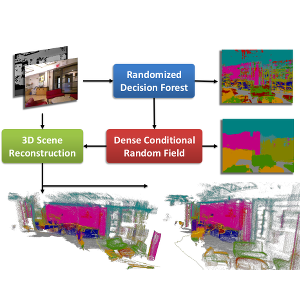
Dr. Alexander Hermans is a researcher at the Institute for Vision and Graphics, Faculty of Electrical Engineering and Information Technology, RWTH Aachen University. He is actively engaged in cutting-edge research at the intersection of computer vision, deep learning, and robotics, with a focus on 3D perception, segmentation, and anomaly detection. Research Interests: His primary research areas include Computer Vision , Deep Learning , Robotics , 3D Scene Understanding , Semantic and Instance Segmentation , and LiDAR-based Perception . His work often addresses the practical challenges of deploying vision systems in real-world robotic applications. Publication Trends: Dr. Hermans' recent publications demonstrate a strong trend towards leveraging transformer architectures for 3D and video understanding, developing robust methods for anomaly detection, and creating unified frameworks for diverse vision tasks. His research on diffusion models and self-supervised learning also highlights his engagement with the latest advancements in AI. Scientific Awards: Best Vision Paper Award at ICRA 2014 Advising and Grants: While no specific students or grants are listed, his role as a senior author on numerous publications and his leadership in creating benchmarks (like OoDIS) and software indicate a significant mentoring and project leadership role. His work is often supported by large-scale datasets and collaborations, suggesting involvement in substantial research grants and projects (e.g., the STRANDS project). Labs and Teams: He is a core member of the research group led by Prof. Bastian Leibe at RWTH Aachen, a group renowned for its work in computer vision and robotics. His research is closely tied to this lab, which focuses on developing robust, real-world applicable vision systems for autonomous agents.