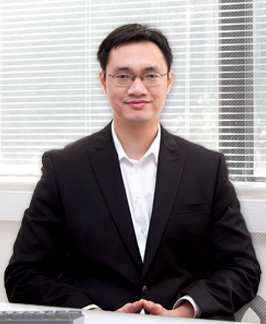
Andrea Michienzi is an Assistant Professor in the Department of Computer Science at the University of Pisa. His research focuses on decentralized social networks, blockchain technology, and the metaverse, with an emphasis on improving privacy, security, and economic dynamics in Web3 environments. He has contributed to frameworks like AWESOME for analyzing Web3 social media and has explored challenges in NFT security, P2E gaming economies, and community management in decentralized systems. Teaching: He instructs the course Basi di dati e Laboratorio di programmazione Web within the Bachelor of Digital Humanities program, emphasizing practical coding and database applications. Research awards: He received a Best Paper Award in 2018 for work related to dynamic community detection in decentralized networks. His publications span topics like bot detection in blockchain games, wealth distribution analysis, and cryptographic protocols for secure messaging. His work integrates computer science, economics, and sociology to address scalability, trust, and ethical challenges in emerging decentralized platforms.
Dr. Omid Haass is a Senior Lecturer at the School of PCPM, RMIT University, based at the City Campus in Australia. His research focuses on project management, blockchain technology, knowledge management, and public sector innovation. He actively supervises research students in areas like front-end planning for government projects. Research Interests: Project Evaluation and Lifecycle Management Blockchain Applications in Public Procurement Agile Frameworks in Education Cybersecurity in Industrial Systems Medical Tourism Policy Publications highlight interdisciplinary work across project management, digital transformation, and organizational behavior. He is open to supervising Master’s and PhD candidates in project-related fields.
Rod Garratt is a Professor of Economics at the University of California, Santa Barbara (UCSB), holding the Maxwell C. and Mary Pellish Chair in Economics. He has held senior roles at institutions such as the Federal Reserve Bank of New York, Bank for International Settlements (BIS), and Bank of England. His research focuses on cryptocurrencies, central bank digital currencies (CBDCs), payment systems, and fintech innovations. Garratt earned his Ph.D. from Cornell University and has published in top journals like the American Economic Review and Journal of Political Economy. Education: PhD in Economics (Cornell University, 1991), MA in Economics (Cornell, 1990), Honours BA in Economics and History (University of Waterloo, 1986). Research Interests: Garratt’s work bridges theoretical economics and practical policy, emphasizing CBDC design, crypto-asset dynamics, and financial infrastructure resilience. He explores how decentralized technologies like blockchain can enhance payment systems while addressing risks such as systemic instability and privacy concerns. His recent work includes analyses of DeFi lending behavior and the implications of CBDCs on monetary policy. Key Contributions: Co-led the Federal Reserve’s Virtual Currency Working Group, contributed to Project Jasper (wholesale CBDC prototype), and advised multiple central banks on digital currency strategies. His research on privacy in electronic cash and the crypto multiplier effect has influenced policy debates globally. Awards: Recognized for contributions to CBDC research, including the 2021 Latin American Journal of Central Banking Best Article Prize and the 2020 NeurIPS Best Paper Award. Professional Roles: Editor of the European Economic Review and Digital Finance, and member of advisory boards for the World Economic Forum and BIS Innovation Hub. Garratt frequently testifies before legislative bodies, including the U.S. House Subcommittee on Monetary Policy. Labs/Initiatives: Active in BIS’s Project Agorá (cross-border payment systems) and collaborates with institutions like the IMF and ECB on digital currency frameworks.
Professor Ellie Rennie is a Professor in the School of Media & Communication at RMIT University. She holds positions as an ARC Future Fellow and Principal Research Fellow, affiliated with RMIT's Blockchain Innovation Hub and the Digital Ethnography Research Centre. She is also an Associate Investigator at the ARC Centre of Excellence for Automated Decision-Making and Society, and Research Director at Metagov. Her research focuses on blockchain governance, digital inclusion in Indigenous communities, and ethnographic methods applied to decentralized systems. Key areas include validator governance, climate action through blockchain (ReFi), and Indigenous knowledge systems' integration with distributed technologies. She contributed to the Australian Digital Inclusion Index and serves on the First Nations Digital Inclusion Advisory Group. Selected publications include analyses of blockchain's environmental impact, validator participation, and participatory ethnography in governance. Awards include the prestigious ARC Future Fellowship. Supervision interests span Web3 socio-economic strategies, decentralized governance, and digital inclusion in creative industries. Affiliated research centers include the Platform Economies Research Network and Blockchain Innovation Hub.
Miguel Pardal is an Assistant Professor at the Instituto Superior Técnico, Universidade de Lisboa, where he has been teaching since 2002. His research focuses on Cybersecurity, IoT, and Cloud Technologies, with recent projects exploring Blockchain technologies (launched in 2023) and intrusion recovery systems. He is also affiliated with INESC-ID, a leading research institution in Lisbon. Education: Licenciatura em Engenharia Informática, Instituto Superior Técnico (2000) Mestrado em Engenharia Informática, Instituto Superior Técnico (2006) Research Interests: Cybersecurity, IoT Security, Cloud Infrastructure, Intrusion Detection and Recovery, Blockchain Applications, and Secure Communication Protocols. His work emphasizes practical solutions for critical systems, including industrial process specifications and decentralized identity management. Recent Articles: Focus on intrusion recovery mechanisms, decentralized systems, and secure communication protocols. Key themes include vulnerability-tolerant TLS, fault-tolerant microservices, and AI-driven algorithm synthesis. Awards: None explicitly listed, though his extensive publication record reflects recognition in cybersecurity and IoT fields. Advising & Grants: Active in guiding students through workshops on LaTeX and research methodologies. Collaborates on EU-funded projects like SafeWalk and CrossCity location proofs. INESC-ID provides infrastructure for his lab-based research. Labs/Teams: Part of INESC-ID's Cybersecurity group, contributing to projects like SPATIO and MACHETE.
Uffe Kock Wiil is a Professor at the Maersk Mc-Kinney Moller Institute, University of Southern Denmark, affiliated with SDU Health Informatics and Technology. He holds a Ph.D. in Computer Science from Aalborg University and has over 30 years of research and development experience, including 20+ years in research management. Ph.D. in Computer Science, Aalborg University (1993) M.Sc. in Software Engineering, Aalborg University (1990) His research focuses on data analytics, visualization, software technologies, and social network analysis, with a strong emphasis on data-driven health technology. Key application areas include intelligent monitoring, decision support, predictive modeling for prevention and diagnosis, and digital health systems for personalized interventions in geriatrics, mental health, cancer, cardiology, and multiple sclerosis. He has also worked on security informatics and IT support for agile planning. His recent publications highlight trends in blockchain-based healthcare data management, AI applications in gastrointestinal cancer, and data analytics for bone health and fracture risk. These works reflect a consistent focus on interdisciplinary innovation, combining computer science with clinical applications to improve patient outcomes. Scientific service includes editorial roles at top journals: Elsevier Journal on Network and Computer Applications Springer Journal on Social Network Analysis and Mining Springer Journal on Healthcare Informatics Research Frontiers in Digital Mental Health He has evaluated grants for funding agencies in Denmark, the EU, Canada, the Netherlands, Norway, Austria, Poland, Slovakia, and Switzerland, and serves on advisory boards for national and international research projects. He has supervised several students, including Ph.D. candidate A. Ebrahimi and supervisee A. Bricca, in topics involving health data modeling and prediction. His major funded projects include the Patient@home platform (DKK 350+ million) and the WISDOM Horizon Europe initiative. He is actively involved in interdisciplinary research with applications in real-world healthcare systems. He previously served as Head of Technical Research at the Center for Innovativ Medicinsk Teknologi (2016–2020) but continues his academic work at SDU. There is no indication of retirement or part-time status; he remains an active full-time professor engaged in research, teaching, and supervision.
Professor Christopher Millard is a leading academic in Privacy and Information Law at Queen Mary University of London, heading the Cloud Legal Project and co-directing the Microsoft Cloud Computing Research Centre. He has over 40 years of experience in technology law, combining academia with legal practice. His research focuses on cloud computing law, privacy, and emerging technologies, with major contributions to publications like Cloud Computing Law (Oxford UP). He has held roles such as Solicitor of the Senior Courts of England and Wales and Senior Counsel at Bristows. Awards include recognition as Internet and eCommerce Lawyer of the Year and fellowships from the Society for Computers & Law and the Royal Society of Arts. Teaching includes courses on EU Data Protection Law and Cloud Computing Law. His research explores cloud computing regulation, data protection, and blockchain implications. Recent publications analyze digital asset rights, cloud gaming, and IoT accountability. He advises on legal frameworks for technologies like blockchain and AI.
Salvador Sánchez Alonso is a Professor at the Department of Computer Languages and Systems, Universidad de Alcalá. He holds a PhD from Universidad Politécnica de Madrid (2005) under Dr. Miguel Ángel Sicilia Urbán. His research focuses on blockchain technology, cybersecurity, linked data, healthcare informatics, and educational technology. He actively contributes to the I4 research group (Intelligence, Innovation, Internet, and Information), exploring topics like privacy-preserving systems, social network analysis, and open data principles. His work bridges theoretical advancements with practical applications, such as predictive modeling for healthcare innovation, quality assessment of educational resources, and decentralized identity systems. Recent publications highlight innovations in quantum software measurement, KlimaDAO analysis, and ethical AI traceability. He has also explored the impact of political events on social networks and hospital resource management through predictive analytics. Key contributions include frameworks for metadata quality in digital repositories, interlinking educational data with the Web of Data, and applying blockchain for secure metadata deployment. His research often intersects interdisciplinary domains, emphasizing social data visualization and user-centric repository design.
Xue Liu is a Professor and William Dawson Scholar at McGill University's School of Computer Science, affiliated with the Department of Mathematics and Statistics (courtesy appointment) and the Department of Electrical and Computer Engineering. He holds positions as Vice President R&D and Chief Scientist at Samsung AI Center Montreal, and serves as Chair (2021-2023) of ACM SIGBED. His research focuses on intelligent computing, cyber-physical systems, sustainable computing, AI/ML applications, IoT, and blockchain technologies. Dr. Liu has received multiple Best Paper Awards from conferences such as IEEE GLOBECOM, IEEE HPCC, and IEEE/ACM IWQoS. He is a Fellow of the Canadian Academy of Engineering (FCAE) and IEEE (FIEEE). His work bridges academia and industry, with entrepreneurial ventures including advisory roles at Infinity Stones Inc., TandemLaunch, and Aerial Technologies. He co-edits the Journal of Blockchain Research and serves on editorial boards of major journals like ACM Transactions on Cyber-Physical Systems and IEEE Transactions on Networking. Key research contributions include innovations in blockchain infrastructure, smart grid optimization, and AI-driven systems. His labs, including the Cyber-Physical Intelligence Lab and MILA affiliation, advance interdisciplinary research in machine learning, robotics, and networked systems. Dr. Liu mentors startups and advises initiatives like Learnable Inc., integrating AI into education and healthcare. Education Affiliations: McGill University School of Computer Science (prestige rankings include top 25 globally per QS 2023) Awards: Multiple Best Paper Awards, FCAE & FIEEE Fellowships Labs: Cyber-Physical Intelligence Lab, MILA, CIM, SYTACom Publications: Over 150 peer-reviewed articles, including books on cloud computing, smart grids, and cyber-physical systems
Professor Vincent Gramoli is a Professor of Computer Science at the University of Sydney and Founder & CTO of Redbelly Network. He holds a PhD from Université de Rennes and a Habilitation from Sorbonne University. His research focuses on distributed computing, security, and blockchain technology. He has pioneered the Red Belly Blockchain, a high-performance, secure blockchain system, and co-developed the Diablo benchmark suite for evaluating blockchain systems. He has received awards including the CSIRO Digital National Facilities Award and the Australian Research Council Future Fellowship. Research interests span distributed consensus protocols, blockchain security, concurrent algorithms, and formal verification. He has advised central banks and served on technical committees for organizations like CORE and ACS. His teaching includes Distributed Systems at the University of Sydney and a Coursera MOOC on Blockchain Scalability. Key contributions include the Red Belly Blockchain (UTXO/account model compatibility, deterministic consensus), Diablo benchmark framework, and formal verification of consensus protocols. His work addresses scalability, security, and fault tolerance in distributed systems. Grants include ARC Future Fellowship (2019) and projects on blockchain security, consensus algorithms, and distributed computing. Current PhD students include Ankit Kapoor (Cryptography for Modern Applications) and Yuchen YE (Evolving Consensus in Complex Networks). Labs/Teams: Leads the Concurrent Systems Research Group at the University of Sydney, collaborating with industry partners like Algorand Foundation and Ethereum Foundation.
Dr. Andy Garcia is a Professor of Accounting at Bowling Green State University’s Schmidthorst College of Business. He holds a Ph.D. in Accounting from Texas Tech University and has over two decades of academic experience, alongside a U.S. Marine veteran background and CPA certification. His research focuses on auditing ethics, accounting technology (e.g., blockchain, XBRL), and historical professionalization of the accounting industry. Garcia has published extensively in journals like ISACA Journal and International Journal of Accounting and Information Management , emphasizing technological advancements and their ethical implications. Education: Ph.D. in Accounting, Texas Tech University (2005) MA in International Management, American Graduate School of International Management (1993) BS in Accounting and Taxation, Colorado State University (1991) Research Interests: Garcia explores cutting-edge technologies like blockchain, their applications in audit procedures, and the historical evolution of accounting practices. He advocates for auditors to adapt to technological shifts while maintaining ethical rigor. His work bridges traditional auditing principles with modern data analytics tools. Awards: 2012 Emerald Literati Outstanding Author Contribution Award 2011 Best Paper Award at National AAA Ethics Symposium Multiple teaching excellence awards (2008–2010) Advising & Engagement: Garcia advises Beta Alpha Psi, a prestigious accounting honor society, and emphasizes global awareness through his international experience in over 15 countries. He encourages students to engage with The Economist and NPR for broader business insights.
Sophie Chabridon is an Associate Professor in the Department of Computer Science at Télécom SudParis, part of the Institut Télécom. She is a member of the SAMOVAR laboratory, specifically the ACMES research team, focusing on algorithms, components, models, and services for distributed computing. Education: PhD in Computer Science, Université René Descartes - Paris V (1996) MSc in Computer Science, University of Oklahoma (1992) Ingénieur in Computer Science, ISI-CUST, Clermont-Ferrand (1991) Research Interests: Context management in IoT Privacy-preserving technologies Middleware architectures for distributed systems Quality of context (QoC) and data coherence Mobile and ambient computing Key Projects: ANR INCOME (2012–2015): Multi-scale context management for IoT Cappucino (2007–2010): Ubiquitous applications and middleware JEMTU (2006–2008): Mobile games and usage technologies Advising & Grants: Supervised over 10 PhD and Master students, including recent theses on context quality and privacy in IoT. Involved in grants such as ANR and European ITEA programs. Lab Affiliation: SAMOVAR laboratory, focusing on networking, communications, and distributed systems research.
Dr. Heming Cui is an Associate Professor at the Department of Computer Science, University of Hong Kong, affiliated with the School of Computing and Data Science. He joined HKU in 2015 after completing his PhD at Columbia University, following bachelor's and master's degrees from Tsinghua University. His research focuses on distributed systems, operating systems, and high-performance computing, with a strong emphasis on reliability and security. Dr. Cui leads projects in distributed AI training systems, blockchain frameworks, and secure execution environments, collaborating closely with industries like Huawei. He has received notable awards including the Croucher Innovation Award (2016), HK$5 million RGC Research Impact Fund (2023), and best paper awards at ICSE and ACSAC. His work has led to commercialized systems such as Huawei's MindSpore integration of Fold3D and TICS' UTEE component derived from his secure systems research. Dr. Cui actively recruits PhD students specializing in systems security and database systems, prioritizing candidates with strong systems-building backgrounds. Key grants include leadership in projects totaling HK$30 million, including flagship collaborations with Huawei and RGC grants targeting transaction/analytical processing in edge computing and cloud security. His research spans over 50 publications in top venues like SOSP, NSDI, and IEEE journals, emphasizing reproducibility and industrial impact.
Professor Danilo Gligoroski is affiliated with the Norwegian University of Science and Technology (NTNU) under the Department of Information Security and Communication Technology. His work bridges cryptography, blockchain technology, and 5G network security, with a focus on decentralized systems and privacy-preserving protocols. Key research trends in his recent publications include blockchain applications in healthcare and reseller markets, verifiable delay functions for consensus mechanisms, and cryptographic frameworks for chat-based systems. He explores data integrity, network coding, and scalable storage solutions for blockchain ecosystems. Major collaborations include co-authors like Mayank Raikwar, Katina Kralevska, and Anton Karl Oskar Hasselgren. His work often intersects with GDPR compliance, network slice isolation, and secure service implementation in modern telecommunications.
Dr. David Neilson is an academic staff member at Middlesex University's Department of Computer Science, where he contributes to research in digital forensics, blockchain technology, and educational technology. He has collaborated extensively with Dr. George Dafoulas on topics ranging from digital evidence preservation to augmented reality applications in learning environments. His research interests include: Digital Forensics Education and Practice Blockchain Applications in Security and Creative Industries Smart Learning Spaces and Emotion Detection Social Media Integration in Higher Education Augmented Reality for Collaborative Learning Data Mining for Educational Impact Assessment Analysis of his publications reveals a focus on merging cybersecurity with pedagogical innovation, particularly in forensic methodologies (blockchain of custody), SSD evidence preservation, and immersive learning technologies. His work bridges technical implementation with educational outcomes. Notable collaborations include: Dr. George Dafoulas (Computer Science) Dr. Hooman Hara (Digital Forensics) Dr. Ioannis Mitchell (Forensic Methodologies) Dr. Maria O'Dair (Blockchain Applications)