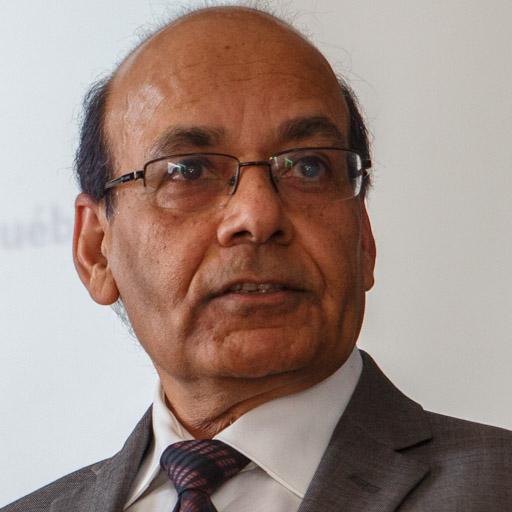
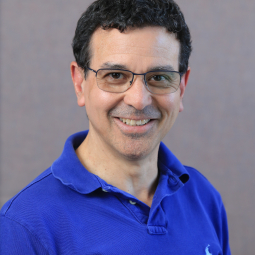
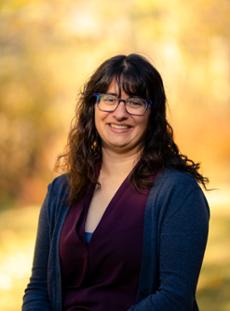
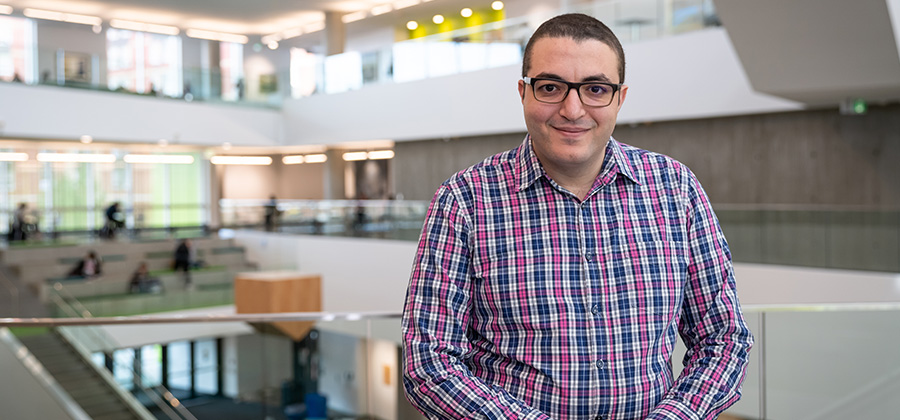
Dr. Yogendra P. Chaubey is a Professor in the Department of Mathematics and Statistics at Concordia University, Montréal, Canada. Holding a Ph.D. from the University of Rochester (1977), his research focuses on statistical methodology with emphasis on sampling theory, distribution modeling, and survival analysis. Education: Ph.D., University of Rochester (1977) His work spans nonparametric density estimation for circular and non-negative data, wavelet-based noise reduction in biological imaging, entropy estimation, left-censored spatial modeling (e.g., arsenic contamination), and inverse Gaussian distributions. Recent collaborations include applications in protein classification and public health. Dr. Chaubey has published extensively on statistical theory and methodology, including corrections and extensions to classical estimators. His teaching includes advanced courses in sample survey theory and applications.
Elizabeth Adjin-Tettey is a Professor at the University of Victoria Faculty of Law and currently serves as the Associate Vice-President Academic Programs. She has held significant administrative roles, including Associate Dean, Administration and Research (2010–2016), and chairs various committees focusing on curriculum, equity, and strategic planning. Her academic career includes tenure-track roles since 2000, with promotions to Associate Professor (2004) and Professor (2010). Education: LLB (Hons) from University of Ghana (1988), BL from Ghana Law School (1990), two LLM degrees (Queen’s University, 1991; University of Calgary, 1993), and a DJur from Osgoode Hall (1996). Research focuses on tort remedies, insurance law, critical race theory, feminist legal analysis, and marginalized groups’ access to justice. Recipient of the Terry J Wuester Teaching Excellence Award (2019), multiple fellowships, and grants, including the Charles D. Gonthier Research Fellowship (2008). Her teaching spans torts, remedies, and insurance law, with a commitment to inclusive pedagogy and social justice. She actively contributes to legal reform through publications on topics like genetic discrimination in insurance, liability settlements, and historical abuse claims. Administrative contributions include leading equity initiatives, curriculum development, and interdisciplinary collaborations.
Sanjeena Dang is an Associate Professor and Canada Research Chair in Data Science and Analytics at Carleton University's School of Mathematics and Statistics. She holds a PhD in Statistics from the University of Guelph (2012). Her research focuses on clustering and classification of high-dimensional data, particularly in bioinformatics, with applications to RNA-seq, microbiome, and microarray datasets. She has led projects supported by NSERC Discovery Grants and the Canada Research Chair Program. Education: PhD in Statistics, University of Guelph (2012) Her research interests span computational statistics, biostatistics, machine learning, and mixture models. She develops novel statistical methodologies to analyze complex biological data, emphasizing high-dimensional data analysis and interpretable models. Recent work includes cluster-weighted factor analyzers for socioeconomic crime rate analysis and Gaussian mixture models for changepoint detection. Her publications highlight advancements in microbiome data clustering, RNA-seq analysis, and polygenic adaptation studies. She has also explored applications in public health, such as obesity prevention interventions. Awards: Canada Research Chair in Data Science and Analytics Grants: NSERC Discovery Grant, CRC Program Funding Her research group collaborates on interdisciplinary projects, applying data science to biological and health domains. She contributes to statistical education through courses and mentorship in data analytics.
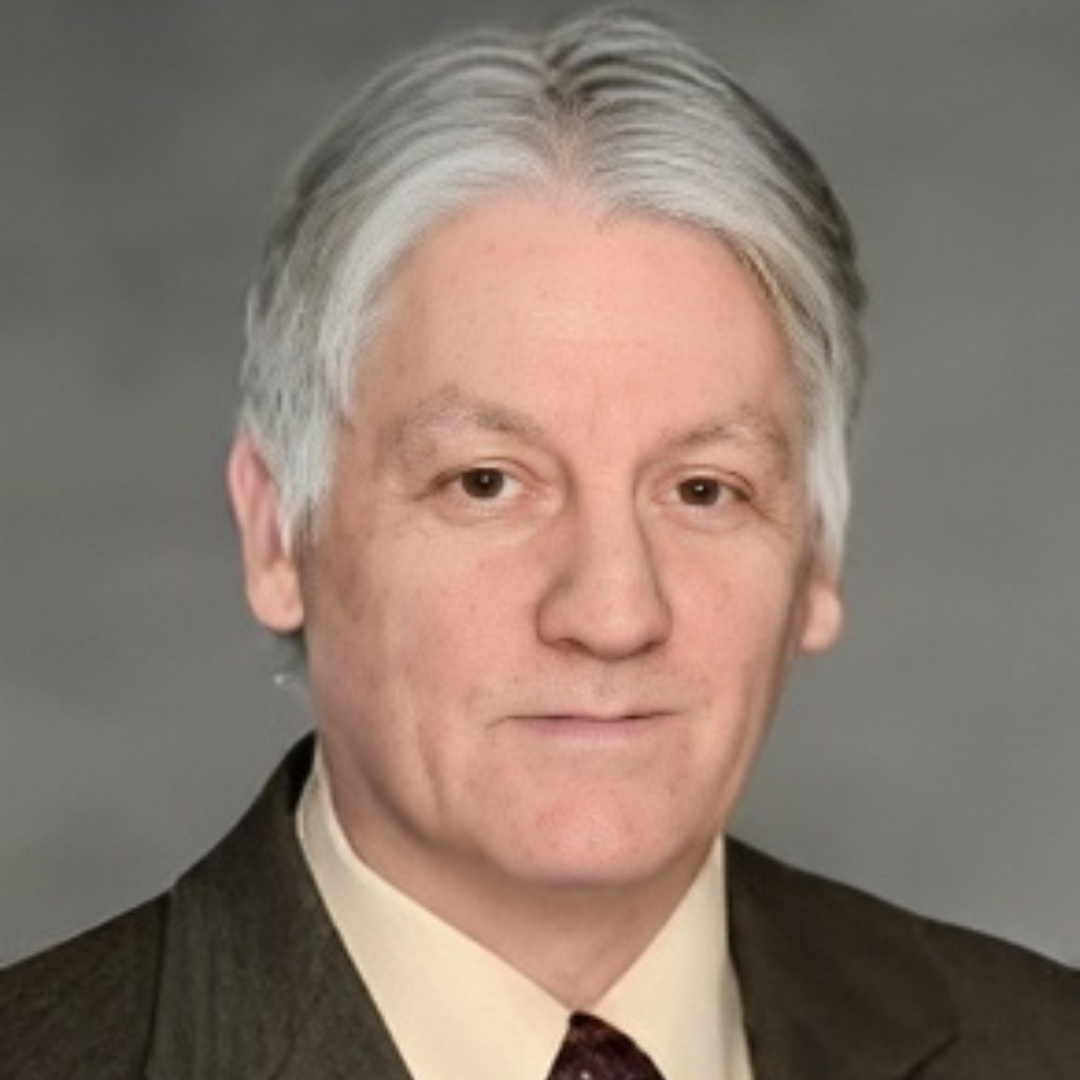
Dr. Sumantra Sarkar is an Associate Professor of Management Information Systems at Binghamton University's School of Management. He joined in 2014 after earning his Ph.D. from Georgia State University, where he began using ERPsim. With over two decades of industry experience in senior management roles at multinational corporations, he now focuses on integrating real-world IT governance, health IT, IT security, and accounting education into his teaching and research. His teaching emphasizes ERPsim simulations for graduate courses like Accounting Information Systems and MBA modules. He uses ERPsim's cash-to-cash, manufacturing, and distribution games to teach ERP navigation and real-time decision-making. Sarkar highlights ERPsim's role in linking front-office and back-office processes, enabling students to grasp integrated business systems. He also advocates for gradual adoption of ERPsim, leveraging teamwork and iterative learning. Research-wise, he analyzes ERPsim game data to develop teaching cases and explores how simulations enhance data-driven decision-making. His work bridges academic theory with practical IT-enabled business processes, particularly in ERP systems and accounting education.
Dr. Ramiro Liscano is a Professor in the Department of Electrical, Computer and Software Engineering at Ontario Tech University's Faculty of Engineering and Applied Science. He holds a PhD in Systems Design Engineering from the University of Waterloo (1998), an MScEng in Mechanical Engineering from the University of Rhode Island (1984), and a BScEng in Mechanical Engineering from the University of New Brunswick (1982). His research focuses on Pervasive and Mobile Computing (including service discovery and security), Distributed Computing (peer-to-peer, web services, grid services), and Sensor Networks (wireless/Internet interoperability). He teaches courses such as Network Design, Pervasive and Mobile Computing, and Software Design Fundamentals. His work includes significant contributions to patent-pending innovations in presence-aware telephony systems, context-aware call handling, and service discovery protocols. Dr. Liscano is a Professional Engineer (PEng) and a Senior Member of IEEE (SMIEEE). Education: PhD (Systems Design Engineering), University of Waterloo, 1998 MScEng (Mechanical Engineering), University of Rhode Island, 1984 BScEng (Mechanical Engineering), University of New Brunswick, 1982 Research Themes: His work bridges theoretical and applied aspects of distributed systems, emphasizing practical implementations in mobile computing environments. Recent efforts include developing interoperable sensor networks and secure service discovery mechanisms. Patents: Over 10 patent filings in areas such as context-aware telephony systems, presence services, and distributed application messaging. Notable filings include interactive conflict resolution for personalized services and availability predictors using call processing data.
Dr. John Friedlan is an Associate Professor of Accounting at Ontario Tech University’s Faculty of Business and Information Technology, where he also serves as Program Director, Commerce. With over 20 years of experience, he has taught at York University’s Schulich School of Business and holds a PhD from the University of Washington. His research focuses on critical analysis of financial reporting, managerial accounting, and the integration of business analytics into decision-making. Dr. Friedlan has been recognized for his teaching excellence, including the Educator of the Year Award (1992) and the Seymour Schulich Award for Teaching Excellence (2000). His educational background includes a Bachelor of Science from McGill University, an MBA from York University, and a PhD from the University of Washington. Prior to academia, he worked at Nabisco Brands and served on the Board of Examiners at the Canadian Institute of Chartered Accountants, qualifying as a Chartered Accountant in 1980. Dr. Friedlan’s research explores topics such as supply chain resilience, risk-averse decision-making, and disruption management. His work bridges theoretical frameworks with practical applications, leveraging computational methods in operations research and analytics. Recent articles address challenges in electric vehicle infrastructure planning, supply chain recovery strategies, and environmental disclosure practices. He actively contributes to practitioner journals like CGA Magazine and CA Magazine , emphasizing real-world relevance. His scientific contributions include over 15 peer-reviewed articles, with a focus on optimizing complex systems under uncertainty. Beyond research, Dr. Friedlan advocates for experiential learning, integrating industry partnerships to prepare students for data-driven business environments.
Randy Fortier is an Associate Teaching Professor and Associate Dean of Science (Undergraduate) at Ontario Tech University's Faculty of Science. He specializes in Computer Science education with a focus on software security, web/mobile development, graphics, and game development. His academic career includes teaching roles at the University of Windsor (1997-2003) and Thompson Rivers University (2003-2013). Education: BSc (Honours Computer Science, Software Development) from University of Windsor (1997), MSc (Computer Science) from University of Windsor (2003). Research interests span software security, mobile/web development, computer graphics, and game development. His earlier work focused on natural language processing and distributed virtual environments. His publications explore semantic web technologies, mobile speech interfaces, and scalable distributed systems architectures. Teaching portfolio includes over 15 courses ranging from introductory programming to advanced topics like interactive media and simulation modeling. He currently holds administrative leadership in undergraduate science education.
Pedro J. Jugo serves as a Professor in the Department of Geology at Laurentian University's Harquail School of Earth Sciences, where he has held a faculty position since July 2006. His academic appointments include teaching foundational and advanced geology courses such as GEOL 1006 (Introductory Geology I), GEOL 1021 (Understanding the Earth), GEOL 3206 (Igneous Petrography), and GEOL 5206 (Topics in Igneous Petrology). B.Sc. from Central de Venezuela M.Sc. from Maryland PhD from Alberta Professor Jugo's research focuses on understanding magmatic processes related to ore deposit formation, with particular expertise in igneous and experimental petrology. His primary research interests include the genesis of orthomagmatic and hydrothermal ore deposits, metasomatic processes affecting magma chemistry, volatiles in magmas, volcanic degassing, geochemistry of highly siderophile elements (Ru, Rh, Pd, Re, Os, Ir, Pt, Au), and sulfide-sulfate equilibria in silicate melts. His work bridges fundamental petrological processes with practical mineral exploration applications. Analysis of his publication record from 1999-2016 reveals consistent focus on sulfur behavior in magmatic systems, experimental determination of element partitioning, and application of advanced analytical techniques like XANES spectroscopy. His research demonstrates strong interdisciplinary connections between experimental petrology, economic geology, and analytical geochemistry, with particular emphasis on understanding the chemical processes that lead to valuable mineral concentration. Professor Jugo actively supervises graduate students, currently mentoring multiple M.Sc. and Ph.D. candidates working on projects related to platinum group element deposits in the Bushveld Complex, gold mineralization studies, and chromitite cycles. His past students include Dr. Fabio Cafagna who completed experimental studies on sulfur and platinum group elements in silicate systems. His current research projects include investigating sulfide-sulfate equilibria, sulfur content and speciation in silicate melts as function of oxidation state, and diffusion mechanisms of highly siderophile elements in magmatic systems. Professor Jugo maintains active collaborations with researchers worldwide, as evidenced by his extensive co-authorship network across international institutions.
Irene Botosaru serves as an Associate Professor in the Department of Economics at McMaster University, specializing in advanced econometric methodologies with applications in microeconomic theory and labor economics. Her scholarly profile demonstrates sustained contributions to panel data analysis, causal inference, and the economics of household resource allocation. Her academic credentials include: BA in Mathematics from the University of Washington BA (Honours) in Economics from the University of Washington MA in Economics from Yale University PhD in Economics from Yale University (2011) Professor Botosaru's research program centers on developing and applying innovative econometric techniques to address identification challenges in nonlinear panel models, particularly regarding time-varying parameters and unobserved heterogeneity. Her work bridges theoretical econometrics with empirical applications in earnings dynamics, household economics, and causal policy evaluation. Key methodological contributions include novel approaches to transformation models, duration analysis with stochastic heterogeneity, and robust treatment effect estimation in constrained panel settings. Analysis of her publication record reveals a pronounced evolution toward time-varying parameter frameworks and adversarial identification strategies, with increasing emphasis on methodological robustness for short panel data. Her research consistently addresses fundamental identification problems in microeconometrics while maintaining strong connections to substantive economic questions regarding income dynamics and household decision-making. She actively contributes to graduate education through courses including Econometrics I (ECON 761), Economic Policy Analysis I (ECON 773), and specialized Topics in Economics (ECON 700), reflecting her expertise in both theoretical and applied econometrics.
Abigail Payne is an Adjunct Professor in the Department of Economics at McMaster University. Her research focuses on the Economics of Education and Tax Policy , with significant contributions to understanding Charitable Giving , Government Funding Effects , and STEM Education disparities. Abigail's scholarly activity spans diverse economic topics, including the impact of tax credits on donations, school competition, and university research funding. Her work has been published in journals such as Journal of Public Economics , National Tax Journal , and Canadian Journal of Economics . Recent publications highlight trends in Education Economics , Public Finance , and Behavioral Economics . Key themes include the gender gap in STEM , tax price effects on donations, and policy analysis for educational equity. Despite extensive co-authorship with scholars like Justin Smith and Martin Dooley, no specific scientific awards or advising roles are documented. Her affiliation with McMaster University reflects ongoing engagement in academic and policy-related research.
Sarath Chandar Anbil Parthipan is an Associate Professor at Polytechnique Montréal and leads the Chandar Research Lab (CRL) . He holds the Canada Research Chair Tier 2 in Lifelong Machine Learning and the CIFAR Chair in Artificial Intelligence . As a core faculty member at Mila - the Quebec AI Institute , he also serves as an adjunct professor at the University of Montreal and IIT Madras . PhD in Computer Science (University of Montreal, 2015) MS by Research in Computer Science (IIT Madras, 2015) B.Eng in Computer Science (Anna University, 2009) His research focuses on lifelong/continual learning , deep learning , reinforcement learning , and natural language processing . He created the Conference on Lifelong Learning Agents (CoLLAs) in 2022 and serves as its organizer. Recent works explore molecular design with BindGPT , multi-agent RL coordination, and model interpretability. Scientific recognition includes: Canada Research Chair Tier 2 CIFAR Chair in AI He supervises students in topics spanning AI for science , medical image segmentation , and reset-free reinforcement learning . The CRL Annual Symposium 2023 featured collaborations with institutions like Princeton University and IBM.
Paul McNicholas is a Professor in the Department of Mathematics and Statistics at McMaster University, where he holds a Tier 1 Canada Research Chair in Computational Statistics. He serves as Editor-in-Chief of the Journal of Classification and has directed the MacData Institute (2017-2022). His academic leadership extends to his role as Associate Chair of Statistics (2021-2023) and his extensive supervision of graduate students across multiple cohorts. Dr. McNicholas earned his academic credentials from Trinity College Dublin, including a Sc.D. in Statistics, Ph.D. in Statistics, M.Sc. in High Performance Computing, and B.A./M.A. in Mathematics. His educational background reflects the interdisciplinary nature of modern computational statistics, combining deep mathematical knowledge with advanced computational skills essential for contemporary data science. His research focuses on computational statistics, particularly mixture model-based clustering and classification. Current research includes work on non-Gaussian mixtures, matrix variate distributions, and real problems in big data analytics. McNicholas has made significant contributions to developing statistical methods for higher-order data, mixed-type data, and multivariate longitudinal data, with special applications in autism and aging research. His methodological innovations have enabled more sophisticated analysis of complex datasets across various domains, particularly in health sciences. Analysis of his recent publications reveals a strong focus on advancing mixture model methodology for increasingly complex data structures. His work spans theoretical developments in distribution theory, computational algorithms for model fitting, and practical applications in health sciences. A notable trend is the extension of traditional statistical methods to handle high-dimensional, non-Gaussian, and structured data while maintaining computational efficiency, with increasing attention to applications in autism spectrum disorder and aging research. Dr. McNicholas has received numerous prestigious awards recognizing his contributions to statistics: Dorothy Killam Fellowship (2023) John L. Synge Award, Royal Society of Canada (2021) Steacie Prize for the Natural Sciences (2020) E.W.R Steacie Memorial Fellowship (2019) College Member, Royal Society of Canada (2017) University Scholar (2017) Tier 1 Canada Research Chair (2015) Dr. McNicholas actively mentors the next generation of statisticians, currently supervising eight Ph.D. students, a Master's student, and an undergraduate researcher. His research group has secured significant funding through various grants and fellowships, enabling cutting-edge research in computational statistics. He has also contributed to the field through software development, with R packages like 'mixture', 'pgmm', 'CDGHMM', 'longclust', and 'vscc' that implement his methodological innovations and make advanced statistical techniques accessible to practitioners. His research group operates within the broader context of the MacData Institute at McMaster University, which he directed from 2017-2022. The group fosters interdisciplinary collaboration, particularly in applications related to health sciences, including autism spectrum disorder research and aging studies. McNicholas has built a vibrant research community that bridges theoretical statistics with practical applications through regular seminars, workshops, and collaborative projects with researchers across multiple disciplines, with particular emphasis on methodological innovations that address real-world challenges in health analytics.
Dr. Collette Lemieux is an Assistant Professor of Statistics and Analytics at the Bissett School of Business, Mount Royal University. She has held roles including Interim Director of the Mokakiiks Centre for Scholarship of Teaching and Learning (2021-22), Chair of the organizing committee for the 2021 Forum for Scholarship of Teaching and Learning, and MRFA department liaison (2021–2022, 2024–ongoing). She received a Teaching and Learning Enhancement Grant (2022-23) and led the development of the Minor in Data Analytics program. Dr. Lemieux holds a PhD in Educational Research (University of Calgary), MSc in Mathematics (University of Calgary), BSc in Mathematics (McGill University), and BEd in Secondary Education (University of Calgary). Her teaching philosophy emphasizes interactive, collaborative, and relevant course design across disciplines, including Science & Technology, Teaching and Learning, and Business. Her research focuses on statistics and mathematics education within the Scholarship of Teaching and Learning. Key themes include story-based pedagogy for enhancing statistical understanding, modernizing business analytics curricula, and exploring digital game-based learning in mathematics education. Her work bridges educational theory and practice, addressing challenges in student engagement and conceptual mastery. Her research outputs span topics like postsecondary students’ statistical reasoning, calculus assessment strategies, and the role of digital games in teacher training. She actively contributes to academic discourse through peer-reviewed publications and institutional leadership roles.
Dr. Mohammed Elmorsy is an Associate Professor in the Department of Computer Science at MacEwan University. He holds a PhD from the University of Alberta (2017) and degrees from Zagazig University, Egypt. His expertise spans wireless sensor networks, network security, IoT, and algorithm design for combinatorial network problems. He teaches courses such as Wireless Networks and Embedded Systems (CMPT 464) and Introduction to Computing I (CMPT 101). Dr. Elmorsy's research focuses on enhancing wireless sensor network reliability through efficient routing protocols, security mechanisms, and resource allocation methodologies that ensure quality of information (QoI) and quality of service (QoS). He has published extensively in top venues like IEEE International Conference on Communications and IEEE Conference on Local Computer Networks. His awards include the Queen Elizabeth II Graduate Scholarship (2016), Mary Louise Imrie Award (2015), and multiple teaching and research accolades from the University of Alberta. He is an active member of the IEEE Computer Society and available to supervise senior student research projects. Key research trends in his articles include energy harvesting optimization, flow reliability analysis in dynamic networks, probabilistic models for network connectivity, and machine learning applications in sports analytics and autonomous systems.
Françoise Bichai is an Associate Professor at the Department of Civil, Geological and Mining Engineering, Polytechnique Montréal, specializing in integrated urban water management and resilience strategies. She leads the Résilience de l'approvisionnement en eau dans les villes (RAEV) research group with over 20 graduate students and holds affiliations as a Researcher at CEISCE, Visiting Researcher at IHE-Delft, and Member of CREDEAU and GENIE EAU. Baccalaureate in Civil Engineering (École Polytechnique) M.Sc.A. in Civil Engineering (École Polytechnique) Ph.D. in Civil Engineering (École Polytechnique) Her research focuses on urban water resilience under climate and anthropogenic pressures, with expertise in hybrid water systems , QMRA , pathogen transport , and water safety planning . She has developed multicriteria decision support frameworks and climate adaptation strategies for municipal water systems. Recent publications (2025-2022) demonstrate trends in bioretention systems , green infrastructure , Bayesian risk modeling , and urban climate resilience , with keywords spanning environmental engineering, public health, and climate adaptation. Her work integrates stormwater harvesting , wastewater reuse , and hybrid system planning . Scientific Awards: NSERC Doctoral Scholarship NSERC Postdoctoral Fellowship FRQNT and NSERC funded NOVA project Social Innovation Project funding (Ministry of Economy and Innovation) Supervision: Over 20 graduate students including Simon Dufort , Sandrine Lacroix , and Justine Petrucci in ongoing PhD work, with 13 completed theses (2024-2018). Laboratory: RAEV research group (Resilience of Urban Water Supply) with interdisciplinary collaborations across Canada, Netherlands, and international institutions.